



Power Battery Management System Market Size 2024-2028
The power battery management system market size is forecast to increase by USD 20.9 billion at a CAGR of 17.9% between 2023 and 2028.
- The market is experiencing significant growth due to the increasing adoption of lithium-ion batteries in various applications. BMS plays a crucial role in optimizing energy utilization and ensuring the safety of these batteries. Key functions of BMS include overcharging protection, state-of-charge (SoC) and state-of-health (SoH) monitoring, cell balancing, and performance monitoring. The demand for smart devices and the growing number of microgrid installations are major growth drivers for the BMS market. However, the demand-supply gap of battery components poses a challenge. Effective BMS solutions can enhance battery longevity, improve overall system performance, and ensure the safe operation of lithium-ion batteries. Moreover, incorporating advanced features such as predictive maintenance and remote monitoring can further augment the value proposition of BMS solutions. The market is driven by the rising adoption of smart devices and microgrids, but the demand-supply gap of battery components poses a challenge. Effective BMS solutions can extend battery life, improve overall system performance, and ensure safe operation.
What will be the Size of the Market During the Forecast Period?
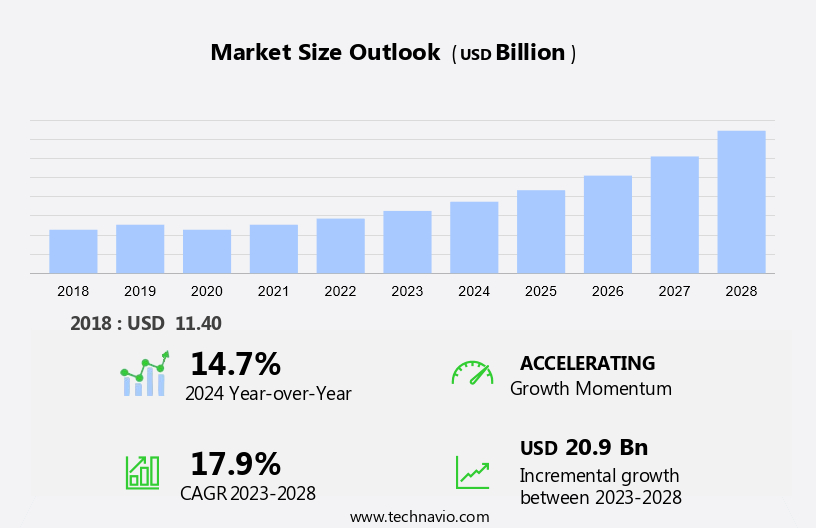
- The market is witnessing significant growth due to the increasing adoption of rechargeable batteries in various sectors, including electric vehicles (EVs), consumer electronics, transportation, and energy storage systems. Lithium-ion batteries and nickel metal hydride batteries are the primary focus of the BMS market. BMS plays a crucial role in managing the energy stored in batteries by monitoring and controlling various parameters such as state-of-charge (SOC), state-of-health (SOH), cell balancing, overcharging protection, and temperature management. These features help improve battery performance, ensure safety, and extend battery life. In the context of EVs, BMS is essential for optimizing energy utilization, enhancing battery range, and ensuring efficient charging. BMS also plays a critical role in emissions control by managing the battery's charging and discharging cycles to minimize the environmental impact. BMS is also gaining popularity in hybrid electric vehicles (HEVs) and consumer electronics to optimize energy consumption and ensure battery longevity. Energy storage systems, particularly those used in renewable energy applications, also require BMS to manage the charging and discharging cycles of batteries and ensure optimal energy utilization.
- Moreover, centralized BMS is suitable for large-scale energy storage systems, where a single control unit manages multiple batteries. Distributed BMS is suitable for applications where batteries are distributed across a large area, and each battery requires individual monitoring and control. The market is experiencing challenges due to the semiconductor shortage, which is impacting the availability and cost of key components used in BMS. However, the market is also witnessing the adoption of AI-based systems to optimize battery performance, improve energy utilization, and enhance safety. The market offers various topologies and is experiencing challenges due to the semiconductor shortage, but it is also witnessing the adoption of AI-based systems to enhance performance and safety.
How is this market segmented and which is the largest segment?
The market research report provides comprehensive data (region-wise segment analysis), with forecasts and estimates in "USD billion" for the period 2024-2028, as well as historical data from 2018-2022 for the following segments.
- Type
- Motive battery
- Stationary battery
- Geography
- APAC
- China
- India
- Japan
- North America
- US
- Europe
- Germany
- South America
- Middle East and Africa
- APAC
By Type Insights
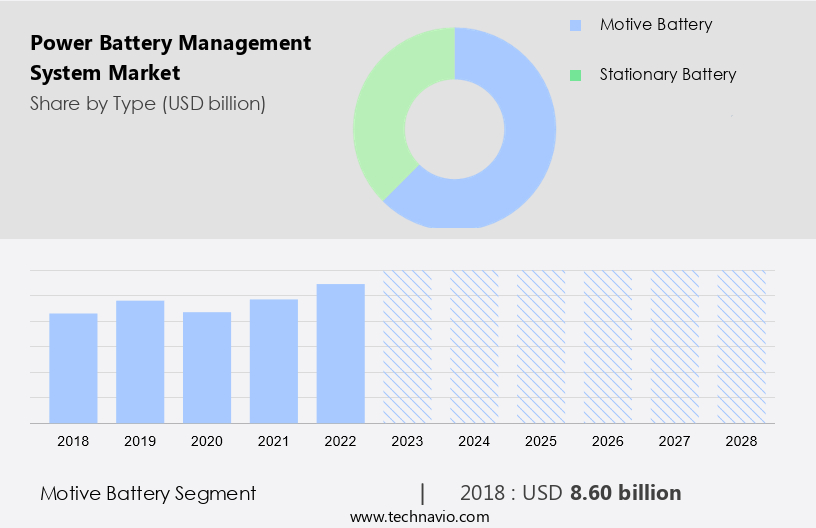
- The motive battery segment is estimated to witness significant growth during the forecast period.
The market is experiencing significant growth due to the rising demand for electric vehicles (EVs) and hybrid electric vehicles (HEVs). A key component of this market is the utilization of lithium-ion batteries, which are preferred for their energy density and efficiency. With the automotive industry transitioning towards electrification, the importance of advanced BMS technologies has become increasingly evident. These systems play a vital role in monitoring battery health, ensuring safety, and optimizing performance by managing charging and discharging processes. The focus on sustainability and reducing greenhouse gas emissions is driving the adoption of motive batteries in transportation.
Furthermore, government incentives and policies encouraging EV adoption have led to increased investments in battery management solutions. Energy utilization is a primary concern, and BMS solutions offer overcharging protection, state-of-charge (SoC) monitoring, state-of-health (SoH) assessment, and cell balancing to enhance battery longevity and performance. BMS systems are essential for ensuring the safe and efficient operation of EVs and HEVs, making them a crucial investment for businesses in the transportation sector.
Get a glance at the market report of share of various segments Request Free Sample
The motive battery segment was valued at USD 8.60 billion in 2018 and showed a gradual increase during the forecast period.
Regional Analysis
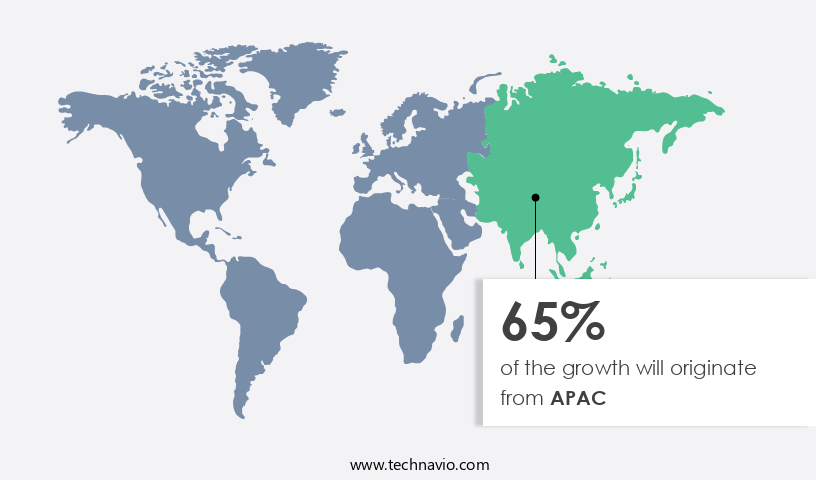
- APAC is estimated to contribute 65% to the growth of the global market during the forecast period.
Technavio's analysts have elaborately explained the regional trends and drivers that shape the market during the forecast period.
For more insights on the market share of various regions Request Free Sample
The market in Asia Pacific (APAC) is witnessing significant growth due to the expanding industries of automobile, shipbuilding, and construction. With increasing investments in these sectors, the demand for various types of vehicles, including Electric Vehicles (EVs), is surging. To cater to this demand, manufacturers are prioritizing the development of advanced battery management systems. APAC's market dominance is further fueled by its focus on research and development to improve battery technologies for promoting cleaner transportation and emissions control. Japan is a major contributor to the APAC market due to its high adoption rate of EVs and the significant demand for these vehicles in the country.
Market Dynamics
Our researchers analyzed the data with 2023 as the base year, along with the key drivers, trends, and challenges. A holistic analysis of drivers will help companies refine their marketing strategies to gain a competitive advantage.
What are the key market drivers leading to the rise in the adoption of Power Battery Management System Market?
Rising demand for smart devices is the key driver of the market.
- The market encompasses various types of systems, including Modular BMS, Centralized BMS, and Distributed BMS. These systems are integral to the efficient management of batteries in various applications, such as Automotive Power Solutions and Industrial Battery Management Systems (IBMS). The Battery Control Unit, Power Management ICs, Communication Channel, and Battery Sensors are essential components of these systems. Energy Harvesting is a growing trend in the Power BMS market, enabling the conversion of waste energy into usable power. The increasing adoption of smart devices, such as smartphones, tablets, and wearables, is driving the demand for advanced BMS solutions.
- Factors like rising digital literacy, affordability, and Internet penetration are contributing to the proliferation of these devices. In 2020, over 69% of the global population used the Internet, leading to a surge in demand for power management solutions to support their digital lifestyles. The increasing demand for power on the go and the need for high-quality digital content on mobile devices are key reasons for the growth of the market. Thus, such factors are driving the growth of the market during the forecast period.
What are the market trends shaping the Power Battery Management System Market?
Growing number of microgrid installations is the upcoming trend in the market.
-
Electricity grids encounter various challenges, including outdated infrastructure, shifting power generation dynamics due to the proliferation of renewable energy sources, and widening power demand and supply disparities. These issues pose threats to grid reliability and efficiency, straining the existing electrical infrastructure. Extending the reach of electricity grids to remote and rural areas entails substantial capital investments, which can be mitigated by implementing microgrids. Microgrids, comprising small-scale power generation units, have gained traction as a viable solution to address inconsistencies in grid infrastructure and performance. Operating in both grid-connected (hybrid microgrids) and standalone modes, these systems incorporate energy storage components. By implementing AI-based battery management systems, microgrids can optimize battery performance, monitor energy usage in real-time, and extend battery lifespan through machine learning algorithms.
-
Moreover, cloud connectivity enables remote monitoring and management of microgrids, enhancing their efficiency and adaptability. The semiconductor shortage and the increasing adoption of renewable energy storage systems have fueled the demand for advanced battery management systems. These systems play a crucial role in ensuring energy density, stability, and safety in battery applications. Furthermore, fleet management of microgrids can be facilitated through AI-driven systems, enabling predictive maintenance and optimization of energy consumption. By addressing the semiconductor shortage and optimizing battery lifespan, these advanced systems contribute to the growth of the market. Thus, such trends will shape the growth of the market during the forecast period.
What challenges does Power Battery Management System Market face during its growth?
Demand-supply gap of battery components is a key challenge affecting market growth.
- The market encompasses heavy-duty Electric Vehicles and Hybrid Electric Vehicles (HEVs). Lithium-ion batteries have emerged as the go-to solution for these applications due to their enhanced energy and power density, extended battery lifecycle, and superior performance. The shift from portable electronic devices to automotive and industrial applications is primarily driven by the need for high-capacity batteries and advanced battery storage.
- .Lithium, the primary component of these batteries, is sourced predominantly from mines in Australia and South America. However, with the escalating demand for lithium from the automotive, industrial, and electronic goods sectors, new reserves are being discovered worldwide. Battery topology plays a crucial role in optimizing the performance and longevity of these batteries. As the adoption of electric vehicles (EVs) continues to increase, the demand for efficient battery management systems will follow suit.
Exclusive Customer Landscape
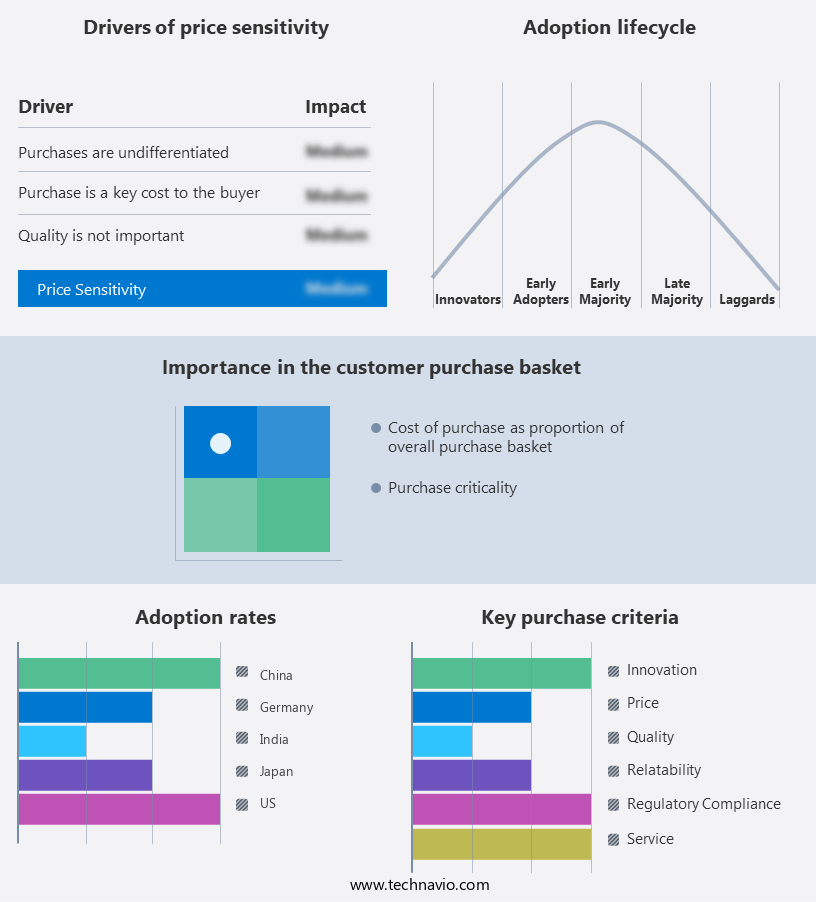
The market forecasting report includes the adoption lifecycle of the market, covering from the innovator's stage to the laggard's stage. It focuses on adoption rates in different regions based on penetration. Furthermore, the market report also includes key purchase criteria and drivers of price sensitivity to help companies evaluate and develop their market growth analysis strategies.
Customer Landscape
Key Companies & Market Insights
Companies are implementing various strategies, such as strategic alliances, market forecast, partnerships, mergers and acquisitions, geographical expansion, and product/service launches, to enhance their presence in the market.
The market research and growth report includes detailed analyses of the competitive landscape of the market and information about key companies, including:
- BMS Powersafe
- Brunswick Corp.
- Charger Industries Ltd.
- Eberspacher Gruppe GmbH and Co.KG
- Elithion Inc.
- Epec LLC
- Evolute Systems Pvt. Ltd.
- Ewert Energy Systems Inc.
- Infineon Technologies AG
- Leclanche SA
- Navitas System LLC
- Nuvation Energy
- NXP Semiconductors NV
- Renesas Electronics Corp.
- Ricardo Plc
- Sensata Technologies Inc.
- Servato Corp.
- Texas Instruments Inc.
Qualitative and quantitative analysis of companies has been conducted to help clients understand the wider business environment as well as the strengths and weaknesses of key market players. Data is qualitatively analyzed to categorize companies as pure play, category-focused, industry-focused, and diversified; it is quantitatively analyzed to categorize companies as dominant, leading, strong, tentative, and weak.
Research Analyst Overview
Battery Management Systems (BMS) are essential components in managing the operation and performance of rechargeable batteries, particularly in applications using lithium-ion batteries. BMS ensures efficient energy utilization, overcharging protection, and balancing of individual cells to maintain optimal battery health and longevity. The growing adoption of electric vehicles (EVs) and renewable energy systems has led to increased demand for advanced BMS solutions. BMS plays a crucial role in monitoring the state-of-charge (SoC) and state-of-health (SoH) of batteries in various sectors, including transportation, telecommunications, and consumer electronics. It provides performance monitoring, cell balancing, and safety features like overcharging protection, making batteries more reliable and efficient.
Furthermore, BMS is also essential for managing heavy-duty electric vehicles, hybrid electric vehicles (HEVs), and advanced battery storage systems. The modular topology of BMS allows for scalability, making it suitable for various applications. Lead-acid batteries and nickel metal hydride batteries also benefit from BMS for improved battery health monitoring and lifecycle management. BMS is integral to reducing carbon emissions by effectively managing intermittent energy sources, ensuring grid stability, and enabling real-time monitoring and machine learning algorithms for predictive maintenance. The semiconductor shortage has led to the development of AI-based systems and cloud connectivity for BMS, enhancing their capabilities and efficiency.
|
Market Scope |
|
|
Report Coverage |
Details |
|
Page number |
136 |
|
Base year |
2023 |
|
Historic period |
2018-2022 |
|
Forecast period |
2024-2028 |
|
Growth momentum & CAGR |
Accelerate at a CAGR of 17.9% |
|
Market growth 2024-2028 |
USD 20.9 billion |
|
Market structure |
Fragmented |
|
YoY growth 2023-2024(%) |
14.7 |
|
Key countries |
China, US, Germany, Japan, and India |
|
Competitive landscape |
Leading Companies, Market Positioning of Companies, Competitive Strategies, and Industry Risks |
What are the Key Data Covered in this Market Research and Growth Report?
- CAGR of the market during the forecast period
- Detailed information on factors that will drive the market growth and forecasting between 2024 and 2028
- Precise estimation of the size of the market and its contribution of the market in focus to the parent market
- Accurate predictions about upcoming market growth and trends and changes in consumer behaviour
- Growth of the market across APAC, North America, Europe, South America, and Middle East and Africa
- Thorough analysis of the market's competitive landscape and detailed information about companies
- Comprehensive analysis of factors that will challenge the growth of market companies
We can help! Our analysts can customize this market research report to meet your requirements. Get in touch
 RIA -
RIA - 
