



Prompt Engineering Tools Market Size 2026-2030
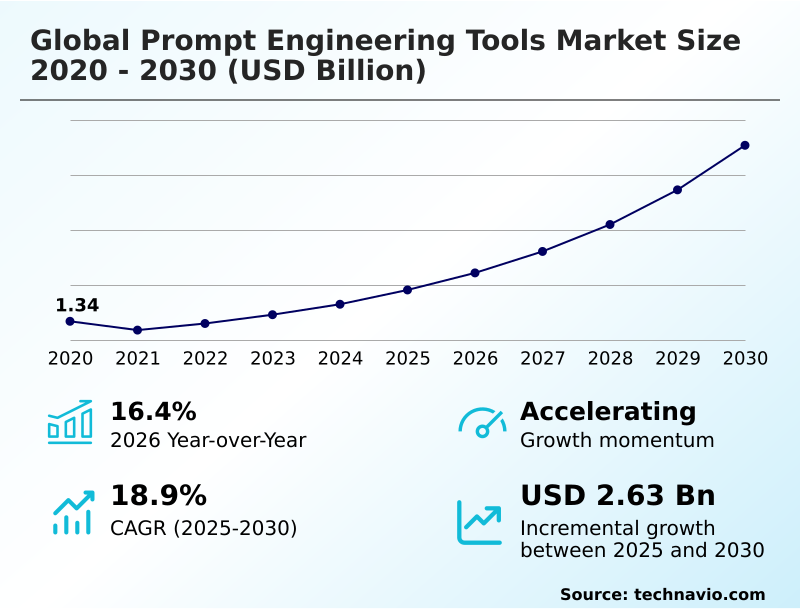
The prompt engineering tools market size is valued to increase by USD 2.63 billion, at a CAGR of 18.9% from 2025 to 2030. Increasing proliferation and sophistication of foundation models will drive the prompt engineering tools market.
Major Market Trends & Insights
- North America dominated the market and accounted for a 34.4% growth during the forecast period.
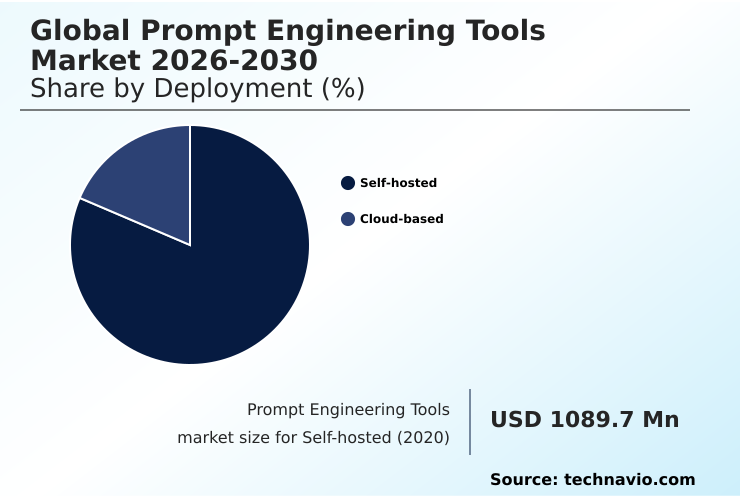
- By Deployment - Self-hosted segment was valued at USD 1.35 billion in 2024
- By Application - NLP enhancement segment accounted for the largest market revenue share in 2024
Market Size & Forecast
- Market Opportunities: USD 3.20 billion
- Market Future Opportunities: USD 2.63 billion
- CAGR from 2025 to 2030 : 18.9%
Market Summary
- The prompt engineering tools market is defined by a fundamental need to systematize interactions with powerful generative models. As organizations move beyond experimentation to deploy production-grade AI systems, the focus shifts to ensuring model response consistency and reliability.
- This requires more than just crafting clever inputs; it demands a comprehensive approach to prompt lifecycle management, encompassing prompt A/B testing, version control, and performance analytics. For example, a financial services firm leveraging AI to generate compliance reports cannot tolerate variability or inaccuracies.
- It must implement a context engineering framework with robust AI guardrail implementation to ensure every output is verifiable and safe. The adoption of specialized developer productivity tools and enterprise AI platforms is therefore not a luxury but a necessity for scalable AI development.
- These platforms provide the AI model observability and governance needed to manage risk, optimize costs, and build secure AI applications, transforming an artisanal craft into a disciplined engineering practice.
What will be the Size of the Prompt Engineering Tools Market during the forecast period?
Get Key Insights on Market Forecast (PDF) Get Free Sample
How is the Prompt Engineering Tools Market Segmented?
The prompt engineering tools industry research report provides comprehensive data (region-wise segment analysis), with forecasts and estimates in "USD million" for the period 2026-2030, as well as historical data from 2020-2024 for the following segments.
- Deployment
- Self-hosted
- Cloud-based
- Application
- NLP enhancement
- Code generation
- Multimodal systems
- Others
- Delivery mode
- Prompt generation
- Prompt optimization
- Prompt debugging
- Prompt storage and management
- End-user
- Enterprises
- Developers and researchers
- Educational institutions
- Government and defense
- Geography
- North America
- US
- Canada
- Mexico
- Europe
- Germany
- UK
- France
- APAC
- China
- Japan
- India
- South America
- Brazil
- Argentina
- Middle East and Africa
- Saudi Arabia
- UAE
- South Africa
- Rest of World (ROW)
- North America
By Deployment Insights
The self-hosted segment is estimated to witness significant growth during the forecast period.
The self-hosted deployment of prompt engineering tools addresses the critical needs of organizations requiring maximum control over their AI infrastructure.
This on-premises approach is driven by the necessity for unparalleled data governance, particularly within regulated sectors like finance and healthcare where keeping sensitive data, including proprietary prompts and model interactions, within the corporate network is non-negotiable.
This model of prompt library management offers extensive customization, allowing for deep integration with bespoke internal systems and existing security protocols, and some have reported a 15% reduction in compliance-related incidents.
While providing control over the AI development lifecycle, it necessitates significant upfront investment and a skilled internal IT team for ongoing maintenance, updates, and scaling, making it a strategic choice for large enterprises where the value of absolute security outweighs the operational overhead of production-grade AI systems and building trustworthy AI.
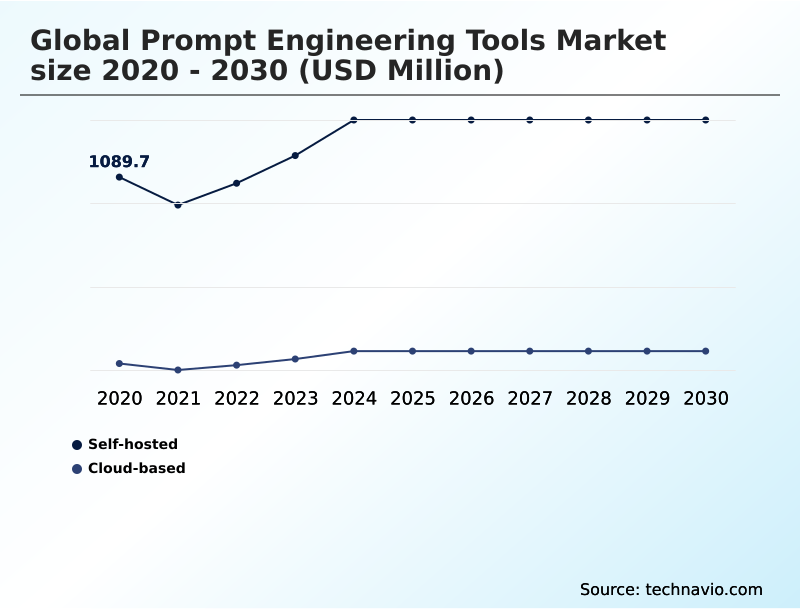
The Self-hosted segment was valued at USD 1.35 billion in 2024 and showed a gradual increase during the forecast period.
Regional Analysis
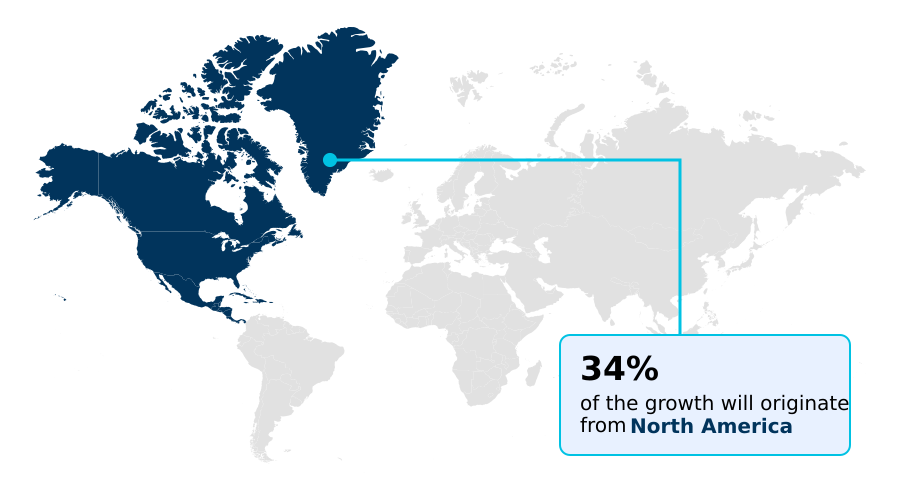
North America is estimated to contribute 34.4% to the growth of the global market during the forecast period.Technavio’s analysts have elaborately explained the regional trends and drivers that shape the market during the forecast period.
See How Prompt Engineering Tools Market Demand is Rising in North America Get Free Sample
The geographic landscape of the market is led by North America, where the high concentration of model developers and venture capital fuels innovation in enterprise AI platforms and model-agnostic tooling.
Europe’s market is distinctly shaped by a regulatory focus on creating responsible AI deployment and AI governance frameworks, mandating features like AI guardrail implementation and robust generative AI governance.
This has led to an adoption environment where secure AI applications are paramount.
Meanwhile, the APAC region is the most dynamic, driven by mobile-first adoption and government initiatives in countries like Singapore, which report a 25% improvement in multilingual content generation efficiency.
This regional diversity underscores the need for localized LLM integration strategies and a nuanced understanding of varying business priorities from building trustworthy AI to pure performance.
Market Dynamics
Our researchers analyzed the data with 2025 as the base year, along with the key drivers, trends, and challenges. A holistic analysis of drivers will help companies refine their marketing strategies to gain a competitive advantage.
- As organizations mature in their AI adoption, the conversation shifts from basic implementation to sophisticated optimization, frequently beginning with the question of how to measure prompt engineering ROI. This leads to the adoption of specific tools for comparing large language models to select the optimal foundation for a given task.
- Establishing best practices for enterprise prompt management becomes critical, moving beyond ad-hoc solutions to structured, auditable systems. A key part of this is addressing security through prompt injection attack mitigation techniques, which has become a non-negotiable for production systems. The complexity further increases when exploring prompt engineering for multimodal systems, where text, image, and data inputs must be orchestrated.
- Teams are now automating prompt testing and validation to ensure consistency, integrating this process directly into their workflows. A core component of this advanced stage involves integrating prompt management into DevOps, treating prompts as first-class citizens in the software lifecycle. This is particularly vital for prompt engineering for regulated industries, where every interaction must be traceable.
- For specific use cases, prompt engineering tools for code generation have demonstrated a two-fold increase in developer output compared to manual methods. This holistic approach, from initial setup to continuous improvement, defines the current state of advanced AI implementation.
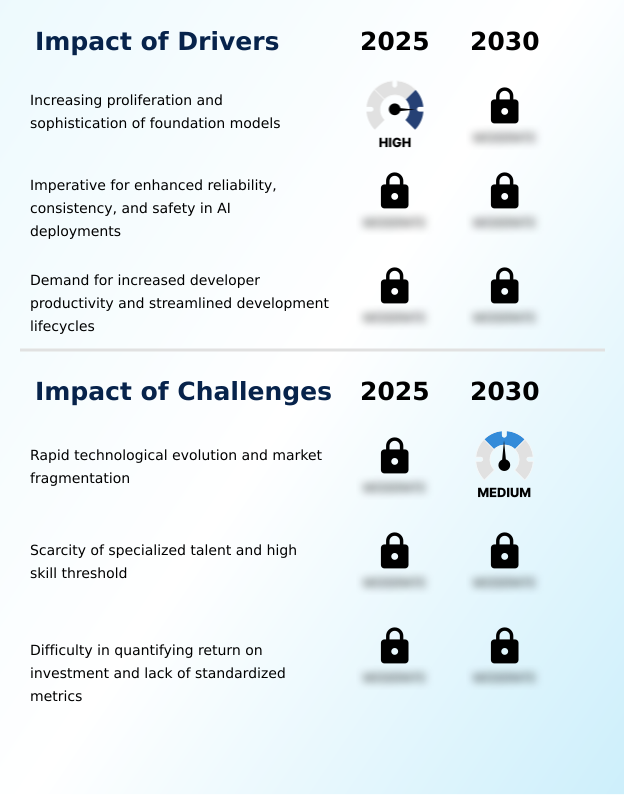
What are the key market drivers leading to the rise in the adoption of Prompt Engineering Tools Industry?
- The increasing proliferation and sophistication of foundation models is a key driver for the prompt engineering tools market.
- The market's rapid expansion is primarily fueled by the increasing complexity of the AI ecosystem and the enterprise-level demand for reliable, production-ready systems.
- The proliferation of diverse foundation models creates significant challenges, as prompt sensitivity can cause output variance of up to 70% between platforms.
- Specialized developer productivity tools providing functionalities like side-by-side model comparison and prompt A/B testing are critical for mitigating this variability. Moreover, the transition of generative AI to mission-critical roles necessitates predictable outcomes and adherence to responsible AI deployment.
- Prompt engineering platforms offer essential governance capabilities, with some users reporting a 15% reduction in costs associated with generating non-compliant content, directly impacting the bottom line and accelerating AI development lifecycle.
What are the market trends shaping the Prompt Engineering Tools Industry?
- The market is witnessing a significant trend toward automated and programmatic prompt optimization. This reflects a shift from manual crafting to systematic, algorithm-driven refinement.
- The market is undergoing a definitive shift toward automation and deep integration, which are key to enabling scalable AI development. A significant trend is the move to automated and programmatic prompt optimization, where advanced prompt optimization services can improve response accuracy by over 20%. This evolution from manual crafting to a systematic, data-driven discipline signifies the industrialization of prompt engineering.
- Concurrently, there is a strong push for deep integration with broader large language model operations and LLMOps frameworks. This convergence, incorporating robust prompt versioning systems and CI/CD pipeline integration, allows for automated testing and validation, which has been shown to reduce deployment errors by more than 50%. This holistic approach ensures greater governance, reproducibility, and scalability.
What challenges does the Prompt Engineering Tools Industry face during its growth?
- The rapid technological evolution and fragmentation of the market present a key challenge to industry growth.
- Key challenges restraining market growth include the hyper-evolution of underlying AI technology and a significant talent deficit. The constant introduction of new model architectures creates a risk of technological obsolescence, forcing tool providers into a resource-intensive cycle of adaptation.
- Simultaneously, the scarcity of specialized talent is a major barrier, with job postings for prompt engineers increasing by over 300% in the last year, far outpacing the supply of qualified candidates. This is compounded by the difficulty in demonstrating a clear return on investment.
- The absence of standardized metrics for evaluating prompt performance makes the value proposition appear subjective, though some firms using prompt engineering training and advanced tooling report a 15% reduction in project rework.
Exclusive Technavio Analysis on Customer Landscape
The prompt engineering tools market forecasting report includes the adoption lifecycle of the market, covering from the innovator’s stage to the laggard’s stage. It focuses on adoption rates in different regions based on penetration. Furthermore, the prompt engineering tools market report also includes key purchase criteria and drivers of price sensitivity to help companies evaluate and develop their market growth analysis strategies.
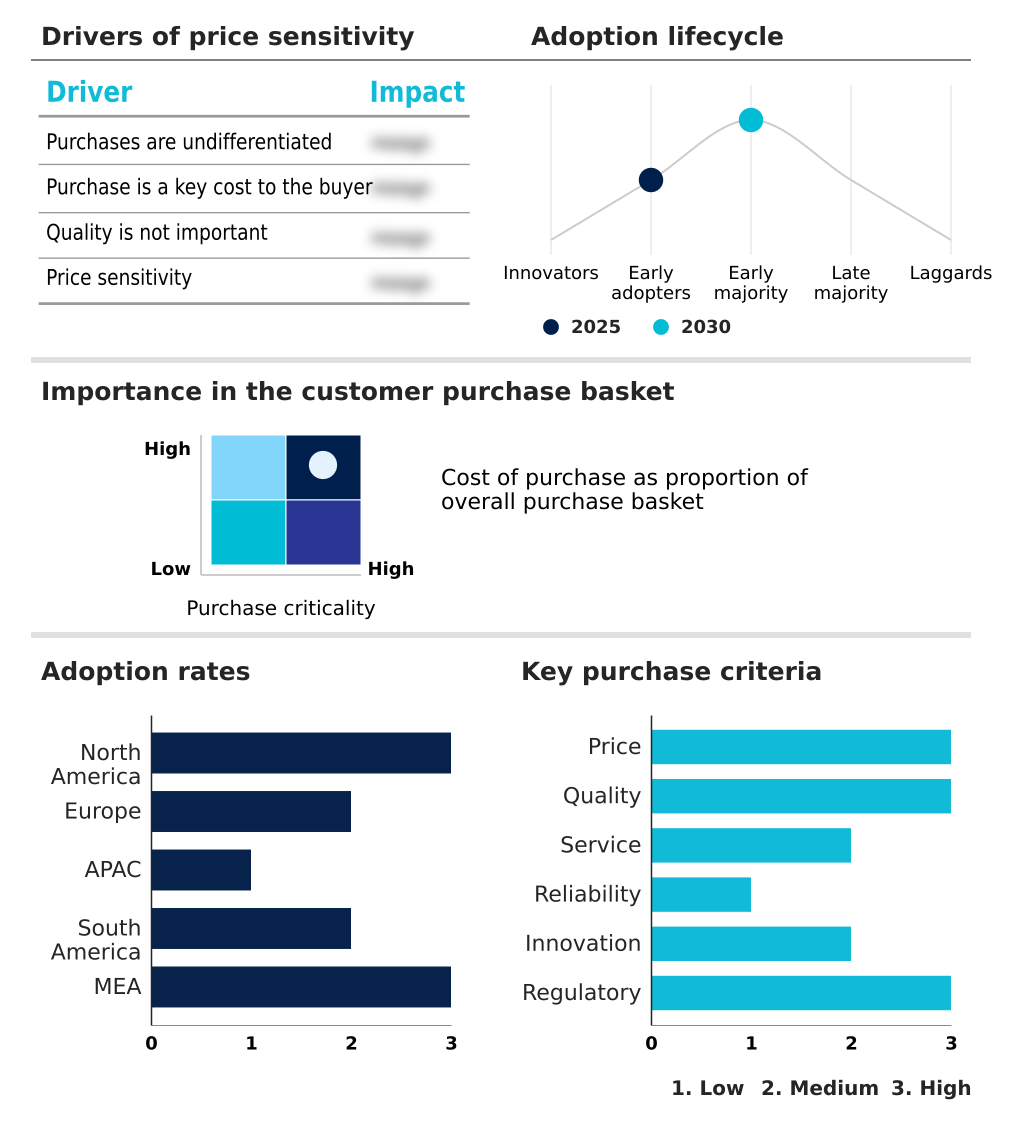
Customer Landscape of Prompt Engineering Tools Industry
Competitive Landscape
Companies are implementing various strategies, such as strategic alliances, prompt engineering tools market forecast, partnerships, mergers and acquisitions, geographical expansion, and product/service launches, to enhance their presence in the industry.
Agentatech UG - Specialized platforms and AI agent tools streamline workflow automation, enhancing operational efficiency through structured prompt engineering.
The industry research and growth report includes detailed analyses of the competitive landscape of the market and information about key companies, including:
- Agentatech UG
- Amazon Web Services Inc.
- ArthurAI Inc.
- Cohere
- FlowGPT
- Google LLC
- Helicone Inc.
- Humanloop Inc.
- LangChain Inc.
- LATITUDE S.L.
- Microsoft Corp.
- Orq.ai
- Portkey Inc.
- PromptBase
- PromptLayer Inc.
- PromptLoop
- Promptmetheus
- Scale AI
- Vellum
- Weights and Biases Inc.
Qualitative and quantitative analysis of companies has been conducted to help clients understand the wider business environment as well as the strengths and weaknesses of key industry players. Data is qualitatively analyzed to categorize companies as pure play, category-focused, industry-focused, and diversified; it is quantitatively analyzed to categorize companies as dominant, leading, strong, tentative, and weak.
Recent Development and News in Prompt engineering tools market
- In February 2025, OpenAI released its GPT-4.5 (Orion) model, which featured significant improvements in factual consistency and complex instruction-following capabilities, impacting the requirements for prompt engineering.
- In February 2025, Microsoft Corp. enhanced its Azure AI Studio with a feature named Prompt Flow Sentinel, designed to offer real-time monitoring and defense against prompt injection attacks for enterprise users.
- In March 2025, Vellum introduced an Automated Prompt Synthesis capability that leverages a meta-model to autonomously generate and evaluate numerous prompt variations, accelerating the optimization lifecycle for developers.
- In April 2025, a consortium including Microsoft, Google, and Anthropic announced the formation of the Enterprise Generative AI Alliance (E-GAIA) to establish standardized best practices and interoperable frameworks for managing large language models in corporate environments.
Dive into Technavio’s robust research methodology, blending expert interviews, extensive data synthesis, and validated models for unparalleled Prompt Engineering Tools Market insights. See full methodology.
| Market Scope | |
|---|---|
| Page number | 321 |
| Base year | 2025 |
| Historic period | 2020-2024 |
| Forecast period | 2026-2030 |
| Growth momentum & CAGR | Accelerate at a CAGR of 18.9% |
| Market growth 2026-2030 | USD 2629.2 million |
| Market structure | Fragmented |
| YoY growth 2025-2026(%) | 16.4% |
| Key countries | US, Canada, Mexico, Germany, UK, France, Italy, Spain, The Netherlands, China, Japan, India, South Korea, Australia, Indonesia, Brazil, Argentina, Chile, Saudi Arabia, UAE, South Africa, Israel and Turkey |
| Competitive landscape | Leading Companies, Market Positioning of Companies, Competitive Strategies, and Industry Risks |
Research Analyst Overview
- The market's evolution is marked by a decisive pivot towards integrated, enterprise-grade solutions that treat prompt engineering as a core engineering discipline. The proliferation of diverse models necessitates sophisticated model-agnostic tooling and comprehensive prompt library management to maintain control and efficiency.
- This trend toward large language model operations is a direct response to boardroom demands for quantifiable ROI and robust generative AI governance, connecting development efforts to strategic business outcomes. Advanced platforms now incorporate prompt optimization algorithms and automated prompt evaluation, moving beyond simple creation to focus on performance.
- For instance, firms adopting integrated prompt management frameworks report a 40% faster deployment cycle for new AI features. This disciplined approach, incorporating CI/CD pipeline integration, adversarial testing for LLMs, and detailed prompt performance analytics, is essential for building production-grade AI systems.
- The ability to ensure model response consistency and manage the full prompt lifecycle is no longer an option but a requirement for any organization serious about leveraging AI at scale. Effective model behavior analysis and a strong context engineering framework are central to achieving this goal.
What are the Key Data Covered in this Prompt Engineering Tools Market Research and Growth Report?
-
What is the expected growth of the Prompt Engineering Tools Market between 2026 and 2030?
-
USD 2.63 billion, at a CAGR of 18.9%
-
-
What segmentation does the market report cover?
-
The report is segmented by Deployment (Self-hosted, and Cloud-based), Application (NLP enhancement, Code generation, Multimodal systems, and Others), Delivery Mode (Prompt generation, Prompt optimization, Prompt debugging, and Prompt storage and management), End-user (Enterprises, Developers and researchers, Educational institutions, and Government and defense) and Geography (North America, Europe, APAC, South America, Middle East and Africa)
-
-
Which regions are analyzed in the report?
-
North America, Europe, APAC, South America and Middle East and Africa
-
-
What are the key growth drivers and market challenges?
-
Increasing proliferation and sophistication of foundation models, Rapid technological evolution and market fragmentation
-
-
Who are the major players in the Prompt Engineering Tools Market?
-
Agentatech UG, Amazon Web Services Inc., ArthurAI Inc., Cohere, FlowGPT, Google LLC, Helicone Inc., Humanloop Inc., LangChain Inc., LATITUDE S.L., Microsoft Corp., Orq.ai, Portkey Inc., PromptBase, PromptLayer Inc., PromptLoop, Promptmetheus, Scale AI, Vellum and Weights and Biases Inc.
-
Market Research Insights
- Market dynamics are shaped by the dual pressures of rapid innovation and the enterprise need for control. Organizations are leveraging prompt management platforms to implement prompt engineering best practices, leading to a reported 25% improvement in AI application reliability.
- As firms pursue scalable AI development, they find that a systematic approach to managing LLM outputs and prompt engineering workflows reduces model-related errors by over 40%. The drive for LLM cost optimization is also critical, with some platforms demonstrating an 18% reduction in token consumption through automated refinement.
- These tools are central to building enterprise generative AI solutions that are not only powerful but also adhere to stringent AI governance frameworks.
We can help! Our analysts can customize this prompt engineering tools market research report to meet your requirements.
 RIA -
RIA - 
