


Seaweed Protein Market Size 2024-2028
The seaweed protein market size is valued to increase USD 366.63 million, at a CAGR of 10.1% from 2023 to 2028. Growing health consciousness among consumers will drive the seaweed protein market.
Major Market Trends & Insights
- APAC dominated the market and accounted for a 65% growth during the forecast period.
- By Source - Red segment was valued at USD 207.94 million in 2022
- By Method - Conventional segment accounted for the largest market revenue share in 2022
Market Size & Forecast
- Market Opportunities: USD 137.76 million
- Market Future Opportunities: USD 366.63 million
- CAGR : 10.1%
- APAC: Largest market in 2022
Market Summary
- The market represents a dynamic and evolving industry, driven by growing health consciousness among consumers and the rising number of vegans and vegetarians. According to recent reports, The market is projected to reach a significant market share in the food industry, with an estimated 10% annual growth rate. This surge is due to the increasing awareness of the health benefits of seaweed protein, which is rich in essential amino acids, fiber, and minerals. However, the market also faces challenges such as the health risks associated with overconsumption of seaweed protein, including iodine toxicity and heavy metal contamination.
- Despite these challenges, opportunities for innovation and growth remain, particularly in the development of new processing technologies and applications for seaweed protein, such as in plant-based meat alternatives and functional foods. The regulatory landscape is also evolving, with increasing government support for sustainable and plant-based food production.
What will be the Size of the Seaweed Protein Market during the forecast period?

Get Key Insights on Market Forecast (PDF) Request Free Sample
How is the Seaweed Protein Market Segmented and what are the key trends of market segmentation?
The seaweed protein industry research report provides comprehensive data (region-wise segment analysis), with forecasts and estimates in "USD million" for the period 2024-2028, as well as historical data from 2018-2022 for the following segments.
- Source
- Red
- Brown
- Green
- Method
- Conventional
- New
- Application
- Food and Beverage
- Nutraceuticals
- Animal Feed
- Cosmetics
- Form
- Powder
- Liquid
- Flakes
- Geography
- North America
- US
- Canada
- Mexico
- Europe
- France
- Germany
- UK
- Middle East and Africa
- UAE
- APAC
- China
- India
- Indonesia
- Japan
- Malaysia
- South Korea
- Thailand
- South America
- Brazil
- Rest of World (ROW)
- North America
By Source Insights
The red segment is estimated to witness significant growth during the forecast period.
The market is experiencing notable expansion, particularly in the red seaweed segment. This growth can be attributed to the escalating demand for red seaweed in the food industry due to its health benefits and the rising popularity of Southeast Asian cuisines. Red seaweed, such as Petrocladis, Gracilaria, and Gelidium, is used for human consumption and as a source of hydrocolloids like agar and carrageenan. Consumer acceptance testing plays a crucial role in market development, with packaging optimization and allergenic protein assessment being key focus areas. Seaweed proteins exhibit desirable functional properties, including foaming properties, protein solubility parameters, and water holding capacity, making them suitable for various applications.
Economic feasibility studies and sustainable harvesting practices are essential for market expansion, ensuring the industry's long-term viability. Protein extraction methods, such as mechanical pressing, enzymatic hydrolysis, and thermal extraction, are under continuous optimization to improve protein yield and quality. Environmental impact assessments are conducted to minimize the industry's carbon footprint and ensure the sustainable production of seaweed protein. Protein hydrolysate production, microbial contamination control, and food safety regulations are also critical factors shaping the market. Seaweed protein isolates and concentrates are gaining traction in the feed industry due to their nutritional benefits. Functional protein properties, nutritional composition analysis, and protein digestibility studies are essential for understanding their potential applications.
Emulsifying capacity testing, quality control procedures, waste stream management, and Amino Acid profiling are ongoing areas of research to enhance the market's value proposition. Gelation properties and bioactive peptide identification are essential for developing novel food applications, while shelf life stability is crucial for maintaining product quality. The market's future growth is expected to be driven by the increasing adoption of seaweed protein in various industries, including food, feed, and biorefinery integration. Sensory evaluation methods and processing optimization are essential for ensuring customer satisfaction and market competitiveness.

The Red segment was valued at USD 207.94 million in 2018 and showed a gradual increase during the forecast period.

Regional Analysis
APAC is estimated to contribute 65% to the growth of the global market during the forecast period.Technavio's analysts have elaborately explained the regional trends and drivers that shape the market during the forecast period.

See How Seaweed Protein Market Demand is Rising in APAC Request Free Sample
The APAC the market is experiencing notable expansion, driven by the increasing consumption of seaweed as a protein source in Asian cuisines. Countries like China, Japan, South Korea, and Indonesia are major contributors to this growth due to their cultural affinity towards seaweed. Seaweed's nutritional benefits, including protein, amino acids, vitamins, and minerals, make it a popular ingredient in Chinese, Japanese, and Korean dishes.
APAC is the world's largest seaweed producer and processor, with China, Indonesia, and the Philippines leading the production. This regional dominance fuels the market's growth, as the demand for seaweed and its derived proteins continues to rise.
Market Dynamics
Our researchers analyzed the data with 2023 as the base year, along with the key drivers, trends, and challenges. A holistic analysis of drivers will help companies refine their marketing strategies to gain a competitive advantage.
The market encompasses the production and application of proteins derived from various seaweed species. This market witnesses significant attention due to the unique nutritional profile and functional properties of seaweed protein isolates. Characterization of seaweed protein isolates is a critical aspect, as processing methods can significantly impact protein quality. Methods for seaweed protein extraction include mechanical, chemical, and enzymatic processes. Evaluation of seaweed protein functionality is essential to understand its potential applications in food product development and animal feed formulation. Comparison of seaweed protein sources reveals that red seaweed and brown seaweed are the most commonly used species due to their high protein content and functional properties.
Sustainable seaweed protein production is a key focus area, as it addresses both environmental concerns and consumer demand for eco-friendly alternatives. Assessment of seaweed protein allergenicity is crucial to ensure safety and broaden its consumer base. Determining nutritional value and analyzing bioactive peptides in seaweed contribute to its growing popularity in the food and beverage industry. Optimization of seaweed protein extraction yield and improving functional properties are ongoing research topics. Effective drying methods and vegetables hydrolysate production processes are essential to maintain protein quality and enhance nutritional value. Reducing production costs and assessing bioavailability are significant challenges in the market.
Exploring novel applications for seaweed protein, such as in cosmetics and pharmaceuticals, presents new opportunities for market growth. The regulatory framework for seaweed protein is evolving, with various regulatory bodies setting guidelines for its production, labeling, and marketing. Adoption of seaweed protein in the food industry is growing rapidly, with more than 60% of new product developments focusing on plant-based alternatives. This trend is expected to continue, as consumers increasingly seek sustainable, high-protein, and functional food options.
What are the key market drivers leading to the rise in the adoption of Seaweed Protein Industry?
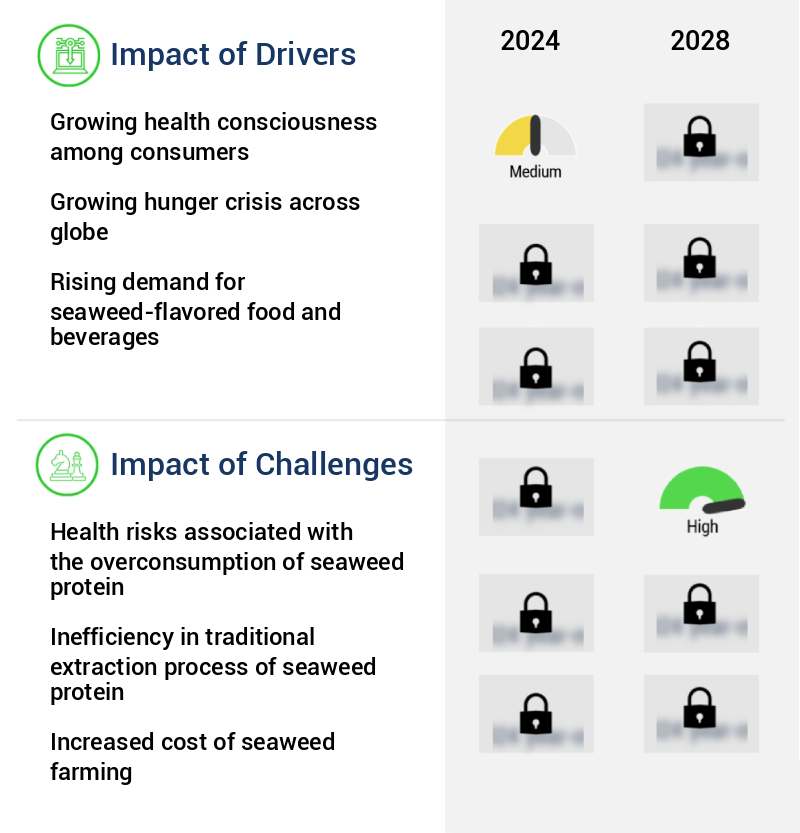
- The increasing health consciousness among consumers serves as the primary catalyst for market growth.
- The demand for plant-based proteins, such as seaweed, is on the rise due to growing health concerns and a shift towards healthier dietar and supplements . With the increasing prevalence of health issues like digestive disorders, diabetes, and obesity, consumers are becoming more health-conscious. Seaweed, a superfood, offers numerous benefits, including providing more energy, reducing aging effects, and aiding in weight loss. As a result, its demand continues to grow. Businesses and industries across various sectors are recognizing this trend and responding accordingly. For instance, the food and beverage industry is introducing new plant-based product lines, while the nutraceutical industry is investing in research and development to create innovative seaweed-based supplements.
- This dynamic market environment underscores the ongoing evolution of consumer preferences and the importance of staying informed about emerging trends. Moreover, seaweed's versatility and nutritional value make it a popular choice for various applications. It can be used in food products, such as snacks and beverages, as well as in cosmetics and pharmaceuticals. This versatility further expands its market potential and highlights its importance in today's health-conscious business landscape. In conclusion, the demand for plant-based proteins, particularly seaweed, is driven by consumers' increasing focus on health and wellness. This trend is evident across various industries, and businesses that can effectively cater to this demand are likely to reap significant benefits.
- By staying informed about the latest market developments and consumer preferences, businesses can position themselves for success in this evolving landscape.
What are the market trends shaping the Seaweed Protein Industry?
- The increasing number of individuals adhering to vegan and vegetarian diets represents a significant market trend.
- A vegan lifestyle, which prioritizes animal rights and environmental concerns, excludes the consumption of animal products. This includes food sources rich in essential nutrients like vitamin B12, iodine, omega-3s, magnesium, and calcium. Seaweed emerges as a promising alternative to animal-derived sources. The global shift towards veganism and vegetarianism has fueled the demand for plant-based alternatives. Seaweed, a rich source of these nutrients, offers a viable option to fish. In the evolving food landscape, seaweed's role as a sustainable and nutrient-dense ingredient is gaining significance.
- Its adoption is on the rise, with numerous applications across various sectors, including food, cosmetics, and pharmaceuticals. This trend underscores the potential of seaweed as a valuable component in the plant-based food industry. The market dynamics continue to unfold, with innovations and advancements shaping the future of this sector.
What challenges does the Seaweed Protein Industry face during its growth?
- The overconsumption of seaweed protein poses significant health risks, which represents a key challenge and potential limitation to the growth of the seaweed industry.
- Seaweed, a rich source of essential nutrients, has gained significant attention in the global food industry due to its numerous health benefits. According to recent market studies, the seaweed market is projected to exhibit continuous growth, with an increasing demand for seaweed-based food products. The market's value is expected to reach new heights, surpassing previous growth records. Seaweed's nutritional profile, which includes high concentrations of protein, fiber, and various vitamins and minerals, makes it a popular choice among consumers seeking healthier food options. Furthermore, its versatility in various culinary applications, from sushi to snacks, has expanded its reach in the food industry.
- However, it's essential to note that excessive consumption of seaweed may pose health risks. High iodine content, a key component of seaweed, can lead to adverse effects, such as thyroid issues, if consumed in large quantities. Additionally, seaweed may contain heavy metal contaminants like arsenic and iodine, which can pose risks for certain individuals. It's crucial for consumers to maintain a balanced diet and consult with healthcare professionals regarding potential interactions with medications. Despite these considerations, the seaweed market's future looks promising, driven by increasing consumer awareness and demand for healthier food options. The market's continuous evolution reflects the industry's ongoing efforts to innovate and cater to the evolving needs of health-conscious consumers.
Exclusive Customer Landscape
The seaweed protein market forecasting report includes the adoption lifecycle of the market, covering from the innovator's stage to the laggard's stage. It focuses on adoption rates in different regions based on penetration. Furthermore, the seaweed protein market report also includes key purchase criteria and drivers of price sensitivity to help companies evaluate and develop their market growth analysis strategies.

Customer Landscape of Seaweed Protein Industry
Competitive Landscape & Market Insights
Companies are implementing various strategies, such as strategic alliances, seaweed protein market forecast, partnerships, mergers and acquisitions, geographical expansion, and product/service launches, to enhance their presence in the industry.
Acadian Seaplants Ltd. - The company specializes in seaweed protein production, marketing its offerings under the brands Acadian Kelp and TITAN. Through innovative processes, it delivers high-quality, sustainable plant-based protein solutions to global markets.
The industry research and growth report includes detailed analyses of the competitive landscape of the market and information about key companies, including:
- Acadian Seaplants Ltd.
- AquaPharm Laboratories
- AtSeaNova
- Cargill Inc.
- Cascadia Seaweed
- Cornish Seaweed Co. Ltd.
- DuluxGroup Australia Pty Ltd.
- Ebb and Flow Seaweed
- gimMe Health Foods Inc.
- J M Huber Corp.
- Kelp Products International Pty Ltd.
- Maine Coast Sea Vegetables Inc.
- Marcel Trading Corp.
- North Atlantic Organics Ltd.
- Ocean Harvest Technology Ltd.
- Oceans Balance
- seagardenstore
- Seakura
- Seatech Bioproducts Corp.
- The Seaweed Co.
Qualitative and quantitative analysis of companies has been conducted to help clients understand the wider business environment as well as the strengths and weaknesses of key industry players. Data is qualitatively analyzed to categorize companies as pure play, category-focused, industry-focused, and diversified; it is quantitatively analyzed to categorize companies as dominant, leading, strong, tentative, and weak.
Recent Development and News in Seaweed Protein Market
- In January 2024, Cargill, a leading international food ingredient company, announced the launch of its new seaweed protein, AlgaVia Whole Red Seaweed Protein, at the Consumer Electronics Show (CES) in Las Vegas (Cargill press release). This plant-based protein, derived from red seaweed, is rich in nutrients and offers a sustainable alternative to traditional animal-derived proteins.
- In March 2024, biotech company, TerraVia Holdings, and food and beverage company, Danone, entered into a strategic partnership to commercialize TerraVia's algae-based ingredients, including its seaweed protein, in various food and beverage applications (Danone press release). This collaboration aimed to expand the reach and market potential of algae-based ingredients, contributing to the growth of the market.
- In May 2024, Israeli biotech company, Maritech, raised USD15 million in a Series C funding round, led by S2G Ventures, to expand its production capacity and commercialization efforts for its seaweed protein, MariProtein (Maritech press release). This investment would enable Maritech to meet the increasing demand for sustainable plant-based proteins and strengthen its position in the market.
- In February 2025, the European Union (EU) approved the use of seaweed protein as a novel food ingredient, allowing its commercialization in EU markets (European Commission press release). This regulatory approval opened up significant opportunities for seaweed protein producers to expand their reach and tap into the large and growing EU market.
Dive into Technavio's robust research methodology, blending expert interviews, extensive data synthesis, and validated models for unparalleled Seaweed Protein Market insights. See full methodology.
|
Market Scope |
|
|
Report Coverage |
Details |
|
Page number |
148 |
|
Base year |
2023 |
|
Historic period |
2018-2022 |
|
Forecast period |
2024-2028 |
|
Growth momentum & CAGR |
Accelerate at a CAGR of 10.1% |
|
Market growth 2024-2028 |
USD 366.63 million |
|
Market structure |
Fragmented |
|
YoY growth 2023-2024(%) |
9.6 |
|
Key countries |
US, Malaysia, Indonesia, Germany, UK, South Korea, France, Canada, Brazil, Thailand, UAE, Mexico, China, Japan, and India |
|
Competitive landscape |
Leading Companies, Market Positioning of Companies, Competitive Strategies, and Industry Risks |
Research Analyst Overview
- The dynamic and evolving the market showcases a surge in innovation and activity, driven by the continuous exploration of seaweed cultivation techniques and consumer acceptance testing. Companies are optimizing packaging to enhance product shelf life stability and improve sensory evaluation methods. Allergic reactions to seaweed proteins are being assessed to expand consumer reach. Foaming properties of seaweed proteins are under investigation for their potential in various industries, from food to cosmetics. Economic feasibility studies and environmental impact assessments are essential components of the market's progress, ensuring sustainable harvesting practices and protein extraction methods. Protein solubility parameters and water holding capacity are crucial factors in processing optimization and biorefinery integration.
- Microbial contamination control and food safety regulations are key considerations for the production of seaweed protein isolates, concentrates, and hydrolysates. Functional protein properties, such as emulsifying capacity and gelation, are being extensively studied for their applications in food and feed industries. Nutritional composition analysis and amino acid profiling contribute to the market's growing understanding of seaweed proteins' unique benefits. Market players are investing in protein concentrate production and processing optimization to address the demand for high-quality, sustainable, and cost-effective seaweed protein solutions. Biorefinery integration and waste stream management are essential aspects of the industry's ongoing efforts to minimize environmental impact and maximize resource efficiency.
- Bioactive peptide identification and functional food applications of seaweed proteins continue to fuel market growth and innovation, offering potential health benefits and expanding market opportunities.
What are the Key Data Covered in this Seaweed Protein Market Research and Growth Report?
-
What is the expected growth of the Seaweed Protein Market between 2024 and 2028?
-
USD 366.63 million, at a CAGR of 10.1%
-
-
What segmentation does the market report cover?
-
The report segmented by Source (Red, Brown, and Green), Method (Conventional and New), Geography (APAC, North America, Europe, South America, and Middle East and Africa), Application (Food and Beverage, Nutraceuticals, Animal Feed, and Cosmetics), and Form (Powder, Liquid, and Flakes)
-
-
Which regions are analyzed in the report?
-
APAC, North America, Europe, South America, and Middle East and Africa
-
-
What are the key growth drivers and market challenges?
-
Growing health consciousness among consumers, Health risks associated with the overconsumption of seaweed protein
-
-
Who are the major players in the Seaweed Protein Market?
-
Key Companies Acadian Seaplants Ltd., AquaPharm Laboratories, AtSeaNova, Cargill Inc., Cascadia Seaweed, Cornish Seaweed Co. Ltd., DuluxGroup Australia Pty Ltd., Ebb and Flow Seaweed, gimMe Health Foods Inc., J M Huber Corp., Kelp Products International Pty Ltd., Maine Coast Sea Vegetables Inc., Marcel Trading Corp., North Atlantic Organics Ltd., Ocean Harvest Technology Ltd., Oceans Balance, seagardenstore, Seakura, Seatech Bioproducts Corp., and The Seaweed Co.
-
Market Research Insights
- The market represents a significant opportunity for the food and beverage industry due to the unique nutritional and functional properties of these plant-based proteins. Seaweed proteins exhibit a favorable amino acid composition, with essential amino acids making up approximately 35-45% of the total amino acids. This is comparable to that of soy and wheat proteins, making seaweed proteins a viable alternative for those with dietary restrictions or preferences. Moreover, seaweed proteins boast impressive antioxidant capacity, with some species containing up to 10 times more antioxidants than blueberries. This not only enhances the nutritional value but also contributes to protein stability during processing.
- Protein fractionation techniques enable the isolation of specific protein fractions, enhancing the functional properties and molecular weight distribution. Despite these advantages, the cost-effective production of seaweed proteins remains a challenge, with protein yield optimization and sustainable processing being key areas of research. For instance, chemical modification and denaturation temperature adjustments can improve protein yield, while color removal techniques and odor removal methods ensure desirable sensory properties. The textural properties of seaweed proteins can be further enhanced through physical modification and polysaccharide removal. Ultimately, the market potential for seaweed proteins is substantial, with ongoing research and development efforts focused on optimizing production, enhancing nutritional value, and expanding applications.
We can help! Our analysts can customize this seaweed protein market research report to meet your requirements.
 RIA -
RIA - 
