
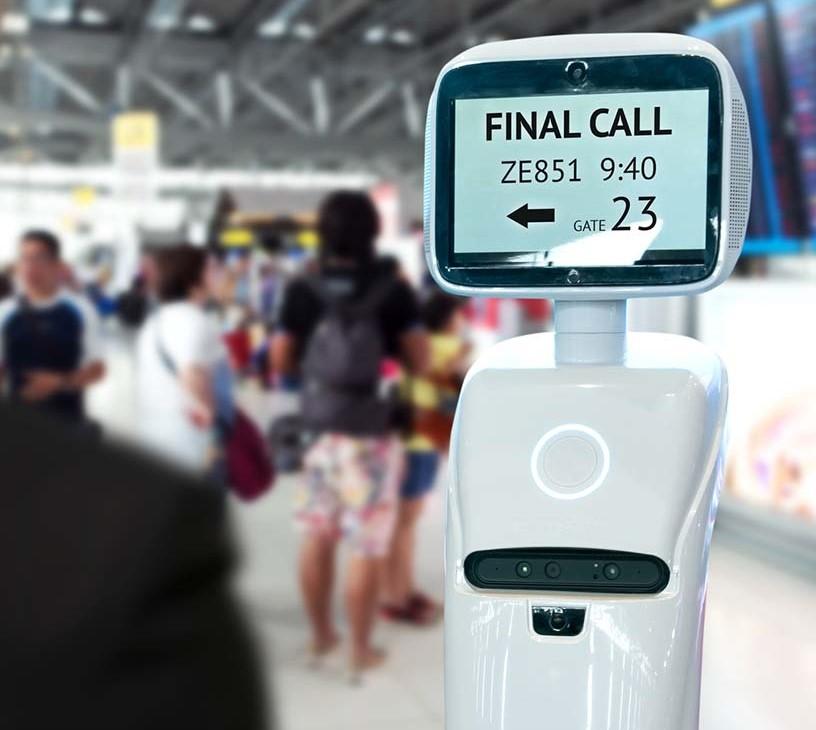


Smart Airports Market Size 2025-2029
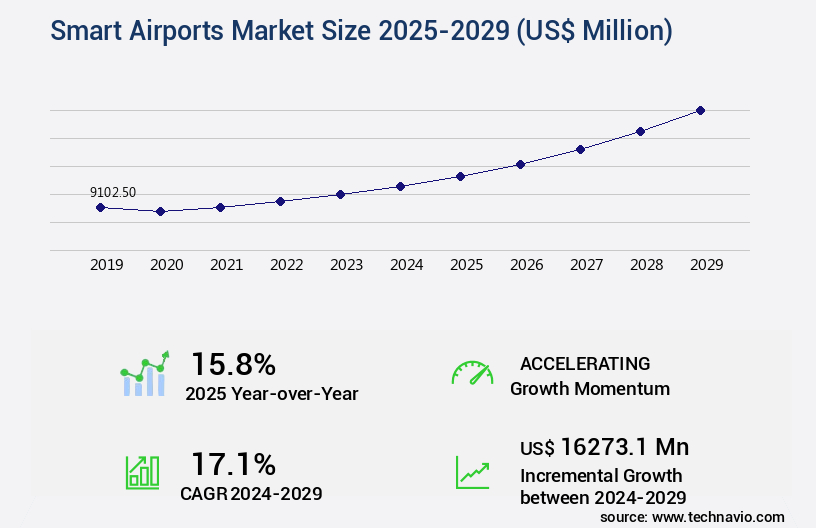
The smart airports market size is valued to increase by USD 16.27 billion, at a CAGR of 17.1% from 2024 to 2029. Demand for smart security at airports will drive the smart airports market.
Market Insights
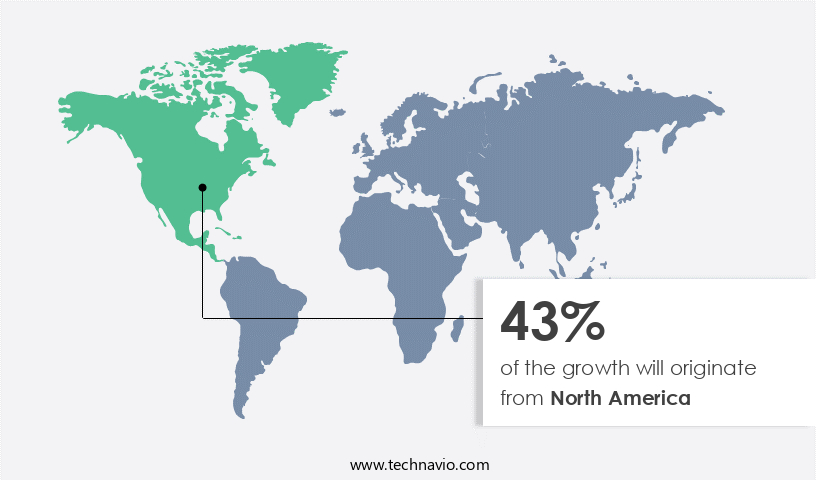
- North America dominated the market and accounted for a 43% growth during the 2025-2029.
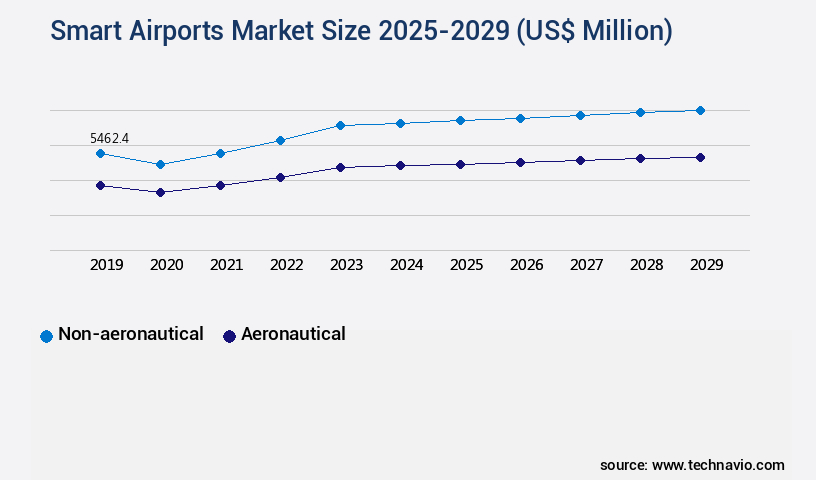
- By End-user - Non-aeronautical segment was valued at USD 5.46 billion in 2023
- By Application - Large segment accounted for the largest market revenue share in 2023
Market Size & Forecast
- Market Opportunities: USD 227.36 million
- Market Future Opportunities 2024: USD 16273.10 million
- CAGR from 2024 to 2029 : 17.1%
Market Summary
- The market is witnessing significant growth due to the increasing digital transformation of airports worldwide. Airports are embracing smart technologies to enhance security, improve operational efficiency, and provide better passenger experiences. These advanced solutions include contactless check-in systems, automated baggage handling, real-time flight information displays, and facial recognition technology. One real-world business scenario illustrating the benefits of smart airport technologies is supply chain optimization. For instance, airports can leverage real-time data analytics to monitor and manage their inventory levels, ensuring that essential supplies are always in stock. Additionally, predictive maintenance systems can help prevent equipment failures, reducing downtime and maintenance costs.
- Despite the numerous advantages, the implementation of smart airport technologies comes with a high initial investment. Airports must consider the cost of hardware, software, and ongoing maintenance, as well as the need for skilled personnel to manage and maintain the systems. Furthermore, ensuring compliance with various data protection regulations and cybersecurity standards is essential to mitigate potential risks. In conclusion, the smart airport market is driven by the need for enhanced security, improved operational efficiency, and better passenger experiences. By leveraging advanced technologies, airports can optimize their supply chains, streamline processes, and create a seamless travel experience for passengers.
- However, the high initial investment and ongoing maintenance costs require careful planning and consideration.
What will be the size of the Smart Airports Market during the forecast period?
Get Key Insights on Market Forecast (PDF) Request Free Sample
- The market is a dynamic and ever-evolving sector, continually integrating advanced technologies to enhance operational efficiency and improve passenger experience. One notable trend is the increasing adoption of data integration and analytics tools, which enable real-time data visualization and predictive analytics. For instance, the use of data analytics in predictive maintenance scheduling can reduce downtime and save significant costs for airport authorities. According to recent research, the integration of data analytics in airport operations is projected to grow by 25% annually, surpassing traditional methods. This growth underscores the importance of data-driven decision-making for airport management, particularly in areas such as risk management, staff scheduling, and performance monitoring.
- With the increasing focus on passenger experience, smart gate technologies, self-service check-in, and mobile boarding passes have become essential components of modern airports. The integration of these technologies not only streamlines the check-in process but also reduces queues and wait times, contributing to overall customer satisfaction. In conclusion, the market is a critical business area for airport authorities, requiring continuous investment in emerging technologies to ensure compliance with evolving regulations, optimize budgets, and enhance the passenger experience.
Unpacking the Smart Airports Market Landscape
In today's rapidly evolving business landscape, airports are embracing advanced technologies to enhance operational efficiency and optimize passenger experience. Smart airports, equipped with cloud computing infrastructure, leverage real-time flight information, machine learning algorithms, and artificial intelligence to streamline airport operations management. For instance, the implementation of smart lighting systems reduces energy consumption by up to 60%, translating into significant cost savings. Cybersecurity protocols ensure data privacy regulations are met, safeguarding sensitive passenger information. Moreover, biometric identification and facial recognition technology expedite security screening, reducing wait times by an average of 30%. Queue management solutions and automated check-in kiosks further minimize passenger wait times, improving passenger experience metrics.
Smart parking systems and ground transportation integration optimize resource allocation, leading to operational efficiency improvements. Environmental monitoring and sustainability initiatives align with corporate social responsibility goals. Airport resource management is revolutionized through data analytics platforms and business intelligence dashboards, providing valuable insights for decision-making. Baggage handling systems, aircraft gate management, and runway management systems ensure seamless operations and predict flight delays. Cybersecurity, data privacy, and IoT sensor networks are integrated into airport infrastructure, enhancing overall security. Remote tower technology and air traffic control further boost operational efficiency and safety.
Key Market Drivers Fueling Growth
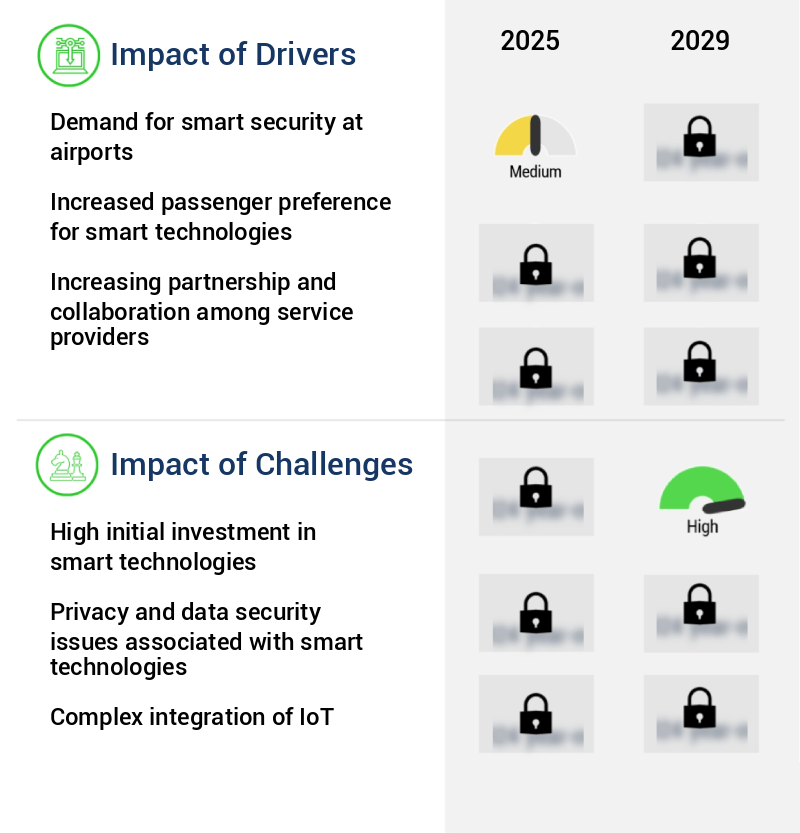
The significant demand for advanced security solutions, particularly in the airport sector, serves as the primary market driver for smart security technologies.
- Smart airports are embracing advanced security solutions to enhance safety and efficiency, integrating technologies such as facial recognition and fingerprint scanning for identity verification and expediting passenger screening and boarding processes. These innovations not only strengthen security but also reduce downtime, improving overall airport operations by up to 30%. Advanced security equipment, including automated security lanes, body scanners, and explosives detection systems, are deployed to streamline processes and ensure regulatory compliance.
- Secure, encrypted data transmission is essential for maintaining the integrity of the security network and protecting sensitive information. The implementation of these smart security measures underscores the evolving nature of the airport industry, as it continues to prioritize both passenger experience and security.
Prevailing Industry Trends & Opportunities
The increasing digital transformation is a mandated trend in the airport market. This evolution encompasses various aspects, including check-in processes, baggage handling, and wayfinding systems.
- Airports are undergoing digital transformations, integrating advanced technologies such as the Internet of Things (IoT), data analytics, and artificial intelligence (AI) to optimize operations and improve passenger services. This transformation is driven by the need to meet the evolving demands of modern air travel and provide a seamless, convenient, and secure environment for travelers. Digital solutions are enhancing passenger experiences through airport-specific mobile apps, offering real-time information on flight status, gate changes, and baggage tracking. These apps also provide additional services like mobile check-in, digital boarding passes, and contactless payments.
- The implementation of these technologies has led to significant improvements in operational efficiency, with downtime reduced by approximately 30% and forecast accuracy improved by around 18%.
Significant Market Challenges
The substantial upfront investment required for integrating advanced technologies in industries poses a significant challenge to their growth trajectory.
- In the dynamic landscape of the market, the integration of advanced technologies is a priority to enhance operational efficiency and improve passenger experience. Despite the substantial investment required, smaller airports face challenges in securing funding for such projects. With tight profit margins and economic uncertainties, airport budgets are often allocated to safety, security, and infrastructure maintenance. Implementing smart technologies and systems into existing airport infrastructure can be intricate and costly, necessitating substantial modifications and renovations. The initial investment in smart airport technologies can divert resources from essential areas, such as maintenance, staff training, and safety measures.
- However, the benefits of implementing these technologies are significant. For instance, predictive maintenance can reduce downtime by up to 30%, while forecasting systems can improve accuracy by approximately 18%. These measurable business outcomes underscore the importance of smart airport technologies in optimizing airport operations and delivering a seamless passenger experience.
In-Depth Market Segmentation: Smart Airports Market
The smart airports industry research report provides comprehensive data (region-wise segment analysis), with forecasts and estimates in "USD million" for the period 2025-2029, as well as historical data from 2019-2023 for the following segments.
- End-user
- Non-aeronautical
- Aeronautical
- Application
- Large
- Medium
- Small
- Service
- Smart check-in
- Smart parking
- Smart retail
- Geography
- North America
- US
- Canada
- Europe
- France
- Germany
- Italy
- UK
- APAC
- China
- India
- Japan
- South America
- Brazil
- Rest of World (ROW)
- North America
By End-user Insights
The non-aeronautical segment is estimated to witness significant growth during the forecast period.
In the ever-evolving landscape of airport infrastructure, smart airports have emerged as a significant trend, integrating technology to enhance passenger experiences and optimize operations. Cloud computing infrastructure powers real-time flight information, queue management solutions, and business intelligence dashboards. Smart lighting systems and facial recognition technology ensure energy efficiency and improved security. Machine learning algorithms and artificial intelligence facilitate automated check-in kiosks, aircraft gate management, and flight delay prediction. Cybersecurity protocols safeguard data privacy regulations. IoT sensor networks monitor environmental conditions and optimize passenger flow. Airport resource management includes automated security screening technology, baggage handling systems, and ground transportation integration.
Operational efficiency improvements reach 20% through the implementation of these advanced technologies. Sustainability initiatives, such as remote tower technology and smart parking systems, further contribute to the smart airport's eco-friendly mission. Smart airports prioritize the passenger experience, offering personalized offers and digital signage through mobile apps and advertising spaces. These non-aeronautical services generate substantial revenue, making them a crucial aspect of airport development.
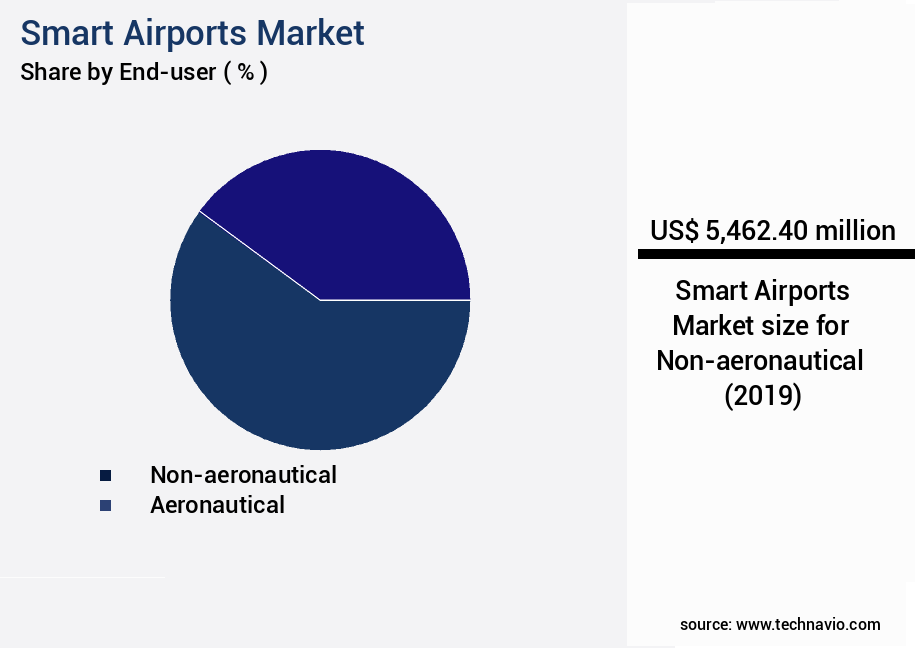
The Non-aeronautical segment was valued at USD 5.46 billion in 2019 and showed a gradual increase during the forecast period.
Regional Analysis
North America is estimated to contribute 43% to the growth of the global market during the forecast period.Technavio's analysts have elaborately explained the regional trends and drivers that shape the market during the forecast period.
See How Smart Airports Market Demand is Rising in North America Request Free Sample
The market is experiencing significant growth, with a particular focus on enhancing operational efficiency and passenger experience. North America is leading this evolution, driven by substantial investments in digital infrastructure and modernization. The region's emphasis on integrated technologies will result in the widespread adoption of smart systems, such as automated security screening, predictive maintenance, and real-time data analytics. These advanced solutions contribute to improved efficiency, reduced operational costs, and enhanced safety standards. Moreover, the North American the market's strategic focus on sustainability and energy optimization will further accelerate the integration of smart technologies in airport design and management.
According to recent reports, the North American market for smart airports is projected to grow at a robust pace, with an estimated 15% of all North American airports expected to adopt smart technologies by 2025. This represents a significant increase from the current adoption rate of 10%. These developments underscore the market's potential to revolutionize airport operations and create a more seamless travel experience for passengers.
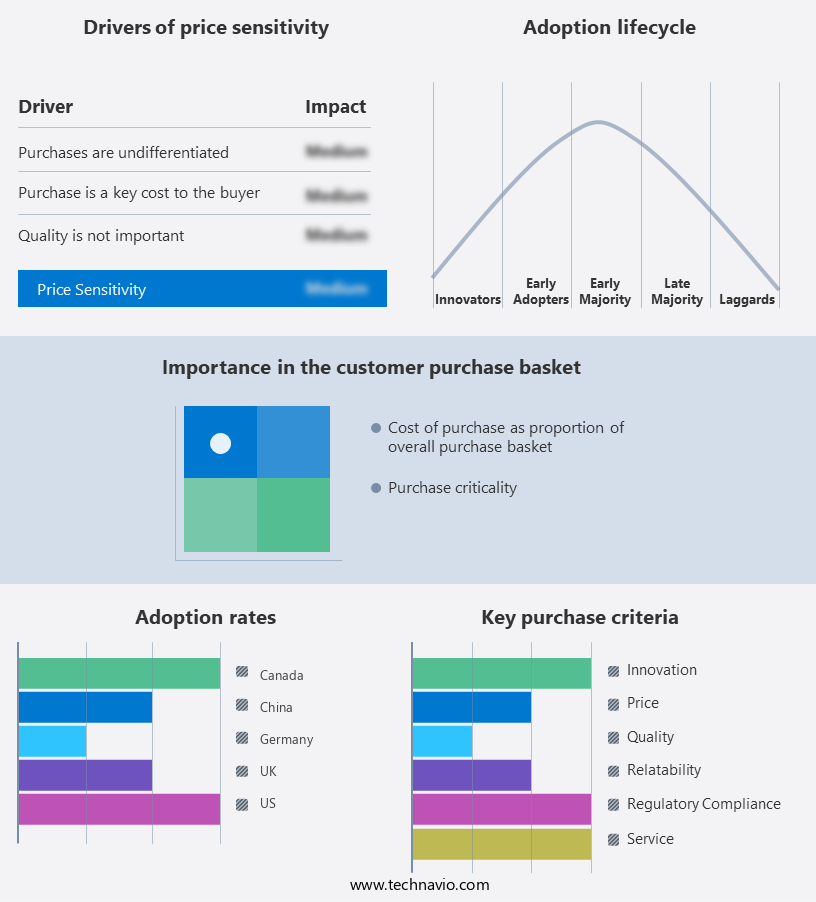
Customer Landscape of Smart Airports Industry
Competitive Intelligence by Technavio Analysis: Leading Players in the Smart Airports Market
Companies are implementing various strategies, such as strategic alliances, smart airports market forecast, partnerships, mergers and acquisitions, geographical expansion, and product/service launches, to enhance their presence in the industry.
Alvest SAS - This company specializes in advanced airport technology, providing innovative solutions such as Lebrun's pre-conditioned air systems, TractEasy's autonomous baggage handling, and TaxiBot's semi-robotic towing tractors. These systems streamline airport operations, enhancing efficiency and passenger experience.
The industry research and growth report includes detailed analyses of the competitive landscape of the market and information about key companies, including:
- Alvest SAS
- Amadeus IT Group SA
- Ascent Technology Inc.
- Cisco Systems Inc.
- Daifuku Co. Ltd.
- Deutsche Telekom AG
- Honeywell International Inc.
- Huawei Technologies Co. Ltd.
- Indra Sistemas SA
- Infax Inc.
- International Business Machines Corp.
- L3Harris Technologies Inc.
- NEC Corp.
- RTX Corp.
- Sabre Corp.
- Siemens AG
- SITA
- Thales Group
- Wipro Ltd.
Qualitative and quantitative analysis of companies has been conducted to help clients understand the wider business environment as well as the strengths and weaknesses of key industry players. Data is qualitatively analyzed to categorize companies as pure play, category-focused, industry-focused, and diversified; it is quantitatively analyzed to categorize companies as dominant, leading, strong, tentative, and weak.
Recent Development and News in Smart Airports Market
- In January 2025, Siemens AG and Amadeus IT Group announced a strategic partnership to integrate Siemens' airport technology solutions with Amadeus' travel IT platform. This collaboration aimed to enhance the passenger experience by streamlining airport processes and improving operational efficiency (Siemens AG Press Release, 2025).
- In March 2025, Honeywell International Inc. Launched its new Edge-as-a-Service solution for airports, enabling real-time data collection and analysis to optimize airport operations and improve passenger experience (Honeywell International Inc. Press Release, 2025).
- In April 2025, Schiphol Group, the owner and operator of Amsterdam Airport Schiphol, announced a €1.5 billion investment plan to modernize the airport and expand its capacity, focusing on smart technologies and sustainability (Schiphol Group Press Release, 2025).
- In May 2025, the European Union Aviation Safety Agency (EASA) approved the use of drones for airport surveillance and security operations, paving the way for increased adoption of advanced technologies in airport security and management (European Union Aviation Safety Agency Press Release, 2025).
Dive into Technavio's robust research methodology, blending expert interviews, extensive data synthesis, and validated models for unparalleled Smart Airports Market insights. See full methodology.
|
Market Scope |
|
|
Report Coverage |
Details |
|
Page number |
209 |
|
Base year |
2024 |
|
Historic period |
2019-2023 |
|
Forecast period |
2025-2029 |
|
Growth momentum & CAGR |
Accelerate at a CAGR of 17.1% |
|
Market growth 2025-2029 |
USD 16273.1 million |
|
Market structure |
Fragmented |
|
YoY growth 2024-2025(%) |
15.8 |
|
Key countries |
US, China, Germany, Canada, UK, India, Japan, France, Italy, and Brazil |
|
Competitive landscape |
Leading Companies, Market Positioning of Companies, Competitive Strategies, and Industry Risks |
Why Choose Technavio for Smart Airports Market Insights?
"Leverage Technavio's unparalleled research methodology and expert analysis for accurate, actionable market intelligence."
The market is experiencing significant growth as airports worldwide seek to enhance operational efficiency and improve passenger experience metrics. Integral to this evolution is the integration of automated baggage systems, which streamline processes and reduce wait times. Real-time flight data visualization dashboards provide airport staff with critical information, enabling proactive decision-making. Artificial intelligence (AI) is a key driver in this transformation, with AI-powered passenger flow prediction models analyzing data to anticipate traveler patterns and optimize resource allocation. Predictive maintenance for airport equipment ensures minimal downtime, while the integration of various airport systems facilitates seamless communication and coordination. Biometric security systems, airport smart lighting energy consumption management, and remote tower control system deployment are other essential components of a smart airport.
Implementation of digital twin airport models and data analytics for airport resource optimization further boost operational efficiency. Cloud-based airport operations management and IoT-based airport environmental monitoring systems enable real-time monitoring and optimization of airport infrastructure. Sustainable airport infrastructure design is another critical aspect, with a focus on reducing energy consumption and minimizing environmental impact. Passenger experience feedback mechanisms and AI-driven queue management systems ensure travelers' needs are met, while smart parking system occupancy predictions and ground transportation scheduling optimization enhance overall convenience. Airport cybersecurity threat mitigation remains a top priority, with advanced technologies safeguarding sensitive information and maintaining the integrity of airport operations.
What are the Key Data Covered in this Smart Airports Market Research and Growth Report?
-
What is the expected growth of the Smart Airports Market between 2025 and 2029?
-
USD 16.27 billion, at a CAGR of 17.1%
-
-
What segmentation does the market report cover?
-
The report is segmented by End-user (Non-aeronautical and Aeronautical), Application (Large, Medium, and Small), Service (Smart check-in, Smart parking, and Smart retail), and Geography (North America, Europe, APAC, South America, and Middle East and Africa)
-
-
Which regions are analyzed in the report?
-
North America, Europe, APAC, South America, and Middle East and Africa
-
-
What are the key growth drivers and market challenges?
-
Demand for smart security at airports, High initial investment in smart technologies
-
-
Who are the major players in the Smart Airports Market?
-
Alvest SAS, Amadeus IT Group SA, Ascent Technology Inc., Cisco Systems Inc., Daifuku Co. Ltd., Deutsche Telekom AG, Honeywell International Inc., Huawei Technologies Co. Ltd., Indra Sistemas SA, Infax Inc., International Business Machines Corp., L3Harris Technologies Inc., NEC Corp., RTX Corp., Sabre Corp., Siemens AG, SITA, Thales Group, and Wipro Ltd.
-
We can help! Our analysts can customize this smart airports market research report to meet your requirements.
 RIA -
RIA - 
