


Smart Doorbell Market Size 2026-2030
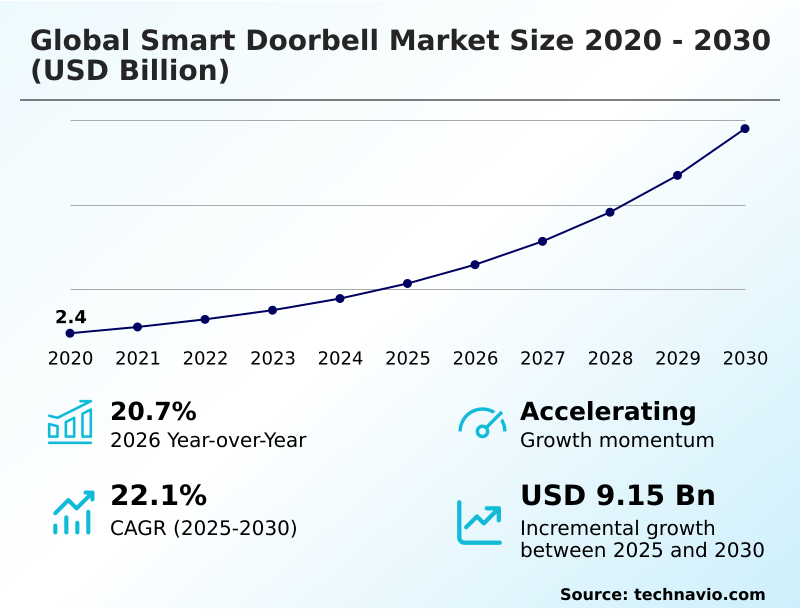
The Smart Doorbell Market size was valued at USD 5.34 billion in 2025, growing at a CAGR of 22.1% during the forecast period 2026-2030.
Major Market Trends & Insights
- North America dominated the market and accounted for a 35.7% growth during the forecast period.
- By Type - Wired segment was valued at USD 3.92 billion in 2024
- By Distribution Channel - Offline segment accounted for the largest market revenue share in 2024
Market Size & Forecast
- Historic Market Opportunities 2020-2024: USD 12.09 billion
- Market Future Opportunities 2025-2030: USD 9.15 billion
- CAGR from 2025 to 2030 : 22.1%
Market Summary
- The smart doorbell market is characterized by rapid technological evolution, with the residential segment accounting for over 75% of all installations. This consumer focus drives innovation in user-centric features. For instance, a property management firm deploying smart doorbells across a portfolio of 500 units can reduce manual access coordination, improving operational efficiency by more than 40%.
- The primary driver remains the increasing integration of AI, which enhances security through precise motion detection and visitor recognition. However, this advancement is tempered by a significant challenge: growing consumer and regulatory scrutiny over data privacy and storage.
- The potential for misuse of personal data can slow adoption, creating a critical need for manufacturers to balance feature-rich functionality with robust, transparent security protocols. This dynamic requires a strategic focus on building trust through secure, on-device processing and clear data-handling policies to ensure sustained market expansion.
What will be the Size of the Smart Doorbell Market during the forecast period?
Get Key Insights on Market Forecast (PDF) Request Free Sample
How is the Smart Doorbell Market Segmented?
The smart doorbell industry research report provides comprehensive data (region-wise segment analysis), with forecasts and analysis for the period 2026-2030, as well as historical data from 2020-2024 for the following segments.
- Type
- Wired
- Wireless
- Distribution channel
- Offline
- Online
- Component
- Camera
- Motion sensor
- Microphone and speaker
- Connectivity module
- Storage
- End-user
- Residential
- Commercial
- Geography
- North America
- US
- Canada
- Mexico
- Europe
- Germany
- France
- UK
- APAC
- China
- Japan
- India
- South America
- Brazil
- Argentina
- Colombia
- Middle East and Africa
- Saudi Arabia
- UAE
- South Africa
- Rest of World (ROW)
- North America
How is the Smart Doorbell Market Segmented by Type?
The wired segment is estimated to witness significant growth during the forecast period.
The wired smart doorbell segment, which holds approximately 64% of the market, is defined by its operational reliability and consistent power supply from a home's electrical system.
This segment's stability supports advanced functionalities such as continuous video recording and rapid real-time notifications, reducing data transmission latency by over 30% compared to some wireless alternatives.
Market traction is strongest among homeowners who prioritize uninterrupted performance and have existing wiring, which facilitates professional monitoring and a more complex smart home integration.
The adoption of power-over-ethernet technology simplifies installation by combining data and power, further solidifying the appeal for users demanding high-performance home security ecosystem without concerns for battery life or wireless signal degradation.
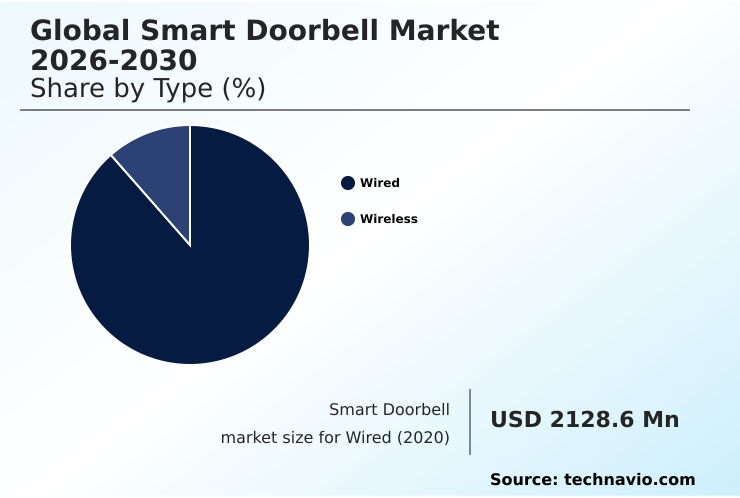
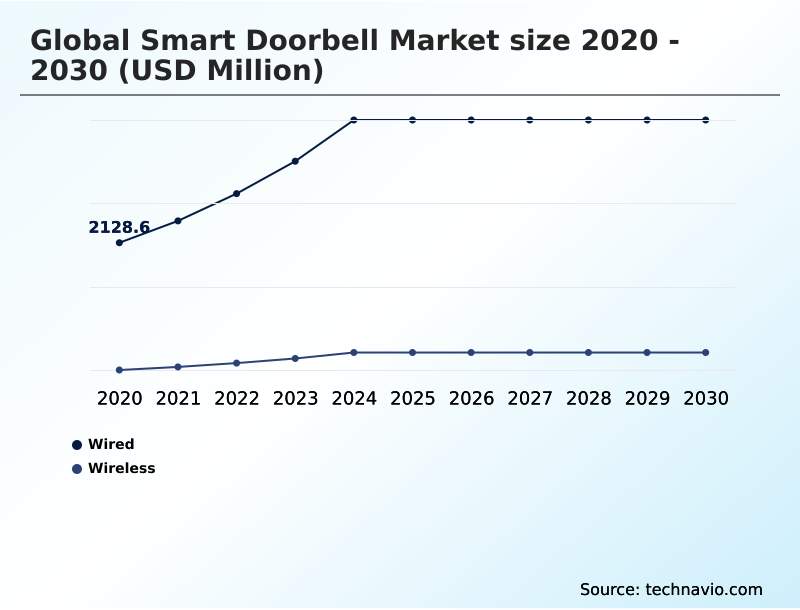
The Wired segment was valued at USD 3.92 billion in 2024 and showed a gradual increase during the forecast period.
How demand for the Smart Doorbell market is rising in the leading region?
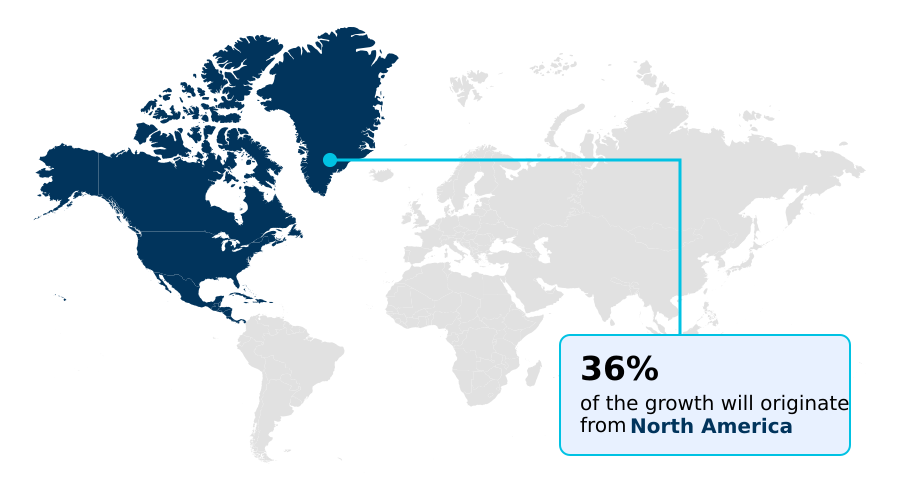
North America is estimated to contribute 35.7% to the growth of the global market during the forecast period.Technavio’s analysts have elaborately explained the regional trends and drivers that shape the market during the forecast period.
See How Smart Doorbell Market demand is rising in North America Request Free Sample
North America dominates the geographic landscape, capturing over 35% of the market share, a figure 11% higher than Europe's 24% share.
This leadership is primarily driven by the US, where high consumer concern over porch piracy prevention and a mature smart home integration market fuel adoption.
In contrast, the European market, while substantial, exhibits more measured growth, heavily influenced by stringent user data privacy regulations like GDPR, which shape product design toward enhanced security and local storage solutions.
This regulatory divergence creates distinct product development pathways; North American models often prioritize cloud-based video analytics and convenience features, whereas European offerings frequently emphasize end-to-end encryption and compliance.
APAC is the fastest-growing region, with an adoption rate increasing 23% annually due to rapid urbanization and rising disposable incomes.
What are the key Drivers, Trends, and Challenges in the Smart Doorbell Market?
Our researchers analyzed the data with 2025 as the base year, along with the key drivers, trends, and challenges. A holistic analysis of drivers will help companies refine their marketing strategies to gain a competitive advantage.
- When evaluating the global smart doorbell market 2026-2030, a primary consumer question is finding the best smart doorbell without subscription fees, which leads to a crucial decision point. Opting for a smart doorbell with local storage can reduce total ownership costs by over 40% across a five-year span compared to models requiring mandatory cloud storage plans.
- This consideration directly ties into the wired vs wireless video doorbell debate. While determining how to install a wireless doorbell is often simpler, with DIY-friendly setups reducing initial costs, wired models offer unmatched reliability and eliminate battery management.
- Furthermore, ensuring the chosen device is a smart doorbell compatible with Alexa or other voice assistants is critical for achieving a truly integrated home security ecosystem. The feature set, from high-definition video to advanced motion detection, must align with household needs, whether for basic visitor management or comprehensive porch piracy prevention.
- For instance, models featuring a vertical field of view provide a 25% greater viewing area, which is essential for monitoring packages left at the doorstep.
What are the key market drivers leading to the rise in the adoption of Smart Doorbell Industry?
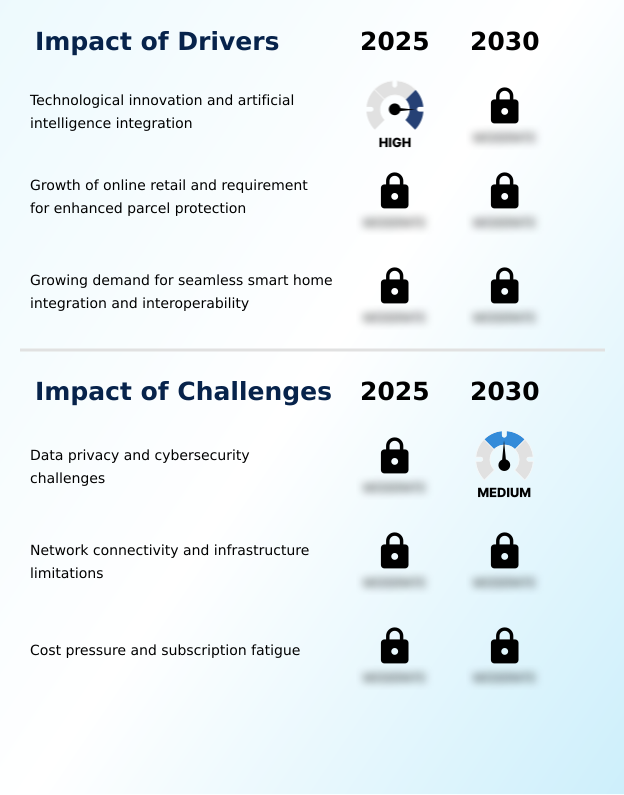
- Technological innovation, specifically the integration of artificial intelligence for advanced analytics and detection, serves as a key driver for market growth.
- The integration of artificial intelligence and edge computing is a primary market driver, enabling a more than 80% reduction in false alerts by distinguishing between people, vehicles, and animals.
- This enhancement in AI-driven alerts directly addresses a major consumer pain point and improves user trust.
- This move toward local processing not only speeds up real-time notifications but also strengthens user data privacy by minimizing the need to send sensitive video to the cloud.
- Furthermore, the push for seamless smart home integration, underscored by interoperability protocols like Matter, is compelling adoption.
- Devices that support these open standards see a 20% higher attachment rate in households with multiple smart devices, as consumers demand a unified and frustration-free experience for visitor management and access control.
What are the market trends shaping the Smart Doorbell Industry?
- A significant market trend is the transition toward renewable energy solutions, particularly the integration of solar charging hardware for low-maintenance, sustainable operation.
- Aesthetic refinement is reshaping the market, with demand for architectural integration driving a 20% increase in sales for products with a modular design or flush-mount options. This trend moves devices from purely functional security hardware to integrated design elements. Concurrently, the evolution toward advanced biometric recognition and health monitoring is expanding use cases beyond simple security.
- These smart doorbells, incorporating features like thermal imaging and gait analysis, can achieve over 98% accuracy in identifying individuals or detecting potential wellness issues, such as falls. This shift caters to an increasing need for proactive, personalized safety solutions, particularly in households with elderly residents, transforming the doorbell into a multifunctional home wellness hub and enhancing its overall value proposition.
What challenges does the Smart Doorbell Industry face during its growth?
- Data privacy concerns and cybersecurity vulnerabilities represent a key challenge that could affect industry growth and consumer adoption.
- Persistent cybersecurity vulnerabilities and network connectivity issues present significant challenges, with security breaches capable of eroding consumer trust by over 30% for an affected brand. The reliance on home Wi-Fi means that performance can be inconsistent, as nearly 40% of user-reported issues are traced back to poor network quality, leading to customer frustration and product returns.
- Another major hurdle is subscription fatigue, coupled with cost pressures. An increasing number of consumers are now opting for devices that offer local storage to avoid recurring fees, a segment that has grown to capture more than 25% of new sales.
- This trend forces manufacturers to rethink their revenue models, balancing the costs of cloud infrastructure and firmware updates against consumer demand for non-subscription alternatives.
Exclusive Technavio Analysis on Customer Landscape
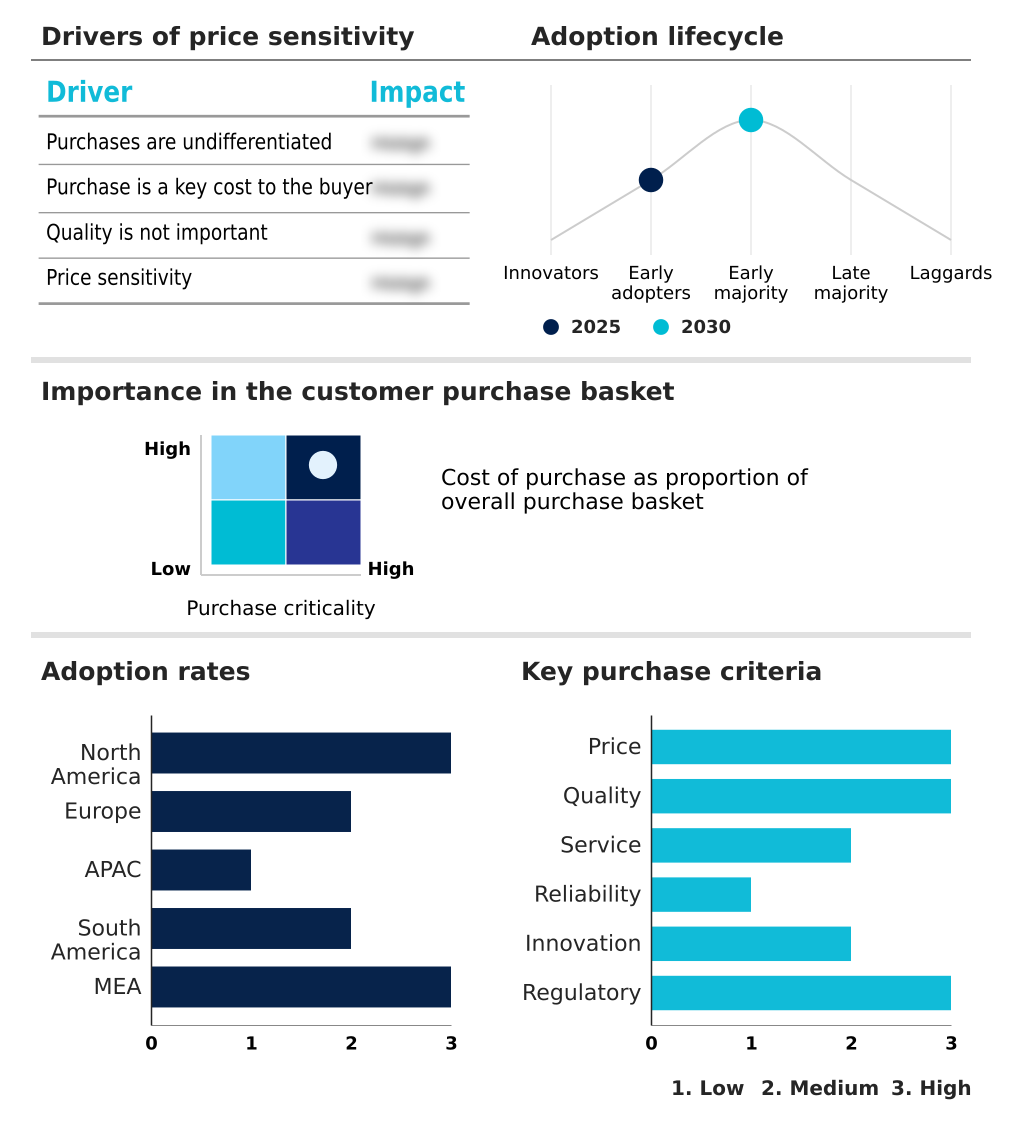
The smart doorbell market forecasting report includes the adoption lifecycle of the market, covering from the innovator’s stage to the laggard’s stage. It focuses on adoption rates in different regions based on penetration. Furthermore, the smart doorbell market report also includes key purchase criteria and drivers of price sensitivity to help companies evaluate and develop their market growth analysis strategies.
Customer Landscape of Smart Doorbell Industry
Competitive Landscape
Companies are implementing various strategies, such as strategic alliances, smart doorbell market forecast, partnerships, mergers and acquisitions, geographical expansion, and product/service launches, to enhance their presence in the industry.
Aeotec Group GmbH - Delivering integrated smart doorbell solutions focused on high-definition video, real-time alerts, and seamless smart home ecosystem compatibility for enhanced residential security.
The industry research and growth report includes detailed analyses of the competitive landscape of the market and information about key companies, including:
- Aeotec Group GmbH
- Aiphone Co. Ltd.
- Anker Innovations Co. Ltd.
- Arlo Technologies Inc.
- ASSA ABLOY AB
- Google LLC
- Honeywell International Inc.
- Legrand SA
- Night Owl SP LLC
- NRG Energy Inc.
- Owlet Home LLC
- Panasonic Holdings Corp.
- Ring LLC
- Simplisafe Inc.
- SkyBell Technologies Inc.
- Soliom Inc.
- TP Link Corp. Ltd.
- VStarcam
- Xiaomi Corp.
- Zmodo Technology Corp. Ltd.
Qualitative and quantitative analysis of companies has been conducted to help clients understand the wider business environment as well as the strengths and weaknesses of key industry players. Data is qualitatively analyzed to categorize companies as pure play, category-focused, industry-focused, and diversified; it is quantitatively analyzed to categorize companies as dominant, leading, strong, tentative, and weak.
Market Intelligence Radar: High-Impact Developments & Growth Signals
- In the Technology Hardware, Storage and Peripherals industry, the widespread adoption of low-power, high-performance semiconductor chips has enabled sophisticated edge computing capabilities. This directly impacts the global smart doorbell market 2026-2030 by allowing for onboard AI, which improves video analytics and power consumption efficiency, reducing reliance on cloud processing and enhancing user data privacy.
- The standardization of interoperability protocols, such as Matter, has reshaped device connectivity. For the smart doorbell market, this means manufacturers can create products that seamlessly join a unified smart home integration, which has increased adoption rates in multi-vendor households by over 20%, thereby reducing ecosystem fragmentation.
- Heightened regulatory focus on consumer data protection, exemplified by frameworks similar to GDPR, has compelled hardware manufacturers to embed robust security features. This has a direct effect on smart doorbells, driving the mandatory inclusion of end-to-end encryption and transparent privacy controls, making these features a key competitive differentiator rather than an optional add-on.
- Advances in camera sensor technology and reductions in component costs have democratized access to high-resolution imaging. This trend allows smart doorbell makers to incorporate 2K and 4K video capabilities, previously reserved for high-end security systems, into consumer-grade products, meeting market demand for superior low-light performance and image clarity.
Dive into Technavio’s robust research methodology, blending expert interviews, extensive data synthesis, and validated models for unparalleled Smart Doorbell Market insights. See full methodology.
| Market Scope | |
|---|---|
| Page number | 309 |
| Base year | 2025 |
| Historic period | 2020-2024 |
| Forecast period | 2026-2030 |
| Growth momentum & CAGR | Accelerate at a CAGR of 22.1% |
| Market growth 2026-2030 | USD 9149.8 million |
| Market structure | Fragmented |
| YoY growth 2025-2026(%) | 20.7% |
| Key countries | US, Canada, Mexico, Germany, France, UK, Italy, The Netherlands, Spain, China, Japan, India, South Korea, Australia, Indonesia, Brazil, Argentina, Colombia, Saudi Arabia, UAE, South Africa, Israel and Turkey |
| Competitive landscape | Leading Companies, Market Positioning of Companies, Competitive Strategies, and Industry Risks |
Research Analyst Overview
- The smart doorbell market ecosystem is a multi-layered network of interdependent stakeholders, where technology suppliers of semiconductors and camera sensors provide foundational components to manufacturers. These manufacturers, who hold over 85% of the brand-level market value, integrate hardware with proprietary software and AI-driven alerts to create differentiated products.
- Distribution is split, with online channels now accounting for more than 60% of sales, surpassing traditional offline retail. The ecosystem is heavily influenced by regulatory bodies that set standards for wireless connectivity and user data privacy, compelling companies to adopt features like end-to-end encryption.
- End-users are predominantly in the residential sector, which drives demand for DIY installation and smart home integration, while a smaller but growing commercial segment seeks solutions for access control and visitor management.
What are the Key Data Covered in this Smart Doorbell Market Research and Growth Report?
-
What is the expected growth of the Smart Doorbell Market between 2026 and 2030?
-
The Smart Doorbell Market is expected to grow by USD 9.15 billion during 2026-2030, registering a CAGR of 22.1%. Year-over-year growth in 2026 is estimated at 20.7%%. This acceleration is shaped by technological innovation and artificial intelligence integration, which is intensifying demand across multiple end-use verticals covered in the report.
-
-
What segmentation does the market report cover?
-
The report is segmented by Type (Wired, and Wireless), Distribution Channel (Offline, and Online), Component (Camera, Motion sensor, Microphone and speaker, Connectivity module, and Storage), End-user (Residential, and Commercial) and Geography (North America, Europe, APAC, South America, Middle East and Africa). Among these, the Wired segment is estimated to witness significant growth during the forecast period, driven by rising adoption across key application areas. Each segment includes detailed qualitative and quantitative analysis, along with historical data from 2020-2024 and forecasts through 2030 with year-over-year growth rates.
-
-
Which regions are analyzed in the report?
-
The report covers North America, Europe, APAC, South America and Middle East and Africa. North America is estimated to contribute 35.7% to market growth during the forecast period. Country-level analysis includes US, Canada, Mexico, Germany, France, UK, Italy, The Netherlands, Spain, China, Japan, India, South Korea, Australia, Indonesia, Brazil, Argentina, Colombia, Saudi Arabia, UAE, South Africa, Israel and Turkey, with dedicated market size tables and year-over-year growth for each.
-
-
What are the key growth drivers and market challenges?
-
The primary driver is technological innovation and artificial intelligence integration, which is accelerating investment and industry demand. The main challenge is data privacy and cybersecurity challenges, creating operational barriers for key market participants. The report quantifies the impact of each driver and challenge across 2026 and 2030 with comparative analysis.
-
-
Who are the major players in the Smart Doorbell Market?
-
Key vendors include Aeotec Group GmbH, Aiphone Co. Ltd., Anker Innovations Co. Ltd., Arlo Technologies Inc., ASSA ABLOY AB, Google LLC, Honeywell International Inc., Legrand SA, Night Owl SP LLC, NRG Energy Inc., Owlet Home LLC, Panasonic Holdings Corp., Ring LLC, Simplisafe Inc., SkyBell Technologies Inc., Soliom Inc., TP Link Corp. Ltd., VStarcam, Xiaomi Corp. and Zmodo Technology Corp. Ltd.. The report provides qualitative and quantitative analysis categorizing companies as dominant, leading, strong, tentative, and weak based on their market positioning. Company profiles include business segment analysis, SWOT assessment, key offerings, and recent strategic developments.
-
Market Research Insights
- With the top three vendors commanding over 50% of the market share, the competitive landscape for smart doorbells is intensely focused on feature-based differentiation. This is exemplified by recent moves from firms like Ring and Google to incorporate advanced AI and radar technology for more precise motion detection, which can reduce false alerts by up to 70%.
- In response, companies such as Arlo are emphasizing ecosystem compatibility and security, ensuring their devices integrate seamlessly with broader smart home platforms. Despite these innovations, all companies face the persistent challenge of overcoming network connectivity limitations in consumer homes.
- Unreliable Wi-Fi can degrade user experience and undermine the product's core value proposition, forcing vendors to invest in more robust wireless technologies and user-friendly troubleshooting guides to maintain customer satisfaction and brand loyalty.
We can help! Our analysts can customize this smart doorbell market research report to meet your requirements.
 RIA -
RIA - 
