


Smart Office Solutions Market Size 2025-2029
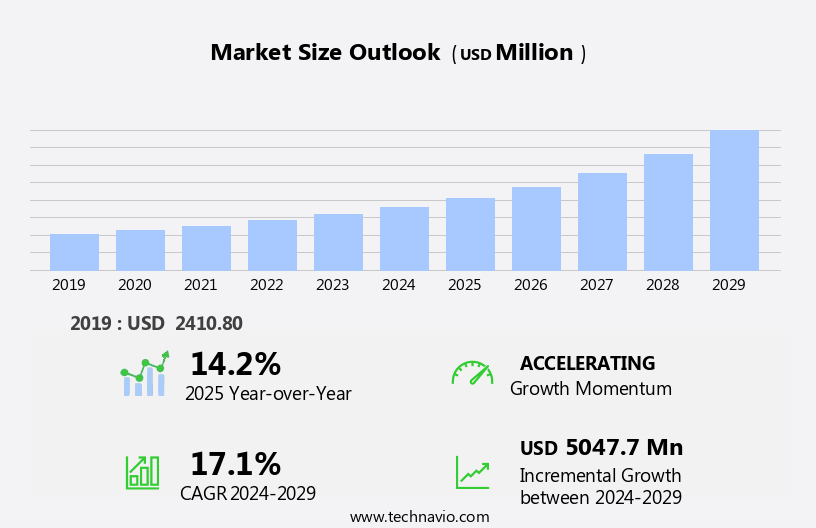
The smart office solutions market size is forecast to increase by USD 5.05 billion, at a CAGR of 17.1% between 2024 and 2029.
- The market is experiencing significant growth, driven by the increasing number of startups innovating in this space and the integration of advanced technologies such as artificial intelligence (AI) and machine learning algorithms. These technologies enable smart offices to optimize energy usage, improve occupant comfort, and enhance productivity. However, the high upfront costs associated with implementing smart office solutions remain a challenge for many organizations, particularly smaller businesses and those with limited budgets. Despite this obstacle, the market's potential for cost savings and operational efficiencies makes it an attractive investment for forward-thinking companies seeking to stay competitive in today's business landscape.
- The integration of AI and machine learning algorithms is expected to be a key trend in the market, as these technologies enable smart offices to learn and adapt to the unique needs of their occupants and environments. Overall, the market offers significant opportunities for growth and innovation, but companies must carefully consider the upfront costs and explore financing options or partnerships to make these investments more feasible.
What will be the Size of the Smart Office Solutions Market during the forecast period?
The market continues to evolve, with dynamic applications across various sectors. Acoustic design, cybersecurity solutions, user experience design, natural language processing, data security, and interactive whiteboards are seamlessly integrated into smart office standards. Change management, environmental controls, sustainability initiatives, mobile app development, agile workspaces, workplace wellbeing, occupancy monitoring, and digital transformation strategies are also key components. Cloud-based collaboration, smart security systems, employee training, user interface design, workplace analytics, and employee satisfaction are essential elements of the digital transformation. High-speed internet, virtual reality, connectivity solutions, desk booking systems, interior design, smart lighting, managed services, wireless networking, energy management, and green building standards are also integral.
IoT sensors, building information modeling, data center infrastructure, augmented reality, access control, flexible work environments, employee engagement platforms, collaboration software, machine learning algorithms, productivity metrics, workflow automation, remote work management, space utilization optimization, digital twins, network infrastructure, return on investment, space planning, and digital signage are ongoing trends. The market's continuous unfolding is marked by the integration of AI-powered assistants, subscription models, hybrid work models, and smart building integration. Embracing these advancements, organizations can optimize their workspaces, enhance productivity, and improve employee engagement. The market's evolution is driven by the need for advanced technology solutions that cater to the evolving needs of modern workplaces.
How is this Smart Office Solutions Industry segmented?
The smart office solutions industry research report provides comprehensive data (region-wise segment analysis), with forecasts and estimates in "USD million" for the period 2025-2029, as well as historical data from 2019-2023 for the following segments.
- Product
- Smart security systems
- Smart EMS
- HVAC control systems
- Smart lighting systems
- Audio-video conferencing systems
- Technology
- Wireless technologies
- Wired technologies
- Component
- Hardware
- Software
- Service
- Type
- Retrofit
- New construction
- Geography
- North America
- US
- Canada
- Europe
- France
- Germany
- Italy
- UK
- APAC
- China
- India
- Japan
- South Korea
- Rest of World (ROW)
- North America
By Product Insights
The smart security systems segment is estimated to witness significant growth during the forecast period.
In the dynamic world of smart office solutions, various entities continue to shape the market's evolution. Acoustic design and user experience (UX) have emerged as critical factors, ensuring harmonious workspaces with optimized noise levels and intuitive interfaces. Cybersecurity solutions have become essential, emphasizing robust data security and natural language processing for seamless communication. Interactive whiteboards and digital transformation strategies facilitate agile workspaces and cloud-based collaboration. Change management and employee training are crucial components of smart office design, enabling a smooth transition to new technologies. Environmental controls and sustainability initiatives prioritize energy efficiency and green building standards, while occupancy monitoring optimizes space utilization.
Smart security systems incorporate advanced access control, video conferencing, and building information modeling for enhanced safety and productivity. Workplace wellbeing is a growing concern, with workplace analytics and employee satisfaction metrics driving decisions. High-speed internet, virtual reality, and connectivity solutions enable remote work management and flexible work environments. Desk booking systems, smart lighting, and managed services streamline daily operations. Employee engagement platforms and collaboration software leverage machine learning algorithms and workflow automation to boost productivity. Remote work management and space planning tools optimize resources and improve return on investment. Digital signage and data visualization enhance communication and knowledge management.
As the market continues to evolve, hybrid work models and subscription services are gaining popularity, with IoT sensors and data center infrastructure powering the digital transformation. Access control, flexible work environments, and AI-powered assistants are shaping the future of smart offices. Building integration, unified communications, and talent acquisition strategies are also key areas of focus.
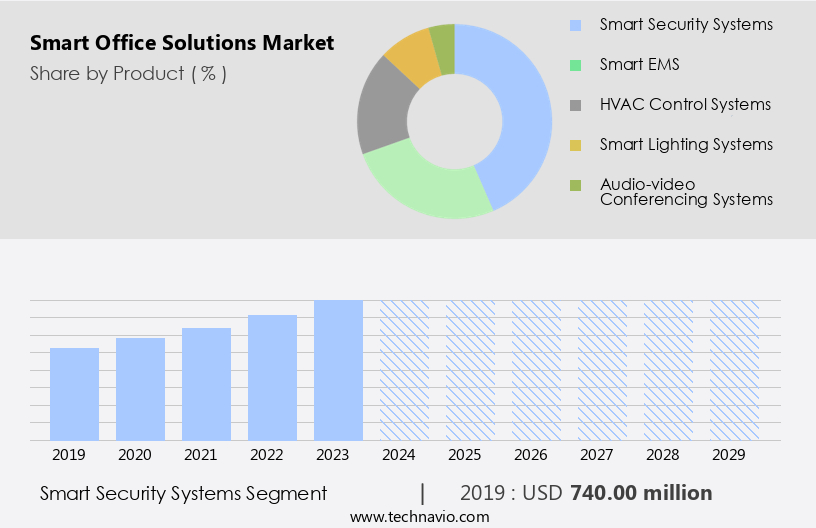
The Smart security systems segment was valued at USD 740.00 billion in 2019 and showed a gradual increase during the forecast period.
Regional Analysis
APAC is estimated to contribute 30% to the growth of the global market during the forecast period.Technavio’s analysts have elaborately explained the regional trends and drivers that shape the market during the forecast period.
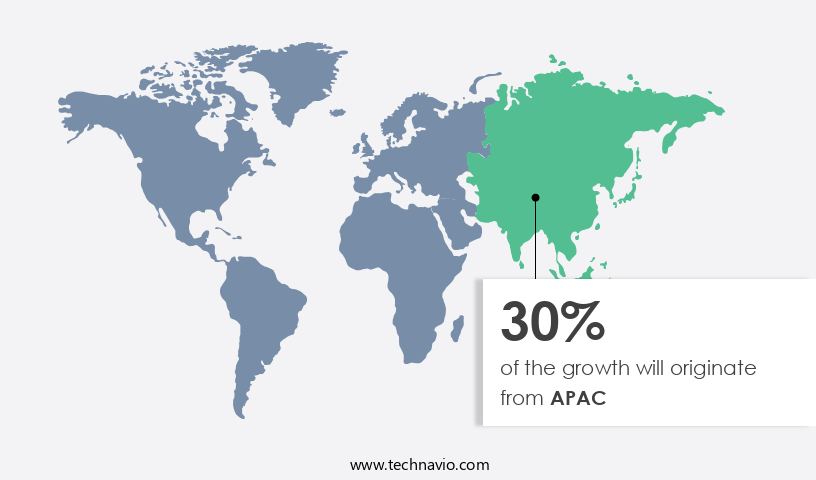
In the dynamic business landscape of APAC, Japan, China, and India are leading the adoption of smart office solutions. The surge in the number of commercial offices and the prioritization of technological safety measures, particularly in China and India, are driving market expansion. IoT services are experiencing significant growth in the region, with over 80% of the populations in China and Japan adopting these technologies. Infrastructure development and the integration of IoT services are gaining momentum due to the increasing number of corporate offices. Amidst growing concerns over cybersecurity, the demand for enhanced safety and security in smart office solutions is escalating in the corporate sector.
User experience design, natural language processing, and data security are key components of these solutions, ensuring harmonious and productive work environments. Change management, environmental controls, and sustainability initiatives are also essential elements, reflecting the region's commitment to workplace wellbeing and eco-consciousness. Mobile app development, agile workspaces, and employee training are other areas of focus, enabling seamless collaboration and productivity. Digital transformation strategies, cloud-based collaboration, and smart security systems are essential components of these solutions, fostering a flexible and connected work environment. Employee engagement platforms, collaboration software, and machine learning algorithms further optimize productivity and workflow automation, while remote work management and space utilization optimization cater to the evolving needs of hybrid work models.
The integration of AI-powered assistants, subscription models, and building information modeling enhances the overall functionality and efficiency of smart office solutions. The adoption of green building standards, energy management, and IT support ensures a sustainable and efficient infrastructure. The market's evolution reflects the region's commitment to digital transformation and the integration of advanced technologies to create harmonious, productive, and secure workspaces.
Market Dynamics
Our researchers analyzed the data with 2024 as the base year, along with the key drivers, trends, and challenges. A holistic analysis of drivers will help companies refine their marketing strategies to gain a competitive advantage.
What are the key market drivers leading to the rise in the adoption of Smart Office Solutions Industry?
- The significant rise in the number of startups serves as the primary catalyst for market growth.
- The market is experiencing significant growth due to increasing investments in technology startups by established IT companies. This trend is driving market expansion as these companies seek to innovate and offer specialized services. For instance, Wipro, a leading IT firm, has invested in several startups, such as Tricentis and Drivestream, to enhance its portfolio. Augmented reality, access control, flexible work environments, employee engagement platforms, collaboration software, machine learning algorithms, productivity metrics, workflow automation, remote work management, space utilization optimization, digital twins, network infrastructure, and digital signage are key technologies shaping the market. These solutions improve productivity, streamline workflows, and create harmonious workspaces.
- Moreover, the adoption of these technologies is essential for businesses to maintain a competitive edge. Productivity metrics, for example, enable companies to monitor employee performance and optimize resource allocation. Workflow automation and remote work management tools are essential for organizations with distributed teams. Space utilization optimization and digital twins help businesses optimize their physical workspaces and reduce costs. The return on investment (ROI) from these solutions is significant, making them a worthwhile investment for businesses. As companies continue to prioritize employee engagement and productivity, the demand for smart office solutions is expected to grow.
What are the market trends shaping the Smart Office Solutions Industry?
- The integration of artificial intelligence (AI) and machine learning algorithms is becoming a significant trend in the development of smart office solutions. These advanced technologies enhance the functionality and efficiency of office environments by automating routine tasks, optimizing energy consumption, and improving overall productivity.
- The market is witnessing significant growth due to the integration of advanced technologies such as artificial intelligence (AI) and machine learning algorithms. This trend signifies a move towards more intelligent and adaptive workplaces that prioritize data-driven insights to boost efficiency, productivity, and user experience. AI and machine learning are being utilized in various smart office solutions, offering capabilities like predictive analytics, automation, and personalized experiences. For instance, AI-enabled occupancy sensors can analyze workspace usage patterns to optimize desk allocation and facility utilization, thereby reducing unnecessary space and enhancing resource efficiency. Additionally, machine learning algorithms can analyze historical employee data to dynamically adjust environmental settings such as lighting, temperature, and air quality, ensuring a comfortable and customized work environment.
- Moreover, smart office designs are incorporating acoustic design, cybersecurity solutions, user experience design, natural language processing, data security, interactive whiteboards, change management, environmental controls, sustainability initiatives, mobile app development, agile workspaces, workplace wellbeing, and occupancy monitoring to create harmonious and immersive workplaces. These digital transformation strategies are revolutionizing the way businesses operate and are essential for staying competitive in today's dynamic business landscape.
What challenges does the Smart Office Solutions Industry face during its growth?
- The implementation of smart offices entails significant upfront costs, which represents a significant challenge and may hinder the industry's growth.
- The market presents significant opportunities for businesses seeking to enhance productivity, employee satisfaction, and workplace efficiency. Cloud-based collaboration tools enable seamless communication and document sharing among teams, while smart security systems ensure a secure working environment. User interface design and workplace analytics provide valuable insights into employee behavior and preferences, fostering a harmonious and immersive work experience. However, the high upfront costs associated with implementing smart office technologies pose a challenge for many organizations, particularly SMEs. These costs encompass hardware procurement, software licensing, infrastructure upgrades, and installation fees. The complexity of integrating various smart office components and systems can also escalate implementation costs.
- To mitigate these challenges, businesses can consider connectivity solutions such as high-speed internet, virtual reality, and desk booking systems. These solutions offer cost-effective alternatives to traditional hardware and infrastructure upgrades. Additionally, managed services and wireless networking can help streamline implementation and maintenance processes. Energy management and green building standards are essential considerations for businesses seeking to reduce operational costs and promote sustainability. Smart lighting and interior design enhance the workplace environment, while workplace analytics can help identify areas for energy savings. In conclusion, the benefits of smart office solutions are undeniable, but the initial investment required for implementation can be substantial.
- By exploring cost-effective alternatives and prioritizing essential components, businesses can overcome financial and logistical barriers to adoption and reap the long-term rewards of a smart office environment.
Exclusive Customer Landscape
The smart office solutions market forecasting report includes the adoption lifecycle of the market, covering from the innovator’s stage to the laggard’s stage. It focuses on adoption rates in different regions based on penetration. Furthermore, the smart office solutions market report also includes key purchase criteria and drivers of price sensitivity to help companies evaluate and develop their market growth analysis strategies.
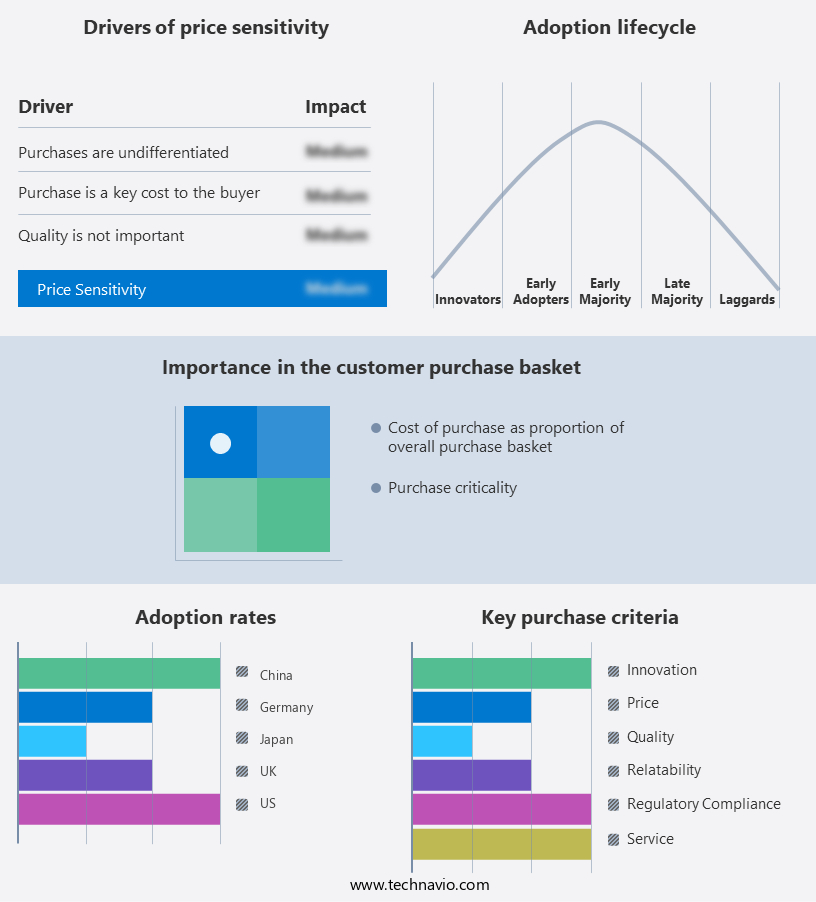
Customer Landscape
Key Companies & Market Insights
Companies are implementing various strategies, such as strategic alliances, smart office solutions market forecast, partnerships, mergers and acquisitions, geographical expansion, and product/service launches, to enhance their presence in the industry.
ABB Ltd. - This company specializes in advanced office technology, delivering integrated control systems for power distribution, lighting, shading, HVAC, and electric vehicle charging. Our innovative solutions optimize energy usage, enhance comfort, and promote sustainability. By seamlessly merging these essential functions, we enable businesses to streamline operations, reduce costs, and improve overall efficiency. Our cutting-edge technology adheres to the highest industry standards, ensuring reliability and ease of use. Embrace the future of smart offices with our comprehensive, customizable solutions.
The industry research and growth report includes detailed analyses of the competitive landscape of the market and information about key companies, including:
- ABB Ltd.
- Avnet Inc.
- Cisco Systems Inc.
- Coor Service Management Holding AB
- Crestron Electronics Inc.
- DEKOM AG
- Develco Products AS
- GoBright B V
- Honeywell International Inc.
- Johnson Controls International Plc
- Komstadt Systems Ltd.
- Konig Neurath AG
- Koninklijke Philips NV
- Lutron Electronics Co. Inc.
- Schneider Electric SE
- Senion AB
- Siemens AG
- Signify NV
- Smart Office Software Solutions
- Tata Teleservices Ltd.
Qualitative and quantitative analysis of companies has been conducted to help clients understand the wider business environment as well as the strengths and weaknesses of key industry players. Data is qualitatively analyzed to categorize companies as pure play, category-focused, industry-focused, and diversified; it is quantitatively analyzed to categorize companies as dominant, leading, strong, tentative, and weak.
Recent Development and News in Smart Office Solutions Market
- In January 2023, Microsoft announced the global availability of its Microsoft Teams Rooms Surface Hub 2S, a new all-in-one smart device designed for modern meeting spaces. This expansion marks Microsoft's commitment to enhancing collaboration and productivity in offices through its Smart Office Solutions (Microsoft, 2023).
- In March 2024, Google and Cisco Systems entered into a strategic partnership to integrate Google Workspace with Cisco's Webex Meetings platform. This collaboration aimed to provide seamless video conferencing and collaboration tools to businesses, merging Google's productivity suite with Cisco's video conferencing capabilities (Google, 2024).
- In May 2024, Logitech, a leading provider of video conferencing equipment, completed its acquisition of Jabra, a Danish audio device manufacturer. This strategic move enabled Logitech to expand its product portfolio, offering integrated audio and video solutions for smart offices (Logitech, 2024).
- In October 2025, the European Union announced the 'Green Deal for Europe' initiative, which includes a focus on digitizing public services and promoting smart offices to reduce carbon emissions. The EU's investment in smart office solutions is expected to drive market growth and innovation in the sector (European Commission, 2025).
Research Analyst Overview
- In the dynamic the market, immersive technologies such as holographic displays and virtual assistant integration enhance user experiences, while biometric authentication and facial recognition ensure data privacy and security. Compliance regulations, including green procurement and carbon footprinting, drive the adoption of sustainable building standards and IoT-enabled smart mobility. Predictive analytics and real-time data analytics optimize building performance and automate HVAC systems, reducing energy consumption. Edge computing and digital asset management streamline content management and data governance, enabling seamless integration with 5G connectivity and smart city infrastructure.
- Building automation systems and smart desk technology leverage voice recognition systems and wayfinding solutions to improve productivity and efficiency. Data privacy and security concerns are addressed through blockchain security and smart city integration, ensuring a secure and interconnected office environment.
Dive into Technavio’s robust research methodology, blending expert interviews, extensive data synthesis, and validated models for unparalleled Smart Office Solutions Market insights. See full methodology.
|
Market Scope |
|
|
Report Coverage |
Details |
|
Page number |
245 |
|
Base year |
2024 |
|
Historic period |
2019-2023 |
|
Forecast period |
2025-2029 |
|
Growth momentum & CAGR |
Accelerate at a CAGR of 17.1% |
|
Market growth 2025-2029 |
USD 5047.7 million |
|
Market structure |
Fragmented |
|
YoY growth 2024-2025(%) |
14.2 |
|
Key countries |
US, China, Japan, Germany, India, South Korea, UK, France, Canada, and Italy |
|
Competitive landscape |
Leading Companies, Market Positioning of Companies, Competitive Strategies, and Industry Risks |
What are the Key Data Covered in this Smart Office Solutions Market Research and Growth Report?
- CAGR of the Smart Office Solutions industry during the forecast period
- Detailed information on factors that will drive the growth and forecasting between 2025 and 2029
- Precise estimation of the size of the market and its contribution of the industry in focus to the parent market
- Accurate predictions about upcoming growth and trends and changes in consumer behaviour
- Growth of the market across APAC, North America, Europe, South America, and Middle East and Africa
- Thorough analysis of the market’s competitive landscape and detailed information about companies
- Comprehensive analysis of factors that will challenge the smart office solutions market growth of industry companies
We can help! Our analysts can customize this smart office solutions market research report to meet your requirements.
 RIA -
RIA - 
