

Vetronics Market Analysis North America, Europe, APAC, South America, Middle East and Africa - US, Russia, China, France, India - Size and Forecast 2024-2028

Vetronics Market Analysis North America, Europe, APAC, South America, Middle East and Africa - US, Russia, China, France, India - Size and Forecast 2024-2028

Published: Jul 2024 143 Pages SKU: IRTNTR73319

Market Overview at a Glance

$1.13 B
Market Opportunity
4.5%
CAGR
4.23
YoY growth 2023-2024(%)

Vetronics Market Size 2024-2028

The vetronics market size is forecast to increase by USD 1.13 billion at a CAGR of 4.5% between 2023 and 2028.

  • The market is experiencing significant growth due to several key trends. The modernization of existing military vehicles is driving demand for advanced vetronics solutions. These upgrades aim to enhance vehicle capabilities and improve operational efficiency. Another trend is the development of vetronics for next-generation military vehicles, which are designed to be more technologically advanced and better equipped to handle complex military operations. However, cybersecurity concerns pose a significant challenge to the market. As military vehicles become increasingly reliant on technology, they become more vulnerable to cyber attacks. This has led to a heightened focus on developing robust cybersecurity measures to protect against potential threats.
  • Overall, the market is expected to grow steadily due to these trends and the ongoing modernization of military technology.
  • What will be the Size of the Vetronics Market During the Forecast Period?
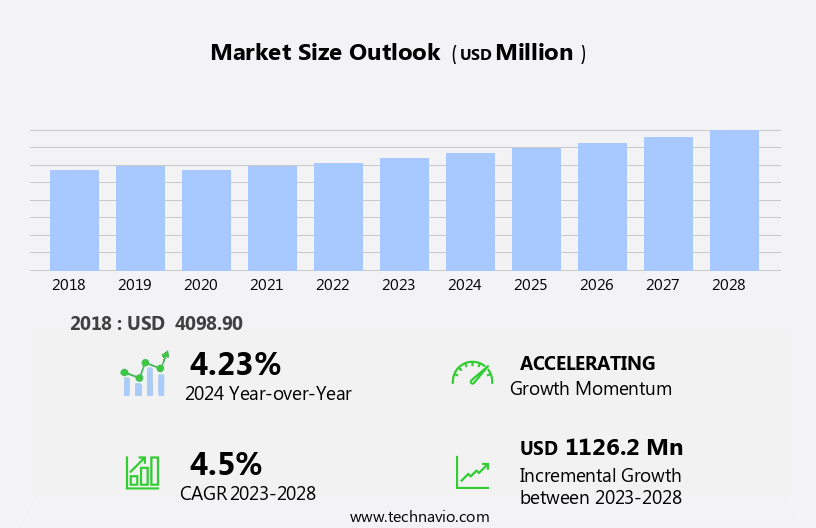
    Vetronics Market Size

     Request Free Sample

  • The market encompasses the supply of electronics and communications systems for ground military vehicles, including main battle tanks, light armored vehicles, and amphibious armored vehicles. This market is driven by defense expenditure and the aging fleet of terrestrial assets requiring modernization. Navigation, power, mobility systems, inter-vehicle communication, self-protection, vehicle health management, and secure communications systems are key areas of focus. The integration of automotive electronic technologies, such as sensors and autonomous driving, is also a significant trend. Military units rely on these systems for command, surveillance, and battlefield situational awareness. The market is characterized by the development of hardware and software interfaces for line fit and ease of integration into military vehicles.
  • The need for real-time data exchange and digital hub functionality further fuels market growth.
  • How is this Vetronics Industry segmented and which is the largest segment?

    The vetronics industry research report provides comprehensive data (region-wise segment analysis), with forecasts and estimates in "USD million" for the period 2024-2028, as well as historical data from 2018-2022 for the following segments.

    • Application
      • Military
      • Homeland security
    • Geography
      • North America
        • US
      • Europe
        • France
      • APAC
        • China
        • India
      • South America
        • Middle East and Africa

        By Application Insights

        • The military segment is estimated to witness significant growth during the forecast period.

        Ground vehicles in military applications are increasingly incorporating advanced technologies for intelligence, surveillance, and reconnaissance (ISR), high-definition video streaming, and threat detection. These innovations necessitate the integration of sophisticated vetronics systems capable of managing complex hardware and software upgrades. The use of open commercial off-the-shelf (COTS) architectures for high data-exchange rates can introduce signal-integrity issues at various levels of the system, including processors. The escalating threats to military vehicles and the evolution of weapons necessitate advanced threat detection and mitigation systems. Modern warfare demands agility, operational capacities, and self-protection. Vetronics systems play a crucial role in enabling joint operations, communication, navigation, power, and vehicle health management.

        They include advanced communication systems, modernization programs, and procurement initiatives for next-generation vehicles. Vetronics architecture encompasses a digital hub, mobility system, inter-vehicle communication, and secure communications systems. It also includes vehicle protection systems, weapon control systems, C3 systems, and sensor and optronics. Homeland security applications, such as border security and cross-border security, also benefit from these advanced technologies.
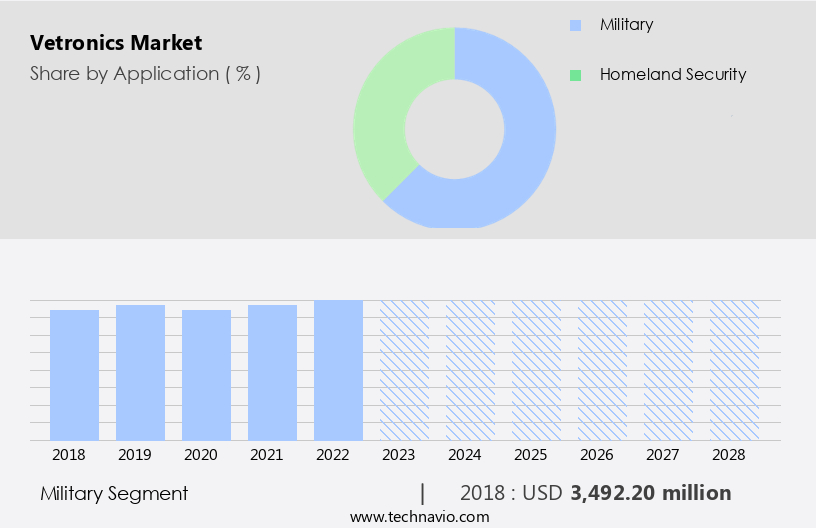
        Vetronics Market Size

        Get a glance at the  Vetronics Industry report of share of various segments Request Free Sample

        The Military segment was valued at USD 3.49 billion in 2018 and showed a gradual increase during the forecast period.

        Regional Analysis

        • North America is estimated to contribute 45% to the growth of the global market during the forecast period.

        Technavio’s analysts have elaborately explained the regional trends and drivers that shape the market during the forecast period.
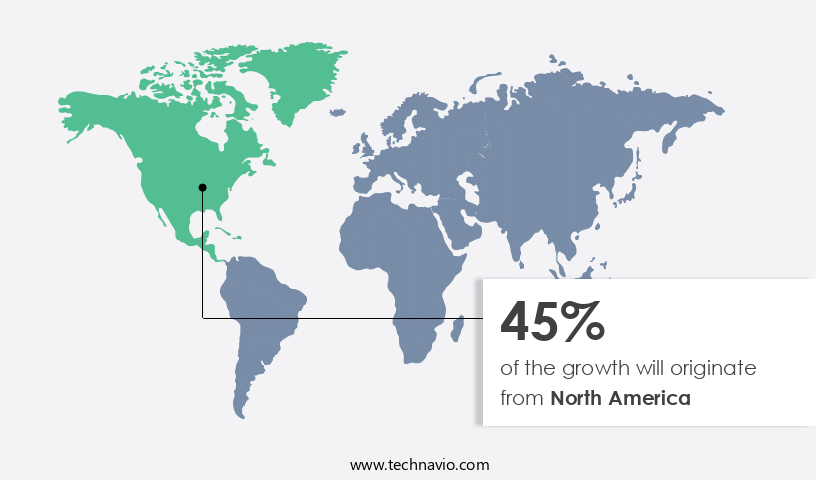
        Vetronics Market Share by Geography

        For more insights on the market share of various regions, Request Free Sample

        The North American the market is driven by the significant military presence, particularly In the United States, which is the largest consumer of vetronics systems In the region. Key market participants, such as Curtiss-Wright Corp. And General Dynamics Corp., contribute significantly to the market's expansion in North America and beyond. Military forces In the region recognize the importance of advanced vetronics systems to optimize vehicle performance. Defense agencies are modernizing their fleets by upgrading vetronics systems, including communication, navigation, power, and vehicle protection. These upgrades aim to enhance operational capacities, agility, and self-protection against various threats. The integration of advanced electronic systems, artificial intelligence, and autonomous driving technologies further bolsters the market's growth.

        Vetronics systems are essential for joint operations, homeland security, and border security applications. Key technologies include advanced communication systems, modernization programs, and digital hubs for mobility systems. The market encompasses a wide range of ground vehicles, including main battle tanks, light armored vehicles, armored personnel carriers, infantry fighting vehicles, and amphibious armored vehicles. Additionally, the market includes unmanned ground and aerial vehicles, drones, and portable power systems. The market's growth is influenced by the increasing demand for hybrid vehicles, unmanned vehicles, and the integration of cybersecurity measures to counteract cyber attacks.

        Market Dynamics

        Our  researchers analyzed the data with 2023 as the base year, along with the key drivers, trends, and challenges. A holistic analysis of drivers will help companies refine their marketing strategies to gain a competitive advantage.

        What are the key market drivers leading to the rise In the adoption of Vetronics Industry?

        Modernization of existing military vehicles is the key driver of the market.

      • Military forces worldwide are modernizing their ground vehicles, including Main Battle Tanks, Light Armored Vehicles, Amphibious Armored Vehicles, and other specialized vehicles, to enhance their operational capacities. These upgrades focus on improving survivability, navigation, communication systems, and threat detection. Modernization programs incorporate advanced electronic systems, artificial intelligence, and hybrid defense technologies to counter asymmetric warfare approaches. Vetronics systems play a crucial role In these upgrades, integrating various subsystems and enabling advanced communication and sensor technologies. Navigation systems, C3 Systems, Weapon Control Systems, and Vehicle Protection Systems are essential components of these vetronics architectures. Governments invest heavily in defense expenditure to maintaIn their terrestrial assets, including military vehicles.
      • This expenditure covers the procurement of next-generation vehicles, upgrades to existing fleets, and the development of advanced arsenals. Vehicle health management and automotive electronic technologies are also critical areas of investment. The defense sector relies on defense contractors and OEMs to provide advanced vetronics systems for military vehicles. These systems include power systems, sensors, secure communications, and inter-vehicle communication capabilities. The integration of unmanned vehicles, electric motors, and cloud computing further enhances the capabilities of military forces. Cyber attacks and wireless communications technology pose significant threats to military units, necessitating the development of advanced security systems. Vetronics systems are integral to these security measures, ensuring the protection of sensitive information and vehicle systems.
      • In summary, military modernization programs focus on upgrading ground vehicles with advanced vetronics systems to enhance their operational capabilities, improve communication and threat detection, and ensure vehicle health management. These upgrades are essential for military forces to maintaIn their competitive edge in modern warfare.
      • What are the market trends shaping the Vetronics Industry?

        Development of advanced vetronics for next-generation military vehicles is the upcoming market trend.

      • The market encompasses advanced electronic systems and communications for ground vehicles In the defense sector, including main battle tanks, light armored vehicles, armored personnel carriers, infantry fighting vehicles, and amphibious armored vehicles. With an aging fleet of terrestrial assets, defense forces are investing heavily in modernization programs and procurement of next-generation vehicles. Navigation systems, power systems, and advanced communication systems are crucial components of these vehicles, enabling operational capacities such as agility, threat detection, and asymmetric warfare approaches. Hybrid defense technologies, including advanced arsenal systems and fusion intelligence, are integral to the Vetronics architecture. Defense contractors and OEMs are collaborating to develop joint operations capabilities, such as inter-vehicle communication, self-protection, and secure communications systems.
      • These advancements require a digital hub and mobility system for real-time data exchange and vehicle health management. Electric motors and internal combustion engines are powering the evolution of military vehicles, with cloud computing and cyber attacks becoming significant concerns. Unmanned ground vehicles and unmanned aerial vehicles are increasingly being used for surveillance and reconnaissance, while drones offer aerial support. The integration of artificial intelligence and autonomous driving technologies is transforming the battlefield, enabling HD video calling, high bandwidth networking, and portable power systems. Cross border security and border breaching require advanced sensor and optronics, C3 systems, weapon control systems, and vehicle protection systems.
      • The market is continually evolving, with a focus on advanced electronics, automotive technologies, and cybersecurity to meet the demands of modern warfare.
      • What challenges does the Vetronics Industry face during its growth?

        Cybersecurity concerns is a key challenge affecting the industry growth.

      • The market encompasses advanced electronic systems and communications for Ground vehicles, including Main Battle Tanks, Light Armored Vehicles, Amphibious Armored Vehicles, and other terrestrial assets. With an aging fleet and the increasing demand for modernization and next generation vehicles, defense expenditure continues to rise. Vetronics systems are integral to operational capacities, providing agility, threat detection, and asymmetric warfare approaches through advanced communication systems, active intelligence collection, fusion, and hybrid defense technologies. These systems enable joint operations, vehicle health management, and autonomous driving through sensors, secure communications systems, and artificial intelligence. Procurement and modernization programs prioritize advanced arsenal, including C3 Systems, Weapon Control Systems, and Vehicle Protection Systems.
      • Defense forces and OEMs rely on Vetronics architecture for command, surveillance, navigation and display, sensor and optronics, power systems, and homeland security applications. However, the increasing use of Vetronics in military vehicles also presents new challenges. Security breaches via cyber attacks on onboard computers and networking hardware, such as the Controller Area Network (CAN) bus, can compromise critical vehicle systems. The lack of built-in security measures for these networks can leave vetronics systems and military platforms vulnerable to sophisticated hackers and malicious programs, potentially jeopardizing ongoing military missions. In response, the focus is on advanced electronic technologies, such as cloud computing, wireless communications technology, and unmanned vehicles, to enhance security and operational capabilities.
      • The market for Vetronics is dynamic, with ongoing developments in unmanned vehicles, electric motors, internal combustion engines, and automotive electronic technologies. The demand for advanced vetronics systems is expected to continue, driven by the need for improved operational capabilities, agility, and threat detection in modern warfare.
      • Exclusive Customer Landscape

        The vetronics market forecasting report includes the adoption lifecycle of the market, covering from the innovator’s stage to the laggard’s stage. It focuses on adoption rates in different regions based on penetration. Furthermore, the vetronics market report also includes key purchase criteria and drivers of price sensitivity to help companies evaluate and develop their market growth analysis strategies.
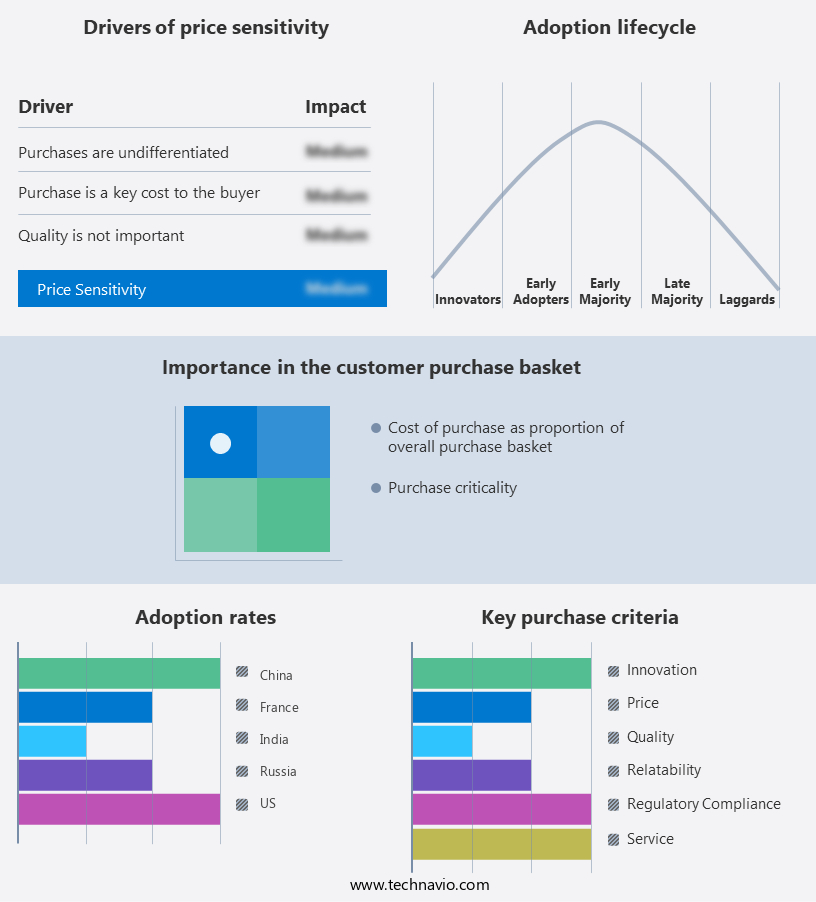
        Vetronics Market Share by Geography

         Customer Landscape

        Key Companies & Market Insights

        Companies are implementing various strategies, such as strategic alliances, vetronics market forecast, partnerships, mergers and acquisitions, geographical expansion, and product/service launches, to enhance their presence In the industry.

        Adecco Group AG - The company specializes in providing advanced vetronics solutions, featuring integrated active protection systems and electro-optical commander sights. These technologies enhance situational awareness and ensure reliable system performance for various military and defense applications. The vetronics offerings cater to the growing demand for sophisticated electronic systems in land, naval, and aerospace sectors. By combining cutting-edge technology and robust design, the company delivers high-performance solutions that meet the stringent requirements of defense organizations worldwide.

        The industry research and growth report includes detailed analyses of the competitive landscape of the market and information about key companies, including:

        • Adecco Group AG
        • AMETEK Inc.
        • BAE Systems Plc
        • Curtiss Wright Corp
        • Elbit Systems Ltd.
        • General Dynamics Corp.
        • Kongsberg Gruppen ASA
        • Krauss Maffei Wegmann GmbH and Co. KG
        • L3Harris Technologies Inc.
        • Leonardo Spa
        • Lockheed Martin Corp.
        • Moog Inc.
        • Oshkosh Corp.
        • Rheinmetall AG
        • RTX Corp.
        • Saab AB
        • TE Connectivity Ltd.
        • Thales Group
        • Ultra Electronics Holdings Plc

        Qualitative and quantitative analysis of companies has been conducted to help clients understand the wider business environment as well as the strengths and weaknesses of key industry players. Data is qualitatively analyzed to categorize companies as pure play, category-focused, industry-focused, and diversified; it is quantitatively analyzed to categorize companies as dominant, leading, strong, tentative, and weak.

        Research Analyst Overview

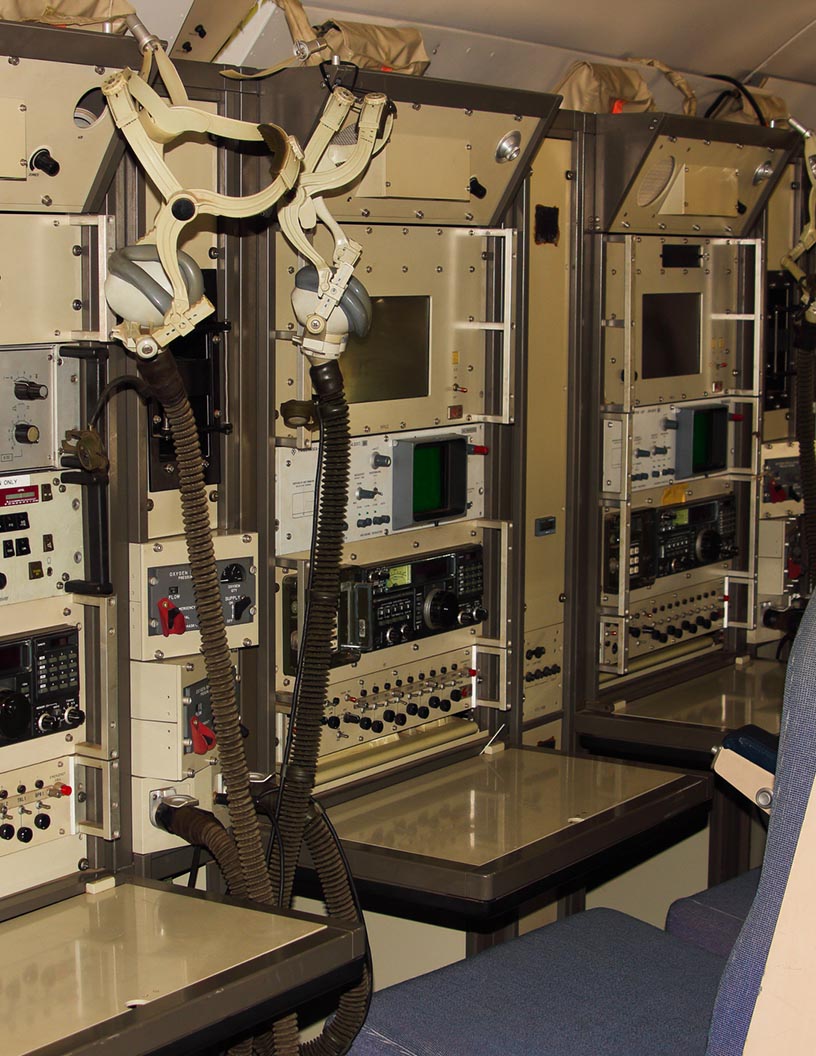
        Vetronics, or Veterans and Electronics, refers to the integration of advanced electronic systems in military ground vehicles and naval vessels. This market encompasses a wide range of technologies, including communication systems, navigation and display, sensor and optronics, power systems, and vehicle health management. The demand for vetronics systems is driven by the need to enhance the operational capacities of defense forces. With the increasing complexity of modern warfare, there is a growing requirement for advanced communication systems to facilitate joint operations. These systems enable real-time data exchange between military units, improving situational awareness and enabling faster decision-making. The defense sector is also investing in next-generation vehicles, which are equipped with advanced electronic systems.

        These systems include artificial intelligence, autonomous driving technologies, and sensors, among others. The integration of these technologies enhances the agility and threat response capabilities of defense forces. Asymmetric warfare approaches and hybrid defense technologies have also led to an increased focus on self-protection systems. Vehicle protection systems, including electronic warfare systems and countermeasure systems, are becoming essential components of vetronics architecture. The market is also witnessing significant investments in procurement and modernization programs. Defense contractors are collaborating with Original Equipment Manufacturers (OEMs) to develop and integrate advanced electronic systems into military vehicles. These systems include line-fit and retro-fit solutions for various types of armored vehicles, such as battle tanks, light protected vehicles, and armored personnel carriers.

        The integration of advanced electronic systems in military vehicles is also leading to the development of digital hubs and mobility systems. These systems enable inter-vehicle communication, intra-vehicle communication, and wireless communications technology, enhancing the overall operational efficiency of defense forces. The market is also witnessing the emergence of unmanned vehicles, including unmanned ground vehicles and unmanned aerial vehicles. These vehicles are used for surveillance and reconnaissance, border security, and homeland security applications. The integration of advanced electronic systems In these vehicles enables real-time data collection and transmission, enhancing their operational capabilities. The market is also witnessing the adoption of cloud computing and cybersecurity technologies to enhance the security of communication systems and vehicle health management systems.

        The threat of cyber attacks on military vehicles and communication systems is a significant concern, and the integration of secure communications systems and sensors is essential to mitigate these risks. In conclusion, the market is witnessing significant growth due to the increasing demand for advanced electronic systems in military vehicles and naval vessels. The integration of these systems enhances the operational capacities of defense forces, enabling faster decision-making, improved situational awareness, and enhanced threat response capabilities. The market is also witnessing the emergence of new technologies, such as autonomous driving and cloud computing, which are transforming the way defense forces operate.

        Market Scope

        Report Coverage

        Details

        Page number

        143

        Base year

        2023

        Historic period

        2018-2022

        Forecast period

        2024-2028

        Growth momentum & CAGR

        Accelerate at a CAGR of 4.5%

        Market growth 2024-2028

        USD 1126.2 million

        Market structure

        Fragmented

        YoY growth 2023-2024(%)

        4.23

        Key countries

        US, Russia, China, France, and India

        Competitive landscape

        Leading Companies, Market Positioning of Companies, Competitive Strategies, and Industry Risks

        Request Free Sample

        What are the Key Data Covered in this Vetronics Market Research and Growth Report?

        • CAGR of the Vetronics industry during the forecast period
        • Detailed information on factors that will drive the growth and forecasting between 2024 and 2028
        • Precise estimation of the size of the market and its contribution of the industry in focus to the parent market
        • Accurate predictions about upcoming growth and trends and changes in consumer behaviour
        • Growth of the market across North America, Europe, APAC, South America, and Middle East and Africa
        • Thorough analysis of the market’s competitive landscape and detailed information about companies
        • Comprehensive analysis of factors that will challenge the vetronics market growth of industry companies

        We can help! Our analysts can customize this vetronics market research report to meet your requirements.

        Get in touch


        1 Executive Summary

        • 1.1 Market overview
          • Executive Summary - Chart on Market Overview
          • Executive Summary - Data Table on Market Overview
          • Executive Summary - Chart on Global Market Characteristics
          • Executive Summary - Chart on Market by Geography
          • Executive Summary - Chart on Market Segmentation by Application
          • Executive Summary - Chart on Incremental Growth
          • Executive Summary - Data Table on Incremental Growth
          • Executive Summary - Chart on Company Market Positioning

        2 Market Landscape

        • 2.1 Market ecosystem
          • Parent Market
          • Data Table on - Parent Market
        • 2.2 Market characteristics
          • Market characteristics analysis
        • 2.3 Value chain analysis
          • Value Chain Analysis

        3 Market Sizing

        • 3.1 Market definition
          • Offerings of companies included in the market definition
        • 3.2 Market segment analysis
          • Market segments
        • 3.3 Market size 2023
          • 3.4 Market outlook: Forecast for 2023-2028
            • Chart on Global - Market size and forecast 2023-2028 ($ million)
            • Data Table on Global - Market size and forecast 2023-2028 ($ million)
            • Chart on Global Market: Year-over-year growth 2023-2028 (%)
            • Data Table on Global Market: Year-over-year growth 2023-2028 (%)

          4 Historic Market Size

          • 4.1 Global Vetronics Market 2018 - 2022
            • Historic Market Size - Data Table on Global Vetronics Market 2018 - 2022 ($ million)
          • 4.2 Application segment analysis 2018 - 2022
            • Historic Market Size - Application Segment 2018 - 2022 ($ million)
          • 4.3 Geography segment analysis 2018 - 2022
            • Historic Market Size - Geography Segment 2018 - 2022 ($ million)
          • 4.4 Country segment analysis 2018 - 2022
            • Historic Market Size - Country Segment 2018 - 2022 ($ million)

          5 Five Forces Analysis

          • 5.1 Five forces summary
            • Five forces analysis - Comparison between 2023 and 2028
          • 5.2 Bargaining power of buyers
            • Bargaining power of buyers - Impact of key factors 2023 and 2028
          • 5.3 Bargaining power of suppliers
            • Bargaining power of suppliers - Impact of key factors in 2023 and 2028
          • 5.4 Threat of new entrants
            • Threat of new entrants - Impact of key factors in 2023 and 2028
          • 5.5 Threat of substitutes
            • Threat of substitutes - Impact of key factors in 2023 and 2028
          • 5.6 Threat of rivalry
            • Threat of rivalry - Impact of key factors in 2023 and 2028
          • 5.7 Market condition
            • Chart on Market condition - Five forces 2023 and 2028

          6 Market Segmentation by Application

          • 6.1 Market segments
            • Chart on Application - Market share 2023-2028 (%)
            • Data Table on Application - Market share 2023-2028 (%)
          • 6.2 Comparison by Application
            • Chart on Comparison by Application
            • Data Table on Comparison by Application
          • 6.3 Military - Market size and forecast 2023-2028
            • Chart on Military - Market size and forecast 2023-2028 ($ million)
            • Data Table on Military - Market size and forecast 2023-2028 ($ million)
            • Chart on Military - Year-over-year growth 2023-2028 (%)
            • Data Table on Military - Year-over-year growth 2023-2028 (%)
          • 6.4 Homeland security - Market size and forecast 2023-2028
            • Chart on Homeland security - Market size and forecast 2023-2028 ($ million)
            • Data Table on Homeland security - Market size and forecast 2023-2028 ($ million)
            • Chart on Homeland security - Year-over-year growth 2023-2028 (%)
            • Data Table on Homeland security - Year-over-year growth 2023-2028 (%)
          • 6.5 Market opportunity by Application
            • Market opportunity by Application ($ million)
            • Data Table on Market opportunity by Application ($ million)

          7 Customer Landscape

          • 7.1 Customer landscape overview
            • Analysis of price sensitivity, lifecycle, customer purchase basket, adoption rates, and purchase criteria

          8 Geographic Landscape

          • 8.1 Geographic segmentation
            • Chart on Market share by geography 2023-2028 (%)
            • Data Table on Market share by geography 2023-2028 (%)
          • 8.2 Geographic comparison
            • Chart on Geographic comparison
            • Data Table on Geographic comparison
          • 8.3 North America - Market size and forecast 2023-2028
            • Chart on North America - Market size and forecast 2023-2028 ($ million)
            • Data Table on North America - Market size and forecast 2023-2028 ($ million)
            • Chart on North America - Year-over-year growth 2023-2028 (%)
            • Data Table on North America - Year-over-year growth 2023-2028 (%)
          • 8.4 Europe - Market size and forecast 2023-2028
            • Chart on Europe - Market size and forecast 2023-2028 ($ million)
            • Data Table on Europe - Market size and forecast 2023-2028 ($ million)
            • Chart on Europe - Year-over-year growth 2023-2028 (%)
            • Data Table on Europe - Year-over-year growth 2023-2028 (%)
          • 8.5 APAC - Market size and forecast 2023-2028
            • Chart on APAC - Market size and forecast 2023-2028 ($ million)
            • Data Table on APAC - Market size and forecast 2023-2028 ($ million)
            • Chart on APAC - Year-over-year growth 2023-2028 (%)
            • Data Table on APAC - Year-over-year growth 2023-2028 (%)
          • 8.6 South America - Market size and forecast 2023-2028
            • Chart on South America - Market size and forecast 2023-2028 ($ million)
            • Data Table on South America - Market size and forecast 2023-2028 ($ million)
            • Chart on South America - Year-over-year growth 2023-2028 (%)
            • Data Table on South America - Year-over-year growth 2023-2028 (%)
          • 8.7 Middle East and Africa - Market size and forecast 2023-2028
            • Chart on Middle East and Africa - Market size and forecast 2023-2028 ($ million)
            • Data Table on Middle East and Africa - Market size and forecast 2023-2028 ($ million)
            • Chart on Middle East and Africa - Year-over-year growth 2023-2028 (%)
            • Data Table on Middle East and Africa - Year-over-year growth 2023-2028 (%)
          • 8.8 US - Market size and forecast 2023-2028
            • Chart on US - Market size and forecast 2023-2028 ($ million)
            • Data Table on US - Market size and forecast 2023-2028 ($ million)
            • Chart on US - Year-over-year growth 2023-2028 (%)
            • Data Table on US - Year-over-year growth 2023-2028 (%)
          • 8.9 Russia - Market size and forecast 2023-2028
            • Chart on Russia - Market size and forecast 2023-2028 ($ million)
            • Data Table on Russia - Market size and forecast 2023-2028 ($ million)
            • Chart on Russia - Year-over-year growth 2023-2028 (%)
            • Data Table on Russia - Year-over-year growth 2023-2028 (%)
          • 8.10 China - Market size and forecast 2023-2028
            • Chart on China - Market size and forecast 2023-2028 ($ million)
            • Data Table on China - Market size and forecast 2023-2028 ($ million)
            • Chart on China - Year-over-year growth 2023-2028 (%)
            • Data Table on China - Year-over-year growth 2023-2028 (%)
          • 8.11 France - Market size and forecast 2023-2028
            • Chart on France - Market size and forecast 2023-2028 ($ million)
            • Data Table on France - Market size and forecast 2023-2028 ($ million)
            • Chart on France - Year-over-year growth 2023-2028 (%)
            • Data Table on France - Year-over-year growth 2023-2028 (%)
          • 8.12 India - Market size and forecast 2023-2028
            • Chart on India - Market size and forecast 2023-2028 ($ million)
            • Data Table on India - Market size and forecast 2023-2028 ($ million)
            • Chart on India - Year-over-year growth 2023-2028 (%)
            • Data Table on India - Year-over-year growth 2023-2028 (%)
          • 8.13 Market opportunity by geography
            • Market opportunity by geography ($ million)
            • Data Tables on Market opportunity by geography ($ million)

          9 Drivers, Challenges, and Opportunity/Restraints

          • 9.1 Market drivers
            • 9.2 Market challenges
              • 9.3 Impact of drivers and challenges
                • Impact of drivers and challenges in 2023 and 2028
              • 9.4 Market opportunities/restraints

                10 Competitive Landscape

                • 10.1 Overview
                  • 10.2 Competitive Landscape
                    • Overview on criticality of inputs and factors of differentiation
                  • 10.3 Landscape disruption
                    • Overview on factors of disruption
                  • 10.4 Industry risks
                    • Impact of key risks on business

                  11 Competitive Analysis

                  • 11.1 Companies profiled
                    • Companies covered
                  • 11.2 Market positioning of companies
                    • Matrix on companies position and classification
                  • 11.3 BAE Systems Plc
                    • BAE Systems Plc - Overview
                    • BAE Systems Plc - Business segments
                    • BAE Systems Plc - Key news
                    • BAE Systems Plc - Key offerings
                    • BAE Systems Plc - Segment focus
                  • 11.4 Curtiss Wright Corp
                    • Curtiss Wright Corp - Overview
                    • Curtiss Wright Corp - Business segments
                    • Curtiss Wright Corp - Key offerings
                    • Curtiss Wright Corp - Segment focus
                  • 11.5 General Dynamics Corp.
                    • General Dynamics Corp. - Overview
                    • General Dynamics Corp. - Business segments
                    • General Dynamics Corp. - Key news
                    • General Dynamics Corp. - Key offerings
                    • General Dynamics Corp. - Segment focus
                  • 11.6 L3Harris Technologies Inc.
                    • L3Harris Technologies Inc. - Overview
                    • L3Harris Technologies Inc. - Business segments
                    • L3Harris Technologies Inc. - Key news
                    • L3Harris Technologies Inc. - Key offerings
                    • L3Harris Technologies Inc. - Segment focus
                  • 11.7 Leonardo Spa
                    • Leonardo Spa - Overview
                    • Leonardo Spa - Business segments
                    • Leonardo Spa - Key news
                    • Leonardo Spa - Key offerings
                    • Leonardo Spa - Segment focus
                  • 11.8 Lockheed Martin Corp.
                    • Lockheed Martin Corp. - Overview
                    • Lockheed Martin Corp. - Business segments
                    • Lockheed Martin Corp. - Key news
                    • Lockheed Martin Corp. - Key offerings
                    • Lockheed Martin Corp. - Segment focus
                  • 11.9 Rheinmetall AG
                    • Rheinmetall AG - Overview
                    • Rheinmetall AG - Business segments
                    • Rheinmetall AG - Key news
                    • Rheinmetall AG - Key offerings
                    • Rheinmetall AG - Segment focus
                  • 11.10 RTX Corp.
                    • RTX Corp. - Overview
                    • RTX Corp. - Business segments
                    • RTX Corp. - Key news
                    • RTX Corp. - Key offerings
                    • RTX Corp. - Segment focus
                  • 11.11 Saab AB
                    • Saab AB - Overview
                    • Saab AB - Business segments
                    • Saab AB - Key news
                    • Saab AB - Key offerings
                    • Saab AB - Segment focus
                  • 11.12 Thales Group
                    • Thales Group - Overview
                    • Thales Group - Business segments
                    • Thales Group - Key news
                    • Thales Group - Key offerings
                    • Thales Group - Segment focus

                  12 Appendix

                  • 12.1 Scope of the report
                    • 12.2 Inclusions and exclusions checklist
                      • Inclusions checklist
                      • Exclusions checklist
                    • 12.3 Currency conversion rates for US$
                      • Currency conversion rates for US$
                    • 12.4 Research methodology
                      • Research methodology
                    • 12.5 Data procurement
                      • Information sources
                    • 12.6 Data validation
                      • Data validation
                    • 12.7 Validation techniques employed for market sizing
                      • Validation techniques employed for market sizing
                    • 12.8 Data synthesis
                      • Data synthesis
                    • 12.9 360 degree market analysis
                      • 360 degree market analysis
                    • 12.10 List of abbreviations
                      • List of abbreviations

                    Research Methodology

                    Technavio presents a detailed picture of the market by way of study, synthesis, and summation of data from multiple sources. The analysts have presented the various facets of the market with a particular focus on identifying the key industry influencers. The data thus presented is comprehensive, reliable, and the result of extensive research, both primary and secondary.

                    INFORMATION SOURCES

                    Primary sources

                    • Manufacturers and suppliers
                    • Channel partners
                    • Industry experts
                    • Strategic decision makers

                    Secondary sources

                    • Industry journals and periodicals
                    • Government data
                    • Financial reports of key industry players
                    • Historical data
                    • Press releases

                    DATA ANALYSIS

                    Data Synthesis

                    • Collation of data
                    • Estimation of key figures
                    • Analysis of derived insights

                    Data Validation

                    • Triangulation with data models
                    • Reference against proprietary databases
                    • Corroboration with industry experts

                    REPORT WRITING

                    Qualitative

                    • Market drivers
                    • Market challenges
                    • Market trends
                    • Five forces analysis

                    Quantitative

                    • Market size and forecast
                    • Market segmentation
                    • Geographical insights
                    • Competitive landscape

                    Interested in this report?

                    Get your sample now to see our research methodology and insights!

                    Download Now

                    Frequently Asked Questions

                    Vetronics market growth will increase by $ 1126.2 mn during 2024-2028 .

                    The Vetronics market is expected to grow at a CAGR of 4.5% during 2024-2028 .

                    Vetronics market is segmented by Application( Military, Homeland security)

                    Adecco Group AG, AMETEK Inc., BAE Systems Plc, Curtiss Wright Corp, Elbit Systems Ltd., General Dynamics Corp., Kongsberg Gruppen ASA, Krauss Maffei Wegmann GmbH and Co. KG, L3Harris Technologies Inc., Leonardo Spa, Lockheed Martin Corp., Moog Inc., Oshkosh Corp., Rheinmetall AG, RTX Corp., Saab AB, TE Connectivity Ltd., Thales Group, Ultra Electronics Holdings Plc are a few of the key vendors in the Vetronics market.

                    North America will register the highest growth rate of 45% among the other regions. Therefore, the Vetronics market in North America is expected to garner significant business opportunities for the vendors during the forecast period.

                    US, Russia, China, France, India

                    • Modernization of existing military vehiclesGovernments globally are constantly modernizing their fleet of vehicles to provide military forces with better survivability is the driving factor this market.
                    • easy navigation is the driving factor this market.
                    • enhanced surveillance performance is the driving factor this market.
                    • better inter-vehicle and intra-vehicle communications is the driving factor this market.
                    • and higher firepower. Military modernization programs include upgrades in the weapons systems is the driving factor this market.
                    • networking capabilities is the driving factor this market.
                    • threat detection systems is the driving factor this market.
                    • fire suppression systems is the driving factor this market.
                    • communication systems is the driving factor this market.
                    • command and control (C2) systems is the driving factor this market.
                    • and other systems that are required for a military mission. The upgrades automatically include those for dedicated vetronics subsystems. Apart from these is the driving factor this market.
                    • separate vetronics systems are used to integrate different systems with each other. These integrated vetronics systems also need to be upgraded to achieve compatibility with other upgraded hardware and software modules. Upgrading the vetronics systems of military vehicles increases the interoperability of these systems is the driving factor this market.
                    • reduces the risk and cost of multi-system integration is the driving factor this market.
                    • and increases the efficiency of vehicle operators by reducing their response time. Armed forces across the world are modernizing the vetronics systems of their ground vehicles to achieve higher capabilities and functionalities in their vehicle platforms. Defense agencies are upgrading the vetronics systems of their military vehicles to refurbish their fleets. This will help extend the service life of the vehicles and reduce service costs. This will improve the vehicles capabilities is the driving factor this market.
                    • such as its lethality and precision. Therefore is the driving factor this market.
                    • the modernization of military vehicles is expected to drive the growth of the market in focus during the forecast period. is the driving factor this market.

                    The Vetronics market vendors should focus on grabbing business opportunities from the Military segment as it accounted for the largest market share in the base year.
