

Winding Wire Market Analysis APAC, Europe, North America, South America, Middle East and Africa - China, Japan, US, Germany, France - Size and Forecast 2024-2028

Winding Wire Market Analysis APAC, Europe, North America, South America, Middle East and Africa - China, Japan, US, Germany, France - Size and Forecast 2024-2028

Published: Jul 2024 148 Pages SKU: IRTNTR73769

Market Overview at a Glance

$10.61 B
Market Opportunity
4.5%
CAGR
4.23
YoY growth 2023-2024(%)

Winding Wire Market Size 2024-2028 

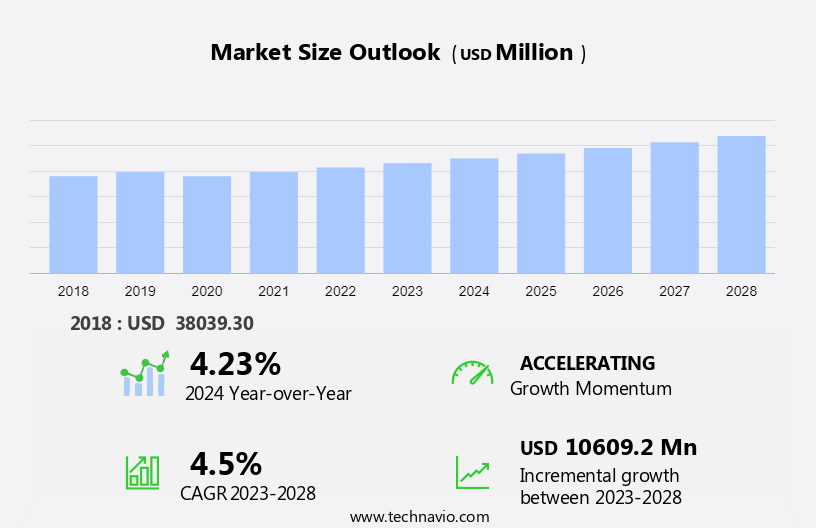
The winding wire market size is forecast to increase by USD 10.61 billion, at a CAGR of 4.5% between 2023 and 2028.

  • The market is experiencing significant growth due to key driving factors, including the expansion of power generation and transmission and distribution networks. This trend is being fueled by the increasing focus on energy efficiency and the need for reliable and high-performance winding wires in various industries such as power generation, electrical equipment, and transportation. However, the market's high fragmentation limits consistent increases in average selling prices. This market analysis report provides an in-depth examination of these growth factors and the challenges they present for market participants.
  • The expansion of power generation and T&D networks is a major driver of market growth, as the demand for electricity continues to rise. At the same time, there is a growing emphasis on energy efficiency and the use of advanced materials in winding wires to improve performance and reduce energy consumption. Despite these opportunities, the market's fragmented nature and intense competition can make it challenging for companies to consistently increase their prices. Overall, the market is poised for continued growth, driven by these key trends and the increasing demand for reliable and efficient electrical infrastructure.

What will be the Size of the Winding Wire Market During the Forecast Period?
Winding Wire Market Size

 Request Free Sample

  • The market is experiencing significant growth, driven by increasing demand from various industries, including industrial, electric vehicles, and telecommunications. Stator windings for electric motors, compact motors, and electric chargers are primary applications for winding wire. The market is segmented based on the type of material used, with both stranded copper wire and solid copper wire holding substantial market shares. The electrical properties of winding wire, such as conductivity, malleability, and corrosion resistance, are crucial factors influencing demand. Additionally, the trend toward energy efficiency and reduced energy loss is driving the adoption of winding wire in power transmission and distribution systems. Flexibility, bending, and shaping capabilities are also essential for installation in various applications. Environmental factors, such as moisture and oxidation, are key challenges for the market, necessitating continuous research and development efforts to improve the durability and performance of winding wire.

How is this Winding Wire Industry segmented and which is the largest segment?

The winding wire industry research report provides comprehensive data (region-wise segment analysis), with forecasts and estimates in "USD million" for the period 2024-2028, as well as historical data from 2018-2022 for the following segments.

  • Product
    • Copper
    • Aluminum
  • Geography
    • APAC
      • China
      • Japan
    • Europe
      • Germany
      • France
    • North America
      • US
    • South America
    • Middle East and Africa

By Product Insights

  • The copper segment is estimated to witness significant growth during the forecast period.

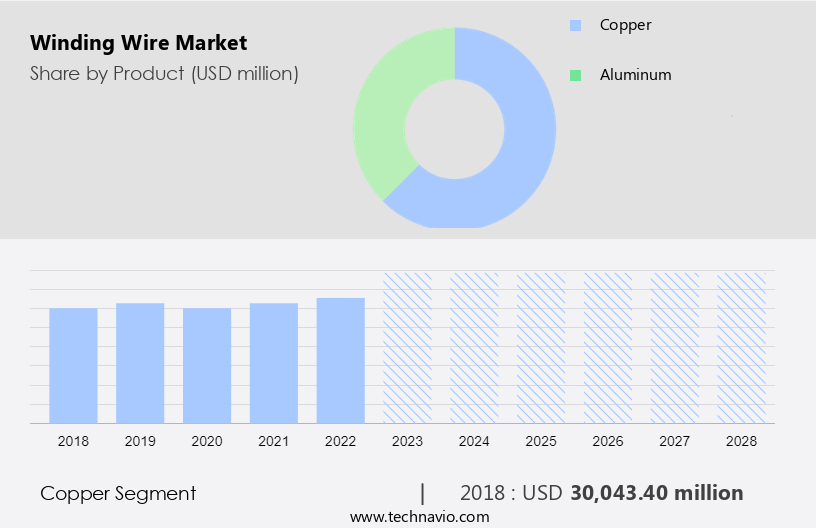
The market is primarily driven by the increasing demand for battery systems, charging infrastructure, residential and commercial buildings, electric appliances, gadgets, and emerging economies. Among the various materials used in winding wires, copper is the largest segment due to its superior mechanical and electrical properties, including lesser thermal expansion, higher corrosion resistance, and less frequent inspection and maintenance requirements. Copper winding exhibits better performance in various applications, including electrical grids, urbanization, industrialization, infrastructure projects, substations, power lines, and replacements in green energy infrastructure. The copper segment is projected to maintain its dominance in the market during the forecast period.
Winding Wire Market Size

Get a glance at the  Winding Wire Industry report of share of various segments Request Free Sample

The copper segment was valued at USD 30.04 billion in 2018 and showed a gradual increase during the forecast period.

Regional Analysis

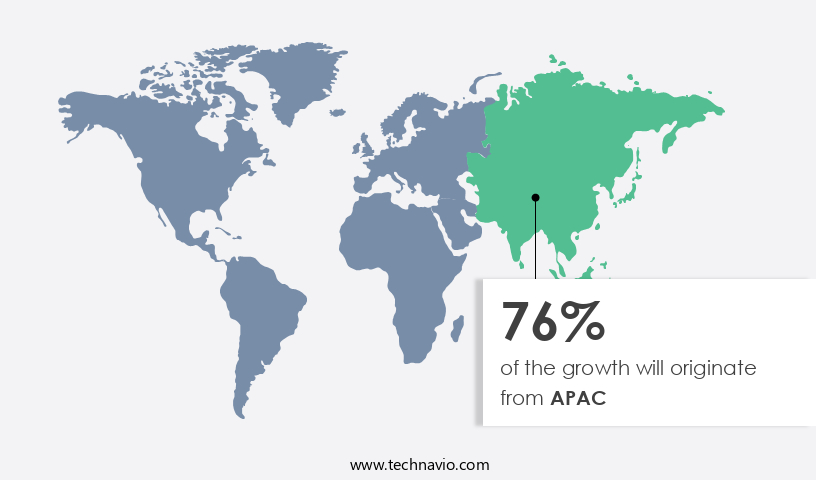
  • APAC is estimated to contribute 76% to the growth of the global market during the forecast period.

Technavio's analysts have elaborately explained the regional trends and drivers that shape the market during the forecast period.
Winding Wire Market Share by Geography

For more insights on the market share of various regions, Request Free Sample

The Asia Pacific (APAC) region is the largest consumer and producer of various electrical and electronic devices, making it the leading geographical segment in The market. APAC's dominance is primarily due to its significant contributions to power generation and automotive industries. In 2020, APAC accounted for nearly 46% of the global power generation and approximately 50% of the global automotive production. The region's high demand for electrical and electronic devices, such as motors, transformers, electric generators, inductors, inverters, and various consumer appliances, drives the market's growth. Winding wires are essential components in these devices, ensuring their efficient performance and longevity. APAC's eco-friendly initiatives and increasing focus on sustainable manufacturing processes are also expected to boost the market's growth by promoting the use of natural and recycled materials in winding wire production.

Market Dynamics

Our winding wire market researchers analyzed the data with 2023 as the base year, along with the key drivers, trends, and challenges. A holistic analysis of drivers will help companies refine their marketing strategies to gain a competitive advantage.

What are the key market drivers leading to the rise in the adoption of the Winding Wire Industry?

Expansion of power generation and T&D network is the key driver of the market.

  • The market experiences growth due to the increasing demand for electric generators and transformers in the power generation and transmission (T&D) sector. With the expansion of electrical infrastructure in urbanizing and industrializing economies, such as India and China, the consumption of electricity has been on the rise. For instance, China's total power consumption reached 8.31 trillion kilowatt-hours (kWh) in 2021, according to the National Energy Administration (NEA). Similarly, India's power consumption grew by 4.7% in 2020. This increasing electricity demand leads to a higher requirement for electric generators and transformers, which in turn fuels the market growth for winding wires.
  • Moreover, the electric vehicles (EV) market, including hybrid vehicles, is another significant consumer of winding wires. The growing adoption of EVs, driven by environmental concerns and sustainability, necessitates the production of electric motors and battery systems, which require winding wires for their stator windings. Additionally, the charging infrastructure for EVs also requires electric chargers, which further boosts the demand for winding wires. The industrial segment, energy segment, and infrastructure segment are the primary end-users of winding wires. Industrial applications include motor applications, such as compact motors, and electrical appliances, like home appliances and transformers. Copper and aluminum magnet wires, available in round, rectangle, and square shapes, are commonly used due to their electrical properties, such as conductivity, malleability, and corrosion resistance.
  • Insulations, made of resin, are crucial in ensuring the dielectric strength, thermal resistance, and insulation resistance of the winding wires. The renewable energy sector, including wind power, solar power, and battery systems, is another significant consumer of winding wires. Wind turbines and solar panels require copper wire as an electrical conductor for power transmission and distribution. Lithium-ion batteries, used in EVs and other electrical appliances, also require winding wires for their battery systems and charging infrastructure.

What are the market trends shaping the Winding Wire Industry?

Increasing focus on energy-efficient winding wires is the upcoming trend in the market.

  • The market encompasses winding wires utilized in various electrical applications, including electric vehicles (EVs), industrial equipment, and home appliances. In the industrial sector, winding wires are integral to electric motors, transformers, and generators, facilitating energy transformation from electrical to mechanical or vice versa. This process, however, results in energy loss as heat. To mitigate this issue, there is a growing emphasis on employing efficient winding wires that minimize heat generation, thereby reducing overall energy consumption. The increasing demand for energy efficiency in industrial applications, such as motors and transformers, propels the market growth. Moreover, the electric vehicles market, including hybrid vehicles and EV charging infrastructure, presents a significant opportunity for winding wire manufacturers.
  • The adoption of renewable energy sources, like wind power and solar power, further fuels the demand for winding wires in battery systems and charging infrastructure. The market caters to diverse applications, including motor applications, electrical appliances, and power transmission and distribution. Copper and aluminum wires, available in various shapes such as round, rectangle, and square, are commonly used due to their electrical properties, including conductivity, malleability, corrosion resistance, and thermal and insulation resistance.
  • The market is influenced by factors like dielectric strength, thermal resistance, insulation resistance, and flexibility, bending, and shaping capabilities. The infrastructure segment, including residential and commercial buildings, and the energy segment, including renewable energy and electrical grids, are significant markets for winding wires. Rapid urbanization and industrialization, along with the increasing demand for data transmission and 5G network expansion, create opportunities for winding wire manufacturers. Additionally, emerging technologies, sustainability, and environmental concerns are driving the adoption of eco-friendly materials in the market.

What challenges does the Winding Wire Industry face during its growth?

High fragmentation of the market limits consistent increases in ASP is a key challenge affecting the industry growth.

  • The market encompasses a diverse range of applications within the Industrial, Energy, and Infrastructure segments. Industrial applications include stator windings for compact motors and various electrical appliances, while the Energy segment caters to transformers, generators, and electrical power cables. In the Infrastructure segment, winding wires are utilized in urban areas for electrical infrastructure development, renewable energy projects, and electric vehicle charging infrastructure. Two primary types of magnet wires dominate the market: Copper and Aluminum. Copper magnet wires offer superior electrical conductivity, malleability, and corrosion resistance, making them ideal for motor applications and electrical appliances. Aluminum magnet wires, on the other hand, are preferred for their lower cost and lighter weight, making them suitable for large-scale applications such as power transmission and distribution, telecommunications, and renewable energy projects.
  • The market dynamics are influenced by various factors, including the increasing adoption of electric vehicles (EVs) and hybrid vehicles, the demand for energy-efficient technology, and the growing urbanization and industrialization trends. The renewable energy sector, particularly wind power and solar power, is also driving market growth due to the increasing focus on sustainability and environmental concerns. The market is characterized by a high degree of competition, with numerous small and medium-sized enterprises (SMEs) catering to the demand for winding wires. The availability of technology and equipment to produce winding wires and the relatively low capital investment required make it an accessible market for new entrants.

Exclusive Customer Landscape

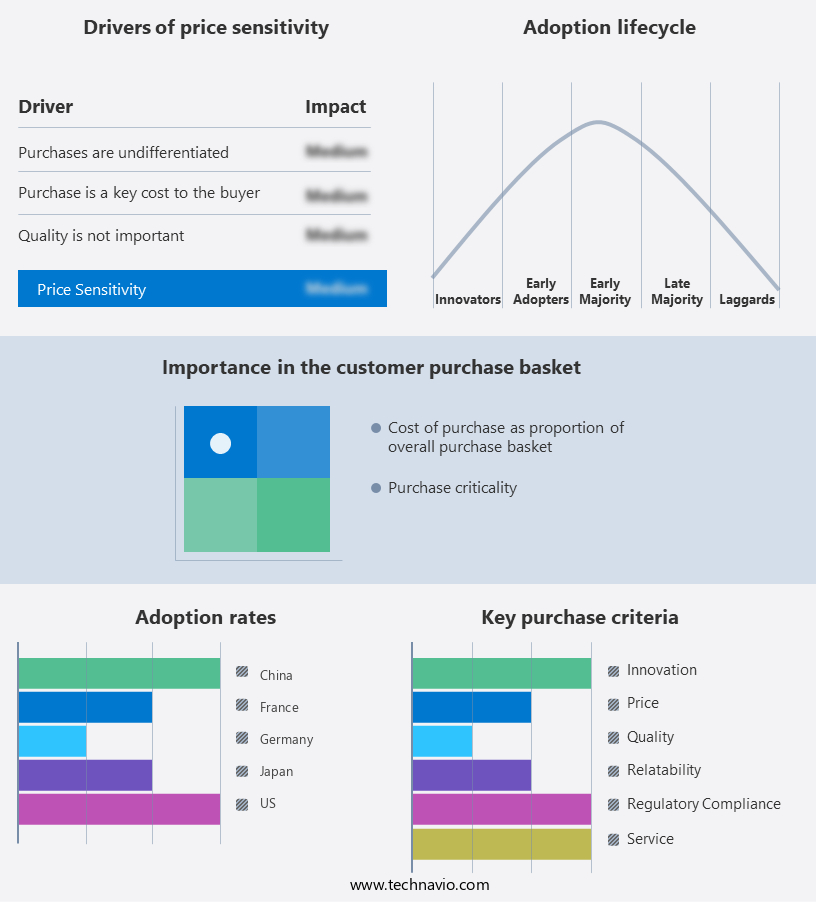
The winding wire market forecasting report includes the adoption lifecycle of the market, covering from the innovator's stage to the laggard's stage. It focuses on adoption rates in different regions based on penetration. Furthermore, the market report also includes key purchase criteria and drivers of price sensitivity to help companies evaluate and develop their market growth analysis strategies.
Winding Wire Market Share by Geography

 Customer Landscape

Key Companies & Market Insights

Companies are implementing various strategies, such as strategic alliances, market forecast, partnerships, mergers and acquisitions, geographical expansion, and product/service launches, to enhance their presence in the industry.

The winding wire industry research and growth report includes detailed analyses of the competitive landscape of the market and information about key companies, including:

  • Bharat Insulation Co. Pvt. Ltd.
  • EL Sewedy Electric Co.
  • Elcowire Group AB
  • Fujikura Co. Ltd.
  • Furukawa Electric Co. Ltd.
  • G. K. Winding Wires Ltd.
  • Hitachi Ltd.
  • International Wire Group Inc.
  • KEI Industries Ltd.
  • Khaitan Winding Wire Pvt. Ltd.
  • LS Cable and System Ltd.
  • Prysmian Spa
  • REA MAGNET WIRE Co. Inc.
  • Sam Dong America
  • Shanghai Metal Corp.
  • Sumitomo Electric Industries Ltd.
  • SUZHOU WUJIANG XINYU ELECTRICAL MATERIAL Co. Ltd.
  • SynFlex Elektro GmbH
  • Vimlesh Industries Pvt. Ltd.
  • Zhengzhou LP Industrial Co. Ltd.

Qualitative and quantitative analysis of companies has been conducted to help clients understand the wider business environment as well as the strengths and weaknesses of key industry players. Data is qualitatively analyzed to categorize companies as pure play, category-focused, industry-focused, and diversified; it is quantitatively analyzed to categorize companies as dominant, leading, strong, tentative, and weak.

Research Analyst Overview

The market is an essential component of various industries, playing a crucial role in power transmission, distribution, and conversion. This market encompasses a diverse range of applications, from industrial machinery and electrical appliances to renewable energy and electric vehicles. The industrial segment is a significant consumer of winding wires due to the extensive use of electrical motors and generators. These applications require winding wires with specific electrical properties, such as high dielectric strength, thermal resistance, and insulation resistance. Copper and aluminum are the primary metals used for manufacturing winding wires due to their excellent electrical conductivity, malleability, and corrosion resistance. The energy segment is another critical area where winding wires find extensive applications. Power transmission and distribution networks rely on electrical cables, which require insulation made of resins to ensure safe and efficient power transfer.

Moreover, the infrastructure segment also utilizes winding wires in various applications, such as substations, power lines, and transformers. The emergence of renewable energy sources, such as wind and solar power, has significantly increased the demand for winding wires. Wind turbines and solar panels require copper wire as an electrical conductor for power transmission. Additionally, the growing adoption of electric vehicles (EVs) and the development of charging infrastructure have created new opportunities for the market. The EV market comprises electric and hybrid vehicles, which require compact motors and battery systems. These applications require winding wires with specific electrical properties, such as high conductivity, flexibility, and resistance to moisture and oxidation. Aluminum magnet wires are commonly used in EV applications due to their lightweight and high thermal conductivity.

Further, the home appliance sector is another significant consumer of winding wires. Appliances such as refrigerators, washing machines, and air conditioners use electrical motors and transformers, which require winding wires for their operation. Copper and aluminum winding wires are commonly used in this sector due to their excellent electrical conductivity and cost-effectiveness. The technology sector also utilizes winding wires in various applications, such as telecommunications and data transmission. The growing demand for 5G network expansion and emerging technologies, such as eco-friendly materials, sustainability, and environmental concerns, are expected to drive the growth of the market. The market for winding wires is diverse and dynamic, with applications ranging from industrial machinery and electrical appliances to renewable energy and electric vehicles.

Winding Wire Market Scope

Report Coverage

Details

Page number

148

Base year

2023

Historic period

2018-2022

Forecast period

2024-2028

Growth momentum & CAGR

Accelerate at a CAGR of 4.5%

Market growth 2024-2028

USD 10.61 billion

Market structure

Fragmented

YoY growth 2023-2024(%)

4.23

Key countries

China, Japan, US, Germany, and France

Competitive landscape

Leading Companies, Market Positioning of Companies, Competitive Strategies, and Industry Risks

Request Free Sample

What are the Key Data Covered in this Market Research and Growth Report?

  • CAGR of the Winding Wire industry during the forecast period
  • Detailed information on factors that will drive the market growth and forecasting between 2024 and 2028
  • Precise estimation of the size of the market  and its contribution of the industry in focus to the parent market
  • Accurate predictions about upcoming market growth and trends and changes in consumer behaviour
  • Growth of the market across APAC, Europe, North America, South America, and Middle East and Africa
  • Thorough analysis of the market's competitive landscape and detailed information about companies
  • Comprehensive analysis of factors that will challenge the growth of industry companies

We can help! Our analysts can customize this market research report to meet your requirements. Get in touch

1 Executive Summary

  • 1.1 Market overview
    • Executive Summary - Chart on Market Overview
    • Executive Summary - Data Table on Market Overview
    • Executive Summary - Chart on Global Market Characteristics
    • Executive Summary - Chart on Market by Geography
    • Executive Summary - Chart on Market Segmentation by Product
    • Executive Summary - Chart on Incremental Growth
    • Executive Summary - Data Table on Incremental Growth
    • Executive Summary - Chart on Company Market Positioning

2 Market Landscape

  • 2.1 Market ecosystem
    • Parent Market
    • Data Table on - Parent Market
  • 2.2 Market characteristics
    • Market characteristics analysis
  • 2.3 Value chain analysis
    • Value Chain Analysis

3 Market Sizing

  • 3.1 Market definition
    • Offerings of companies included in the market definition
  • 3.2 Market segment analysis
    • Market segments
  • 3.3 Market size 2023
    • 3.4 Market outlook: Forecast for 2023-2028
      • Chart on Global - Market size and forecast 2023-2028 ($ million)
      • Data Table on Global - Market size and forecast 2023-2028 ($ million)
      • Chart on Global Market: Year-over-year growth 2023-2028 (%)
      • Data Table on Global Market: Year-over-year growth 2023-2028 (%)

    4 Historic Market Size

    • 4.1 Global Winding Wire Market 2018 - 2022
      • Historic Market Size - Data Table on Global Winding Wire Market 2018 - 2022 ($ million)
    • 4.2 Product segment analysis 2018 - 2022
      • Historic Market Size - Product Segment 2018 - 2022 ($ million)
    • 4.3 Geography segment analysis 2018 - 2022
      • Historic Market Size - Geography Segment 2018 - 2022 ($ million)
    • 4.4 Country segment analysis 2018 - 2022
      • Historic Market Size - Country Segment 2018 - 2022 ($ million)

    5 Five Forces Analysis

    • 5.1 Five forces summary
      • Five forces analysis - Comparison between 2023 and 2028
    • 5.2 Bargaining power of buyers
      • Bargaining power of buyers - Impact of key factors 2023 and 2028
    • 5.3 Bargaining power of suppliers
      • Bargaining power of suppliers - Impact of key factors in 2023 and 2028
    • 5.4 Threat of new entrants
      • Threat of new entrants - Impact of key factors in 2023 and 2028
    • 5.5 Threat of substitutes
      • Threat of substitutes - Impact of key factors in 2023 and 2028
    • 5.6 Threat of rivalry
      • Threat of rivalry - Impact of key factors in 2023 and 2028
    • 5.7 Market condition
      • Chart on Market condition - Five forces 2023 and 2028

    6 Market Segmentation by Product

    • 6.1 Market segments
      • Chart on Product - Market share 2023-2028 (%)
      • Data Table on Product - Market share 2023-2028 (%)
    • 6.2 Comparison by Product
      • Chart on Comparison by Product
      • Data Table on Comparison by Product
    • 6.3 Copper - Market size and forecast 2023-2028
      • Chart on Copper - Market size and forecast 2023-2028 ($ million)
      • Data Table on Copper - Market size and forecast 2023-2028 ($ million)
      • Chart on Copper - Year-over-year growth 2023-2028 (%)
      • Data Table on Copper - Year-over-year growth 2023-2028 (%)
    • 6.4 Aluminum - Market size and forecast 2023-2028
      • Chart on Aluminum - Market size and forecast 2023-2028 ($ million)
      • Data Table on Aluminum - Market size and forecast 2023-2028 ($ million)
      • Chart on Aluminum - Year-over-year growth 2023-2028 (%)
      • Data Table on Aluminum - Year-over-year growth 2023-2028 (%)
    • 6.5 Market opportunity by Product
      • Market opportunity by Product ($ million)
      • Data Table on Market opportunity by Product ($ million)

    7 Customer Landscape

    • 7.1 Customer landscape overview
      • Analysis of price sensitivity, lifecycle, customer purchase basket, adoption rates, and purchase criteria

    8 Geographic Landscape

    • 8.1 Geographic segmentation
      • Chart on Market share by geography 2023-2028 (%)
      • Data Table on Market share by geography 2023-2028 (%)
    • 8.2 Geographic comparison
      • Chart on Geographic comparison
      • Data Table on Geographic comparison
    • 8.3 APAC - Market size and forecast 2023-2028
      • Chart on APAC - Market size and forecast 2023-2028 ($ million)
      • Data Table on APAC - Market size and forecast 2023-2028 ($ million)
      • Chart on APAC - Year-over-year growth 2023-2028 (%)
      • Data Table on APAC - Year-over-year growth 2023-2028 (%)
    • 8.4 Europe - Market size and forecast 2023-2028
      • Chart on Europe - Market size and forecast 2023-2028 ($ million)
      • Data Table on Europe - Market size and forecast 2023-2028 ($ million)
      • Chart on Europe - Year-over-year growth 2023-2028 (%)
      • Data Table on Europe - Year-over-year growth 2023-2028 (%)
    • 8.5 North America - Market size and forecast 2023-2028
      • Chart on North America - Market size and forecast 2023-2028 ($ million)
      • Data Table on North America - Market size and forecast 2023-2028 ($ million)
      • Chart on North America - Year-over-year growth 2023-2028 (%)
      • Data Table on North America - Year-over-year growth 2023-2028 (%)
    • 8.6 South America - Market size and forecast 2023-2028
      • Chart on South America - Market size and forecast 2023-2028 ($ million)
      • Data Table on South America - Market size and forecast 2023-2028 ($ million)
      • Chart on South America - Year-over-year growth 2023-2028 (%)
      • Data Table on South America - Year-over-year growth 2023-2028 (%)
    • 8.7 Middle East and Africa - Market size and forecast 2023-2028
      • Chart on Middle East and Africa - Market size and forecast 2023-2028 ($ million)
      • Data Table on Middle East and Africa - Market size and forecast 2023-2028 ($ million)
      • Chart on Middle East and Africa - Year-over-year growth 2023-2028 (%)
      • Data Table on Middle East and Africa - Year-over-year growth 2023-2028 (%)
    • 8.8 China - Market size and forecast 2023-2028
      • Chart on China - Market size and forecast 2023-2028 ($ million)
      • Data Table on China - Market size and forecast 2023-2028 ($ million)
      • Chart on China - Year-over-year growth 2023-2028 (%)
      • Data Table on China - Year-over-year growth 2023-2028 (%)
    • 8.9 Japan - Market size and forecast 2023-2028
      • Chart on Japan - Market size and forecast 2023-2028 ($ million)
      • Data Table on Japan - Market size and forecast 2023-2028 ($ million)
      • Chart on Japan - Year-over-year growth 2023-2028 (%)
      • Data Table on Japan - Year-over-year growth 2023-2028 (%)
    • 8.10 US - Market size and forecast 2023-2028
      • Chart on US - Market size and forecast 2023-2028 ($ million)
      • Data Table on US - Market size and forecast 2023-2028 ($ million)
      • Chart on US - Year-over-year growth 2023-2028 (%)
      • Data Table on US - Year-over-year growth 2023-2028 (%)
    • 8.11 Germany - Market size and forecast 2023-2028
      • Chart on Germany - Market size and forecast 2023-2028 ($ million)
      • Data Table on Germany - Market size and forecast 2023-2028 ($ million)
      • Chart on Germany - Year-over-year growth 2023-2028 (%)
      • Data Table on Germany - Year-over-year growth 2023-2028 (%)
    • 8.12 France - Market size and forecast 2023-2028
      • Chart on France - Market size and forecast 2023-2028 ($ million)
      • Data Table on France - Market size and forecast 2023-2028 ($ million)
      • Chart on France - Year-over-year growth 2023-2028 (%)
      • Data Table on France - Year-over-year growth 2023-2028 (%)
    • 8.13 Market opportunity by geography
      • Market opportunity by geography ($ million)
      • Data Tables on Market opportunity by geography ($ million)

    9 Drivers, Challenges, and Opportunity/Restraints

    • 9.1 Market drivers
      • 9.2 Market challenges
        • 9.3 Impact of drivers and challenges
          • Impact of drivers and challenges in 2023 and 2028
        • 9.4 Market opportunities/restraints

          10 Competitive Landscape

          • 10.1 Overview
            • 10.2 Competitive Landscape
              • Overview on criticality of inputs and factors of differentiation
            • 10.3 Landscape disruption
              • Overview on factors of disruption
            • 10.4 Industry risks
              • Impact of key risks on business

            11 Competitive Analysis

            • 11.1 Companies profiled
              • Companies covered
            • 11.2 Market positioning of companies
              • Matrix on companies position and classification
            • 11.3 EL Sewedy Electric Co.
              • EL Sewedy Electric Co. - Overview
              • EL Sewedy Electric Co. - Product / Service
              • EL Sewedy Electric Co. - Key offerings
            • 11.4 Elcowire Group AB
              • Elcowire Group AB - Overview
              • Elcowire Group AB - Product / Service
              • Elcowire Group AB - Key offerings
            • 11.5 Fujikura Co. Ltd.
              • Fujikura Co. Ltd. - Overview
              • Fujikura Co. Ltd. - Business segments
              • Fujikura Co. Ltd. - Key news
              • Fujikura Co. Ltd. - Key offerings
              • Fujikura Co. Ltd. - Segment focus
            • 11.6 Furukawa Electric Co. Ltd.
              • Furukawa Electric Co. Ltd. - Overview
              • Furukawa Electric Co. Ltd. - Business segments
              • Furukawa Electric Co. Ltd. - Key news
              • Furukawa Electric Co. Ltd. - Key offerings
              • Furukawa Electric Co. Ltd. - Segment focus
            • 11.7 Hitachi Ltd.
              • Hitachi Ltd. - Overview
              • Hitachi Ltd. - Business segments
              • Hitachi Ltd. - Key news
              • Hitachi Ltd. - Key offerings
              • Hitachi Ltd. - Segment focus
            • 11.8 LS Cable and System Ltd.
              • LS Cable and System Ltd. - Overview
              • LS Cable and System Ltd. - Product / Service
              • LS Cable and System Ltd. - Key offerings
            • 11.9 Prysmian Spa
              • Prysmian Spa - Overview
              • Prysmian Spa - Business segments
              • Prysmian Spa - Key news
              • Prysmian Spa - Key offerings
              • Prysmian Spa - Segment focus
            • 11.10 REA MAGNET WIRE Co. Inc.
              • REA MAGNET WIRE Co. Inc. - Overview
              • REA MAGNET WIRE Co. Inc. - Product / Service
              • REA MAGNET WIRE Co. Inc. - Key offerings
            • 11.11 Sam Dong America
              • Sam Dong America - Overview
              • Sam Dong America - Product / Service
              • Sam Dong America - Key offerings
            • 11.12 Sumitomo Electric Industries Ltd.
              • Sumitomo Electric Industries Ltd. - Overview
              • Sumitomo Electric Industries Ltd. - Business segments
              • Sumitomo Electric Industries Ltd. - Key news
              • Sumitomo Electric Industries Ltd. - Key offerings
              • Sumitomo Electric Industries Ltd. - Segment focus

            12 Appendix

            • 12.1 Scope of the report
              • 12.2 Inclusions and exclusions checklist
                • Inclusions checklist
                • Exclusions checklist
              • 12.3 Currency conversion rates for US$
                • Currency conversion rates for US$
              • 12.4 Research methodology
                • Research methodology
              • 12.5 Data procurement
                • Information sources
              • 12.6 Data validation
                • Data validation
              • 12.7 Validation techniques employed for market sizing
                • Validation techniques employed for market sizing
              • 12.8 Data synthesis
                • Data synthesis
              • 12.9 360 degree market analysis
                • 360 degree market analysis
              • 12.10 List of abbreviations
                • List of abbreviations

              Research Methodology

              Technavio presents a detailed picture of the market by way of study, synthesis, and summation of data from multiple sources. The analysts have presented the various facets of the market with a particular focus on identifying the key industry influencers. The data thus presented is comprehensive, reliable, and the result of extensive research, both primary and secondary.

              INFORMATION SOURCES

              Primary sources

              • Manufacturers and suppliers
              • Channel partners
              • Industry experts
              • Strategic decision makers

              Secondary sources

              • Industry journals and periodicals
              • Government data
              • Financial reports of key industry players
              • Historical data
              • Press releases

              DATA ANALYSIS

              Data Synthesis

              • Collation of data
              • Estimation of key figures
              • Analysis of derived insights

              Data Validation

              • Triangulation with data models
              • Reference against proprietary databases
              • Corroboration with industry experts

              REPORT WRITING

              Qualitative

              • Market drivers
              • Market challenges
              • Market trends
              • Five forces analysis

              Quantitative

              • Market size and forecast
              • Market segmentation
              • Geographical insights
              • Competitive landscape

              Interested in this report?

              Get your sample now to see our research methodology and insights!

              Download Now

              Frequently Asked Questions

              Winding Wire market growth will increase by $ 10609.2 mn during 2024-2028.

              The Winding Wire market is expected to grow at a CAGR of 4.5% during 2024-2028.

              Winding Wire market is segmented by Product( Copper, Aluminum)

              Bharat Insulation Co. Pvt. Ltd., EL Sewedy Electric Co., Elcowire Group AB, Fujikura Co. Ltd., Furukawa Electric Co. Ltd., G. K. Winding Wires Ltd., Hitachi Ltd., International Wire Group Inc., KEI Industries Ltd., Khaitan Winding Wire Pvt. Ltd., LS Cable and System Ltd., Prysmian Spa, REA MAGNET WIRE Co. Inc., Sam Dong America, Shanghai Metal Corp., Sumitomo Electric Industries Ltd., SUZHOU WUJIANG XINYU ELECTRICAL MATERIAL Co. Ltd., SynFlex Elektro GmbH, Vimlesh Industries Pvt. Ltd., Zhengzhou LP Industrial Co. Ltd. are a few of the key vendors in the Winding Wire market.

              APAC will register the highest growth rate of 76% among the other regions. Therefore, the Winding Wire market in APAC is expected to garner significant business opportunities for the vendors during the forecast period.

              China, Japan, US, Germany, France

              • Expansion of power generation and T and D networkElectric generators and transformers account for the significant consumption of winding wires in the global winding wire market. Thus is the driving factor this market.
              • the growing network of power generation and T and D across the world increases the demand for electric generators and transformers is the driving factor this market.
              • which drives the growth of the global winding wire market.The global consumption of electricity has been increasing steadily. Global electricity generation is increasing at a rapid pace is the driving factor this market.
              • particularly in developing economies such as India and China. For instance is the driving factor this market.
              • according to the National Energy Administration (NEA) is the driving factor this market.
              • the total power use in China reached 8.31 trillion kilowatt-hours (kWh) in 2021. Similarly is the driving factor this market.
              • in India is the driving factor this market.
              • power consumption grew by 4.5% in December 2021 to 110.32 billion units (BU) over the same period in 2020. Thus is the driving factor this market.
              • the rising consumption of electricity will lead to increased demand for electricity generation. Electric generators used in hydroelectric is the driving factor this market.
              • thermal is the driving factor this market.
              • and wind power plants require large quantities of winding wires. Winding wires are also used in inverters that are placed in solar power plants to convert direct current (DC) into alternating current (AC) and transform it into the correct primary voltage. Hence is the driving factor this market.
              • the expansion of global power generation capacity in general and renewable energy generation capacity is the driving factor this market.
              • in particular is the driving factor this market.
              • is driving the demand for winding wires for electric generators.Also is the driving factor this market.
              • a rapid year-over-year increase in electricity generation and consumption cannot be achieved without the commensurate expansion of T and D networks. Capacity additions in industries is the driving factor this market.
              • increasing urbanization is the driving factor this market.
              • and electrification of the transportation sector is the driving factor this market.
              • such as rail networks and rapid transit systems (metro and monorails) is the driving factor this market.
              • have largely been responsible for ever-increasing electricity generation capacity and T and D network in developing countries.In developed countries is the driving factor this market.
              • power generation capacities and T and D networks are not increasing significantly is the driving factor this market.
              • as urbanization and industrialization have almost achieved the point of saturation in most of the developed countries is the driving factor this market.
              • and growth in electricity consumption is far lower than in most developing countries.However is the driving factor this market.
              • most of the developed countries is the driving factor this market.
              • such as the US is the driving factor this market.
              • Germany is the driving factor this market.
              • Japan is the driving factor this market.
              • and the UK is the driving factor this market.
              • are focused on developing smart grids to minimize T and D losses and increase the flexibility of the T and D network to respond to large fluctuations in supply and demand and variable renewable energy (VRE) sources such as solar and wind power. For instance is the driving factor this market.
              • UK Power Networks and National Grid Plc are trying to develop a smart grid with inbuilt flexibility to accept additional capacity from energy companies for local distribution. The US and Germany are expected to invest approximately $135 billion in the development of the smart grid by 2026. This is expected to increase demand for smart transformers that can digitally communicate with control rooms. Hence is the driving factor this market.
              • factors such as the expansion of electricity and T and D network in developing countries and investments in smart grid networks in developed countries are expected to raise the demand for power and distribution transformers is the driving factor this market.
              • which will drive the growth of the global winding wire market during the forecast period. is the driving factor this market.

              The Winding Wire market vendors should focus on grabbing business opportunities from the Copper segment as it accounted for the largest market share in the base year.
