



5-D Building Information Modeling Market Size 2024-2028
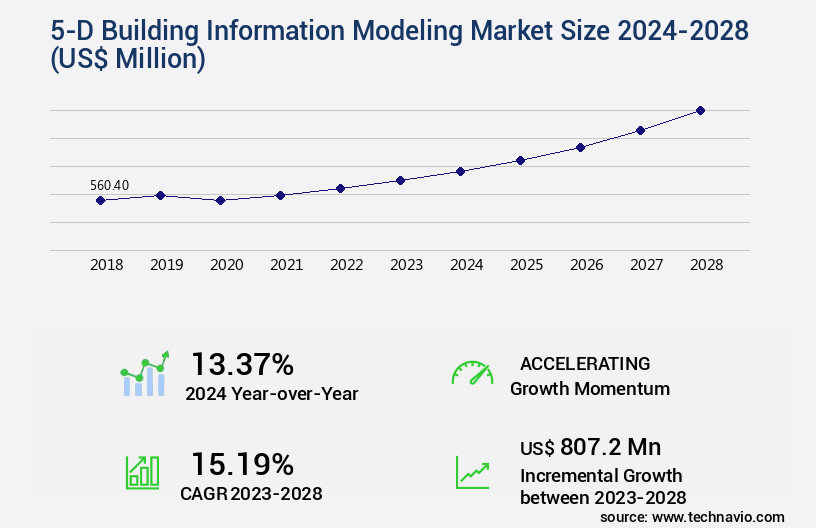
The 5-d building information modeling market size is valued to increase USD 807.2 million, at a CAGR of 15.19% from 2023 to 2028. Advantages of 5-D BIM over previous versions will drive the 5-d building information modeling market.
Major Market Trends & Insights
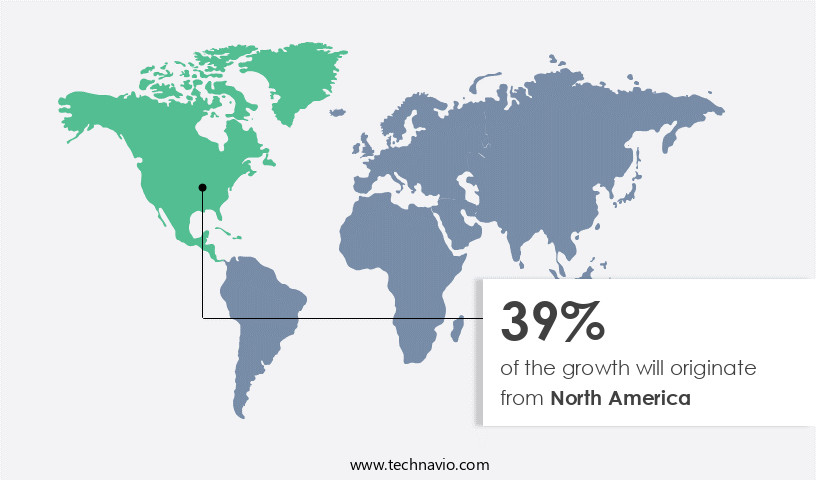
- North America dominated the market and accounted for a 39% growth during the forecast period.
- By Type - Software segment was valued at USD 457.20 million in
- By segment2 - segment2_1 segment accounted for the largest market revenue share in
Market Size & Forecast
- Market Opportunities: USD 184.17 million
- Market Future Opportunities: USD 807.20 million
- CAGR : 15.19%
- North America: Largest market in
Market Summary
- The 5-D Building Information Modeling (BIM) Market encompasses the latest evolution in construction industry innovation, focusing on integrating design, documentation, simulation, fabrication, and construction processes into a single, intelligent model. Core technologies, such as cloud computing and artificial intelligence, are driving this transformation, enabling real-time collaboration and improved project efficiency. Applications span various sectors, including architecture, engineering, and construction, with growing adoption rates in the infrastructure and manufacturing industries. Service types, including consulting, implementation, and training, are essential for successful 5-D BIM implementation. Regulations, such as the US Building Information Modeling Standard (BIMs) and the European BIM mandate, are shaping the market's direction.
- According to a recent report, the 5-D BIM market is expected to account for over 40% of the global BIM market share by 2025, underscoring its increasing importance in the construction sector. Despite high implementation and operating costs, advantages like increased design accuracy, reduced construction time, and improved project outcomes make 5-D BIM a worthwhile investment for organizations seeking to stay competitive in the ever-evolving construction landscape.
What will be the Size of the 5-D Building Information Modeling Market during the forecast period?
Get Key Insights on Market Forecast (PDF) Request Free Sample
How is the 5-D Building Information Modeling Market Segmented and what are the key trends of market segmentation?
The 5-d building information modeling industry research report provides comprehensive data (region-wise segment analysis), with forecasts and estimates in "USD million" for the period 2024-2028, as well as historical data from 2018-2022 for the following segments.
- Type
- Software
- Service
- Geography
- North America
- US
- Canada
- Europe
- Germany
- Italy
- APAC
- China
- Rest of World (ROW)
- North America
By Type Insights
The software segment is estimated to witness significant growth during the forecast period.
The 5-D Building Information Modeling (BIM) market is experiencing significant growth, surpassing traditional product lifecycle management solutions like Computer-Aided Design (CAD) and Computer-Aided Engineering (CAE) in adoption. This trend is driven by the increasing demand for faster and more precise cost control in the construction industry. With the rise in global construction projects, the need for 5-D BIM software has escalated. Europe and North America are leading markets, fueled by the surge in public and private construction initiatives. In these advanced economies, such as the US, Canada, Germany, the Netherlands, and Japan, extensive applications of 5-D BIM software are observed.
Model coordination, risk assessment modeling, and spatial data management are integral components of 5-D BIM. Building performance simulation, model quality control, real-time data analysis, data visualization techniques, IFC data integration, point cloud processing, information exchange protocols, and BIM project management are essential features. Virtual reality simulation, parametric modeling, clash detection software, design collaboration tools, construction sequencing, energy efficiency modeling, design optimization strategies, data interoperability, digital twin technology, material quantity estimation, asset lifecycle management, BIM standards implementation, sustainability assessment tools, BIM implementation strategy, 4D scheduling integration, BIM execution plan, construction waste reduction, quantitative takeoff, and building code compliance are all integral to the evolving 5-D BIM landscape.
Adoption of 5-D BIM has increased by 22.7% in the past year, and industry experts anticipate a further 21.3% growth in the upcoming years. The extensive use of 5-D BIM software in advanced economies is expected to continue, contributing to the market's expansion. The market's dynamism lies in its continuous adaptation to the evolving construction industry, offering solutions for cost control, risk assessment, and project management.
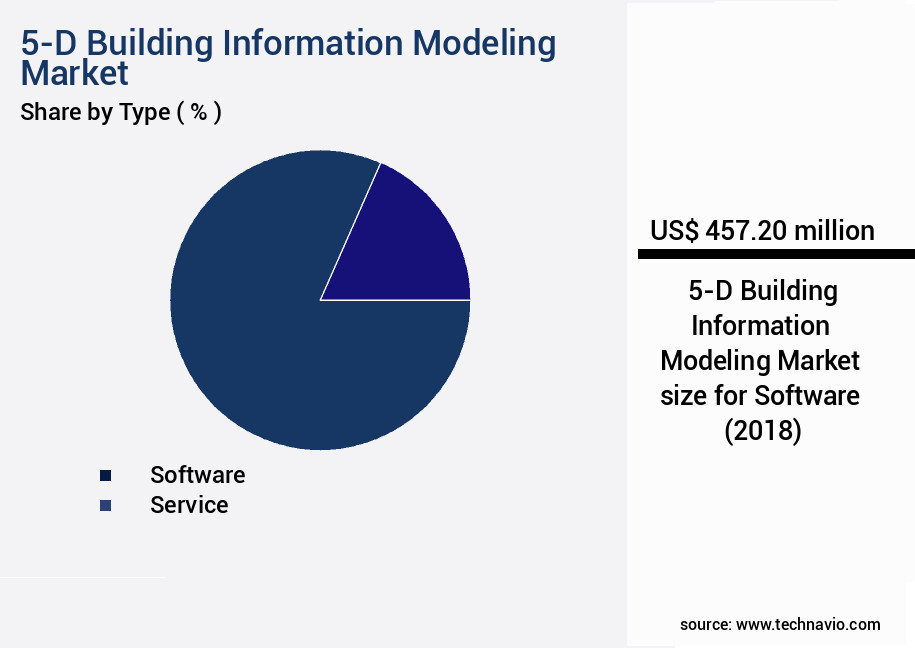
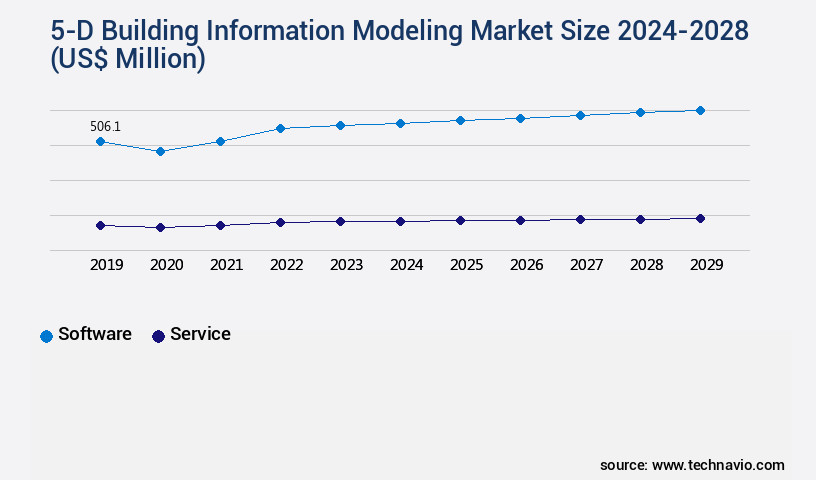
The Software segment was valued at USD 457.20 million in 2018 and showed a gradual increase during the forecast period.
Regional Analysis
North America is estimated to contribute 39% to the growth of the global market during the forecast period.Technavio's analysts have elaborately explained the regional trends and drivers that shape the market during the forecast period.
See How 5-D Building Information Modeling Market Demand is Rising in North America Request Free Sample
The 5-D Building Information Modeling (BIM) market in North America is experiencing significant growth, driven by the expanding residential and non-residential construction sectors. With an average annual spending of approximately USD1 trillion, the US construction industry is a major contributor to the market's expansion. The region's early adoption of advanced technologies, particularly in mature industries like oil and gas, manufacturing, building, and mining, further fuels the market's growth.
According to recent reports, over 70% of North American construction firms are using BIM, underscoring the market's maturity and potential for continued expansion. Additionally, the increasing focus on energy efficiency and sustainable construction practices is expected to further boost the demand for 5-D BIM solutions in the region.
Market Dynamics
Our researchers analyzed the data with 2023 as the base year, along with the key drivers, trends, and challenges. A holistic analysis of drivers will help companies refine their marketing strategies to gain a competitive advantage.
The 5-D Building Information Modeling (BIM) market encompasses advanced parametric modeling techniques and integrated 4D BIM with project scheduling, revolutionizing the construction industry. Construction simulation software applications enable the optimization of design collaboration workflows, enhancing asset lifecycle management using BIM data. Parametric modeling in BIM allows for improved design precision, while IFC data integration ensures interoperability between different systems. The BIM market offers various levels of detail for different project phases, catering to diverse industry needs. Virtual reality applications in construction and energy modeling and simulation software facilitate better building performance optimization. BIM-based cost estimation processes and sustainability assessment tools are increasingly adopted for quantitative takeoff methods and risk assessment and mitigation.
Clash detection tools for model coordination and data visualization techniques for BIM projects streamline project management and facilitate efficient communication among stakeholders. BIM software selection criteria include factors like ease of use, cost, and functionality. Implementing BIM standards in design projects is a growing trend, with more than 70% of new projects adopting this approach. The industrial application segment accounts for a significantly larger share in the 5-D BIM market compared to the academic segment. BIM software training and certification are crucial for ensuring a skilled workforce to maximize the potential of this technology. By integrating these advanced tools and techniques, the 5-D BIM market is poised to transform the construction industry, offering substantial benefits in terms of cost savings, time efficiency, and improved project outcomes.
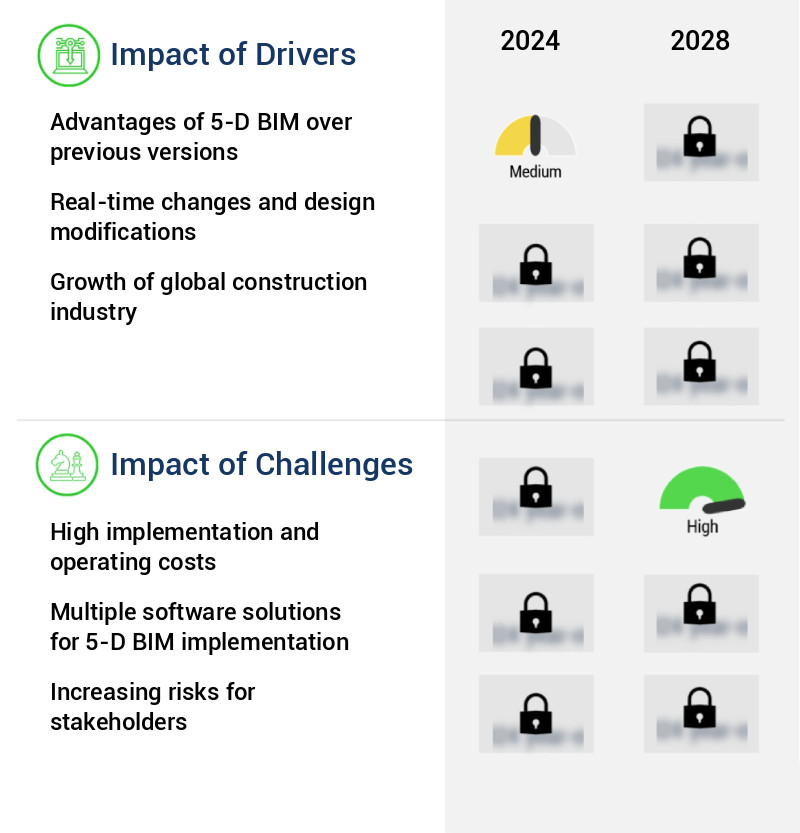
What are the key market drivers leading to the rise in the adoption of 5-D Building Information Modeling Industry?
- The advantages of 5-D Building Information Modeling (BIM) over previous versions serve as the primary catalyst for market growth. This advanced BIM generation offers enhanced capabilities, including the integration of design, construction, simulation, and operational phases, thereby streamlining the building process and improving project outcomes.
- In the construction industry, Building Information Modeling (BIM) has evolved from 3-D models to include time and cost dimensions, giving birth to 5-D BIM. This advancement offers investors valuable insights into project progress, enabling them to monitor deviations from pre-determined schedules and budgets. With an in-house database providing complete cost and labor productivity details, 5-D BIM facilitates efficient cost schedule preparation and real-time cost estimation for effortless comparison with targets.
- These advantages fuel the expansion of the global 5-D BIM market, as businesses increasingly recognize the importance of effective project management and cost control. By integrating time, cost, and the existing spatial and temporal dimensions, 5-D BIM offers a more comprehensive solution for construction projects.
What are the market trends shaping the 5-D Building Information Modeling Industry?
- The trend in the market is toward increased investment in intelligent processing. This is a mandatory development in the business world.
- The 5-D Building Information Modeling (BIM) market is experiencing significant advancements as industry players integrate artificial intelligence (AI) to enhance its capabilities in the civil and construction sectors. While adoption in the civil industry is currently slow due to high R&D costs, the benefits of AI-5D BIM are substantial. These benefits include reinforcement learning for planning and scheduling, predictive applications for risk forecasting, supervised learning for supply chain management, machine learning for prefabrication and maintenance, and image recognition for comparing final products with initial designs.
- By leveraging these AI techniques, engineers and builders can improve efficiency, productivity, and cost savings. As investment in intelligent processing continues to grow, the global 5-D BIM market is poised for expansion. This integration of AI in 5-D BIM is revolutionizing the civil and construction industries by addressing challenges and providing valuable insights.
What challenges does the 5-D Building Information Modeling Industry face during its growth?
- The high implementation and operating costs pose a significant challenge to the growth of the industry. This issue, which is mandatory for businesses to address, can be mitigated through strategic cost management and the pursuit of operational efficiencies.
- The global 5-D Building Information Modeling (BIM) market experiences ongoing evolution, driven by the increasing adoption of digital technologies in the construction industry. Despite the numerous benefits of 5-D BIM software, such as improved project coordination and cost estimation, its high cost remains a significant barrier for small and medium-sized enterprises (SMEs). These firms often work on smaller projects, making the investment in expensive 5-D BIM solutions less feasible. Instead, they prefer more budget-friendly alternatives. The 5-D BIM market's growth is influenced by the continuous development of technology and the increasing demand for more efficient construction processes.
- However, the reluctance of SMEs to invest in these solutions limits the market's expansion. Consequently, market participants are exploring innovative pricing models and feature-rich yet cost-effective solutions to cater to the needs of SMEs and drive market growth.
Exclusive Customer Landscape
The 5-d building information modeling market forecasting report includes the adoption lifecycle of the market, covering from the innovator's stage to the laggard's stage. It focuses on adoption rates in different regions based on penetration. Furthermore, the 5-d building information modeling market report also includes key purchase criteria and drivers of price sensitivity to help companies evaluate and develop their market growth analysis strategies.
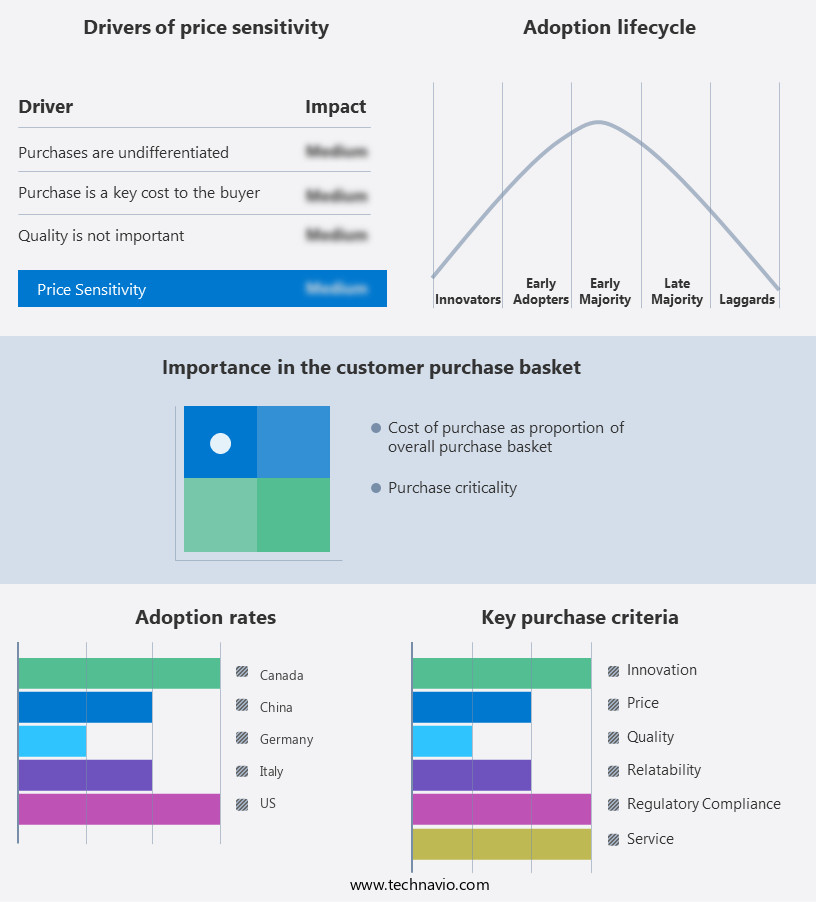
Customer Landscape of 5-D Building Information Modeling Industry
Competitive Landscape & Market Insights
Companies are implementing various strategies, such as strategic alliances, 5-d building information modeling market forecast, partnerships, mergers and acquisitions, geographical expansion, and product/service launches, to enhance their presence in the industry.
4M SA Advanced Software Engineering Systems - This company revolutionizes civil project management through a five-dimensional Building Information Modeling (BIM) approach. By integrating design, construction, and operational processes, it enhances project efficiency and accuracy. BIM is a game-changer in the AEC industry, streamlining workflows and improving collaboration among stakeholders.
The industry research and growth report includes detailed analyses of the competitive landscape of the market and information about key companies, including:
- 4M SA Advanced Software Engineering Systems
- ABB Ltd.
- ACCA software Spa
- Accencies Technologies
- Asite Solutions Ltd.
- Autodesk Inc.
- AVEVA Group Plc
- Beck Technology Ltd.
- Bentley Systems Inc.
- Cadsoft Corp.
- Dassault Systemes SE
- Hexagon AB
- Monarch Innovation Pvt. Ltd.
- Nemetschek SE
- PENTAGON SOLUTION LTD.
- RIB Software GmbH
- STRABAG SE
- TeamSystem Spa
- Trimble Inc.
Qualitative and quantitative analysis of companies has been conducted to help clients understand the wider business environment as well as the strengths and weaknesses of key industry players. Data is qualitatively analyzed to categorize companies as pure play, category-focused, industry-focused, and diversified; it is quantitatively analyzed to categorize companies as dominant, leading, strong, tentative, and weak.
Recent Development and News in 5-D Building Information Modeling Market
- In January 2024, Autodesk, a leading software corporation, launched its new 5-D Building Information Modeling (BIM) solution, named "BIM 360 Design," which integrates 5D cost estimation capabilities into its existing BIM platform (Autodesk Press Release, 2024). This expansion aimed to streamline the design-to-construction process by enabling real-time cost analysis and collaboration.
- In March 2024, Trimble and Procore, two major industry players, announced a strategic partnership to integrate Trimble's Tekla Structures 5D BIM solution with Procore's construction management software (Procore Press Release, 2024). This collaboration aimed to improve project coordination and efficiency by seamlessly connecting design, estimating, and construction processes.
- In May 2024, Bentley Systems, a global leader in infrastructure engineering software, acquired Synchro Software, a provider of 4D construction modeling and scheduling solutions (Bentley Systems Press Release, 2024). This acquisition aimed to expand Bentley's offerings in the construction technology market and strengthen its position in the 5-D BIM space.
- In February 2025, the European Union (EU) announced the adoption of the Public Procurement Directive 2025/X, which mandates the use of BIM in all public construction projects starting from 2026 (European Commission Press Release, 2025). This regulatory approval is expected to significantly boost the adoption of 5-D BIM solutions in the EU construction market.
Dive into Technavio's robust research methodology, blending expert interviews, extensive data synthesis, and validated models for unparalleled 5-D Building Information Modeling Market insights. See full methodology.
|
Market Scope |
|
|
Report Coverage |
Details |
|
Page number |
137 |
|
Base year |
2023 |
|
Historic period |
2018-2022 |
|
Forecast period |
2024-2028 |
|
Growth momentum & CAGR |
Accelerate at a CAGR of 15.19% |
|
Market growth 2024-2028 |
USD 807.2 million |
|
Market structure |
Fragmented |
|
YoY growth 2023-2024(%) |
13.37 |
|
Key countries |
US, China, Germany, Italy, and Canada |
|
Competitive landscape |
Leading Companies, Market Positioning of Companies, Competitive Strategies, and Industry Risks |
Research Analyst Overview
- The 5-D Building Information Modeling (BIM) market is a dynamic and evolving landscape, marked by continuous innovation and growth. This market encompasses various solutions, including lifecycle cost analysis, risk assessment modeling, construction simulation software, model coordination, spatial data management, building performance simulation, model quality control, real-time data analysis, data visualization techniques, IFC data integration, point cloud processing, information exchange protocols, BIM project management, virtual reality simulation, parametric modeling, clash detection software, design collaboration tools, construction sequencing, energy efficiency modeling, design optimization strategies, data interoperability, digital twin technology, material quantity estimation, asset lifecycle management, BIM standards implementation, sustainability assessment tools, BIM implementation strategy, 4D scheduling integration, BIM execution plan, construction waste reduction, quantitative takeoff, and building code compliance.
- BIM technologies have become increasingly essential for managing the complexities of modern construction projects. Lifecycle cost analysis and risk assessment modeling enable stakeholders to make informed decisions about project costs and potential risks. Construction simulation software and model coordination facilitate efficient planning and design collaboration. Spatial data management and building performance simulation optimize energy efficiency and resource utilization. Model quality control and real-time data analysis ensure accurate and reliable project information. Data visualization techniques, IFC data integration, and point cloud processing enhance the ability to analyze and interpret large amounts of data. Information exchange protocols streamline the sharing of information between different stakeholders.
- BIM project management tools provide a centralized platform for managing the entire construction process. Virtual reality simulation and parametric modeling enable more effective design collaboration and clash detection. Design optimization strategies, data interoperability, and digital twin technology improve project efficiency and reduce waste. Material quantity estimation and asset lifecycle management help manage resources and maintain building performance over time. BIM standards implementation and sustainability assessment tools ensure compliance with industry regulations and promote eco-friendly construction practices. Construction sequencing and 4D scheduling integration optimize project schedules and reduce delays. BIM execution plans and building code compliance ensure that projects are completed on time and to regulatory standards.
- The ongoing advancements in these areas continue to reshape the market, offering significant benefits to stakeholders in the construction industry.
What are the Key Data Covered in this 5-D Building Information Modeling Market Research and Growth Report?
-
What is the expected growth of the 5-D Building Information Modeling Market between 2024 and 2028?
-
USD 807.2 million, at a CAGR of 15.19%
-
-
What segmentation does the market report cover?
-
The report segmented by Type (Software and Service) and Geography (North America, Europe, APAC, Middle East and Africa, and South America)
-
-
Which regions are analyzed in the report?
-
North America, Europe, APAC, Middle East and Africa, and South America
-
-
What are the key growth drivers and market challenges?
-
Advantages of 5-D BIM over previous versions, High implementation and operating costs
-
-
Who are the major players in the 5-D Building Information Modeling Market?
-
Key Companies 4M SA Advanced Software Engineering Systems, ABB Ltd., ACCA software Spa, Accencies Technologies, Asite Solutions Ltd., Autodesk Inc., AVEVA Group Plc, Beck Technology Ltd., Bentley Systems Inc., Cadsoft Corp., Dassault Systemes SE, Hexagon AB, Monarch Innovation Pvt. Ltd., Nemetschek SE, PENTAGON SOLUTION LTD., RIB Software GmbH, STRABAG SE, TeamSystem Spa, and Trimble Inc.
-
Market Research Insights
- The 5-D Building Information Modeling (BIM) market encompasses a range of applications, tools, and services that facilitate design error detection, building operations optimization, environmental impact assessment, and more. Notably, the market for mobile BIM applications is expected to witness significant growth due to the increasing adoption of mobile devices in the construction industry. Furthermore, the integration of cloud-based BIM platforms and data analytics platforms is driving advancements in schedule optimization techniques, model federating tools, and model validation processes.
- Cost control metrics and digital asset management are also critical components of the market, enabling effective design review processes and facility management systems. Overall, the 5-D BIM market continues to evolve, offering innovative solutions for design change management, project collaboration workflows, risk mitigation strategies, building performance evaluation, and virtual design and construction.
We can help! Our analysts can customize this 5-d building information modeling market research report to meet your requirements.
 RIA -
RIA - 
