



Augmented And Virtual Reality In Healthcare Market Size 2024-2028
The augmented and virtual reality in healthcare market size is forecast to increase by USD 6.21 billion, at a CAGR of 28% between 2023 and 2028.
- The Augmented and Virtual Reality (A&VR) market in healthcare is experiencing significant growth, driven by the increasing demand for innovative and immersive healthcare solutions. This trend is being fueled by the advent of Industry 4.0 and the digital transformation of healthcare services. A&VR technology offers numerous benefits, including enhanced training and education for healthcare professionals, improved patient outcomes, and increased operational efficiency. However, the market faces several challenges. Infrastructural and integration issues remain a significant obstacle to widespread adoption. The complexity of integrating A&VR technology into existing healthcare systems and workflows can be a daunting task.
- Additionally, ensuring the security and privacy of patient data in A&VR applications is a critical concern. Addressing these challenges will require collaboration between technology providers, healthcare organizations, and regulatory bodies to create standardized frameworks and guidelines for A&VR implementation. Companies that can effectively navigate these challenges and deliver innovative, user-friendly solutions will be well-positioned to capitalize on the growing demand for A&VR technology in healthcare.
What will be the Size of the Augmented And Virtual Reality In Healthcare Market during the forecast period?
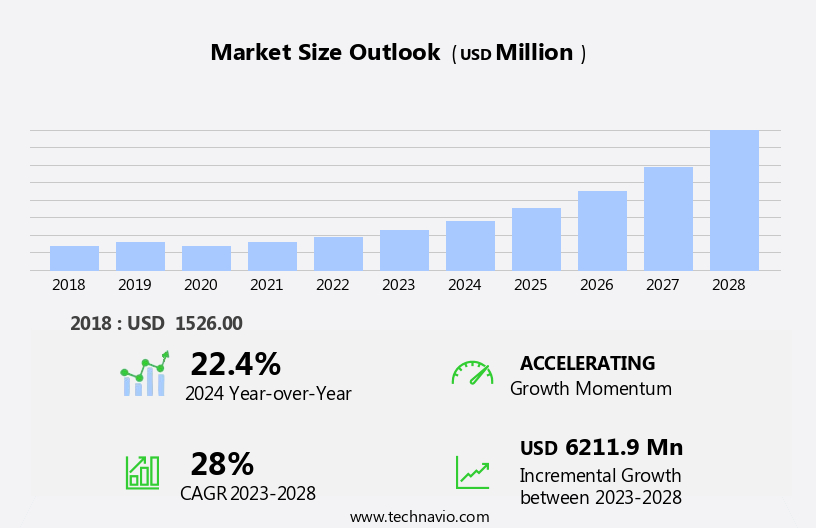
Explore in-depth regional segment analysis with market size data - historical 2018-2022 and forecasts 2024-2028 - in the full report.
Request Free Sample
The augmented and virtual reality (AVR) market in healthcare continues to evolve, integrating various components to enhance patient care and improve clinical outcomes. Hardware components, such as head-mounted displays (HMDs) and wearable sensors, provide immersive experiences for medical training simulations and telemedicine platforms. Virtual reality (VR) technology offers interactive anatomy models, allowing for more effective patient education and clinical decision-making. Computer vision and 3D modeling enable advanced data analytics and user experience (UX) design, while cloud computing facilitates seamless integration with clinical systems and software platforms. Haptic feedback adds a tactile dimension to VR applications, enhancing the user experience in mental health treatment, physical therapy, and surgical planning.
AVR technology is revolutionizing healthcare, with applications ranging from medication adherence and procedural training to pain management and rehabilitation therapy. Machine learning (ML) and artificial intelligence (AI) are being integrated to improve treatment efficacy and clinical decision support. User interface (UI) design plays a crucial role in ensuring an intuitive and engaging patient experience. The ongoing unfolding of market activities reveals a dynamic and evolving landscape, with continuous advancements in hardware, software, and application development. The integration of AVR technology with telemedicine platforms, clinical decision support systems, and data visualization tools is transforming the way healthcare is delivered and experienced.
The potential for immersive, interactive content in chronic disease management, diagnostic imaging, and occupational therapy is vast, offering new opportunities for innovation and growth in the healthcare sector.
How is this Augmented And Virtual Reality In Healthcare Industry segmented?
The augmented and virtual reality in healthcare industry research report provides comprehensive data (region-wise segment analysis), with forecasts and estimates in "USD million" for the period 2024-2028, as well as historical data from 2018-2022 for the following segments.
- Component
- Hardware
- Software
- Geography
- North America
- US
- Europe
- Germany
- UK
- APAC
- China
- Japan
- Rest of World (ROW)
- North America
By Component Insights
The hardware segment is estimated to witness significant growth during the forecast period.
The augmented and virtual reality (AR/VR) market in healthcare is experiencing significant growth, with various applications revolutionizing patient care and medical training. AR integrates digital information into the real world, enhancing user experience (UX) and improving patient engagement. Health informatics and 360-degree videos are leveraged to deliver immersive educational content. AR-assisted surgical planning and diagnostic imaging offer more precise and effective treatment outcomes. VR technology, offering 3D visual representations, is used in medical training simulations for procedural training, enabling doctors to practice complex procedures in a risk-free environment. Wearable sensors and HMDs equipped with computer vision facilitate motion tracking and data analytics, enabling remote patient monitoring and medication adherence.
Haptic feedback and VR environments provide realistic experiences for mental health treatment and physical therapy. Machine learning (ML) and artificial intelligence (AI) are integrated into software platforms for clinical decision support, treatment efficacy analysis, and chronic disease management. Interactive content and clinical outcomes are visualized through data visualization tools, enhancing patient education and rehabilitation therapy. Integration platforms and telemedicine platforms facilitate seamless communication between healthcare providers and patients, improving accessibility and affordability. Innovations in AR/VR technology include handheld devices for pain management, content creation tools for occupational therapy, and immersive experiences for rehabilitation therapy. The future of AR/VR in healthcare is promising, with continuous advancements in hardware components, such as HMDs, and software platforms, driving the industry forward.
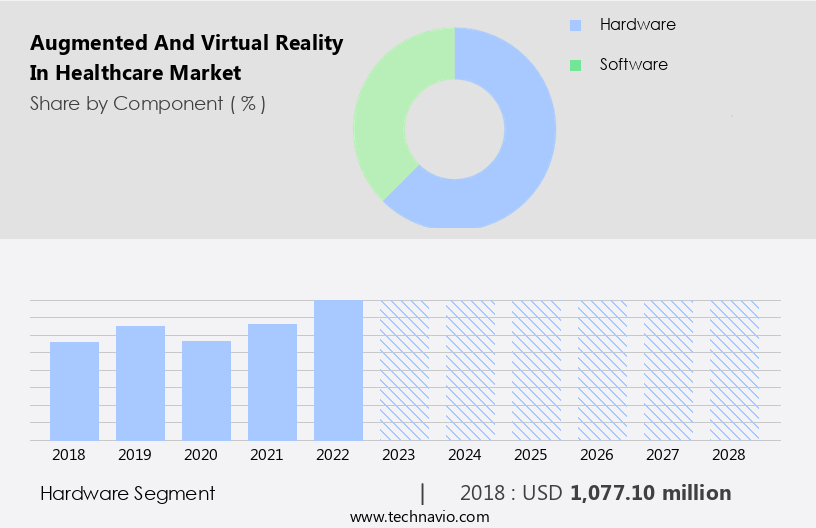
The Hardware segment was valued at USD 1.08 billion in 2018 and showed a gradual increase during the forecast period.
Regional Analysis
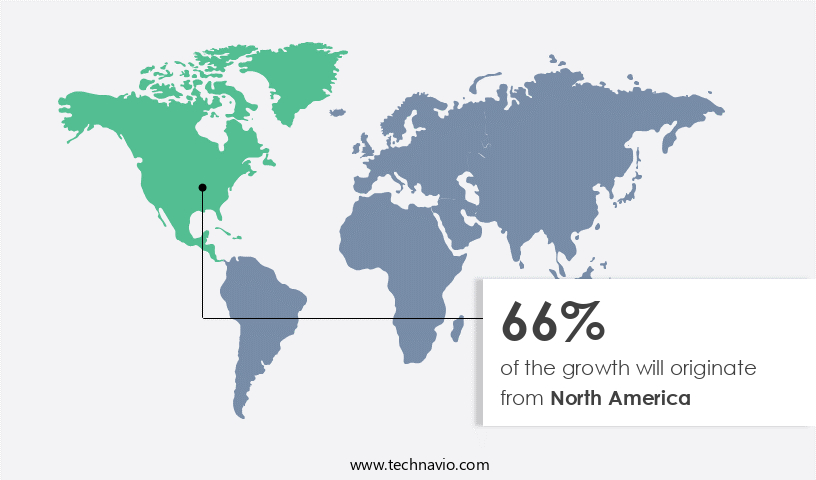
North America is estimated to contribute 66% to the growth of the global market during the forecast period. Technavio's analysts have elaborately explained the regional trends and drivers that shape the market during the forecast period.
The North American market for augmented and virtual reality in healthcare is experiencing significant growth due to the region's advanced technology landscape and increased healthcare spending. The maturing healthcare industry in developed countries and the rise of digitalization are key catalysts for this expansion. Urbanization and disposable income growth in North America are also contributing factors, as these technologies offer more convenient and realistic experiences for both patients and healthcare professionals. Augmented reality and virtual reality solutions are increasingly being adopted to enhance patient engagement, improve medical training simulations, facilitate procedural training, and support medication adherence.
Wearable sensors, head-mounted displays, and other hardware components are integral to these solutions, as are user interfaces, computer vision, and data analytics. Additionally, virtual reality technologies are being used for mental health treatment, physical therapy, and chronic disease management, among other healthcare applications. Machine learning and artificial intelligence are also playing a crucial role in improving treatment efficacy, clinical decision support, and data visualization. The integration of these technologies into telemedicine platforms, clinical decision support systems, and surgical planning software is revolutionizing the healthcare industry, offering immersive experiences and rehabilitation therapy for various conditions. Pain management, content creation tools, and occupational therapy are other areas where augmented and virtual reality technologies are making a significant impact.
Overall, the North American market for augmented and virtual reality in healthcare is poised for continued growth, driven by the convergence of technology and healthcare needs.
Market Dynamics
Our researchers analyzed the data with 2023 as the base year, along with the key drivers, trends, and challenges. A holistic analysis of drivers will help companies refine their marketing strategies to gain a competitive advantage.
What are the key market drivers leading to the rise in the adoption of Augmented and Virtual Reality In Healthcare Industry?
- The growing demand for healthcare services, driven by an aging population, increasing prevalence of chronic diseases, and advancements in medical technology, is the primary factor fueling market growth.
- The global healthcare industry is experiencing significant growth due to the aging population and rising disposable incomes, leading to increased demand for advanced healthcare services. Chronic diseases and the need for enhanced medical assistance are also driving this trend. The healthcare sector faces a pressing need for more resources and personnel to effectively manage the growing patient population. In response, innovative technologies such as augmented and virtual reality (AR/VR) are being adopted to improve patient care and diagnostic accuracy.
- These immersive technologies offer a harmonious blend of real and virtual environments, allowing for more efficient and effective medical procedures. The use of AR/VR in diagnostic imaging and medical training is expected to continue gaining momentum in the coming years.
What are the market trends shaping the Augmented and Virtual Reality In Healthcare Industry?
- The emergence of Industry 4.0 signifies a significant market trend.
- Augmented Reality (AR) and Virtual Reality (VR) technologies are revolutionizing the healthcare sector by enhancing remote patient monitoring, medical training, and user experience. AR integrates digital information into the real world, making it an ideal solution for real-time patient monitoring and medication adherence. Meanwhile, VR provides immersive experiences for medical training simulations, procedural training, and patient engagement. Health informatics benefits from these technologies through the use of 360-degree videos and head-mounted displays (HMDs), enabling healthcare professionals to access and analyze patient data in a more interactive and harmonious manner.
- Wearable sensors and UI designs further streamline the process, ensuring a seamless and efficient healthcare ecosystem. Overall, AR and VR technologies are transforming healthcare by improving patient outcomes, enhancing medical education, and optimizing operational efficiency.
What challenges does the Augmented And Virtual Reality In Healthcare Industry face during its growth?
- The integration and infrastructure challenges are significant impediments to the industry's growth. In order to expand, companies must effectively address these complex issues, ensuring seamless integration of systems and the development of robust infrastructures.
- Augmented and virtual reality (VR) technologies are revolutionizing healthcare applications, offering immersive experiences for mental health treatment, physical therapy, and interactive anatomy models. Hardware components, such as VR headsets and haptic feedback devices, enable users to interact with 3D modeling and computer vision technologies in virtual environments. However, the implementation of these advanced systems in the healthcare industry faces challenges. Infrastructure and integration issues persist, as access to high-speed Internet and compatibility with heterogeneous IT systems are necessary for effective implementation. These challenges hinder productivity and may limit the reach of VR solutions, particularly in developing countries. Despite these hurdles, the potential benefits of VR in healthcare are significant, including improved patient outcomes, enhanced training opportunities, and cost savings through remote consultations and virtual treatments.
- Cloud computing can help mitigate some of these challenges by providing scalable and flexible solutions for data storage and processing. Overall, the integration of VR technologies in healthcare is a promising development, requiring ongoing efforts to address infrastructure and integration challenges.
Exclusive Customer Landscape
The augmented and virtual reality in healthcare market forecasting report includes the adoption lifecycle of the market, covering from the innovator's stage to the laggard's stage. It focuses on adoption rates in different regions based on penetration. Furthermore, the augmented and virtual reality in healthcare market report also includes key purchase criteria and drivers of price sensitivity to help companies evaluate and develop their market growth analysis strategies.
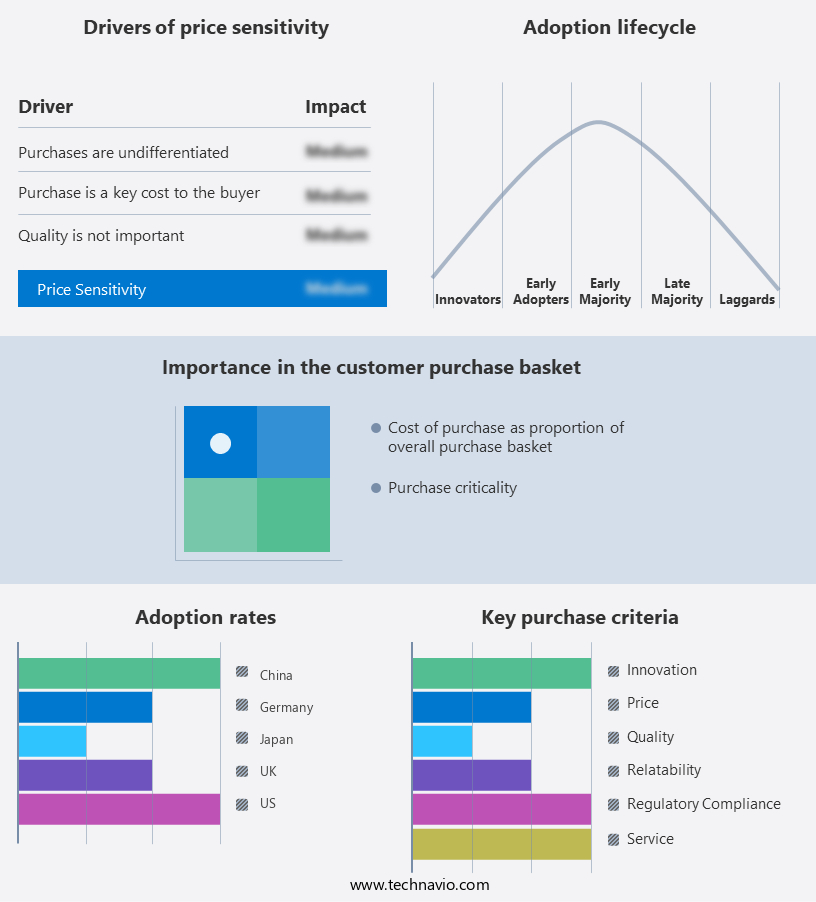
Customer Landscape
Key Companies & Market Insights
Companies are implementing various strategies, such as strategic alliances, augmented and virtual reality in healthcare market forecast, partnerships, mergers and acquisitions, geographical expansion, and product/service launches, to enhance their presence in the industry.
3D Systems Corp. - The company specializes in providing advanced healthcare solutions through augmented and virtual reality technology, specifically ImmersiveTouch.
The industry research and growth report includes detailed analyses of the competitive landscape of the market and information about key companies, including:
- 3D Systems Corp.
- AccuVein Inc.
- Augmedix Inc
- CAE Inc.
- Canon Inc.
- EchoPixel Inc.
- Firsthand Technology Inc.
- Intuitive Surgical Inc.
- Koninklijke Philips N.V.
- Laerdal Medical AS
- Microsoft Corp.
- MindMaze SA
- Orca Health Inc.
- Siemens AG
- Wipro Ltd.
- WorldViz Inc.
- XRHealth USA Inc.
Qualitative and quantitative analysis of companies has been conducted to help clients understand the wider business environment as well as the strengths and weaknesses of key industry players. Data is qualitatively analyzed to categorize companies as pure play, category-focused, industry-focused, and diversified; it is quantitatively analyzed to categorize companies as dominant, leading, strong, tentative, and weak.
Recent Development and News in Augmented And Virtual Reality In Healthcare Market
- In January 2024, Medtronic, a leading medical technology company, announced the FDA approval of its HoloLens 2-powered holographic surgical planning system, HoloAnatomy, for use in pre-surgical planning and training (Medtronic Press Release, 2024). This approval marked a significant milestone in the adoption of augmented reality (AR) technology in the healthcare sector.
- In March 2024, Microsoft and Google, two tech giants, joined forces to expand their presence in the AR and virtual reality (VR) healthcare market. Microsoft entered into a strategic partnership with Google's DeepMind Health to develop AI-powered diagnostic tools using AR and VR technology (Microsoft News Center, 2024). Google, on the other hand, launched its VR headset, Google Cardboard VR 2.0, with enhanced features designed specifically for healthcare applications (Google Blog, 2024).
- In April 2025, Oculus, a Facebook company, secured a strategic investment of USD 100 million from Johnson & Johnson to accelerate the development and deployment of Oculus for Business solutions in healthcare (Oculus Press Release, 2025). This investment signaled a strong commitment from both companies to the potential of VR technology in healthcare training, simulation, and therapy.
- In May 2025, the European Union's Medical Devices Regulation (MDR) came into effect, paving the way for the approval and market entry of advanced AR and VR medical devices in Europe (European Commission, 2020). This regulatory change is expected to boost the growth of the AR and VR healthcare market in Europe, with a potential market size of USD 1.2 billion by 2027 (Market Research Report, 2021).
Research Analyst Overview
- In the dynamic healthcare industry, augmented reality (AR) and virtual reality (VR) technologies are revolutionizing remote diagnostics and home healthcare. Consumer health technology, including wearable health trackers and AI-powered diagnostics, integrates AR and VR for more accurate and accessible healthcare services. Public health initiatives leverage AR for disease surveillance and holographic projections for educational purposes. Data security is paramount in telehealth services and healthcare IT infrastructure, ensuring patient safety and privacy during virtual consultations. Precision medicine and pharmaceutical development benefit from AR and VR in clinical trials and robotic surgery. Disaster response teams utilize AR for real-time epidemiological modeling and virtual training.
- Workflow optimization in hospitals and staff training programs employ VR simulations for efficient and effective learning experiences. Wellness programs integrate fitness apps and AI-powered virtual assistants for personalized preventive care. Accessibility features in assistive technologies and BCIs cater to diverse patient populations. VR in healthcare also extends to patient-centered care, such as virtual environments for mental health therapy and pain management. Predictive analytics and big data analytics enhance patient care by providing personalized treatment plans and early disease detection. AR and VR technologies continue to transform the healthcare landscape, from medical devices and telehealth services to pharmaceutical development and public health initiatives.
- The future of healthcare is a collaborative, accessible, and technology-driven ecosystem that prioritizes patient safety, personalized medicine, and improved outcomes.
Dive into Technavio's robust research methodology, blending expert interviews, extensive data synthesis, and validated models for unparalleled Augmented and Virtual Reality In Healthcare Market insights. See full methodology.
|
Market Scope |
|
|
Report Coverage |
Details |
|
Page number |
150 |
|
Base year |
2023 |
|
Historic period |
2018-2022 |
|
Forecast period |
2024-2028 |
|
Growth momentum & CAGR |
Accelerate at a CAGR of 28% |
|
Market growth 2024-2028 |
USD 6211.9 million |
|
Market structure |
Fragmented |
|
YoY growth 2023-2024(%) |
22.4 |
|
Key countries |
US, China, UK, Germany, and Japan |
|
Competitive landscape |
Leading Companies, Market Positioning of Companies, Competitive Strategies, and Industry Risks |
What are the Key Data Covered in this Augmented And Virtual Reality In Healthcare Market Research and Growth Report?
- CAGR of the Augmented And Virtual Reality In Healthcare industry during the forecast period
- Detailed information on factors that will drive the growth and forecasting between 2024 and 2028
- Precise estimation of the size of the market and its contribution of the industry in focus to the parent market
- Accurate predictions about upcoming growth and trends and changes in consumer behaviour
- Growth of the market across North America, Europe, APAC, South America, and Middle East and Africa
- Thorough analysis of the market's competitive landscape and detailed information about companies
- Comprehensive analysis of factors that will challenge the augmented and virtual reality in healthcare market growth of industry companies
We can help! Our analysts can customize this augmented and virtual reality in healthcare market research report to meet your requirements.
 RIA -
RIA - 
