



Dynamite Market Size 2024-2028
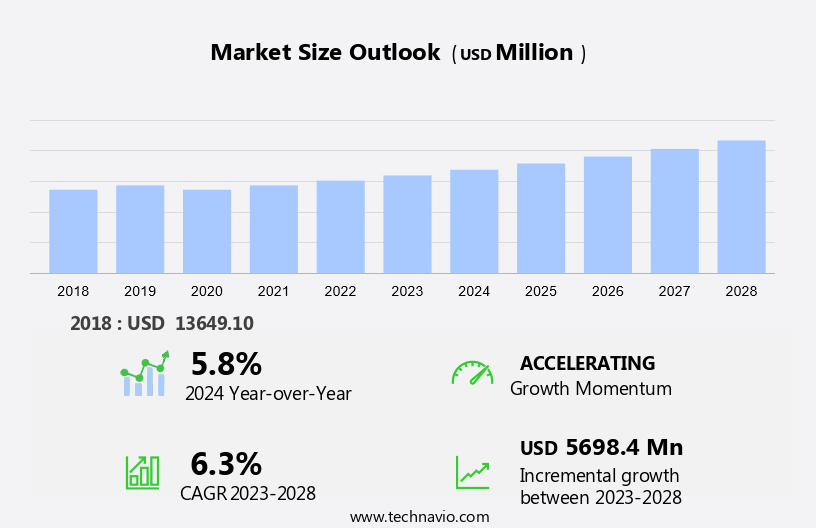
The dynamite market size is forecast to increase by USD 5.7 billion at a CAGR of 6.3% between 2023 and 2028.
- The market has experienced significant developments, driven by the expansion of mining activities in emerging economies and the growth of the construction sector. The formation of gases from dynamite, including potential and kinetic energy, continues to be a crucial factor in various industries, such as mining and construction. Dynamite, which includes porous siliceous earth, wood pulp, and sodium nitrate as key components, plays a crucial role in mining operations, both in underground and open-pit sites. The invention of dynamite, which enabled the efficient harnessing and application of stored energy for motion and explosion, revolutionized these sectors. However, the closure of mines due to safety concerns and environmental regulations poses challenges to the market's growth. In the US context, the market trends include the increasing demand for dynamite In the construction industry, particularly for excavation and demolition projects, and the ongoing research and development of safer and more efficient dynamite alternatives.
What will be the Size of the Dynamite Market During the Forecast Period?
- The invention of dynamite, a nitroglycerin-based explosive, revolutionized various industries, particularly construction and military applications, In the late 19th century. This groundbreaking discovery was guided by the scientific community's relentless pursuit of advancements in chemistry. Nitroglycerin, a highly sensitive liquid, was the primary component of this explosive, which was later combined with clay and blasting caps to create a stable, usable product. Dynamite's potential energy was harnessed to accomplish feats previously deemed impossible. In the realm of construction, dynamite enabled the formation of tunnels and canals, significantly reducing the time and effort required for such projects.
- Further, the energy stored in dynamite was transformed into kinetic energy upon explosion, propelling massive amounts of debris and rock, thus paving the way for rapid infrastructure development. Beyond construction, dynamite's impact was felt In the military sector. The explosive force generated by the formation of gases upon explosion made it an invaluable tool in warfare. Dynamite was used to create bombs, canons, and rockets, providing a significant advantage in military engagements. The invention of dynamite marked a pivotal moment in history, with far-reaching consequences. Ethical considerations were raised due to its destructive potential.
- However, the potential benefits of dynamite in various industries were too significant to ignore. The invention was patented, ensuring its exclusive use and further development by its creators. Thus, the invention of dynamite brought about a new era in construction and military applications. Its impact on the way we build infrastructure and wage wars is still felt today. The transformation of potential energy into kinetic energy through the use of dynamite continues to be a testament to the power of scientific discovery and human ingenuity.
How is this Dynamite Industry segmented and which is the largest segment?
The dynamite industry research report provides comprehensive data (region-wise segment analysis), with forecasts and estimates in "USD billion" for the period 2024-2028, as well as historical data from 2018-2022 for the following segments.
- Application
- Mining
- Defense
- Construction
- Others
- Geography
- APAC
- China
- North America
- US
- Europe
- Germany
- South America
- Brazil
- Middle East and Africa
- APAC
By Application Insights
- The mining segment is estimated to witness significant growth during the forecast period.
The market is experiencing significant growth due to the increasing demand for blasting and drilling applications In the mining sector, particularly in developing countries like India and China. This market trend is attributed to the rising application of dynamite in various mining industries, including quarrying, coal mining, metal mining, and non-metal mining. Coal mining is a significant application of mining explosives, with dynamite being a preferred choice due to its shock resistance and heat stability. The percussion method is commonly used to initiate the detonation of dynamite, making it a reliable and efficient option for mining operations.
Furthermore, the absorbent nature of dynamite aids In the containment of explosions, ensuring safety and minimizing environmental impact. Blasting and explosives technology is a critical component of mining processes, and dynamite, such as RDX, ANFO, and TNT, is extensively used In these applications. The versatility of dynamite, combined with its ability to enhance mining productivity and efficiency, makes it an indispensable tool In the mining industry. The market for dynamite is expected to continue its growth trajectory during the forecast period, driven by the increasing demand for mining operations in developing countries.
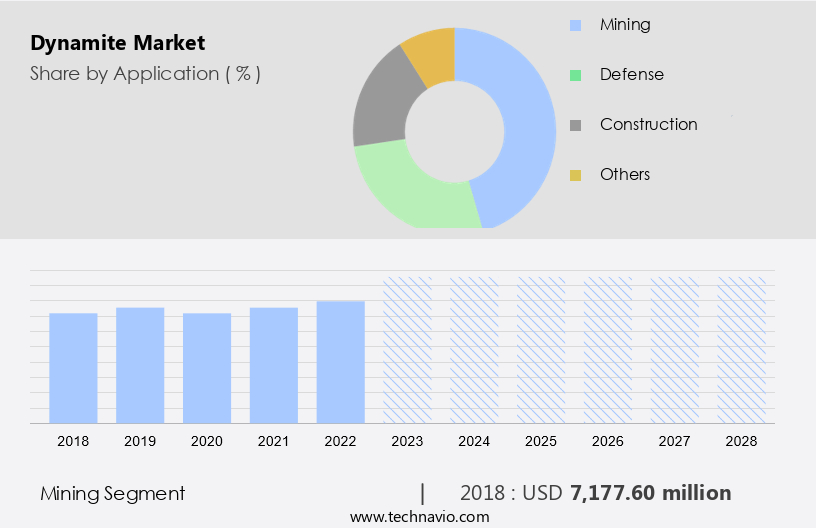
Get a glance at the Dynamite Industry report of share of various segments Request Free Sample
The mining segment was valued at USD 7.18 billion in 2018 and showed a gradual increase during the forecast period.
Regional Analysis
- APAC is estimated to contribute 53% to the growth of the global market during the forecast period.
Technavio's analysts have elaborately explained the regional trends and drivers that shape the market during the forecast period.
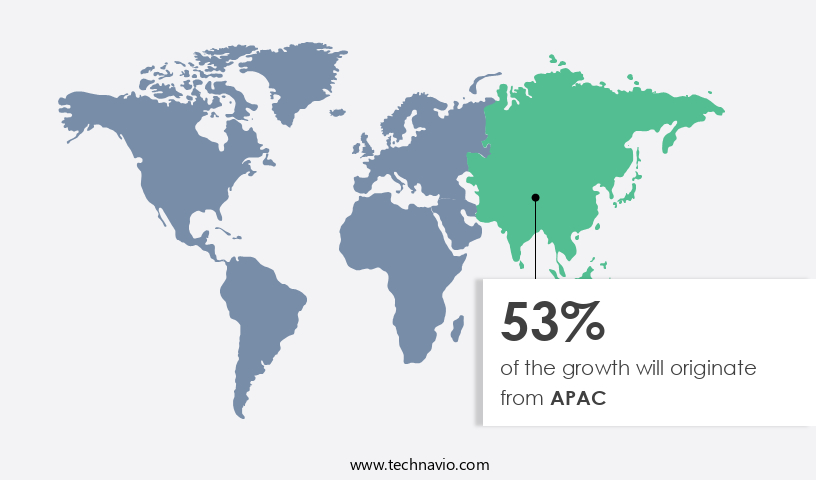
For more insights on the market share of various regions, Request Free Sample
The market In the Asia Pacific (APAC) region is significantly driven by the immense demand for energy and infrastructure development, which necessitates the utilization of metals and energy minerals. Major developing economies, including India, China, Indonesia, and the Philippines, are part of this region, making it a significant contributor to the global infrastructure sector. The APAC region holds immense potential in various sectors for infrastructure development, leading to an increased demand for minerals. Consequently, the demand for dynamite is anticipated to rise In the coming years to facilitate mining activities. The Chinese and Australian mining industries are the primary contributors to the market in APAC.
In India, the mining sector dominates the demand for dynamite due to the country's vast mineral and metal deposits. The use of dynamite as a cardiovascular drug or propellant for missiles is insignificant In the region. Instead, it is primarily used as a blasting agent for mining and construction activities. The colorless, oily explosive is a crucial component In the extraction of metals and minerals, making it an indispensable part of the mining industry in APAC.
Market Dynamics
Our researchers analyzed the data with 2023 as the base year, along with the key drivers, trends, and challenges. A holistic analysis of drivers will help companies refine their marketing strategies to gain a competitive advantage.
What are the key market drivers leading to the rise In the adoption of Dynamite Industry?
Shifting of mining activities to emerging economies is the key driver of the market.
- The mining industry is witnessing a significant shift towards emerging economies due to their stronger economic growth and larger GDPs compared to developed economies. Countries such as India, Brazil, South Africa, Indonesia, Mexico, and Kazakhstan are experiencing an increase in mining activities, particularly in the gold sector, which is seeing a high growth rate in Latin America. Africa is the second most popular destination for exploration and mining activities due to its vast mineral reserves.
- Key factors driving this trend include commodity demand, higher prices, liberalized mineral policies, advances in technology, and privatization. Notably, emerging economies hold the largest reserves of tin (95%) and platinum group metals (98%). This trend is expected to continue as these countries offer attractive investment opportunities for mining companies.
What are the market trends shaping the Dynamite Industry?
Growth of the construction sector is the upcoming market trend.
- The global construction industry has experienced significant transformations since 2005, with the economic downturn of 2008 resulting in a noticeable decrease in mature markets, including the US, which is presently in a recovery phase. The expansion of the construction sector is fueled by the escalating need for residential and commercial structures, such as offices and retail complexes. In major construction economies, like China and the US, advantageous interest rates facilitate private construction projects. Additionally, governments are investing in essential infrastructure sectors, including healthcare, education, power, transportation, and communication. The burgeoning demand for public infrastructure in emerging economies, such as Brazil, Russia, India, China, South Africa, and the Gulf Cooperation Council countries, is a significant contributor to market growth. The construction sector's development is also influenced by the increasing potential and kinetic energy harnessed from various inventions and stored energy sources.
- For instance, canals have been used for centuries to transport water and generate hydroelectric power, while modern innovations like compressed natural gas and solar energy offer sustainable alternatives to traditional energy sources. When these inventions are employed in construction projects, they contribute to the formation of gases and motion, ultimately leading to explosive progress In the industry. The construction industry's growth is further fuelled by the increasing investment in energy infrastructure, which is essential for powering modern buildings and cities. In the US, for example, the energy sector is experiencing a resurgence, with a focus on renewable energy sources like wind, solar, and hydropower. This shift towards cleaner, more sustainable energy sources is expected to continue, driving the construction sector's expansion and creating new opportunities for businesses.
- Thus, the construction industry's growth is underpinned by various factors, including the increasing demand for residential and commercial structures, favorable interest rates, government investment in infrastructure, and the adoption of innovative energy sources. As the industry continues to evolve, it will be essential for businesses to stay informed about the latest trends and developments to remain competitive and succeed in this dynamic market.
What challenges does the Dynamite Industry face during its growth?
Closure of mines is a key challenge affecting the industry's growth.
- In the mining industry, scientists and experts have been guided by ethical considerations to address the challenges of declining investments and environmental concerns. The invention of nitroglycerin and the subsequent development of dynamite revolutionized mining, but its use has raised concerns due to the potential risks of land and water pollution. Many underground mines, which require a larger workforce and yield lower output, have been identified as unprofitable and have been temporarily or permanently closed in various parts of the world.
- Moreover, this trend is particularly noticeable in countries where the mining sector significantly contributes to the national GDP. The decline in mining-related investments and foreign direct investments (FDI) has been a major concern for these economies.
- To mitigate these issues, efforts are being made to find sustainable solutions, such as implementing stricter regulations and exploring alternative mining methods.
Exclusive Customer Landscape
The dynamite market forecasting report includes the adoption lifecycle of the market, market growth and forecasting, covering from the innovator's stage to the laggard's stage. It focuses on adoption rates in different regions based on penetration. Furthermore, the dynamite market report also includes key purchase criteria and drivers of price sensitivity to help companies evaluate and develop their market growth analysis strategies.
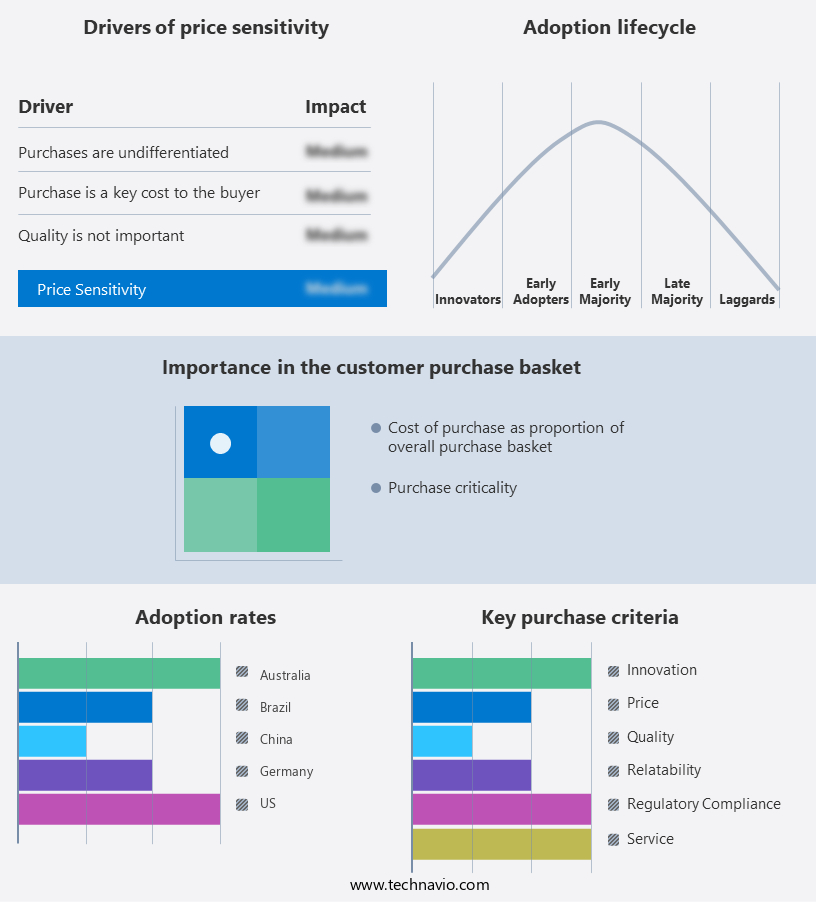
Customer Landscape
Key Companies & Market Insights
Companies are implementing various strategies, such as strategic alliances, dynamite market forecast, partnerships, mergers and acquisitions, geographical expansion, and product/service launches, to enhance their presence In the industry.
The industry research and growth report includes detailed analyses of the competitive landscape of the market and information about key companies, including:
- Austin Powder
- Chemring Group Plc
- ENAEX S.A.
- EPC Groupe
- Explosia as
- Hanwha Corp.
- IDEAL Industrial Explosives Ltd.
- IDL Explosives Ltd.
- Incitec Pivot Pty Ltd.
- KGHM Polska Miedz SA
- MAXAM CORP. HOLDING SL
- NOF CORP.
- Omnia Holdings Ltd.
- Orica Ltd.
- Oy Forcit Ab
- Sasol Ltd.
- Titanobel
- Yara International ASA
Qualitative and quantitative analysis of companies has been conducted to help clients understand the wider business environment as well as the strengths and weaknesses of key industry players. Data is qualitatively analyzed to categorize companies as pure play, category-focused, industry-focused, and diversified; it is quantitatively analyzed to categorize companies as dominant, leading, strong, tentative, and weak.
Research Analyst Overview
In the realm of scientific advancements, the invention of dynamite revolutionized the way construction projects and military operations were carried out. Guided by the ethics of progress, scientists In the late 19th century discovered the potential energy hidden In the chemical compound of nitroglycerin. They transformed this unstable liquid into a stable, detonable form by combining it with absorbent materials like wood pulp and sodium nitrate, an oxidizing agent. The formation of gases from this mixture, when exploded by blasting caps or percussion, released an immense force. This force was harnessed to build tunnels, canals, and clear paths for bombs, canons, and rockets.
Thus, dynamite came in various forms such as gelatinous dynamite, nitrocellulose, ammonium nitrate, and extra dynamite, each with its unique properties. The invention of dynamite opened new avenues In the field of energy, leading to the production of explosives and propellants for missiles. Nitroglycerin, the base ingredient, also found applications In the medical field as a vasodilator for cardiac pain relief. Porous siliceous earth was used to make dynamite shock resistant, ensuring safety during handling. The power of dynamite was felt during wars, where it became an essential tool In the arsenal. Its use extended beyond military applications, with dynamite being used In the mining industry, quarrying, and civil engineering projects. The invention of dynamite marked a significant milestone In the history of chemistry, showcasing the potential of stored energy in motion.
|
Market Scope |
|
|
Report Coverage |
Details |
|
Page number |
141 |
|
Base year |
2023 |
|
Historic period |
2018-2022 |
|
Forecast period |
2024-2028 |
|
Growth momentum & CAGR |
Accelerate at a CAGR of 6.3% |
|
Market growth 2024-2028 |
USD 5.7 billion |
|
Market structure |
Fragmented |
|
YoY growth 2023-2024(%) |
5.8 |
|
Key countries |
China, US, Australia, Germany, and Brazil |
|
Competitive landscape |
Leading Companies, Market Positioning of Companies, Competitive Strategies, and Industry Risks |
What are the Key Data Covered in this Dynamite Market Research and Growth Report?
- CAGR of the Dynamite industry during the forecast period
- Detailed information on factors that will drive the growth and forecasting between 2024 and 2028
- Precise estimation of the size of the market and its contribution of the industry in focus to the parent market
- Accurate predictions about upcoming growth and trends and changes in consumer behaviour
- Growth of the market across APAC, North America, Europe, South America, and Middle East and Africa
- Thorough analysis of the market's competitive landscape and detailed information about companies
- Comprehensive analysis of factors that will challenge the dynamite market growth of industry companies
We can help! Our analysts can customize this dynamite market research report to meet your requirements.
 RIA -
RIA - 
