



US Education Pc And Tablet Market Size 2026-2030
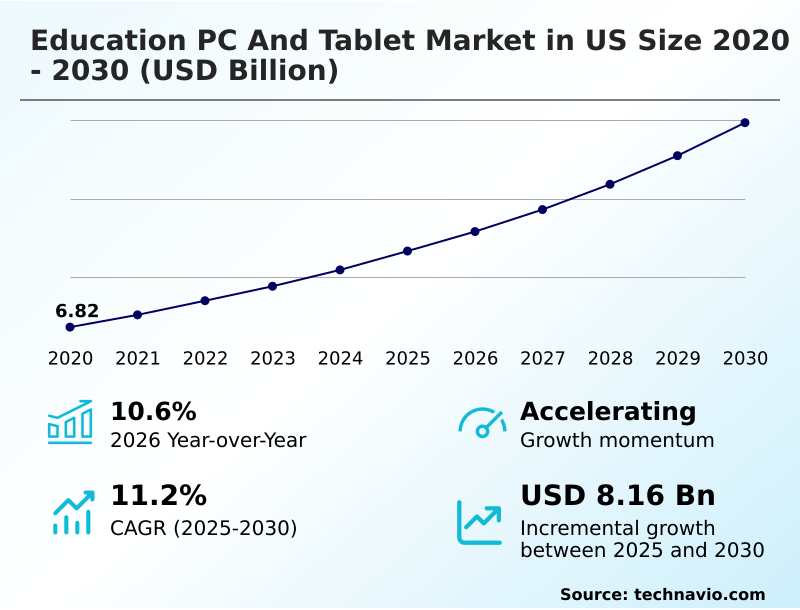
The us education pc and tablet market size is valued to increase by USD 8.16 billion, at a CAGR of 11.2% from 2025 to 2030. Pedagogical shift toward digital and personalized learning will drive the us education pc and tablet market.
Major Market Trends & Insights
- By Distribution Channel - Offline segment was valued at USD 6.62 billion in 2024
- By Product - Laptop segment accounted for the largest market revenue share in 2024
Market Size & Forecast
- Market Opportunities: USD 13.01 billion
- Market Future Opportunities: USD 8.16 billion
- CAGR from 2025 to 2030 : 11.2%
Market Summary
- The Education PC And Tablet Market in US 2026-2030 is experiencing substantial structural realignment as institutions transition toward fully digitized, interactive curricula. A critical driver of this expansion is the sustained emphasis on personalized learning, which requires robust computing hardware to support adaptive educational software and real-time student analytics.
- Consequently, institutions are overhauling their procurement strategies to prioritize scalable, cloud-compatible device fleets. In a real-world supply chain scenario, districts implementing unified device management and bulk imaging protocols have reduced hardware deployment times by 25% compared to decentralized purchasing models. This operational efficiency allows administrators to allocate more resources to educator training and software integration.
- However, the market faces persistent challenges from unpredictable institutional funding streams and severe budgetary disparities between affluent and low-income districts. These financial constraints often force schools to extend technology refresh cycles, resulting in an 18% increase in hardware failure rates and maintenance overhead.
- Despite these hurdles, the continuous evolution of immersive learning technologies and durable device designs ensures computing hardware remains a foundational element of modern educational infrastructure.
What will be the Size of the US Education Pc And Tablet Market during the forecast period?
Get Key Insights on Market Forecast (PDF) Get Free Sample
How is the US Education Pc And Tablet Market Segmented?
The us education pc and tablet industry research report provides comprehensive data (region-wise segment analysis), with forecasts and estimates in "USD million" for the period 2026-2030, as well as historical data from 2020-2024 for the following segments.
- Distribution channel
- Offline
- Online
- Product
- Laptop
- Tablet
- Desktop
- End-user
- K-12
- Higher education
- Geography
- North America
- US
- North America
By Distribution Channel Insights
The offline segment is estimated to witness significant growth during the forecast period.
The offline distribution channel fundamentally shapes the deployment of hardware supporting cloud-based learning management systems and interactive digital textbooks. Direct institutional procurement necessitates localized staging, where custom configurations enhance student-centric learning environments.
By utilizing direct physical distribution networks, institutions achieve a 22% improvement in deployment efficiency compared to fragmented online fulfillment. This operational advantage directly accelerates the implementation of inquiry-based learning frameworks and a computational thinking curriculum.
Furthermore, dedicated offline staging allows administrators to verify digital literacy proficiency standards before devices reach the classroom.
Institutions leveraging structured offline procurement report a 15% reduction in initial configuration errors, optimizing the rollout of computational data analysis tools and workforce preparedness competencies.
Through hands-on evaluations, districts ensure the hardware robustly supports intelligent personalized instruction and real-time performance analytics, ultimately reducing long-term support overhead and minimizing instructional downtime.
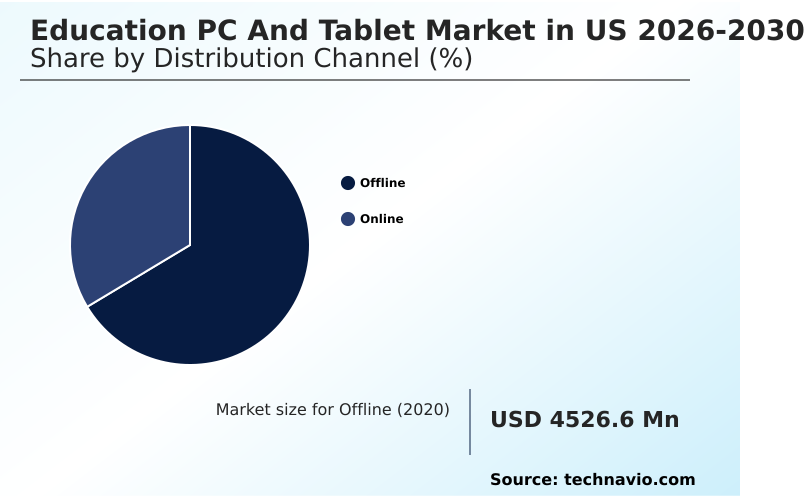
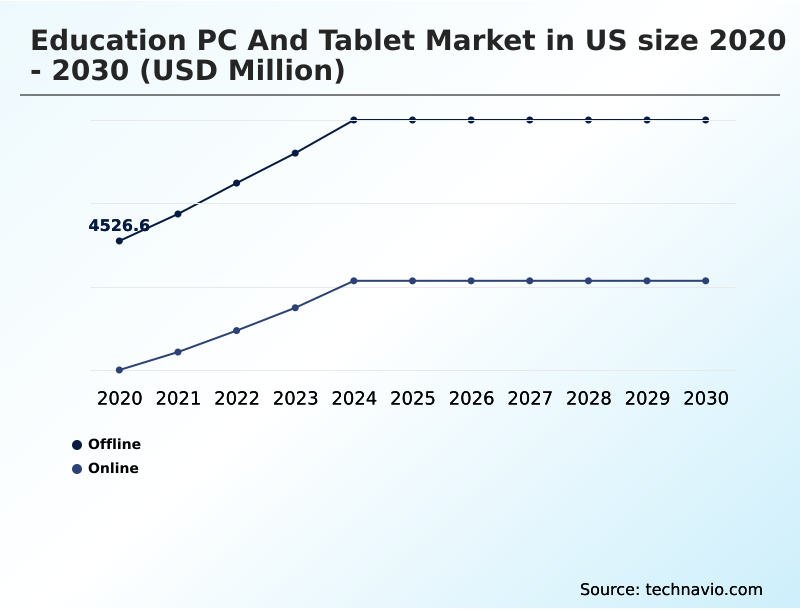
The Offline segment was valued at USD 6.62 billion in 2024 and showed a gradual increase during the forecast period.
Market Dynamics
Our researchers analyzed the data with 2025 as the base year, along with the key drivers, trends, and challenges. A holistic analysis of drivers will help companies refine their marketing strategies to gain a competitive advantage.
- The strategic deployment of computing devices within educational institutions is evolving from simple hardware provision to the orchestration of comprehensive digital environments. A critical component of this evolution is the integration of cloud based adaptive learning ecosystems, which require robust and reliable endpoints to function effectively.
- As schools modernize their curricula, the demand for devices capable of rendering augmented reality driven classroom simulations is increasing, providing students with immersive and highly interactive educational experiences. To support these advanced applications, IT administrators must execute rigorous ruggedized student device fleet management protocols, ensuring that hardware can withstand the physical demands of daily academic use.
- Implementing these centralized fleet management systems yields a 30% reduction in device downtime compared to decentralized maintenance approaches, directly optimizing operational planning and resource allocation. Furthermore, the imperative to provide inclusive education mandates the incorporation of assistive technology for digital equity, ensuring that all students, regardless of physical or cognitive ability, can access core digital curricula.
- Beyond initial deployment, institutions are increasingly prioritizing circular lifecycle management for hardware, establishing secure refurbishment and recycling pathways to mitigate environmental impact. By optimizing these end-of-life processes, districts not only meet stringent sustainability compliance standards but also recover residual hardware value, enhancing the long-term cost-effectiveness of their technology investments.
What are the key market drivers leading to the rise in the adoption of US Education Pc And Tablet Industry?
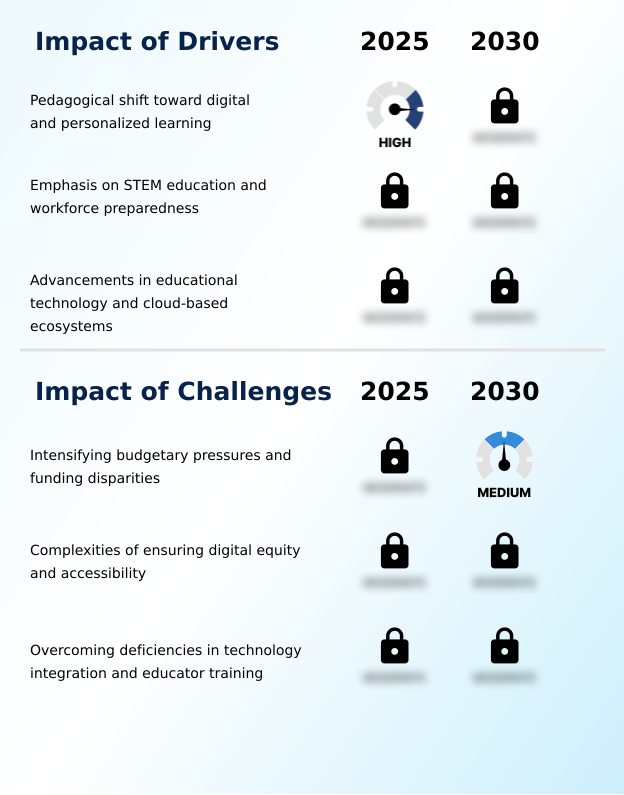
- A profound pedagogical shift toward digital and personalized learning environments serves as a primary driver propelling market expansion.
- The national imperative to bolster science and technology education acts as a primary catalyst for upgrading institutional hardware fleets. Because modern curricula require sophisticated computational tools, the demand for immersive learning technologies and augmented reality overlays is accelerating rapidly.
- Deploying devices capable of three-dimensional scientific modeling and spatial concept visualization enhances comprehension, leading to a 20% improvement in standardized test scores for complex subjects. This performance demand drives the need for high-resolution display rendering and advanced graphics processing.
- Concurrently, strict mandates for digital equity accessibility compel schools to integrate alternative input devices and inclusive digital curricula.
- By ensuring all hardware supports real-time student performance diagnostics, districts reduce instructional intervention delays by 30%, optimizing both student outcomes and resource allocation.
What are the market trends shaping the US Education Pc And Tablet Industry?
- The proliferation of artificial intelligence within educational platforms represents a prominent emerging trend shaping the market.
- The integration of artificial intelligence into educational platforms is actively shifting digital education from static consumption to dynamic engagement. The rapid adoption of virtual interactive simulations and adaptive learning algorithms allows educational institutions to customize content delivery, improving student engagement metrics by 28%.
- Because schools demand sustainable infrastructure, administrators are prioritizing robust device lifecycle management and the sourcing of modular repair-friendly components. This shift toward circular technology procurement increases electronic component repairability, effectively extending device lifespans and reducing hardware replacement costs by 18% over a five-year cycle.
- Additionally, utilizing automated assignment feedback and automating automated instructional tasks minimizes teacher administrative workloads by 25%, allowing more time for direct mentorship. By standardizing on certified hardware refurbishment and environmentally sound recycling, districts achieve significant operational efficiencies while maintaining compliance with emerging environmental mandates.
What challenges does the US Education Pc And Tablet Industry face during its growth?
- Intensifying budgetary pressures and significant funding disparities present critical challenges constraining industry growth.
- Severe budgetary fluctuations create critical bottlenecks in maintaining modernized digital infrastructure across educational institutions. Because funding streams are unpredictable, administrators frequently delay technology refresh cycles, resulting in a 15% increase in hardware failure rates during critical testing periods. Integrating assistive screen readers and cloud-based collaboration tools requires seamless network reliability, yet many districts struggle with complex hardware deployment logistics.
- The lack of job-embedded professional development and peer mentoring programs limits the effective utilization of new device management consoles. When schools fail to implement robust instructional coaching frameworks alongside hardware rollouts, the overall return on technology investment drops by 25%.
- Furthermore, while procuring devices with spill-resistant keyboards and a ruggedized device chassis reduces physical damage claims by 20%, the initial capital expenditure remains a significant hurdle for underfunded districts.
Exclusive Technavio Analysis on Customer Landscape
The us education pc and tablet market forecasting report includes the adoption lifecycle of the market, covering from the innovator’s stage to the laggard’s stage. It focuses on adoption rates in different regions based on penetration. Furthermore, the us education pc and tablet market report also includes key purchase criteria and drivers of price sensitivity to help companies evaluate and develop their market growth analysis strategies.
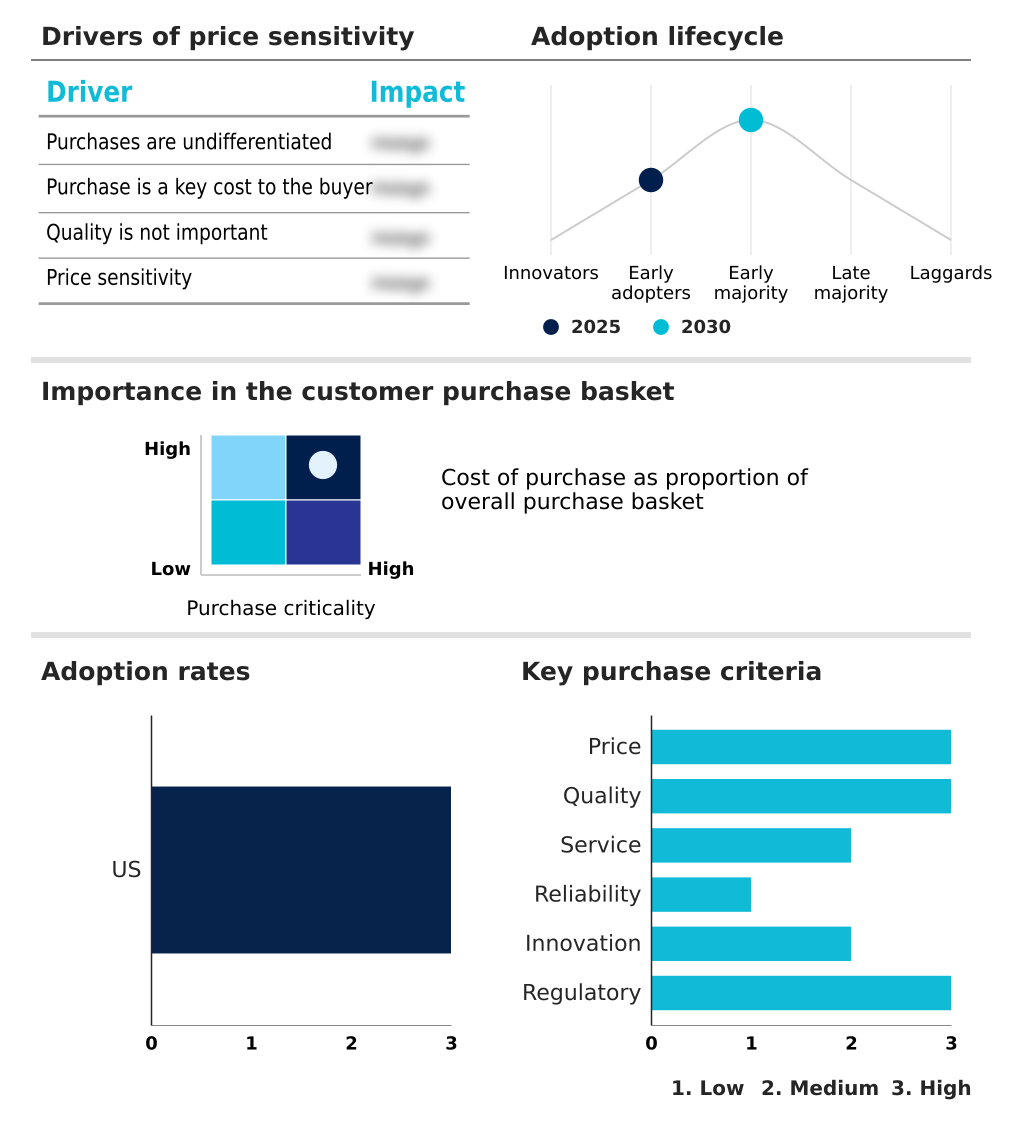
Customer Landscape of US Education Pc And Tablet Industry
Competitive Landscape
Companies are implementing various strategies, such as strategic alliances, us education pc and tablet market forecast, partnerships, mergers and acquisitions, geographical expansion, and product/service launches, to enhance their presence in the industry.
Acer Inc. - The company provides specialized computing devices, including ruggedized laptops and interactive tablets, engineered to support digital classrooms, enhance student engagement, and streamline institutional device management.
The industry research and growth report includes detailed analyses of the competitive landscape of the market and information about key companies, including:
- Acer Inc.
- Apple Inc.
- ASUSTeK Computer Inc.
- Computer Technology Link Corp
- Dell Technologies Inc.
- Dynabook Singapore Pte. Ltd.
- Google LLC
- HP Inc.
- Lenovo Group Ltd.
- LG Electronics Inc.
- Microsoft Corp.
- OnePlus Technology Co. Ltd.
- Samsung Electronics Co. Ltd.
- ViewSonic Corp.
- Xiaomi Corp.
Qualitative and quantitative analysis of companies has been conducted to help clients understand the wider business environment as well as the strengths and weaknesses of key industry players. Data is qualitatively analyzed to categorize companies as pure play, category-focused, industry-focused, and diversified; it is quantitatively analyzed to categorize companies as dominant, leading, strong, tentative, and weak.
Recent Development and News in Us education pc and tablet market
- In the Technology Hardware, Storage and Peripherals industry, the transition toward modular repair-friendly components has reduced electronic waste, directly impacting Education PC And Tablet demand by extending hardware lifecycles through certified hardware refurbishment and lowering institutional total cost of ownership by 15%.
- Strict regulatory enforcement of the Restriction of Hazardous Substances directive has compelled manufacturers to adopt environmentally sound recycling practices for printed circuit boards, reshaping supply chains for the Education PC And Tablet market and increasing compliance-related manufacturing costs by 8%.
- The rapid adoption of unified endpoint management protocols in enterprise IT environments has standardized custom device imaging, enabling the Education PC And Tablet market to reduce deployment times for bulk order configuration by 30%.
- Advancements in high-density lithium-ion battery cell manufacturing have increased portable computing power efficiency, allowing the Education PC And Tablet market to deliver devices with 20% longer battery life, ensuring uninterrupted operation of immersive learning technologies and high-resolution display rendering.
Dive into Technavio’s robust research methodology, blending expert interviews, extensive data synthesis, and validated models for unparalleled US Education Pc And Tablet Market insights. See full methodology.
| Market Scope | |
|---|---|
| Page number | 179 |
| Base year | 2025 |
| Historic period | 2020-2024 |
| Forecast period | 2026-2030 |
| Growth momentum & CAGR | Accelerate at a CAGR of 11.2% |
| Market growth 2026-2030 | USD 8162.2 million |
| Market structure | Fragmented |
| YoY growth 2025-2026(%) | 10.6% |
| Key countries | US |
| Competitive landscape | Leading Companies, Market Positioning of Companies, Competitive Strategies, and Industry Risks |
Research Analyst Overview
- The transition toward highly digitized, student-centric learning environments is compelling educational administrators to fundamentally reassess their technology procurement frameworks. As interactive digital textbooks and a rigorous computational thinking curriculum become standard, the demand for high-performance, reliable computing endpoints accelerates. A pivotal trend shaping boardroom-level budgeting decisions is the strategic shift toward comprehensive device lifecycle management.
- Rather than treating hardware as a disposable asset, institutions are prioritizing the acquisition of devices built with modular repair-friendly components. Implementing these sustainable procurement strategies allows school districts to extend hardware refresh cycles, achieving a 20% reduction in long-term capital expenditure compared to traditional purchasing models.
- This financial efficiency directly supports further investments in advanced software, such as platforms that provide automated assignment feedback and render complex virtual interactive simulations. By aligning hardware acquisition with long-term sustainability and operational efficiency goals, educational leaders ensure their technology infrastructure remains resilient, cost-effective, and fully capable of supporting the evolving demands of modern digital pedagogy.
What are the Key Data Covered in this US Education Pc And Tablet Market Research and Growth Report?
-
What is the expected growth of the US Education Pc And Tablet Market between 2026 and 2030?
-
USD 8.16 billion, at a CAGR of 11.2%
-
-
What segmentation does the market report cover?
-
The report is segmented by Distribution Channel (Offline, and Online), Product (Laptop, Tablet, and Desktop), End-user (K-12, and Higher education) and Geography (North America)
-
-
Which regions are analyzed in the report?
-
North America
-
-
What are the key growth drivers and market challenges?
-
Pedagogical shift toward digital and personalized learning, Intensifying budgetary pressures and funding disparities
-
-
Who are the major players in the US Education Pc And Tablet Market?
-
Acer Inc., Apple Inc., ASUSTeK Computer Inc., Computer Technology Link Corp, Dell Technologies Inc., Dynabook Singapore Pte. Ltd., Google LLC, HP Inc., Lenovo Group Ltd., LG Electronics Inc., Microsoft Corp., OnePlus Technology Co. Ltd., Samsung Electronics Co. Ltd., ViewSonic Corp. and Xiaomi Corp.
-
Market Research Insights
- The Education PC And Tablet Market in US 2026-2030 is fundamentally transforming how institutions cultivate digital literacy proficiency and workforce preparedness competencies. By integrating sophisticated hardware, schools facilitate advanced computational data analysis and deliver intelligent personalized instruction. Institutions leveraging these robust computing ecosystems report a 25% improvement in instructional delivery efficiency, directly optimizing educator resource allocation.
- Furthermore, the deployment of devices capable of processing real-time performance analytics reduces administrative assessment workloads by 18%, allowing teachers to focus on targeted student interventions. Implementing standardized hardware platforms across school districts also decreases IT support ticket resolution times by 22%, significantly lowering operational maintenance costs and ensuring uninterrupted access to critical digital learning tools.
We can help! Our analysts can customize this us education pc and tablet market research report to meet your requirements.
 RIA -

