

Emission Control Catalysts Market Analysis APAC, Europe, North America, South America, Middle East and Africa - China, US, Germany, Japan, UK - Size and Forecast 2024-2028

Emission Control Catalysts Market Analysis APAC, Europe, North America, South America, Middle East and Africa - China, US, Germany, Japan, UK - Size and Forecast 2024-2028

Published: May 2024 174 Pages SKU: IRTNTR43303

Market Overview at a Glance

$4.01 B
Market Opportunity
5.68%
CAGR
5.29
YoY growth 2023-2024(%)

Emission Control Catalysts Market Size 2024-2028 

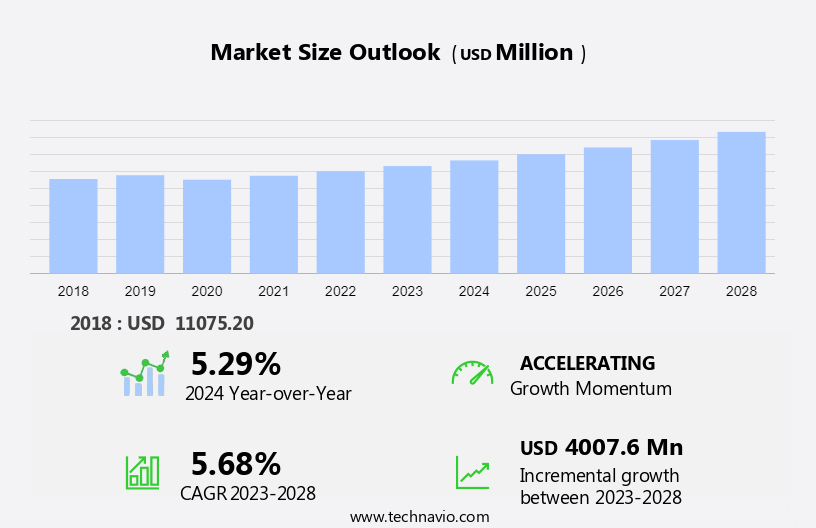
The emission control catalysts market size is forecast to increase by USD 4.01 billion, at a CAGR of 5.68% between 2023 and 2028.

  • The market growth depends on key drivers such as the growth in the global automotive sector, which significantly contributes to the demand for emission control catalysts (ECCs) in both automotive and industrial applications. An emerging trend shaping the market is the increasing prospects for ECCs in emerging markets, especially in regions like APAC, where automotive production is rising, with China and Japan playing key roles. However, the market faces challenges, such as the growing popularity of electric vehicles (EVs), which reduce the need for traditional emission control technologies, potentially limiting the demand for ECCs in the automotive sector.

What will be the Size of the Market During the Forecast Period?
Emission Control Catalysts Market Size

 Request Free Sample

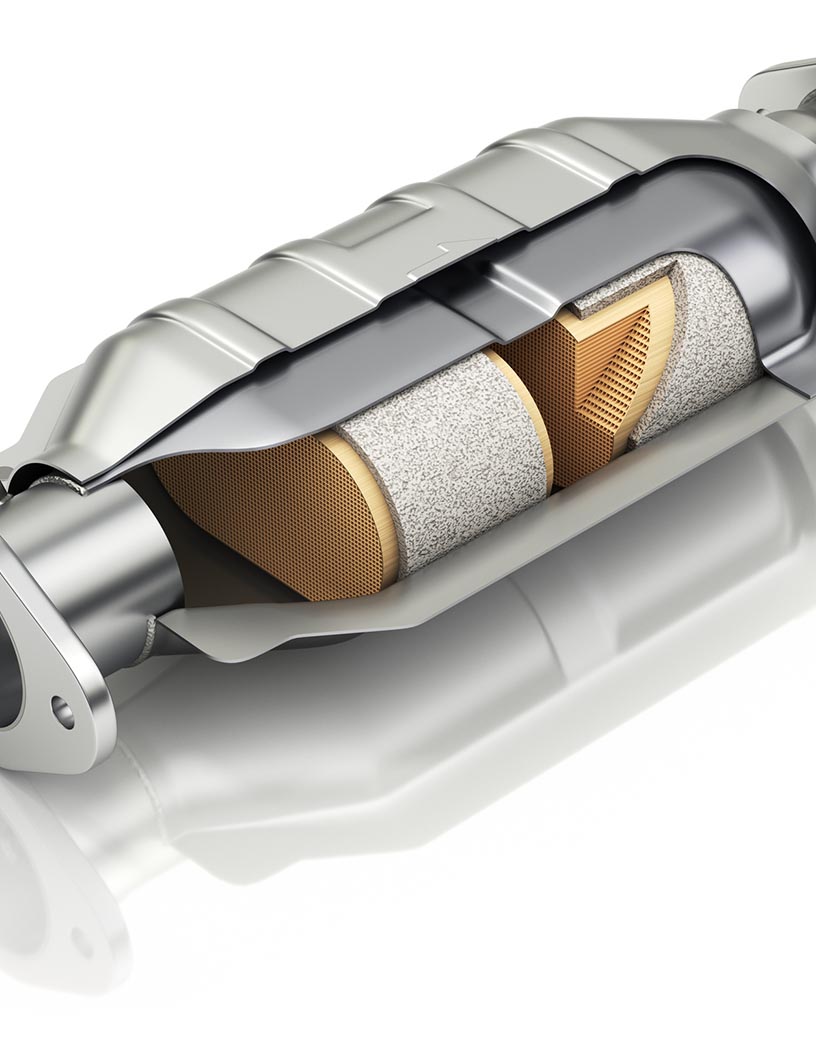
  • The market encompasses the production and supply of catalysts used in both the automotive and industrial sectors for reducing harmful emissions. These catalysts play a crucial role in mitigating the emissions from Mobile Sources, such as Internal Combustion Engines in automobiles, and Stationary Sources, like Power Generation Plants. Automobile Manufacturers and the Industrial sector rely heavily on Emission Control Catalysts, including Catalytic Converters, to meet stringent Emission Standards. These catalysts help in controlling the emission of Harmful Hydrocarbons and CO2, contributing significantly to improving Air Quality in urban areas and metropolises. Catalytic Converters, primarily made of Platinum, Rhodium, and other Metals, are essential components of Emission Control Systems in vehicles.
  • They work by converting harmful pollutants into less harmful substances through a process called Catalytic Conversion. Moreover, the advent of Battery Electric Vehicles has led to the development of new types of Emission Control Catalysts, such as Lean Nox Traps, to address the unique emission challenges posed by these vehicles. Overall, the market is expected to grow significantly due to the increasing focus on Emission Control and the need to reduce Harmful Chemicals in the environment.

How is this market segmented and which is the largest segment?

The market research report provides comprehensive data (region-wise segment analysis), with forecasts and estimates in "USD billion" for the period 2024-2028, as well as historical data from 2018-2022 for the following segments.

  • Application
    • Mobile emission
    • Stationary emission
  • Type
    • Palladium
    • Platinum
    • Rhodium
  • Geography
    • APAC
      • China
      • Japan
    • Europe
      • Germany
      • UK
    • North America
      • US
    • South America
    • Middle East and Africa

By Application Insights

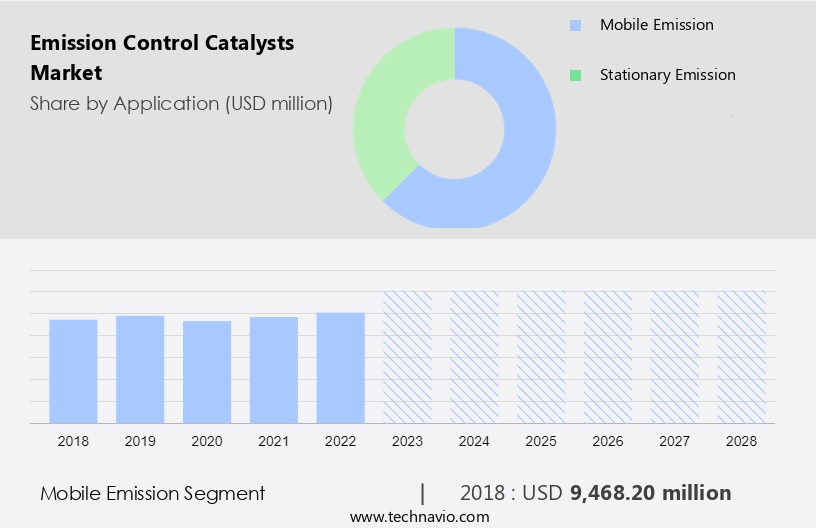
  • The mobile emission segment is estimated to witness significant growth during the forecast period.

The market is driven by stringent emission regulations in the mobile industry. Nearly all new vehicles, including those with internal combustion engines and battery electric vehicles, utilize autocatalysts for emission control. Harmful hydrocarbons from vehicular populations in urban areas and metropolises contribute significantly to poor air quality. As a result, governments worldwide impose regulations to reduce CO2 emissions from automobiles, leading to increased adoption of ECCs. Three-way catalysts, such as gasoline particulate filters, diesel oxidation catalysts, and diesel particulate filters, are essential primary chemicals in the ECC market. Platinum group metals, rare earth oxides, aluminum oxide, SCR technology, TiO2, V2O5, and WO2 are key components in these catalysts.

The market is influenced by various factors, including the increasing demand for light vehicles and heavy-duty counterparts, power stations, chemical plants, and stationary diesel engines. The global consumption of ECCs is significant, with major contributors being Mainland China and other regions with high vehicular populations. The market is expected to grow steadily, despite supply constraints and rising prices, due to the need for improving environmental health and concerns regarding sustainability. Additionally, the transition to renewable energy sources and the reduction of emissions from coal power plants and industrial processes will further boost the demand for ECCs.
Emission Control Catalysts Market Size

Get a glance at the market report of share of various segments Request Free Sample

The mobile emission segment was valued at USD 9.47 billion in 2018 and showed a gradual increase during the forecast period.

Regional Analysis

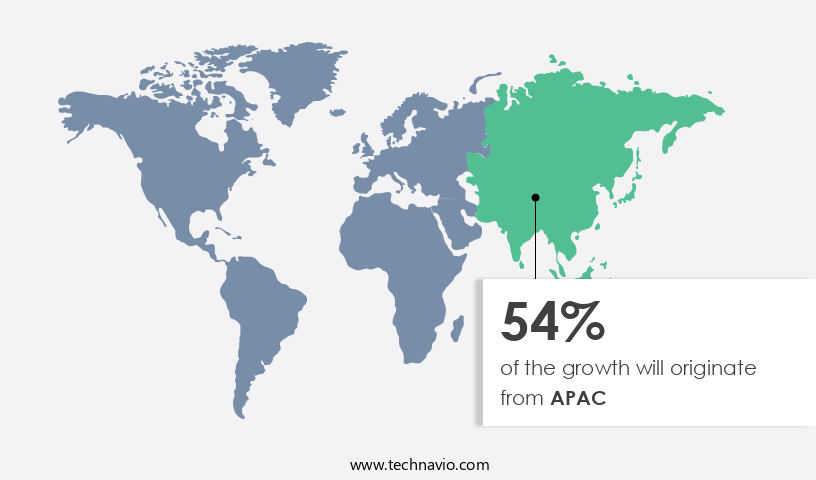
  • APAC is estimated to contribute 54% to the growth of the global market during the forecast period.

Technavio's analysts have elaborately explained the regional trends and drivers that shape the market during the forecast period.
Emission Control Catalysts Market Share by Geography

For more insights on the market share of various regions Request Free Sample

In the APAC region, the mobile industry's significant growth and urbanization have led to increasing vehicular populations and correspondingly higher CO2 emissions and harmful hydrocarbon releases. Stringent emission regulations have been implemented by regulatory bodies to improve air quality in metropolises, particularly in countries like Mainland China, India, Japan, and South Korea, which are major automobile manufacturing hubs. This has driven the demand for advanced emission control technologies, including automobile catalysts such as three-way catalysts, gasoline particulate filters, diesel oxidation catalysts, and diesel particulate filters.

These catalysts contain primary chemicals like platinum group metals, rare earth oxides, aluminum oxide, SCR technology, TiO2, V2O5, and WO2. The emission control market in APAC encompasses catalytic converter types, including Platinum and Rhodium, and extends to stationary applications like power stations, chemical plants, and heavy-duty counterparts such as coal power plants, turbines, and industrial diesel engines. The market's growth is influenced by trade and economics, with metal prices and supply chain dynamics playing crucial roles.

Market Dynamics

Our researchers analyzed the data with 2023 as the base year, along with the key drivers, trends, and challenges. A holistic analysis of drivers will help companies refine their marketing strategies to gain a competitive advantage.

What are the key market drivers leading to the rise in the adoption of the Emission Control Catalysts Market?

Growth in global automotive sector is the key driver of the market.

  • The market encompasses the use of these catalysts in both the automotive and industrial sectors for controlling emissions. ECCs are primarily made of metallic or non-metallic elements and are known for their high-temperature resistance. In the automotive industry, they are utilized in various functional components such as spark plugs, oxygen sensors, and PTC heaters. Advanced versions of automotive ECCs exhibit superior physical, thermal, and electrical properties, making them cost-effective alternatives to other metals and non-ceramic materials.
  • In mobile emissions, Lean Nox Traps utilize ECCs to reduce NOx emissions. HC, CO, and SOx are controlled in both mobile and stationary emissions through the use of ECCs. SCR technology, another application of ECCs, converts NOx into harmless nitrogen and water. VOCs are controlled through the use of ECCs in various industrial processes. Overall, ECCs play a crucial role in mitigating emissions of harmful gases such as NOx, HC, CO, SOx, and VOCs in both the automotive and industrial sectors.

What are the market trends shaping the Emission Control Catalysts Market?

Emerging markets to provide significant prospects for ECCs are the upcoming trend in the market.

  • The market is experiencing significant growth, particularly in developing regions such as APAC. This expansion is driven by the increasing automotive production in these areas, which accounts for over half of the global market. China, in particular, is a major contributor, with its growing middle-class population leading to increased demand. Japan, as a mature automotive market and leading producer, also plays a significant role. ECCs are essential in controlling Mobile Emissions from light- and medium-weight vehicles, reducing Harmful Gases (HC, CO, NOx) and Volatile Organic Compounds (VOCs). In the industrial sector, Lean NOx Traps and Selective Catalytic Reduction (SCR) systems are used to mitigate Stationary Emissions of NOx, SOx, and other metals.

What challenges does the Emission Control Catalysts Market face during its growth?

The growing popularity of EVs is a key challenge affecting the market growth.

  • The market is witnessing significant growth due to increasing regulations aimed at reducing greenhouse gas emissions in both mobile and stationary applications. In the automotive sector, Lean NOx Traps and Selective Catalytic Reduction (SCR) systems are widely used to minimize NOx, HC, CO, and VOC emissions. Other metals, such as platinum group metals, play a crucial role in these catalytic processes. Similarly, in industries, catalysts are employed to reduce SOx and NOx emissions from power generation and manufacturing processes. The adoption of these emission control technologies is driven by stringent emission norms in regions like APAC, North America, and Europe, where governments are offering tax incentives for their implementation.

Exclusive Customer Landscape

The market forecasting report includes the adoption lifecycle of the market, covering from the innovator's stage to the laggard's stage. It focuses on adoption rates in different regions based on penetration. Furthermore, the market report also includes key purchase criteria and drivers of price sensitivity to help companies evaluate and develop their market growth analysis strategies.
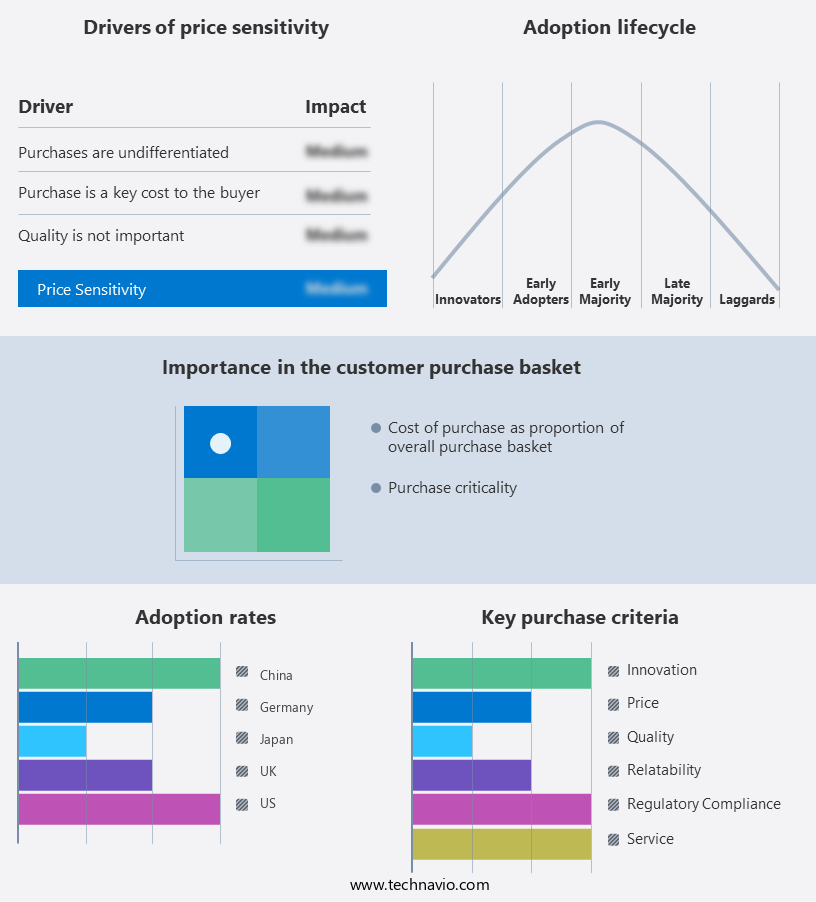
Emission Control Catalysts Market Share by Geography

 Customer Landscape

Key Companies & Market Insights

Companies are implementing various strategies, such as strategic alliances, market forecasts, partnerships, mergers and acquisitions, geographical expansion, and product/service launches, to enhance their presence in the market. The market research and growth report includes detailed analyses of the competitive landscape of the market and information about key companies, including:

  • AeriNOx Inc.
  • Ashland Inc.
  • BASF SE
  • Catalytic Combustion Corp.
  • CDTi Advanced Materials Inc.
  • Clariant International Ltd.
  • CORMETECH Inc.
  • Cummins Inc.
  • DCL International Inc.
  • DieselNet
  • Evonik Industries AG
  • Honeywell International Inc.
  • Ibiden Co. Ltd.
  • Johnson Matthey Plc
  • S and P Global Inc.
  • Solvay SA
  • Tenneco Inc.
  • Topsoes AS
  • Toyota Motor Corp.
  • Umicore SA

Qualitative and quantitative analysis of companies has been conducted to help clients understand the wider business environment as well as the strengths and weaknesses of key market players. Data is qualitatively analyzed to categorize companies as pure play, category-focused, industry-focused, and diversified; it is quantitatively analyzed to categorize companies as dominant, leading, strong, tentative, and weak.

Research Analyst Overview

The market plays a crucial role in the automotive industry and various other sectors that require air pollution control. These catalysts, such as ECC, EMissionSionS, and PGM (Platinum Group Metals), are essential components in reducing harmful emissions from internal combustion engines. They convert harmful gases like nitrogen oxides (NOx) and carbon monoxide (CO) into less harmful substances, such as nitrogen (N2) and carbon dioxide (CO2). The market for Emission Control Catalysts is driven by stringent environmental regulations and increasing awareness of air pollution. Further, key players focus on research and development to improve the efficiency and durability of catalysts. The Asia Pacific region is expected to dominate the market due to the high production of vehicles and increasing environmental concerns. In conclusion, the market is a significant contributor to reducing air pollution and complying with environmental regulations. The market is expected to grow due to increasing demand from various industries and stringent regulations.

Market Scope

Report Coverage

Details

Page number

174

Base year

2023

Historic period

2018-2022

Forecast period

2024-2028

Growth momentum & CAGR

Accelerate at a CAGR of 5.68%

Market Growth 2024-2028

USD 4.01 billion

Market structure

Fragmented

YoY growth 2023-2024(%)

5.29

Key countries

China, US, Germany, Japan, and UK

Competitive landscape

Leading Companies, Market Positioning of Companies, Competitive Strategies, and Industry Risks

Request Free Sample

What are the Key Data Covered in this Market Research and Growth Report?

  • CAGR of the market during the market forecast period
  • Detailed information on factors that will drive the market growth and forecasting between 2024 and 2028
  • Precise estimation of the size of the market  and its contribution of the market in focus to the parent market
  • Accurate predictions about upcoming market growth and trends and changes in consumer behaviour
  • Growth of the market across APAC, Europe, North America, South America, and Middle East and Africa
  • Thorough analysis of the market's competitive landscape and detailed information about companies
  • Comprehensive analysis of factors that will challenge the growth of market companies

We can help! Our analysts can customize this market research report to meet your requirements.

Get in touch

1 Executive Summary

  • 1.1 Market overview
    • Executive Summary - Chart on Market Overview
    • Executive Summary - Data Table on Market Overview
    • Executive Summary - Chart on Global Market Characteristics
    • Executive Summary - Chart on Market by Geography
    • Executive Summary - Chart on Market Segmentation by Application
    • Executive Summary - Chart on Market Segmentation by Type
    • Executive Summary - Chart on Incremental Growth
    • Executive Summary - Data Table on Incremental Growth
    • Executive Summary - Chart on Company Market Positioning

2 Market Landscape

  • 2.1 Market ecosystem
    • Parent Market
    • Data Table on - Parent Market
  • 2.2 Market characteristics
    • Market characteristics analysis
  • 2.3 Value chain analysis
    • Value Chain Analysis

3 Market Sizing

  • 3.1 Market definition
    • Offerings of companies included in the market definition
  • 3.2 Market segment analysis
    • Market segments
  • 3.3 Market size 2023
    • 3.4 Market outlook: Forecast for 2023-2028
      • Chart on Global - Market size and forecast 2023-2028 ($ million)
      • Data Table on Global - Market size and forecast 2023-2028 ($ million)
      • Chart on Global Market: Year-over-year growth 2023-2028 (%)
      • Data Table on Global Market: Year-over-year growth 2023-2028 (%)

    4 Historic Market Size

    • 4.1 Global Emission Control Catalysts Market 2018 - 2022
      • Historic Market Size - Data Table on Global Emission Control Catalysts Market 2018 - 2022 ($ million)
    • 4.2 Application segment analysis 2018 - 2022
      • Historic Market Size - Application Segment 2018 - 2022 ($ million)
    • 4.3 Type segment analysis 2018 - 2022
      • Historic Market Size - Type Segment 2018 - 2022 ($ million)
    • 4.4 Geography segment analysis 2018 - 2022
      • Historic Market Size - Geography Segment 2018 - 2022 ($ million)
    • 4.5 Country segment analysis 2018 - 2022
      • Historic Market Size - Country Segment 2018 - 2022 ($ million)

    5 Five Forces Analysis

    • 5.1 Five forces summary
      • Five forces analysis - Comparison between 2023 and 2028
    • 5.2 Bargaining power of buyers
      • Bargaining power of buyers - Impact of key factors 2023 and 2028
    • 5.3 Bargaining power of suppliers
      • Bargaining power of suppliers - Impact of key factors in 2023 and 2028
    • 5.4 Threat of new entrants
      • Threat of new entrants - Impact of key factors in 2023 and 2028
    • 5.5 Threat of substitutes
      • Threat of substitutes - Impact of key factors in 2023 and 2028
    • 5.6 Threat of rivalry
      • Threat of rivalry - Impact of key factors in 2023 and 2028
    • 5.7 Market condition
      • Chart on Market condition - Five forces 2023 and 2028

    6 Market Segmentation by Application

    • 6.1 Market segments
      • Chart on Application - Market share 2023-2028 (%)
      • Data Table on Application - Market share 2023-2028 (%)
    • 6.2 Comparison by Application
      • Chart on Comparison by Application
      • Data Table on Comparison by Application
    • 6.3 Mobile emission - Market size and forecast 2023-2028
      • Chart on Mobile emission - Market size and forecast 2023-2028 ($ million)
      • Data Table on Mobile emission - Market size and forecast 2023-2028 ($ million)
      • Chart on Mobile emission - Year-over-year growth 2023-2028 (%)
      • Data Table on Mobile emission - Year-over-year growth 2023-2028 (%)
    • 6.4 Stationary emission - Market size and forecast 2023-2028
      • Chart on Stationary emission - Market size and forecast 2023-2028 ($ million)
      • Data Table on Stationary emission - Market size and forecast 2023-2028 ($ million)
      • Chart on Stationary emission - Year-over-year growth 2023-2028 (%)
      • Data Table on Stationary emission - Year-over-year growth 2023-2028 (%)
    • 6.5 Market opportunity by Application
      • Market opportunity by Application ($ million)
      • Data Table on Market opportunity by Application ($ million)

    7 Market Segmentation by Type

    • 7.1 Market segments
      • Chart on Type - Market share 2023-2028 (%)
      • Data Table on Type - Market share 2023-2028 (%)
    • 7.2 Comparison by Type
      • Chart on Comparison by Type
      • Data Table on Comparison by Type
    • 7.3 Palladium - Market size and forecast 2023-2028
      • Chart on Palladium - Market size and forecast 2023-2028 ($ million)
      • Data Table on Palladium - Market size and forecast 2023-2028 ($ million)
      • Chart on Palladium - Year-over-year growth 2023-2028 (%)
      • Data Table on Palladium - Year-over-year growth 2023-2028 (%)
    • 7.4 Platinum - Market size and forecast 2023-2028
      • Chart on Platinum - Market size and forecast 2023-2028 ($ million)
      • Data Table on Platinum - Market size and forecast 2023-2028 ($ million)
      • Chart on Platinum - Year-over-year growth 2023-2028 (%)
      • Data Table on Platinum - Year-over-year growth 2023-2028 (%)
    • 7.5 Rhodium - Market size and forecast 2023-2028
      • Chart on Rhodium - Market size and forecast 2023-2028 ($ million)
      • Data Table on Rhodium - Market size and forecast 2023-2028 ($ million)
      • Chart on Rhodium - Year-over-year growth 2023-2028 (%)
      • Data Table on Rhodium - Year-over-year growth 2023-2028 (%)
    • 7.6 Market opportunity by Type
      • Market opportunity by Type ($ million)
      • Data Table on Market opportunity by Type ($ million)

    8 Customer Landscape

    • 8.1 Customer landscape overview
      • Analysis of price sensitivity, lifecycle, customer purchase basket, adoption rates, and purchase criteria

    9 Geographic Landscape

    • 9.1 Geographic segmentation
      • Chart on Market share by geography 2023-2028 (%)
      • Data Table on Market share by geography 2023-2028 (%)
    • 9.2 Geographic comparison
      • Chart on Geographic comparison
      • Data Table on Geographic comparison
    • 9.3 APAC - Market size and forecast 2023-2028
      • Chart on APAC - Market size and forecast 2023-2028 ($ million)
      • Data Table on APAC - Market size and forecast 2023-2028 ($ million)
      • Chart on APAC - Year-over-year growth 2023-2028 (%)
      • Data Table on APAC - Year-over-year growth 2023-2028 (%)
    • 9.4 Europe - Market size and forecast 2023-2028
      • Chart on Europe - Market size and forecast 2023-2028 ($ million)
      • Data Table on Europe - Market size and forecast 2023-2028 ($ million)
      • Chart on Europe - Year-over-year growth 2023-2028 (%)
      • Data Table on Europe - Year-over-year growth 2023-2028 (%)
    • 9.5 North America - Market size and forecast 2023-2028
      • Chart on North America - Market size and forecast 2023-2028 ($ million)
      • Data Table on North America - Market size and forecast 2023-2028 ($ million)
      • Chart on North America - Year-over-year growth 2023-2028 (%)
      • Data Table on North America - Year-over-year growth 2023-2028 (%)
    • 9.6 South America - Market size and forecast 2023-2028
      • Chart on South America - Market size and forecast 2023-2028 ($ million)
      • Data Table on South America - Market size and forecast 2023-2028 ($ million)
      • Chart on South America - Year-over-year growth 2023-2028 (%)
      • Data Table on South America - Year-over-year growth 2023-2028 (%)
    • 9.7 Middle East and Africa - Market size and forecast 2023-2028
      • Chart on Middle East and Africa - Market size and forecast 2023-2028 ($ million)
      • Data Table on Middle East and Africa - Market size and forecast 2023-2028 ($ million)
      • Chart on Middle East and Africa - Year-over-year growth 2023-2028 (%)
      • Data Table on Middle East and Africa - Year-over-year growth 2023-2028 (%)
    • 9.8 China - Market size and forecast 2023-2028
      • Chart on China - Market size and forecast 2023-2028 ($ million)
      • Data Table on China - Market size and forecast 2023-2028 ($ million)
      • Chart on China - Year-over-year growth 2023-2028 (%)
      • Data Table on China - Year-over-year growth 2023-2028 (%)
    • 9.9 US - Market size and forecast 2023-2028
      • Chart on US - Market size and forecast 2023-2028 ($ million)
      • Data Table on US - Market size and forecast 2023-2028 ($ million)
      • Chart on US - Year-over-year growth 2023-2028 (%)
      • Data Table on US - Year-over-year growth 2023-2028 (%)
    • 9.10 Germany - Market size and forecast 2023-2028
      • Chart on Germany - Market size and forecast 2023-2028 ($ million)
      • Data Table on Germany - Market size and forecast 2023-2028 ($ million)
      • Chart on Germany - Year-over-year growth 2023-2028 (%)
      • Data Table on Germany - Year-over-year growth 2023-2028 (%)
    • 9.11 Japan - Market size and forecast 2023-2028
      • Chart on Japan - Market size and forecast 2023-2028 ($ million)
      • Data Table on Japan - Market size and forecast 2023-2028 ($ million)
      • Chart on Japan - Year-over-year growth 2023-2028 (%)
      • Data Table on Japan - Year-over-year growth 2023-2028 (%)
    • 9.12 UK - Market size and forecast 2023-2028
      • Chart on UK - Market size and forecast 2023-2028 ($ million)
      • Data Table on UK - Market size and forecast 2023-2028 ($ million)
      • Chart on UK - Year-over-year growth 2023-2028 (%)
      • Data Table on UK - Year-over-year growth 2023-2028 (%)
    • 9.13 Market opportunity by geography
      • Market opportunity by geography ($ million)
      • Data Tables on Market opportunity by geography ($ million)

    10 Drivers, Challenges, and Opportunity/Restraints

    • 10.1 Market drivers
      • 10.2 Market challenges
        • 10.3 Impact of drivers and challenges
          • Impact of drivers and challenges in 2023 and 2028
        • 10.4 Market opportunities/restraints

          11 Competitive Landscape

          • 11.1 Overview
            • 11.2 Competitive Landscape
              • Overview on criticality of inputs and factors of differentiation
            • 11.3 Landscape disruption
              • Overview on factors of disruption
            • 11.4 Industry risks
              • Impact of key risks on business

            12 Competitive Analysis

            • 12.1 Companies profiled
              • Companies covered
            • 12.2 Market positioning of companies
              • Matrix on companies position and classification
            • 12.3 AeriNOx Inc.
              • AeriNOx Inc. - Overview
              • AeriNOx Inc. - Product / Service
              • AeriNOx Inc. - Key offerings
            • 12.4 BASF SE
              • BASF SE - Overview
              • BASF SE - Business segments
              • BASF SE - Key news
              • BASF SE - Key offerings
              • BASF SE - Segment focus
            • 12.5 CDTi Advanced Materials Inc.
              • CDTi Advanced Materials Inc. - Overview
              • CDTi Advanced Materials Inc. - Product / Service
              • CDTi Advanced Materials Inc. - Key offerings
            • 12.6 Clariant International Ltd.
              • Clariant International Ltd. - Overview
              • Clariant International Ltd. - Business segments
              • Clariant International Ltd. - Key news
              • Clariant International Ltd. - Key offerings
              • Clariant International Ltd. - Segment focus
            • 12.7 CORMETECH Inc.
              • CORMETECH Inc. - Overview
              • CORMETECH Inc. - Product / Service
              • CORMETECH Inc. - Key offerings
            • 12.8 Cummins Inc.
              • Cummins Inc. - Overview
              • Cummins Inc. - Business segments
              • Cummins Inc. - Key news
              • Cummins Inc. - Key offerings
              • Cummins Inc. - Segment focus
            • 12.9 DCL International Inc.
              • DCL International Inc. - Overview
              • DCL International Inc. - Product / Service
              • DCL International Inc. - Key offerings
            • 12.10 Evonik Industries AG
              • Evonik Industries AG - Overview
              • Evonik Industries AG - Business segments
              • Evonik Industries AG - Key news
              • Evonik Industries AG - Key offerings
              • Evonik Industries AG - Segment focus
            • 12.11 Honeywell International Inc.
              • Honeywell International Inc. - Overview
              • Honeywell International Inc. - Business segments
              • Honeywell International Inc. - Key news
              • Honeywell International Inc. - Key offerings
              • Honeywell International Inc. - Segment focus
            • 12.12 Ibiden Co. Ltd.
              • Ibiden Co. Ltd. - Overview
              • Ibiden Co. Ltd. - Business segments
              • Ibiden Co. Ltd. - Key offerings
              • Ibiden Co. Ltd. - Segment focus
            • 12.13 Johnson Matthey Plc
              • Johnson Matthey Plc - Overview
              • Johnson Matthey Plc - Business segments
              • Johnson Matthey Plc - Key offerings
              • Johnson Matthey Plc - Segment focus
            • 12.14 Tenneco Inc.
              • Tenneco Inc. - Overview
              • Tenneco Inc. - Product / Service
              • Tenneco Inc. - Key news
              • Tenneco Inc. - Key offerings
            • 12.15 Topsoes AS
              • Topsoes AS - Overview
              • Topsoes AS - Product / Service
              • Topsoes AS - Key offerings
            • 12.16 Toyota Motor Corp.
              • Toyota Motor Corp. - Overview
              • Toyota Motor Corp. - Business segments
              • Toyota Motor Corp. - Key news
              • Toyota Motor Corp. - Key offerings
              • Toyota Motor Corp. - Segment focus
            • 12.17 Umicore SA
              • Umicore SA - Overview
              • Umicore SA - Business segments
              • Umicore SA - Key offerings
              • Umicore SA - Segment focus

            13 Appendix

            • 13.1 Scope of the report
              • 13.2 Inclusions and exclusions checklist
                • Inclusions checklist
                • Exclusions checklist
              • 13.3 Currency conversion rates for US$
                • Currency conversion rates for US$
              • 13.4 Research methodology
                • Research methodology
              • 13.5 Data procurement
                • Information sources
              • 13.6 Data validation
                • Data validation
              • 13.7 Validation techniques employed for market sizing
                • Validation techniques employed for market sizing
              • 13.8 Data synthesis
                • Data synthesis
              • 13.9 360 degree market analysis
                • 360 degree market analysis
              • 13.10 List of abbreviations
                • List of abbreviations

              Research Methodology

              Technavio presents a detailed picture of the market by way of study, synthesis, and summation of data from multiple sources. The analysts have presented the various facets of the market with a particular focus on identifying the key industry influencers. The data thus presented is comprehensive, reliable, and the result of extensive research, both primary and secondary.

              INFORMATION SOURCES

              Primary sources

              • Manufacturers and suppliers
              • Channel partners
              • Industry experts
              • Strategic decision makers

              Secondary sources

              • Industry journals and periodicals
              • Government data
              • Financial reports of key industry players
              • Historical data
              • Press releases

              DATA ANALYSIS

              Data Synthesis

              • Collation of data
              • Estimation of key figures
              • Analysis of derived insights

              Data Validation

              • Triangulation with data models
              • Reference against proprietary databases
              • Corroboration with industry experts

              REPORT WRITING

              Qualitative

              • Market drivers
              • Market challenges
              • Market trends
              • Five forces analysis

              Quantitative

              • Market size and forecast
              • Market segmentation
              • Geographical insights
              • Competitive landscape

              Interested in this report?

              Get your sample now to see our research methodology and insights!

              Download Now

              Frequently Asked Questions

              Emission Control Catalysts market growth will increase by $ 4007.6 mn during 2024-2028 .

              The Emission Control Catalysts market is expected to grow at a CAGR of 5.68% during 2024-2028 .

              Emission Control Catalysts market is segmented by Application( Mobile emission, Stationary emission, rhodium) Type( Palladium, Platinum, Rhodium, South America, MEA)

              AeriNOx Inc., Ashland Inc., BASF SE, Catalytic Combustion Corp., CDTi Advanced Materials Inc., Clariant International Ltd., CORMETECH Inc., Cummins Inc., DCL International Inc., DieselNet, Evonik Industries AG, Honeywell International Inc., Ibiden Co. Ltd., Johnson Matthey Plc, S and P Global Inc., Solvay SA, Tenneco Inc., Topsoes AS, Toyota Motor Corp., Umicore SA are a few of the key vendors in the Emission Control Catalysts market.

              APAC will register the highest growth rate of 54% among the other regions. Therefore, the Emission Control Catalysts market in APAC is expected to garner significant business opportunities for the vendors during the forecast period.

              China, US, Germany, Japan, UK

              • Growth in global automotive sectorThe design is the driving factor this market.
              • development is the driving factor this market.
              • production is the driving factor this market.
              • and operation of automobile units and their subsystems require electrical is the driving factor this market.
              • electronic is the driving factor this market.
              • mechanical is the driving factor this market.
              • and software engineering. ECCs are extensively used in industrial and automotive applications. They are compounds made of metallic or non-metallic elements and are known for their capacity to withstand high temperatures. Automotive ECCs is the driving factor this market.
              • particularly the advanced versions is the driving factor this market.
              • exhibit excellent physical is the driving factor this market.
              • thermal is the driving factor this market.
              • and electrical properties. They are reliable and are used as cost-effective alternatives to metals and other non-ceramic materials.Automotive ECCs are used in functional components such as spark plugs is the driving factor this market.
              • glow plugs is the driving factor this market.
              • oxygen sensors is the driving factor this market.
              • knocking sensors is the driving factor this market.
              • PTC heaters is the driving factor this market.
              • parking distance control is the driving factor this market.
              • and fuel injection systems. Structural automotive components that use ECCs include brake discs is the driving factor this market.
              • catalyst support is the driving factor this market.
              • pump components is the driving factor this market.
              • and particulate filter. Factors such as the rapid development of innovative designs and features and the increasing use of automobiles as the primary mode of transportation worldwide increase the demand for automotive ECCs. Therefore is the driving factor this market.
              • vendors invest heavily in R and D activities for developing advanced materials.Population growth and rising disposable incomes are increasing the spending on automobiles globally is the driving factor this market.
              • thereby increasing the production of cars. Furthermore is the driving factor this market.
              • regulations regarding emissions are becoming more stringent. Therefore is the driving factor this market.
              • the increased demand for automobiles is expected to continue to contribute to the growth of the global emission control catalysts market during the forecast period.APAC is the major revenue contributor to the global automotive market. Many automobile vendors are establishing manufacturing facilities in APAC. Furthermore is the driving factor this market.
              • cheap labor costs and favorable government subsidies and government policies are attracting many vendors into the market. In addition is the driving factor this market.
              • an increase in the production of automobiles is also fostering market growth during the forecast period. is the driving factor this market.

              The Emission Control Catalysts market vendors should focus on grabbing business opportunities from the Mobile emission segment as it accounted for the largest market share in the base year.
