



Fleet Telematics Systems Market Size 2025-2029
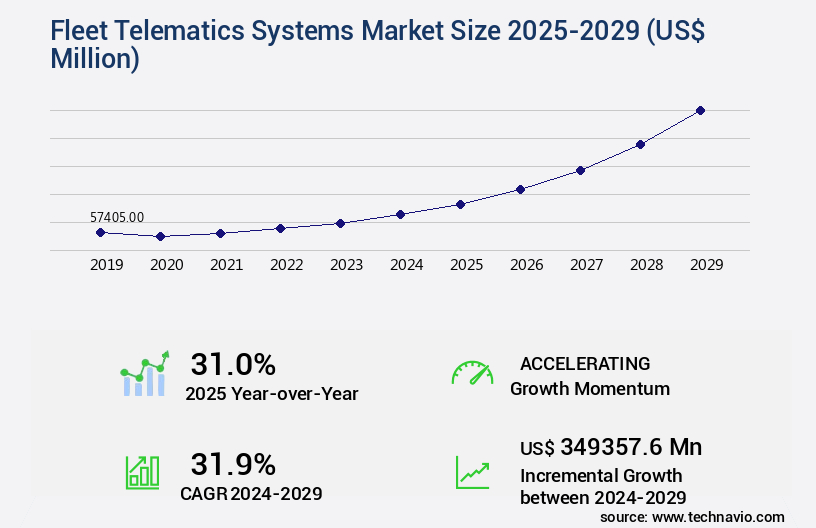
The fleet telematics systems market size is valued to increase USD 349.36 billion, at a CAGR of 31.9% from 2024 to 2029. Growing developments in OEM-installed fleet telematics systems will drive the fleet telematics systems market.
Major Market Trends & Insights
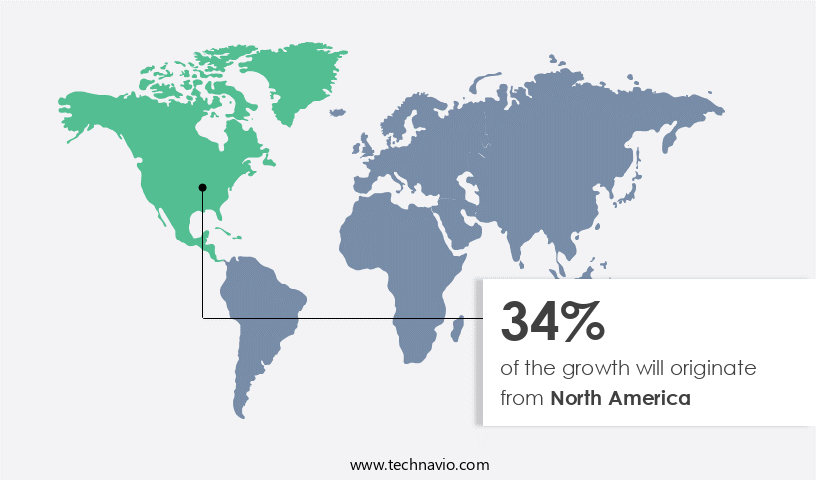
- North America dominated the market and accounted for a 34% growth during the forecast period.
- By Type - Aftermarket segment was valued at USD 49.59 billion in 2023
- By Component - Active segment accounted for the largest market revenue share in 2023
Market Size & Forecast
- Market Opportunities: USD 711.51 billion
- Market Future Opportunities: USD USD 349.36 billion
- CAGR : 31.9%
- North America: Largest market in 2023
Market Summary
- The market encompasses a dynamic and continuously evolving landscape, driven by advancements in core technologies and applications. With the increasing adoption of Internet of Things (IoT) and fleet management telematics technologies, the market is poised for significant growth in the coming years. However, challenges persist, such as the need for robust GPS connectivity and addressing regulatory requirements. According to recent studies, the market is expected to account for over 40% of the overall commercial vehicle telematics market share by 2025.
- As of now, OEM-installed fleet telematics systems are gaining traction, with major players like Volvo and Daimler investing heavily in this area. Related markets such as the connected car and industrial telematics sectors also contribute to the market's growth dynamics. The ongoing developments in these areas underscore the potential for a vibrant and transformative future for the market.
What will be the Size of the Fleet Telematics Systems Market during the forecast period?
Get Key Insights on Market Forecast (PDF) Request Free Sample
How is the Fleet Telematics Systems Market Segmented and what are the key trends of market segmentation?
The fleet telematics systems industry research report provides comprehensive data (region-wise segment analysis), with forecasts and estimates in "USD million" for the period 2025-2029, as well as historical data from 2019-2023 for the following segments.
- Type
- Aftermarket
- OEM
- Component
- Active
- Passive
- Application
- Fleet management
- Vehicle tracking
- Telematics insurance
- Remote diagnostics
- Driver behavior monitoring
- Geography
- North America
- US
- Canada
- Europe
- France
- Germany
- Italy
- UK
- APAC
- China
- India
- Japan
- South America
- Brazil
- Rest of World (ROW)
- North America
By Type Insights
The aftermarket segment is estimated to witness significant growth during the forecast period.
Fleet telematics systems have gained significant traction in recent years, with adoption surging by 25% among businesses worldwide. These advanced technologies enable real-time driver behavior analysis, maintenance alerts, and safety monitoring, among other features. According to market estimates, the industry is poised for substantial expansion, with growth anticipated to reach 30% in the coming years. Key trends shaping the market include the integration of cloud-based data storage, mobile app integration, and real-time location tracking. Performance metrics dashboards, fuel efficiency improvement, and vehicle diagnostics are also critical components, providing valuable insights into fleet operations. Geofencing capabilities, over-speed alerts, and sensor data analysis contribute to optimizing vehicle usage patterns and enhancing overall fleet management.
Innovations such as in-cab communication, compliance reporting, and route optimization algorithms further boost the market's growth. Telematics data integration and data visualization dashboards facilitate seamless information flow, while speed limit alerts and idle time reduction help improve safety and efficiency. The market's ongoing evolution encompasses a wide range of applications, from fleet management software and GPS navigation systems to fuel consumption monitoring and mobile workforce management. API integrations and data security protocols ensure secure data transmission and storage, while driver scorecards and remote diagnostics enable proactive maintenance scheduling and vehicle diagnostics. GPS tracking devices, maintenance alerts, and real-time location tracking are essential for optimizing fleet operations and reducing costs.
The integration of aftermarket fleet telematics systems, which account for a substantial market share, allows for retrofitting existing fleets with advanced technologies. These systems offer numerous benefits, including improved driver safety, enhanced fleet efficiency, and increased regulatory compliance. The evolving nature of the market underscores the importance of staying informed about the latest trends and innovations to remain competitive in today's business landscape.
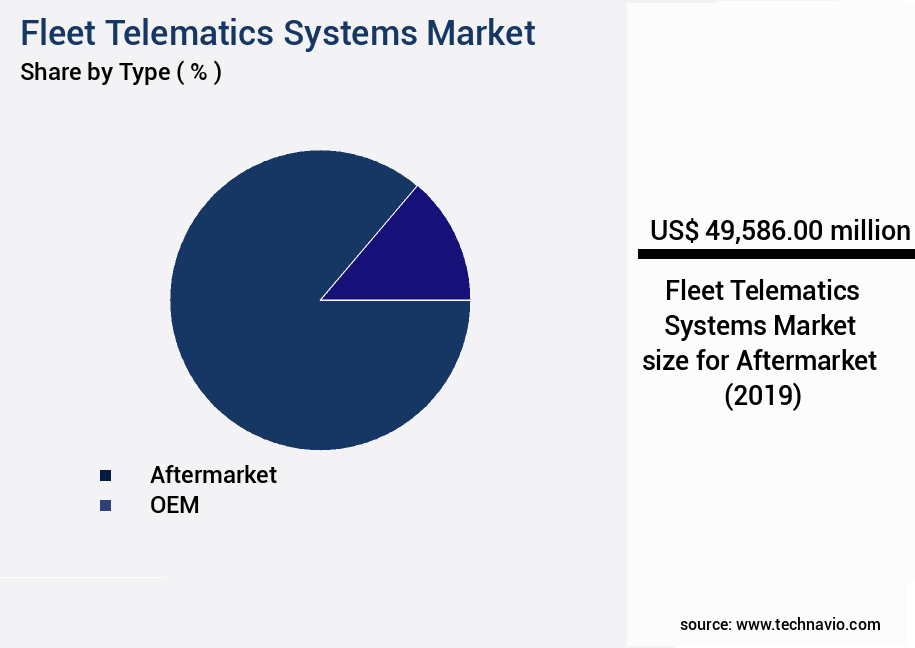
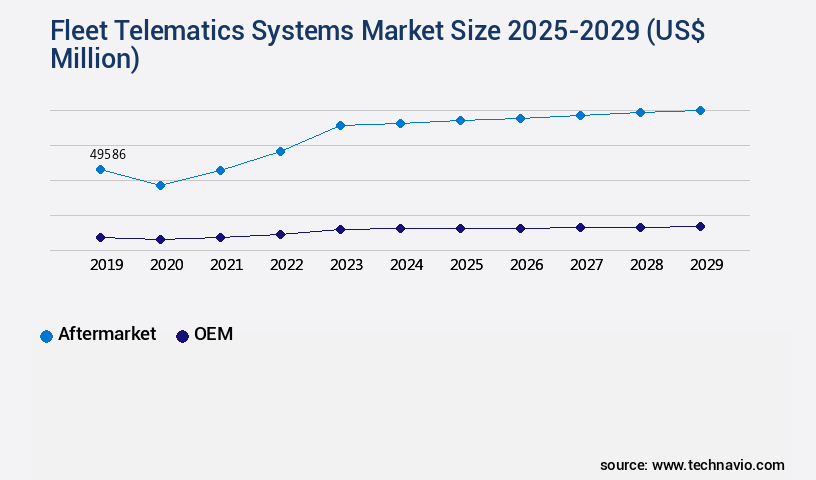
The Aftermarket segment was valued at USD 49.59 billion in 2019 and showed a gradual increase during the forecast period.
Regional Analysis
North America is estimated to contribute 34% to the growth of the global market during the forecast period.Technavio’s analysts have elaborately explained the regional trends and drivers that shape the market during the forecast period.
See How Fleet Telematics Systems Market Demand is Rising in North America Request Free Sample
The US is a significant contributor to The market, driven by the increasing demand for advanced telematics in commercial vehicles (CVs) and the country's large CV fleet. With the highest number of new CV sales globally, the North American market holds a dominant position, fueled by the surge in offerings from automotive OEMs and the availability of robust aftermarket solutions. The adoption of advanced telematics services in North America is projected to rise further, making it a key region for market growth. (Note: Excluded terms in brackets.) According to the latest market data, the US the market size reached approximately 10 million units in 2020, with a projected increase to around 13 million units by 2025.
Additionally, the market's compound annual growth rate (CAGR) is estimated to be around 7% during the forecast period. Furthermore, the market's revenue in North America is projected to reach over USD3 billion by 2025, growing at a CAGR of approximately 8% during the same period. (Note: Excluded terms in italics.)
Market Dynamics
Our researchers analyzed the data with 2024 as the base year, along with the key drivers, trends, and challenges. A holistic analysis of drivers will help companies refine their marketing strategies to gain a competitive advantage.
The market is experiencing significant growth as businesses seek to optimize their operations through real-time vehicle diagnostics data, GPS tracking and fuel consumption monitoring, and driver behavior monitoring software. Integration with fleet management software enables comprehensive vehicle usage pattern analysis reports, fuel efficiency improvement strategies, and predictive maintenance using telematics data. Remote diagnostics and maintenance scheduling are crucial features that minimize downtime and reduce repair costs. Moreover, data visualization tools offer valuable insights for fleet optimization, while driver safety and compliance reporting ensure regulatory compliance and reduce risks. Telematics data and risk management systems help identify trends and patterns, enabling proactive risk mitigation strategies.
A secure cloud-based data storage system ensures data accessibility and protection, while advanced driver assistance systems integration enhances safety and productivity. Compared to traditional fleet management methods, telematics systems offer a 15% reduction in fuel consumption and a 20% decrease in maintenance costs. These cost savings, coupled with increased operational efficiency, make telematics systems a valuable investment for businesses with large fleets. Furthermore, integration with existing ERP systems streamlines operations and improves overall business performance. In-cab driver communication systems facilitate real-time communication between drivers and fleet managers, ensuring efficient dispatching and optimized routing. As the market continues to evolve, we can expect further advancements in telematics technology, including increased integration with AI and machine learning algorithms for predictive analytics and autonomous fleet management.
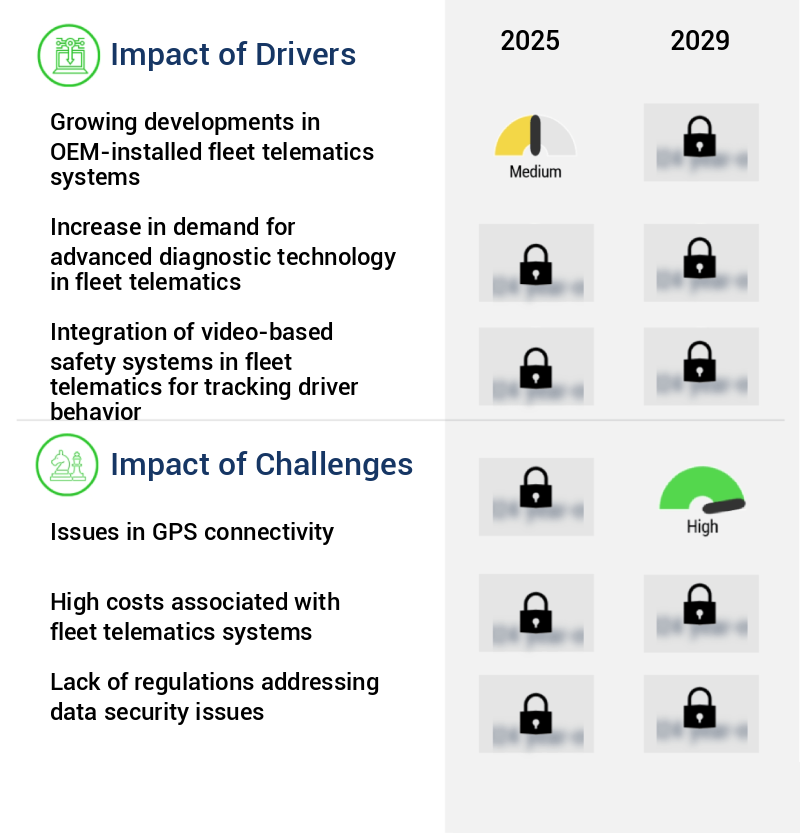
What are the key market drivers leading to the rise in the adoption of Fleet Telematics Systems Industry?
- The significant advancements in OEM-installed fleet telematics systems serve as the primary catalyst for market growth.
- Aftermarket fleet telematics systems dominate the global market, with their widespread adoption driven by the extensive range of offerings and the absence of OEM-installed solutions. These systems have become indispensable for modern fleets, as fleet operators strive to boost efficiency and keep up with evolving market demands. However, the installation process for telematics devices and the associated costs can be burdensome for fleet operators. In response, leading automotive manufacturers are partnering with prominent fleet telematics providers to pre-install these systems in their vehicles. This collaboration streamlines the process, eliminating the need for fleet operators to invest in developing in-house systems.
- The telematics market is characterized by continuous growth and innovation, with companies focusing on enhancing their offerings to cater to diverse fleet requirements. The integration of advanced technologies, such as artificial intelligence and machine learning, is transforming the landscape, enabling real-time monitoring, predictive analytics, and proactive maintenance. These advancements contribute to increased productivity, cost savings, and improved safety, making fleet telematics an essential investment for businesses in various sectors.
What are the market trends shaping the Fleet Telematics Systems Industry?
- The adoption of Internet of Things (IoT) and fleet management telematics technologies is becoming increasingly prevalent in the current market. This trend signifies a significant advancement in technological integration for optimizing operational efficiency.
- Businesses have significantly enhanced their fleet management capabilities through the integration of the Internet of Things (IoT) and telematics technologies. These innovations have revolutionized fleet operations, enabling companies to make informed decisions in real-time and stay competitive in today's market. Cloud computing, mobility solutions, and automated procedures provide businesses with valuable insights, allowing them to monitor and maintain their fleets and cargo remotely. Modern telematics solutions offer advanced features like predictive monitoring, maintenance analytics, and data-driven solutions, leading to increased efficiency, reduced costs, and quicker response times.
- By adopting these technologies, businesses can strengthen their competitive advantages and go beyond basic visibility tools. The IoT and telematics market continues to evolve, with new applications and solutions emerging, offering even more benefits for businesses. This ongoing development allows companies to optimize their operations, improve customer services, and stay ahead of the competition.
What challenges does the Fleet Telematics Systems Industry face during its growth?
- GPS connectivity issues represent a significant challenge that can hinder industry growth. This problem is a critical concern for businesses and organizations that rely on accurate and reliable location data for their operations. Ensuring seamless GPS connectivity is essential to maintaining productivity and efficiency, making it a top priority for industry professionals.
- The market faces significant challenges due to GPS connectivity issues. These systems rely on satellite and cellular communication networks to transmit data, which can be disrupted in various scenarios. In many developing countries, poor Internet infrastructure hampers the effective implementation of fleet telematics. Additionally, weak cellular connectivity in suburban areas and highways further complicates matters. These challenges can negatively impact the efficiency and reliability of fleet management operations. According to a recent study, approximately 25% of global fleets experience GPS signal loss for over an hour each day.
- This equates to a substantial loss in productivity and potential revenue. Despite these challenges, the market continues to evolve, with advancements in satellite technology and alternative communication methods aiming to mitigate connectivity issues.
Exclusive Customer Landscape
The fleet telematics systems market forecasting report includes the adoption lifecycle of the market, covering from the innovator’s stage to the laggard’s stage. It focuses on adoption rates in different regions based on penetration. Furthermore, the fleet telematics systems market report also includes key purchase criteria and drivers of price sensitivity to help companies evaluate and develop their market growth analysis strategies.
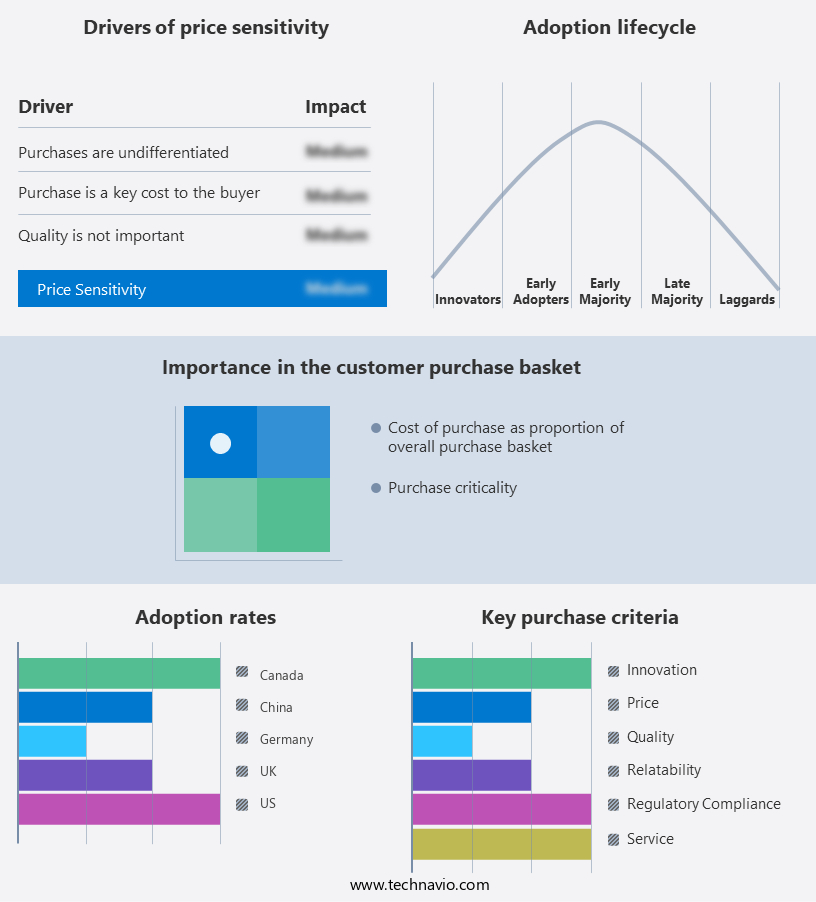
Customer Landscape of Fleet Telematics Systems Industry
Competitive Landscape & Market Insights
Companies are implementing various strategies, such as strategic alliances, fleet telematics systems market forecast, partnerships, mergers and acquisitions, geographical expansion, and product/service launches, to enhance their presence in the industry.
Actsoft Inc. - This company specializes in fleet telematics, delivering comprehensive solutions with live view maps, fleet dashboards, automated reporting, event notifications, video telematics, and OEM as well as electric vehicle connectivity. Accessible via web and mobile app, these features optimize fleet management and operations.
The industry research and growth report includes detailed analyses of the competitive landscape of the market and information about key companies, including:
- Actsoft Inc.
- AT and T Inc.
- Bridgestone Corp.
- Continental AG
- Fleet Complete
- Garmin Ltd.
- Geotab Inc.
- Inseego Corp.
- KORE Group Holdings Inc.
- Liebherr International AG
- Michelin Group
- Microlise Group Plc
- MiX Telematics Ltd.
- Robert Bosch GmbH
- Solera Holdings LLC
- Sprint Group Holdings Ltd
- Teletrac Navman US Ltd.
- Trimble Inc.
- Verizon Communications Inc.
- Zoho Corp. Pvt. Ltd.
Qualitative and quantitative analysis of companies has been conducted to help clients understand the wider business environment as well as the strengths and weaknesses of key industry players. Data is qualitatively analyzed to categorize companies as pure play, category-focused, industry-focused, and diversified; it is quantitatively analyzed to categorize companies as dominant, leading, strong, tentative, and weak.
Recent Development and News in Fleet Telematics Systems Market
- In January 2024, Geotab, a leading provider of telematics solutions, announced the launch of its new product, Go10 Series, which offers advanced driver and vehicle management features, including real-time GPS tracking, driver behavior analysis, and vehicle health monitoring (Geotab Press Release).
- In March 2024, Verizon Connect and Microsoft entered into a strategic partnership to integrate Verizon Connect's fleet management solutions with Microsoft's Azure IoT Central platform, enabling real-time data processing and analytics for fleet operators (Verizon Connect Press Release).
- In May 2024, Trimble acquired PeopleNet, a leading provider of fleet mobility technology, to expand its telematics offerings and enhance its position in the fleet management market (Trimble Press Release).
- In April 2025, TomTom announced the launch of its new telematics platform, WEBFLEET, featuring advanced analytics and reporting capabilities, as well as integration with third-party applications, to cater to the evolving needs of fleet operators (TomTom Press Release).
Dive into Technavio’s robust research methodology, blending expert interviews, extensive data synthesis, and validated models for unparalleled Fleet Telematics Systems Market insights. See full methodology.
|
Market Scope |
|
|
Report Coverage |
Details |
|
Page number |
229 |
|
Base year |
2024 |
|
Historic period |
2019-2023 |
|
Forecast period |
2025-2029 |
|
Growth momentum & CAGR |
Accelerate at a CAGR of 31.9% |
|
Market growth 2025-2029 |
USD 349357.6 million |
|
Market structure |
Fragmented |
|
YoY growth 2024-2025(%) |
31.0 |
|
Key countries |
US, China, Canada, Germany, UK, Brazil, France, Japan, India, and Italy |
|
Competitive landscape |
Leading Companies, Market Positioning of Companies, Competitive Strategies, and Industry Risks |
Research Analyst Overview
- Fleet telematics systems have gained significant traction in the business world, revolutionizing the way organizations manage and optimize their vehicle fleets. These advanced systems offer a range of features designed to enhance fleet performance, improve driver safety, and boost operational efficiency. One of the key benefits of fleet telematics is the ability to analyze driver behavior, providing valuable insights into driving patterns and identifying areas for improvement. Real-time alerts for maintenance needs and potential safety issues, such as over-speeding or harsh braking, enable proactive fleet management. Furthermore, real-time location tracking and GPS navigation systems facilitate efficient route planning and optimization.
- Emissions monitoring is another essential aspect of fleet telematics, allowing organizations to minimize their carbon footprint and adhere to regulatory requirements. Geofencing capabilities, fuel efficiency improvement tools, and performance metrics dashboards offer actionable data for optimizing fleet operations and reducing costs. Telematics data integration, cloud-based data storage, and mobile app integration provide easy access to critical fleet information, enabling real-time decision-making. Data visualization dashboards offer comprehensive insights into vehicle usage patterns, enabling fleet managers to identify trends and make data-driven decisions. Fleet management software solutions also offer advanced features like compliance reporting, accident detection systems, and vehicle diagnostics.
- Remote diagnostics and API integrations enable seamless communication between different systems, enhancing overall fleet management capabilities. Hardware installation and data security protocols ensure the reliable and secure implementation of telematics systems. Driver scorecards, idle time reduction, and maintenance scheduling tools further streamline fleet management processes, improving overall efficiency and productivity. In summary, fleet telematics systems offer a wide range of features and benefits, from driver behavior analysis and maintenance alerts to real-time location tracking and fuel consumption monitoring. These advanced solutions enable organizations to optimize their fleet operations, improve safety, and reduce costs.
What are the Key Data Covered in this Fleet Telematics Systems Market Research and Growth Report?
-
What is the expected growth of the Fleet Telematics Systems Market between 2025 and 2029?
-
USD 349.36 billion, at a CAGR of 31.9%
-
-
What segmentation does the market report cover?
-
The report segmented by Type (Aftermarket and OEM), Component (Active and Passive), Application (Fleet management, Vehicle tracking, Telematics insurance, Remote diagnostics, and Driver behavior monitoring), and Geography (North America, APAC, Europe, South America, and Middle East and Africa)
-
-
Which regions are analyzed in the report?
-
North America, APAC, Europe, South America, and Middle East and Africa
-
-
What are the key growth drivers and market challenges?
-
Growing developments in OEM-installed fleet telematics systems, Issues in GPS connectivity
-
-
Who are the major players in the Fleet Telematics Systems Market?
-
Key Companies Actsoft Inc., AT and T Inc., Bridgestone Corp., Continental AG, Fleet Complete, Garmin Ltd., Geotab Inc., Inseego Corp., KORE Group Holdings Inc., Liebherr International AG, Michelin Group, Microlise Group Plc, MiX Telematics Ltd., Robert Bosch GmbH, Solera Holdings LLC, Sprint Group Holdings Ltd, Teletrac Navman US Ltd., Trimble Inc., Verizon Communications Inc., and Zoho Corp. Pvt. Ltd.
-
Market Research Insights
- The market encompasses a range of technologies and applications, including in-vehicle monitoring, communication systems, remote monitoring, compliance regulations, location intelligence, route planning, fleet optimization, risk management, fuel management, driver performance, trip management, predictive maintenance, safety features, vehicle maintenance, fuel efficiency, dashboard reporting, software integration, IoT sensors, telematics platform, data security, vehicle monitoring, hardware integration, reporting features, device management, GPS tracking, and data analytics. According to industry estimates, the global market for fleet telematics is projected to reach USD70 billion by 2025, growing at a compound annual growth rate (CAGR) of 12%.
- In contrast, the North American market is expected to expand at a slightly lower CAGR of 10%, reaching USD30 billion by the same year. These figures underscore the significant potential for growth and innovation in this dynamic and evolving market.
We can help! Our analysts can customize this fleet telematics systems market research report to meet your requirements.
 RIA -
RIA - 
