
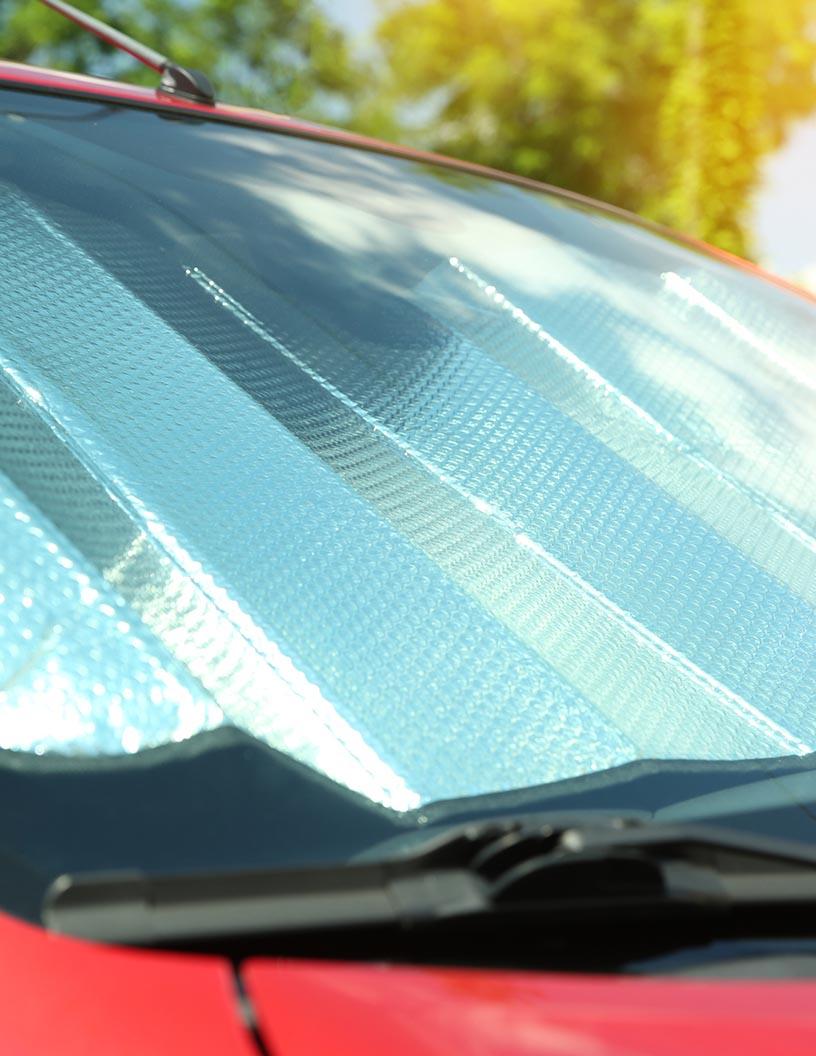


Heat Shield Market Size 2024-2028
The heat shield market size is forecast to increase by USD 2.6 billion at a CAGR of 3.3% between 2023 and 2028.
- The market is driven by the increasing focus on vehicle safety and thermal management. With the rise of electric vehicles (EVs), there is a growing demand for effective thermal protection to ensure optimal battery performance and improve fuel economy. Moreover, stringent emissions regulations necessitate the use of advanced materials such as carbon fiber composites and lightweight metals for heat shield manufacturing. The aerospace and defense sectors also contribute significantly to the market growth due to their requirement for high-performance thermal management solutions. However, the sharp decline in automobile production and sales in the wake of the global economic downturn poses a challenge to market expansion.
What will be the Size of the Market During the Forecast Period?
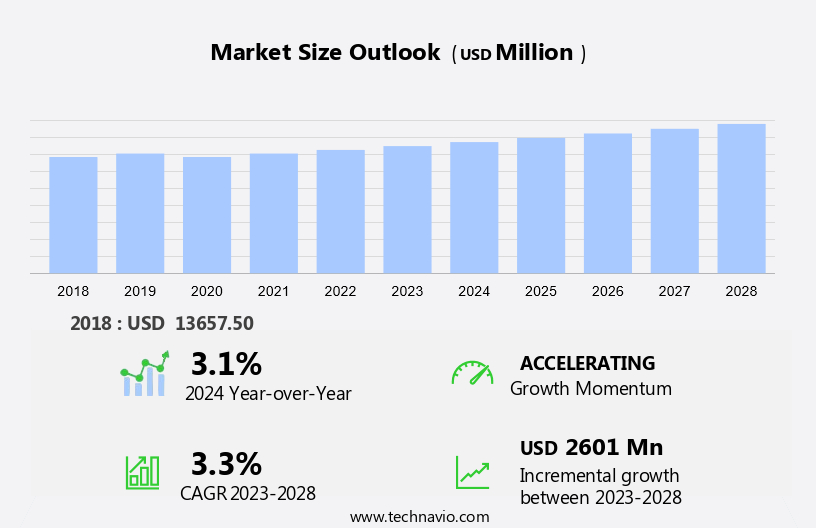
- The market is a significant sector within the broader automotive industry, focusing on thermal management solutions for various vehicle applications. These shields play a crucial role in ensuring vehicle safety and optimizing fuel economy by reducing heat transfer between components. In the context of the evolving automotive landscape, the increasing emphasis on vehicle safety, thermal management, and emissions reduction has led to growing demand for advanced heat shields. This trend is particularly relevant to electric vehicles (EVs) and fuel-efficient vehicles, as thermal management is essential for their optimal performance and extended range. Thermal management is a critical aspect of both conventional internal combustion engine (ICE) vehicles and electric vehicles. In ICE vehicles, heat shields protect components such as catalytic converters and exhaust manifolds from excessive heat, improving engine performance and reducing CO2 emissions.
- Additionally, the emissions regulations continue to be a significant factor influencing the heat shield market. Stringent regulations, such as those set by the Environmental Protection Agency (EPA) and the California Air Resources Board (CARB), necessitate the use of advanced thermal management solutions to minimize vehicle emissions. Heat shields play a crucial role in this regard by reducing heat transfer and optimizing engine efficiency. In conclusion, the heat shield market is a vital component of the automotive industry, with applications spanning passenger cars, light commercial vehicles, and electric vehicles. The focus on vehicle safety, thermal management, and emissions reduction, coupled with the development of advanced materials and technologies, is driving growth in this market. As the automotive industry continues to evolve, heat shields will remain an essential element in ensuring vehicle performance, fuel efficiency, and environmental sustainability.
How is this market segmented and which is the largest segment?
The market research report provides comprehensive data (region-wise segment analysis), with forecasts and estimates in "USD billion" for the period 2024-2028, as well as historical data from 2018-2022 for the following segments.
- Product
- Metallic
- Non-metallic
- Geography
- APAC
- China
- India
- North America
- US
- Europe
- Germany
- UK
- South America
- Middle East and Africa
- APAC
By Product Insights
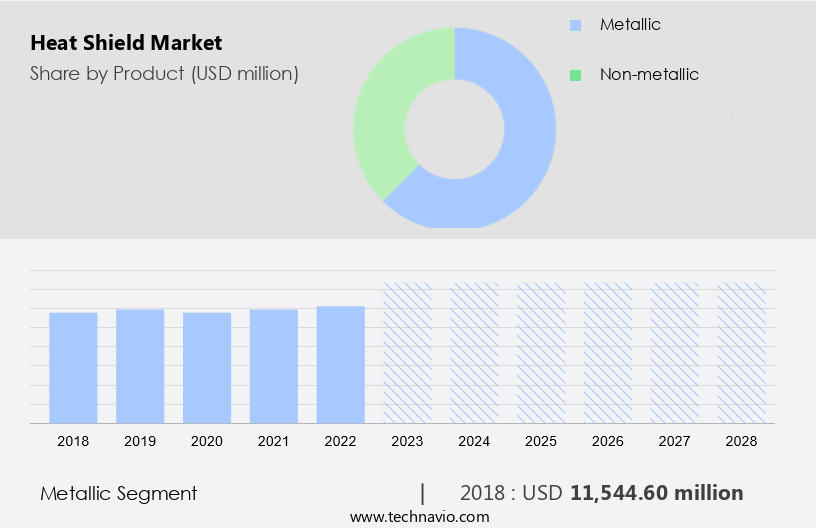
- The metallic segment is estimated to witness significant growth during the forecast period.
The market encompasses various segments, with metallic heat shields holding a substantial share due to their extensive usage in industries requiring superior thermal resistance and durability. Metallic heat shields, commonly fabricated from metals such as aluminum, stainless steel, and titanium, are extensively employed in the automotive, aerospace, and industrial sectors. These materials' capacity to endure extreme temperatures and resist corrosion makes them an optimal choice for applications where other materials may deteriorate. In the automotive industry, metallic heat shields play a pivotal role in safeguarding vital components, including engines, exhaust systems, and turbochargers, from excessive heat. This thermal protection is crucial for ensuring vehicle safety and enhancing overall vehicle lifespan.
Furthermore, high-performance vehicles and electric vehicles (EVs) specifically require metallic heat shields to manage heightened heat loads and optimize battery efficiency. Automotive heat shields contribute significantly to vehicle safety and thermal management. As emissions regulations become increasingly stringent, the demand for fuel economy and reduced vehicle emissions has led to a growing interest in the use of lightweight materials, such as carbon fiber composites and lightweight metals, in heat shield production. These advanced materials offer improved thermal insulation while reducing overall vehicle weight, making them an attractive alternative to traditional metallic heat shields.
Get a glance at the market report of share of various segments Request Free Sample
The metallic segment was valued at USD 11.54 billion in 2018 and showed a gradual increase during the forecast period.
Regional Analysis
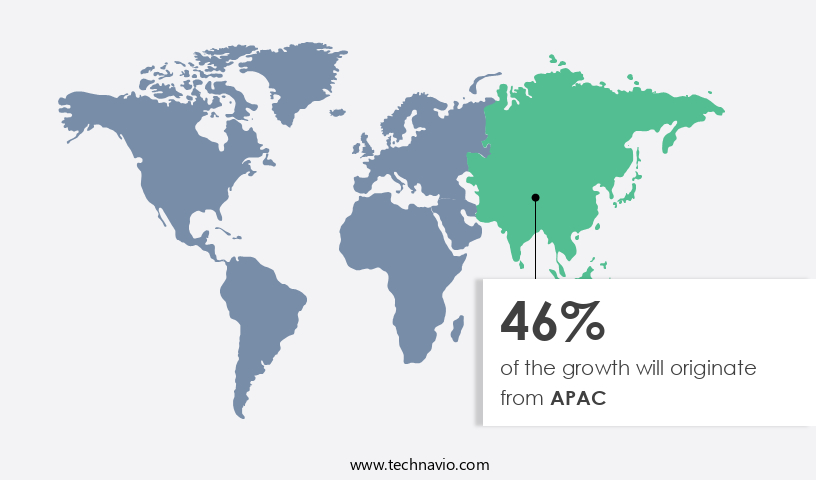
- APAC is estimated to contribute 46% to the growth of the global market during the forecast period.
Technavio's analysts have elaborately explained the regional trends and drivers that shape the market during the forecast period.
For more insights on the market share of various regions Request Free Sample
The market in the APAC region is witnessing notable expansion due to the region's rapid industrialization and urbanization, as well as a strong automotive manufacturing sector in countries like China, India, Japan, and South Korea. The automotive industry's growth is a significant factor, with increasing demand for heat shields to enhance vehicle performance, decrease emissions, and ensure passenger safety in high-temperature conditions. Furthermore, the expanding aerospace sector, particularly in China and India, is driving demand for heat-resistant materials capable of withstanding extreme temperatures, essential for both civilian and defense applications.
Additionally, growing environmental consciousness is prompting manufacturers to create eco-friendly and advanced heat shield solutions, contributing to market growth. In the realm of vehicle production, Original Equipment Manufacturers (OEMs) are focusing on vehicle light-weighting and engine efficiency to meet stringent CO2 emission regulations. Lightweight heat shields are becoming increasingly popular due to their ability to improve fuel efficiency and reduce weight in passenger cars and light commercial vehicles. The market is poised for substantial growth in the coming years.
Market Dynamics
Our researchers analyzed the data with 2023 as the base year, along with the key drivers, trends, and challenges. A holistic analysis of drivers will help companies refine their marketing strategies to gain a competitive advantage.
What are the key market drivers leading to the rise in adoption of Heat Shield Market?
Rising preference for luxury vehicles is the key driver of the market.
- The market is a growing focus on safety technologies as luxury vehicles continue to prioritize reliability, fuel efficiency, and comfort. One segment that has gained significant attention is the sports utility vehicle (SUV) sector. The increasing number of road accidents and resulting fatalities have compelled Original Equipment Manufacturers (OEMs) to integrate advanced safety systems into SUVs. These systems include emergency brake assists, lane departure warning systems, collision mitigation warnings, blind-spot detection, and automatic emergency braking systems. However, the penetration rate of these safety features is higher in sedans compared to SUVs. The integration of safety technologies is not limited to sedans alone. Internal Combustion Engine (ICE) vehicles, including SUVs, are increasingly adopting aluminized steel heat shields for their turbochargers and catalytic converters. Metallic heat shields made of aluminum are preferred due to their lightweight properties and excellent thermal insulation capabilities.
- Furthermore, in EVs, heat shields are used to protect the batteries from external heat sources and maintain optimal operating temperatures. As the market for EVs continues to grow, the demand for aluminum heat shields is expected to increase. In conclusion, the automotive industry is witnessing a shift towards safety and efficiency, with a focus on the integration of advanced safety systems and lightweight materials such as aluminized steel heat shields. This trend is applicable to both ICE and electric vehicles, highlighting the importance of continuous innovation and improvement in the automotive sector. Thus, such factors are driving the growth of the market during the forecast period.
What are the market trends shaping the Heat Shield Market?
Growth in the aerospace and defense sector is the upcoming trend in the market.
- The market is experiencing significant growth due to the increasing demand for advanced thermal management solutions in high-performance and high-temperature applications, particularly in the aerospace and defense sectors. In the aerospace industry, the production of commercial and military aircraft is driving the need for heat shields to protect critical components such as engines, exhaust systems, and fuselage sections from extreme heat. As aircraft engines become more powerful and fuel-efficient, they generate higher temperatures, necessitating heat shielding for safety, efficiency, and extended component life. In the defense sector, the development of hypersonic and supersonic aircraft and missiles has intensified the requirement for heat shields.
- Lithium-ion batteries used in luxury vehicles, sun-roof and moon-roof film kits, and engine applications also contribute to the market growth. Heat shields made of materials like Aluminized Steel and Stainless Steel are in high demand for their ability to withstand extreme temperatures. Digit Insurance and other vehicle insurers recognize the importance of heat shields and offer coverage for their failure or malfunction. The market is expected to continue its expansion in the coming years.
What challenges does Heat Shield Market face during the growth?
The sharp decline in automobile production and sales is a key challenge affecting the market growth.
- The market in the US faces challenges due to the decline in automobile production and sales, which significantly impacts demand for heat shield components in engines, exhaust systems, and underbody protection. Economic instability, disrupted supply chains, and shifting consumer purchasing power have led to a decrease in automotive production, affecting the demand for heat shields. The COVID-19 pandemic has intensified these issues, causing semiconductor shortages and inflationary pressures that have disrupted vehicle manufacturing timelines and increased costs.
- Furthermore, the growing preference for fuel-efficient vehicles and electric vehicles (EVs) has influenced the heat shield industry, as these vehicles have distinct thermal management requirements. High-performance vehicles and compact engines continue to utilize advanced electronics and heat shields for engine performance and heat management. Heat shields remain essential for maintaining optimal engine temperature and protecting against exhaust heat, but their demand is subject to the evolving automotive landscape.
Exclusive Customer Landscape
The market forecasting report includes the adoption lifecycle of the market, covering from the innovator's stage to the laggard's stage. It focuses on adoption rates in different regions based on penetration. Furthermore, the market report also includes key purchase criteria and drivers of price sensitivity to help companies evaluate and develop their market growth analysis strategies.
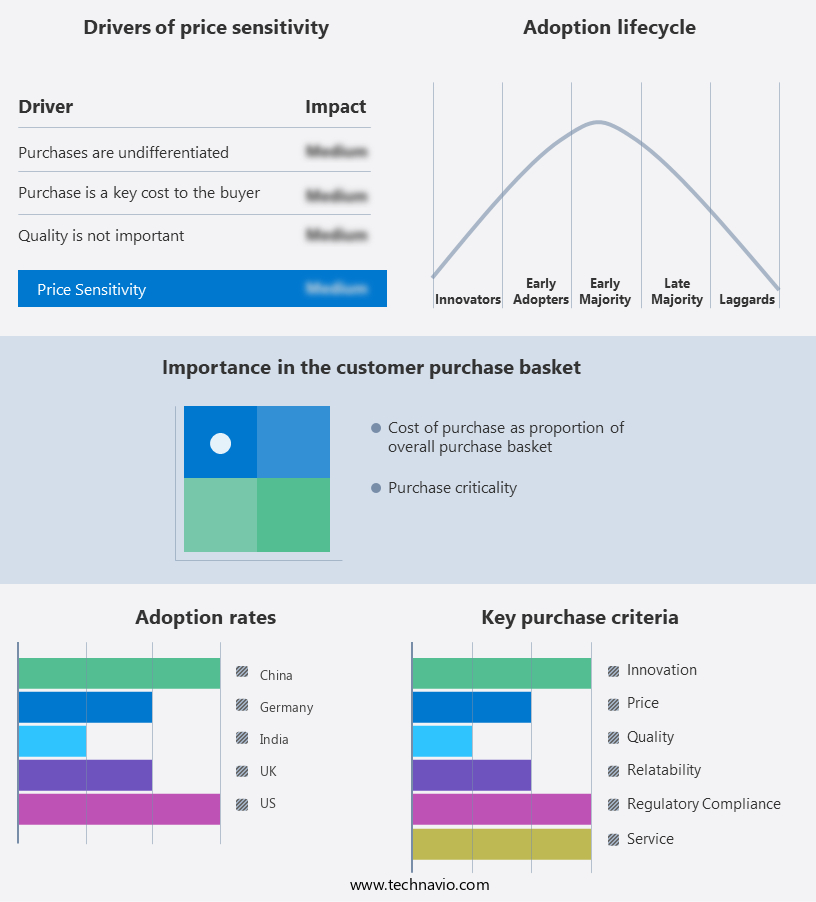
Customer Landscape
Key Companies & Market Insights
Companies are implementing various strategies, such as strategic alliances, market forecast, partnerships, mergers and acquisitions, geographical expansion, and product/service launches, to enhance their presence in the market.
The market research and growth report includes detailed analyses of the competitive landscape of the market and information about key companies, including:
- Autoneum Holding Ltd.
- Carcoustics Shared Services GmbH
- Compagnie de Saint-Gobain SA
- Dana Inc.
- ElringKlinger AG
- HAPPICH GmbH
- Heatshield Products Inc.
- ISOLITE GmbH
- J and S GmbH Automotive Technology
- Morgan Advanced Materials Plc
- NICHIAS Corp.
- Nihon Tokushu Toryo Co. Ltd.
- QUSA Thermal Inc.
- Shiloh Industries Inc.
- Talbros
- Tenneco Inc.
- The Narmco Group
- Thermo Tec
- Unifrax LLC
- Zircotec Ltd.
Qualitative and quantitative analysis of companies has been conducted to help clients understand the wider business environment as well as the strengths and weaknesses of key market players. Data is qualitatively analyzed to categorize companies as pure play, category-focused, industry-focused, and diversified; it is quantitatively analyzed to categorize companies as dominant, leading, strong, tentative, and weak.
Research Analyst Overview
The market is witnessing significant growth due to the increasing demand for thermal management solutions in the automotive industry. With the focus on vehicle safety, fuel economy, and emissions regulations, heat shields have become essential components in both internal combustion engines (ICE) and electric vehicles (EVs). Heat shields provide thermal protection to various vehicle components, including catalytic converters, turbochargers, and battery-operated vehicles' lithium-ion batteries. In the context of EVs, battery thermal management is a critical aspect, and heat shields play a vital role in maintaining optimal battery temperature. Phase change materials (PCMs) and smart heat shields are popular solutions for battery thermal management.
Furthermore, the integration of advanced electronics and high-performance vehicles, as well as the trend towards lightweighting and compact engines, has led to the use of lightweight materials like carbon fiber composites and lightweight metals in heat shield manufacturing. Raw material prices, especially for aluminum and stainless steel, impact the market. OEMs and aftermarket players are increasingly turning to e-commerce platforms for sales, expanding the market reach. The vehicle production of passenger cars and light commercial vehicles continues to grow, fueling the demand for heat shields in the automotive industry. Heat shields are also essential for NVH (Noise, Vibration, and Harshness) management, particularly in luxury cars.
|
Market Scope |
|
|
Report Coverage |
Details |
|
Page number |
134 |
|
Base year |
2023 |
|
Historic period |
2018-2022 |
|
Forecast period |
2024-2028 |
|
Growth momentum & CAGR |
Accelerate at a CAGR of 3.3% |
|
Market growth 2024-2028 |
USD 2.60 billion |
|
Market structure |
Fragmented |
|
YoY growth 2023-2024(%) |
3.1 |
|
Key countries |
China, US, Germany, India, and UK |
|
Competitive landscape |
Leading Companies, Market Positioning of Companies, Competitive Strategies, and Industry Risks |
What are the Key Data Covered in this Market Research and Growth Report?
- CAGR of the market during the forecast period
- Detailed information on factors that will drive the market growth and forecasting between 2024 and 2028
- Precise estimation of the size of the market and its contribution of the market in focus to the parent market
- Accurate predictions about upcoming market growth and trends and changes in consumer behaviour
- Growth of the market across APAC, North America, Europe, South America, and Middle East and Africa
- Thorough analysis of the market's competitive landscape and detailed information about companies
- Comprehensive analysis of factors that will challenge the growth of market companies
We can help! Our analysts can customize this market research report to meet your requirements. Get in touch
 RIA -
RIA - 
