



Organometallics Market Size 2024-2028
The organometallics market size is forecast to increase by USD 2.91 billion at a CAGR of 5.36% between 2023 and 2028.
What will be the Size of the Organometallics Market During the Forecast Period?
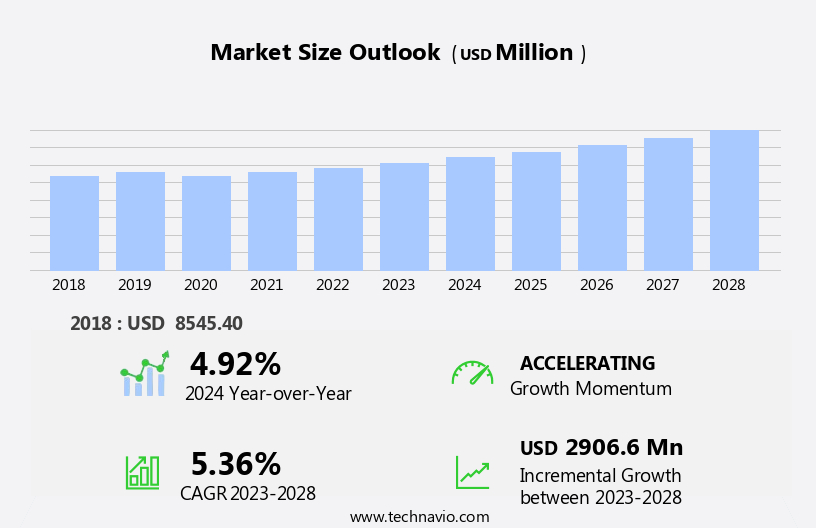
How is this Organometallics Industry segmented?
The organometallics industry research report provides comprehensive data (region-wise segment analysis), with forecasts and estimates in "USD million" for the period 2024-2028, as well as historical data from 2018-2022 for the following segments.
- End-user
- Chemicals
- Textile
- Electronics
- Pharmaceuticals
- Geography
- APAC
- China
- India
- Japan
- North America
- US
- Europe
- Germany
- South America
- Middle East and Africa
- APAC
By End-user Insights
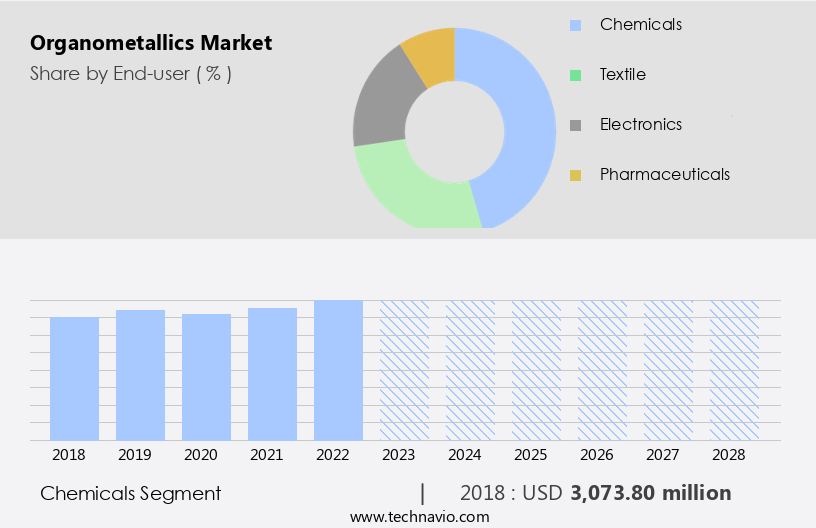
The chemicals segment is estimated to witness significant growth during the forecast period. Organometallics, a class of compounds consisting of carbon bound to a metal or a transition metal, play a significant role in homogeneous catalysis, particularly In the chemical industry. Their application spans across various sectors, including the manufacturing of polymers such as polyethylene and polypropylene In the plastics industry, agrochemical production, and the synthesis of fine chemicals and materials science. Transition metal catalysts, specifically in olefin polymerization, are a key application area for organometallics. In the chemical manufacturing sector, companies are focusing on sustainable synthesis approaches to reduce environmental impact. Organometallics are also used in healthcare and pharmaceuticals, electronics, and various other industries.
For instance, organolithiums, organotins, organoaluminiums, organozinc, organosilicon, organoboron, organogallium, and organopalladium are widely used as reagents in organic synthesis. In the semiconductor industry, organometallic catalysts are used in synthetic methodologies for the production of LEDs, solar cells, and other electronic devices. Organometallics also find applications in sustainable growth areas such as clean energy and green chemical applications. Key players In the chemicals industry, including those In the pharmaceuticals industry, are investing in research and development to expand their organometallic product offerings. Organometallics are used in various applications, including the production of Gilman reagents, Grignard reagents, and other organometallic compounds. The market for organometallics is expected to grow due to their increasing use in various industries and applications.
Get a glance at the market report of various segments Request Free Sample
The Chemicals segment was valued at USD 3.07 billion in 2018 and showed a gradual increase during the forecast period.
Regional Analysis
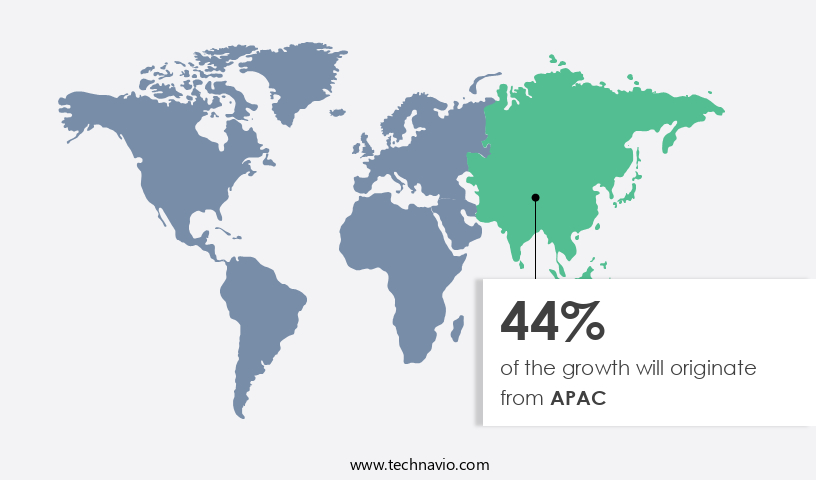
APAC is estimated to contribute 44% to the growth of the global market during the forecast period. Technavio’s analysts have elaborately explained the regional trends and drivers that shape the market during the forecast period.
For more insights on the market size of various regions, Request Free Sample
The market encompasses a range of compounds that incorporate carbon-metal bonds. These compounds, which include Carbon, Transition metal, and other metal derivatives, play a significant role in various sectors such as Chemical manufacturing, Agrochemical production, and Materials science. Transition metal catalysts, particularly in Olefin polymerization, are essential for the production of Polymers and Plastics, including Polyethylene and Polypropylene. In the Chemical industry, organometallics are utilized in Fine chemicals synthesis, while In the Pharmaceuticals Industry, they are employed In the production of Medicines. Organometallic Catalysts are also integral to Sustainable synthesis approaches, Green chemical applications, and the production of Gilman reagents and Grignard reagents.
Organosilicon, Organoboron, Organogallaum, Organopalladium, Organolithium, Organoberyllium, Organomagnesium, and other organometallic compounds are used in various applications, including Agriculture, Electronics, and Sustainable growth initiatives in Clean energy and Green chemical applications. Organolithium Segment and Semiconductor Segment are key areas of focus In the market. The increasing demand for Organometallics in various industries is expected to drive market growth during the forecast period.
Market Dynamics
Our researchers analyzed the data with 2023 as the base year, along with the key drivers, trends, and challenges. A holistic analysis of drivers will help companies refine their marketing strategies to gain a competitive advantage.
What are the key market drivers for the Organometallics industry?
- Rising rate of industrialization in emerging economies is the key driver of the market. The Organometallic Catalysts Market is a significant segment In the chemical industry, particularly in applications such as textile, electronics, pharmaceuticals, and chemicals. The market's expansion is driven by the global industrialization trend, with emerging economies in Asia Pacific (APAC) leading the charge. Countries like India, China, Indonesia, Malaysia, and Thailand are experiencing rapid development and economic growth, making them attractive destinations for foreign investment. China, in particular, is a popular hub for electronics manufacturers. The burgeoning populations and rising disposable incomes of these economies have compelled numerous manufacturers to establish production facilities In the region. Transition metals, including carbon-linked transition metals, play a crucial role in various chemical synthesis processes, such as olefin polymerization, leading to the production of polymers and plastics In the chemicals sector.
Additionally, transition metal catalysts are essential in agrochemical production, sustainable synthesis approaches, fine chemicals, materials science, medicines, and various other industries. In the electronics sector, organometallic catalysts are used In the production of semiconductors, LEDs, and solar cells. The market for organometallic catalysts includes a diverse range of compounds, including Gilman reagents, Grignard reagents, organosilicon, organoboron, organogallium, organopalladium, organolithium, organoberyllium, organomagnesium, and others. The market's growth is further fueled by the increasing demand for sustainable growth, clean energy, and green chemical applications in various industries. Key players In the market include Trimethyl aluminum, Trimethyl antimony, Trimethylgallium, Trimethylindium, and other organometallic compounds.
What are the market trends shaping the Organometallics industry?
- Growing demand for catalysts is the upcoming market trend. Organometallic catalysts play a significant role in various chemical synthesis processes, particularly in industries such as pharmaceuticals, electronics, textiles, and chemicals. Transition metals, including carbon-linked metals like organotins, organolithiums, organoaluminiums, organozinc, organosilicon, organoboron, organogallium, and organopalladium, are commonly used as catalysts in olefin polymerization and other applications. The chemical manufacturing sector, including polyethylene and polypropylene production, relies heavily on these catalysts. The growth of end-user industries has fueled the demand for organometallic catalysts. Consumers' increasing spending capacity and the growing awareness of ecological sustainability are expected to further boost demand. In the pharmaceutical industry, for instance, enzymes are increasingly being used in medicine production, especially in emerging economies like India and China.
Moreover, the transition metal catalysts are essential In the production of agrochemicals, sustainable synthesis approaches, fine chemicals, materials science, and healthcare and pharmaceutical industries. In the electronics sector, organometallic catalysts are used In the synthesis of LEDs, solar cells, and semiconductors. In the e-commerce sector, trimethyl aluminum, trimethyl antimony, trimethylgallium, trimethylindium, and other organometallic compounds are used as catalysts and reagents. Organolithiums, organoberyllium, organomagnesium, and other organometallic compounds are used as catalysts in organic synthesis and metal purification processes. The semiconductor industry utilizes organometallic catalysts in synthetic methodologies and sustainability practices. The organolithium segment and semiconductor segment are expected to dominate the organometallic catalysts market during the forecast period.
In summary, the organometallic catalysts market is driven by the growing demand from various end-user industries, including pharmaceuticals, electronics, textiles, and chemicals. The increasing awareness of sustainability practices and the expanding use of organometallic catalysts in green chemical applications are also contributing to market growth.
What challenges does the Organometallics industry face?
- Stringent regulations and policies is a key challenge affecting the industry growth. The market encompasses the production and application of compounds that contain a carbon-metal bond. Transition metals, such as palladium, nickel, and rhodium, play a crucial role in this sector through their use as catalysts in chemical synthesis, particularly in olefin polymerization for the production of polymers and plastics In the chemical manufacturing sector. Transition metal catalysts are also integral to agrochemical production, sustainable synthesis approaches, and the production of fine chemicals, materials science, medicines, and various other industries. Key organometallic compounds include Gilman reagents, Grignard reagents, organosilicon, organoboron, organogallium, organopalladium, organolithium, organoberyllium, organomagnesium, and others. These compounds find extensive applications in various sectors, including electronics, agriculture, healthcare and pharmaceutical, and e-commerce.
Strict regulations, such as those imposed by the US Environmental Protection Agency (EPA) and Registration, Evaluation, Authorization, and Restriction of Chemicals (REACH), on the volatile organic compound (VOC) content of specialty chemicals, including catalysts used in paints and coatings, adhesives, and sealants, pose a significant challenge to market growth. For instance, the Massachusetts Department of Environmental Protection (MassDEP) has set stringent guidelines on VOCs for adhesives and sealants, and California has established VOC limits for various products, including adhesives and sealants. Adherence to these regulations necessitates continuous innovation and development of cleaner, more sustainable chemical manufacturing processes.
Exclusive Customer Landscape
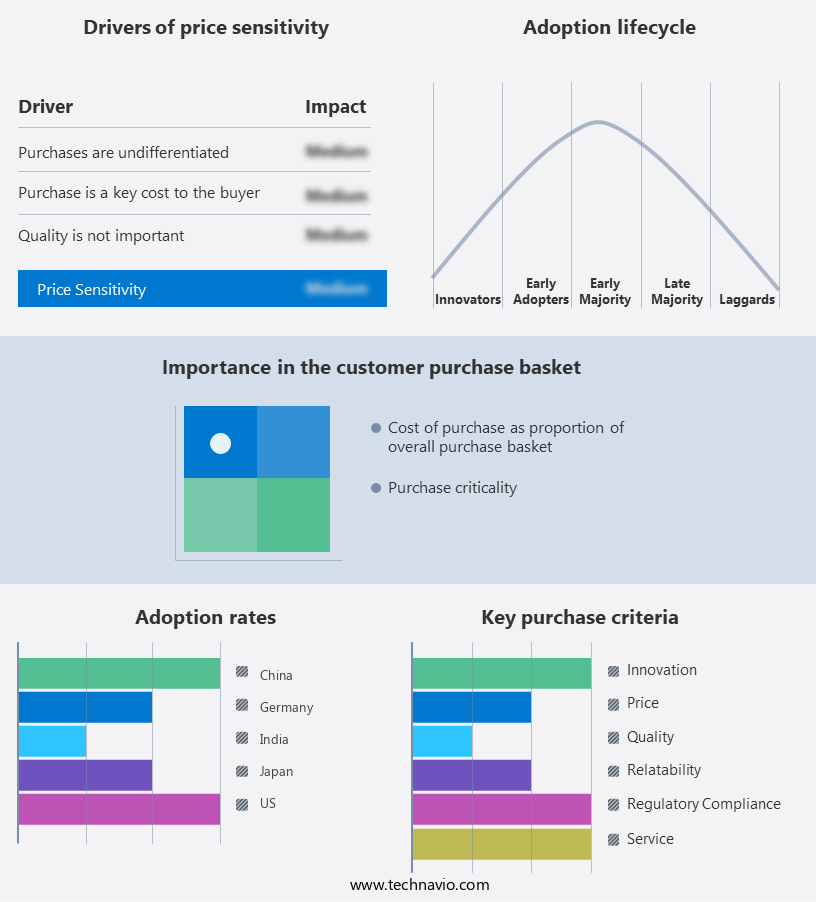
The organometallics market forecasting report includes the adoption lifecycle of the market, covering from the innovator’s stage to the laggard’s stage. It focuses on adoption rates in different regions based on penetration. Furthermore, the organometallics market report also includes key purchase criteria and drivers of price sensitivity to help companies evaluate and develop their market growth analysis strategies.
Customer Landscape
Key Companies & Market Insights
Companies are implementing various strategies, such as strategic alliances, organometallics market forecast, partnerships, mergers and acquisitions, geographical expansion, and product/service launches, to enhance their presence In the industry.
Albemarle Corp. - Organometallics, a critical segment In the chemical industry, encompasses a diverse range of compounds such as aluminum alkyls and magnesium alkyls. These organometallics play essential roles in various applications, including the production of polyethylene packaging, toys, pharmaceuticals, and electronic devices. The company in question is a significant contributor to this market, providing high-quality organometallics that drive innovation and efficiency In these industries. By leveraging advanced technologies and expertise, the company ensures the delivery of superior products that meet the evolving needs of its customers.
The industry research and growth report includes detailed analyses of the competitive landscape of the market and information about key companies, including:
- Albemarle Corp.
- American Elements
- Blue Line Corp.
- Coastal Chemical Co. LLC
- GFS Chemicals Inc.
- HOS Technik Vertriebs und Produktions GmbH
- Hydrite Chemical Co.
- Hydro One Beverages
- Matrix (Guangzhou) Metamaterials Co. Ltd.
- Noah Chemicals
- Nouryon
- Reaxis Inc.
- Strem Chemicals Inc.
- Thermo Fisher Scientific Inc.
- Tulip Chemicals Pvt. Ltd.
- Univar Solutions Inc.
Qualitative and quantitative analysis of companies has been conducted to help clients understand the wider business environment as well as the strengths and weaknesses of key industry players. Data is qualitatively analyzed to categorize companies as pure play, category-focused, industry-focused, and diversified; it is quantitatively analyzed to categorize companies as dominant, leading, strong, tentative, and weak.
Research Analyst Overview
The market encompasses a diverse range of compounds that incorporate carbon-metal bonds. These compounds, which include transition metal complexes, play a significant role in various sectors, particularly in chemical synthesis and catalysis. Transition metals, such as those In the d-block of the periodic table, are commonly used as catalysts In the polymerization of olefins, including polyethylene and polypropylene. The plastics sector relies heavily on these transition metal catalysts, which enable the production of high-performance polymers with desirable properties. The chemical manufacturing sector also benefits from organometallics in various applications. Transition metal catalysts are utilized in agrochemical production, sustainable synthesis approaches for fine chemicals, and materials science.
In addition, organometallics find use In the healthcare and pharmaceutical industry, where they contribute to the development of medicines and In the electrical and electronics sector for the production of semiconductors. Organometallics have also gained prominence In the field of sustainable growth and clean energy. These compounds play a crucial role In the production of green chemical applications, such as In the synthesis of Gilman reagents and Grignard reagents. Organosilicon, organoboron, organogallium, organopalladium, organolithium, organoberyllium, and organomagnesium are some of the organometallics that have found applications in this area. The market is driven by the increasing demand for high-performance materials and sustainable manufacturing processes.
The market is expected to grow significantly In the coming years, with the organolithium segment and the semiconductor segment leading the charge. Organometallic catalysts have become essential in synthetic methodologies due to their ability to facilitate complex chemical reactions. They are used In the production of LEDs, solar cells, and e-commerce applications. Trimethyl aluminum, trimethyl antimony, trimethylgallium, trimethylindium, and other organometallics are commonly used as catalysts In these applications. The chemicals industry is a significant consumer of organometallics, with the production of alcohols, textiles, and other chemicals relying on these compounds. Organometallics are also used In the purification of metals, making them an essential component of the metals industry.
In conclusion, the market is a dynamic and diverse sector that plays a crucial role in various industries, from plastics and chemicals to healthcare and electronics. The market is driven by the increasing demand for high-performance materials and sustainable manufacturing processes, and it is expected to grow significantly In the coming years. Organometallics are essential components of synthetic methodologies, and their use is expanding into new applications, such as clean energy and e-commerce.
|
Market Scope |
|
|
Report Coverage |
Details |
|
Page number |
139 |
|
Base year |
2023 |
|
Historic period |
2018-2022 |
|
Forecast period |
2024-2028 |
|
Growth momentum & CAGR |
Accelerate at a CAGR of 5.36% |
|
Market growth 2024-2028 |
USD 2906.6 million |
|
Market structure |
Fragmented |
|
YoY growth 2023-2024(%) |
4.92 |
|
Key countries |
US, China, Germany, India, and Japan |
|
Competitive landscape |
Leading Companies, Market Positioning of Companies, Competitive Strategies, and Industry Risks |
What are the Key Data Covered in this Organometallics Market Research and Growth Report?
- CAGR of the Organometallics industry during the forecast period
- Detailed information on factors that will drive the growth and forecasting between 2024 and 2028
- Precise estimation of the size of the market and its contribution of the industry in focus to the parent market
- Accurate predictions about upcoming growth and trends and changes in consumer behaviour
- Growth of the market across APAC, North America, Europe, South America, and Middle East and Africa
- Thorough analysis of the market’s competitive landscape and detailed information about companies
- Comprehensive analysis of factors that will challenge the organometallics market growth of industry companies
We can help! Our analysts can customize this organometallics market research report to meet your requirements.
 RIA -
RIA - 
