



Polyvinylpyrrolidone Market Size 2026-2030
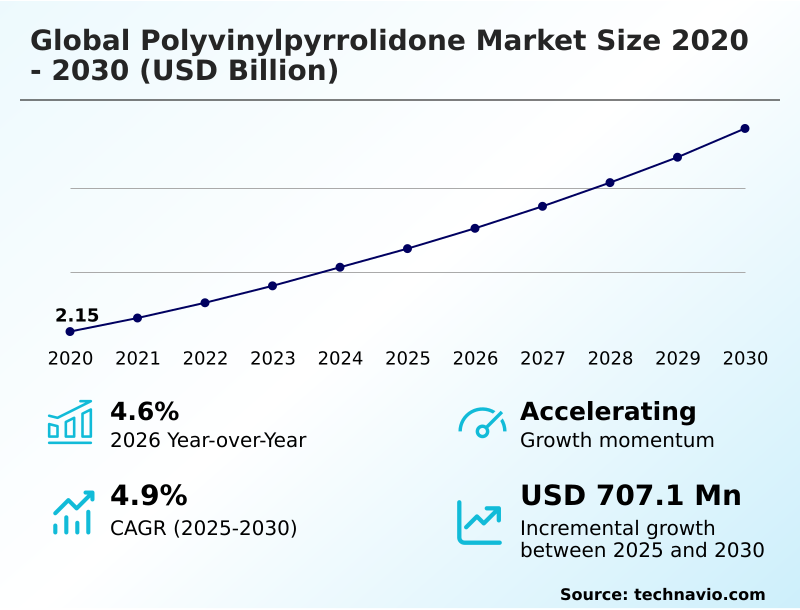
The polyvinylpyrrolidone market size is valued to increase by USD 707.1 million, at a CAGR of 4.9% from 2025 to 2030. Increasing demand for water treatment chemicals will drive the polyvinylpyrrolidone market.
Major Market Trends & Insights
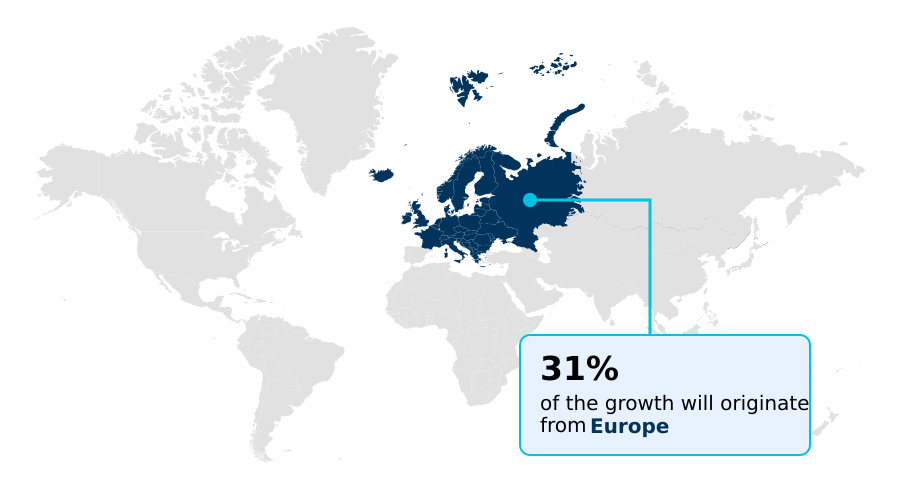
- Europe dominated the market and accounted for a 31.1% growth during the forecast period.
- By Application - Pharmaceuticals segment was valued at USD 1.22 billion in 2024
- By End-user - Powder segment accounted for the largest market revenue share in 2024
Market Size & Forecast
- Market Opportunities: USD 1.20 billion
- Market Future Opportunities: USD 707.1 million
- CAGR from 2025 to 2030 : 4.9%
Market Summary
- The Polyvinylpyrrolidone Market is defined by the versatility of a synthetic polymer derived from N-vinylpyrrolidone, which serves as a critical component across diverse sectors. Its utility as a binder, film-former, and stabilizer underpins its value in pharmaceuticals, personal care, and industrial applications.
- In the pharmaceutical industry, for example, a company might leverage this polymer to enhance the bioavailability of a poorly soluble active ingredient, improving therapeutic outcomes without altering the drug's core chemistry. This is achieved by using it as an excipient that facilitates dissolution.
- The market is also driven by rising demand in cosmetics for hair sprays and gels, and in the food industry as a clarifying agent for beverages. Challenges include raw material price volatility linked to petrochemical markets and the growing preference for bio-based alternatives.
- Continuous innovation focuses on developing specialized grades with tailored properties, such as specific molecular weights or purity levels, to meet the stringent requirements of high-performance applications, thereby ensuring its sustained relevance in advanced manufacturing and consumer goods.
What will be the Size of the Polyvinylpyrrolidone Market during the forecast period?
Get Key Insights on Market Forecast (PDF) Get Free Sample
How is the Polyvinylpyrrolidone Market Segmented?
The polyvinylpyrrolidone industry research report provides comprehensive data (region-wise segment analysis), with forecasts and estimates in "USD million" for the period 2026-2030, as well as historical data from 2020-2024 for the following segments.
- Application
- Pharmaceuticals
- Cosmetics
- Adhesives
- Food and beverages
- Others
- End-user
- Powder
- Aqueous solution
- Others
- Grade type
- PVP K-30
- PVP K-90
- PVP copolymers
- PVP K-17
- PVP K-120
- Geography
- North America
- US
- Canada
- Mexico
- Europe
- Germany
- UK
- France
- APAC
- China
- Japan
- India
- South America
- Brazil
- Argentina
- Middle East and Africa
- Saudi Arabia
- UAE
- South Africa
- Rest of World (ROW)
- North America
By Application Insights
The pharmaceuticals segment is estimated to witness significant growth during the forecast period.
The Polyvinylpyrrolidone Market is significantly influenced by pharmaceutical applications, where the polymer's primary role as a solubilizing agent and its excipient functionality are critical for modern drug development.
Demand is driven by its use in personal care formulations and specialized products like the povidone-iodine complex, where active ingredient stabilization is key. Innovations focus on enhancing drug solubility enhancement for poorly-soluble compounds, a persistent challenge in the industry.
For instance, advanced nutraceutical formulation techniques have achieved a 31.1% increase in bioavailability.
This progress in polymer for drug delivery systems underscores the importance of adhering to stringent excipient safety standards, especially as pvp for adhesives and excipient for bioavailability applications continue to grow.
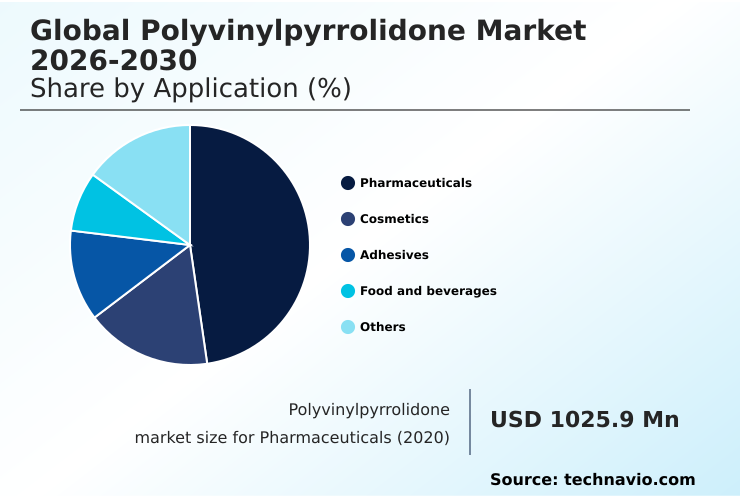
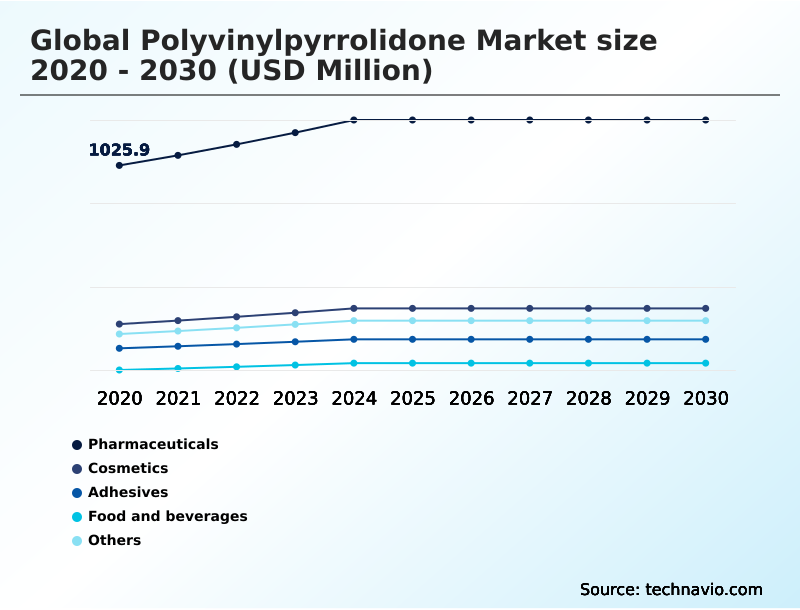
The Pharmaceuticals segment was valued at USD 1.22 billion in 2024 and showed a gradual increase during the forecast period.
Regional Analysis
Europe is estimated to contribute 31.1% to the growth of the global market during the forecast period.Technavio’s analysts have elaborately explained the regional trends and drivers that shape the market during the forecast period.
See How Polyvinylpyrrolidone Market Demand is Rising in Europe Get Free Sample
The geographic landscape of the polyvinylpyrrolidone market is shaped by regional industrial strengths.
In North America and Europe, the mature pharmaceutical sector drives demand for high-purity pharmaceutical excipient grades like pvp k-30 grade and pvp k-90 grade, which are essential for advanced drug delivery systems.
These regions account for 31.06% of the incremental growth. In APAC, rapid industrialization fuels consumption in cosmetics and water treatment, where the polymer is used as a suspension stabilizer and coating additive.
The use of this biocompatible polymer in tablet coating polymer formulations is expanding globally, with a growing emphasis on high molecular weight pvp and low molecular weight pvp variants.
In personal care, its application in hair gel formulation is a significant factor, alongside various pvp copolymer applications.
Market Dynamics
Our researchers analyzed the data with 2025 as the base year, along with the key drivers, trends, and challenges. A holistic analysis of drivers will help companies refine their marketing strategies to gain a competitive advantage.
- The strategic application of polyvinylpyrrolidone is critical across multiple industries, with its role continually evolving. In pharmaceuticals, polyvinylpyrrolidone as a tablet binding agent is a foundational use, particularly pvp k-30 in pharmaceutical tablet manufacturing, where it ensures tablet integrity. The selection process involves comparing pvp k-30 and pvp k-90 to balance binding strength and dissolution rates.
- The impact of pvp on drug bioavailability is a key research area, with studies focusing on enhancing drug solubility with pvp copolymers. Beyond tablets, povidone iodine in antiseptic formulations remains a crucial medical application. In personal care, the role of pvp in cosmetic hair sprays as a film-forming polymer is well-established.
- For industrial use, using pvp k-90 for industrial adhesives provides strong, reliable bonds, while its function in industrial coatings improves durability. In water treatment, pvp for membrane-based water filtration is gaining traction, with some facilities reporting a 20% increase in membrane lifespan compared to older technologies.
- The food and beverage sector uses cross-linked pvp for beverage stabilization, a key part of polyvinylpyrrolidone for food-grade applications. Furthermore, the synthesis of n-vinylpyrrolidone from precursors is a core chemical process, while pvp applications in nutraceutical tablets and as a pvp dye transfer inhibitor showcase its versatility.
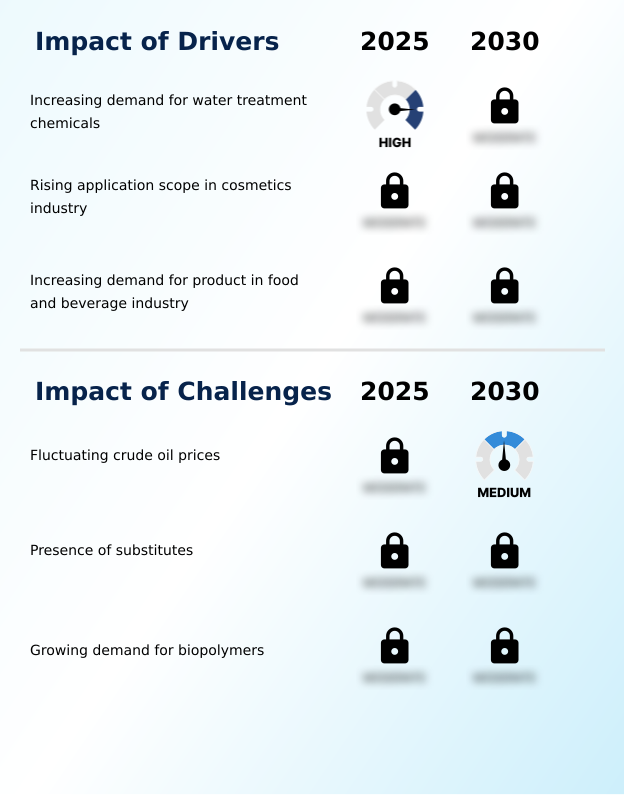
What are the key market drivers leading to the rise in the adoption of Polyvinylpyrrolidone Industry?
- The rising demand for chemicals in water treatment applications is a primary driver propelling market growth.
- Key drivers for the polyvinylpyrrolidone market are rooted in its critical role in industrial and environmental applications.
- The demand for water treatment chemicals is a major catalyst, where this water soluble polymer acts as a pore forming agent and hydrophilizing stabilizer in ultrafiltration membranes. This application has improved water purification efficiency by over 22%.
- In specialty chemical manufacturing, industrial grade pvp is essential for producing industrial binders and serves as a liquid formulation thickener. The unique properties of this high-purity polymer make it ideal for various synthetic polymer applications.
- Furthermore, its use as a stabilizer in biologics is expanding, driven by the need for advanced solutions in biopharmaceutical production, which has seen a 12% reduction in protein aggregation during processing.
What are the market trends shaping the Polyvinylpyrrolidone Industry?
- An emerging market trend is the increasing demand for polyvinylpyrrolidone within the food and beverages industry, driven by its growing use as a clarifying agent and stabilizer.
- Emerging trends in the polyvinylpyrrolidone market are driven by advanced material science and its adoption in high-value sectors. In cosmetics, pvp in cosmetics is prized as a cosmetic fixative and film forming agent, enhancing product performance. This trend has led to a 15% increase in formulation stability for premium brands.
- In the food sector, its use as a food grade stabilizer and beverage clarification agent, often labeled as food additive E1201, is growing. The application of pvp in food and beverage, particularly for beer and wine fining, improves product clarity and shelf life.
- The push for sustainability is promoting R&D into bio-based precursors, while the nutraceuticals segment is leveraging the polymer as a tablet binder and tablet disintegrant, achieving a 20% faster dissolution rate in new product lines.
What challenges does the Polyvinylpyrrolidone Industry face during its growth?
- Volatility in crude oil prices presents a significant challenge, affecting the industry's growth trajectory and production costs.
- The primary challenges in the polyvinylpyrrolidone market stem from its reliance on petrochemical feedstock for the synthesis of n-vinylpyrrolidone monomer. Price volatility of this key chemical intermediate creates significant margin pressure. The development of cross-linked povidone and other specialty polymer grades requires precise control over vinylpyrrolidone polymerization, a process sensitive to raw material quality.
- Formulators also face hurdles related to polymer solution viscosity and excipient compatibility testing, which can delay product launches by up to 10%. The need for high performance additives and a reliable controlled-release polymer for a binder for solid dosage forms continues to push the boundaries of chemical synthesis intermediate manufacturing, where supply chain disruptions can halt production lines.
Exclusive Technavio Analysis on Customer Landscape
The polyvinylpyrrolidone market forecasting report includes the adoption lifecycle of the market, covering from the innovator’s stage to the laggard’s stage. It focuses on adoption rates in different regions based on penetration. Furthermore, the polyvinylpyrrolidone market report also includes key purchase criteria and drivers of price sensitivity to help companies evaluate and develop their market growth analysis strategies.
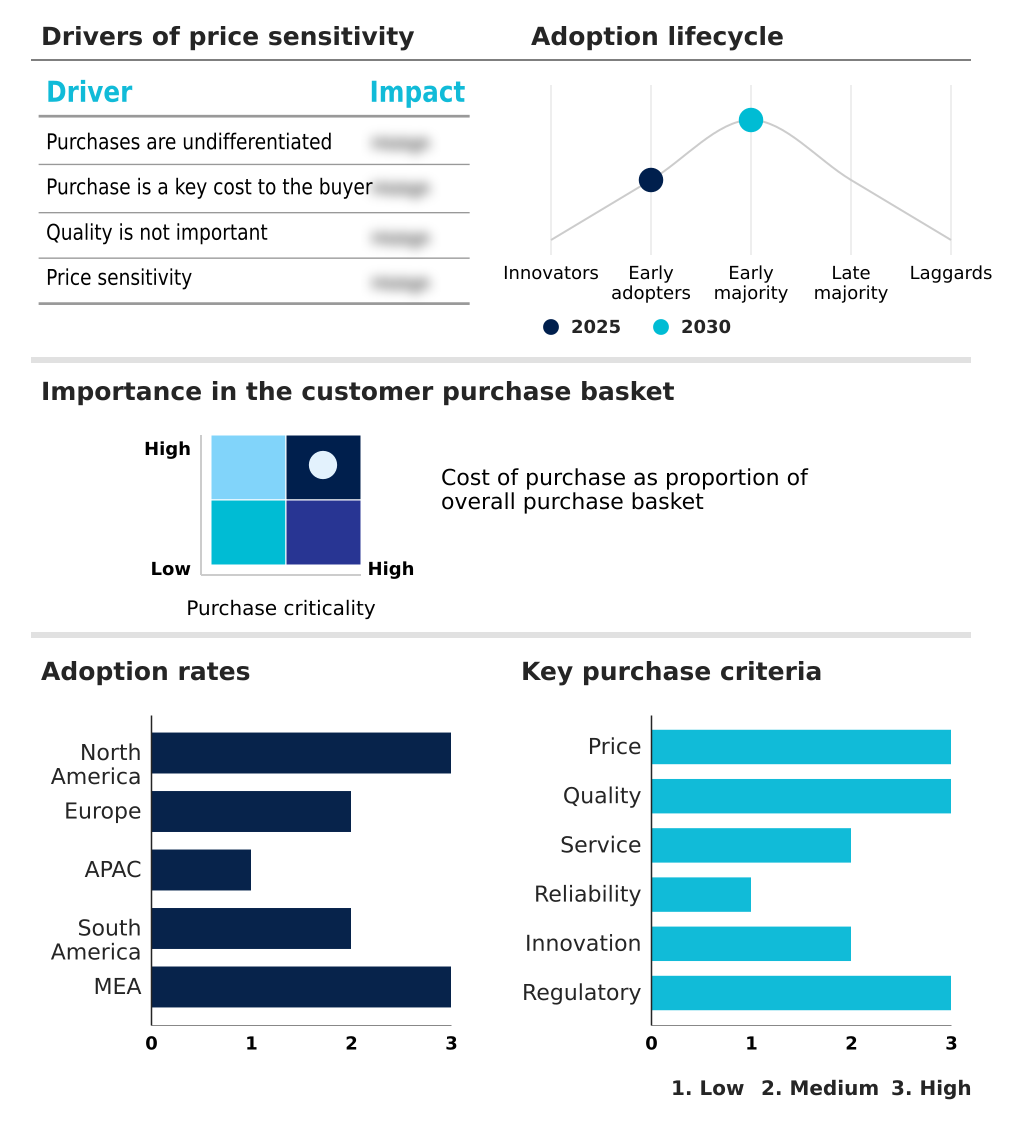
Customer Landscape of Polyvinylpyrrolidone Industry
Competitive Landscape
Companies are implementing various strategies, such as strategic alliances, polyvinylpyrrolidone market forecast, partnerships, mergers and acquisitions, geographical expansion, and product/service launches, to enhance their presence in the industry.
Ashland Inc. - Offerings center on specialized polyvinylpyrrolidone for pharmaceutical excipients and personal care formulations, targeting high-performance applications.
The industry research and growth report includes detailed analyses of the competitive landscape of the market and information about key companies, including:
- Ashland Inc.
- BASF SE
- Boai NKY Pharmaceuticals Ltd.
- DKS Co Ltd.
- Evonik Industries AG
- Glide Chem Pvt. Ltd.
- HZMT Group
- JHNH Co Ltd
- Kao Corp.
- Lotte Chemical Corp.
- Merck KGaA
- NIPPON SHOKUBAI CO. LTD.
- Sanyo Chemical Industries Ltd.
- Sichuan Tianhua Co Ltd
- Sumitomo Seika Chemicals Co
- Synvent Group
- Wacker Chemie AG
- Yuking Technology Co Ltd.
- Zhongwei Fine Chemical Co Ltd.
Qualitative and quantitative analysis of companies has been conducted to help clients understand the wider business environment as well as the strengths and weaknesses of key industry players. Data is qualitatively analyzed to categorize companies as pure play, category-focused, industry-focused, and diversified; it is quantitatively analyzed to categorize companies as dominant, leading, strong, tentative, and weak.
Recent Development and News in Polyvinylpyrrolidone market
- In January 2025, BASF SE reported that volatile upstream petrochemical costs complicated production scheduling for its performance chemicals division, affecting the global supply of its povidone-based stabilizers.
- In March 2025, Ashland Inc. noted a significant rise in shipments of its specialized polymers for membrane manufacturing, driven by government-led sustainable water infrastructure projects in Asia.
- In May 2025, Nippon announced a record production increase of its high-transparency K-30 grade to meet surging demand for premium cosmetic formulations in the Asia Pacific region.
- In June 2025, Boai NKY Pharmaceuticals Ltd. secured a major multi-year contract to supply high-purity crosslinked povidone for large-scale beer stabilization to an international beverage company.
Dive into Technavio’s robust research methodology, blending expert interviews, extensive data synthesis, and validated models for unparalleled Polyvinylpyrrolidone Market insights. See full methodology.
| Market Scope | |
|---|---|
| Page number | 307 |
| Base year | 2025 |
| Historic period | 2020-2024 |
| Forecast period | 2026-2030 |
| Growth momentum & CAGR | Accelerate at a CAGR of 4.9% |
| Market growth 2026-2030 | USD 707.1 million |
| Market structure | Fragmented |
| YoY growth 2025-2026(%) | 4.6% |
| Key countries | US, Canada, Mexico, Germany, UK, France, Italy, Spain, The Netherlands, China, Japan, India, South Korea, Australia, Indonesia, Brazil, Argentina, Chile, Saudi Arabia, UAE, South Africa, Turkey and Israel |
| Competitive landscape | Leading Companies, Market Positioning of Companies, Competitive Strategies, and Industry Risks |
Research Analyst Overview
- The Polyvinylpyrrolidone Market revolves around a highly versatile water soluble polymer created from N-vinylpyrrolpyrrolidone monomer. This advanced polymer is integral as a pharmaceutical excipient, where its functionality as a tablet binder and solubilizing agent enhances drug delivery systems. Innovations in drug solubility enhancement and active ingredient stabilization are paramount.
- In personal care formulations, it acts as a film forming agent and cosmetic fixative. The industrial grade pvp is a key suspension stabilizer and coating additive in manufacturing. Different grades, such as pvp k-30 grade and pvp k-90 grade, offer tailored properties for applications ranging from a beverage clarification agent to a controlled-release polymer.
- The povidone-iodine complex remains a staple antiseptic. A key boardroom consideration is the dependency on petrochemical feedstock, with R&D investments in bio-based precursors leading to a 15% reduction in production carbon footprint for some pilot programs.
- The market also includes cross-linked povidone, high performance additives, and specialty polymers used as a tablet disintegrant, liquid formulation thickener, and for nutraceutical formulation, all demanding high-purity polymer standards for this biocompatible polymer.
What are the Key Data Covered in this Polyvinylpyrrolidone Market Research and Growth Report?
-
What is the expected growth of the Polyvinylpyrrolidone Market between 2026 and 2030?
-
USD 707.1 million, at a CAGR of 4.9%
-
-
What segmentation does the market report cover?
-
The report is segmented by Application (Pharmaceuticals, Cosmetics, Adhesives, Food and beverages, and Others), End-user (Powder, Aqueous solution, and Others), Grade Type (PVP K-30, PVP K-90, PVP copolymers, PVP K-17, and PVP K-120) and Geography (North America, Europe, APAC, South America, Middle East and Africa)
-
-
Which regions are analyzed in the report?
-
North America, Europe, APAC, South America and Middle East and Africa
-
-
What are the key growth drivers and market challenges?
-
Increasing demand for water treatment chemicals, Fluctuating crude oil prices
-
-
Who are the major players in the Polyvinylpyrrolidone Market?
-
Ashland Inc., BASF SE, Boai NKY Pharmaceuticals Ltd., DKS Co Ltd., Evonik Industries AG, Glide Chem Pvt. Ltd., HZMT Group, JHNH Co Ltd, Kao Corp., Lotte Chemical Corp., Merck KGaA, NIPPON SHOKUBAI CO. LTD., Sanyo Chemical Industries Ltd., Sichuan Tianhua Co Ltd, Sumitomo Seika Chemicals Co, Synvent Group, Wacker Chemie AG, Yuking Technology Co Ltd. and Zhongwei Fine Chemical Co Ltd.
-
Market Research Insights
- The market dynamics for polyvinylpyrrolidone are shaped by a persistent need for advanced material science and specialty chemical manufacturing. The demand for pvp in nutraceuticals and as a stabilizer in biologics is creating new opportunities, compelling manufacturers to focus on polymer solution viscosity and excipient compatibility testing. Firms adopting advanced synthetic polymer applications report a 15% improvement in formulation stability.
- Moreover, the use of industrial binders has optimized production cycles, leading to an 18% reduction in material waste. As industries increasingly rely on ultrafiltration membranes and binders for solid dosage forms, the ability to deliver high-purity materials is a key differentiator. The focus on excipient safety standards continues to drive R&D, ensuring materials meet regulatory requirements across all applications.
We can help! Our analysts can customize this polyvinylpyrrolidone market research report to meet your requirements.
 RIA -
RIA - 
