


Probiotic Dietary Supplements Market Analysis North America, Europe, APAC, South America, Middle East and Africa - US, China, Australia, UK, Germany - Size and Forecast 2024-2028

Probiotic Dietary Supplements Market Analysis North America, Europe, APAC, South America, Middle East and Africa - US, China, Australia, UK, Germany - Size and Forecast 2024-2028

Published: Jul 2024 157 Pages SKU: IRTNTR70211

Market Overview at a Glance

$1.16 B
Market Opportunity
4.5%
CAGR
4.23
YoY growth 2023-2024(%)

Probiotic Dietary Supplements Market Size 2024-2028 

The probiotic dietary supplements market size is forecast to increase by USD 1.16 billion at a CAGR of 4.5% between 2023 and 2028. Probiotic dietary supplements have gained significant attention in the market due to their potential benefits in addressing various health concerns. The rising awareness of the advantages of probiotics, such as improving gut health and boosting the immune system, is driving market growth. Additionally, probiotics are increasingly being used to manage weight and prevent conditions like antibiotic-associated diarrhea, urogenital infections, diarrhea, high cholesterol, skin disorders, irritable bowel syndrome, and lung infections. However, challenges persist, including the availability of counterfeit supplements and inconsistent product quality. These issues necessitate stringent regulatory oversight and industry best practices to ensure consumer safety and trust. The market is expected to continue its expansion, driven by increasing consumer demand and innovative product development.

What will be the Size of the Market During the Forecast Period?
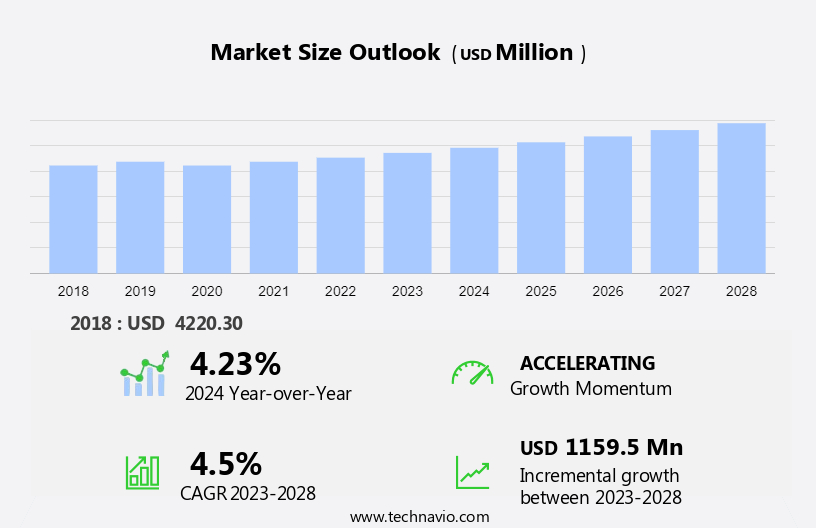
Probiotic Dietary Supplements Market Size

 Request Free Sample

The market is witnessing significant growth due to the increasing awareness of the role of gut health and immunity in overall well-being. Probiotics are live bacteria and yeasts that provide numerous health benefits, particularly in digestive health, immune health, weight management, energy levels, and skin health. Digestive Health: Probiotics play a crucial role in maintaining a healthy balance of gut bacteria, which aids in digestion, nutrient absorption, and the prevention of digestive ailments such as intestinal inflammation and antibiotic-associated diarrhea. Immune Health: Probiotics also support immune health by enhancing the body's natural defenses and reducing the risk of urogenital infections and diarrhea.

Moreover, weight Management: Probiotics have been shown to aid in weight management by modulating metabolism and reducing body weight and body fat. Probiotics can improve energy levels by enhancing nutrient absorption and metabolism, making them an essential addition to a healthy lifestyle. Probiotics have been linked to improved skin health by reducing inflammation, enhancing skin barrier function, and promoting the production of collagen. The gut is the body's largest immune organ, and maintaining a healthy gut microbiome is essential for overall health. Probiotics help promote a healthy gut microbiome, which can lead to better health outcomes.

Furthermore, preventive Healthcare: Probiotics are increasingly being recognized as a valuable tool in preventive healthcare, as they can help address various health conditions, including high cholesterol and skin disorders. Probiotics are increasingly being incorporated into beverage formulations, making it easier for consumers to incorporate them into their daily routine. With advancements in probiotic technology, customized probiotic formulations are becoming increasingly popular, allowing consumers to address specific health concerns and individualized nutritional needs. Some of the commonly used probiotic strains include Lactic Acid Bacteria (Lactobacillus and Streptococcus thermophilus), Lactobacillus plantarum (twk10), Lactobacillus helveticus Rosell-52, and Bifidobacterium longum Rosell-175.

Market Segmentation

The market research report provides comprehensive data (region-wise segment analysis), with forecasts and estimates in "USD billion" for the period 2024-2028, as well as historical data from 2018-2022 for the following segments.

  • Application
    • Nutritional supplements
    • Specialty nutrients
    • Food and beverages
    • Infant formula
  • Geography
    • North America
      • US
    • Europe
      • Germany
      • UK
    • APAC
      • China
    • South America
    • Middle East and Africa

By Application Insights

The nutritional supplements segment is estimated to witness significant growth during the forecast period. Probiotic dietary supplements have gained significant traction in the global market due to their numerous health benefits. In 2023, the nutritional supplements segment held the largest market share in the probiotic dietary supplements industry. These supplements comprise vitamins, minerals, meal replacements, herbs, sports nutrition products, and others. Consumption of these supplements is aimed at enhancing the nutritional value of one's diet. Probiotics, specifically those containing friendly bacteria for the digestive tract, are increasingly popular in developed economies. These supplements offer protection against various health conditions such as antibiotic-associated diarrhea, urogenital infections, and skin disorders.

Moreover, they are beneficial for individuals suffering from high cholesterol levels, irritable bowel syndrome, lung infections, and inflammatory bowel disease. The market is projected to expand steadily during the forecast period, providing ample opportunities for market participants.
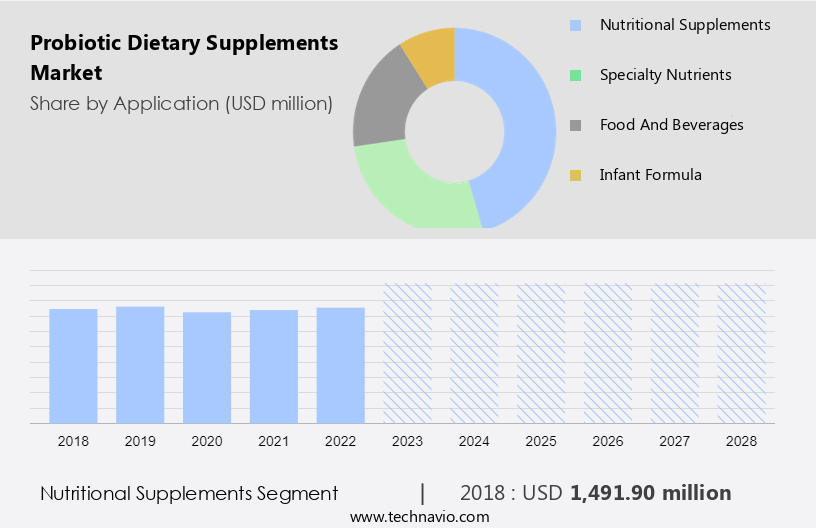
Probiotic Dietary Supplements Market Size

Get a glance at the market share of various segments Request Free Sample

The nutritional supplements segment was valued at USD 1.49 billion in 2018 and showed a gradual increase during the forecast period.

Regional Insights

Europe is estimated to contribute 35% to the growth of the global market during the forecast period. Technavio's analysts have elaborately explained the regional trends and drivers that shape the market during the forecast period.
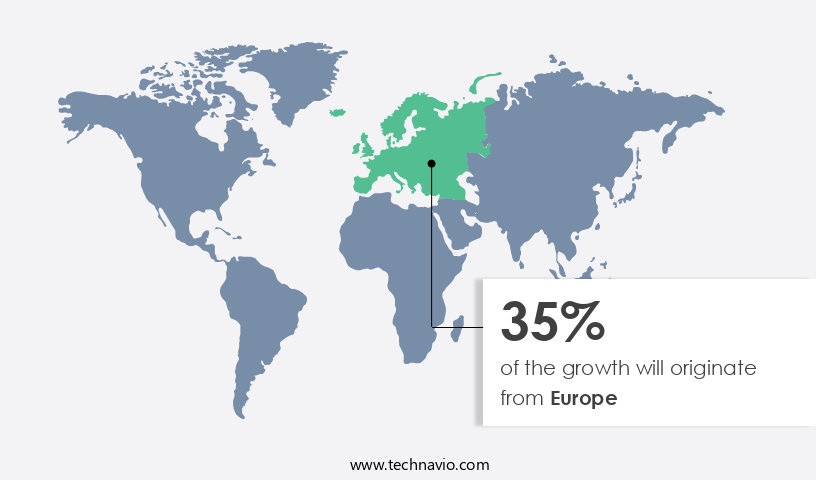
Probiotic Dietary Supplements Market Share by Geography

For more insights on the market share of various regions Request Free Sample

Probiotic dietary supplements have gained significant traction in North America, particularly in the United States and Canada. The rising awareness of immune health, preventive healthcare, and the convenience of supplements have fueled their popularity. Young adults in their 20s and 30s, who prioritize healthy eating and consume raw and organic food, are major consumers. The market is witnessing an increase in demand for digestive health-related products, and probiotic supplements are at the forefront due to their positive benefits. Delayed-release capsules and advanced encapsulating technologies ensure optimal efficacy. Key health concerns include weight management and energy levels, which probiotics address through gut health and skin health improvements.

Market Dynamics

Our researchers analyzed the data with 2023 as the base year, along with the key drivers, trends, and challenges. A holistic analysis of drivers will help companies refine their marketing strategies to gain a competitive advantage.

Key Market Driver

Rising awareness of benefits of probiotic supplements is notably driving market growth. Probiotic supplements, derived from beneficial bacteria such as Lactobacillus and Bifidobacterium, play a crucial role in maintaining digestive health and boosting immunity. Brands like Lonza, Kaged Muscle, and Nutraceutical sector offer various probiotic supplements, including Probians and Probiotics, to address gastrointestinal issues like diarrhea, irritable bowel syndrome, and constipation.

Furthermore, these supplements help combat harmful bacteria, improve nutrient absorption, and promote regular bowel movements. Lactobacillus L acidophilus and L rhamnosus are popular strains used in probiotic supplements for their benefits in gut health and type-2 diabetes management. The demand for probiotic supplements has increased due to consumer concerns over gastrointestinal ailments and chronic disorders, especially in the geriatric population. Probiotic-fortified food products and dairy-free, allergen-free, and sugar-free formulations cater to diverse consumer needs. In the context of the coronavirus disease, probiotics have emerged as immunity-boosters, making them an essential addition to daily health regimens. Thus, such factors are driving the growth of the market during the forecast period.

Significant  Market Trends

Growing demand for weight management is the key trend in the market. Probiotic supplements, derived from strains like Lactobacillus and Bifidobacterium, have gained significant popularity in the dietary supplements market due to their benefits for digestive and immune health. Brands offer probiotic supplements under various labels, including Probians and Probiotics. These supplements aid in maintaining gut health by inhibiting the growth of harmful bacteria, improving nutrient absorption, and promoting regular bowel movement.

Furthermore, probiotics are also linked to the management of chronic gastrointestinal disorders, such as Type-2 diabetes, gastrointestinal ailments, diarrhea, irritable bowel syndrome, and colorectal cancer. Consumer concerns for allergen-free, dairy-free, and sugar-free formulations have led to the development of various probiotic supplements catering to diverse dietary needs. The immunity-boosting properties of probiotics have gained renewed importance in the context of the Coronavirus disease. Additionally, probiotics are increasingly used in fortified food products to cater to the geriatric population and those with chronic gastrointestinal disorders. Strains like L acidophilus and L rhamnosus are commonly used for their health benefits. Thus, such trends will shape the growth of the market during the forecast period.

Major Market Challenge

The availability of counterfeit dietary supplements is the major challenge that affects the growth of the market. Probiotic supplements, derived from strains like Lactobacillus and Bifidobacterium, are gaining popularity as effective solutions for various digestive health concerns. Brands like Lonza, Kaged Muscle, and Nutraceutical sector's Probians offer these supplements, providing benefits such as improved nutrient absorption, regular bowel movement, and enhanced immunity. Probiotics, found naturally in curd and yogurt, help combat harmful bacteria and promote gut health. Consumer concerns for gastrointestinal ailments, including diarrhea, irritable bowel syndrome, and constipation, have led to an increase in demand for probiotic supplements.

Furthermore, Chronic gastrointestinal disorders, particularly in the geriatric population and those with type-2 diabetes, have further fueled this trend. Probiotics, such as L acidophilus and L rhamnosus, have shown promise in addressing these issues. The nutraceutical sector has responded by offering dairy-free, allergen-free, and sugar-free formulations to cater to diverse consumer needs. Amidst the ongoing coronavirus disease pandemic, immunity-boosting probiotic supplements have gained significant attention. Fortified food products are also emerging as viable alternatives for those who prefer consuming probiotics through their daily meals. Hence, the above factors will impede the growth of the market during the forecast period

Exclusive Customer Landscape

The market forecasting report includes the adoption lifecycle of the market, covering from the innovator's stage to the laggard's stage. It focuses on adoption rates in different regions based on penetration. Furthermore, the report also includes key purchase criteria and drivers of price sensitivity to help companies evaluate and develop their market growth analysis strategies.
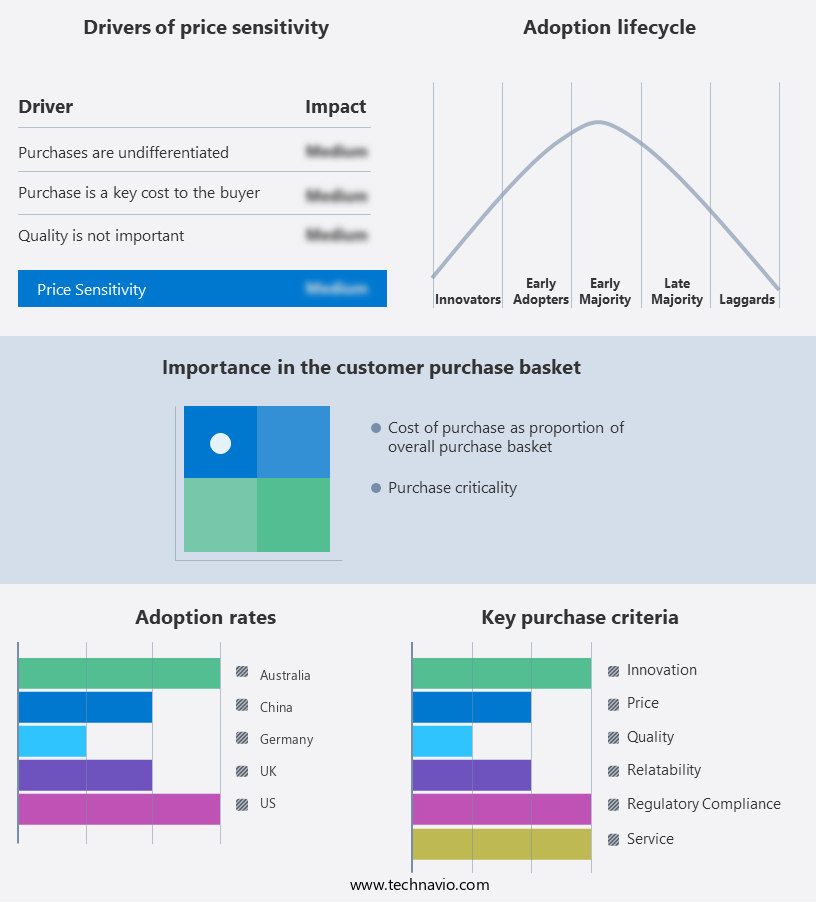
Probiotic Dietary Supplements Market Share by Geography

 Customer Landscape

Key Companies & Market Insights

Companies are implementing various strategies, such as strategic alliances, partnerships, mergers and acquisitions, geographical expansion, and product/service launches, to enhance their presence in the market.

Archer Daniels Midland Co. - The company offers probiotic dietary supplements under its subsidiary Deerland Probiotics.

The market research and growth report includes detailed analyses of the competitive landscape of the market and information about key companies, including:

  • Archer Daniels Midland Co.
  • Bayer AG
  • BioGaia AB
  • Chr Hansen Holding AS
  • CUSTOM PROBIOTICS Inc.
  • DuPont de Nemours Inc.
  • glacbiotech Co. Ltd.
  • Koninklijke DSM NV
  • Lallemand Inc.
  • NutraScience Labs
  • Pharmacare Laboratories Australia
  • Probi AB
  • Reckitt Benckiser Group Plc
  • ResBiotic
  • Unique Biotech Ltd.
  • Vertical Pharmaceuticals LLC
  • Vitakem Nutraceutical Inc.
  • Winclove BV

Qualitative and quantitative analysis of companies has been conducted to help clients understand the wider business environment as well as the strengths and weaknesses of key market players. Data is qualitatively analyzed to categorize companies as pure play, category-focused, industry-focused, and diversified; it is quantitatively analyzed to categorize companies as dominant, leading, strong, tentative, and weak.

Research Analyst Overview

Probiotic dietary supplements have gained significant popularity in the global market due to their numerous health benefits. These supplements contain live bacteria strains, such as lactic acid bacteria, streptococcus thermophilus, lactobacillus, L. Plantarum (twk10), and others, which help maintain digestive health and boost immune function. Probiotics address various health conditions, including digestive ailments like intestinal inflammation, antibiotic-associated diarrhea, and urogenital infections. They also help manage high cholesterol levels, skin disorders, and irritable bowel syndrome.

Additionally, probiotics have shown potential benefits for lung infections, inflammatory bowel disease, anxiety and depression, insomnia, sexual wellness, and athletic performance. The market for probiotic supplements caters to diverse demographics, with consumer preferences leaning towards delayed-release capsules, encapsulating technologies, and customized formulations in various product formats, including powders, gummies, and beverages. Effective dosages, quality control, regulatory scrutiny, product safety, labeling, and claims are essential factors influencing the market's growth. Technologies like Zeta probiotics and strains such as lactobacillus helveticus Rosell 52 and bifidobacterium longum Rosell 175 are driving innovation in the industry.

Market Scope

Report Coverage

Details

Page number

157

Base year

2023

Historic period

2018-2022

Forecast period

2024-2028

Growth momentum & CAGR

Accelerate at a CAGR of 4.5%

Market growth 2024-2028

USD 1.16 billion

Market structure

Fragmented

YoY growth 2023-2024(%)

4.23

Regional analysis

North America, Europe, APAC, South America, and Middle East and Africa

Performing market contribution

Europe at 35%

Key countries

US, China, Australia, UK, and Germany

Competitive landscape

Leading Companies, Market Positioning of Companies, Competitive Strategies, and Industry Risks

Key companies profiled

Archer Daniels Midland Co., Bayer AG, BioGaia AB, Chr Hansen Holding AS, CUSTOM PROBIOTICS Inc., DuPont de Nemours Inc., glacbiotech Co. Ltd., Koninklijke DSM NV, Lallemand Inc., NutraScience Labs, Pharmacare Laboratories Australia, Probi AB, Reckitt Benckiser Group Plc, ResBiotic, Unique Biotech Ltd., Vertical Pharmaceuticals LLC, Vitakem Nutraceutical Inc., and Winclove BV

Market dynamics

Parent market analysis, market growth inducers and obstacles, market forecast, fast-growing and slow-growing segment analysis, COVID-19 impact and recovery analysis and future consumer dynamics, market condition analysis for the forecast period

Customization purview

If our market report has not included the data that you are looking for, you can reach out to our analysts and get segments customized.

Request Free Sample

What are the Key Data Covered in this Market Research and Growth Report?

  • CAGR of the market during the forecast period
  • Detailed information on factors that will drive the market growth and forecasting between 2024 and 2028
  • Precise estimation of the size of the market  and its contribution of the market in focus to the parent market
  • Accurate predictions about upcoming market growth and trends and changes in consumer behaviour
  • Growth of the market across North America, Europe, APAC, South America, and Middle East and Africa
  • Thorough analysis of the market's competitive landscape and detailed information about companies
  • Comprehensive analysis of factors that will challenge the growth of market companies

We can help! Our analysts can customize this market research report to meet your requirements. Get in touch

1 Executive Summary

  • 1.1 Market overview
    • Executive Summary - Chart on Market Overview
    • Executive Summary - Data Table on Market Overview
    • Executive Summary - Chart on Global Market Characteristics
    • Executive Summary - Chart on Market by Geography
    • Executive Summary - Chart on Market Segmentation by Application
    • Executive Summary - Chart on Incremental Growth
    • Executive Summary - Data Table on Incremental Growth
    • Executive Summary - Chart on Company Market Positioning

2 Market Landscape

  • 2.1 Market ecosystem
    • Parent Market
    • Data Table on - Parent Market
  • 2.2 Market characteristics
    • Market characteristics analysis
  • 2.3 Value chain analysis
    • Value Chain Analysis

3 Market Sizing

  • 3.1 Market definition
    • Offerings of companies included in the market definition
  • 3.2 Market segment analysis
    • Market segments
  • 3.3 Market size 2023
    • 3.4 Market outlook: Forecast for 2023-2028
      • Chart on Global - Market size and forecast 2023-2028 ($ million)
      • Data Table on Global - Market size and forecast 2023-2028 ($ million)
      • Chart on Global Market: Year-over-year growth 2023-2028 (%)
      • Data Table on Global Market: Year-over-year growth 2023-2028 (%)

    4 Historic Market Size

    • 4.1 Global Probiotic Dietary Supplements Market 2018 - 2022
      • Historic Market Size - Data Table on Global Probiotic Dietary Supplements Market 2018 - 2022 ($ million)
    • 4.2 Application segment analysis 2018 - 2022
      • Historic Market Size - Application Segment 2018 - 2022 ($ million)
    • 4.3 Geography segment analysis 2018 - 2022
      • Historic Market Size - Geography Segment 2018 - 2022 ($ million)
    • 4.4 Country segment analysis 2018 - 2022
      • Historic Market Size - Country Segment 2018 - 2022 ($ million)

    5 Five Forces Analysis

    • 5.1 Five forces summary
      • Five forces analysis - Comparison between 2023 and 2028
    • 5.2 Bargaining power of buyers
      • Bargaining power of buyers - Impact of key factors 2023 and 2028
    • 5.3 Bargaining power of suppliers
      • Bargaining power of suppliers - Impact of key factors in 2023 and 2028
    • 5.4 Threat of new entrants
      • Threat of new entrants - Impact of key factors in 2023 and 2028
    • 5.5 Threat of substitutes
      • Threat of substitutes - Impact of key factors in 2023 and 2028
    • 5.6 Threat of rivalry
      • Threat of rivalry - Impact of key factors in 2023 and 2028
    • 5.7 Market condition
      • Chart on Market condition - Five forces 2023 and 2028

    6 Market Segmentation by Application

    • 6.1 Market segments
      • Chart on Application - Market share 2023-2028 (%)
      • Data Table on Application - Market share 2023-2028 (%)
    • 6.2 Comparison by Application
      • Chart on Comparison by Application
      • Data Table on Comparison by Application
    • 6.3 Nutritional supplements - Market size and forecast 2023-2028
      • Chart on Nutritional supplements - Market size and forecast 2023-2028 ($ million)
      • Data Table on Nutritional supplements - Market size and forecast 2023-2028 ($ million)
      • Chart on Nutritional supplements - Year-over-year growth 2023-2028 (%)
      • Data Table on Nutritional supplements - Year-over-year growth 2023-2028 (%)
    • 6.4 Specialty nutrients - Market size and forecast 2023-2028
      • Chart on Specialty nutrients - Market size and forecast 2023-2028 ($ million)
      • Data Table on Specialty nutrients - Market size and forecast 2023-2028 ($ million)
      • Chart on Specialty nutrients - Year-over-year growth 2023-2028 (%)
      • Data Table on Specialty nutrients - Year-over-year growth 2023-2028 (%)
    • 6.5 Food and beverages - Market size and forecast 2023-2028
      • Chart on Food and beverages - Market size and forecast 2023-2028 ($ million)
      • Data Table on Food and beverages - Market size and forecast 2023-2028 ($ million)
      • Chart on Food and beverages - Year-over-year growth 2023-2028 (%)
      • Data Table on Food and beverages - Year-over-year growth 2023-2028 (%)
    • 6.6 Infant formula - Market size and forecast 2023-2028
      • Chart on Infant formula - Market size and forecast 2023-2028 ($ million)
      • Data Table on Infant formula - Market size and forecast 2023-2028 ($ million)
      • Chart on Infant formula - Year-over-year growth 2023-2028 (%)
      • Data Table on Infant formula - Year-over-year growth 2023-2028 (%)
    • 6.7 Market opportunity by Application
      • Market opportunity by Application ($ million)
      • Data Table on Market opportunity by Application ($ million)

    7 Customer Landscape

    • 7.1 Customer landscape overview
      • Analysis of price sensitivity, lifecycle, customer purchase basket, adoption rates, and purchase criteria

    8 Geographic Landscape

    • 8.1 Geographic segmentation
      • Chart on Market share by geography 2023-2028 (%)
      • Data Table on Market share by geography 2023-2028 (%)
    • 8.2 Geographic comparison
      • Chart on Geographic comparison
      • Data Table on Geographic comparison
    • 8.3 North America - Market size and forecast 2023-2028
      • Chart on North America - Market size and forecast 2023-2028 ($ million)
      • Data Table on North America - Market size and forecast 2023-2028 ($ million)
      • Chart on North America - Year-over-year growth 2023-2028 (%)
      • Data Table on North America - Year-over-year growth 2023-2028 (%)
    • 8.4 Europe - Market size and forecast 2023-2028
      • Chart on Europe - Market size and forecast 2023-2028 ($ million)
      • Data Table on Europe - Market size and forecast 2023-2028 ($ million)
      • Chart on Europe - Year-over-year growth 2023-2028 (%)
      • Data Table on Europe - Year-over-year growth 2023-2028 (%)
    • 8.5 APAC - Market size and forecast 2023-2028
      • Chart on APAC - Market size and forecast 2023-2028 ($ million)
      • Data Table on APAC - Market size and forecast 2023-2028 ($ million)
      • Chart on APAC - Year-over-year growth 2023-2028 (%)
      • Data Table on APAC - Year-over-year growth 2023-2028 (%)
    • 8.6 South America - Market size and forecast 2023-2028
      • Chart on South America - Market size and forecast 2023-2028 ($ million)
      • Data Table on South America - Market size and forecast 2023-2028 ($ million)
      • Chart on South America - Year-over-year growth 2023-2028 (%)
      • Data Table on South America - Year-over-year growth 2023-2028 (%)
    • 8.7 Middle East and Africa - Market size and forecast 2023-2028
      • Chart on Middle East and Africa - Market size and forecast 2023-2028 ($ million)
      • Data Table on Middle East and Africa - Market size and forecast 2023-2028 ($ million)
      • Chart on Middle East and Africa - Year-over-year growth 2023-2028 (%)
      • Data Table on Middle East and Africa - Year-over-year growth 2023-2028 (%)
    • 8.8 US - Market size and forecast 2023-2028
      • Chart on US - Market size and forecast 2023-2028 ($ million)
      • Data Table on US - Market size and forecast 2023-2028 ($ million)
      • Chart on US - Year-over-year growth 2023-2028 (%)
      • Data Table on US - Year-over-year growth 2023-2028 (%)
    • 8.9 China - Market size and forecast 2023-2028
      • Chart on China - Market size and forecast 2023-2028 ($ million)
      • Data Table on China - Market size and forecast 2023-2028 ($ million)
      • Chart on China - Year-over-year growth 2023-2028 (%)
      • Data Table on China - Year-over-year growth 2023-2028 (%)
    • 8.10 Australia - Market size and forecast 2023-2028
      • Chart on Australia - Market size and forecast 2023-2028 ($ million)
      • Data Table on Australia - Market size and forecast 2023-2028 ($ million)
      • Chart on Australia - Year-over-year growth 2023-2028 (%)
      • Data Table on Australia - Year-over-year growth 2023-2028 (%)
    • 8.11 UK - Market size and forecast 2023-2028
      • Chart on UK - Market size and forecast 2023-2028 ($ million)
      • Data Table on UK - Market size and forecast 2023-2028 ($ million)
      • Chart on UK - Year-over-year growth 2023-2028 (%)
      • Data Table on UK - Year-over-year growth 2023-2028 (%)
    • 8.12 Germany - Market size and forecast 2023-2028
      • Chart on Germany - Market size and forecast 2023-2028 ($ million)
      • Data Table on Germany - Market size and forecast 2023-2028 ($ million)
      • Chart on Germany - Year-over-year growth 2023-2028 (%)
      • Data Table on Germany - Year-over-year growth 2023-2028 (%)
    • 8.13 Market opportunity by geography
      • Market opportunity by geography ($ million)
      • Data Tables on Market opportunity by geography ($ million)

    9 Drivers, Challenges, and Opportunity/Restraints

    • 9.1 Market drivers
      • 9.2 Market challenges
        • 9.3 Impact of drivers and challenges
          • Impact of drivers and challenges in 2023 and 2028
        • 9.4 Market opportunities/restraints

          10 Competitive Landscape

          • 10.1 Overview
            • 10.2 Competitive Landscape
              • Overview on criticality of inputs and factors of differentiation
            • 10.3 Landscape disruption
              • Overview on factors of disruption
            • 10.4 Industry risks
              • Impact of key risks on business

            11 Competitive Analysis

            • 11.1 Companies profiled
              • Companies covered
            • 11.2 Market positioning of companies
              • Matrix on companies position and classification
            • 11.3 Archer Daniels Midland Co.
              • Archer Daniels Midland Co. - Overview
              • Archer Daniels Midland Co. - Business segments
              • Archer Daniels Midland Co. - Key news
              • Archer Daniels Midland Co. - Key offerings
              • Archer Daniels Midland Co. - Segment focus
            • 11.4 Bayer AG
              • Bayer AG - Overview
              • Bayer AG - Business segments
              • Bayer AG - Key news
              • Bayer AG - Key offerings
              • Bayer AG - Segment focus
            • 11.5 BioGaia AB
              • BioGaia AB - Overview
              • BioGaia AB - Business segments
              • BioGaia AB - Key news
              • BioGaia AB - Key offerings
              • BioGaia AB - Segment focus
            • 11.6 Chr Hansen Holding AS
              • Chr Hansen Holding AS - Overview
              • Chr Hansen Holding AS - Business segments
              • Chr Hansen Holding AS - Key news
              • Chr Hansen Holding AS - Key offerings
              • Chr Hansen Holding AS - Segment focus
            • 11.7 DuPont de Nemours Inc.
              • DuPont de Nemours Inc. - Overview
              • DuPont de Nemours Inc. - Business segments
              • DuPont de Nemours Inc. - Key news
              • DuPont de Nemours Inc. - Key offerings
              • DuPont de Nemours Inc. - Segment focus
            • 11.8 Koninklijke DSM NV
              • Koninklijke DSM NV - Overview
              • Koninklijke DSM NV - Business segments
              • Koninklijke DSM NV - Key news
              • Koninklijke DSM NV - Key offerings
              • Koninklijke DSM NV - Segment focus
            • 11.9 Lallemand Inc.
              • Lallemand Inc. - Overview
              • Lallemand Inc. - Product / Service
              • Lallemand Inc. - Key news
              • Lallemand Inc. - Key offerings
            • 11.10 Probi AB
              • Probi AB - Overview
              • Probi AB - Business segments
              • Probi AB - Key news
              • Probi AB - Key offerings
              • Probi AB - Segment focus
            • 11.11 Vertical Pharmaceuticals LLC
              • Vertical Pharmaceuticals LLC - Overview
              • Vertical Pharmaceuticals LLC - Product / Service
              • Vertical Pharmaceuticals LLC - Key offerings
            • 11.12 Winclove BV
              • Winclove BV - Overview
              • Winclove BV - Product / Service
              • Winclove BV - Key offerings

            12 Appendix

            • 12.1 Scope of the report
              • 12.2 Inclusions and exclusions checklist
                • Inclusions checklist
                • Exclusions checklist
              • 12.3 Currency conversion rates for US$
                • Currency conversion rates for US$
              • 12.4 Research methodology
                • Research methodology
              • 12.5 Data procurement
                • Information sources
              • 12.6 Data validation
                • Data validation
              • 12.7 Validation techniques employed for market sizing
                • Validation techniques employed for market sizing
              • 12.8 Data synthesis
                • Data synthesis
              • 12.9 360 degree market analysis
                • 360 degree market analysis
              • 12.10 List of abbreviations
                • List of abbreviations

              Research Methodology

              Technavio presents a detailed picture of the market by way of study, synthesis, and summation of data from multiple sources. The analysts have presented the various facets of the market with a particular focus on identifying the key industry influencers. The data thus presented is comprehensive, reliable, and the result of extensive research, both primary and secondary.

              INFORMATION SOURCES

              Primary sources

              • Manufacturers and suppliers
              • Channel partners
              • Industry experts
              • Strategic decision makers

              Secondary sources

              • Industry journals and periodicals
              • Government data
              • Financial reports of key industry players
              • Historical data
              • Press releases

              DATA ANALYSIS

              Data Synthesis

              • Collation of data
              • Estimation of key figures
              • Analysis of derived insights

              Data Validation

              • Triangulation with data models
              • Reference against proprietary databases
              • Corroboration with industry experts

              REPORT WRITING

              Qualitative

              • Market drivers
              • Market challenges
              • Market trends
              • Five forces analysis

              Quantitative

              • Market size and forecast
              • Market segmentation
              • Geographical insights
              • Competitive landscape

              Interested in this report?

              Get your sample now to see our research methodology and insights!

              Download Now

              Frequently Asked Questions

              Probiotic Dietary Supplements market growth will increase by $ 1159.5 mn during 2024-2028.

              The Probiotic Dietary Supplements market is expected to grow at a CAGR of 4.5% during 2024-2028.

              Probiotic Dietary Supplements market is segmented by Application( Nutritional supplements, Specialty nutrients, Food and beverages, Infant formula)

              Archer Daniels Midland Co., Bayer AG, BioGaia AB, Chr Hansen Holding AS, CUSTOM PROBIOTICS Inc., DuPont de Nemours Inc., glacbiotech Co. Ltd., Koninklijke DSM NV, Lallemand Inc., NutraScience Labs, Pharmacare Laboratories Australia, Probi AB, Reckitt Benckiser Group Plc, ResBiotic, Unique Biotech Ltd., Vertical Pharmaceuticals LLC, Vitakem Nutraceutical Inc., Winclove BV are a few of the key vendors in the Probiotic Dietary Supplements market.

              Europe will register the highest growth rate of 35% among the other regions. Therefore, the Probiotic Dietary Supplements market in Europe is expected to garner significant business opportunities for the vendors during the forecast period.

              US, China, Australia, UK, Germany

              • Rising awareness of benefits of probiotic supplements is the driving factor this market.

              The Probiotic Dietary Supplements market vendors should focus on grabbing business opportunities from the Nutritional supplements segment as it accounted for the largest market share in the base year.
              RIA - Research AI Assistant
              Ask RIA
