



Augmented Reality And Virtual Reality Market Size 2025-2029
The augmented reality and virtual reality market size is forecast to increase by USD 641.25 billion, at a CAGR of 51.8% between 2024 and 2029.
- The Augmented Reality (AR) and Virtual Reality (VR) market is experiencing significant growth, fueled by increasing demand for immersive technologies in various industries. This demand is driven by the potential of AR and VR to revolutionize sectors such as gaming, education, healthcare, and retail, offering enhanced user experiences and improved productivity. Meanwhile, the investment landscape is favorable, with growing funding for startups specializing in AR and VR technologies. This financial support is enabling innovation and the development of new applications, further expanding the market's potential. However, the market's growth is not without challenges. High development costs associated with creating AR and VR applications pose a significant hurdle for companies looking to enter the market.
- These costs, which include hardware, software, and human resources, can act as a barrier to entry for smaller players and require strategic planning and substantial investment to overcome. Companies seeking to capitalize on the opportunities presented by the AR and VR market must navigate these challenges effectively to remain competitive and succeed in this dynamic and innovative landscape.
What will be the Size of the Augmented Reality And Virtual Reality Market during the forecast period?
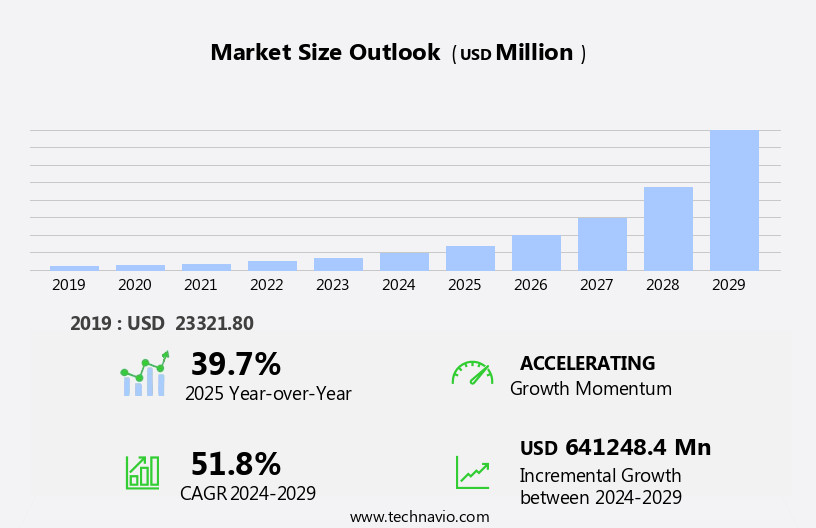
Explore in-depth regional segment analysis with market size data - historical 2019-2023 and forecasts 2025-2029 - in the full report.
Request Free Sample
The Extended Reality (XR) market continues to evolve, with new technologies and applications emerging at an unprecedented rate. XR encompasses Augmented Reality (AR), Virtual Reality (VR), and Mixed Reality (MR), each offering unique immersive experiences. Key components of XR include user comfort, interaction fidelity, and cybersecurity measures. High-performance computing, network infrastructure, and high-resolution displays are essential for delivering seamless experiences. Voice recognition and motion tracking sensors enable natural interaction, while 360-degree cameras and 3D scanning provide realistic environments. AR applications span various sectors, from training simulations and data analytics to computer vision and education. VR headsets offer immersive experiences in gaming, entertainment, and virtual tourism.
MR combines the best of both worlds, enabling interactive simulations and virtual environments. Price point remains a critical factor, with cloud-based platforms and AI-powered personalization driving cost savings. Haptic feedback devices and spatial audio add depth to the user experience. 3D modeling software and rendering techniques are essential for creating engaging content. Market adoption is on the rise, with applications in healthcare, military, and e-commerce. Digital twin technology and virtual reality systems are revolutionizing industries, from manufacturing to construction. SLAM technology and object recognition enable advanced AR applications. Network infrastructure, data privacy, and cybersecurity measures are becoming increasingly important as XR becomes more prevalent.
High frame rates and depth sensing are essential for delivering realistic experiences. The future of XR is bright, with endless possibilities for innovation and growth.
How is this Augmented Reality And Virtual Reality Industry segmented?
The augmented reality and virtual reality industry research report provides comprehensive data (region-wise segment analysis), with forecasts and estimates in "USD million" for the period 2025-2029, as well as historical data from 2019-2023 for the following segments.
- Technology
- AR
- VR
- Application
- Consumer
- Enterprise
- Component
- Hardware
- Software
- End-user
- Aerospace and defense
- Consumer
- Commercial
- Enterprise
- Others
- Geography
- North America
- US
- Canada
- Europe
- France
- Germany
- Italy
- UK
- APAC
- China
- India
- Japan
- South America
- Brazil
- Rest of World (ROW)
- North America
By Technology Insights
The ar segment is estimated to witness significant growth during the forecast period.
The Extended Reality (XR) market, encompassing Augmented Reality (AR) and Virtual Reality (VR), is experiencing significant growth due to several key factors. New product launches, both in hardware and software, are driving innovation in the sector. The expanding adoption of XR in various industries, including retail and consumer goods, healthcare, education, and military applications, is increasing demand. AR, in particular, is gaining traction due to its ability to provide immersive experiences by overlaying digital information onto the real world. This technology is being used in training simulations, data analytics, computer vision, and 3D modeling, among other applications. VR, on the other hand, offers fully immersive environments for gaming, education, and virtual tourism.
Network infrastructure advancements, such as high-performance computing, cloud-based platforms, and 5G networks, are enabling smoother and more interactive experiences. User comfort, interaction fidelity, and cybersecurity measures are also becoming increasingly important considerations in the development of XR technology. Motion tracking sensors, voice recognition, and gesture recognition are enhancing user experience and interaction. In the AR segment, 3D scanning, rendering techniques, and object recognition are becoming more sophisticated, enabling more accurate and realistic AR experiences. AR glasses and head-mounted displays are becoming more affordable and accessible, making AR technology more accessible to a wider audience. AR applications are also being integrated into e-commerce platforms, providing customers with immersive shopping experiences.
VR technology is advancing with high-resolution displays, frame rate, and spatial audio, providing more realistic and immersive experiences. Virtual reality systems are being used in healthcare applications for training and therapy, and in military applications for simulation and training. Game engines and content creation tools are making it easier for developers to create VR experiences. The market adoption of XR technology is being fueled by the integration of AI-powered personalization, digital twin technology, and 360-degree cameras. These technologies are enabling more customized and interactive experiences, as well as more accurate simulations and modeling. Data privacy and security are also becoming important considerations in the development of XR technology.
In conclusion, the XR market is experiencing significant growth due to the expanding adoption of AR and VR technology in various industries, network infrastructure advancements, and the integration of innovative technologies such as AI, digital twin technology, and 3D modeling software. Haptic feedback devices and voice recognition are also enhancing user experience and interaction. The market is expected to continue growing as these technologies become more accessible and affordable.

The AR segment was valued at USD 16.26 billion in 2019 and showed a gradual increase during the forecast period.
Regional Analysis
APAC is estimated to contribute 42% to the growth of the global market during the forecast period.Technavio’s analysts have elaborately explained the regional trends and drivers that shape the market during the forecast period.

The market is witnessing significant growth, with North America leading the way in 2024. Key factors fueling this expansion include the presence of prominent companies, increasing investments in AR and VR technology, consumer adoption of advanced applications, and robust research activities. The US and Canada are the primary contributors to this market, with the presence of major tech firms driving its growth. Extended reality (XR), including augmented reality glasses and head-mounted displays, is a key trend, along with 3D scanning, rendering techniques, and mixed reality. Network infrastructure, user comfort, interaction fidelity, and cybersecurity measures are crucial considerations.
Immersive experiences are in high demand, with applications spanning education, digital twin technology, e-commerce platforms, and healthcare. Market adoption is also increasing in military applications, virtual tourism, and interactive simulations. High-performance computing, voice recognition, remote collaboration tools, motion tracking sensors, data privacy, and AI-powered personalization are essential components. The market is further characterized by high-resolution displays, frame rate, spatial audio, depth sensing, object recognition, and SLAM technology. Virtual reality headsets, game engines, content creation tools, and interactive storytelling are also driving innovation. Price point, image processing, entertainment applications, and 3D modeling software are other important factors. Cloud-based platforms, haptic feedback devices, and gesture recognition are also gaining traction.
Market Dynamics
Our researchers analyzed the data with 2024 as the base year, along with the key drivers, trends, and challenges. A holistic analysis of drivers will help companies refine their marketing strategies to gain a competitive advantage.
The market is experiencing exponential growth, with technologies like AR and VR increasingly shaping the future of entertainment, education, and industries such as healthcare, real estate, and manufacturing. Augmented reality (AR) overlays digital information onto the real world, enhancing user experience, while virtual reality (VR) creates immersive, simulated environments. Key players in this market include hardware manufacturers, software developers, and content creators. AR and VR technologies are revolutionizing fields like retail, where customers can virtually try on clothes or test-drive cars, and education, where students can explore complex concepts in 3D. Additionally, AR and VR are transforming training programs, enabling more effective and engaging learning experiences. With advancements in wearable technology, 5G connectivity, and AI integration, the potential applications for AR and VR are virtually limitless. The market is expected to continue growing, driven by increasing consumer demand, technological innovations, and cross-industry collaborations.
What are the key market drivers leading to the rise in the adoption of Augmented Reality And Virtual Reality Industry?
- The expanding interest and requirement for Augmented Reality (AR) and Virtual Reality (VR) technology serve as the primary catalyst for market growth.
- The global market for Augmented Reality (AR) and Virtual Reality (VR) technology is experiencing significant growth due to increasing customer adoption. Since 2015, there has been a notable surge in demand for VR solutions, with many more expressing interest in the technology. This trend is expected to continue, driving the expansion of the AR and VR market. Innovations in technology, such as high-resolution displays, frame rate improvements, spatial audio, depth sensing, object recognition, and SLAM technology, are enhancing the user experience and making AR and VR applications more interactive and immersive. Moreover, the integration of AR and VR technology in various industries, including healthcare, military applications, and gaming, is expanding the market's scope.
- Virtual reality headsets and game engines are essential tools for creating engaging and realistic VR environments. These technological advancements are enabling users to interact with virtual simulations and explore virtual worlds in a harmonious and engaging manner. As a result, the global AR and VR market is poised for substantial growth during the forecast period.
What are the market trends shaping the Augmented Reality And Virtual Reality Industry?
- The investment landscape is shifting towards augmented reality (AR) and virtual reality (VR) startups, with growing funding becoming a notable market trend. Professionals and investors are increasingly recognizing the potential of these technologies, leading to significant financial backing for companies in this sector.
- The global market for Augmented Reality (AR) and Virtual Reality (VR) technologies is experiencing significant growth, with various industries recognizing their potential beyond entertainment applications. This trend has resulted in increased funding for AR and VR technology, particularly for display medium manufacturers and AR application developers. In February 2024, VR startup AutoVRse raised USD2 million in funding, led by Lumikai, to enhance its enterprise solution, VRseBuilder. The investment will support AutoVRse's workforce expansion, US market penetration, and product diversification efforts. Content creation tools, user interfaces, and gesture recognition technologies are driving the development of immersive AR and VR experiences.
- Cloud-based platforms and 3D modeling software enable the creation and delivery of interactive storytelling in these technologies. Image processing and haptic feedback devices provide a harmonious and engaging user experience. Virtual reality systems are increasingly being adopted for enterprise use cases, such as employee training, product design, and customer engagement. AR is finding applications in healthcare, marketing, and education, offering new opportunities for businesses to innovate and enhance their offerings. The market dynamics are propelling the development of advanced AR and VR technologies, with a focus on delivering compelling user experiences at accessible price points.
What challenges does the Augmented Reality And Virtual Reality Industry face during its growth?
- The high development costs associated with creating applications for augmented reality (AR) and virtual reality (VR) technologies pose a significant challenge to the industry's growth. This challenge stems from the complex nature of AR and VR technologies, which require advanced hardware and software capabilities to deliver immersive user experiences. As a result, the costs of developing and deploying these applications can be substantial, potentially hindering the industry's expansion and limiting the accessibility of these innovative technologies to a wider audience.
- Augmented Reality (AR) and Virtual Reality (VR) technologies are revolutionizing industries by offering immersive experiences for training simulations and data analytics. Extended Reality (XR), a term encompassing AR, VR, and mixed reality, utilizes computer vision, network infrastructure, and advanced rendering techniques to create harmonious and interactive environments. Cost factors, such as the creation and distribution of VR content and hardware and software expenses, are significant considerations when developing AR and VR applications. 360-degree cameras are employed to generate realistic panoramic content, which is often more cost-effective than computer-generated graphics. However, the true value of AR and VR applications lies in their interactive content, which necessitates the use of high-end photorealistic cameras and advanced computer graphics.
- The cost of creating VR content for an app can range from USD20,000 to USD150,000. User comfort and interaction fidelity are crucial elements, necessitating the implementation of cybersecurity measures to ensure a secure and engaging experience. AR glasses and 3D scanning technologies further enhance the potential of these technologies. By focusing on these aspects, businesses can harness the power of AR and VR to create innovative and effective solutions.
Exclusive Customer Landscape
The augmented reality and virtual reality market forecasting report includes the adoption lifecycle of the market, covering from the innovator’s stage to the laggard’s stage. It focuses on adoption rates in different regions based on penetration. Furthermore, the augmented reality and virtual reality market report also includes key purchase criteria and drivers of price sensitivity to help companies evaluate and develop their market growth analysis strategies.

Customer Landscape
Key Companies & Market Insights
Companies are implementing various strategies, such as strategic alliances, augmented reality and virtual reality market forecast, partnerships, mergers and acquisitions, geographical expansion, and product/service launches, to enhance their presence in the industry.
Meta Platforms Inc. - This company specializes in advanced reality technologies, including RealityKit 2 and ARKit, enhancing user experiences through immersive augmented and virtual realities. Our innovative solutions elevate industries by merging digital and physical worlds, offering limitless potential for progress.
The industry research and growth report includes detailed analyses of the competitive landscape of the market and information about key companies, including:
- Meta Platforms Inc.
- HTC Corp.
- Sony Corp.
- Microsoft Corp.
- Magic Leap Inc.
- Lenovo Group Ltd.
- HP Inc.
- Pico Interactive
- Varjo Technologies
- Vuzix Corp.
- Epson
- RealWear Inc.
- Nreal
- Pimax Technology
- ASUSTek Computer Inc.
- Samsung Electronics Co. Ltd.
- LG Electronics
- Acer Inc.
- Huawei Technologies Co. Ltd.
- Xiaomi Corp.
Qualitative and quantitative analysis of companies has been conducted to help clients understand the wider business environment as well as the strengths and weaknesses of key industry players. Data is qualitatively analyzed to categorize companies as pure play, category-focused, industry-focused, and diversified; it is quantitatively analyzed to categorize companies as dominant, leading, strong, tentative, and weak.
Recent Development and News in Augmented Reality And Virtual Reality Market
- In January 2024, Meta Platforms, Inc. (formerly Facebook), announced the launch of the Meta Quest 2, an upgraded version of its virtual reality headset, featuring improved graphics, ergonomics, and wireless connectivity (Meta Platforms Inc., 2024). This release marked a significant stride in the consumer VR market.
- In March 2024, Microsoft Corporation and Sony Group Corporation revealed a strategic partnership to collaborate on developing games and applications for Microsoft's Azure cloud platform and Sony's PlayStation VR2 headset, expanding their reach in the AR and VR gaming sectors (Microsoft Corporation, 2024; Sony Group Corporation, 2024).
- In May 2024, Magic Leap, a leading AR company, secured a USD500 million investment led by Alphabet Inc.'s CapitalG growth equity investment fund, enabling further advancements in its spatial computing technology (Magic Leap, 2024).
- In April 2025, Apple Inc. Received regulatory approval from the U.S. Food and Drug Administration (FDA) for its AR head-mounted display, marking the first such approval for a major tech company, paving the way for potential medical applications in the AR market (U.S. Food and Drug Administration, 2025).
Research Analyst Overview
- The augmented reality (AR) and virtual reality (VR) market is experiencing significant advancements, driven by the integration of 5G connectivity and wireless communication technologies. Game development companies are increasingly adopting VR training solutions to enhance user experience and improve performance. Motion capture and object tracking technologies enable more realistic user interactions in VR environments. In the realm of VR therapy, machine learning (ML) and deep learning algorithms are being employed to personalize treatment plans. Remote work solutions are leveraging AR technology for enhanced collaboration and productivity. Haptic suits and olfactory displays offer immersive experiences, while environmental mapping and real-time processing improve virtual production quality.
- Hand tracking, facial recognition, and eye tracking technologies are revolutionizing user research in software engineering. Holographic displays and sensor fusion are pushing the boundaries of AR marketing and advertising. AR education is gaining traction, offering interactive learning experiences. Immersive journalism and biometric sensors are transforming news consumption, while neural networks and AI are enhancing VR gaming experiences. Edge computing and virtual reality gaming are merging to provide low-latency, high-performance solutions. Mixed reality gaming is blurring the lines between the physical and digital worlds, offering new possibilities for project management and entertainment.
Dive into Technavio’s robust research methodology, blending expert interviews, extensive data synthesis, and validated models for unparalleled Augmented Reality And Virtual Reality Market insights. See full methodology.
|
Market Scope |
|
|
Report Coverage |
Details |
|
Page number |
243 |
|
Base year |
2024 |
|
Historic period |
2019-2023 |
|
Forecast period |
2025-2029 |
|
Growth momentum & CAGR |
Accelerate at a CAGR of 51.8% |
|
Market growth 2025-2029 |
USD 641248.4 million |
|
Market structure |
Fragmented |
|
YoY growth 2024-2025(%) |
39.7 |
|
Key countries |
US, UK, China, Japan, Canada, Germany, India, France, Italy, and Brazil |
|
Competitive landscape |
Leading Companies, Market Positioning of Companies, Competitive Strategies, and Industry Risks |
What are the Key Data Covered in this Augmented Reality And Virtual Reality Market Research and Growth Report?
- CAGR of the Augmented Reality And Virtual Reality industry during the forecast period
- Detailed information on factors that will drive the growth and forecasting between 2025 and 2029
- Precise estimation of the size of the market and its contribution of the industry in focus to the parent market
- Accurate predictions about upcoming growth and trends and changes in consumer behaviour
- Growth of the market across North America, APAC, Europe, Middle East and Africa, and South America
- Thorough analysis of the market’s competitive landscape and detailed information about companies
- Comprehensive analysis of factors that will challenge the augmented reality and virtual reality market growth of industry companies
We can help! Our analysts can customize this augmented reality and virtual reality market research report to meet your requirements.