


Securities Exchanges Market Size 2026-2030
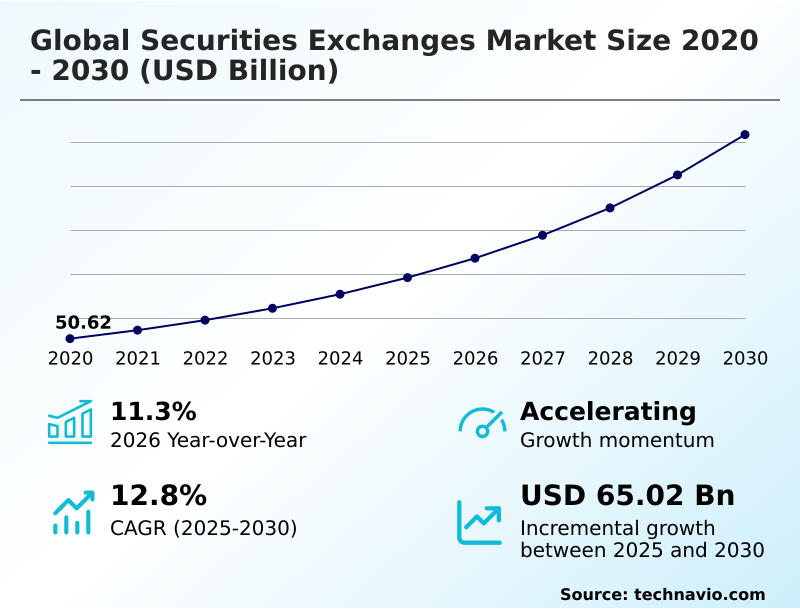
The securities exchanges market size is valued to increase by USD 65.02 billion, at a CAGR of 12.8% from 2025 to 2030. Growing demand for investment opportunities will drive the securities exchanges market.
Major Market Trends & Insights
- APAC dominated the market and accounted for a 39.1% growth during the forecast period.
- By Service - Market platforms segment was valued at USD 40.15 billion in 2024
- By Trade Finance Instruments - Equities segment accounted for the largest market revenue share in 2024
Market Size & Forecast
- Market Opportunities: USD 92.75 billion
- Market Future Opportunities: USD 65.02 billion
- CAGR from 2025 to 2030 : 12.8%
Market Summary
- The securities exchanges market is undergoing a significant transformation, driven by technological innovation and evolving regulatory landscapes. Core operations are being enhanced through the adoption of advanced technologies like AI-driven market surveillance systems and distributed ledger technology, which promise greater efficiency and security.
- This shift is a direct response to the demands of high-frequency trading and the need for low-latency execution environments. Exchanges are also diversifying their revenue streams beyond simple transaction fees, moving into high-margin areas such as market data feeds and index licensing.
- A key trend is the democratization of market access, with online platforms empowering a new generation of retail investors. For instance, an asset management firm now leverages sophisticated algorithmic trading strategies, using real-time data analytics to optimize its portfolio and manage risk in a market characterized by increasing speed and complexity.
- However, this digitalization also introduces challenges, including heightened cybersecurity risks and the complexities of navigating market fragmentation across different trading venues.
What will be the Size of the Securities Exchanges Market during the forecast period?
Get Key Insights on Market Forecast (PDF) Get Free Sample
How is the Securities Exchanges Market Segmented?
The securities exchanges industry research report provides comprehensive data (region-wise segment analysis), with forecasts and estimates in "USD million" for the period 2026-2030, as well as historical data from 2020-2024 for the following segments.
- Service
- Market platforms
- Capital access platforms
- Others
- Trade finance instruments
- Equities
- Derivatives
- Bonds
- Exchange-traded funds
- Others
- Type
- Large-cap exchanges
- Mid-cap exchanges
- Small-cap exchanges
- Geography
- APAC
- China
- Japan
- India
- North America
- US
- Canada
- Mexico
- Europe
- UK
- The Netherlands
- Germany
- South America
- Brazil
- Argentina
- Middle East and Africa
- South Africa
- Saudi Arabia
- Rest of World (ROW)
- APAC
By Service Insights
The market platforms segment is estimated to witness significant growth during the forecast period.
Market platforms are the foundational service segment, providing the core infrastructure for trading activities.
These securities trading platforms are defined by their electronic order matching engine, which processes bids and asks from the order book to establish prices in lit markets.
Institutional investors and prime brokerage firms rely on these systems for executing trades and accessing real-time market data feeds. Exchanges generate revenue from equity listing and corporate bond issuance, facilitating initial public offering (IPO) events and other capital formation services.
The entire trade lifecycle management, from order placement to execution, is managed within this segment, with automation driving down paperwork and processing costs by over 70% for some participants.
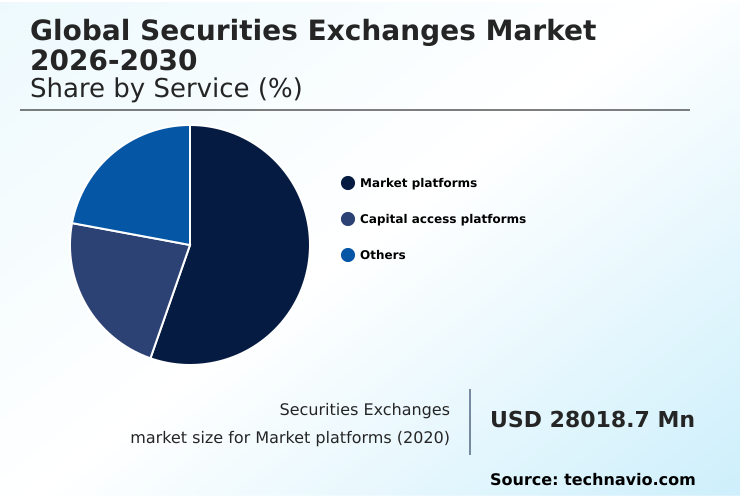
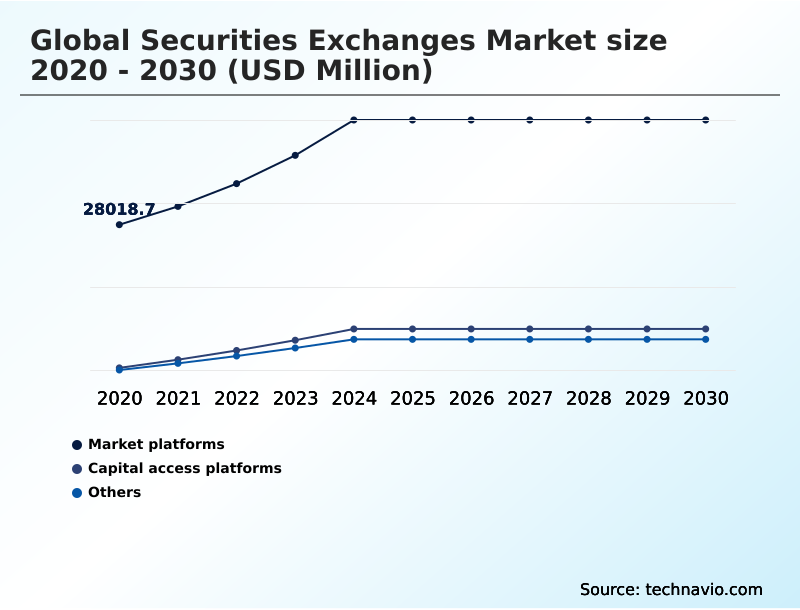
The Market platforms segment was valued at USD 40.15 billion in 2024 and showed a gradual increase during the forecast period.
Regional Analysis
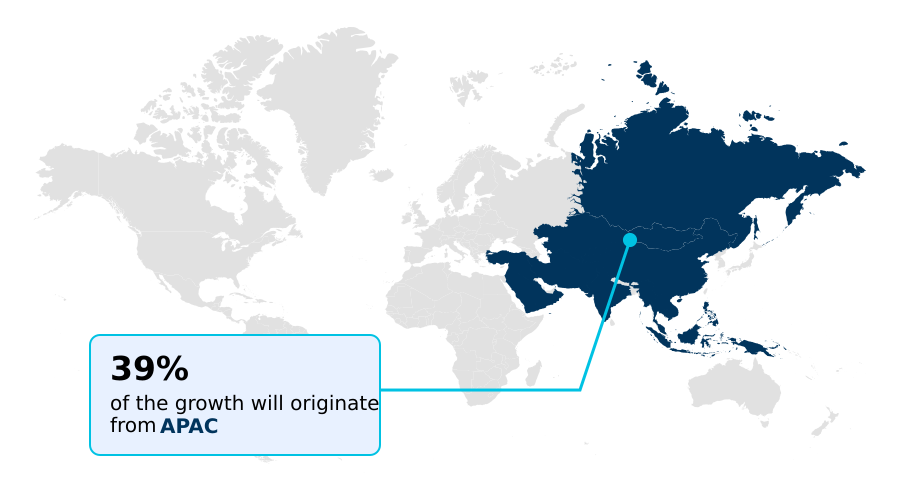
APAC is estimated to contribute 39.1% to the growth of the global market during the forecast period.Technavio’s analysts have elaborately explained the regional trends and drivers that shape the market during the forecast period.
See How Securities Exchanges Market Demand is Rising in APAC Get Free Sample
The geographic landscape is characterized by intense competition and regional specialization, contributing to market fragmentation. North America continues to lead in innovation, especially around the T+1 settlement cycle, which compels upgrades to financial market infrastructure.
The region also sees a high volume of secondary offering and special purpose acquisition company (SPAC) transactions.
Meanwhile, APAC is the fastest-growing region, contributing over 39% of the market's incremental growth, driven by strong cross-border listing activity and a focus on improving cross-border settlement through its central securities depository networks.
The market microstructure in Europe is adapting to post-Brexit realities, influencing block trading and post-trade services. A robust risk management framework is becoming a global standard, essential for maintaining stability as markets become more interconnected.
Market Dynamics
Our researchers analyzed the data with 2025 as the base year, along with the key drivers, trends, and challenges. A holistic analysis of drivers will help companies refine their marketing strategies to gain a competitive advantage.
- The strategic agenda for securities exchanges is increasingly shaped by a complex interplay of regulatory mandates and technological disruption. A central topic is the impact of T+1 settlement on liquidity, forcing firms to re-engineer post-trade settlement automation benefits to maintain efficiency.
- Simultaneously, the role of AI in market surveillance systems is becoming critical for ensuring integrity, especially with the proliferation of high-frequency trading latency reduction techniques. This technological race extends to exploring the benefits of using colocation services for competitive advantage.
- A fundamental debate continues around decentralized finance vs traditional exchanges, a conversation amplified by the tokenization of real-world assets and rising cybersecurity risks in digital asset exchanges. Exchanges are also comparing lit vs dark pool liquidity to optimize market structure.
- Product innovation is accelerating, driven by the growth drivers for thematic ETFs and the rising popularity of the direct listing vs traditional IPO process. Operationally, the evolution of real-time market data feeds and the adoption of regulatory technology for trade reporting are paramount.
- The focus is also on strengthening clearing mechanisms for OTC derivatives, managing risk in derivatives clearing, and understanding the role of securities lending in passive investing. Finally, exchanges are innovating the future of corporate bond issuance platforms and refining smart order routing in fragmented markets to meet the ESG criteria for stock exchange listings.
What are the key market drivers leading to the rise in the adoption of Securities Exchanges Industry?
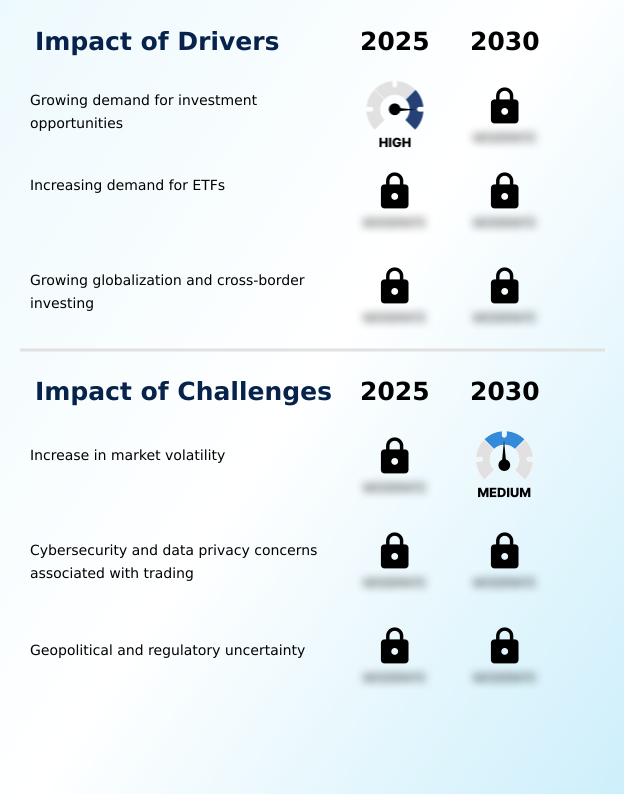
- The growing demand for diverse investment opportunities is a key driver propelling the growth of the securities exchanges market.
- Market growth is fueled by an insatiable demand for sophisticated trading capabilities and investment products.
- The proliferation of algorithmic trading and high-frequency trading, which now accounts for over 50% of equity volume in developed markets, necessitates investments in low latency trading infrastructure and colocation services. This demand for speed enhances the efficiency of straight-through processing.
- The expansion of derivatives trading, including options trading and futures contracts, provides critical risk management tools for corporations and investors. Furthermore, the popularity of passive and thematic investing has boosted ETF creation and redemption activities, driving significant volumes.
- The ecosystem is also supported by innovations in smart order routing, which optimizes execution across multiple venues. The growth in securities financing and the issuance of specialized products like social bonds further diversify the market's offerings and revenue streams.
What are the market trends shaping the Securities Exchanges Industry?
- An increasing focus on sustainable and environmental, social, and governance (ESG) factors is a significant market trend, influencing investment decisions and product development across securities exchanges.
- Key trends are reshaping the securities exchanges market, driven by shifts in investor preferences and technological capabilities. The focus on sustainable finance instruments, including green bonds, has surged, with ESG-related assets under management growing by over 20% annually in some regions. This trend has fueled the popularity of thematic ETFs.
- Concurrently, the rise of commission-free retail investor platforms has democratized access, leading to a significant increase in market participation. Technology is a primary enabler, with distributed ledger technology and smart contracts paving the way for securities tokenization and the emergence of regulated digital asset exchanges.
- The growth of these platforms, alongside traditional dark pools, is influencing market dynamics like payment for order flow. These innovations are creating new avenues for activities like securities lending, enhancing overall market efficiency.
What challenges does the Securities Exchanges Industry face during its growth?
- An increase in market volatility presents a key challenge to the securities exchanges market, potentially impacting trading volumes and investor confidence.
- The primary challenges facing the market revolve around maintaining integrity and stability in an increasingly complex and digital environment. The threat of sophisticated cyberattacks requires continuous investment in market surveillance systems, with spending on cybersecurity infrastructure increasing by an estimated 15% annually.
- Regulators are focused on strengthening market integrity monitoring and ensuring robust anti-money laundering (AML) and know your customer (KYC) protocols are enforced. Central counterparty clearing houses face pressure to manage systemic risk, especially in derivatives clearing for volatile instruments.
- The rise of alternative trading systems (ATS) contributes to a fragmented equity market structure, complicating the price discovery mechanism for both equities and fixed-income trading. Finally, the need for timely and accurate compliance reporting solutions adds significant operational cost, while activities like index licensing require constant vigilance to prevent misuse.
Exclusive Technavio Analysis on Customer Landscape
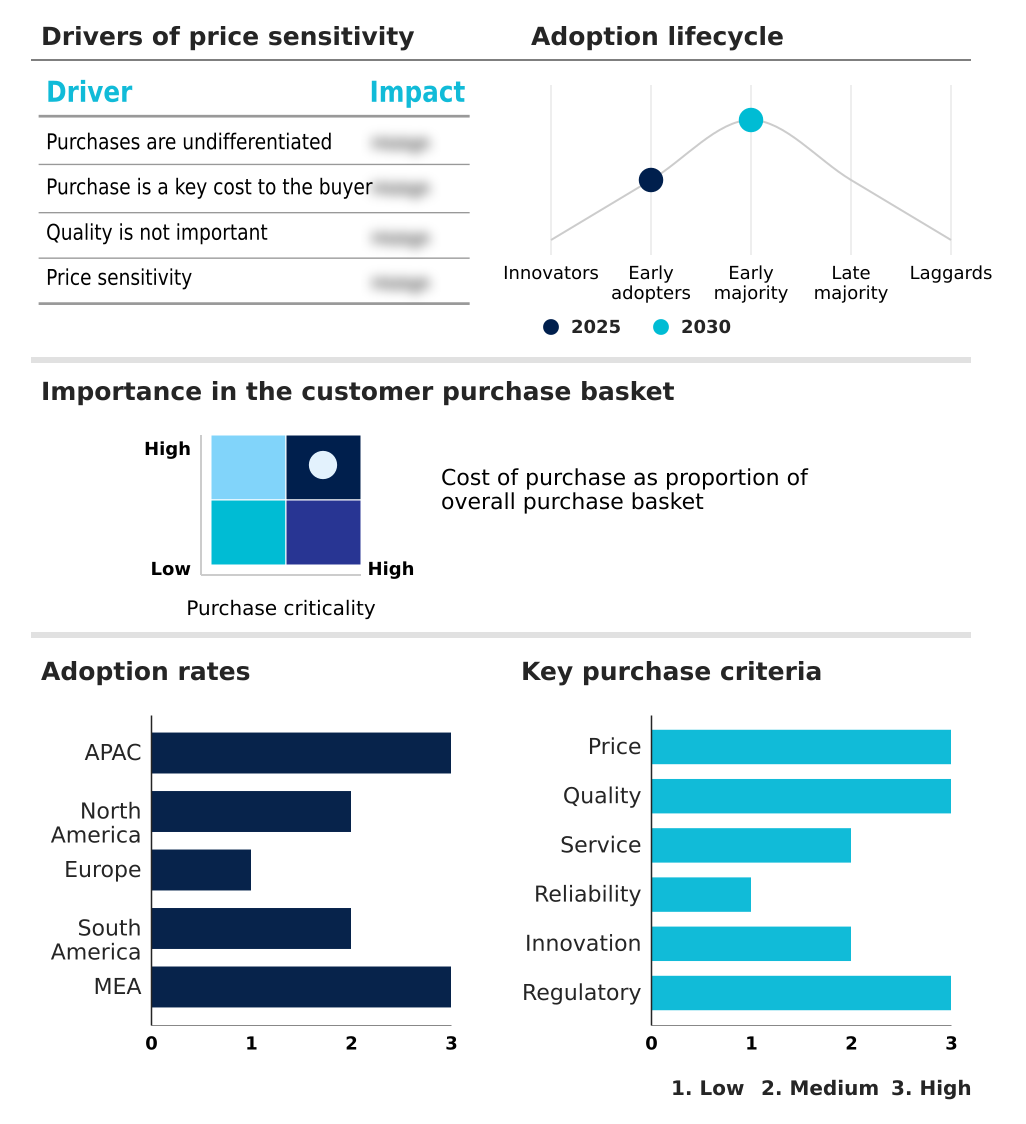
The securities exchanges market forecasting report includes the adoption lifecycle of the market, covering from the innovator’s stage to the laggard’s stage. It focuses on adoption rates in different regions based on penetration. Furthermore, the securities exchanges market report also includes key purchase criteria and drivers of price sensitivity to help companies evaluate and develop their market growth analysis strategies.
Customer Landscape of Securities Exchanges Industry
Competitive Landscape
Companies are implementing various strategies, such as strategic alliances, securities exchanges market forecast, partnerships, mergers and acquisitions, geographical expansion, and product/service launches, to enhance their presence in the industry.
ASX Ltd. - Core offerings encompass integrated platforms for equity and derivative trading, underpinned by advanced market technology and capital access solutions for issuers.
The industry research and growth report includes detailed analyses of the competitive landscape of the market and information about key companies, including:
- ASX Ltd.
- BSE Ltd.
- Deutsche Borse AG
- Dubai Financial Market PJSC
- Euronext N.V.
- Intercontinental Exchange Inc.
- Japan Exchange Group Inc.
- JSE Ltd.
- London Stock Exchange Group plc
- Moscow Exchange
- Nasdaq Inc.
- Shanghai Stock Exchange
- SIX Group Ltd.
- Taiwan Stock Exchange Corp.
- The Korea Exchange
- TMX Group Ltd.
- Warsaw Stock Exchange
Qualitative and quantitative analysis of companies has been conducted to help clients understand the wider business environment as well as the strengths and weaknesses of key industry players. Data is qualitatively analyzed to categorize companies as pure play, category-focused, industry-focused, and diversified; it is quantitatively analyzed to categorize companies as dominant, leading, strong, tentative, and weak.
Recent Development and News in Securities exchanges market
- In November, 2024, HKEX announced plans to open a new office in Riyadh to enhance financial connectivity between China and the Gulf region, supporting cross-border capital flows.
- In January, 2025, a leading North American exchange group announced the acquisition of a regulatory technology firm to enhance its AI-powered market surveillance and anti-money laundering compliance solutions.
- In March, 2025, a major European exchange operator partnered with a leading financial data provider to launch a comprehensive ESG analytics platform for institutional investors and asset managers.
- In April, 2025, Cboe Global Markets announced its plan to launch options on the S&P 500 Equal Weight Index, aiming to meet growing market demand for broader diversification tools.
Dive into Technavio’s robust research methodology, blending expert interviews, extensive data synthesis, and validated models for unparalleled Securities Exchanges Market insights. See full methodology.
| Market Scope | |
|---|---|
| Page number | 303 |
| Base year | 2025 |
| Historic period | 2020-2024 |
| Forecast period | 2026-2030 |
| Growth momentum & CAGR | Accelerate at a CAGR of 12.8% |
| Market growth 2026-2030 | USD 65019.5 million |
| Market structure | Fragmented |
| YoY growth 2025-2026(%) | 11.3% |
| Key countries | China, Japan, India, Hong Kong, Australia, Indonesia, US, Canada, Mexico, UK, The Netherlands, Germany, Switzerland, France, Italy, Brazil, Chile, Argentina, South Africa, Egypt, Nigeria, Morocco and Saudi Arabia |
| Competitive landscape | Leading Companies, Market Positioning of Companies, Competitive Strategies, and Industry Risks |
Research Analyst Overview
- The securities exchanges market is in a state of perpetual evolution, driven by the dual forces of technology and regulation. Boardroom decisions are increasingly focused on strategic investments in regulatory technology (regtech) to navigate complex compliance mandates like the T+1 settlement cycle, which can reduce settlement failures by over 90%.
- The core infrastructure, from the order matching engine to central counterparty clearing and post-trade settlement, is being re-engineered. The rise of algorithmic trading and high-frequency trading necessitates low latency trading environments supported by colocation services and robust market data feeds.
- Exchanges are managing a diverse ecosystem of lit markets and dark pools, while innovating in derivatives trading, securities financing, and securities lending. The process for an equity listing, whether via a traditional initial public offering (IPO), secondary offering, or special purpose acquisition company (SPAC), is adapting.
- Furthermore, the growth of the exchange-traded fund (ETF) and corporate bond issuance markets requires a sophisticated price discovery mechanism.
- This landscape is shaped by market fragmentation, payment for order flow debates, and the emergence of distributed ledger technology and smart contracts, all while strengthening know your customer (KYC) and anti-money laundering (AML) frameworks within the central securities depository through straight-through processing. Index licensing and managing the order book for activities like block trading remain key revenue sources.
What are the Key Data Covered in this Securities Exchanges Market Research and Growth Report?
-
What is the expected growth of the Securities Exchanges Market between 2026 and 2030?
-
USD 65.02 billion, at a CAGR of 12.8%
-
-
What segmentation does the market report cover?
-
The report is segmented by Service (Market platforms, Capital access platforms, and Others), Trade Finance Instruments (Equities, Derivatives, Bonds, Exchange-traded funds, and Others), Type (Large-cap exchanges, Mid-cap exchanges, and Small-cap exchanges) and Geography (APAC, North America, Europe, South America, Middle East and Africa)
-
-
Which regions are analyzed in the report?
-
APAC, North America, Europe, South America and Middle East and Africa
-
-
What are the key growth drivers and market challenges?
-
Growing demand for investment opportunities, Increase in market volatility
-
-
Who are the major players in the Securities Exchanges Market?
-
ASX Ltd., BSE Ltd., Deutsche Borse AG, Dubai Financial Market PJSC, Euronext N.V., Intercontinental Exchange Inc., Japan Exchange Group Inc., JSE Ltd., London Stock Exchange Group plc, Moscow Exchange, Nasdaq Inc., Shanghai Stock Exchange, SIX Group Ltd., Taiwan Stock Exchange Corp., The Korea Exchange, TMX Group Ltd. and Warsaw Stock Exchange
-
Market Research Insights
- The market's dynamism is driven by a strategic pivot toward technology-enabled services. Adoption of smart order routing through advanced securities trading platforms has improved best-execution rates by over 15% across increasingly fragmented market structures. Financial market infrastructure is evolving, with a focus on enhancing clearinghouse risk management and post-trade services.
- The rise of retail investor platforms has democratized access, while institutional investors are leveraging new sustainable finance instruments and thematic ETFs. The integration of market integrity monitoring and compliance reporting solutions can reduce manual audit efforts by up to 60%, creating significant operational efficiencies.
- This evolution is also fostering new opportunities in securities tokenization and the expansion of digital asset exchanges, reshaping capital formation services.
We can help! Our analysts can customize this securities exchanges market research report to meet your requirements.
 RIA -
RIA - 
