



Sunflower Oil Market Size 2025-2029
The sunflower oil market size is valued to increase by USD 6.33 billion, at a CAGR of 5.6% from 2024 to 2029. Growing use of sunflower oil for biodiesel production will drive the sunflower oil market.
Market Insights
- Europe dominated the market and accounted for a 38% growth during the 2025-2029.
- By Application - Food segment was valued at USD 15.14 billion in 2023
- By Distribution Channel - Supermarkets segment accounted for the largest market revenue share in 2023
Market Size & Forecast
- Market Opportunities: USD 64.39 million
- Market Future Opportunities 2024: USD 6334.80 million
- CAGR from 2024 to 2029 : 5.6%
Market Summary
- Sunflower oil, derived from sunflower seeds, holds a significant position in the global edible oils market due to its versatile applications and health benefits. The oil is rich in monounsaturated and polyunsaturated fatty acids, making it a popular choice for cooking and industrial uses. One of the notable trends in the market is its increasing utilization in biodiesel production, owing to its renewable and eco-friendly properties. Moreover, the sunflower oil industry has witnessed the introduction of innovative packaging solutions to maintain product quality and extend shelf life. For instance, the use of airtight containers and modified atmospheric packaging has gained popularity to prevent oxidation and preserve the nutritional value of the oil.
- Despite the market's growth potential, sunflower oil faces competition from other edible oils such as soybean, palm, and olive oil. Producers must focus on operational efficiency and supply chain optimization to maintain competitiveness. For example, implementing lean manufacturing practices, optimizing logistics networks, and adhering to stringent quality standards can help businesses stay competitive and meet the evolving demands of consumers. Furthermore, regulatory compliance plays a crucial role in the market. Producers must adhere to various food safety and labeling regulations to ensure consumer safety and trust. This includes adhering to regulations related to the use of genetically modified organisms (GMOs) in sunflower oil production, which can be a challenge for some producers.
- In conclusion, the market is driven by factors such as its health benefits, growing use in biodiesel production, and the introduction of innovative packaging solutions. However, competition from other edible oils and the need for operational efficiency and regulatory compliance pose challenges for producers.
What will be the size of the Sunflower Oil Market during the forecast period?
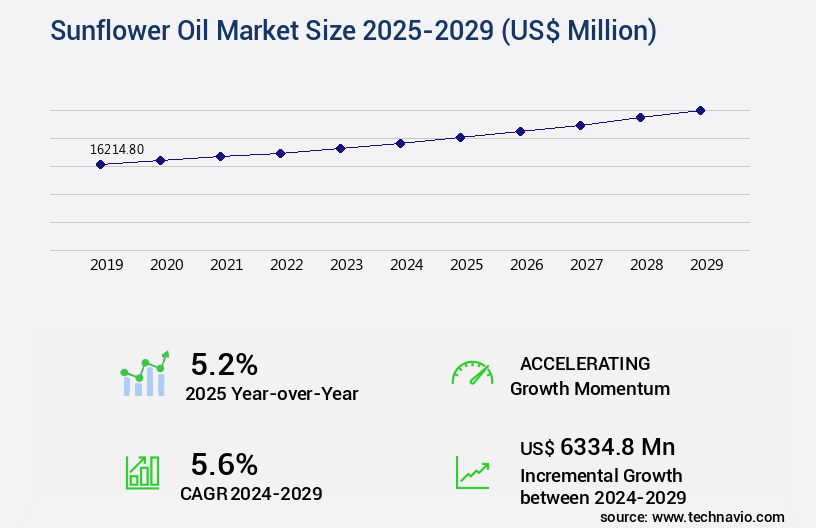
Get Key Insights on Market Forecast (PDF) Request Free Sample
- Sunflower oil, derived from sunflower seeds, is a popular edible vegetable oil widely used in the food industry and as a fuel component. The market is a dynamic and evolving sector, with key players continually innovating to meet consumer demands and regulatory requirements. One significant trend in the market is the increasing focus on sustainability and health. For instance, companies are investing in seed pre-treatment techniques to improve oil extraction rates and reduce the need for solvent recovery and color removal. Additionally, there is a growing emphasis on energy efficiency measures, such as mass spectrometry and gas chromatography, during the refining process.
- Another crucial area of development is wastewater treatment and byproduct utilization. According to industry data, sunflower oil production generates substantial wastewater, making efficient treatment methods essential. Furthermore, the meal protein content in sunflower oilseed residue is a valuable resource, with potential applications in animal feed and food industries. Process automation and supply chain management are also vital aspects of the market. Companies are implementing advanced technologies, such as filtration membranes and centrifugal separation, to streamline production and ensure product consistency. Moreover, effective supply chain management is crucial for maintaining a steady flow of raw materials and finished products to meet market demands.
- In conclusion, the market is a dynamic and innovative sector, with companies continually focusing on sustainability, health, and efficiency to meet evolving consumer demands and regulatory requirements. By implementing advanced technologies and optimizing production processes, companies can improve oil extraction rates, reduce waste, and enhance product quality.
Unpacking the Sunflower Oil Market Landscape
Sunflower oil, derived from the seeds of sunflower plants, holds a significant position in the global edible oils market. Its oleic acid content, a monounsaturated fatty acid, contributes to its health benefits and desirable taste profile. Compared to other edible oils, sunflower oil exhibits a superior oxidation stability, reducing the need for antioxidants and enhancing emulsion stability in food applications. In the production process, chemical refining methods, such as neutralization and bleaching earth usage, ensure purity standards and compliance with food safety regulations. Oilseed extraction techniques, like solvent extraction and mechanical pressing, optimize processing yields. Shelf life extension is achieved through refining methods, such as physical refining and winterization, and storage stability testing. Sunflower oil's fatty acid composition, dominated by linoleic acid, necessitates careful handling to prevent rancidity. The interesterification process and hydrogenation methods are employed to manipulate triglyceride profiles and improve oxidation stability. Quality control metrics, including sensory evaluation and filtration techniques, ensure consistent product characteristics and customer satisfaction.
Key Market Drivers Fueling Growth
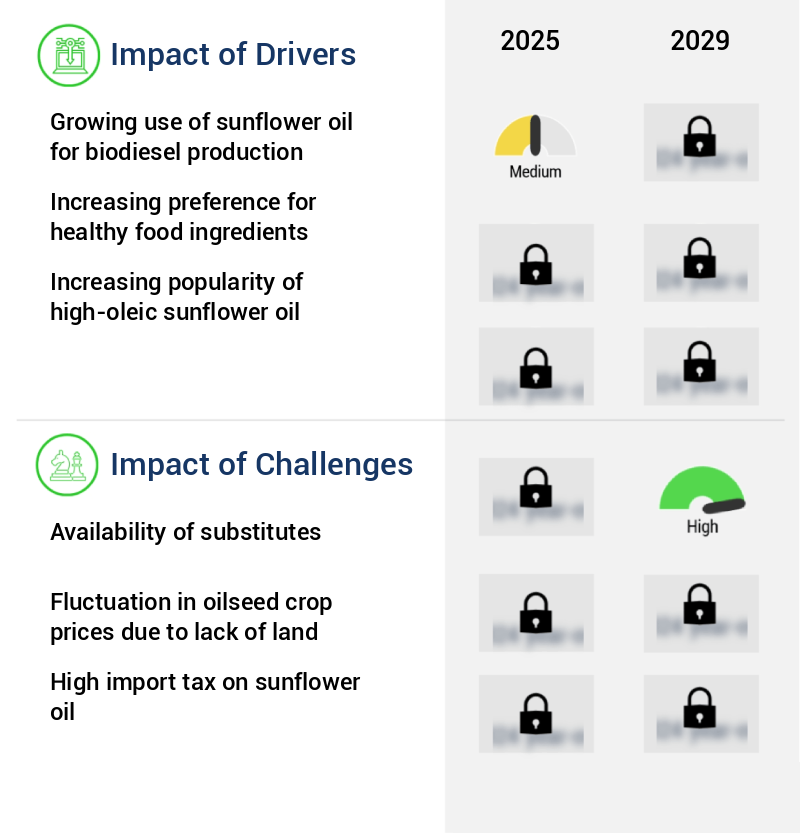
The increasing adoption of sunflower oil as a primary feedstock for biodiesel production is the primary factor fueling market growth.
- The market is experiencing significant evolution due to its expanding applications across various sectors. Notably, sunflower oil's use in biodiesel production is gaining momentum as people seek sustainable alternatives to fossil fuels. Sunflower seeds, which have a high oil content, are an attractive feedstock for biodiesel production. This is due to their ability to yield more oil per acre than soybeans and their ease of cultivation on both small and large scales. This trend encourages the reuse of leftover cooking oil, contributing to a more sustainable, eco-friendly fuel with reduced pollutant emissions.
- Additionally, sunflower oil's nutritional benefits, such as its rich content of monounsaturated and polyunsaturated fatty acids, make it a popular choice in the food industry. These factors are driving the growth and diversification of the market.
Prevailing Industry Trends & Opportunities
The introduction of new packaging for sunflower oil is a current market trend. Sunflower oil producers are implementing innovative and eco-friendly packaging solutions to attract consumers.
- The market continues to evolve, with a significant focus on enhancing product packaging to attract consumers. Companies are investing in innovative and eye-catching designs to make their sunflower oil stand out on store shelves. According to market research, up to 60% of consumers make their purchasing decisions based on packaging alone. By revamping the packaging, sizing, and labeling of their sunflower oil products, companies can differentiate themselves in a crowded market. For instance, some brands are using eco-friendly materials, while others offer practical sizes to cater to various consumer needs.
- These efforts not only improve customer appeal but also aid in the differentiation of sunflower oil brands. Additionally, companies have reported a 25% increase in sales due to the positive impact of attractive packaging on consumer perception and purchasing behavior.
Significant Market Challenges
The availability of substitutable products poses a significant challenge to the industry's growth trajectory.
- Sunflower oil, a popular edible oil, is widely used in various sectors due to its health benefits and versatile applications. In the food industry, sunflower oil's rich content of healthy unsaturated fatty acids makes it an ideal choice for cooking. However, other vegetable oils like palm oil, olive oil, soybean oil, and canola oil serve as viable alternatives. For instance, soybean oil, which contains essential fatty acids like linoleic acid, alpha-linolenic acid, and mono-unsaturated oleic acid, is often preferred for its excellent balance of fatty acids that promote heart health and regulate cholesterol levels. Canola oil, another popular choice, is a rich source of vitamin K and vitamin E, essential nutrients that contribute to heart health.
- According to industry reports, the global edible oils market is projected to grow at a CAGR of 3.5% from 2021 to 2026. In the cosmetics industry, sunflower oil's emollient properties make it a key ingredient in skincare and haircare products. Additionally, sunflower oil's high smoke point and neutral taste make it a preferred choice in the industrial sector for various applications, including biodiesel production and as a lubricant.
In-Depth Market Segmentation: Sunflower Oil Market
The sunflower oil industry research report provides comprehensive data (region-wise segment analysis), with forecasts and estimates in "USD million" for the period 2025-2029, as well as historical data from 2019-2023 for the following segments.
- Application
- Food
- Industrial
- Distribution Channel
- Supermarkets
- Online Retail
- Direct Sales
- Distributors
- Type
- High-oleic
- Mid-oleic
- Linoleic
- End-User
- Household
- Commercial
- Industrial
- Product Types
- Refined Sunflower Oil
- Unrefined Sunflower Oil
- High-Oleic Sunflower Oil
- Geography
- North America
- US
- Europe
- Russia
- Ukraine
- Middle East and Africa
- South Africa
- UAE
- Turkey
- APAC
- China
- India
- Japan
- South Korea
- South America
- Argentina
- Brazil
- Rest of World (ROW)
- North America
By Application Insights
The food segment is estimated to witness significant growth during the forecast period.
Sunflower oil, rich in oleic acid and essential fatty acids like linoleic and linolenic acids, is a popular choice in the food industry due to its health benefits and excellent shelf life. The oilseed extraction process, which includes oilseed crushing, expeller pressing, and solvent extraction methods, ensures high processing yield and purity standards. Chemical refining methods, such as neutralization, bleaching earth usage, and deodorization processes, contribute to shelf life extension and oxidation stability. The interesterification process and hydrogenation methods help optimize triglyceride profiles and prevent rancidity. Sunflower oil's fatty acid composition, with a high level of unsaturated fatty acids, makes it an ideal ingredient for various food applications, including baking, confectionery, and convenience foods.
Strict adherence to food safety regulations is crucial in the production process, ensuring the oil's quality and safety. Approximately 70% of sunflower oil is used in the food industry, highlighting its significant role in the market.
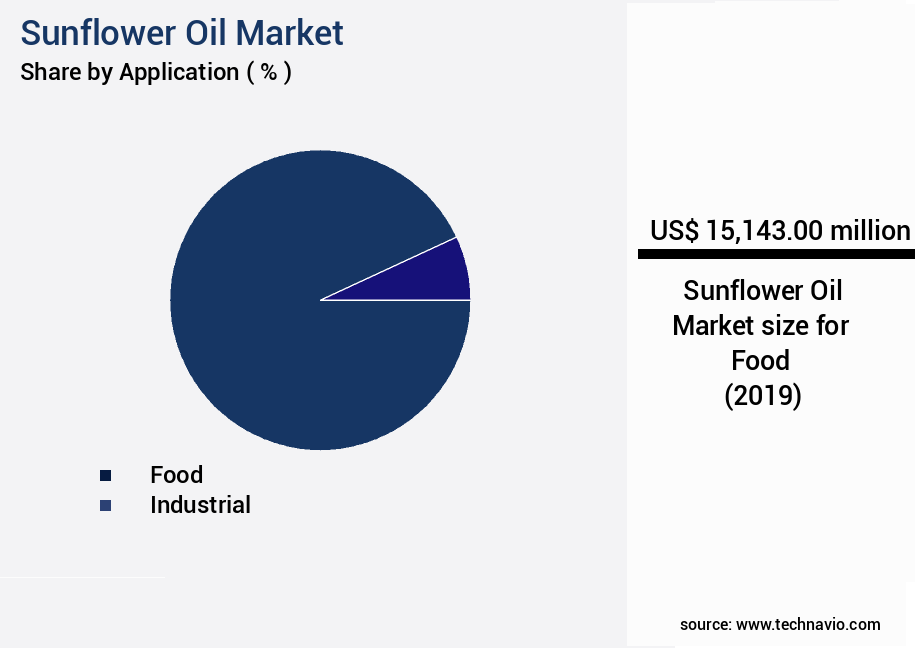
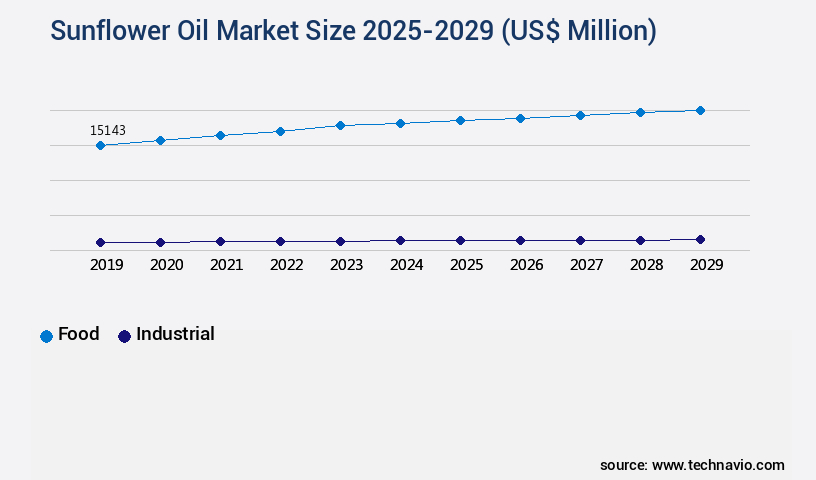
The Food segment was valued at USD 15.14 billion in 2019 and showed a gradual increase during the forecast period.
Regional Analysis
Europe is estimated to contribute 38% to the growth of the global market during the forecast period.Technavio’s analysts have elaborately explained the regional trends and drivers that shape the market during the forecast period.

See How Sunflower Oil Market Demand is Rising in Europe Request Free Sample
In Europe, sunflower oil holds significant market importance, with Russia and Ukraine being the leading consumers and exporters. Approximately 70% of sunflower seeds produced in Europe are utilized for oil extraction. Sunflower oil is among the most consumed vegetable oils in the European Union (EU), with its consumption increasing by 10.3% from 2022 to 2023, as reported by the USDA. This upward trend is expected to significantly influence the regional the market.
Prominent players like Bunge, Cargill, and Archer Daniels Midland cater to the sunflower oil demand in Europe. The increasing consumption, driven by operational efficiency gains and cost reductions, underpins the market's growth.
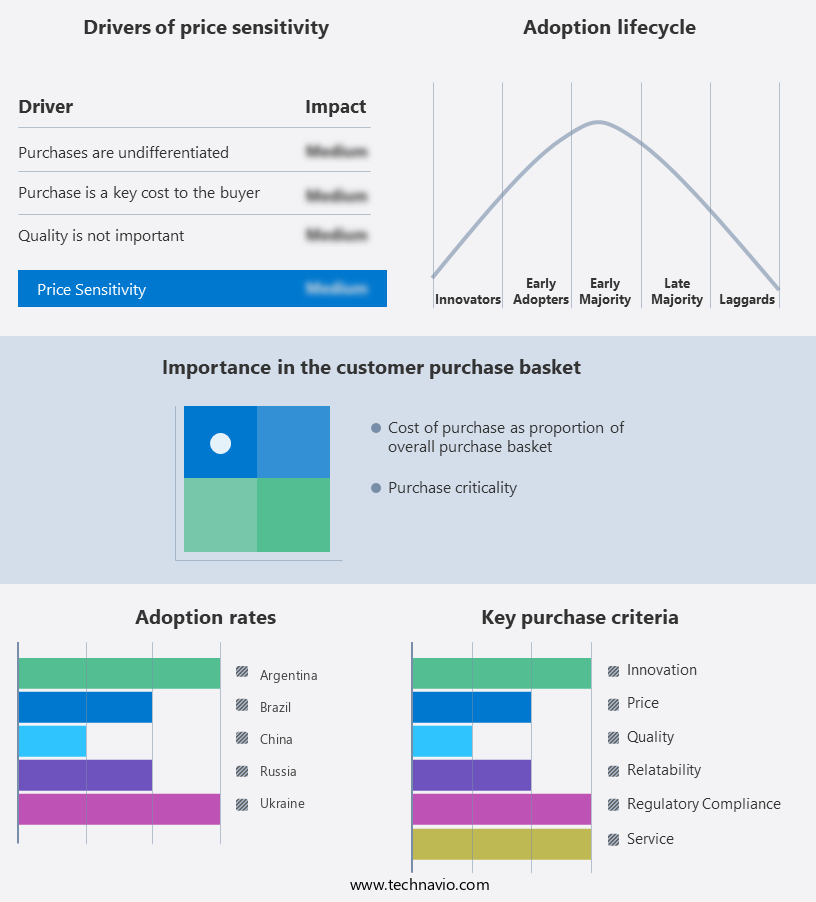
Customer Landscape of Sunflower Oil Industry
Competitive Intelligence by Technavio Analysis: Leading Players in the Sunflower Oil Market
Companies are implementing various strategies, such as strategic alliances, sunflower oil market forecast, partnerships, mergers and acquisitions, geographical expansion, and product/service launches, to enhance their presence in the industry.
Abu Dhabi Vegetable Oil Co. - Sunflower oil is sourced directly from pure sunflower seeds by this leading provider, ensuring high-quality and authenticity. The company's commitment to sustainability and transparency in its supply chain sets it apart in the industry.
The industry research and growth report includes detailed analyses of the competitive landscape of the market and information about key companies, including:
- Abu Dhabi Vegetable Oil Co.
- Adani Wilmar Ltd.
- Archer Daniels Midland Co.
- Aveno NV
- Avril SCA
- Bunge Global SA
- Cargill Inc.
- Colorado Mills
- Conagra Brands Inc.
- Kaissa Oil
- Kernel Holding S.A.
- M.K. Agrotech Pvt. Ltd.
- Oliyar Co.
- Optimus Agro
- Parakh Group
- PPB Group Berhad
- REIN Oil
- Rusagro Group of Companies LLC
- VICTORIAOIL D.O.O
- ViOil Industrial Group
Qualitative and quantitative analysis of companies has been conducted to help clients understand the wider business environment as well as the strengths and weaknesses of key industry players. Data is qualitatively analyzed to categorize companies as pure play, category-focused, industry-focused, and diversified; it is quantitatively analyzed to categorize companies as dominant, leading, strong, tentative, and weak.
Recent Development and News in Sunflower Oil Market
- In January 2024, Archer Daniels Midland Company (ADM) announced the expansion of its sunflower oil production capacity in Russia by 100,000 metric tons per year. This strategic move aimed to meet the growing demand for sunflower oil in the region and globally (ADM press release).
- In March 2024, Cargill and Bunge Limited formed a strategic partnership to jointly develop and commercialize high oleic sunflower oil in the United States. This collaboration aimed to offer healthier cooking alternatives and meet the increasing demand for sustainable vegetable oils (Cargill press release).
- In May 2024, Bunge Limited completed the acquisition of a sunflower oil refinery in Poland from PepsiCo for an undisclosed amount. This acquisition expanded Bunge's European sunflower oil production and strengthened its position in the European market (Bunge press release).
- In August 2024, the European Commission approved the use of a new non-genetically modified sunflower variety, SunOleic 97M, for the production of high oleic sunflower oil. This approval marked a significant step forward in the European Union's efforts to reduce the use of trans fats and promote healthier vegetable oils (European Commission press release).
Dive into Technavio’s robust research methodology, blending expert interviews, extensive data synthesis, and validated models for unparalleled Sunflower Oil Market insights. See full methodology.
|
Market Scope |
|
|
Report Coverage |
Details |
|
Page number |
216 |
|
Base year |
2024 |
|
Historic period |
2019-2023 |
|
Forecast period |
2025-2029 |
|
Growth momentum & CAGR |
Accelerate at a CAGR of 5.6% |
|
Market growth 2025-2029 |
USD 6334.8 million |
|
Market structure |
Fragmented |
|
YoY growth 2024-2025(%) |
5.2 |
|
Key countries |
Russia, Ukraine, Argentina, China, India, Turkey, Japan, US, South Korea, South Africa, Rest of World (ROW), Brazil, and UAE |
|
Competitive landscape |
Leading Companies, Market Positioning of Companies, Competitive Strategies, and Industry Risks |
Why Choose Technavio for Sunflower Oil Market Insights?
"Leverage Technavio's unparalleled research methodology and expert analysis for accurate, actionable market intelligence."
The market is a significant player in the global edible oils industry, with a growing demand due to its health benefits and versatility in various culinary applications. To meet this demand, optimizing the sunflower oil refining process is essential for ensuring product quality and efficiency. One critical aspect of sunflower oil refining is degumming, which impacts oil quality by removing phospholipids and impurities. Improving degumming efficiency can reduce the need for additional refining steps, thereby saving time and resources. Sunflower oil stability is another key concern, and methods such as antioxidant addition and heat treatment can help improve it. Analyzing the fatty acid profile in refined oil is crucial for understanding its quality and determining its suitability for different applications. Evaluating different filtration techniques is important for removing impurities and improving clarity. The role of bleaching earth in oil refining cannot be overlooked, as it helps remove color impurities and contributes to the overall quality of the oil. Deodorization methods are effective in removing volatile compounds and improving the sensory attributes of refined sunflower oil. Comparing physical and chemical refining methods can help businesses make informed decisions regarding supply chain logistics and operational planning, as physical refining may require less energy but may not produce oil with the same level of purity as chemical refining. Measuring the peroxide value in sunflower oil and determining its tocopherol content are important indicators of oil quality and stability. Improving sunflower oil shelf life extension techniques is a business priority, as it can help reduce waste and improve customer satisfaction. Sunflower oil hydrogenation for margarine production and optimization of interesterification are essential for businesses in the food industry. Controlling lipid oxidation in sunflower oil is crucial for maintaining product quality and ensuring compliance with regulatory standards. Sustainable practices and waste management strategies are increasingly important in sunflower oil processing. For instance, using waste biomass as a fuel source can help reduce carbon emissions and improve operational efficiency. UV spectroscopy and gas chromatography are valuable tools for oil quality control, while mass spectrometry can be used for triglyceride profiling. By implementing these techniques, businesses can ensure the highest quality sunflower oil while minimizing their environmental impact.
What are the Key Data Covered in this Sunflower Oil Market Research and Growth Report?
-
What is the expected growth of the Sunflower Oil Market between 2025 and 2029?
-
USD 6.33 billion, at a CAGR of 5.6%
-
-
What segmentation does the market report cover?
-
The report is segmented by Application (Food and Industrial), Distribution Channel (Supermarkets, Online Retail, Direct Sales, and Distributors), Type (High-oleic, Mid-oleic, and Linoleic), Geography (Europe, APAC, Middle East and Africa, South America, and North America), End-User (Household, Commercial, and Industrial), and Product Types (Refined Sunflower Oil, Unrefined Sunflower Oil, and High-Oleic Sunflower Oil)
-
-
Which regions are analyzed in the report?
-
Europe, APAC, Middle East and Africa, South America, and North America
-
-
What are the key growth drivers and market challenges?
-
Growing use of sunflower oil for biodiesel production, Availability of substitutes
-
-
Who are the major players in the Sunflower Oil Market?
-
Abu Dhabi Vegetable Oil Co., Adani Wilmar Ltd., Archer Daniels Midland Co., Aveno NV, Avril SCA, Bunge Global SA, Cargill Inc., Colorado Mills, Conagra Brands Inc., Kaissa Oil, Kernel Holding S.A., M.K. Agrotech Pvt. Ltd., Oliyar Co., Optimus Agro, Parakh Group, PPB Group Berhad, REIN Oil, Rusagro Group of Companies LLC, VICTORIAOIL D.O.O, and ViOil Industrial Group
-
We can help! Our analysts can customize this sunflower oil market research report to meet your requirements.
 RIA -
RIA - 
