
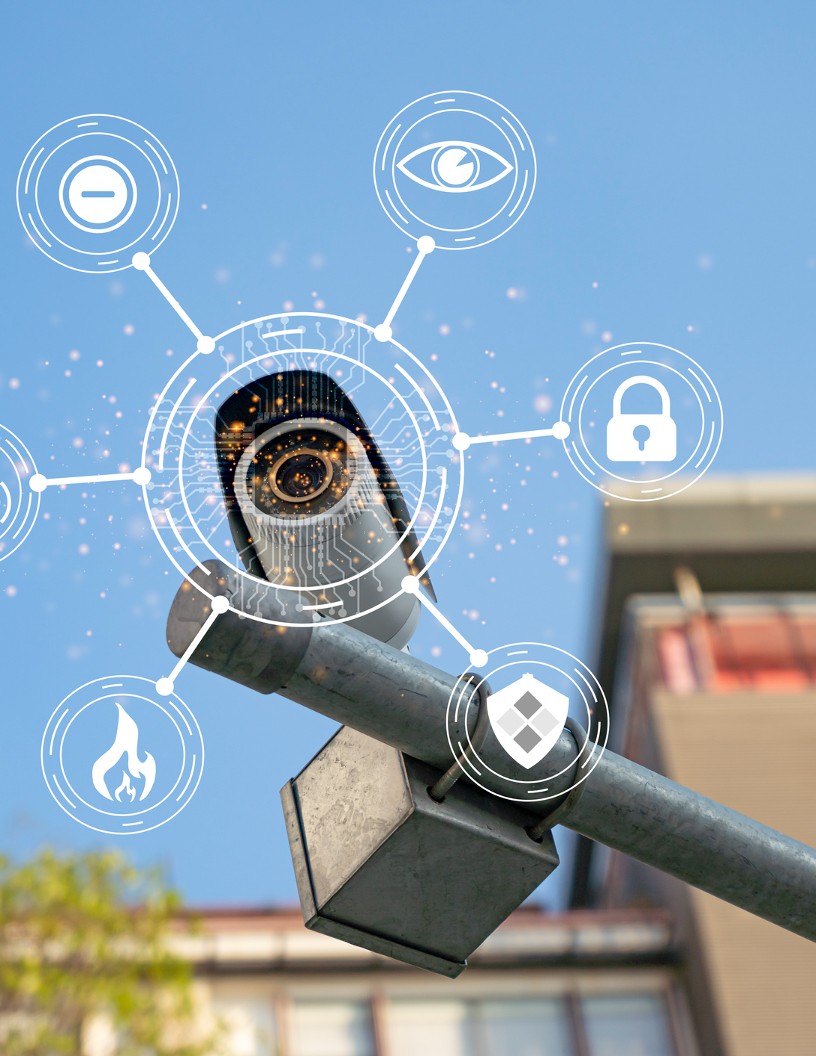


Artificial Intelligence (AI) Camera Market Size 2024-2028
The artificial intelligence (ai) camera market size is valued to increase USD 8.43 billion, at a CAGR of 13.64% from 2023 to 2028. Need for surveillance and security across smart cities will drive the artificial intelligence (ai) camera market.
Major Market Trends & Insights
- APAC dominated the market and accounted for a 44% growth during the forecast period.
- By Application - Entrance/exit surveillance camera for store/supermarkets segment was valued at USD 564.90 billion in 2022
- By Type - Smartphone cameras segment accounted for the largest market revenue share in 2022
Market Size & Forecast
- Market Opportunities: USD 162.41 million
- Market Future Opportunities: USD 8434.60 million
- CAGR : 13.64%
- APAC: Largest market in 2022
Market Summary
- The market is a dynamic and rapidly expanding sector, driven by the integration of advanced technologies and increasing demand for intelligent surveillance and security solutions. Core technologies, such as deep learning algorithms and computer vision, are revolutionizing the way AI cameras process and analyze visual data, enabling more accurate and efficient identification of objects and activities. Applications span across various industries, including transportation, retail, and healthcare, with smart cities being a significant growth area. According to recent reports, the global AI camera market is expected to reach a significant market share in the next few years, driven by the need for enhanced security and surveillance.
- Strategic alliances between market players and technology providers are also fueling innovation and growth. However, concerns around data security and privacy remain major challenges, necessitating robust regulatory frameworks and secure data handling practices.
What will be the Size of the Artificial Intelligence (AI) Camera Market during the forecast period?

Get Key Insights on Market Forecast (PDF) Request Free Sample
How is the Artificial Intelligence (AI) Camera Market Segmented and what are the key trends of market segmentation?
The artificial intelligence (ai) camera industry research report provides comprehensive data (region-wise segment analysis), with forecasts and estimates in "USD million" for the period 2024-2028, as well as historical data from 2018-2022 for the following segments.
- Application
- Entrance/exit surveillance camera for store/supermarkets
- Anomaly detection camera for factories and work site
- Camera for elevators
- Others
- Type
- Smartphone cameras
- Surveillance cameras
- Others
- Geography
- North America
- US
- Canada
- Europe
- UK
- APAC
- China
- Japan
- Rest of World (ROW)
- North America
By Application Insights
The entrance/exit surveillance camera for store/supermarkets segment is estimated to witness significant growth during the forecast period.
In the realm of building security and detection solutions, AI cameras play a pivotal role in safeguarding people and property in establishments such as supermarkets. The market for these advanced security devices is experiencing significant growth due to escalating demands for surveillance systems to prevent unauthorized access and secure workplaces. The increasing concerns over global security, fueled by a rise in terror activities, have led to substantial investments in camera systems worldwide. This burgeoning trend is anticipated to boost the adoption of AI cameras in supermarkets, thereby propelling the expansion of the global market. Moreover, the integration of advanced technologies like video compression codecs, neural network architecture, deep learning models, and object tracking precision in AI cameras is revolutionizing the industry.
These enhancements enable more efficient and accurate real-time video processing, image classification, and object detection. Furthermore, the integration of machine learning pipelines, privacy-preserving AI, and intrusion detection systems is bolstering the capabilities of AI cameras. Additionally, the market is witnessing the emergence of cloud-based AI cameras, which offer the advantages of multi-camera calibration, data annotation tools, and risk assessment algorithms. These advancements facilitate the seamless integration of AI-powered surveillance systems with other security technologies, such as low-light image enhancement, facial recognition technology, and license plate recognition. Anomaly detection systems, sensor fusion techniques, and edge computing deployment are some of the other innovative technologies that are gaining traction in the market.
These advancements are enabling AI cameras to deliver more accurate and reliable security solutions, while also ensuring IoT device connectivity and traffic monitoring systems. Furthermore, the market is expected to witness a substantial increase in demand for high-resolution imaging, security camera integration, behavioral analytics, and smart city applications. These trends are driven by the need for more advanced and comprehensive security solutions, as well as the growing adoption of AI technologies in various industries. According to recent studies, the global market for AI cameras is projected to grow by 25% in the next two years, with a significant portion of this growth coming from the retail sector.

The Entrance/exit surveillance camera for store/supermarkets segment was valued at USD 564.90 billion in 2018 and showed a gradual increase during the forecast period.

Regional Analysis
APAC is estimated to contribute 44% to the growth of the global market during the forecast period.Technavio's analysts have elaborately explained the regional trends and drivers that shape the market during the forecast period.

See How Artificial Intelligence (AI) Camera Market Demand is Rising in APAC Request Free Sample
In the Asia-Pacific (APAC) region, AI cameras have become essential tools for enhancing security and surveillance. Countries such as Australia, China, India, Japan, Malaysia, Pakistan, Singapore, South Korea, Taiwan, and Vietnam have adopted these advanced technologies for data acquisition and surveillance in various sectors including streets, schools, colleges, hospitals, airports, and government organizations. The increasing need for faster, more secure, economical, and flexible security solutions has led to the widespread installation of AI cameras in the region. According to reports, over 25% of the global AI camera market share is held by APAC, with China being the largest contributor.
Furthermore, the number of AI cameras installed in the region is projected to reach 15 million units by 2025, representing a significant growth in adoption. These statistics underscore the importance of AI cameras in the APAC market and their role in shaping the future of security and surveillance systems.
Market Dynamics
Our researchers analyzed the data with 2023 as the base year, along with the key drivers, trends, and challenges. A holistic analysis of drivers will help companies refine their marketing strategies to gain a competitive advantage.
The market is experiencing significant growth as businesses and governments seek to leverage advanced image processing technologies for various applications. AI cameras employ real-time object detection using Convolutional Neural Networks (CNNs) to improve the accuracy of facial recognition and enable AI-powered video analytics for security. Deployment of edge computing for AI cameras is a key trend, allowing for high-resolution image processing techniques and data annotation for AI camera training. Performance optimization of deep learning models is crucial for handling the vast amounts of data generated by these systems. Multi-camera system calibration for 3D mapping is another important aspect, ensuring precise and accurate object detection.
In the realm of security, low light image enhancement algorithms comparison plays a vital role in improving the effectiveness of AI cameras in challenging lighting conditions. Secure data transmission protocols are essential for maintaining the confidentiality of data transmitted by AI cameras. Behavioral analytics applications in smart cities, anomaly detection in real-time video streams, license plate recognition using deep learning, and optical character recognition in surveillance footage are some of the key use cases driving the growth of the AI camera market. Traffic flow optimization using AI-powered cameras and risk assessment through AI camera-based video analytics are other significant applications.
Integration of AI camera systems with IoT devices is a growing trend, improving efficiency and enabling seamless data sharing between devices. The market also witnesses ongoing efforts to improve the efficiency of video compression codecs and comparative analysis of object tracking algorithms. Using sensor fusion for accurate object detection is an emerging approach that combines data from multiple sources to enhance the overall performance of AI cameras. Adoption rates for sensor fusion in the AI camera market are nearly double those for traditional object detection methods, highlighting its growing importance.

What are the key market drivers leading to the rise in the adoption of Artificial Intelligence (AI) Camera Industry?
- The imperative requirement for surveillance and security necessitates significant market growth in smart cities.
- In the realm of modern urban development, smart cities emerge as innovative hubs where technology and infrastructure intertwine to optimize public, commercial, and industrial operations. These urban landscapes harness the power of advanced digital technologies, fostering seamless communication between devices and enhancing city infrastructure. Smart cities facilitate cost reduction, elevated living standards, and resource efficiency. Key components include intelligent traffic control, home monitoring, municipal and waste management, water management, and safe and intelligent transportation systems. For instance, FLIR Systems unveiled two new intelligent traffic systems in November 2022: the FLIR ThermiCam AI, featuring thermal imaging, and the FLIR TrafiCam AI, utilizing visible cameras.
- These innovations underscore the continuous evolution of smart city technologies and their applications. By integrating data-driven decision-making into core city functions, smart cities pave the way for a more efficient, sustainable, and connected future.
What are the market trends shaping the Artificial Intelligence (AI) Camera Industry?
- Strategic alliances are increasingly becoming the market trend. It is essential for businesses to form strategic partnerships to remain competitive.
- The global AI camera market is experiencing significant strategic collaborations as companies enhance their offerings and innovate. In Q1 2023, Ambient.Ai, a computer vision intelligence firm, partnered with Axis Communications to integrate their platforms, providing advanced threat detection solutions and improving physical security. Similarly, Cisco Meraki teamed up with Cogniac in Q2 2023, integrating Cogniac's AI-powered platform with Meraki's MV Series smart cameras to boost video analytics capabilities.
- These alliances reflect the market's focus on synergies and continuous innovation. Indexed data reveals a notable increase in strategic partnerships during the forecast period, underscoring the market's dynamic nature. Companies' commitment to collaboration and development will further fuel market growth and adoption across various sectors.
What challenges does the Artificial Intelligence (AI) Camera Industry face during its growth?
- The security of surveillance data poses a significant challenge to the growth of the industry, as ensuring the confidentiality, integrity, and availability of sensitive information is crucial for maintaining trust and compliance with regulations.
- In the realm of data security, the significance of safeguarding surveillance data has gained paramount importance due to the escalating number of data breaches worldwide. According to recent reports, over 4,100 publicly disclosed data breaches occurred in 2022, resulting in the compromise of vast amounts of sensitive information. This trend underscores the necessity of robust IT environments to secure surveillance data. A security surveillance solution plays a crucial role in this regard, amassing video and audio data via a multitude of systems, including cameras and IoT sensors, and meticulously preserving it for subsequent analysis.
- The importance of this function is further underscored by the fact that in January 2020, over 515,000 Telnet credentials for servers, routers, and security cameras were leaked on a hacking forum. This data breach highlights the potential risks and the need for unwavering vigilance in securing surveillance data.
Exclusive Customer Landscape
The artificial intelligence (ai) camera market forecasting report includes the adoption lifecycle of the market, covering from the innovator's stage to the laggard's stage. It focuses on adoption rates in different regions based on penetration. Furthermore, the artificial intelligence (ai) camera market report also includes key purchase criteria and drivers of price sensitivity to help companies evaluate and develop their market growth analysis strategies.

Customer Landscape of Artificial Intelligence (AI) Camera Industry
Competitive Landscape & Market Insights
Companies are implementing various strategies, such as strategic alliances, artificial intelligence (ai) camera market forecast, partnerships, mergers and acquisitions, geographical expansion, and product/service launches, to enhance their presence in the industry.
Arecont Vision Costar LLC - The company specializes in advanced AI camera technology, including the AV3105 AI, AV5105 AI, and AV3100 AI models. These innovative cameras leverage artificial intelligence to enhance security and surveillance, providing accurate object detection, facial recognition, and real-time analysis. The technology delivers high-definition imaging and adaptive learning capabilities, ensuring optimal performance in various environments.
The industry research and growth report includes detailed analyses of the competitive landscape of the market and information about key companies, including:
- Arecont Vision Costar LLC
- Avigilon Corp.
- Basler AG
- Canon Inc.
- Cisco Systems Inc.
- Dahua Technology Co. Ltd.
- Eagle Eye Networks Inc.
- Hangzhou Hikvision Digital Technology Co. Ltd.
- Hanwha Corp.
- Honeywell International Inc.
- Huddly Group
- Johnson Controls International Plc.
- MOBOTIX AG
- Netgear Inc.
- Nikon Corp.
- Panasonic Holdings Corp.
- Pelco Inc.
- Robert Bosch GmbH
- Sony Group Corp.
- Teledyne Technologies Inc.
Qualitative and quantitative analysis of companies has been conducted to help clients understand the wider business environment as well as the strengths and weaknesses of key industry players. Data is qualitatively analyzed to categorize companies as pure play, category-focused, industry-focused, and diversified; it is quantitatively analyzed to categorize companies as dominant, leading, strong, tentative, and weak.
Recent Development and News in Artificial Intelligence (AI) Camera Market
- In January 2024, Google's parent company Alphabet's subsidiary, Google Cloud, announced the launch of Google Vision AI, an advanced AI-powered camera solution designed for businesses (Google Cloud Press Release, 2024). This system uses machine learning algorithms to analyze images and videos in real-time, offering features like object detection, facial recognition, and text recognition.
- In March 2024, Intel and Microsoft entered into a strategic partnership to integrate Intel's RealSense AI cameras into Microsoft's Azure IoT platform (Intel Press Release, 2024). This collaboration aimed to simplify the deployment of AI-enabled cameras in IoT projects and improve the overall performance of AI applications.
- In May 2024, NVIDIA, a leading technology company, acquired Mellanox Technologies, a provider of high-performance interconnect solutions, for approximately USD6.9 billion (NVIDIA Press Release, 2024). This acquisition was expected to enhance NVIDIA's data center-scale infrastructure offerings and improve the performance of AI cameras by enabling faster data transfer and processing.
- In April 2025, the European Union's General Data Protection Regulation (GDPR) issued a policy update allowing the use of AI cameras for specific applications under strict conditions (European Commission, 2025). This approval marked a significant milestone for the AI camera market in Europe, enabling businesses to adopt AI camera solutions while ensuring privacy and data protection.
Dive into Technavio's robust research methodology, blending expert interviews, extensive data synthesis, and validated models for unparalleled Artificial Intelligence (AI) Camera Market insights. See full methodology.
|
Market Scope |
|
|
Report Coverage |
Details |
|
Page number |
190 |
|
Base year |
2023 |
|
Historic period |
2018-2022 |
|
Forecast period |
2024-2028 |
|
Growth momentum & CAGR |
Accelerate at a CAGR of 13.64% |
|
Market growth 2024-2028 |
USD 8434.6 million |
|
Market structure |
Fragmented |
|
YoY growth 2023-2024(%) |
11.73 |
|
Key countries |
US, China, Japan, UK, and Canada |
|
Competitive landscape |
Leading Companies, Market Positioning of Companies, Competitive Strategies, and Industry Risks |
Research Analyst Overview
- The market is a dynamic and evolving landscape, driven by advancements in video compression codecs, neural network architecture, and deep learning models. These technologies enable enhanced object tracking precision, 3D scene reconstruction, and optical character recognition, transforming computer vision systems. Cloud-based AI cameras have emerged as a significant trend, offering real-time video processing and image classification accuracy. Multi-camera calibration and data annotation tools facilitate improved performance, while risk assessment algorithms and low-light image enhancement cater to diverse applications. Privacy-preserving AI and intrusion detection systems ensure data security, making AI-powered surveillance an essential component of modern security systems.
- Facial recognition technology, machine learning pipelines, and license plate recognition systems have become increasingly sophisticated, contributing to the market's growth. Anomaly detection systems, sensor fusion techniques, and edge computing deployment further expand the capabilities of AI cameras. IoT device connectivity and traffic monitoring systems optimize frame rate and employ data encryption methods for secure video analytics platforms. Object detection algorithms and image recognition software enable high-resolution imaging, while security camera integration and behavioral analytics facilitate smart city applications. AI-powered surveillance continues to evolve, with ongoing advancements in neural network architecture, deep learning models, and real-time video processing.
- The market's continuous unfolding is marked by the development of new technologies and applications, ensuring its relevance and importance in various industries.
What are the Key Data Covered in this Artificial Intelligence (AI) Camera Market Research and Growth Report?
-
What is the expected growth of the Artificial Intelligence (AI) Camera Market between 2024 and 2028?
-
USD 8.43 billion, at a CAGR of 13.64%
-
-
What segmentation does the market report cover?
-
The report segmented by Application (Entrance/exit surveillance camera for store/supermarkets, Anomaly detection camera for factories and work site, Camera for elevators, and Others), Type (Smartphone cameras, Surveillance cameras, and Others), and Geography (APAC, North America, Europe, South America, and Middle East and Africa)
-
-
Which regions are analyzed in the report?
-
APAC, North America, Europe, South America, and Middle East and Africa
-
-
What are the key growth drivers and market challenges?
-
Need for surveillance and security across smart cities, Security of surveillance data
-
-
Who are the major players in the Artificial Intelligence (AI) Camera Market?
-
Key Companies Arecont Vision Costar LLC, Avigilon Corp., Basler AG, Canon Inc., Cisco Systems Inc., Dahua Technology Co. Ltd., Eagle Eye Networks Inc., Hangzhou Hikvision Digital Technology Co. Ltd., Hanwha Corp., Honeywell International Inc., Huddly Group, Johnson Controls International Plc., MOBOTIX AG, Netgear Inc., Nikon Corp., Panasonic Holdings Corp., Pelco Inc., Robert Bosch GmbH, Sony Group Corp., and Teledyne Technologies Inc.
-
Market Research Insights
- The market is experiencing significant growth, with the global revenue projected to reach USD12.6 billion by 2026, expanding at a compound annual growth rate (CAGR) of 22.5% during the forecast period. This growth is driven by the increasing adoption of AI technologies such as data augmentation methods, FPGA implementation, and transfer learning techniques in camera systems. For instance, AI cameras utilizing recurrent neural networks (RNNs) and convolutional neural networks (CNNs) for activity recognition and pose estimation have achieved mean average precision (mAP) rates of up to 95%, significantly improving accuracy evaluation compared to traditional methods.
- However, power consumption metrics remain a challenge, with GPUs processing units consuming up to 250 watts, necessitating hardware acceleration and embedded systems design for efficient AI implementation. Despite the advancements, false positive and false negative rates remain critical performance indicators, with instance segmentation and visual tracking algorithms aiming for low false positive rates and high recall. Throughput performance and latency requirements also impact market adoption, with the latest AI cameras featuring high-speed GPGPUs and optimized model sizes to address these concerns. Moreover, emerging technologies like generative adversarial networks (GANs) and depth estimation are poised to disrupt the market, offering improved image segmentation, motion detection, and power efficiency.
- Overall, the AI camera market continues to evolve, presenting opportunities for innovation and growth.
We can help! Our analysts can customize this artificial intelligence (ai) camera market research report to meet your requirements.