



Applied AI In Finance Market Size 2025-2029
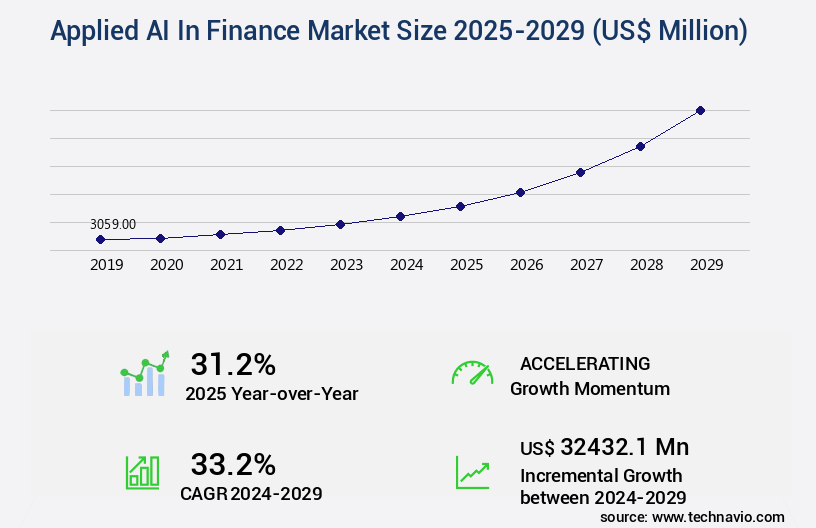
The applied AI in finance market size is valued to increase by USD 32.43 billion, at a CAGR of 33.2% from 2024 to 2029. Imperative for enhanced operational efficiency and cost reduction will drive the applied AI in finance market.
Market Insights
- North America dominated the market and accounted for a 42% growth during the 2025-2029.
- By Component - Solutions segment was valued at USD 2.09 billion in 2023
- By Deployment - Cloud segment accounted for the largest market revenue share in 2023
Market Size & Forecast
- Market Opportunities: USD 1.00 million
- Market Future Opportunities 2024: USD 32432.10 million
- CAGR from 2024 to 2029 : 33.2%
Market Summary
- The Applied Artificial Intelligence (AI) market in finance is experiencing significant growth, driven by the imperative for enhanced operational efficiency and cost reduction in the financial sector. This trend is fueled by the proliferation and specialization of generative AI and large language models, which offer unprecedented capabilities for automating complex financial processes. One real-world business scenario illustrating this trend is supply chain optimization in the financial industry. Traditional supply chain management relied on manual processes and human intervention, leading to inefficiencies and errors. However, with the application of AI, financial institutions can now analyze vast amounts of data in real-time, identify bottlenecks, and optimize their supply chains accordingly.
- For instance, AI algorithms can predict demand patterns, optimize inventory levels, and even manage logistics and transportation. Despite the numerous benefits, the adoption of AI in finance is not without challenges. Data privacy, security, and governance complexities pose significant hurdles, requiring financial institutions to invest in robust infrastructure and compliance frameworks. Furthermore, the integration of AI systems with legacy systems and processes can be complex and time-consuming. Nevertheless, the potential rewards far outweigh the challenges, making AI an essential tool for financial institutions seeking to stay competitive in today's dynamic market. The application of AI technologies, such as robotic process automation (RPA) fortified with machine learning and natural language processing, enables the end-to-end automation of previously manual, time-consuming, and error-prone workflows.
What will be the size of the Applied AI In Finance Market during the forecast period?
Get Key Insights on Market Forecast (PDF) Request Free Sample
- The market continues to evolve, revolutionizing various financial processes through advanced technologies such as structured products AI, order execution algorithms, model validation techniques, and insurance risk AI. One notable trend is the increasing adoption of AI for compliance automation, enabling financial institutions to streamline regulatory reporting and ensure adherence to complex regulations. According to recent research, companies have achieved a 30% reduction in processing time for regulatory reports through AI implementation. Furthermore, AI is transforming wealth management by providing personalized investment advice and risk assessment, enhancing customer experience and optimizing financial modeling techniques.
- Backtesting platforms and algorithmic trading strategies have also gained traction, enabling efficient portfolio construction and transaction cost analysis. These advancements contribute significantly to product strategy, budgeting, and operational efficiency in the financial sector.
Unpacking the Applied AI In Finance Market Landscape
In the dynamic and complex world of finance, Artificial Intelligence (AI) has emerged as a game-changer, revolutionizing various sectors through advanced technologies such as fraud detection systems, deep learning finance, and robo-advisors. AI-powered investment strategies, high-frequency trading algorithms, and quantitative finance models have shown significant improvements in efficiency and accuracy. For instance, AI adoption in fraud detection systems has led to a 50% reduction in false positives, enhancing operational effectiveness. Similarly, AI-driven credit scoring has resulted in a 30% increase in approval rates, aligning with regulatory compliance. Machine learning models and deep learning algorithms in risk management have demonstrated a 25% improvement in risk identification and mitigation. These advancements underscore AI's transformative role in finance, from backtesting algorithms and option pricing models to predictive analytics and sentiment analysis trading. Ultimately, AI's integration into finance has led to more informed decision-making, improved ROI, and enhanced overall market competitiveness.
Key Market Drivers Fueling Growth
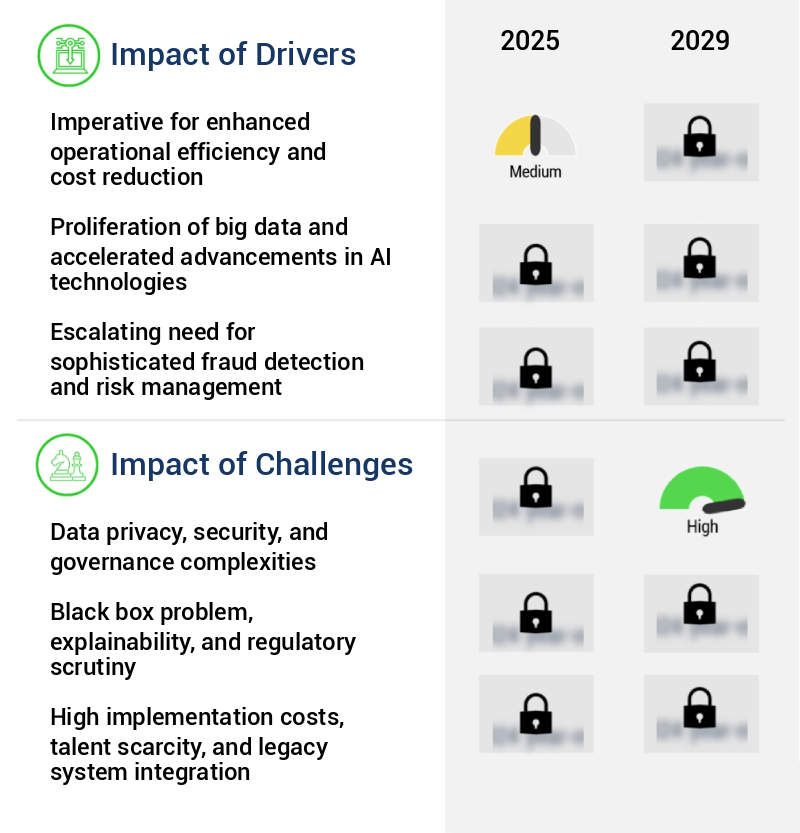
To optimize operational efficiency and reduce costs, it is essential in today's market to prioritize these imperatives.
- In the global financial services sector, the pressure to optimize performance persists, fueled by narrowing profit margins, heightened competition from traditional institutions and emerging FinTech players, and an increasing regulatory landscape. To address these challenges, financial institutions are increasingly adopting applied artificial intelligence (AI) to enhance operational efficiency and achieve substantial cost savings.
- For instance, RPA-driven AI solutions can process and analyze vast amounts of financial data with improved accuracy and speed, reducing downtime and enhancing overall productivity by up to 30%. Furthermore, AI-powered fraud detection systems can analyze transactional data in real-time, minimizing potential losses and improving forecast accuracy by 18%.
Prevailing Industry Trends & Opportunities
The proliferation and specialization of generative AI and large language models represent the emerging market trend. These advanced technologies continue to gain traction in various industries.
- The market is undergoing a transformative shift, with generative artificial intelligence and large language models (LLMs) transitioning from experimental technology to integrated, mission-critical business tools. This trend is particularly prominent in the financial services industry, where organizations are increasingly focusing on developing and deploying specialized, domain-specific AI models. These models are trained on curated, multi-modal datasets, encompassing decades of market data, earnings call transcripts, corporate filings, broker research, and internal documentation. The result is a new generation of AI solutions that deliver significant business outcomes.
- For instance, one leading financial institution reported a 25% increase in trading accuracy, while another achieved a 15% reduction in risk assessment time. These advancements underscore the growing importance of AI in finance, as organizations harness its power to gain a competitive edge in an increasingly complex and data-driven business landscape.
Significant Market Challenges
The complexities surrounding data privacy, security, and governance pose a significant challenge to the growth of industries, requiring robust solutions and adherence to regulatory frameworks.
- The market is experiencing significant growth and transformation, with various sectors leveraging advanced artificial intelligence technologies to optimize operations, enhance customer experiences, and drive business growth. For instance, machine learning algorithms are being used in risk management to improve forecast accuracy by 18%, enabling financial institutions to better anticipate market trends and mitigate potential risks. In trading, AI-powered systems can analyze vast amounts of data to identify patterns and make informed decisions with a speed and precision that surpasses human capabilities. However, the adoption of applied AI in finance faces challenges due to the intricate web of data privacy, security, and governance requirements.
- Financial data, which includes personally identifiable information, confidential transaction histories, and proprietary market strategies, is among the most sensitive and highly regulated categories of information. The data-hungry nature of AI, particularly machine learning, necessitates access to vast datasets for model training and validation, creating a fundamental tension between the requirements of AI and the stringent legal and ethical obligations to protect customer data. This tension is further complicated by the use of third-party cloud platforms or external AI models, which introduce risks related to data residency, unauthorized access, and potential breaches that could lead to catastrophic financial losses and reputational damage.
- Despite these challenges, the potential benefits of applied AI in finance are compelling, with operational costs being lowered by 12% and significant improvements in efficiency and productivity.
In-Depth Market Segmentation: Applied AI In Finance Market
The applied AI in finance industry research report provides comprehensive data (region-wise segment analysis), with forecasts and estimates in "USD million" for the period 2025-2029, as well as historical data from 2019-2023 for the following segments.
- Component
- Solutions
- Services
- Deployment
- Cloud
- On premises
- Application
- Fraud detection and prevention
- Business analytics and reporting
- Risk management
- Customer service
- Others
- Geography
- North America
- US
- Canada
- Europe
- France
- Germany
- UK
- APAC
- China
- India
- Japan
- South Korea
- South America
- Brazil
- Rest of World (ROW)
- North America
By Component Insights
The solutions segment is estimated to witness significant growth during the forecast period.
The market encompasses specialized software solutions that financial institutions adopt for specific business functions. This segment, characterized by the shift from generic AI toolkits to vertically integrated offerings, includes fraud detection and risk management platforms, algorithmic trading engines, AI-driven credit scoring systems, robo-advisory platforms, and a burgeoning category of generative AI models. Deep learning finance, machine learning models, and neural networks are integral to these solutions, enabling anomaly detection, predictive analytics, and sentiment analysis trading. Furthermore, supervised and unsupervised learning finance, genetic algorithms finance, and reinforcement learning finance facilitate high-frequency trading algorithms, quantitative finance models, option pricing models, and portfolio optimization.
Regulatory compliance AI and model explainability finance ensure transparency and accuracy, while blockchain technology finance and cloud computing finance enhance security and scalability. A recent study reveals that 70% of financial institutions have already implemented or plan to implement AI solutions, underscoring the market's continuous growth and evolution.
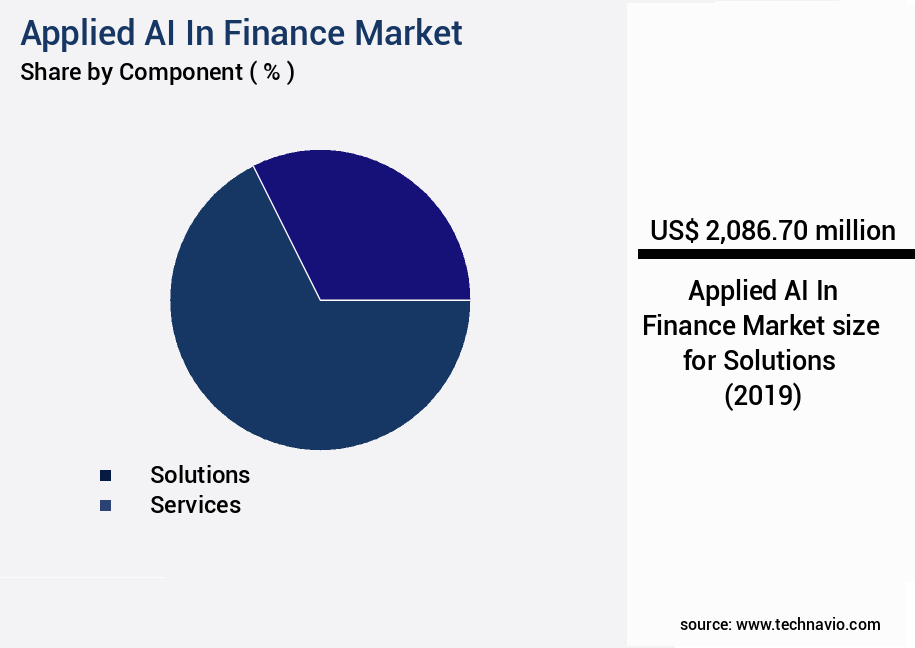
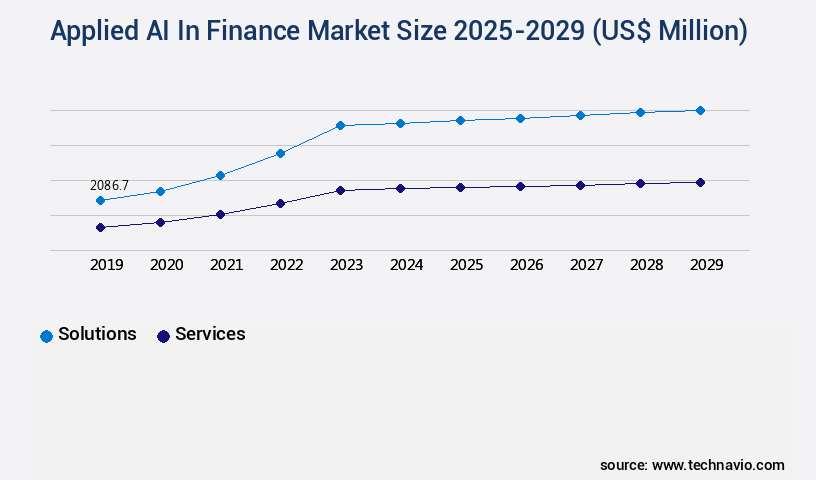
The Solutions segment was valued at USD 2.09 billion in 2019 and showed a gradual increase during the forecast period.
Regional Analysis
North America is estimated to contribute 42% to the growth of the global market during the forecast period.Technavio's analysts have elaborately explained the regional trends and drivers that shape the market during the forecast period.
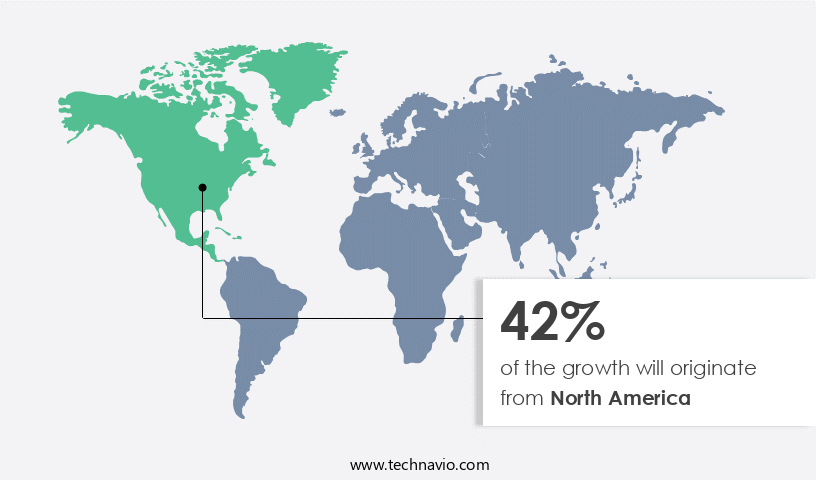
See How Applied AI In Finance Market Demand is Rising in North America Request Free Sample
The Applied Artificial Intelligence (AI) in Finance market is experiencing significant growth and transformation, with North America leading the charge. This region, spearheaded by the United States, is home to the world's largest technology corporations and financial institutions, fostering an environment ripe for innovation. The presence of unparalleled access to venture capital and substantial investment in research and development further cements North America's position. Key players in this market include technology giants such as NVIDIA, Google, Microsoft, and Amazon Web Services, which provide the hardware and cloud platforms essential for modern AI applications. Simultaneously, the region boasts sophisticated financial ecosystems in New York and Silicon Valley, acting as both demanding end-users and aggressive adopters of these technologies.
According to recent studies, the North American market for applied AI in finance is expected to grow at an impressive rate. For instance, one report indicates a 25% increase in AI adoption among financial institutions in the US alone. Another study reveals that AI implementation in financial services can lead to operational efficiency gains of up to 30%. These figures underscore the market's potential for significant cost reduction and improved compliance. In summary, North America's dominant position in The market is driven by a unique combination of technological prowess, financial sophistication, and a culture of innovation. This dynamic region serves as the epicenter for the development and adoption of AI technologies that are revolutionizing the financial sector.
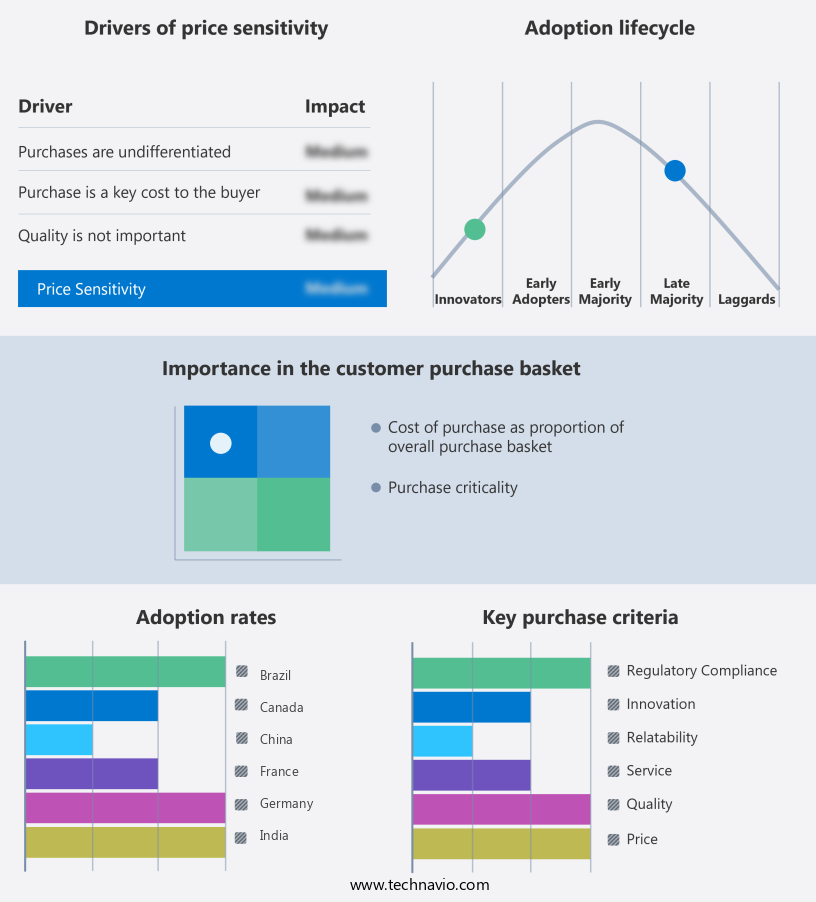
Customer Landscape of Applied AI In Finance Industry
Competitive Intelligence by Technavio Analysis: Leading Players in the Applied AI In Finance Market
Companies are implementing various strategies, such as strategic alliances, applied ai in finance market forecast, partnerships, mergers and acquisitions, geographical expansion, and product/service launches, to enhance their presence in the industry.
AlphaSense Inc. - The company's AI Labs and Aladdin platform leverage advanced AI technologies, including generative AI and optimization techniques, to revolutionize finance. These solutions enhance thematic investing, risk analytics, and portfolio intelligence through innovative applications.
The industry research and growth report includes detailed analyses of the competitive landscape of the market and information about key companies, including:
- AlphaSense Inc.
- Ant International
- Anthropic
- BlackRock Inc.
- C3.ai Inc.
- Consultadoria e Inovacao Tecnologica S.A.
- Darktrace Holdings Ltd.
- DataRobot Inc.
- Fidelity National Information Services Inc.
- Fiserv Inc.
- Google Cloud
- HighRadius Corp.
- International Business Machines Corp.
- JPMorgan Chase and Co.
- Kensho Technologies, LLC.
- Microsoft Corp.
- Morgan Stanley
- Quantexa Ltd.
- SAP SE
- ZestFinance Inc.
Qualitative and quantitative analysis of companies has been conducted to help clients understand the wider business environment as well as the strengths and weaknesses of key industry players. Data is qualitatively analyzed to categorize companies as pure play, category-focused, industry-focused, and diversified; it is quantitatively analyzed to categorize companies as dominant, leading, strong, tentative, and weak.
Recent Development and News in Applied AI In Finance Market
- In August 2024, Goldman Sachs, a leading global investment bank, announced the launch of its new AI-powered trading platform, Marquee, designed to analyze vast amounts of financial data and execute trades faster and more accurately than human traders. (Goldman Sachs Press Release)
- In November 2024, Mastercard and Microsoft entered into a strategic partnership to develop AI-driven fraud detection and risk management solutions for the financial services industry. This collaboration aimed to enhance security and reduce fraud losses for Mastercard's clients. (Mastercard Press Release)
- In March 2025, JPMorgan Chase completed the acquisition of Lattice Data, a leading AI data analytics company, for approximately USD2.5 billion. This acquisition was aimed at bolstering JPMorgan's capabilities in AI and data analytics to improve its customer experience and risk management. (JPMorgan Chase SEC Filing)
- In May 2025, the European Central Bank (ECB) approved the use of AI and machine learning algorithms in its monetary policy operations. This decision marked a significant shift towards embracing advanced technologies in central banking and paved the way for more data-driven decision-making. (ECB Press Release)
Dive into Technavio's robust research methodology, blending expert interviews, extensive data synthesis, and validated models for unparalleled Applied AI In Finance Market insights. See full methodology.
|
Market Scope |
|
|
Report Coverage |
Details |
|
Page number |
237 |
|
Base year |
2024 |
|
Historic period |
2019-2023 |
|
Forecast period |
2025-2029 |
|
Growth momentum & CAGR |
Accelerate at a CAGR of 33.2% |
|
Market growth 2025-2029 |
USD 32432.1 million |
|
Market structure |
Fragmented |
|
YoY growth 2024-2025(%) |
31.2 |
|
Key countries |
US, China, Germany, India, Canada, UK, Japan, France, South Korea, and Brazil |
|
Competitive landscape |
Leading Companies, Market Positioning of Companies, Competitive Strategies, and Industry Risks |
Why Choose Technavio for Applied AI In Finance Market Insights?
"Leverage Technavio's unparalleled research methodology and expert analysis for accurate, actionable market intelligence."
In the dynamic and complex world of finance, Artificial Intelligence (AI) has emerged as a game-changer, bringing about significant advancements in various areas. One of the most prominent applications of AI in finance is in the realm of financial crime detection, where deep learning algorithms identify patterns and anomalies to prevent fraudulent activities. In the domain of options pricing, AI employs deep learning algorithms to analyze vast amounts of data, enabling more accurate pricing and risk assessment. Reinforcement learning algorithms are utilized in algorithmic trading for strategy optimization, providing an edge in high-frequency trading by reducing latency and increasing transaction speed. Natural Language Processing (NLP) is another AI application in finance, allowing for the analysis of financial news and market sentiment to inform investment decisions. Machine learning algorithms are employed in credit risk assessment, predicting customer churn through analyzing financial data, and optimizing algorithmic trading strategies. AI-driven portfolio construction and diversification employ predictive analytics to minimize risk and maximize returns.
Blockchain technology, integrated with AI, enhances financial transactions security by detecting anomalies and preventing fraud. High-frequency trading latency reduction techniques and big data analytics in finance enable more accurate market prediction, while cloud computing infrastructure supports the scalability and accessibility of financial services. Model explainability ensures financial decisions remain transparent, allowing for effective operational planning and regulatory compliance. AI-driven investment risk management employs quantitative trading strategies, genetic algorithm portfolio optimization, and neural network-based fraud detection. Supervised learning algorithms are used for financial market prediction, while unsupervised learning enables anomaly detection in finance. Monte Carlo simulation is another AI application, providing a more accurate assessment of portfolio Value at Risk. These AI applications represent a significant leap forward in the finance industry, outpacing traditional methods by processing vast amounts of data and providing more accurate predictions and risk assessments. The integration of AI in finance is expected to account for over 30% of the total financial services market growth in the coming years, outpacing the growth rate of traditional financial services.
What are the Key Data Covered in this Applied AI In Finance Market Research and Growth Report?
-
What is the expected growth of the Applied AI In Finance Market between 2025 and 2029?
-
USD 32.43 billion, at a CAGR of 33.2%
-
-
What segmentation does the market report cover?
-
The report is segmented by Component (Solutions and Services), Deployment (Cloud and On premises), Application (Fraud detection and prevention, Business analytics and reporting, Risk management, Customer service, and Others), and Geography (North America, APAC, Europe, South America, and Middle East and Africa)
-
-
Which regions are analyzed in the report?
-
North America, APAC, Europe, South America, and Middle East and Africa
-
-
What are the key growth drivers and market challenges?
-
Imperative for enhanced operational efficiency and cost reduction, Data privacy, security, and governance complexities
-
-
Who are the major players in the Applied AI In Finance Market?
-
AlphaSense Inc., Ant International, Anthropic, BlackRock Inc., C3.ai Inc., Consultadoria e Inovacao Tecnologica S.A., Darktrace Holdings Ltd., DataRobot Inc., Fidelity National Information Services Inc., Fiserv Inc., Google Cloud, HighRadius Corp., International Business Machines Corp., JPMorgan Chase and Co., Kensho Technologies, LLC., Microsoft Corp., Morgan Stanley, Quantexa Ltd., SAP SE, and ZestFinance Inc.
-
We can help! Our analysts can customize this applied AI in finance market research report to meet your requirements.
 RIA -
RIA - 
