



Business Process Management As A Service (Bpmaas) Market Size and Growth Forecast 2026-2030
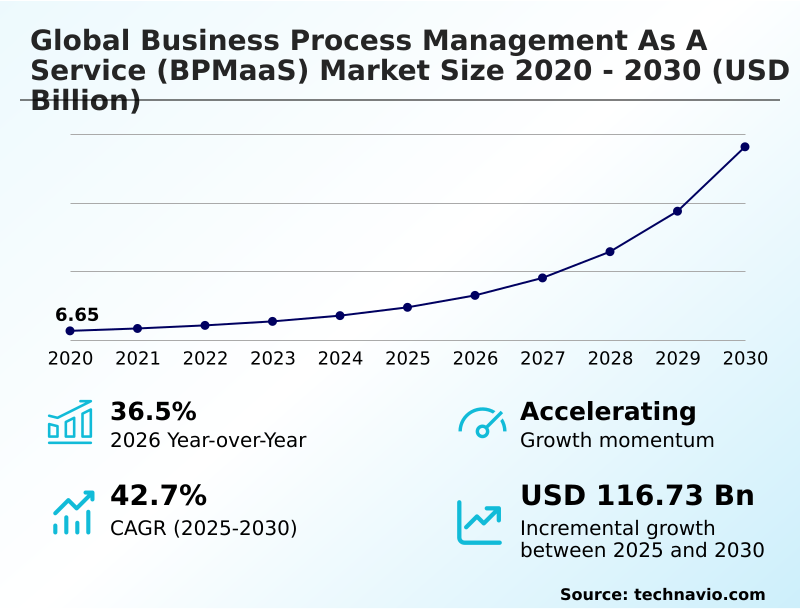
The Business Process Management As A Service (Bpmaas) Market size was valued at USD 23.77 billion in 2025 growing at a CAGR of 42.7% during the forecast period 2026-2030.
North America accounts for 41.4% of incremental growth during the forecast period. The On-premises segment by Deployment was valued at USD 10.06 billion in 2024, while the BFSI segment holds the largest revenue share by End-user.
The market is projected to grow by USD 133.86 billion from 2020 to 2030, with USD 116.73 billion of the growth expected during the forecast period of 2025 to 2030.
Get Key Insights on Market Forecast (PDF) Request Free Sample
Business Process Management As A Service (Bpmaas) Market Overview
The business process management as a service (bpmaas) market is defined by a strategic shift from manual oversight to automated, intelligent operations. This transition is driven by the need for enhanced operational agility and cost optimization, with North America contributing over 41% of the market's incremental growth. Organizations are leveraging these platforms for comprehensive digital transformation, incorporating technologies such as robotic process automation and process mining to refine workflows. For instance, a multinational financial institution implementing know your customer (kyc) automation through a BPMaaS platform can reduce client onboarding times by more than 50% while improving regulatory compliance with anti-money laundering (aml) monitoring standards like those mandated by the Bank Secrecy Act. The move toward hyperautomation, which combines AI with iBPM and other tools, enables businesses to achieve end-to-end process intelligence and automated decision-making, setting a new benchmark for operational excellence.
Drivers, Trends, and Challenges in the Business Process Management As A Service (Bpmaas) Market
Strategic decision-making in the business process management as a service (bpmaas) market requires a nuanced approach, particularly when evaluating bpmaas vendors for healthcare data security, where compliance with regulations like HIPAA is non-negotiable.
This contrasts sharply with manufacturing, where the focus is on bpmaas integration with legacy erp systems and using process mining tools for manufacturing optimization to improve production uptime. The choice between low-code vs no-code process automation platforms often depends on an organization's internal technical capabilities and the complexity of its workflows.
For instance, a financial institution implementing intelligent automation for customer onboarding workflows may see a process cycle time reduction of over 40% compared to manual methods, a significant gain that justifies investment in more sophisticated platforms.
Meanwhile, implementing a zero-trust architecture in bpmaas has become a critical consideration for mitigating cybersecurity risks, especially for companies managing multi-cloud bpmaas deployments and leveraging robotic process automation in supply chain management to connect with global partners.
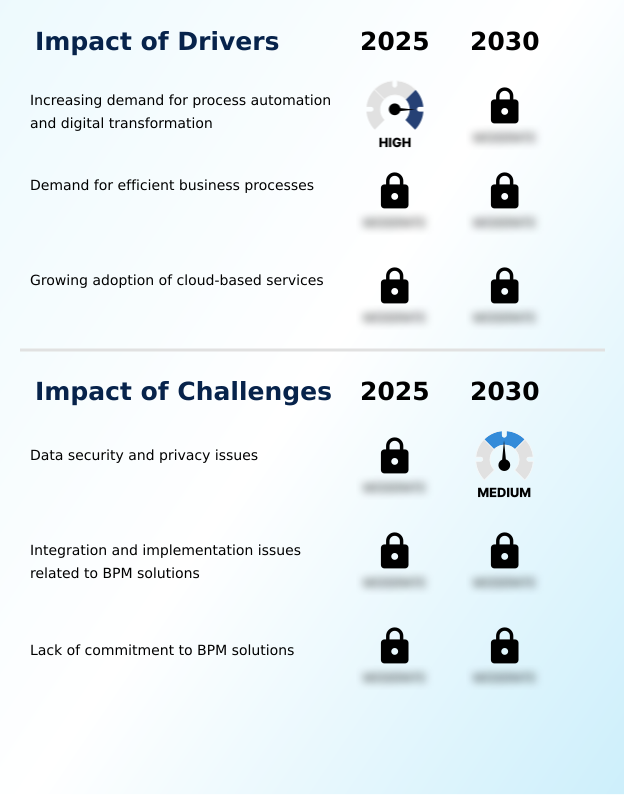
Primary Growth Driver: The increasing demand for process automation and digital transformation is a primary driver fueling the adoption of business process management solutions across industries.
The primary driver for the business process management as a service (bpmaas) market is the relentless pursuit of operational efficiency and digital transformation. Businesses are leveraging these platforms to automate repetitive tasks, eliminate process bottlenecks, and reduce operational costs.
The widespread adoption of cloud-based services, which grew by over 36% in the last year, serves as a foundational driver, offering scalability and lower upfront costs compared to on-premises solutions.
This financial flexibility makes advanced automation accessible to small and medium enterprises.
The demand for an enhanced omnichannel customer experience also propels the market, as companies use process orchestration to synchronize front-end and back-office operations, ensuring seamless customer journeys and driving loyalty in a digital-first economy.
Emerging Market Trend: The emergence of mobile BPM solutions is a significant market trend. It enables employees to manage and approve workflows remotely via smartphones and tablets, enhancing organizational agility.
Key trends are reshaping the business process management as a service (bpmaas) market, with a notable shift toward intelligent automation and hyperautomation. The emergence of intelligent business process management (iBPM) integrates AI and machine learning to enable predictive process modeling and automated decision-making. This allows organizations to move from reactive to proactive operational management.
Another significant trend is the increasing integration of IoT, where data from connected devices triggers automated workflows, particularly in manufacturing and logistics. For instance, in a smart factory, sensor data can initiate maintenance requests automatically.
Furthermore, the rise of mobile BPM solutions caters to a decentralized workforce, allowing process management from any location and improving overall business agility and responsiveness in a competitive landscape.
Key Industry Challenge: Data security and privacy issues represent a key challenge, restraining market growth as organizations migrate sensitive operational workflows to cloud environments.
Significant challenges constrain the business process management as a service (bpmaas) market, primarily concerning data security and legacy system integration. Migrating core workflows to the cloud introduces risks of data breaches, making robust data governance and compliance with regulations like GDPR essential. Many organizations remain hesitant, particularly in sectors with sensitive data.
A secondary but critical challenge is the complexity of integrating cloud platforms with existing on-premises legacy systems. This integration debt often requires extensive custom coding and specialized expertise, leading to project delays and cost overruns. Without seamless data flow between new and old systems, the promised efficiency gains of digital transformation remain unrealized, hindering broader market adoption.
Explore Full Market Dynamics Analysis Request Free Sample
Business Process Management As A Service (Bpmaas) Market Segmentation
The business process management as a service (bpmaas) industry research report provides comprehensive data including region-wise segment analysis, with forecasts and analysis for the period 2026-2030, as well as historical data from 2020-2024 for the following segments.
Deployment Segment Analysis
The on-premises segment is estimated to witness significant growth during the forecast period.
The on-premises segment of the business process management as a service (bpmaas) market serves organizations with stringent data security and regulatory compliance mandates, such as those in government and finance.
This deployment model ensures complete control over data residency and sensitive information by hosting the process orchestration layer within a company's own data center. This approach is critical for legacy system integration with entrenched enterprise resource planning (erp) systems.
While the cloud-based segment is larger, on-premises solutions provide unmatched performance predictability, a crucial factor for high-frequency operations.
Adherence to security frameworks like ISO/IEC 27001 is easier to manage, making it a persistent choice for entities prioritizing control and security over the scalability benefits of public cloud, accounting for a substantial share of deployments in regulated industries.
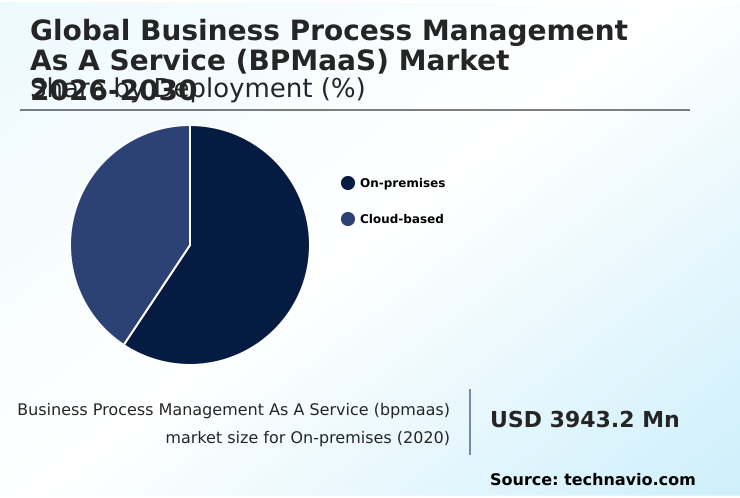
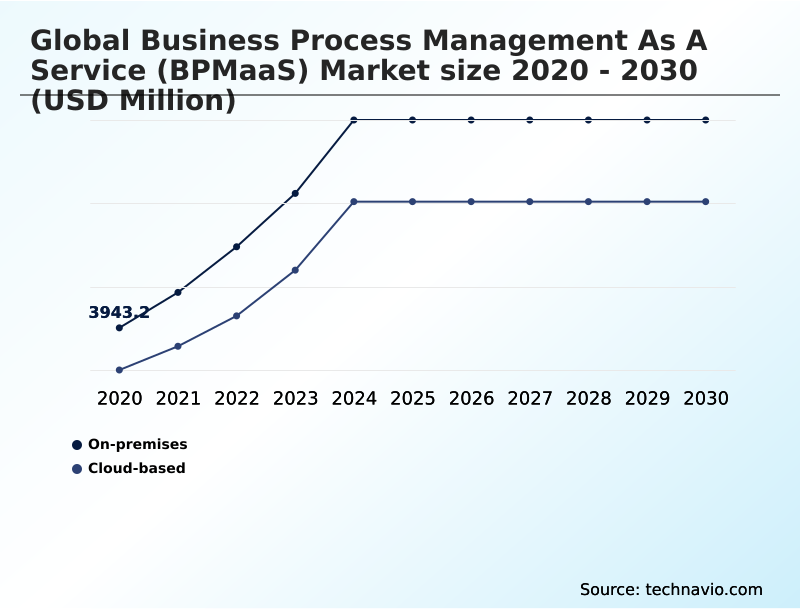
The On-premises segment was valued at USD 10.06 billion in 2024 and showed a gradual increase during the forecast period.
Business Process Management As A Service (Bpmaas) Market by Region: North America Leads with 41.4% Growth Share
North America is estimated to contribute 41.4% to the growth of the global market during the forecast period.
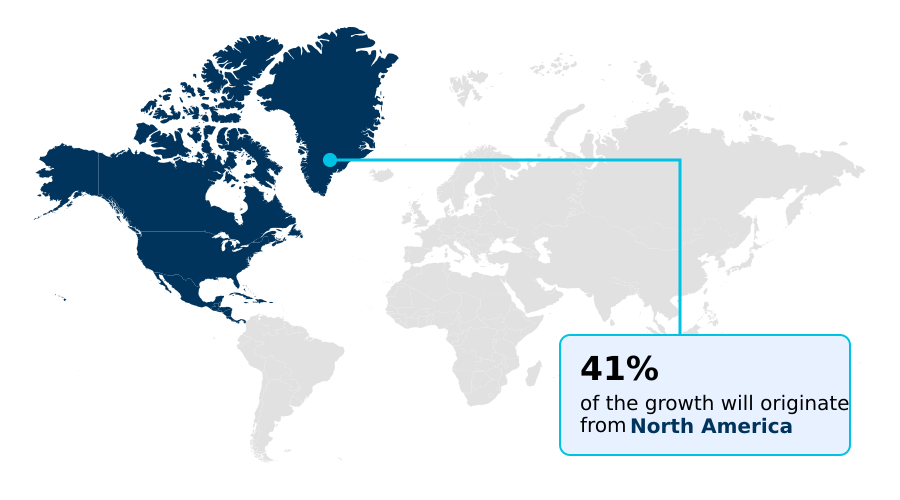
The geographic landscape of the business process management as a service (bpmaas) market is characterized by distinct regional adoption patterns, with North America leading, contributing approximately 41.4% to the market's growth, driven by mature financial services and healthcare sectors.
In contrast, APAC is the fastest-growing region, with a CAGR of 43.2%, fueled by widespread mobile adoption and government-led digitalization.
European adoption is shaped by a strong focus on digital sovereignty and data residency, with organizations in Germany prioritizing integration with Industry 4.0 principles for manufacturing.
This regional divergence requires vendors to offer solutions that address specific regulatory frameworks, such as GDPR in Europe, and support the demand for an omnichannel customer experience, which varies significantly between developed and emerging economies.
This approach ensures platforms meet localized needs for both regulatory compliance and operational efficiency.
Customer Landscape Analysis for the Business Process Management As A Service (Bpmaas) Market
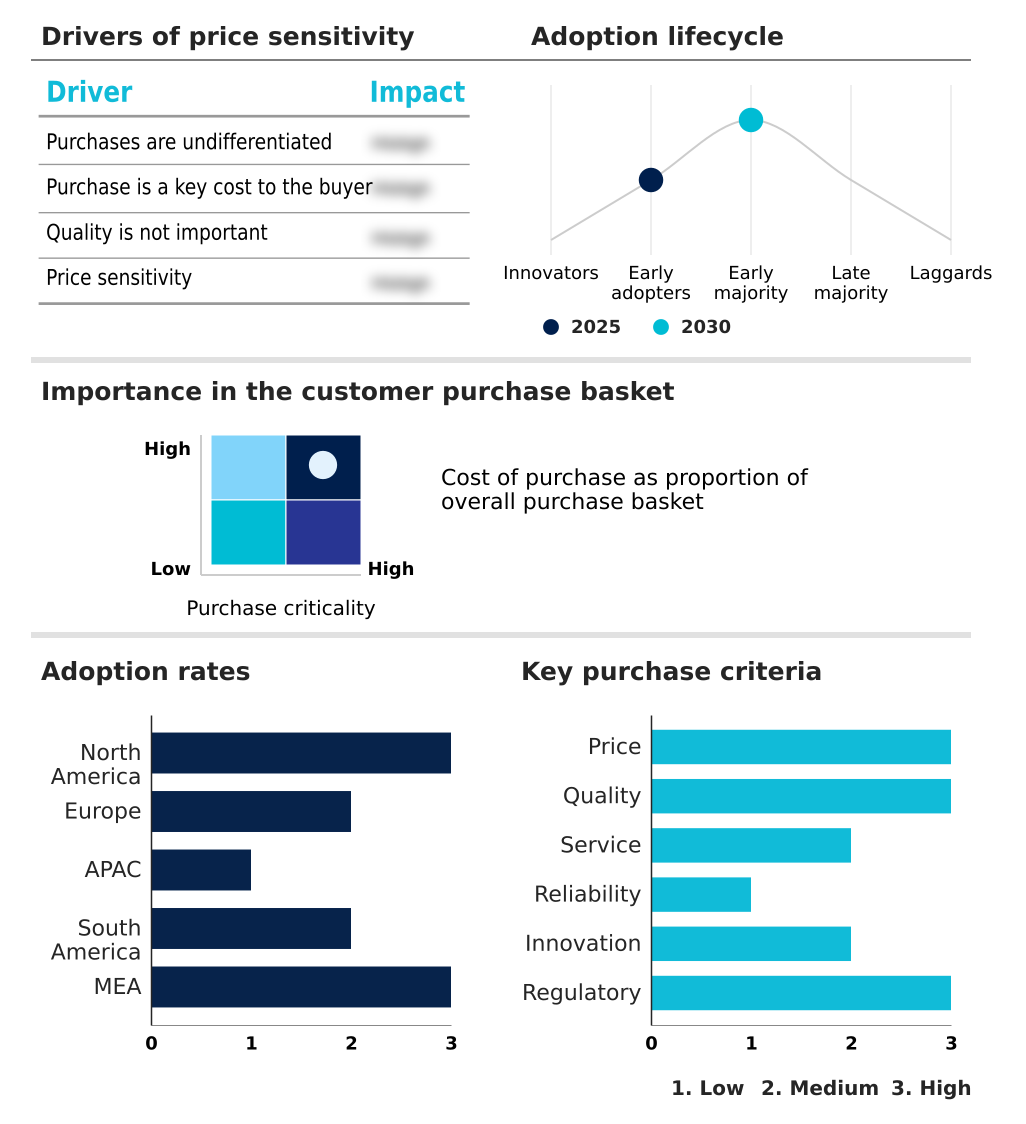
The business process management as a service (bpmaas) market forecasting report includes the adoption lifecycle of the market, covering from the innovator’s stage to the laggard’s stage. It focuses on adoption rates in different regions based on penetration. Furthermore, the business process management as a service (bpmaas) market report also includes key purchase criteria and drivers of price sensitivity to help companies evaluate and develop their market growth analysis strategies.
Competitive Landscape of the Business Process Management As A Service (Bpmaas) Market
Companies are implementing various strategies, such as strategic alliances, partnerships, mergers and acquisitions, geographical expansion, and product/service launches, to enhance their presence in the business process management as a service (bpmaas) market industry.
Accenture Plc - Offerings include intelligent operations and digital process outsourcing, enabling enterprise transformation and operational efficiency through expertly managed, technology-driven services.
The industry research and growth report includes detailed analyses of the competitive landscape of the market and information about key companies, including:
- Accenture Plc
- Appian Corp.
- BP Logix Inc.
- Capgemini SE
- Cloud Software Group Inc.
- Cognizant Technology Solution
- ExlService Holdings Inc.
- Fujitsu Ltd.
- Genpact Ltd.
- getsix Group
- HCL Technologies Ltd.
- IBM Corp.
- Oracle Corp.
- Pegasystems Inc.
- SAP SE
- Software AG
- Tata Consultancy Services
- Tech Mahindra Ltd.
- Wipro Ltd.
- WNS Holdings Ltd.
Qualitative and quantitative analysis of companies has been conducted to help clients understand the wider business environment as well as the strengths and weaknesses of key industry players. Data is qualitatively analyzed to categorize companies as pure play, category-focused, industry-focused, and diversified; it is quantitatively analyzed to categorize companies as dominant, leading, strong, tentative, and weak.
Recent Developments in the Business Process Management As A Service (Bpmaas) Market
- In May 2025, a major global fashion retailer utilized a cloud-based BPM platform to automate its returns and exchange process, allowing customers to initiate returns through a mobile app and receive instant credits, which improved customer satisfaction.
- In April 2025, a leading global automotive manufacturer implemented an AI-driven BPMaaS solution to coordinate its multi-tier supply chain, enabling the company to predict and mitigate potential parts shortages before they impacted production.
- In March 2025, a prominent international banking group successfully migrated its global mortgage processing workflow to a cloud-based BPM platform, resulting in a 40% reduction in approval times and significantly improved transparency for its customers.
- In February 2025, a leading global cloud provider announced the expansion of its specialized BPM service regions into Southeast Asia to support the rapid digitalization of the local logistics and retail sectors.
Research Analyst Overview: Business Process Management As A Service (Bpmaas) Market
The business process management as a service (bpmaas) market is evolving beyond simple workflow orchestration toward intelligent business process management (ibpm), fueled by a year-over-year growth of over 36%. This shift reflects a strategic boardroom-level decision to invest in platforms that provide deep process intelligence solutions and real-time process monitoring.
For procurement decision-makers, the choice is no longer just about cloud versus on-premise; it is about selecting a low-code automation platform that enables agile deployment and supports a hybrid cloud strategy. Organizations are integrating robotic process automation and API integrations to achieve end-to-end efficiency.
For example, ensuring compliance with data protection standards like ISO/IEC 27001 requires robust API integrations and case management solutions that can provide a clear audit trail. The adoption of cloud-native architecture is critical for future-proofing operations and achieving the operational agility needed to compete.
Dive into Technavio’s robust research methodology, blending expert interviews, extensive data synthesis, and validated models for unparalleled Business Process Management As A Service (Bpmaas) Market insights. See full methodology.
| Market Scope | |
|---|---|
| Page number | 305 |
| Base year | 2025 |
| Historic period | 2020-2024 |
| Forecast period | 2026-2030 |
| Growth momentum & CAGR | Accelerate at a CAGR of 42.7% |
| Market growth 2026-2030 | USD 116733.1 million |
| Market structure | Fragmented |
| YoY growth 2025-2026(%) | 36.5% |
| Key countries | US, Canada, Mexico, Germany, UK, France, Italy, The Netherlands, Spain, China, Japan, India, South Korea, Australia, Indonesia, Brazil, Argentina, Chile, Saudi Arabia, UAE, South Africa, Israel and Turkey |
| Competitive landscape | Leading Companies, Market Positioning of Companies, Competitive Strategies, and Industry Risks |
Business Process Management As A Service (Bpmaas) Market: Key Questions Answered in This Report
-
What is the expected growth of the Business Process Management As A Service (Bpmaas) Market between 2026 and 2030?
-
The Business Process Management As A Service (Bpmaas) Market is expected to grow by USD 116.73 billion during 2026-2030, registering a CAGR of 42.7%. Year-over-year growth in 2026 is estimated at 36.5%%. This acceleration is shaped by increasing demand for process automation and digital transformation, which is intensifying demand across multiple end-use verticals covered in the report.
-
-
What segmentation does the market report cover?
-
The report is segmented by Deployment (On-premises, and Cloud-based), End-user (BFSI, Manufacturing, Retail, and Others), Service Type (Consulting, Integration, and Support) and Geography (North America, Europe, APAC, South America, Middle East and Africa). Among these, the On-premises segment is estimated to witness significant growth during the forecast period, driven by rising adoption across key application areas. Each segment includes detailed qualitative and quantitative analysis, along with historical data from 2020-2024 and forecasts through 2030 with year-over-year growth rates.
-
-
Which regions are analyzed in the report?
-
The report covers North America, Europe, APAC, South America and Middle East and Africa. North America is estimated to contribute 41.4% to market growth during the forecast period. Country-level analysis includes US, Canada, Mexico, Germany, UK, France, Italy, The Netherlands, Spain, China, Japan, India, South Korea, Australia, Indonesia, Brazil, Argentina, Chile, Saudi Arabia, UAE, South Africa, Israel and Turkey, with dedicated market size tables and year-over-year growth for each.
-
-
What are the key growth drivers and market challenges?
-
The primary driver is increasing demand for process automation and digital transformation, which is accelerating investment and industry demand. The main challenge is data security and privacy issues, creating operational barriers for key market participants. The report quantifies the impact of each driver and challenge across 2026 and 2030 with comparative analysis.
-
-
Who are the major players in the Business Process Management As A Service (Bpmaas) Market?
-
Key vendors include Accenture Plc, Appian Corp., BP Logix Inc., Capgemini SE, Cloud Software Group Inc., Cognizant Technology Solution, ExlService Holdings Inc., Fujitsu Ltd., Genpact Ltd., getsix Group, HCL Technologies Ltd., IBM Corp., Oracle Corp., Pegasystems Inc., SAP SE, Software AG, Tata Consultancy Services, Tech Mahindra Ltd., Wipro Ltd. and WNS Holdings Ltd.. The report provides qualitative and quantitative analysis categorizing companies as dominant, leading, strong, tentative, and weak based on their market positioning. Company profiles include business segment analysis, SWOT assessment, key offerings, and recent strategic developments.
-
Business Process Management As A Service (Bpmaas) Market Research Insights
Market dynamics are increasingly shaped by the need for operational resilience and the strategic implementation of digital transformation initiatives. The adoption of cloud-native architectures is central, enabling organizations to achieve workflow transparency and enhanced data governance.
This is particularly critical in industries facing stringent regulatory compliance, where platforms must support complex business process outsourcing contracts and ensure adherence to service level agreements (SLAs). The emphasis on total cost of ownership is steering procurement decisions, with firms evaluating the long-term value of scalable platforms over the capital expenditure of legacy system integration.
As a result, solutions that facilitate seamless supply chain orchestration and improve resource utilization are gaining a competitive edge, helping businesses navigate market volatility with greater agility and data-driven insight.
We can help! Our analysts can customize this business process management as a service (bpmaas) market research report to meet your requirements.
 RIA -
RIA - 
