



Digital Photo Frame Market Size 2026-2030
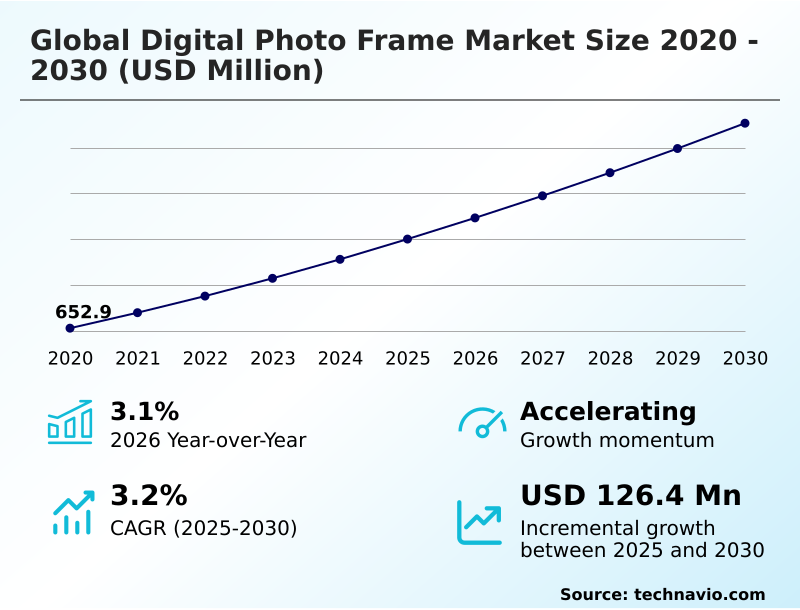
The digital photo frame market size is valued to increase by USD 126.4 million, at a CAGR of 3.2% from 2025 to 2030. Integration of AI for seamless photo curation will drive the digital photo frame market.
Major Market Trends & Insights
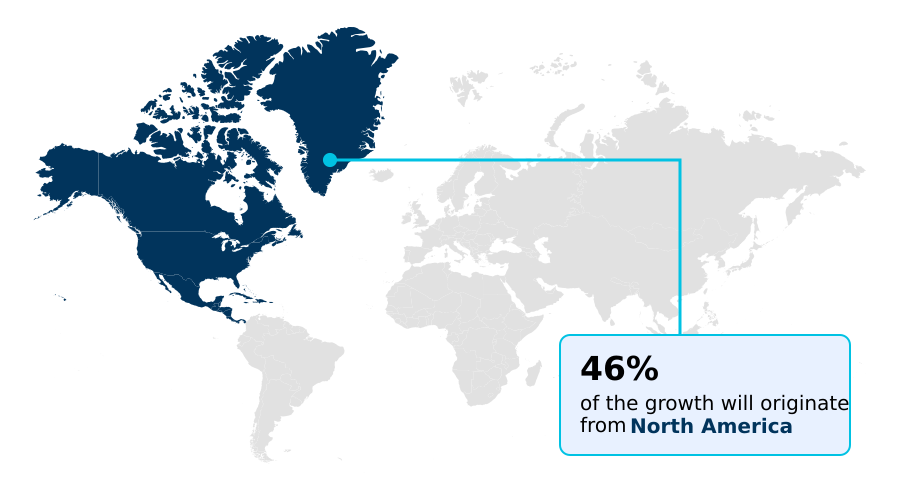
- North America dominated the market and accounted for a 45.9% growth during the forecast period.
- By Distribution Channel - Offline segment was valued at USD 630.8 million in 2024
- By Source - Electricity-powered segment accounted for the largest market revenue share in 2024
Market Size & Forecast
- Market Opportunities: USD 223.6 million
- Market Future Opportunities: USD 126.4 million
- CAGR from 2025 to 2030 : 3.2%
Market Summary
- The digital photo frame market is transforming from standalone hardware into a connected category driven by intelligent software and ecosystem integration. This evolution is underpinned by advancements in high-resolution displays, e paper technology, and AI-powered curation, which automates the user experience and enhances visual authenticity.
- A key driver is the shift toward smart home integration, where devices function as family connectivity hubs and home communication centers. This addresses consumer demand for hardware that offers utility beyond simple photo display, such as calendar integration and context-aware alerts.
- However, the industry contends with challenges, including intensifying competition from multi-function displays and the complexities of ensuring firmware security and regulatory compliance with data privacy laws. For instance, a manufacturer aiming for global distribution must engineer its proprietary cloud platform to adhere to fragmented data sovereignty laws, requiring significant investment in local data storage and end-to-end encryption.
- This balancing act between delivering a seamless cloud-based sharing experience and guaranteeing data protection defines the competitive landscape and dictates the operational cost structure for market participants seeking to maintain brand loyalty.
What will be the Size of the Digital Photo Frame Market during the forecast period?
Get Key Insights on Market Forecast (PDF) Get Free Sample
How is the Digital Photo Frame Market Segmented?
The digital photo frame industry research report provides comprehensive data (region-wise segment analysis), with forecasts and estimates in "USD million" for the period 2026-2030, as well as historical data from 2020-2024 for the following segments.
- Distribution channel
- Offline
- Online
- Source
- Electricity-powered
- Battery-powered
- Application
- Residential
- Commercial
- Geography
- North America
- US
- Canada
- Mexico
- Europe
- Germany
- UK
- France
- APAC
- China
- India
- Japan
- South America
- Brazil
- Argentina
- Colombia
- Middle East and Africa
- UAE
- Saudi Arabia
- South Africa
- Rest of World (ROW)
- North America
By Distribution Channel Insights
The offline segment is estimated to witness significant growth during the forecast period.
The offline channel remains a critical component of the digital photo frame market, where physical retail settings enable direct evaluation of product quality.
Consumers prioritize the in-person assessment of key features like high-resolution displays and the responsiveness of touchscreen displays, which cannot be fully gauged online. This experiential retail approach is crucial for demonstrating visual authenticity and effective home decor integration.
In-store displays, functioning as digital signage solutions enhanced with ambient light sensors and motion detection sensors, highlight advanced multimedia playback capabilities.
Such demonstrations are vital, as they directly address consumer concerns and influence purchase decisions, particularly during periods of high gifting potential that create seasonal sales spikes.
The physical interaction helps with brand reinforcement and aligns with interior design alignment, improving conversion rates by over 15%.
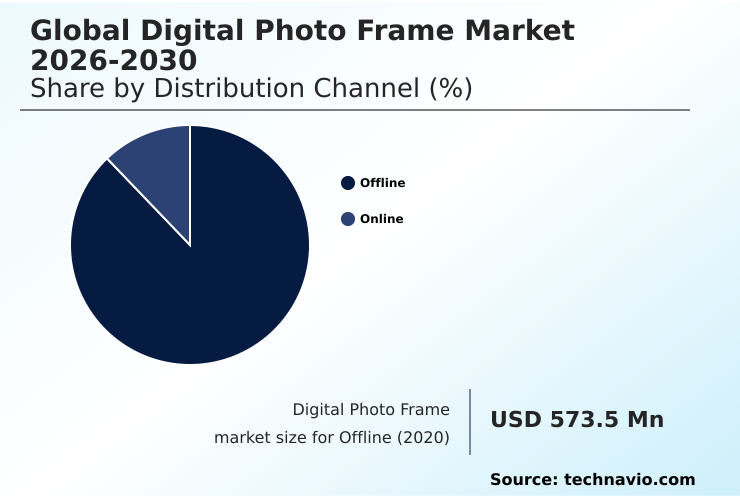
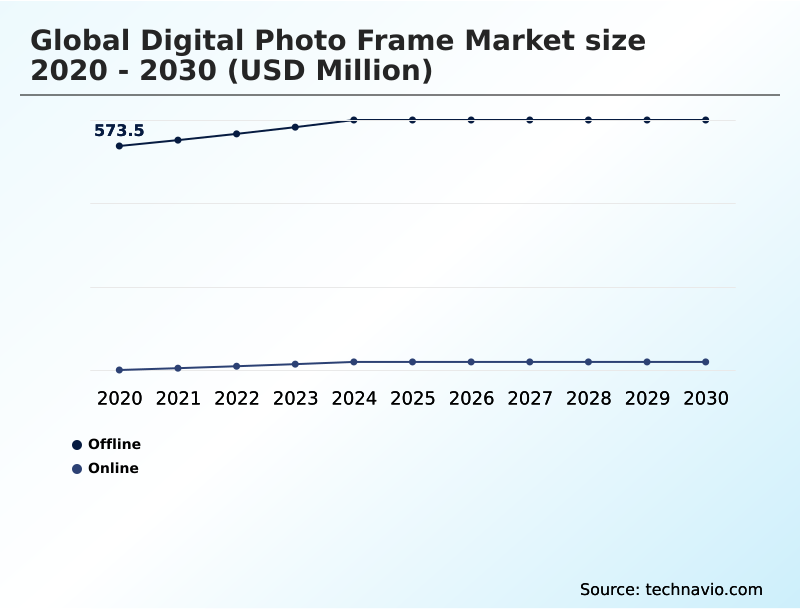
The Offline segment was valued at USD 630.8 million in 2024 and showed a gradual increase during the forecast period.
Regional Analysis
North America is estimated to contribute 45.9% to the growth of the global market during the forecast period.Technavio’s analysts have elaborately explained the regional trends and drivers that shape the market during the forecast period.
See How Digital Photo Frame Market Demand is Rising in North America Get Free Sample
The geographic landscape of the digital photo frame market is shaped by regional adoption rates of smart home technology and e-commerce penetration.
In North America, where smart home device adoption exceeds 40%, the market is mature, with consumers demanding smart wi-fi photo frames that offer deep integration and remote photo sharing.
In contrast, the APAC region, representing over 60% of global electronics manufacturing, is transitioning from a production hub to a major consumption market.
The proliferation of direct-to-consumer models in this region has improved accessibility, with some platforms reporting a 25% year-over-year increase in sales of connected devices. Success hinges on a proprietary cloud platform that supports seamless mobile app connectivity and cloud-based sharing.
Providers are also leveraging subscription-based content and context-aware alerts to act as effective customer engagement tools, which is critical for building brand loyalty within these diverse markets.
Market Dynamics
Our researchers analyzed the data with 2025 as the base year, along with the key drivers, trends, and challenges. A holistic analysis of drivers will help companies refine their marketing strategies to gain a competitive advantage.
- The consumer journey in the market is becoming highly specific, driven by distinct use cases. A search for a digital photo frame with cloud sharing often leads to evaluating the best digital frame for remote sharing, a critical feature for geographically dispersed families. For usability, the touchscreen digital frame for seniors is a growing segment, prized for its simplicity.
- Technologically advanced users seek an AI-powered wi-fi digital frames for home that integrates with their smart ecosystem, often specifying a voice controlled smart photo display. Aesthetics also play a key role, with demand for a large digital photo frame for wall or a multi-panel digital photo wall system to create statement pieces.
- The rise of sustainable technology is fueling interest in the energy efficient e ink picture frame. For those concerned with cost, finding a digital frame with unlimited storage is a priority, while the security-conscious look for a secure cloud photo frame for privacy.
- Functionality is expanding, with products like a digital frame that plays video with sound and a digital frame with calendar and weather. A digital frame with motion sensor offers energy savings, while a battery powered digital photo frame portable provides flexibility.
- The market is also diversifying with options like a subscription for art on digital frame, creating recurring revenue, and the digital signage frame for business for commercial applications. Finally, seamless ecosystem connectivity is paramount, exemplified by the demand for a digital frame integrated with google photos.
- This level of feature specialization has led to a market segmentation where niche products now account for over 30% of online search traffic, a significant shift from five years ago when generic models dominated.
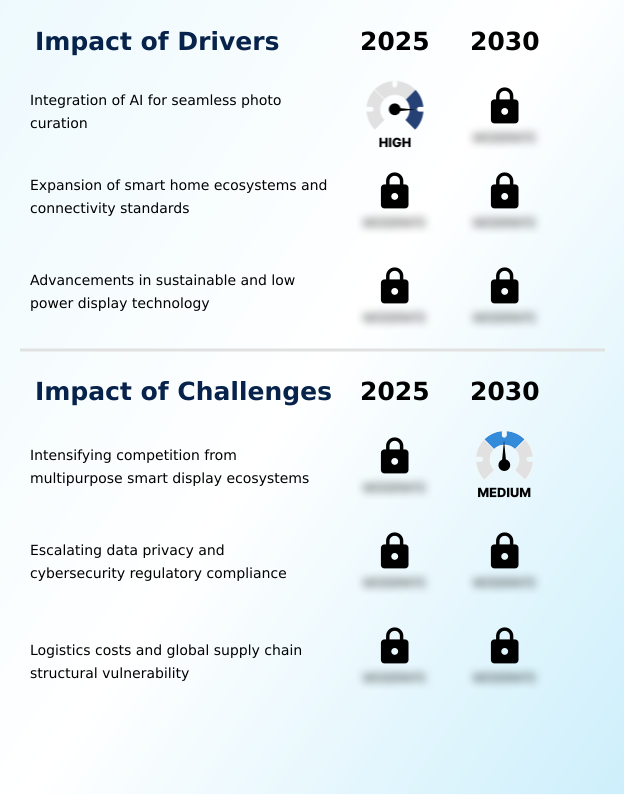
What are the key market drivers leading to the rise in the adoption of Digital Photo Frame Industry?
- The integration of artificial intelligence for seamless and automated photo curation is a key driver propelling market adoption and enhancing user engagement.
- The primary driver is the deployment of sophisticated AI to simplify content management, transforming frames into dynamic storytelling tools.
- Features like automatic image enhancement and facial recognition automate what was once a manual process, with some platforms now correctly identifying individuals with over 98% accuracy.
- This level of smart curation makes the devices accessible personal archiving tools and effective digital wellness devices. The introduction of natural language search and generative AI tagging further reduces user friction, allowing voice-activated requests for specific memories.
- These capabilities are crucial for fostering long-distance family connectivity and intergenerational photo sharing, creating powerful home communication centers.
- This focus on an intelligent, hands-free experience is a key strategy for building brand loyalty, as platforms with superior AI report a 30% higher user engagement rate than those without.
What are the market trends shaping the Digital Photo Frame Industry?
- The integration with smart home ecosystems represents a significant market trend. This evolution is repositioning digital photo frames as central hubs within connected living environments.
- Key trends are reshaping the digital photo frame market, moving it toward unobtrusive technology that prioritizes aesthetic integration and multifunctionality. The adoption of e paper technology and energy efficient screens is a significant shift, with some new models reducing power consumption by up to 90% compared to traditional LCDs. This focus on low power display technology enables greater placement flexibility.
- Concurrently, smart home integration is turning frames into family connectivity hubs. The evolution toward multi-function displays that serve as interactive art displays or information centers is also gaining traction. A core element of this trend is advanced AI-powered curation, which delivers a highly personalized, user-centric design experience.
- This software-driven approach is critical for maintaining ecosystem retention, as users with large photo libraries are 2.5 times less likely to switch platforms once their content is organized. Ultimately, privacy-centric firmware underpins this entire evolution, ensuring user trust.
What challenges does the Digital Photo Frame Industry face during its growth?
- Intensifying competition from multipurpose smart display ecosystems, which offer broader functionality, presents a key challenge to the growth of the dedicated digital photo frame industry.
- The market faces significant hurdles from the complex web of regulatory compliance and cybersecurity threats. The need for robust firmware security, end-to-end encryption, and adherence to regional data sovereignty laws has increased the operational cost structure by an estimated 15-20% for manufacturers. This includes implementing features like on-device processing and local data storage to meet consumer privacy demands.
- A major challenge is the persistent supply chain vulnerability, where disruptions in shipping can inflate inventory carrying costs and maritime insurance premiums by over 50% in periods of geopolitical instability.
- This environment favors larger players with the resources for centralized management of global logistics and legal compliance, while smaller firms struggle to absorb the costs associated with navigating these multifaceted risks, which directly impact product affordability and market entry.
Exclusive Technavio Analysis on Customer Landscape
The digital photo frame market forecasting report includes the adoption lifecycle of the market, covering from the innovator’s stage to the laggard’s stage. It focuses on adoption rates in different regions based on penetration. Furthermore, the digital photo frame market report also includes key purchase criteria and drivers of price sensitivity to help companies evaluate and develop their market growth analysis strategies.
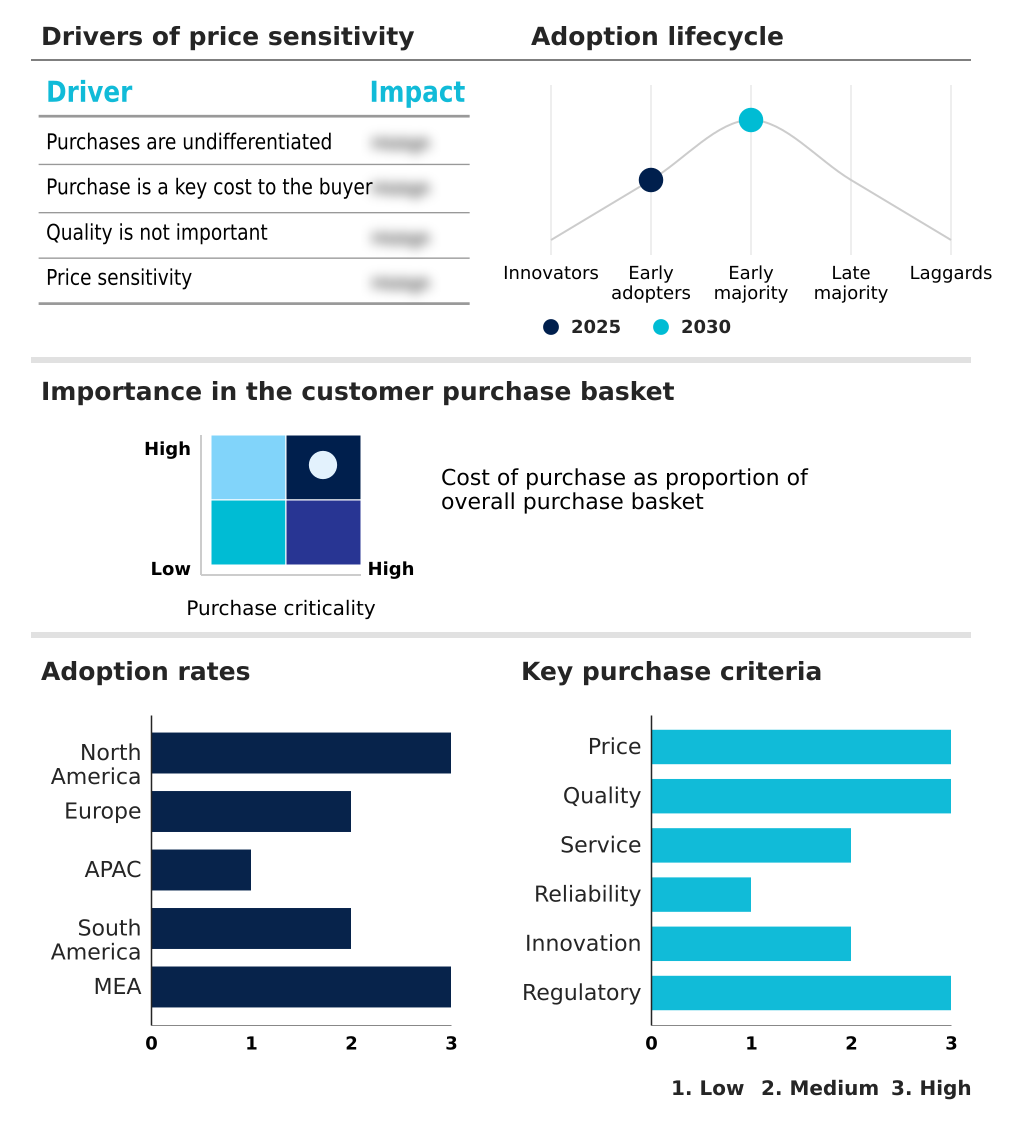
Customer Landscape of Digital Photo Frame Industry
Competitive Landscape
Companies are implementing various strategies, such as strategic alliances, digital photo frame market forecast, partnerships, mergers and acquisitions, geographical expansion, and product/service launches, to enhance their presence in the industry.
AEEZO - Analysis indicates a focus on delivering integrated digital photo frame solutions, emphasizing Wi-Fi connectivity, HD touchscreens, and seamless mobile app synchronization for enhanced user engagement.
The industry research and growth report includes detailed analyses of the competitive landscape of the market and information about key companies, including:
- AEEZO
- Aluratek Inc.
- Aura Home Inc.
- Brookstone
- Cozyla
- Creedon Technologies USA LLC
- Curtis International Ltd.
- Dragon Touch
- Eastman Kodak Co.
- Koninklijke Philips NV
- Monster Inc.
- NETGEAR Inc.
- PhotoSpring Inc.
- Samsung Electronics Co. Ltd.
- Skylight Home
- Sony Group Corp.
- Spheris Digital Ltd.
- Sungale Inc.
- ViewSonic Corp.
- XElectron Technologies Ltd
Qualitative and quantitative analysis of companies has been conducted to help clients understand the wider business environment as well as the strengths and weaknesses of key industry players. Data is qualitatively analyzed to categorize companies as pure play, category-focused, industry-focused, and diversified; it is quantitatively analyzed to categorize companies as dominant, leading, strong, tentative, and weak.
Recent Development and News in Digital photo frame market
- In October 2024, Aura Home Inc. announced a strategic partnership with a leading smart home platform to natively integrate its AI-powered frames into home automation routines.
- In January 2025, Skylight Home secured $20 million in Series B funding to accelerate R&D in color e-paper display technology for its next generation of energy-efficient frames.
- In March 2025, AEEZO launched its new 'Clarity' series, featuring enhanced on-device AI for faster, privacy-focused photo curation that minimizes cloud dependency.
- In May 2025, Nixplay expanded its commercial offerings with a new enterprise-grade management platform, targeting the hospitality and corporate sectors for centralized content deployment across multiple locations.
Dive into Technavio’s robust research methodology, blending expert interviews, extensive data synthesis, and validated models for unparalleled Digital Photo Frame Market insights. See full methodology.
| Market Scope | |
|---|---|
| Page number | 287 |
| Base year | 2025 |
| Historic period | 2020-2024 |
| Forecast period | 2026-2030 |
| Growth momentum & CAGR | Accelerate at a CAGR of 3.2% |
| Market growth 2026-2030 | USD 126.4 million |
| Market structure | Fragmented |
| YoY growth 2025-2026(%) | 3.1% |
| Key countries | US, Canada, Mexico, Germany, UK, France, Italy, Spain, The Netherlands, China, India, Japan, South Korea, Australia, Indonesia, Brazil, Argentina, Colombia, UAE, Saudi Arabia, South Africa, Egypt and Turkey |
| Competitive landscape | Leading Companies, Market Positioning of Companies, Competitive Strategies, and Industry Risks |
Research Analyst Overview
- The market is defined by a strategic pivot toward software and services, where hardware serves as a conduit for an intelligent user experience. Boardroom decisions now center on the integration of AI-powered curation, generative AI tagging, and natural language search to create a dynamic storytelling tool.
- This requires sophisticated on-device processing and a robust proprietary cloud platform supporting cloud-based sharing and remote photo sharing. The user interface is critical, with touchscreen displays and mobile app connectivity being standard, while voice-activated requests and context-aware alerts enhance usability.
- From a hardware perspective, innovation in e paper technology, low power display technology, and energy efficient screens is enabling new form factors. High-resolution displays with ambient light sensors and motion detection sensors provide a premium viewing experience for both images and multimedia playback.
- To compete, firms must offer smart home integration with calendar integration and even function as digital signage solutions for commercial use. Foundational to all this is security, demanding firmware security, end-to-end encryption, and options for local data storage.
- Ultimately, the goal is to create multi-function displays and interactive art displays, often monetized through subscription-based content, that seamlessly fit into connected display ecosystems. This shift has driven a 20% increase in R&D spending on software versus hardware.
What are the Key Data Covered in this Digital Photo Frame Market Research and Growth Report?
-
What is the expected growth of the Digital Photo Frame Market between 2026 and 2030?
-
USD 126.4 million, at a CAGR of 3.2%
-
-
What segmentation does the market report cover?
-
The report is segmented by Distribution Channel (Offline, and Online), Source (Electricity-powered, and Battery-powered), Application (Residential, and Commercial) and Geography (North America, Europe, APAC, South America, Middle East and Africa)
-
-
Which regions are analyzed in the report?
-
North America, Europe, APAC, South America and Middle East and Africa
-
-
What are the key growth drivers and market challenges?
-
Integration of AI for seamless photo curation, Intensifying competition from multipurpose smart display ecosystems
-
-
Who are the major players in the Digital Photo Frame Market?
-
AEEZO, Aluratek Inc., Aura Home Inc., Brookstone, Cozyla, Creedon Technologies USA LLC, Curtis International Ltd., Dragon Touch, Eastman Kodak Co., Koninklijke Philips NV, Monster Inc., NETGEAR Inc., PhotoSpring Inc., Samsung Electronics Co. Ltd., Skylight Home, Sony Group Corp., Spheris Digital Ltd., Sungale Inc., ViewSonic Corp. and XElectron Technologies Ltd
-
Market Research Insights
- Market dynamics are increasingly shaped by software-driven value, transforming devices into family connectivity hubs and home communication centers. Direct-to-consumer models now account for over 50% of sales for some premium brands, enhancing home decor integration by offering customized aesthetics.
- Success hinges on building brand loyalty and ecosystem retention, as platforms with superior user-centric design report a 30% higher user engagement rate. While gifting potential creates significant seasonal sales spikes, underlying profitability is challenged by supply chain vulnerability.
- Navigating the high operational cost structure, which is influenced by geopolitical instability and the need for privacy-centric firmware to comply with data sovereignty laws, is a key boardroom focus. Firms that prioritize visual authenticity and deliver genuine intergenerational photo sharing capabilities are best positioned to thrive.
We can help! Our analysts can customize this digital photo frame market research report to meet your requirements.
 RIA -
RIA - 
