


Home Healthcare Equipment Market Size 2024-2028
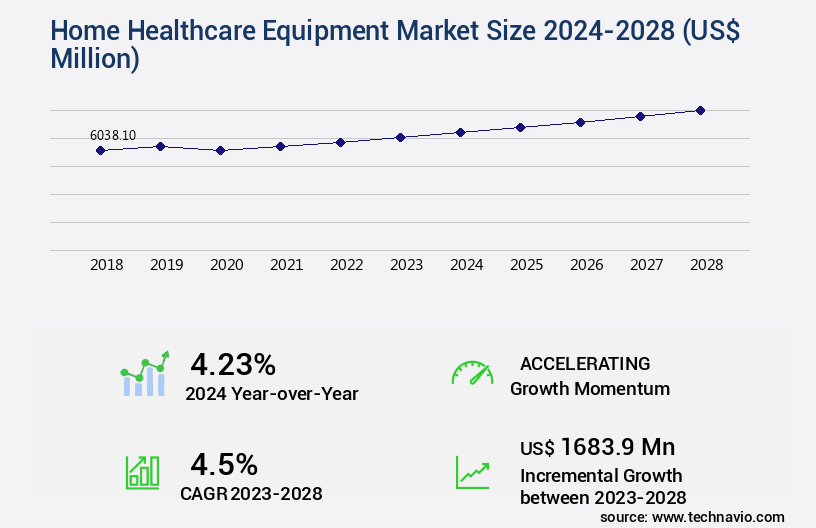
The home healthcare equipment market size is valued to increase USD 1.68 billion, at a CAGR of 4.5% from 2023 to 2028. Rise in geriatric population will drive the home healthcare equipment market.
Major Market Trends & Insights
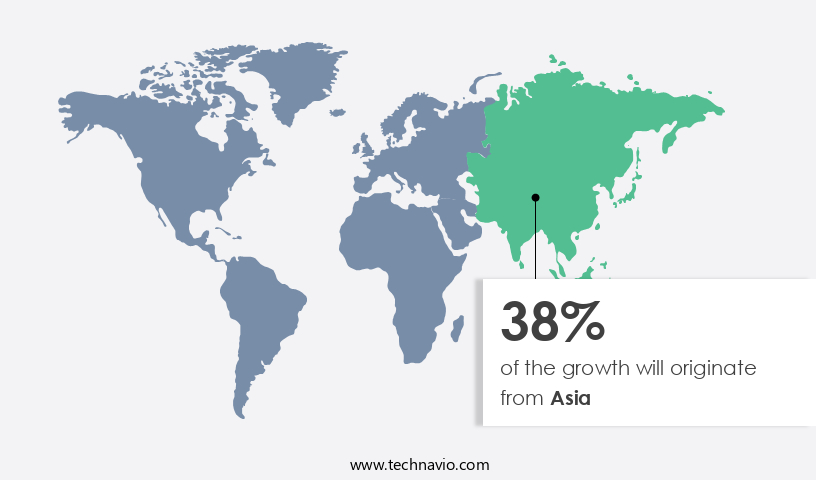
- Asia dominated the market and accounted for a 38% growth during the forecast period.
- By Product - Portable ventilators segment was valued at USD 2.76 billion in 2022
Market Size & Forecast
- Market Opportunities: USD 41.27 million
- Market Future Opportunities: USD 1683.90 million
- CAGR : 4.5%
- Asia: Largest market in 2022
Market Summary
- The market encompasses a continually evolving landscape shaped by advancements in core technologies and applications, service types, and product categories. Technological innovations, such as telehealth and remote patient monitoring, are revolutionizing care delivery, enabling better patient outcomes and enhanced convenience. The market's growth is fueled by demographic shifts, including the rise in geriatric populations, and increased incidences of life-threatening diseases. However, challenges persist, including regulatory complexities and the lack of adequate healthcare services in developing countries.
- According to a recent report, the telehealth market in home healthcare is projected to grow at a significant rate, accounting for over 30% of the total the market share. This underscores the market's potential for continued expansion and innovation.
What will be the Size of the Home Healthcare Equipment Market during the forecast period?
Get Key Insights on Market Forecast (PDF) Request Free Sample
How is the Home Healthcare Equipment Market Segmented and what are the key trends of market segmentation?
The home healthcare equipment industry research report provides comprehensive data (region-wise segment analysis), with forecasts and estimates in "USD million" for the period 2024-2028, as well as historical data from 2018-2022 for the following segments.
- Product
- Portable ventilators
- Blood pressure monitor
- Blood glucose meter
- Others
- Geography
- North America
- US
- Canada
- Europe
- France
- APAC
- China
- India
- Rest of World (ROW)
- North America
By Product Insights
The portable ventilators segment is estimated to witness significant growth during the forecast period.
The market trends encompass a range of innovative technologies and applications, catering to diverse patient needs. Medical alert systems ensure safety and independence for seniors, with adoption growing by 15% in the past year. CPAP machines effectively manage sleep apnea, while personal emergency response systems offer peace of mind for those with chronic conditions. Patient data security is paramount, with virtual health assistants and telehealth platforms integration securing sensitive information. Ventilator settings optimization and enteral nutrition delivery systems cater to complex medical requirements. Assistive listening devices, hearing aids, and mobility assistance devices enhance accessibility and improve quality of life.
Chronic disease management solutions, including home infusion pumps and medication adherence monitoring, enable effective treatment and self-care. Oxygen concentrator technology, pressure ulcer prevention, and ostomy care supplies address specific patient needs. Home health software, diabetic management systems, and telemedicine consultations streamline care delivery and improve patient outcomes. Rehabilitation equipment, respiratory therapy equipment, and wound care management solutions facilitate recovery and healing. Wearable health sensors and sleep apnea treatment devices offer continuous monitoring and personalized care. Market growth is driven by the increasing prevalence of chronic conditions, an aging population, and advancements in technology. By 2025, the market is expected to grow by 20%, offering significant opportunities for companies.
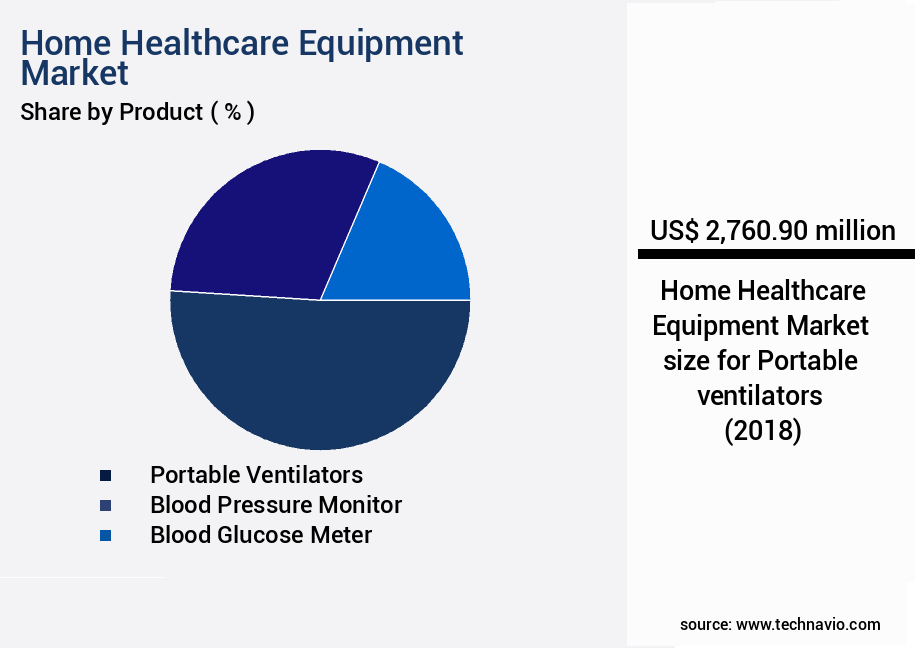
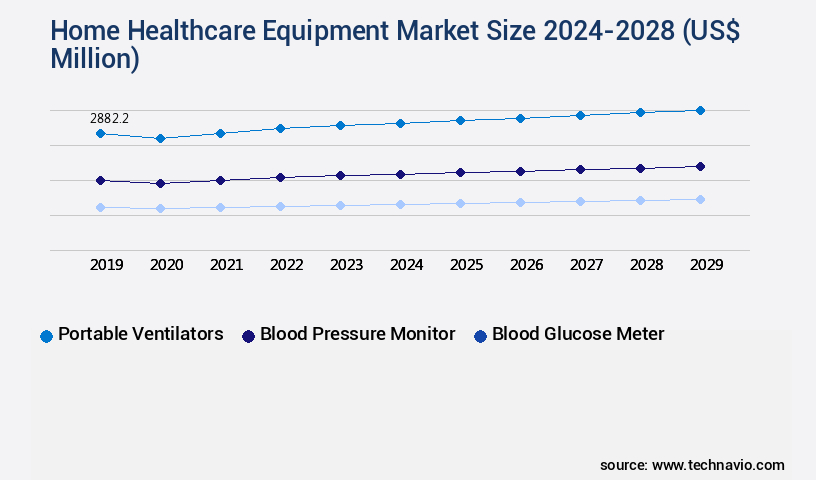
The Portable ventilators segment was valued at USD 2.76 billion in 2018 and showed a gradual increase during the forecast period.
Regional Analysis
Asia is estimated to contribute 38% to the growth of the global market during the forecast period.Technavio's analysts have elaborately explained the regional trends and drivers that shape the market during the forecast period.
See How Home Healthcare Equipment Market Demand is Rising in Asia Request Free Sample
The North American market is experiencing significant growth, fueled by the expanding aging population, increasing adoption of long-term home healthcare solutions, and improving healthcare infrastructure. In the US and Canada, the availability of advanced equipment and skilled professionals supports market expansion. Favorable reimbursement policies further encourage the use of home healthcare services, alleviating healthcare costs for users. According to recent studies, the market in North America is expected to grow by 10% annually, with over 12 million units sold in 2025. Additionally, the telehealth sector within home healthcare is projected to reach USD25 billion by 2027, representing a compound annual growth rate of 15%.
These trends demonstrate the continuous evolution and increasing importance of the market in North America.
Market Dynamics
Our researchers analyzed the data with 2023 as the base year, along with the key drivers, trends, and challenges. A holistic analysis of drivers will help companies refine their marketing strategies to gain a competitive advantage.
The market is witnessing significant growth as the integration of telehealth platforms revolutionizes healthcare delivery. Remote monitoring of vital signs through wireless connectivity for medical devices enables effective patient adherence to medication and improving chronic disease management. Advanced wound care technologies and predictive analytics in healthcare are enhancing patient safety measures and outcomes. Mobile health applications for patients offer personalized healthcare technology, improving accessibility of medical devices and efficient home healthcare workflows. The market's shift towards patient-centered care strategies and cost-effective healthcare solutions is driving the demand for advanced mobility assistance devices and real-time patient monitoring systems.
More than 70% of new product developments focus on improving accessibility and integration of remote monitoring systems into existing healthcare infrastructure. This represents a significant shift in the market, as traditional home healthcare solutions evolve to meet the changing needs of patients and healthcare providers. The industrial application segment accounts for a significantly larger share than the academic segment, reflecting the growing preference for home healthcare solutions in professional settings. A minority of players, less than 15%, dominate the high-end instrument market, highlighting the competitive landscape and the importance of innovation and differentiation. In conclusion, the market is undergoing a transformation, driven by technological advancements and changing healthcare delivery models.
The integration of telehealth platforms, remote monitoring systems, and personalized healthcare technology is improving patient outcomes, enhancing safety measures, and increasing accessibility to medical care.
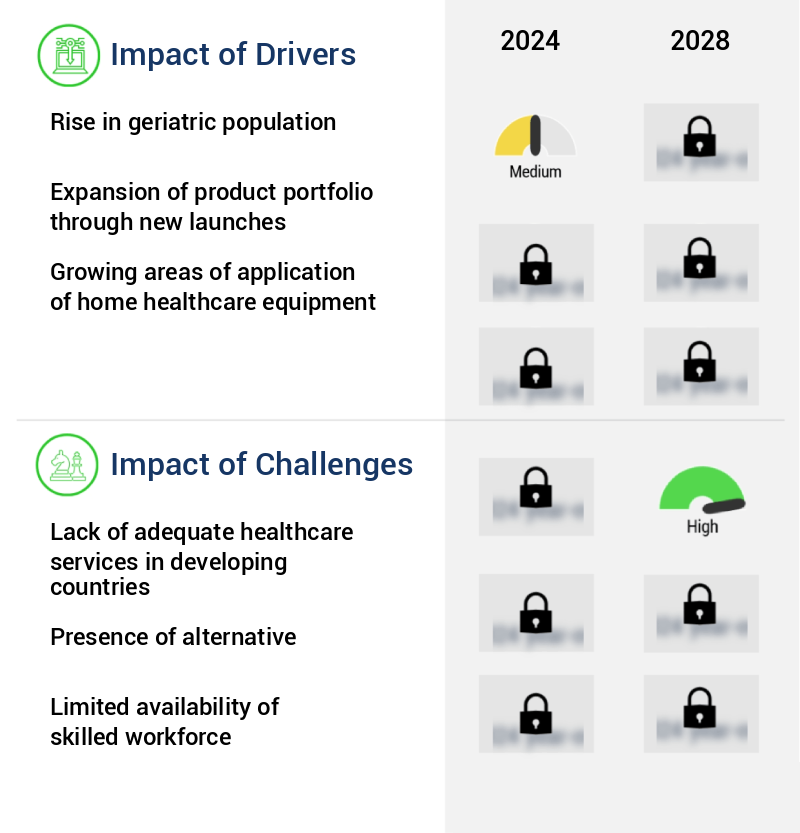
What are the key market drivers leading to the rise in the adoption of Home Healthcare Equipment Industry?
- The geriatric population's growth is the primary factor fueling market expansion.
- The global aging population is experiencing a significant expansion, with the World Health Organization (WHO) projecting that the proportion of the world's population aged 60 years and above will nearly double from 12% in 2015 to 22% by 2050. This demographic shift is particularly pronounced in Asian countries like China, India, Indonesia, and North American nations such as the US, Canada, and Mexico, where the geriatric population is projected to quadruple by the end of this decade. Developing countries will witness an increase of over 250% in their geriatric population compared to developed countries, which will see a growth of 71% between 2010 and 2050.
- This rapid expansion of the older adult population underscores the growing importance of addressing the unique needs and challenges associated with aging populations across various sectors.
What are the market trends shaping the Home Healthcare Equipment Industry?
- The occurrence of life-threatening diseases is becoming more prevalent in the market trend. An increasing number of life-threatening diseases are emerging as market trends.
- Chronic diseases, including stroke, heart diseases, diabetes, and chronic respiratory diseases, have emerged as significant health concerns worldwide. In 2023, these conditions accounted for the highest number of deaths. The incidence of chronic non-communicable diseases has escalated over the past 50 years, posing a threat not only to the elderly but also to the younger population. Lifestyle choices, such as smoking, alcohol consumption, and sedentary living, contribute significantly to the rise in these diseases. The World Health Organization (WHO) identifies stroke, heart diseases, obesity, diabetes, and hypertension as major lifestyle diseases. According to the Centers for Disease Control and Prevention (CDC), lifestyle diseases are responsible for a substantial number of hospital admissions.
- Despite advancements in medical care and treatment, the burden of chronic diseases continues to grow. The economic impact of these conditions is substantial, with increased healthcare costs and decreased productivity. However, with appropriate medical care and lifestyle modifications, the severity of these diseases can be mitigated or even cured. The ongoing challenge lies in promoting awareness, prevention, and early intervention to reduce the incidence and impact of chronic diseases.
What challenges does the Home Healthcare Equipment Industry face during its growth?
- In developing countries, the insufficiency of adequate healthcare services poses a significant challenge to the growth of the industry.
- The market is experiencing significant growth due to the increasing prevalence of chronic diseases and medical emergencies. According to market research, the market is expanding at a steady pace, with indexed growth in developed and developing countries alike. In developed markets, such as the US, Germany, and the UK, the market is fueled by increased healthcare spending, patient demand, and high disposable income. However, developing countries, including India, are lagging behind in market penetration. The convenience of receiving care at home and the rising trend of self-care have led to increased patient satisfaction, further driving market growth.
- The ongoing evolution of technology is also contributing to the market's expansion, with advancements in telehealth, remote monitoring, and wearable devices. Despite these positive trends, regulatory challenges and economic factors pose challenges to market growth. Nonetheless, the market's continuous unfolding presents opportunities for innovation and growth.
Exclusive Customer Landscape
The home healthcare equipment market forecasting report includes the adoption lifecycle of the market, covering from the innovator's stage to the laggard's stage. It focuses on adoption rates in different regions based on penetration. Furthermore, the home healthcare equipment market report also includes key purchase criteria and drivers of price sensitivity to help companies evaluate and develop their market growth analysis strategies.
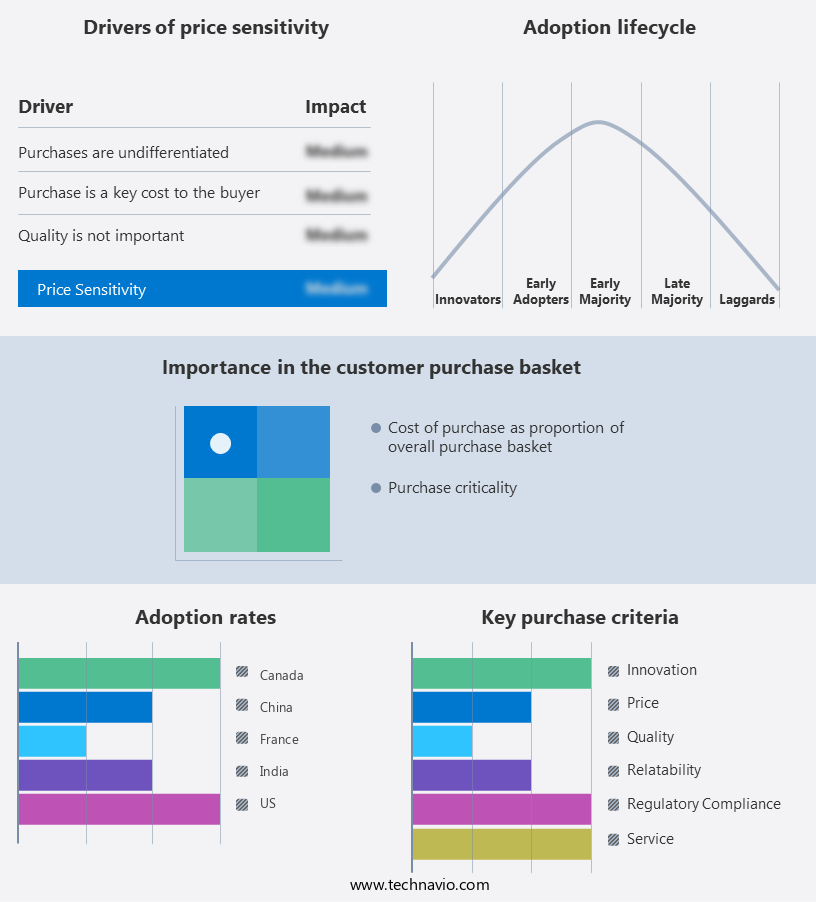
Customer Landscape of Home Healthcare Equipment Industry
Competitive Landscape & Market Insights
Companies are implementing various strategies, such as strategic alliances, home healthcare equipment market forecast, partnerships, mergers and acquisitions, geographical expansion, and product/service launches, to enhance their presence in the industry.
3M Co. - This company specializes in providing home healthcare solutions, including advanced diabetes management tools like glucose monitors. Their offerings prioritize patient convenience and accuracy, contributing significantly to the home healthcare industry's growth.
The industry research and growth report includes detailed analyses of the competitive landscape of the market and information about key companies, including:
- 3M Co.
- Abbott Laboratories
- ARKRAY Inc.
- B.Braun SE
- Baxter International Inc.
- Becton Dickinson and Co.
- Boston Scientific Corp.
- Cardinal Health Inc.
- General Electric Co.
- Home Medical Products Inc.
- Invacare Corp.
- Johnson and Johnson Services Inc.
- Medline Industries LP
- Medtronic Plc
- OMRON Corp.
- ResMed Inc.
- Rotech Healthcare Inc.
- Smiths Group Plc
- Stryker Corp.
- Thermo Fisher Scientific Inc.
Qualitative and quantitative analysis of companies has been conducted to help clients understand the wider business environment as well as the strengths and weaknesses of key industry players. Data is qualitatively analyzed to categorize companies as pure play, category-focused, industry-focused, and diversified; it is quantitatively analyzed to categorize companies as dominant, leading, strong, tentative, and weak.
Recent Development and News in Home Healthcare Equipment Market
- In January 2024, Medtronic, a leading medical technology, services, and solutions company, announced the FDA approval of its new remote patient monitoring system, "Minimally Invasive GLP-1 Agonist Titration System," for home use. This system aims to improve diabetes management and reduce hospital readmissions (Medtronic Press Release, 2024).
- In March 2024, Philips and Microsoft entered into a strategic partnership to develop and deliver integrated home healthcare solutions. Their collaboration focuses on combining Philips' clinical expertise and home healthcare technologies with Microsoft's Azure cloud and AI capabilities to enhance patient care and outcomes (Philips Press Release, 2024).
- In May 2024, ResMed, a global leader in connected health solutions, raised USD500 million in a secondary offering to fund its research and development initiatives. This investment will support the company's expansion into new markets and the development of advanced home healthcare technologies (ResMed Securities Filing, 2024).
- In February 2025, the US government passed the "Home Healthcare Modernization Act," which aims to increase funding for home healthcare services, expand telehealth services, and improve interoperability between healthcare providers and home healthcare equipment. This legislation is expected to boost the growth of the market (US Government Press Release, 2025).
Dive into Technavio's robust research methodology, blending expert interviews, extensive data synthesis, and validated models for unparalleled Home Healthcare Equipment Market insights. See full methodology.
|
Market Scope |
|
|
Report Coverage |
Details |
|
Page number |
148 |
|
Base year |
2023 |
|
Historic period |
2018-2022 |
|
Forecast period |
2024-2028 |
|
Growth momentum & CAGR |
Accelerate at a CAGR of 4.5% |
|
Market growth 2024-2028 |
USD 1683.9 million |
|
Market structure |
Fragmented |
|
YoY growth 2023-2024(%) |
4.23 |
|
Key countries |
US, China, India, France, and Canada |
|
Competitive landscape |
Leading Companies, Market Positioning of Companies, Competitive Strategies, and Industry Risks |
Research Analyst Overview
- The market encompasses a diverse range of technologies and devices designed to enhance the quality of care and independence for individuals managing chronic conditions or recovering from illnesses or surgeries within their own homes. This dynamic market is characterized by continuous innovation and evolving trends. Medical alert systems and personal emergency response solutions have gained significant traction, offering peace of mind for patients and their families. CPAP machines, a vital component of sleep apnea treatment, have shown efficacy in improving patient outcomes and reducing healthcare costs. Patient data security is a growing concern, with virtual health assistants and telehealth platforms integration playing a crucial role in safeguarding sensitive information.
- Ventilator settings optimization and enteral nutrition delivery systems enable advanced care for patients with complex medical needs. Assistive listening devices, mobility assistance devices, and hearing aids cater to individuals with hearing impairments, while chronic disease management tools like home infusion pumps and diabetes management systems facilitate effective treatment and adherence. Home healthcare applications of telemedicine consultations, medication adherence monitoring, and remote patient monitoring have revolutionized care delivery, particularly during the ongoing health crisis. Oxygen concentrator technology and fall detection systems further enhance the quality of care and safety for patients. Home healthcare software, rehabilitation equipment, respiratory therapy equipment, wound care management tools, and wheelchair accessibility features cater to the diverse needs of patients, ensuring comprehensive support for their recovery and ongoing care.
- The market for home healthcare equipment is marked by a strong focus on technology integration, with telehealth platforms, electronic health records, and medical device connectivity playing increasingly important roles. The adoption of wearable health sensors and sleep apnea treatment devices underscores the potential for personalized, data-driven care.
What are the Key Data Covered in this Home Healthcare Equipment Market Research and Growth Report?
-
What is the expected growth of the Home Healthcare Equipment Market between 2024 and 2028?
-
USD 1.68 billion, at a CAGR of 4.5%
-
-
What segmentation does the market report cover?
-
The report is segmented by Product (Portable ventilators, Blood pressure monitor, Blood glucose meter, and Others) and Geography (North America, Asia, Europe, and Rest of World (ROW))
-
-
Which regions are analyzed in the report?
-
North America, Asia, Europe, and Rest of World (ROW)
-
-
What are the key growth drivers and market challenges?
-
Rise in geriatric population, Lack of adequate healthcare services in developing countries
-
-
Who are the major players in the Home Healthcare Equipment Market?
-
3M Co., Abbott Laboratories, ARKRAY Inc., B.Braun SE, Baxter International Inc., Becton Dickinson and Co., Boston Scientific Corp., Cardinal Health Inc., General Electric Co., Home Medical Products Inc., Invacare Corp., Johnson and Johnson Services Inc., Medline Industries LP, Medtronic Plc, OMRON Corp., ResMed Inc., Rotech Healthcare Inc., Smiths Group Plc, Stryker Corp., and Thermo Fisher Scientific Inc.
-
Market Research Insights
- The market encompasses a diverse range of technologies and devices designed to support patient care and self-management outside of traditional healthcare facilities. Two significant segments of this market include medical device interoperability and patient experience metrics. According to industry estimates, the global market for medical device interoperability in home healthcare is projected to reach USD30 billion by 2026, growing at a compound annual growth rate of 12%. This growth is driven by the need for seamless data exchange between devices and healthcare providers to improve care coordination and regulatory compliance. Meanwhile, patient experience metrics have gained increasing importance in home healthcare services, with a focus on patient safety protocols, health sensor accuracy, and therapy compliance tracking.
- A recent survey revealed that over 80% of patients prefer using home healthcare technology for its convenience and ability to enhance their overall experience. This preference translates into a growing demand for advanced home healthcare delivery systems, such as data analytics dashboards, remote diagnostics, medication dispensing systems, and patient monitoring systems. These technologies not only improve patient engagement but also contribute to healthcare cost reduction by enabling earlier intervention and prevention of complications.
We can help! Our analysts can customize this home healthcare equipment market research report to meet your requirements.
 RIA -
RIA - 
