


Mechanical Locks Market Size 2024-2028
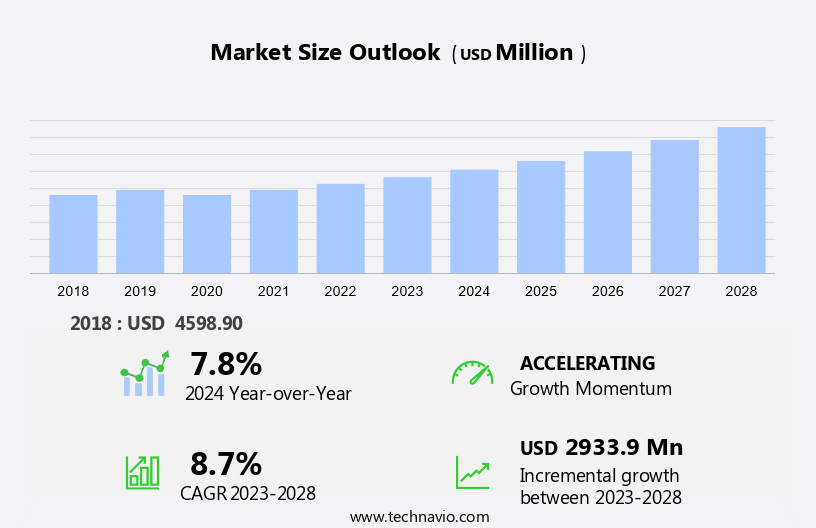
The mechanical locks market size is forecast to increase by USD 2.93 billion at a CAGR of 8.7% between 2023 and 2028.
- The market is experiencing significant growth due to several key factors. One major driver is the increasing demand for security solutions in emerging economies. Despite the rise of advanced electronic locks, conventional mechanical locks continue to hold a substantial market share, particularly in single cylinder and stainless steel varieties. Another trend influencing the market is the shift towards smart locks, which offer features such as remote locking via smartphones and biometric door access.
- Additionally, key card locks are also gaining popularity for their convenience and enhanced security. However, challenges such as the need for regular maintenance and the risk of lock picking or drilling remain. Overall, the market is expected to grow steadily, driven by the sustained reliance on conventional locks and the increasing emphasis on commercial security.
What will be the Size of the Market During the Forecast Period?
- The market encompasses various types of locks, including tubular locks, interconnected locks, deadbolt locks, two-way locks, and more. These locks provide physical security solutions for homes, construction activities, and rural areas. In this analysis, we explore the latest trends and technologies shaping the market. Tubular locks, a popular choice for households, offer a simple yet effective security solution. They are known for their durability and ease of use. Interconnected locks, on the other hand, provide an added layer of security by connecting multiple locks in a series. Deadbolt locks, available in single and double cylinder variants, offer high-security levels and are widely used in both residential and commercial applications.
- Additionally, two-way locks allow users to secure a door from both sides, ensuring enhanced security. Lock technology continues to evolve, with keyless entry systems gaining popularity. Biometric locks, which use unique human characteristics for access, and smart home automation are other emerging trends in the market. Installation services play a crucial role in the market. Homeowners and construction companies require professional installation to ensure optimal security and functionality. Deadlocks, with their robust design, are a common choice for high-security applications. Smart home technologies, such as energy-efficient technologies, remote control, and smart devices, are increasingly being integrated with mechanical locks. Copper and iron, key materials in lock manufacturing, continue to be in demand due to their strength and durability.
- Moreover, mortise locks, designed to fit into the door, are a popular choice for doors due to their reliability and security. Physical security remains a top priority for households and businesses. Mechanical locks, with their proven track record, continue to be a preferred choice for securing doors. The market is expected to grow, driven by the increasing demand for enhanced security solutions and the integration of advanced technologies. The Internet of Things (IoT) is transforming the market. Electronic locks, remote locking, and electromechanical locks are gaining popularity due to their compatibility with smart home systems. Homeowners and businesses are increasingly adopting these advanced security solutions to enhance their security and convenience. In conclusion, the market is driven by the evolving security needs of households and businesses. The integration of advanced technologies, such as AI, machine learning, and IoT, is transforming the industry. The market is expected to grow, driven by the increasing demand for enhanced security solutions and the integration of smart home technologies.
How is this market segmented and which is the largest segment?
The market research report provides comprehensive data (region-wise segment analysis), with forecasts and estimates in "USD billion" for the period 2024-2028, as well as historical data from 2018-2022 for the following segments.
- End-user
- Commercial
- Residential
- Geography
- APAC
- China
- India
- South America
- Brazil
- Middle East and Africa
- North America
- Europe
- APAC
By End-user Insights
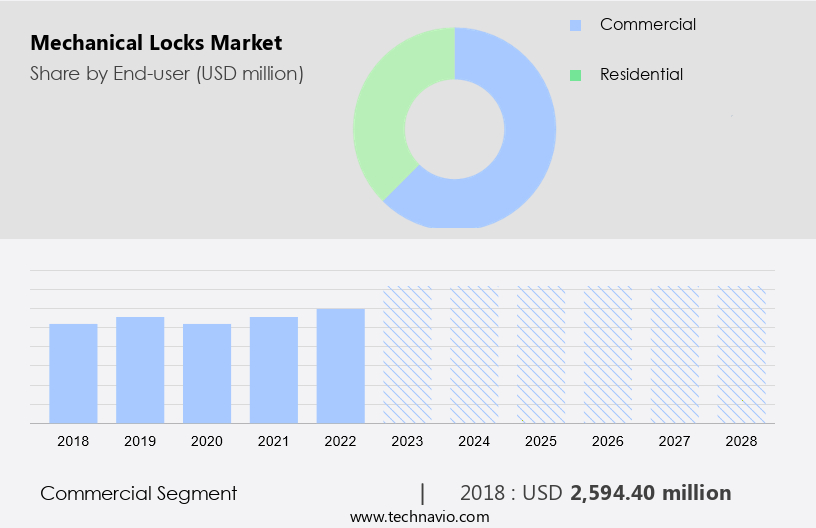
- The commercial segment is estimated to witness significant growth during the forecast period.
In the commercial building sector, mechanical locks continue to play a crucial role in ensuring security and safety. These locks are widely used in various types of doors, such as manual doors, automatic doors, and glass doors, for both new installations and lock replacement. Mechanical locks come in different categories, including tubular locks, cylindrical locks, and interconnected locks. companies are introducing advanced mechanical locks with features like self-locking, which automatically engages the lock after each closing, whether manually or motor-controlled. The expansion of the commercial construction industry will fuel the demand for mechanical locks in the coming years. For instance, the burgeoning IT, telecommunications, and business process outsourcing industries in India are driving the need for office spaces in metropolitan areas, thereby increasing the demand for mechanical locks.
Additionally, the integration of Internet of Things (IoT) technology and energy-efficient solutions in mechanical locks is a growing trend. Remote control and smart devices are also being incorporated into mechanical locks to enhance personal security and convenience. Overall, the market for mechanical locks is expected to grow significantly during the forecast period due to these factors.
Get a glance at the market report of share of various segments Request Free Sample
The commercial segment was valued at USD 2.59 billion in 2018 and showed a gradual increase during the forecast period.
Regional Analysis
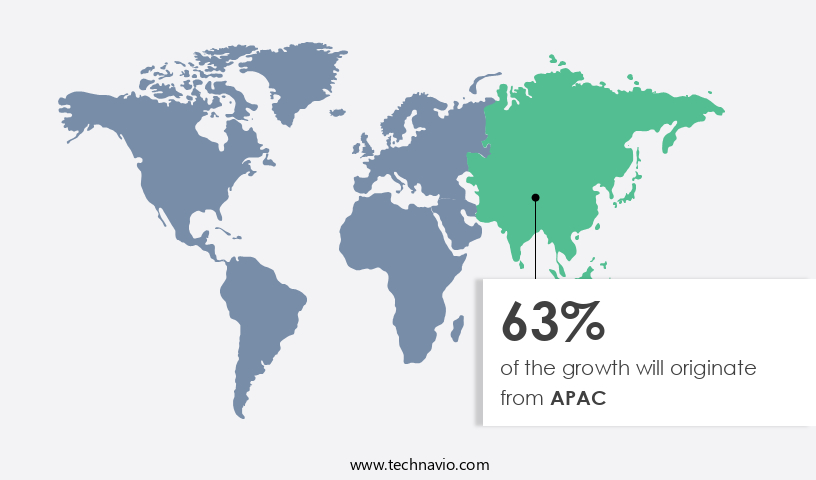
- APAC is estimated to contribute 63% to the growth of the global market during the forecast period.
Technavio's analysts have elaborately explained the regional trends and drivers that shape the market during the forecast period.
For more insights on the market share of various regions Request Free Sample
In the APAC region, countries such as Japan, China, and India are major consumers of mechanical door locks. The expansion of commercial offices and the preference for technologically advanced living solutions, particularly in China and India, will fuel market growth during the forecast period. The growing income levels of the middle class and rapid urbanization have led to an increase in demand for residential and non-residential buildings in these countries.
Consequently, the use of mechanical locks for security functions in buildings is anticipated to propel the growth of the APAC market. Mechanical locks continue to be a popular choice for physical security solutions in various sectors, including healthcare, household, and rural areas. In the US, digital access control systems are increasingly being adopted, but mechanical locks remain a significant component of overall security strategies. Copper and iron mechanical locks are commonly used for doors due to their durability and affordability. Electrical locking devices, such as padlocks, are also gaining popularity for their convenience and added security features. The US market is expected to grow due to the increasing demand for security solutions and the availability of advanced technological features in mechanical locks.
Market Dynamics
Our researchers analyzed the data with 2023 as the base year, along with the key drivers, trends, and challenges. A holistic analysis of drivers will help companies refine their marketing strategies to gain a competitive advantage.
What are the key market drivers leading to the rise in adoption of Mechanical Locks Market?
Growing demand from emerging economies is the key driver of the market.
- In developing countries like India and Indonesia, the expansion of urban areas and infrastructure investments fuel the construction industry's growth. Mechanical locks play a crucial role in securing openings by keeping doors closed until a release mechanism is engaged. As a result, the burgeoning demand from end-users, including the residential, non-residential, and infrastructure sectors, in these countries is projected to boost the demand for mechanical locks over the next five years.
- Additionally, the rising GDP in developing nations is anticipated to stimulate the growth of manufacturing and building industries, consequently driving the expansion of The market during the forecast period.
What are the market trends shaping the Mechanical Locks Market?
Sustained reliance on conventional locks is the upcoming trend in the market.
- In contrast to digital door locks, which offer advanced safety, security, and convenience, traditional mechanical locks continue to hold a significant market share, particularly in countries like India, Kenya, Brazil, China, and Indonesia. Consumers express a higher degree of trust in conventional locks due to the perceived risk of digital lock misuse.
- Additionally, mechanical locks, such as deadbolts, mortise locks, and knob locks, require a physical key for operation. Manufacturers of these locks prioritize design enhancements and improved build quality to meet growing security demands from buyers. The increasing concern for home and commercial security drives companies to produce conventional locks that effectively deter burglaries.
What challenges does Mechanical Locks Market face during the growth?
Growing emphasis on smart locks is a key challenge affecting the market growth.
- In today's security-conscious world, mechanical locks have evolved into smart locks, offering advanced features and remote access through wireless technology networks such as Bluetooth, Wi-Fi, and Z-Wave. These locks, popular in both residential and commercial sectors, provide enhanced security with innovative locking systems. Tubular locks, interconnected locks, deadbolt locks, two-way locks, and other mechanical lock variants have given way to keyless entry systems and biometric locks.
- However, smart home automation is driving the demand for smart locks. Consumers prioritize safety, security, and privacy, leading companies like ASSA ABLOY AB to expand their offerings. Smart locks offer the convenience of eliminating the need for physical keys, allowing users to unlock or operate doors through their smartphones. Keyless entry and biometric locks further enhance security by eliminating the risk of lost or stolen keys. Lock technology continues to advance, with smart locks integrating seamlessly into home automation systems. Installation services are readily available for those who prefer professional assistance. As consumers increasingly adopt smart locks for their convenience and security benefits, the market for these advanced door security solutions is poised for growth.
Exclusive Customer Landscape
The market forecasting report includes the adoption lifecycle of the market, covering from the innovator's stage to the laggard's stage. It focuses on adoption rates in different regions based on penetration. Furthermore, the market report also includes key purchase criteria and drivers of price sensitivity to help companies evaluate and develop their market growth analysis strategies.
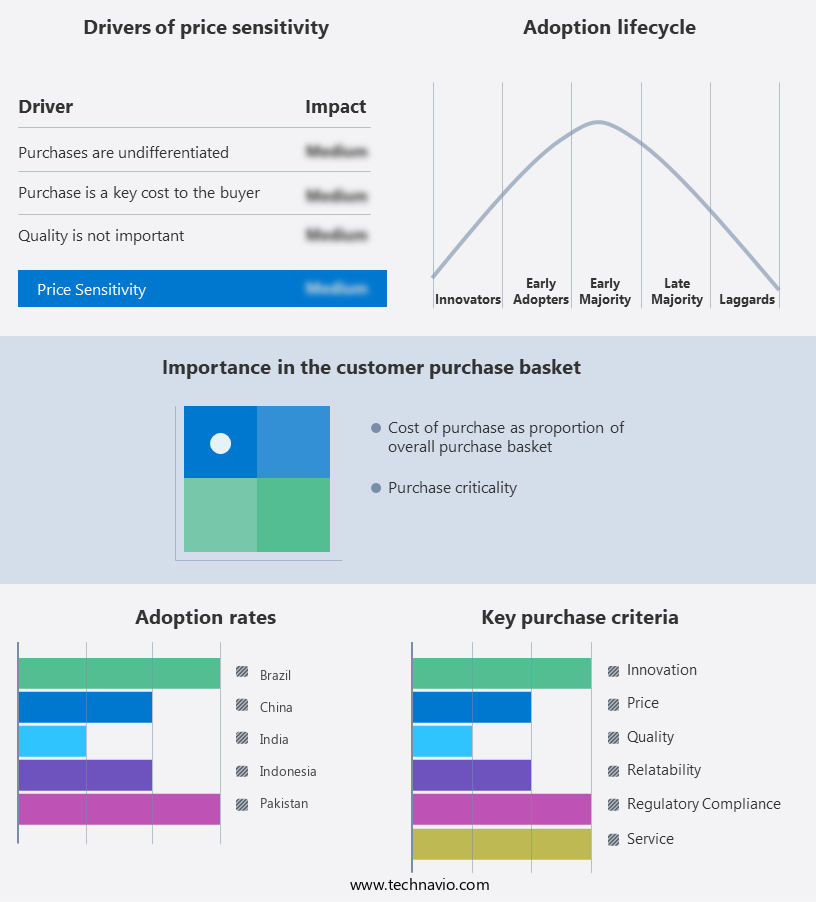
Customer Landscape
Key Companies & Market Insights
Companies are implementing various strategies, such as strategic alliances, market forecast, partnerships, mergers and acquisitions, geographical expansion, and product/service launches, to enhance their presence in the market.
The market research and growth report includes detailed analyses of the competitive landscape of the market and information about key companies, including:
- ABUS August Bremicker Sons KG
- Alban Giacomo SpA
- Allegion Public Ltd. Co.
- ASSA ABLOY AB
- Aug. Winkhaus GmbH and Co. KG
- Cal-Royal Products Inc.
- Codelocks Ltd.
- Dormakaba Holding AG
- Draper Tools Ltd.
- ECO Schulte GmbH and Co. KG
- Edilportale.com SpA
- EVVA Sicherheitstechnologie GmbH
- GEZE GmbH
- GretschÂ-Unitas Group
- Hager Group
- ISEO Serrature Spa
- Serrature Meroni SpA
- SFPI Group
- Spectrum Brands Holdings Inc.
Qualitative and quantitative analysis of companies has been conducted to help clients understand the wider business environment as well as the strengths and weaknesses of key market players. Data is qualitatively analyzed to categorize companies as pure play, category-focused, industry-focused, and diversified; it is quantitatively analyzed to categorize companies as dominant, leading, strong, tentative, and weak.
Research Analyst Overview
Mechanical locks continue to be a popular choice for securing doors in both residential and commercial settings. These traditional locks come in various types, including tubular locks, deadbolt locks, interconnected locks, and single and double cylinder locks. Tubular locks are commonly used for manual doors, while deadbolt locks provide enhanced security for residential and commercial applications. Two-way locks enable the locking and unlocking of doors from both sides, making them suitable for certain commercial applications. Keyless entry systems, such as biometric locks and smartphone-controlled locks, offer added convenience and security. Lock technology is evolving, with the integration of smart home automation and IoT.
In summary, energy-efficient technologies, remote control, and smart devices are increasingly being used in mechanical locks. The mechanical category also includes electromechanical locks, which combine the benefits of mechanical and electronic locks. Installation services are essential for the proper functioning of mechanical locks. System failure, renovation, and new construction projects require lock replacement and the installation of integrated locking systems. The market caters to various industries, including hospitality, travel and tourism, healthcare, and construction activities. Materials used in mechanical locks include copper, iron, and stainless steel. Security concerns remain paramount, with personal security a priority for homeowners and businesses. The market also includes wireless access control, digital access control, and padlocks, catering to diverse needs in rural areas and commercial applications.
|
Market Scope |
|
|
Report Coverage |
Details |
|
Page number |
131 |
|
Base year |
2023 |
|
Historic period |
2018-2022 |
|
Forecast period |
2024-2028 |
|
Growth momentum & CAGR |
Accelerate at a CAGR of 8.7% |
|
Market growth 2024-2028 |
USD 2.93 billion |
|
Market structure |
Fragmented |
|
YoY growth 2023-2024(%) |
7.8 |
|
Key countries |
China, India, Brazil, Indonesia, and Pakistan |
|
Competitive landscape |
Leading Companies, Market Positioning of Companies, Competitive Strategies, and Industry Risks |
What are the Key Data Covered in this Market Research and Growth Report?
- CAGR of the market during the forecast period
- Detailed information on factors that will drive the market growth and forecasting between 2024 and 2028
- Precise estimation of the size of the market and its contribution of the market in focus to the parent market
- Accurate predictions about upcoming market growth and trends and changes in consumer behaviour
- Growth of the market across APAC, South America, Middle East and Africa, North America, and Europe
- Thorough analysis of the market's competitive landscape and detailed information about companies
- Comprehensive analysis of factors that will challenge the growth of market companies
We can help! Our analysts can customize this market research report to meet your requirements. Get in touch
 RIA -
RIA - 
