


Smart Container Market Size 2026-2030
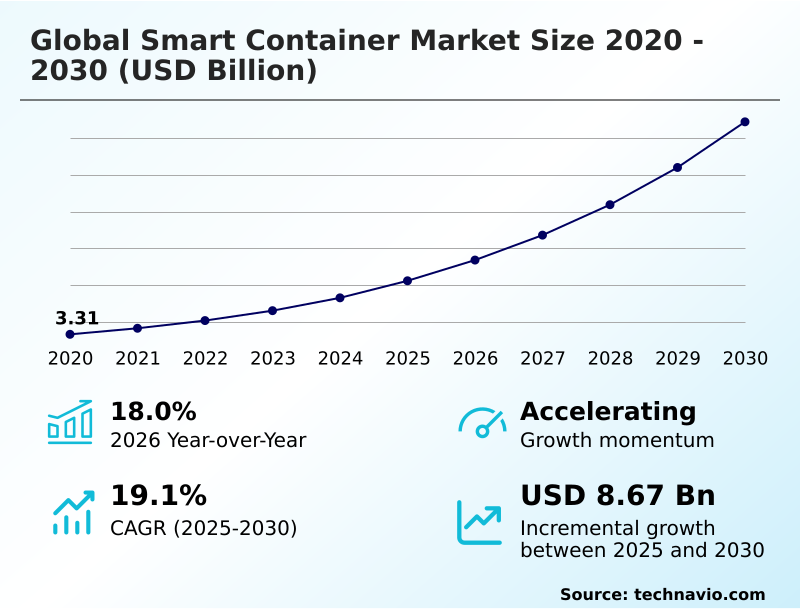
The smart container market size is valued to increase by USD 8.67 billion, at a CAGR of 19.1% from 2025 to 2030. Accelerated Integration of advanced telematics in global logistics will drive the smart container market.
Major Market Trends & Insights
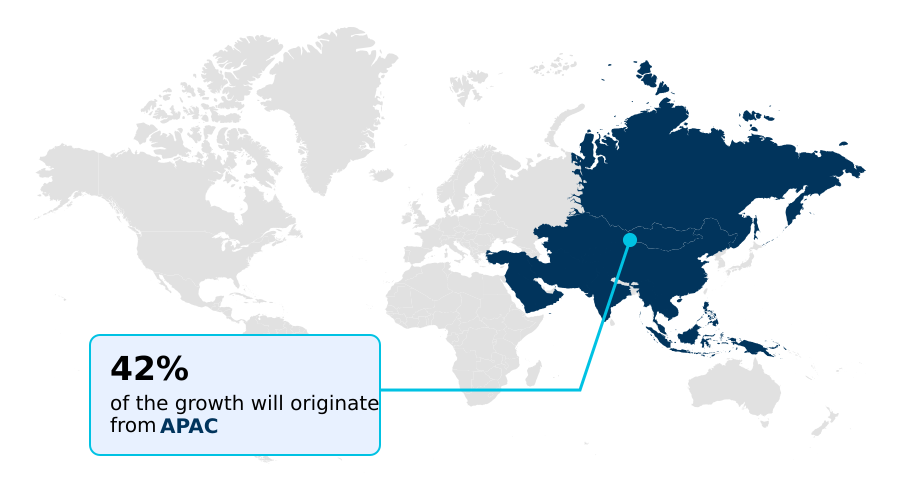
- APAC dominated the market and accounted for a 42% growth during the forecast period.
- By Component - Hardware segment was valued at USD 2.36 billion in 2024
- By End-user - Food and beverage segment accounted for the largest market revenue share in 2024
Market Size & Forecast
- Market Opportunities: USD 11.60 billion
- Market Future Opportunities: USD 8.67 billion
- CAGR from 2025 to 2030 : 19.1%
Market Summary
- The smart container market is fundamentally reshaping logistics through the integration of advanced technologies that enable unprecedented supply chain visibility. By embedding units with IoT telematics solutions and environmental sensor data collectors, stakeholders gain real-time asset tracking and cargo condition monitoring.
- This capability is critical for industries handling high-value or sensitive goods, such as pharmaceuticals and perishables, where cold chain integrity is paramount. For example, a shipper of biologics can leverage remote temperature control and receive immediate alerts for any deviation, preventing costly spoilage and ensuring regulatory compliance.
- The market's momentum is driven by the need for operational efficiency, with AI-driven analytics platforms transforming raw data from multi-sensor data fusion into actionable insights for predictive maintenance alerts and asset utilization optimization. However, challenges surrounding telematics hardware integration, data standardization, and cybersecurity persist.
- As the industry moves toward greater supply chain automation tech, the focus is on creating interoperable, secure systems that reduce detention and demurrage, optimize empty container repositioning, and provide a verifiable, tamper-proof data log for every shipment, often leveraging blockchain for supply chain enhancements. This digital transformation is paving the way for more resilient, predictable, and sustainable global trade.
What will be the Size of the Smart Container Market during the forecast period?
Get Key Insights on Market Forecast (PDF) Request Free Sample
How is the Smart Container Market Segmented?
The smart container industry research report provides comprehensive data (region-wise segment analysis), with forecasts and estimates in "USD million" for the period 2026-2030, as well as historical data from 2020-2024 for the following segments.
- Component
- Hardware
- Software
- Services
- End-user
- Food and beverage
- Pharmaceuticals
- Chemicals
- Oil and gas
- Others
- Type
- Smart dry containers
- Smart refrigerated container
- Smart tank containers
- Open-top and flat rack
- Geography
- APAC
- China
- India
- Japan
- Europe
- Germany
- The Netherlands
- UK
- North America
- US
- Canada
- Mexico
- South America
- Brazil
- Argentina
- Colombia
- Middle East and Africa
- UAE
- Saudi Arabia
- South Africa
- Rest of World (ROW)
- APAC
By Component Insights
The hardware segment is estimated to witness significant growth during the forecast period.
The hardware segment is foundational, enabling real-time asset tracking through advanced telematics systems and telematics hardware integration.
It comprises a range of smart container IoT devices, including sensors for shock and vibration detection and modules for satellite connectivity and low-power wide-area networks (LPWAN).
The evolution of multi-sensor data fusion and edge computing in logistics allows for on-device processing, enhancing real-time container visibility.
These IoT telematics solutions are crucial for maritime logistics technology and port automation technology, with some integrated systems improving data accuracy by over 15%, directly supporting the market’s shift towards more connected and intelligent operations.
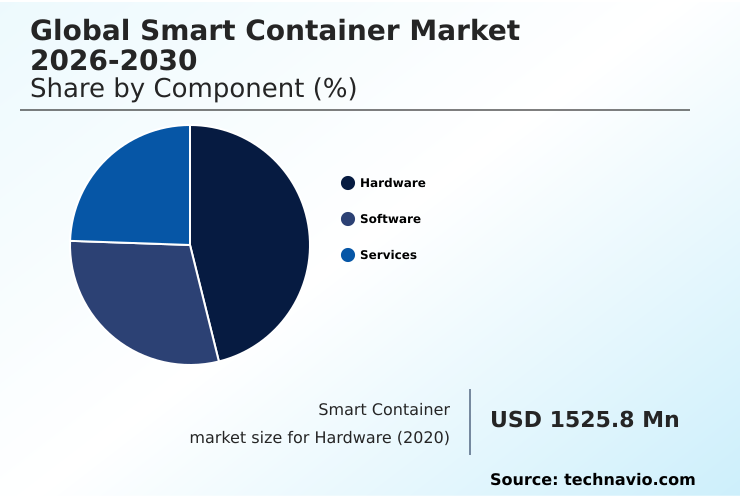
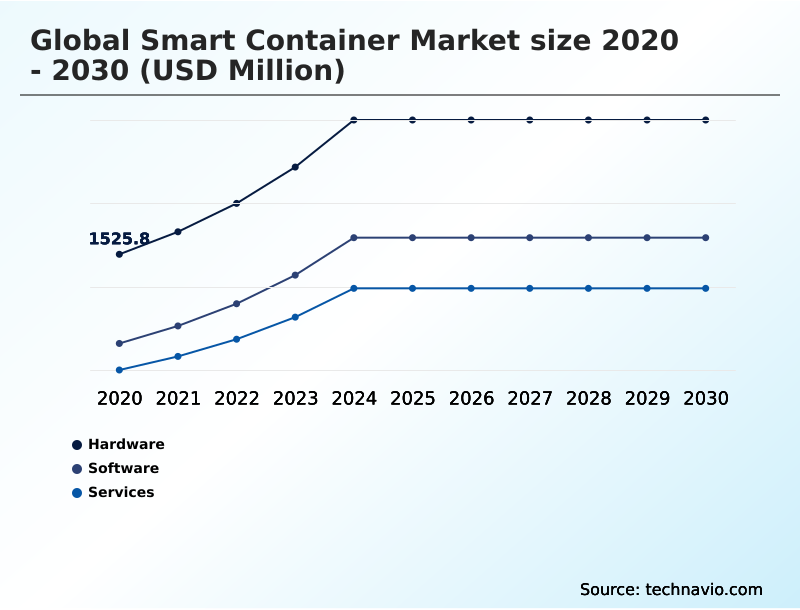
The Hardware segment was valued at USD 2.36 billion in 2024 and showed a gradual increase during the forecast period.
Regional Analysis
APAC is estimated to contribute 42% to the growth of the global market during the forecast period.Technavio’s analysts have elaborately explained the regional trends and drivers that shape the market during the forecast period.
See How Smart Container Market Demand is Rising in APAC Request Free Sample
The market's geographic dynamics are shaped by regional priorities. In APAC, the focus is on supply chain automation tech and digital freight tracking for high-volume intermodal container tracking to support its manufacturing hubs.
North America and Europe prioritize sustainable logistics technology and supply chain visibility, using cloud-based logistics platforms for advanced cargo condition monitoring. South America leverages reefer container telematics to protect agricultural exports, monitoring environmental sensor data closely.
Across all regions, the push for automated customs clearance and better IoT in intermodal transport drives the adoption of global asset tracking solutions to manage complex, international supply chains effectively, with APAC poised to contribute over 42% of market growth.
Market Dynamics
Our researchers analyzed the data with 2025 as the base year, along with the key drivers, trends, and challenges. A holistic analysis of drivers will help companies refine their marketing strategies to gain a competitive advantage.
- Strategic decision-making in the smart container market increasingly hinges on specific applications and ROI calculations. For instance, using AI for empty container repositioning is a primary focus for carriers looking to reduce operational waste. In specialized verticals, real-time temperature monitoring for pharmaceuticals is non-negotiable for ensuring efficacy and compliance.
- The impact of 5G on smart container connectivity is a critical consideration, promising lower latency and higher data throughput, which directly benefits blockchain applications in container shipping by enabling faster, more secure ledger updates. The benefits of IoT in cold chain logistics are well-documented, leading to a direct reduction in spoilage and insurance claims.
- Shippers are now analyzing how to reduce demurrage with smart containers, as automated gate-in/gate-out processes cut down port dwell times. This ties into the broader goal of improving asset utilization in shipping, a key performance metric for fleet owners.
- However, executives must also address the significant cybersecurity risks in smart container technology, which demand robust encryption and access controls, particularly for smart container solutions for hazardous materials. Calculating the ROI of implementing smart container fleets remains a crucial step, often involving a detailed analysis before integrating smart containers with TMS software.
- For reefers, best practices for smart reefer management involve using telematics data for predictive maintenance, moving from reactive repairs to proactive servicing. When selecting hardware, LPWAN vs satellite for container tracking presents a trade-off between cost and coverage, influencing strategies for enhancing supply chain security with sensors.
- This is especially relevant for smart container technology for perishable exports, where continuous connectivity is vital. Finally, the challenges of smart container interoperability and the role of smart containers in sustainable logistics are top-of-mind, as the industry moves toward automating customs processes with container data and seeks standardized platforms.
- In comparing solutions, many stakeholders evaluate by comparing smart container hardware providers to find the best fit for their operational needs.
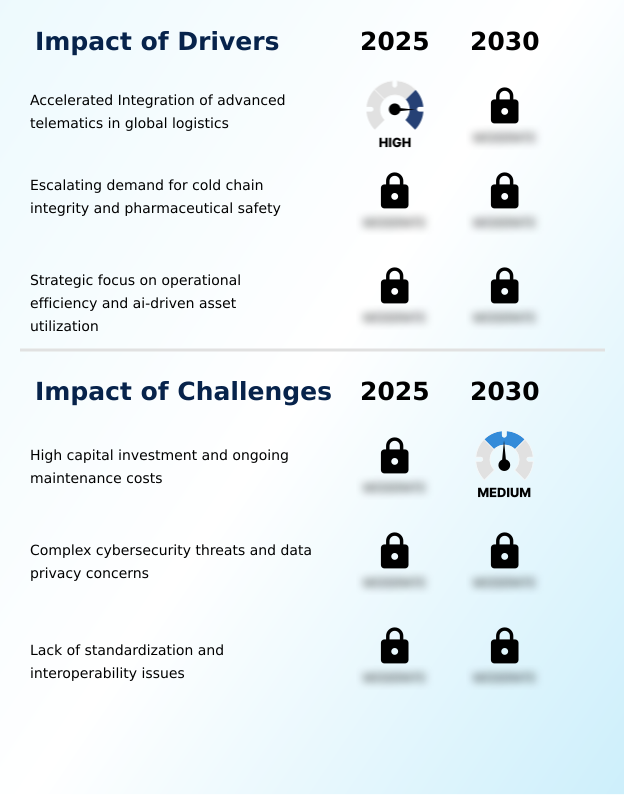
What are the key market drivers leading to the rise in the adoption of Smart Container Industry?
- The accelerated integration of advanced telematics and IoT technologies across the global logistics sector is a key driver for market growth, meeting the demand for real-time visibility.
- The demand for absolute cold chain integrity is a major driver, particularly in food and beverage logistics, where perishable goods transport requires constant monitoring. Cold chain logistics solutions prevent significant product loss.
- A second driver is the pursuit of operational efficiency through asset utilization optimization. Logistics efficiency tools leverage data for predictive maintenance alerts and to streamline empty container repositioning, cutting operational costs by over 12%.
- The use of geofencing and route deviation alerts, along with real-time freight monitoring from a supply chain control tower, contributes to detention and demurrage reduction and supports automated port operations through digital twin simulation.
What are the market trends shaping the Smart Container Industry?
- The convergence of artificial intelligence and blockchain technology is an emerging trend, poised to enhance supply chain transparency. This integration establishes immutable trust and predictive capabilities across logistical networks.
- A key trend is the convergence of AI-driven analytics platforms with blockchain for supply chain integrity, enabling tamper-proof data logging and predictive supply chain analytics. This supply chain digitalization is advancing intelligent asset management and the broader container lifecycle management. The proliferation of smart reefer technology and zero-maintenance IoT sensors, especially for IoT for chemical transport, is transforming specialized logistics.
- As part of this shift, smart logistics platforms and connected shipping containers are delivering enhanced control, with some fleets achieving a 15% reduction in their carbon footprint calculation.
What challenges does the Smart Container Industry face during its growth?
- The high capital investment required for implementation, coupled with ongoing maintenance and data subscription costs, presents a key challenge to the widespread adoption of smart containers.
- Significant challenges include the need for robust supply chain risk mitigation strategies against cybersecurity threats inherent in digital container shipping. Effective container security systems are vital for secure cargo transport, especially for pharmaceutical supply chain security and the movement of hazardous materials transport.
- Breaches in systems with GPS tracking capabilities could expose data or lead to theft, while false door opening sensor alerts can create operational friction. Furthermore, a lack of standardization complicates the integration of fleet management software and remote asset monitoring, creating data silos that challenge pharmaceutical tracking compliance and comprehensive smart container data analytics for refrigerated container monitoring.
- These issues can impede ROI for carriers.
Exclusive Technavio Analysis on Customer Landscape
The smart container market forecasting report includes the adoption lifecycle of the market, covering from the innovator’s stage to the laggard’s stage. It focuses on adoption rates in different regions based on penetration. Furthermore, the smart container market report also includes key purchase criteria and drivers of price sensitivity to help companies evaluate and develop their market growth analysis strategies.
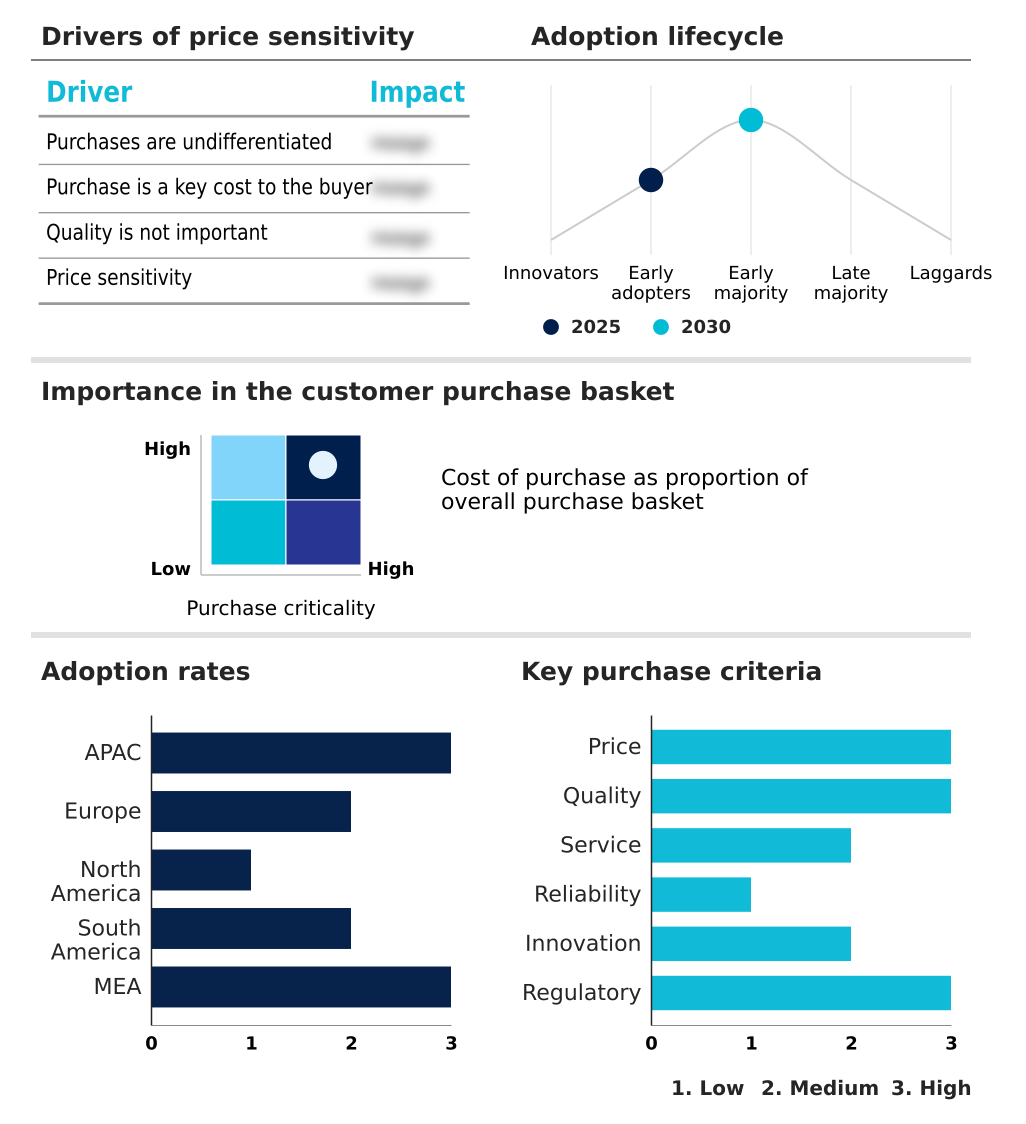
Customer Landscape of Smart Container Industry
Competitive Landscape
Companies are implementing various strategies, such as strategic alliances, smart container market forecast, partnerships, mergers and acquisitions, geographical expansion, and product/service launches, to enhance their presence in the industry.
Aeler Technologies - Next-generation composite containers integrating embedded sensors and AI are engineered to safeguard high-value, sensitive cargo, enhancing supply chain integrity and asset protection.
The industry research and growth report includes detailed analyses of the competitive landscape of the market and information about key companies, including:
- Aeler Technologies
- BlackBerry Ltd.
- CalAmp Corp.
- Carrier Global Corp.
- Daikin Industries Ltd.
- Dwyer Instruments LLC
- Emerson Electric Co.
- Envirotainer AB
- Geotab Inc.
- Globe Tracker, ApS.
- Logiwa Inc.
- Nexxiot
- ORBCOMM Inc.
- Phillips Connect
- Ramco Systems Ltd.
- Thermo King
- TRAXENS
- Triton International Ltd
- Unilode Aviation Solutions
- ZillionSource Technologies
Qualitative and quantitative analysis of companies has been conducted to help clients understand the wider business environment as well as the strengths and weaknesses of key industry players. Data is qualitatively analyzed to categorize companies as pure play, category-focused, industry-focused, and diversified; it is quantitatively analyzed to categorize companies as dominant, leading, strong, tentative, and weak.
Recent Development and News in Smart container market
- In May 2025, a cybersecurity advisory report was issued, identifying a significant vulnerability in a legacy data transmission protocol commonly used by smart containers, prompting calls for immediate firmware updates across European and North American logistics networks.
- In April 2025, a leading global chemical logistics association established a new industry standard that mandates real-time pressure monitoring for all Class 3 flammable liquids transported in smart tank containers to mitigate fire risks.
- In March 2025, Maersk announced a strategic collaboration with IBM to deploy a new generation of AI-driven smart containers designed to optimize fuel usage and reduce carbon emissions on its Pacific routes.
- In February 2025, Hapag-Lloyd confirmed the completion of its fleet-wide initiative to equip its entire standard container fleet with smart tracking devices, establishing full real-time visibility for its assets.
Dive into Technavio’s robust research methodology, blending expert interviews, extensive data synthesis, and validated models for unparalleled Smart Container Market insights. See full methodology.
| Market Scope | |
|---|---|
| Page number | 303 |
| Base year | 2025 |
| Historic period | 2020-2024 |
| Forecast period | 2026-2030 |
| Growth momentum & CAGR | Accelerate at a CAGR of 19.1% |
| Market growth 2026-2030 | USD 8671.7 million |
| Market structure | Fragmented |
| YoY growth 2025-2026(%) | 18.0% |
| Key countries | China, India, Japan, South Korea, Australia, Indonesia, Germany, The Netherlands, UK, France, Italy, Spain, US, Canada, Mexico, Brazil, Argentina, Colombia, UAE, Saudi Arabia, South Africa, Turkey and Israel |
| Competitive landscape | Leading Companies, Market Positioning of Companies, Competitive Strategies, and Industry Risks |
Research Analyst Overview
- The smart container market is undergoing a significant transformation, driven by the need for granular supply chain visibility and intelligent asset management. The core of this evolution lies in advanced telematics hardware integration, enabling real-time asset tracking and comprehensive cargo condition monitoring through multi-sensor data fusion.
- For instance, IoT telematics solutions provide critical environmental sensor data, essential for maintaining cold chain integrity for perishable goods transport and ensuring pharmaceutical supply chain security. Stakeholders leverage this data for predictive maintenance alerts and asset utilization optimization, which is crucial for detention and demurrage reduction.
- The technology, which includes everything from shock and vibration detection to door opening sensor alerts, is supported by both low-power wide-area networks (LPWAN) and satellite connectivity modules. Advanced systems utilize geofencing and route deviation notifications for supply chain risk mitigation. The data is often secured via tamper-proof data logging, with some firms exploring blockchain for supply chain integrity.
- On the software side, an AI-driven analytics platform and cloud-based logistics platform are used for fleet management software and digital twin simulation. This allows for sophisticated carbon footprint calculation, with some operators achieving a 15% reduction in emissions. The push for efficiency is also seen in smart reefer technology, unit load device (ULD) tracking, and solutions for hazardous materials transport.
- Ultimately, the goal is container lifecycle management through zero-maintenance IoT sensors, paving the way for automated customs clearance.
What are the Key Data Covered in this Smart Container Market Research and Growth Report?
-
What is the expected growth of the Smart Container Market between 2026 and 2030?
-
USD 8.67 billion, at a CAGR of 19.1%
-
-
What segmentation does the market report cover?
-
The report is segmented by Component (Hardware, Software, and Services), End-user (Food and beverage, Pharmaceuticals, Chemicals, Oil and gas, and Others), Type (Smart dry containers, Smart refrigerated container, Smart tank containers, and Open-top and flat rack) and Geography (APAC, Europe, North America, South America, Middle East and Africa)
-
-
Which regions are analyzed in the report?
-
APAC, Europe, North America, South America and Middle East and Africa
-
-
What are the key growth drivers and market challenges?
-
Accelerated Integration of advanced telematics in global logistics, High capital investment and ongoing maintenance costs
-
-
Who are the major players in the Smart Container Market?
-
Aeler Technologies, BlackBerry Ltd., CalAmp Corp., Carrier Global Corp., Daikin Industries Ltd., Dwyer Instruments LLC, Emerson Electric Co., Envirotainer AB, Geotab Inc., Globe Tracker, ApS., Logiwa Inc., Nexxiot, ORBCOMM Inc., Phillips Connect, Ramco Systems Ltd., Thermo King, TRAXENS, Triton International Ltd, Unilode Aviation Solutions and ZillionSource Technologies
-
Market Research Insights
- The market is defined by a strategic shift toward intelligent asset management, where connected shipping containers are no longer passive assets but active data-generating nodes in the digital supply chain.
- Real-time container visibility, enabled by smart container IoT devices, allows companies to achieve significant operational gains; for instance, integrated digital freight tracking systems have been shown to reduce port drayage wait times by up to 20%. The adoption of advanced telematics systems is critical in specialized segments like cold chain logistics solutions, where maintaining cargo integrity is non-negotiable.
- As supply chain automation tech matures, firms are leveraging smart container data analytics to optimize routes and asset utilization, with some achieving a 15% reduction in carbon emissions through dynamic adjustments. This focus on verifiable ROI underscores the move from basic tracking to predictive supply chain analytics for proactive risk management.
We can help! Our analysts can customize this smart container market research report to meet your requirements.
 RIA -
RIA - 
