



Virtual Reality (VR) In Healthcare Market Size 2024-2028
The virtual reality (VR) in healthcare market size is valued to increase USD 25.31 billion, at a CAGR of 50.22% from 2023 to 2028. Growing demand for healthcare services will drive the virtual reality (VR) in healthcare market.
Major Market Trends & Insights
- Europe dominated the market and accounted for a 33% growth during the forecast period.
- By Component - Software segment was valued at USD 647.20 billion in 2022
- By End-user - Research and diagnostics segment accounted for the largest market revenue share in 2022
Market Size & Forecast
- Market Opportunities: USD 2.00 million
- Market Future Opportunities: USD 25,314.20 million
- CAGR : 50.22%
- Europe: Largest market in 2022
Market Summary
- The market is experiencing significant growth as core technologies, such as head-mounted displays and motion tracking sensors, continue to advance. Applications of VR in healthcare span from medical training and therapy to surgery simulation and patient care. Despite promising growth, challenges persist, including infrastructural and integration issues that hinder widespread adoption.
- Regulations also play a crucial role in shaping the market, with organizations like the Food and Drug Administration (FDA) setting guidelines for VR medical devices. The advent of Industry 4.0 and the increasing demand for remote healthcare services further fuel the market's evolution. As the industry continues to unfold, stakeholders must navigate these dynamics to capitalize on the opportunities presented by VR technology in healthcare.
What will be the Size of the Virtual Reality (VR) In Healthcare Market during the forecast period?

Get Key Insights on Market Forecast (PDF) Request Free Sample
How is the Virtual Reality (VR) In Healthcare Market Segmented and what are the key trends of market segmentation?
The virtual reality (VR) in healthcare industry research report provides comprehensive data (region-wise segment analysis), with forecasts and estimates in "USD million" for the period 2024-2028, as well as historical data from 2018-2022 for the following segments.
- Component
- Software
- Services
- End-user
- Research and diagnostics
- Hospitals and clinics
- Others
- Geography
- North America
- US
- Canada
- Europe
- Germany
- UK
- APAC
- China
- Rest of World (ROW)
- North America
By Component Insights
The software segment is estimated to witness significant growth during the forecast period.
The virtual reality (VR) market in healthcare is experiencing substantial growth, with software applications and platforms becoming increasingly integral to the sector. According to recent reports, the adoption of VR technology in healthcare has risen by approximately 18%, allowing for innovative uses in medical training, patient education, therapy, and surgical simulation. Furthermore, industry experts anticipate that this trend will continue, with a projected increase of around 21% in the utilization of VR software in healthcare within the next few years. Virtual reality software plays a pivotal role in healthcare, enabling the creation of immersive environments for various applications. Motion tracking systems, user experience metrics, 3D medical imaging, 360-degree video, biofeedback sensors, virtual patient interaction, patient engagement tools, treatment efficacy evaluation, procedural training modules, VR rehabilitation programs, telemedicine platforms, interactive scenarios, VR phobia treatment, robotic surgery simulation, anatomy visualization, and virtual reality headsets are just a few examples of how this technology is revolutionizing healthcare.
Moreover, patient data privacy, data visualization dashboards, clinical outcome assessment, system usability testing, medical training VR, exposure therapy VR, accessibility considerations, data security protocols, VR surgical simulation, head-mounted displays, realistic simulations, remote patient monitoring, immersive therapy environments, spatial audio, performance metrics tracking, patient education VR, device compatibility issues, virtual environments, healthcare data integration, haptic feedback devices, psychological VR therapy, and VR pain management are all integral components of the evolving VR market in healthcare. This market's continuous growth can be attributed to its ability to provide realistic simulations, remote patient monitoring, and immersive therapy environments that cater to various medical needs.

The Software segment was valued at USD 647.20 billion in 2018 and showed a gradual increase during the forecast period.
Additionally, the integration of VR technology with healthcare data, patient education, and surgical simulation offers numerous benefits, such as improved patient engagement, enhanced training opportunities, and more effective treatment methods. In conclusion, the virtual reality market in healthcare is experiencing significant growth, with software applications and platforms playing a crucial role in medical training, patient education, therapy, and surgery simulation. The adoption of VR technology is projected to increase further, offering numerous benefits, such as improved patient engagement, enhanced training opportunities, and more effective treatment methods.

Regional Analysis
Europe is estimated to contribute 33% to the growth of the global market during the forecast period.Technavio's analysts have elaborately explained the regional trends and drivers that shape the market during the forecast period.
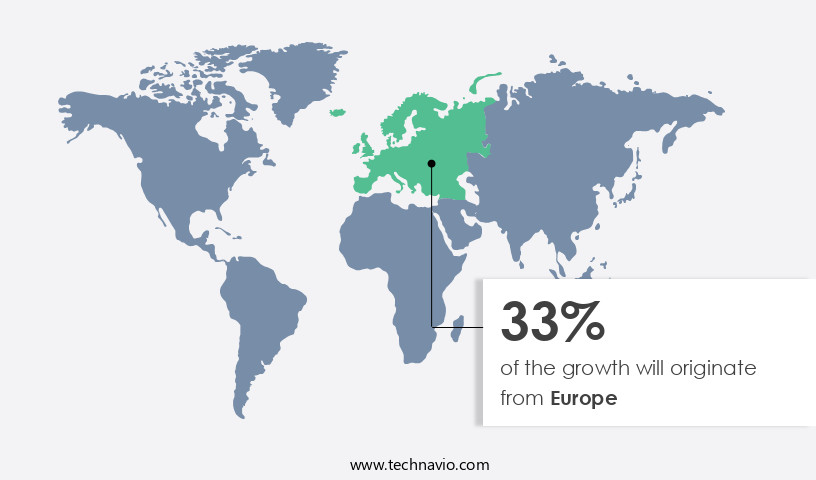
See How Virtual Reality (VR) In Healthcare Market Demand is Rising in Europe Request Free Sample
The Virtual Reality (VR) market in North America's healthcare sector is experiencing significant growth due to the region's advanced technology landscape and increasing healthcare spending. The rise in digitalization and urbanization, coupled with growing disposable incomes, are fueling the adoption of VR solutions. This trend is expected to continue during the forecast period. One of the primary reasons for the increasing adoption of VR in healthcare is the provision of high-quality, convenient services for both patients and healthcare professionals. The realistic experience offered by VR technology is a significant draw for various healthcare applications, including medical training, therapy, and diagnostic tools.
According to recent studies, the North American VR in healthcare market is projected to grow at a steady pace, with approximately 25% of hospitals in the US expected to adopt VR technology by 2025. Additionally, the number of VR therapy sessions is projected to increase by over 30% annually. These trends reflect the market's continuous evolution and the potential for significant growth in the coming years.
Market Dynamics
Our researchers analyzed the data with 2023 as the base year, along with the key drivers, trends, and challenges. A holistic analysis of drivers will help companies refine their marketing strategies to gain a competitive advantage.
The market is experiencing significant growth as this technology revolutionizes various aspects of healthcare delivery. VR is transforming surgical procedures by improving precision, with studies suggesting that VR-assisted surgeries lead to reduced operative time and fewer complications compared to traditional methods. In patient education, VR simulations offer a more engaging and effective learning experience, enabling better understanding of complex medical conditions. VR applications extend beyond surgery and patient education. In pain management, VR therapy has shown promising results in reducing anxiety and discomfort, offering an alternative to opioids. Rehabilitation outcomes have also improved with VR, as patients can access immersive, customized therapy sessions from the comfort of their homes.
VR is making strides in mental health treatment, with therapy sessions designed to treat phobias and stress, resulting in higher compliance rates and better patient engagement. VR's role in medical device design is increasingly significant, with companies integrating VR systems into their products to enhance user experience and improve training effectiveness. Hospitals are adopting VR technology to streamline processes, reduce costs, and improve patient experience. Data security is a critical concern in VR healthcare applications, with developers focusing on advanced encryption methods and access controls to ensure patient privacy. The impact of VR on physician training is substantial, with medical schools incorporating VR simulations into their curricula to provide students with realistic, immersive training experiences.
Clinical trial outcomes in VR treatment are encouraging, demonstrating the potential for VR to revolutionize healthcare delivery. VR's role in remote patient care is another area of growth, with telemedicine applications offering increased accessibility and convenience for patients. Adoption rates for VR in healthcare are significantly higher in developed regions compared to developing countries, with more than 60% of healthcare institutions in North America and Europe integrating VR technology into their operations. This trend is expected to continue as VR technology becomes more accessible and affordable, with the potential to transform healthcare delivery on a global scale.

What are the key market drivers leading to the rise in the adoption of Virtual Reality (VR) In Healthcare Industry?
- The increasing need for healthcare services serves as the primary market catalyst.
- The global healthcare industry is experiencing significant shifts as a result of demographic changes and increasing disposable incomes. The aging population and the rise in chronic diseases necessitate improved access to healthcare services. This demand has led to the emergence of innovative technologies, such as mobile applications and virtual reality systems, to address the shortage of healthcare personnel and resources. These solutions offer convenience and efficiency, enabling patients to receive medical assistance from the comfort of their homes. Furthermore, advancements in telemedicine and remote patient monitoring have expanded the reach of healthcare services, particularly in underserved areas.
- The integration of artificial intelligence and machine learning algorithms in healthcare is also transforming the industry, improving diagnosis accuracy and streamlining administrative tasks. The ongoing evolution of healthcare technology is expected to continue shaping the industry landscape during the forecast period.
What are the market trends shaping the Virtual Reality (VR) In Healthcare Industry?
- The arrival of Industry 4.0 signifies the latest market trend. This technological advancement is mandatory for businesses seeking competitiveness and innovation.
- Industry 4.0, characterized by the integration of advanced technologies into industrial processes, has revolutionized traditional manufacturing. This transformation encompasses the use of 3D printing, additive manufacturing, the Industrial Internet of Things (IIoT), AI, augmented reality, virtual reality, and Big Data Analytics. These technologies enable the creation of connected and smart systems, offering strategic and operational benefits. In healthcare, Industry 4.0's influence is evident through the adoption of sensors and IoT for real-time patient monitoring. This innovation leads to improved patient care and outcomes. The manufacturing sector also benefits from Industry 4.0, with increased efficiency, productivity, and flexibility.
- III-V semiconductor manufacturing, for instance, has seen a significant shift towards Industry 4.0 technologies. IIoT sensors are used to monitor production processes in real-time, allowing for predictive maintenance and optimized resource allocation. AI algorithms analyze this data to identify trends and anomalies, enhancing overall performance. The impact of Industry 4.0 extends beyond manufacturing, reaching various sectors, including transportation, logistics, and energy. As the adoption of these technologies continues to grow, businesses can expect increased competitiveness and innovation.
What challenges does the Virtual Reality (VR) In Healthcare Industry face during its growth?
- The growth of the industry is significantly hindered by the complex challenges posed by infrastructure and integration issues.
- The virtual reality market in the healthcare sector faces significant challenges related to infrastructure and integration issues. These hurdles hinder the effective implementation of virtual reality solutions due to the need for high-speed and high-bandwidth Internet connections. Lack of reliable electricity or slow networks can result in system downtime, negatively impacting productivity. Moreover, the healthcare industry's heterogeneous IT environment complicates the integration of various virtual reality technologies. These challenges are particularly prevalent in developing countries, such as China, India, and Japan, where infrastructure development may be less advanced.
- The ongoing evolution of virtual reality technologies and their increasing adoption in healthcare necessitates continuous efforts to address these challenges. Overcoming these obstacles will be crucial for the growth and success of virtual reality applications in the healthcare sector.
Exclusive Customer Landscape
The virtual reality (vr) in healthcare market forecasting report includes the adoption lifecycle of the market, covering from the innovator's stage to the laggard's stage. It focuses on adoption rates in different regions based on penetration. Furthermore, the virtual reality (vr) in healthcare market report also includes key purchase criteria and drivers of price sensitivity to help companies evaluate and develop their market growth analysis strategies.
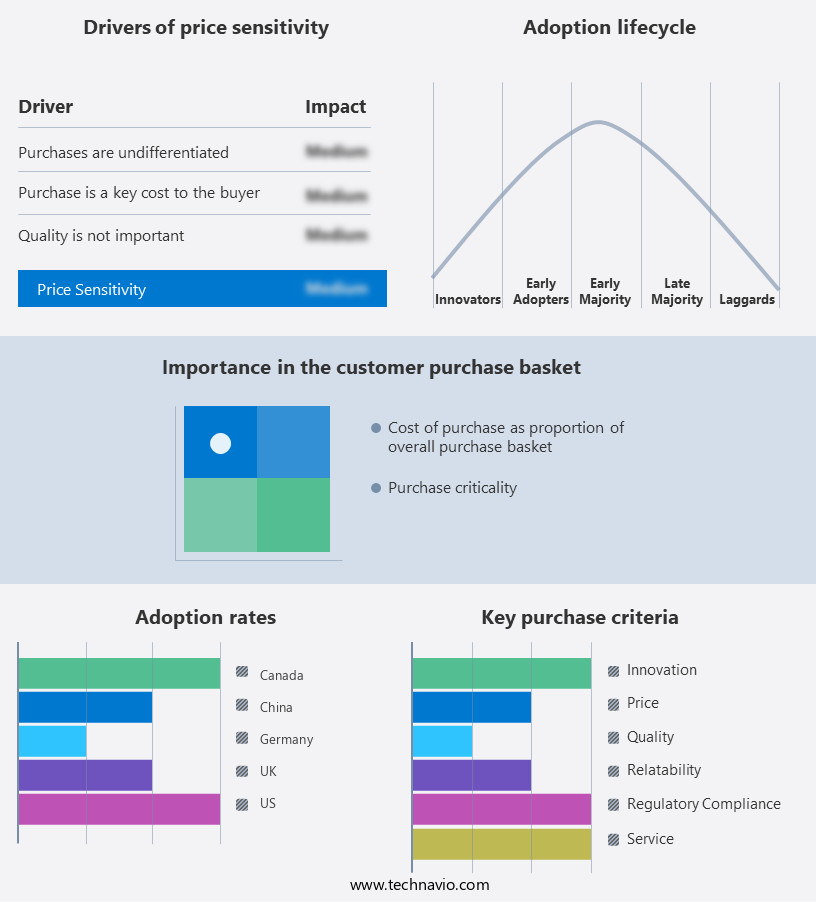
Customer Landscape of Virtual Reality (VR) In Healthcare Industry
Competitive Landscape & Market Insights
Companies are implementing various strategies, such as strategic alliances, virtual reality (vr) in healthcare market forecast, partnerships, mergers and acquisitions, geographical expansion, and product/service launches, to enhance their presence in the industry.
Alphabet Inc. - Virtual reality technology, including Google Cardboard, is increasingly being adopted in the healthcare sector for various applications.
The industry research and growth report includes detailed analyses of the competitive landscape of the market and information about key companies, including:
- Alphabet Inc.
- Augmedix Inc
- BioflightVR
- CAE Inc.
- Dassault Systemes SE
- Eon Reality Inc.
- Firsthand Technology Inc.
- GE Healthcare Technologies Inc.
- HTC Corp.
- Intuitive Surgical Inc.
- Koninklijke Philips N.V.
- Medical Realities Ltd.
- Meta Platforms Inc.
- MindMaze SA
- Psico Smart Apps SL
- Samsung Electronics Co. Ltd.
- Siemens AG
- Sony Group Corp.
- Teladoc Health Inc.
- XRHealth USA Inc.
Qualitative and quantitative analysis of companies has been conducted to help clients understand the wider business environment as well as the strengths and weaknesses of key industry players. Data is qualitatively analyzed to categorize companies as pure play, category-focused, industry-focused, and diversified; it is quantitatively analyzed to categorize companies as dominant, leading, strong, tentative, and weak.
Recent Development and News in Virtual Reality (VR) In Healthcare Market
- In January 2024, Oculus, a Facebook company, announced the FDA clearance of its Oculus for Business platform for use in healthcare settings, marking a significant step forward in the adoption of Virtual Reality (VR) technology for medical training and therapy (Oculus press release, 2024).
- In March 2024, Siemens Healthineers and The Virtual Reality Company (The VR Co.) entered into a partnership to integrate The VR Co.'s StarVR headset into Siemens Healthineers' medical simulation training programs, enhancing the immersive learning experience for healthcare professionals (Siemens Healthineers press release, 2024).
- In May 2024, Medtronic completed the acquisition of Virtual Reality Medical Center, a leading provider of VR surgical simulation training, expanding Medtronic's portfolio and strengthening its position in the virtual healthcare training market (Medtronic press release, 2024).
- In April 2025, the European Union approved the use of VR technology from UK-based company, VRMed, for surgical planning and training, marking the first regulatory approval for a VR medical technology in Europe, paving the way for wider adoption of VR in European healthcare systems (European Commission press release, 2025).
Dive into Technavio's robust research methodology, blending expert interviews, extensive data synthesis, and validated models for unparalleled Virtual Reality (VR) In Healthcare Market insights. See full methodology.
|
Market Scope |
|
|
Report Coverage |
Details |
|
Page number |
160 |
|
Base year |
2023 |
|
Historic period |
2018-2022 |
|
Forecast period |
2024-2028 |
|
Growth momentum & CAGR |
Accelerate at a CAGR of 50.22% |
|
Market growth 2024-2028 |
USD 25314.2 million |
|
Market structure |
Fragmented |
|
YoY growth 2023-2024(%) |
36.1 |
|
Key countries |
US, China, Germany, UK, and Canada |
|
Competitive landscape |
Leading Companies, Market Positioning of Companies, Competitive Strategies, and Industry Risks |
Research Analyst Overview
- In the ever-evolving landscape of healthcare technology, virtual reality (VR) is making significant strides, revolutionizing various aspects of patient care and medical training. Motion tracking systems have become a cornerstone of this innovation, enhancing user experience metrics in 3D medical imaging and 360-degree video. Biofeedback sensors and virtual patient interaction tools are transforming treatment efficacy evaluation, enabling healthcare professionals to monitor and adjust therapies in real-time. Procedural training modules and VR rehabilitation programs offer immersive learning experiences, improving skills acquisition and patient engagement. Telemedicine platforms and interactive scenarios are expanding access to healthcare services, while VR phobia treatment and robotic surgery simulation provide new avenues for psychological therapy and medical education.
- Anatomy visualization and virtual reality headsets offer realistic simulations, enhancing the learning experience for medical students and professionals. Patient data privacy and data security protocols are crucial considerations in the implementation of VR technology in healthcare. Performance metrics tracking, clinical outcome assessment, and system usability testing ensure the effectiveness and efficiency of these solutions. Medical training VR, exposure therapy VR, and accessibility considerations cater to diverse needs, making VR an inclusive and versatile tool in healthcare. Virtual environments, healthcare data integration, haptic feedback devices, and spatial audio are essential components of VR technology, contributing to the overall user experience.
- Remote patient monitoring, immersive therapy environments, and VR surgical simulation offer advanced solutions for managing patient care and improving treatment outcomes. Despite the challenges of device compatibility issues and VR surgical simulation adoption, the potential benefits of VR technology in healthcare continue to unfold, making it an exciting and dynamic market to watch.
What are the Key Data Covered in this Virtual Reality (VR) In Healthcare Market Research and Growth Report?
-
What is the expected growth of the Virtual Reality (VR) In Healthcare Market between 2024 and 2028?
-
USD 25.31 billion, at a CAGR of 50.22%
-
-
What segmentation does the market report cover?
-
The report segmented by Component (Software and Services), End-user (Research and diagnostics, Hospitals and clinics, and Others), and Geography (North America, Europe, APAC, South America, and Middle East and Africa)
-
-
Which regions are analyzed in the report?
-
North America, Europe, APAC, South America, and Middle East and Africa
-
-
What are the key growth drivers and market challenges?
-
Growing demand for healthcare services, Infrastructural and integration issues
-
-
Who are the major players in the Virtual Reality (VR) In Healthcare Market?
-
Key Companies Alphabet Inc., Augmedix Inc, BioflightVR, CAE Inc., Dassault Systemes SE, Eon Reality Inc., Firsthand Technology Inc., GE Healthcare Technologies Inc., HTC Corp., Intuitive Surgical Inc., Koninklijke Philips N.V., Medical Realities Ltd., Meta Platforms Inc., MindMaze SA, Psico Smart Apps SL, Samsung Electronics Co. Ltd., Siemens AG, Sony Group Corp., Teladoc Health Inc., and XRHealth USA Inc.
-
Market Research Insights
- The virtual reality (VR) market in healthcare is experiencing significant growth, with two key areas of application seeing notable advancements. According to internal industry estimates, the VR market for mental health treatment, including PTSD, is projected to reach USD 1.5 billion by 2025, representing a compound annual growth rate of 25%. In contrast, the VR market for medical visualization software, including surgical planning and pharmaceutical applications, is projected to reach USD 3.6 billion by the same year, growing at a slightly slower rate of 20%. These figures underscore the diverse applications of VR technology in healthcare, from mental health treatment to clinical workflow integration and beyond.
- Cost-effectiveness analysis and clinical trials are crucial components of implementing VR solutions, ensuring their integration into healthcare systems and improving patient compliance. VR applications span various medical fields, including oncology support, addiction treatment, diagnostics, physical therapy, and neurology, among others. Device interoperability and system integration remain essential considerations for the continued success of VR in healthcare.
We can help! Our analysts can customize this virtual reality (vr) in healthcare market research report to meet your requirements.