


Advertising Technology Software Market Size - North America, Europe, APAC, Middle East and Africa, South America - US, China, Japan, UK, Germany - Trends and Forecast Report 2024-2028

Advertising Technology Software Market Size - North America, Europe, APAC, Middle East and Africa, South America - US, China, Japan, UK, Germany - Trends and Forecast Report 2024-2028

Published: Aug 2024 170 Pages SKU: IRTNTR75833

Market Overview at a Glance

$11.5 B
Market Opportunity
7.78%
CAGR
7.11
YoY growth 2023-2024(%)

Advertising Technology (Ad Tech) Software Market Size 2024-2028

The advertising technology (ad tech) software market size is forecast to increase by USD 11.5 billion at a CAGR of 7.78% between 2023 and 2028.

  • The market is experiencing significant growth, driven by several key factors. The increasing penetration of the internet and smartphones has expanded the reach of digital advertising, providing businesses with new opportunities to engage consumers. Additionally, the integration of artificial intelligence (AI) and machine learning technologies is enabling more targeted and personalized advertising, improving campaign performance and return on investment. However, the growing adoption of ad-blocker solutions poses a challenge for Ad Tech companies, requiring them to develop strategies to bypass these tools and deliver relevant and non-intrusive ads to consumers. Overall, these trends are shaping the future of the Ad Tech market and driving innovation In the industry.
  • What will be the Size of the Advertising Technology (Ad Tech) Software Market During the Forecast Period?
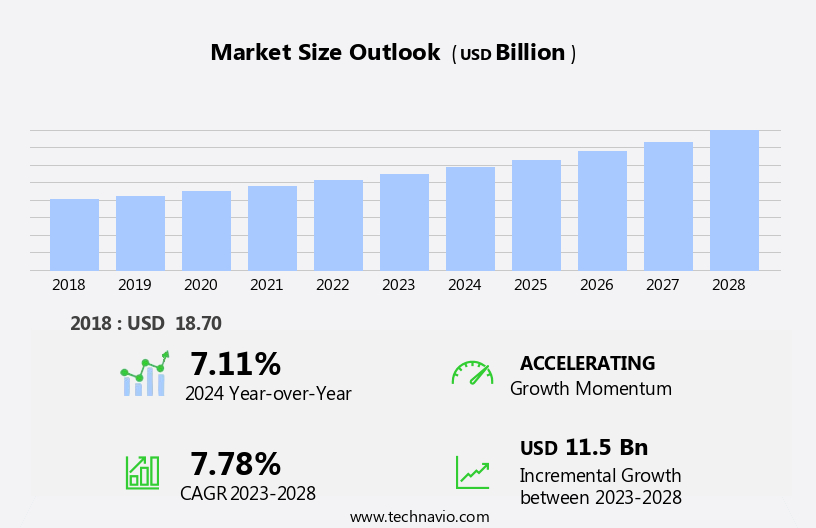
    Advertising Technology (Ad Tech) Software Market Size

     Request Free Sample

  • The market is a dynamic and evolving industry that enables advertisers to effectively reach and engage audiences across various digital channels. Key components of the ad tech ecosystem include publisher platforms, data management platforms, ad networks, and ad exchanges. Advertisers utilize these solutions for campaign management, audience segmentation, contextual targeting, retargeting, and behavioral targeting. Ad tech also supports multichannel advertising efforts, including mobile, video, native, social media, search engine, rich media, and programmatic advertising. Ad tech innovation continues to drive advancements in viewability, ad analytics, ad measurement, and ad performance. Marketers increasingly rely on ad tech to optimize their ad spend and improve campaign ROI.
  • The ad tech stack also integrates with marketing automation, CRM, and data integration tools to streamline workflows and ensure privacy compliance with regulations such as GDPR and CCPA. Overall, the ad tech market is characterized by continuous innovation, increasing competition, and a growing focus on data-driven marketing strategies.
  • How is this Advertising Technology (Ad Tech) Software Industry segmented and which is the largest segment?

    The advertising technology (ad tech) software industry research report provides comprehensive data (region-wise segment analysis), with forecasts and estimates in "USD billion" for the period 2024-2028, as well as historical data from 2018-2022 for the following segments.

    • End-user
      • Retail and consumer goods
      • IT and telecom
      • BFSI
      • Media and entertainment
      • Others
    • Deployment
      • Cloud-based
      • On-premises
    • Geography
      • North America
        • US
      • Europe
        • Germany
        • UK
      • APAC
        • China
        • Japan
      • Middle East and Africa
        • South America

        By End-user Insights

        • The retail and consumer goods segment is estimated to witness significant growth during the forecast period.

        The market is experiencing significant growth, particularly In the retail and consumer goods sector. Online advertising through programmatic platforms, such as Demand-side platforms (DSPs) and Supply-side platforms (SSPs), enables marketers to target consumers based on their behavior and preferences. Ad formats like Display advertising, Digital marketing, and Social media advertising are popular choices for reaching audiences across multiple channels. Technological innovations, including Ad servers, Ad exchanges, and Real-time bidding (RTB), facilitate automated ad buying and selling, increasing efficiency and reducing costs. Publisher platforms and Data management platforms (DMPs) help manage and analyze consumer data for effective audience segmentation, contextual targeting, retargeting, and attribution modeling.

        Ad networks and Ad creative optimization tools further enhance campaign performance. Key drivers for the market include the increase in digital ad spend, reach, frequency, and cost-per-click (CPC), as well as the growing importance of viewability, ad targeting, cross-device tracking, and cost-per-action (CPA). However, challenges such as ad fraud detection, ad blocking, and privacy compliance (GDPR, CCPA) necessitate robust Ad Tech solutions. The Ad Tech ecosystem includes various components, such as Ad analytics, Ad measurement, Ad performance, Multichannel advertising, Mobile advertising, Video advertising, Native advertising, and Search engine advertising, all working together to deliver effective advertising solutions.
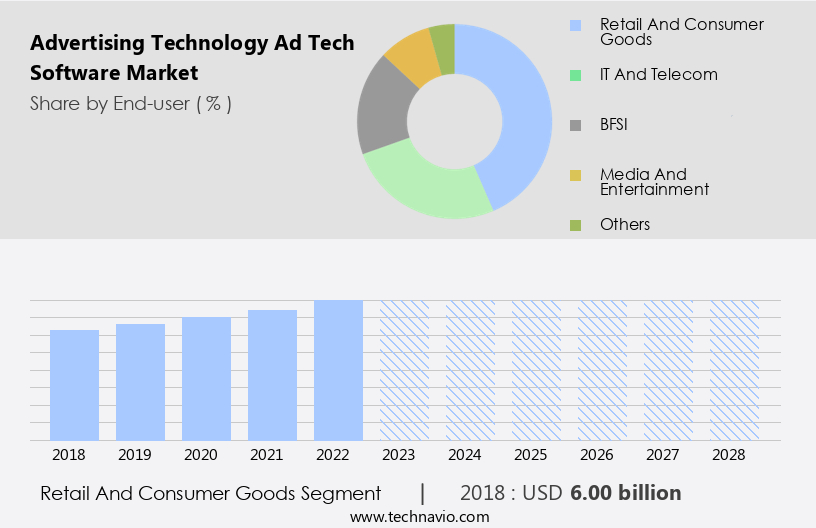
        Advertising Technology (Ad Tech) Software Market Size

        Get a glance at the  Advertising Technology (Ad Tech) Software Industry report of share of various segments Request Free Sample

        The Retail and consumer goods segment was valued at USD 6.00 billion in 2018 and showed a gradual increase during the forecast period.

        Regional Analysis

        • North America is estimated to contribute 39% to the growth of the global market during the forecast period.

        Technavio’s analysts have elaborately explained the regional trends and drivers that shape the market during the forecast period.
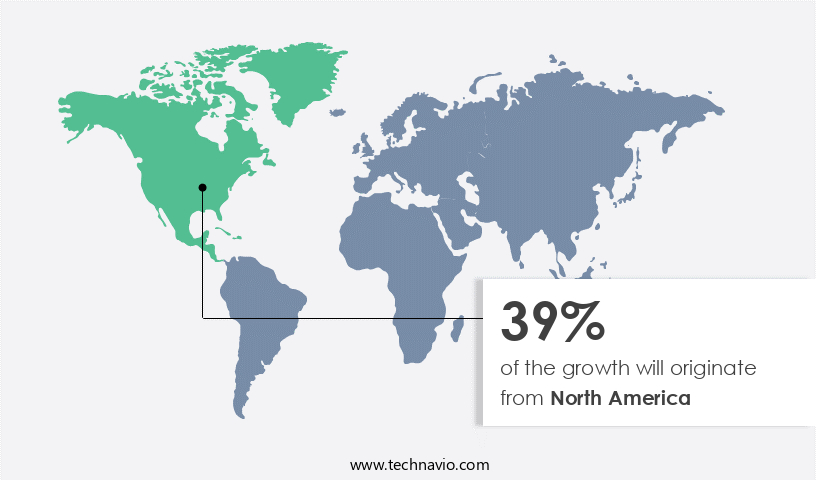
        Advertising Technology (Ad Tech) Software Market Share by Geography

        For more insights on the market share of various regions, Request Free Sample

        Ad tech software is experiencing significant growth in North America due to the increasing use of smartphones and robust broadband infrastructure. Mobile and TV advertising saturation In the region is driving market expansion, with mobile ad spending being a major contributor. As consumers spend more time on mobile devices for daily activities and content consumption, marketers are increasingly integrating marketing efforts onto these platforms. US digital advertising investment reached approximately USD209 billion in 2021. Programmatic advertising, including Demand-side platforms (DSPs) and Supply-side platforms (SSPs), are key components of the ad tech ecosystem, enabling real-time bidding (RTB), contextual targeting, audience segmentation, retargeting, and behavioral targeting.

        Ad servers, ad exchanges, and ad networks facilitate ad inventory management, conversion tracking, and ad optimization. Marketers utilize Data management platforms (DMPs) for data integration and privacy compliance with regulations such as GDPR and CCPA. Ad tech innovation continues to advance with multichannel advertising, mobile advertising, video advertising, native advertising, social media advertising, search engine advertising, rich media ads, and ad creative optimization. Ad performance measurement and attribution modeling are essential for understanding campaign effectiveness and ROI. Ad spend, reach, frequency, ad budget, and ad analytics are critical metrics for marketers. Ad measurement and performance tracking are crucial for continuous ad optimization and cost management.

        Ad fraud detection, cost-per-click (CPC), cost-per-mille (CPM), cost-per-action (CPA), ad blocking, cost-per-acquisition (CPA), ad verification, click-through rate (CTR), impressions, and ad placement are essential aspects of the ad tech ecosystem.

        Market Dynamics

        Our  researchers analyzed the data with 2023 as the base year, along with the key drivers, trends, and challenges. A holistic analysis of drivers will help companies refine their marketing strategies to gain a competitive advantage.

        What are the key market drivers leading to the rise In the adoption of Advertising Technology (Ad Tech) Software Industry?

        Increasing internet and smartphone penetration is the key driver of the market.

      • The global Ad Tech software market is experiencing significant growth due to the increasing demand for digital marketing solutions. With the proliferation of the Internet and smartphones, more individuals are accessing content online, leading companies to invest in digital advertisements. Consequently, the need for advanced Ad Tech software, including Demand-side platforms, Programmatic advertising, Ad servers, Supply-side platforms, Ad exchanges, and Real-time bidding (RTB), has escalated. Ad Tech software solutions facilitate various advertising functions, such as contextual targeting, audience segmentation, retargeting, and behavioral targeting. Ad networks, Cost-per-click (CPC), cost-per-mille (CPM), and cost-per-action (CPA) are essential components of the Ad Tech ecosystem.
      • Ad fraud detection, conversion tracking, ad placement, and ad optimization are critical features that ensure effective ad performance. Moreover, the Ad Tech stack includes Data management platforms, Facebook Ads, and Google Ads, which enable advertisers to manage, analyze, and optimize their ad campaigns. Cross-device tracking, ad creative, attribution modeling, ad inventory, and ad budget are other essential aspects of Ad Tech software. Ad measurement, ad analytics, ad performance, multichannel advertising, mobile advertising, video advertising, native advertising, and social media advertising are all integral parts of the Ad Tech ecosystem. As technology continues to evolve, Ad Tech software providers are investing in innovation, including marketing automation, CRM, data integration, and privacy compliance with regulations such as GDPR and CCPA.
      • The Ad Tech market is expected to continue its growth trajectory, driven by the increasing need for effective and targeted digital advertising solutions.
      • What are the market trends shaping the Advertising Technology (Ad Tech) Software Industry?

        Integration of AI and machine learning is the upcoming market trend.

      • The adoption of artificial intelligence (AI) and machine learning in advertising technology (Ad Tech) software is gaining momentum. These advanced technologies are integrated to enhance search results, propose pertinent ads to users, and automate various functions, including fraud detection and ad placement. By analyzing user behavior, preferences, and search history, AI algorithms offer customized recommendations for ads and products. Machine learning optimizes ad targeting and pricing based on user engagement and conversion rates. These enhancements contribute to a superior user experience, increased advertising revenue, and a more competitive edge for Ad Tech software. Consequently, the global market for Ad Tech software is poised for significant expansion during the forecast period.
      • Key features of this market include demand-side platforms, programmatic advertising, ad servers, supply-side platforms, ad exchanges, real-time bidding (RTB), contextual targeting, audience segmentation, retargeting, ad networks, behavioral targeting, ad creative, attribution modeling, ad inventory, conversion tracking, ad placement, cost-per-click, ad optimization, cost-per-mille, ad fraud detection, cost-per-action, ad blocking, cost-per-acquisition, ad verification, click-through rate, impressions, ad spend, reach, frequency, ad budget, ad analytics, ad measurement, ad performance, multichannel advertising, mobile advertising, video advertising, native advertising, social media advertising, search engine advertising, rich media ads, ad tech stack, ad tech ecosystem, marketing automation, CRM, data integration, and privacy compliance, including GDPR and CCPA.
      • Ad Tech innovation continues to shape the digital marketing landscape.
      • What challenges does the Advertising Technology (Ad Tech) Software Industry face during its growth?

        Growing adoption of ad-blocker solutions is a key challenge affecting the industry growth.

      • The global Ad Tech software market is experiencing significant challenges due to the increasing use of ad-blockers by consumers. Ad-blockers, which can be easily installed as browser extensions, prevent advertisements from appearing on websites, reducing revenue for both advertisers and publishers. This trend is particularly impacting the mobile ad market, as mobile ad-blocker solutions become more prevalent. To counteract this trend, advertisers and publishers are investing in advanced technologies such as programmatic advertising, demand-side platforms, and supply-side platforms, to improve ad targeting, delivery, and tracking. These technologies enable real-time bidding (RTB), contextual targeting, audience segmentation, retargeting, and cross-device tracking, among other features.
      • Ad servers, data management platforms, and ad exchanges are also crucial components of the Ad Tech stack, providing essential functions such as ad inventory management, conversion tracking, ad placement, and ad optimization. Ad creatives, cost-per-click (CPC), cost-per-mille (CPM), cost-per-action (CPA), ad fraud detection, ad verification, and click-through rate (CTR) measurement are all important metrics for measuring ad performance and optimizing ad spend. Marketers are also focusing on multichannel advertising, including video advertising, native advertising, social media advertising, and search engine advertising, to reach their audiences across various channels and devices. Marketing automation, CRM, data integration, and privacy compliance are also critical aspects of the Ad Tech ecosystem, with regulations such as GDPR and CCPA shaping the industry's future.
      • Despite these challenges, the Ad Tech market is expected to continue innovating, with emerging technologies such as artificial intelligence, machine learning, and blockchain poised to transform the industry. The market's future growth will depend on its ability to adapt to evolving consumer preferences, regulatory requirements, and technological advancements.
      • Exclusive Customer Landscape

        The advertising technology (ad tech) software market forecasting report includes the adoption lifecycle of the market, covering from the innovator’s stage to the laggard’s stage. It focuses on adoption rates in different regions based on penetration. Furthermore, the advertising technology (ad tech) software market report also includes key purchase criteria and drivers of price sensitivity to help companies evaluate and develop their market growth analysis strategies.
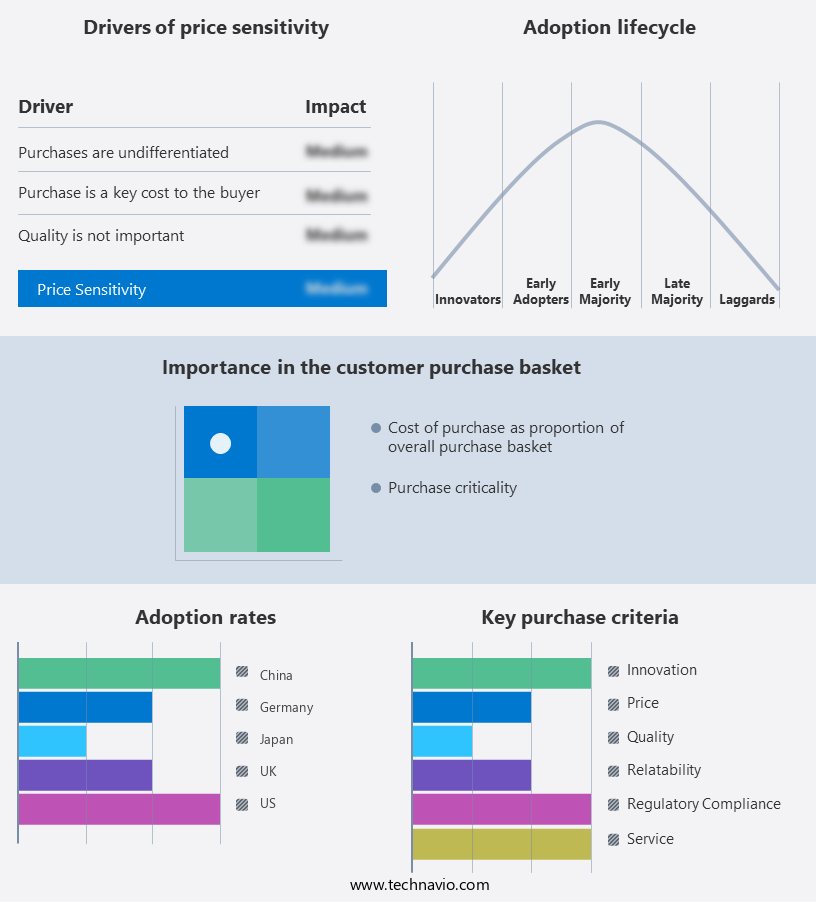
        Advertising Technology (Ad Tech) Software Market Share by Geography

         Customer Landscape

        Key Companies & Market Insights

        Companies are implementing various strategies, such as strategic alliances, advertising technology (ad tech) software market forecast, partnerships, mergers and acquisitions, geographical expansion, and product/service launches, to enhance their presence In the industry.

        Adform - Ad Tech software, such as Adform DSP, offers advanced solutions for programmatic advertising. This technology enables campaign planning, audience targeting, and creative optimization tools. By utilizing these features, advertisers can effectively reach their desired audience and maximize campaign performance. Ad Tech software streamlines the digital advertising process, making it more efficient and data-driven. Advertisers can leverage real-time data and insights to inform their ad buying decisions, resulting in more effective and targeted campaigns. Adform DSP is just one example of the innovative Ad Tech software available to advertisers, providing them with the tools they need to succeed in today's digital advertising landscape.

        The industry research and growth report includes detailed analyses of the competitive landscape of the market and information about key companies, including:

        • Adform
        • Adobe Inc.
        • Alphabet Inc.
        • Amazon.com Inc.
        • Criteo SA
        • InMobi Pte. Ltd.
        • Integral Ad Science Holding Corp.
        • Magnite Inc.
        • MediaMath Inc.
        • Mediaocean LLC
        • Meta Platforms Inc.
        • Microsoft Corp.
        • NextRoll Inc.
        • OpenX Technologies Inc.
        • PubMatic Inc.
        • Skai
        • The Trade Desk Inc.
        • Tremor International Ltd.
        • Twitter Inc.
        • WebFX

        Qualitative and quantitative analysis of companies has been conducted to help clients understand the wider business environment as well as the strengths and weaknesses of key industry players. Data is qualitatively analyzed to categorize companies as pure play, category-focused, industry-focused, and diversified; it is quantitatively analyzed to categorize companies as dominant, leading, strong, tentative, and weak.

        Research Analyst Overview

        Advertising technology, or ad tech, refers to the software and platforms used by advertisers and publishers to buy, sell, and manage digital advertising campaigns. This market is characterized by its constant evolution, driven by advancements in technology and shifting consumer behaviors. At the core of ad tech are two primary components: demand-side platforms (DSPs) and supply-side platforms (SSPs). DSPs enable advertisers to manage and optimize their digital ad campaigns in real-time, while SSPs help publishers sell their ad inventory more efficiently. Programmatic advertising, facilitated by these platforms, has revolutionized the way digital ads are bought and sold. It allows for automated, real-time bidding (RTB) on ad inventory, enabling advertisers to target specific audiences and optimize their ad spend based on real-time data.

        The ad tech ecosystem also includes other key players such as ad exchanges, ad servers, and data management platforms (DMPs). Ad exchanges act as marketplaces where buying and selling of ad inventory takes place, while ad servers manage the delivery of ads to the appropriate websites or applications. DMPs help collect, manage, and analyze data to inform targeted advertising strategies. Ad targeting is a critical aspect of ad tech, with various methods such as contextual targeting, audience segmentation, retargeting, and behavioral targeting. Contextual targeting involves serving ads based on the content of the webpage, while audience segmentation targets specific demographics or interests.

        Retargeting focuses on reaching users who have previously engaged with a brand, and behavioral targeting uses user data to deliver personalized ads. Another essential aspect of ad tech is ad measurement and analytics. Advertisers use these tools to assess the performance of their campaigns, track conversions, and optimize ad spend. Key performance indicators (KPIs) such as impressions, reach, frequency, click-through rate (CTR), and cost-per-click (CPC) are commonly used to evaluate campaign success. The ad tech market is also influenced by various trends and innovations. Multichannel advertising, which involves delivering consistent brand messages across various channels, is becoming increasingly important.

        Mobile advertising, video advertising, native advertising, and social media advertising are all growing areas withIn the market. Ad tech also faces challenges, such as ad fraud detection, ad blocking, and privacy compliance. Ad fraud refers to the use of deceptive practices to generate fraudulent ad impressions or clicks, while ad blocking is a growing concern for advertisers as more users employ ad-blocking software to avoid unwanted ads. Privacy compliance, particularly with regards to regulations like GDPR and CCPA, is a critical issue for ad tech companies to navigate. In conclusion, the ad tech market is a dynamic and complex ecosystem that is constantly evolving to meet the needs of advertisers and publishers.

        With a focus on programmatic advertising, ad targeting, and measurement and analytics, ad tech plays a crucial role In the digital advertising landscape. However, it also faces challenges related to ad fraud, ad blocking, and privacy compliance, which require ongoing innovation and adaptation.

        Market Scope

        Report Coverage

        Details

        Page number

        170

        Base year

        2023

        Historic period

        2018-2022

        Forecast period

        2024-2028

        Growth momentum & CAGR

        Accelerate at a CAGR of 7.78%

        Market growth 2024-2028

        USD 11.5 billion

        Market structure

        Fragmented

        YoY growth 2023-2024(%)

        7.11

        Key countries

        US, China, Japan, UK, and Germany

        Competitive landscape

        Leading Companies, Market Positioning of Companies, Competitive Strategies, and Industry Risks

        Request Free Sample

        What are the Key Data Covered in this Advertising Technology (Ad Tech) Software Market Research and Growth Report?

        • CAGR of the Advertising Technology (Ad Tech) Software industry during the forecast period
        • Detailed information on factors that will drive the growth and forecasting between 2024 and 2028
        • Precise estimation of the size of the market and its contribution of the industry in focus to the parent market
        • Accurate predictions about upcoming growth and trends and changes in consumer behaviour
        • Growth of the market across North America, Europe, APAC, Middle East and Africa, and South America
        • Thorough analysis of the market’s competitive landscape and detailed information about companies
        • Comprehensive analysis of factors that will challenge the advertising technology (ad tech) software market growth of industry companies

        We can help! Our analysts can customize this advertising technology (ad tech) software market research report to meet your requirements.

        Get in touch


        1 Executive Summary

        • 1.1 Market overview
          • Executive Summary - Chart on Market Overview
          • Executive Summary - Data Table on Market Overview
          • Executive Summary - Chart on Global Market Characteristics
          • Executive Summary - Chart on Market by Geography
          • Executive Summary - Chart on Market Segmentation by End-user
          • Executive Summary - Chart on Market Segmentation by Deployment
          • Executive Summary - Chart on Incremental Growth
          • Executive Summary - Data Table on Incremental Growth
          • Executive Summary - Chart on Company Market Positioning

        2 Market Landscape

        • 2.1 Market ecosystem
          • Parent Market
          • Data Table on - Parent Market
        • 2.2 Market characteristics
          • Market characteristics analysis
        • 2.3 Value chain analysis
          • Value Chain Analysis

        3 Market Sizing

        • 3.1 Market definition
          • Offerings of companies included in the market definition
        • 3.2 Market segment analysis
          • Market segments
        • 3.3 Market size 2023
          • 3.4 Market outlook: Forecast for 2023-2028
            • Chart on Global - Market size and forecast 2023-2028 ($ billion)
            • Data Table on Global - Market size and forecast 2023-2028 ($ billion)
            • Chart on Global Market: Year-over-year growth 2023-2028 (%)
            • Data Table on Global Market: Year-over-year growth 2023-2028 (%)

          4 Historic Market Size

          • 4.1 Global Advertising Technology (Ad Tech) Software Market 2018 - 2022
            • Historic Market Size - Data Table on Global Advertising Technology (Ad Tech) Software Market 2018 - 2022 ($ billion)
          • 4.2 End-user segment analysis 2018 - 2022
            • Historic Market Size - End-user Segment 2018 - 2022 ($ billion)
          • 4.3 Deployment segment analysis 2018 - 2022
            • Historic Market Size - Deployment Segment 2018 - 2022 ($ billion)
          • 4.4 Geography segment analysis 2018 - 2022
            • Historic Market Size - Geography Segment 2018 - 2022 ($ billion)
          • 4.5 Country segment analysis 2018 - 2022
            • Historic Market Size - Country Segment 2018 - 2022 ($ billion)

          5 Five Forces Analysis

          • 5.1 Five forces summary
            • Five forces analysis - Comparison between 2023 and 2028
          • 5.2 Bargaining power of buyers
            • Bargaining power of buyers - Impact of key factors 2023 and 2028
          • 5.3 Bargaining power of suppliers
            • Bargaining power of suppliers - Impact of key factors in 2023 and 2028
          • 5.4 Threat of new entrants
            • Threat of new entrants - Impact of key factors in 2023 and 2028
          • 5.5 Threat of substitutes
            • Threat of substitutes - Impact of key factors in 2023 and 2028
          • 5.6 Threat of rivalry
            • Threat of rivalry - Impact of key factors in 2023 and 2028
          • 5.7 Market condition
            • Chart on Market condition - Five forces 2023 and 2028

          6 Market Segmentation by End-user

          • 6.1 Market segments
            • Chart on End-user - Market share 2023-2028 (%)
            • Data Table on End-user - Market share 2023-2028 (%)
          • 6.2 Comparison by End-user
            • Chart on Comparison by End-user
            • Data Table on Comparison by End-user
          • 6.3 Retail and consumer goods - Market size and forecast 2023-2028
            • Chart on Retail and consumer goods - Market size and forecast 2023-2028 ($ billion)
            • Data Table on Retail and consumer goods - Market size and forecast 2023-2028 ($ billion)
            • Chart on Retail and consumer goods - Year-over-year growth 2023-2028 (%)
            • Data Table on Retail and consumer goods - Year-over-year growth 2023-2028 (%)
          • 6.4 IT and telecom - Market size and forecast 2023-2028
            • Chart on IT and telecom - Market size and forecast 2023-2028 ($ billion)
            • Data Table on IT and telecom - Market size and forecast 2023-2028 ($ billion)
            • Chart on IT and telecom - Year-over-year growth 2023-2028 (%)
            • Data Table on IT and telecom - Year-over-year growth 2023-2028 (%)
          • 6.5 BFSI - Market size and forecast 2023-2028
            • Chart on BFSI - Market size and forecast 2023-2028 ($ billion)
            • Data Table on BFSI - Market size and forecast 2023-2028 ($ billion)
            • Chart on BFSI - Year-over-year growth 2023-2028 (%)
            • Data Table on BFSI - Year-over-year growth 2023-2028 (%)
          • 6.6 Media and entertainment - Market size and forecast 2023-2028
            • Chart on Media and entertainment - Market size and forecast 2023-2028 ($ billion)
            • Data Table on Media and entertainment - Market size and forecast 2023-2028 ($ billion)
            • Chart on Media and entertainment - Year-over-year growth 2023-2028 (%)
            • Data Table on Media and entertainment - Year-over-year growth 2023-2028 (%)
          • 6.7 Others - Market size and forecast 2023-2028
            • Chart on Others - Market size and forecast 2023-2028 ($ billion)
            • Data Table on Others - Market size and forecast 2023-2028 ($ billion)
            • Chart on Others - Year-over-year growth 2023-2028 (%)
            • Data Table on Others - Year-over-year growth 2023-2028 (%)
          • 6.8 Market opportunity by End-user
            • Market opportunity by End-user ($ billion)
            • Data Table on Market opportunity by End-user ($ billion)

          7 Market Segmentation by Deployment

          • 7.1 Market segments
            • Chart on Deployment - Market share 2023-2028 (%)
            • Data Table on Deployment - Market share 2023-2028 (%)
          • 7.2 Comparison by Deployment
            • Chart on Comparison by Deployment
            • Data Table on Comparison by Deployment
          • 7.3 Cloud-based - Market size and forecast 2023-2028
            • Chart on Cloud-based - Market size and forecast 2023-2028 ($ billion)
            • Data Table on Cloud-based - Market size and forecast 2023-2028 ($ billion)
            • Chart on Cloud-based - Year-over-year growth 2023-2028 (%)
            • Data Table on Cloud-based - Year-over-year growth 2023-2028 (%)
          • 7.4 On-premises - Market size and forecast 2023-2028
            • Chart on On-premises - Market size and forecast 2023-2028 ($ billion)
            • Data Table on On-premises - Market size and forecast 2023-2028 ($ billion)
            • Chart on On-premises - Year-over-year growth 2023-2028 (%)
            • Data Table on On-premises - Year-over-year growth 2023-2028 (%)
          • 7.5 Market opportunity by Deployment
            • Market opportunity by Deployment ($ billion)
            • Data Table on Market opportunity by Deployment ($ billion)

          8 Customer Landscape

          • 8.1 Customer landscape overview
            • Analysis of price sensitivity, lifecycle, customer purchase basket, adoption rates, and purchase criteria

          9 Geographic Landscape

          • 9.1 Geographic segmentation
            • Chart on Market share by geography 2023-2028 (%)
            • Data Table on Market share by geography 2023-2028 (%)
          • 9.2 Geographic comparison
            • Chart on Geographic comparison
            • Data Table on Geographic comparison
          • 9.3 North America - Market size and forecast 2023-2028
            • Chart on North America - Market size and forecast 2023-2028 ($ billion)
            • Data Table on North America - Market size and forecast 2023-2028 ($ billion)
            • Chart on North America - Year-over-year growth 2023-2028 (%)
            • Data Table on North America - Year-over-year growth 2023-2028 (%)
          • 9.4 Europe - Market size and forecast 2023-2028
            • Chart on Europe - Market size and forecast 2023-2028 ($ billion)
            • Data Table on Europe - Market size and forecast 2023-2028 ($ billion)
            • Chart on Europe - Year-over-year growth 2023-2028 (%)
            • Data Table on Europe - Year-over-year growth 2023-2028 (%)
          • 9.5 APAC - Market size and forecast 2023-2028
            • Chart on APAC - Market size and forecast 2023-2028 ($ billion)
            • Data Table on APAC - Market size and forecast 2023-2028 ($ billion)
            • Chart on APAC - Year-over-year growth 2023-2028 (%)
            • Data Table on APAC - Year-over-year growth 2023-2028 (%)
          • 9.6 Middle East and Africa - Market size and forecast 2023-2028
            • Chart on Middle East and Africa - Market size and forecast 2023-2028 ($ billion)
            • Data Table on Middle East and Africa - Market size and forecast 2023-2028 ($ billion)
            • Chart on Middle East and Africa - Year-over-year growth 2023-2028 (%)
            • Data Table on Middle East and Africa - Year-over-year growth 2023-2028 (%)
          • 9.7 South America - Market size and forecast 2023-2028
            • Chart on South America - Market size and forecast 2023-2028 ($ billion)
            • Data Table on South America - Market size and forecast 2023-2028 ($ billion)
            • Chart on South America - Year-over-year growth 2023-2028 (%)
            • Data Table on South America - Year-over-year growth 2023-2028 (%)
          • 9.8 US - Market size and forecast 2023-2028
            • Chart on US - Market size and forecast 2023-2028 ($ billion)
            • Data Table on US - Market size and forecast 2023-2028 ($ billion)
            • Chart on US - Year-over-year growth 2023-2028 (%)
            • Data Table on US - Year-over-year growth 2023-2028 (%)
          • 9.9 China - Market size and forecast 2023-2028
            • Chart on China - Market size and forecast 2023-2028 ($ billion)
            • Data Table on China - Market size and forecast 2023-2028 ($ billion)
            • Chart on China - Year-over-year growth 2023-2028 (%)
            • Data Table on China - Year-over-year growth 2023-2028 (%)
          • 9.10 Japan - Market size and forecast 2023-2028
            • Chart on Japan - Market size and forecast 2023-2028 ($ billion)
            • Data Table on Japan - Market size and forecast 2023-2028 ($ billion)
            • Chart on Japan - Year-over-year growth 2023-2028 (%)
            • Data Table on Japan - Year-over-year growth 2023-2028 (%)
          • 9.11 UK - Market size and forecast 2023-2028
            • Chart on UK - Market size and forecast 2023-2028 ($ billion)
            • Data Table on UK - Market size and forecast 2023-2028 ($ billion)
            • Chart on UK - Year-over-year growth 2023-2028 (%)
            • Data Table on UK - Year-over-year growth 2023-2028 (%)
          • 9.12 Germany - Market size and forecast 2023-2028
            • Chart on Germany - Market size and forecast 2023-2028 ($ billion)
            • Data Table on Germany - Market size and forecast 2023-2028 ($ billion)
            • Chart on Germany - Year-over-year growth 2023-2028 (%)
            • Data Table on Germany - Year-over-year growth 2023-2028 (%)
          • 9.13 Market opportunity by geography
            • Market opportunity by geography ($ billion)
            • Data Tables on Market opportunity by geography ($ billion)

          10 Drivers, Challenges, and Opportunity/Restraints

          • 10.1 Market drivers
            • 10.2 Market challenges
              • 10.3 Impact of drivers and challenges
                • Impact of drivers and challenges in 2023 and 2028
              • 10.4 Market opportunities/restraints

                11 Competitive Landscape

                • 11.1 Overview
                  • 11.2 Competitive Landscape
                    • Overview on criticality of inputs and factors of differentiation
                  • 11.3 Landscape disruption
                    • Overview on factors of disruption
                  • 11.4 Industry risks
                    • Impact of key risks on business

                  12 Competitive Analysis

                  • 12.1 Companies profiled
                    • Companies covered
                  • 12.2 Market positioning of companies
                    • Matrix on companies position and classification
                  • 12.3 Adform
                    • Adform - Overview
                    • Adform - Product / Service
                    • Adform - Key offerings
                  • 12.4 Adobe Inc.
                    • Adobe Inc. - Overview
                    • Adobe Inc. - Business segments
                    • Adobe Inc. - Key news
                    • Adobe Inc. - Key offerings
                    • Adobe Inc. - Segment focus
                  • 12.5 Alphabet Inc.
                    • Alphabet Inc. - Overview
                    • Alphabet Inc. - Business segments
                    • Alphabet Inc. - Key offerings
                    • Alphabet Inc. - Segment focus
                  • 12.6 Amazon.com Inc.
                    • Amazon.com Inc. - Overview
                    • Amazon.com Inc. - Business segments
                    • Amazon.com Inc. - Key news
                    • Amazon.com Inc. - Key offerings
                    • Amazon.com Inc. - Segment focus
                  • 12.7 InMobi Pte. Ltd.
                    • InMobi Pte. Ltd. - Overview
                    • InMobi Pte. Ltd. - Product / Service
                    • InMobi Pte. Ltd. - Key offerings
                  • 12.8 Integral Ad Science Holding Corp.
                    • Integral Ad Science Holding Corp. - Overview
                    • Integral Ad Science Holding Corp. - Business segments
                    • Integral Ad Science Holding Corp. - Key offerings
                    • Integral Ad Science Holding Corp. - Segment focus
                  • 12.9 Magnite Inc.
                    • Magnite Inc. - Overview
                    • Magnite Inc. - Product / Service
                    • Magnite Inc. - Key offerings
                  • 12.10 Meta Platforms Inc.
                    • Meta Platforms Inc. - Overview
                    • Meta Platforms Inc. - Product / Service
                    • Meta Platforms Inc. - Key news
                    • Meta Platforms Inc. - Key offerings
                  • 12.11 Microsoft Corp.
                    • Microsoft Corp. - Overview
                    • Microsoft Corp. - Business segments
                    • Microsoft Corp. - Key news
                    • Microsoft Corp. - Key offerings
                    • Microsoft Corp. - Segment focus
                  • 12.12 OpenX Technologies Inc.
                    • OpenX Technologies Inc. - Overview
                    • OpenX Technologies Inc. - Product / Service
                    • OpenX Technologies Inc. - Key offerings
                  • 12.13 PubMatic Inc.
                    • PubMatic Inc. - Overview
                    • PubMatic Inc. - Business segments
                    • PubMatic Inc. - Key offerings
                    • PubMatic Inc. - Segment focus
                  • 12.14 The Trade Desk Inc.
                    • The Trade Desk Inc. - Overview
                    • The Trade Desk Inc. - Product / Service
                    • The Trade Desk Inc. - Key offerings
                  • 12.15 Tremor International Ltd
                    • Tremor International Ltd - Overview
                    • Tremor International Ltd - Product / Service
                    • Tremor International Ltd - Key offerings
                  • 12.16 Twitter Inc.
                    • Twitter Inc. - Overview
                    • Twitter Inc. - Product / Service
                    • Twitter Inc. - Key offerings
                  • 12.17 WebFX
                    • WebFX - Overview
                    • WebFX - Product / Service
                    • WebFX - Key offerings

                  13 Appendix

                  • 13.1 Scope of the report
                    • 13.2 Inclusions and exclusions checklist
                      • Inclusions checklist
                      • Exclusions checklist
                    • 13.3 Currency conversion rates for US$
                      • Currency conversion rates for US$
                    • 13.4 Research methodology
                      • Research methodology
                    • 13.5 Data procurement
                      • Information sources
                    • 13.6 Data validation
                      • Data validation
                    • 13.7 Validation techniques employed for market sizing
                      • Validation techniques employed for market sizing
                    • 13.8 Data synthesis
                      • Data synthesis
                    • 13.9 360 degree market analysis
                      • 360 degree market analysis
                    • 13.10 List of abbreviations
                      • List of abbreviations

                    Research Methodology

                    Technavio presents a detailed picture of the market by way of study, synthesis, and summation of data from multiple sources. The analysts have presented the various facets of the market with a particular focus on identifying the key industry influencers. The data thus presented is comprehensive, reliable, and the result of extensive research, both primary and secondary.

                    INFORMATION SOURCES

                    Primary sources

                    • Manufacturers and suppliers
                    • Channel partners
                    • Industry experts
                    • Strategic decision makers

                    Secondary sources

                    • Industry journals and periodicals
                    • Government data
                    • Financial reports of key industry players
                    • Historical data
                    • Press releases

                    DATA ANALYSIS

                    Data Synthesis

                    • Collation of data
                    • Estimation of key figures
                    • Analysis of derived insights

                    Data Validation

                    • Triangulation with data models
                    • Reference against proprietary databases
                    • Corroboration with industry experts

                    REPORT WRITING

                    Qualitative

                    • Market drivers
                    • Market challenges
                    • Market trends
                    • Five forces analysis

                    Quantitative

                    • Market size and forecast
                    • Market segmentation
                    • Geographical insights
                    • Competitive landscape

                    Interested in this report?

                    Get your sample now to see our research methodology and insights!

                    Download Now

                    Frequently Asked Questions

                    Advertising Technology (Ad Tech) Software market growth will increase by $ 11.5 bn during 2024-2028.

                    The Advertising Technology (Ad Tech) Software market is expected to grow at a CAGR of 7.78% during 2024-2028.

                    Advertising Technology (Ad Tech) Software market is segmented by End-user( Retail and consumer goods, IT and telecom, BFSI, Media and entertainment, Others) Deployment( Cloud-based, On-premises)

                    Adform, Adobe Inc., Alphabet Inc., Amazon.com Inc., Criteo SA, InMobi Pte. Ltd., Integral Ad Science Holding Corp., Magnite Inc., MediaMath Inc., Mediaocean LLC, Meta Platforms Inc., Microsoft Corp., NextRoll Inc., OpenX Technologies Inc., PubMatic Inc., Skai, The Trade Desk Inc., Tremor International Ltd., Twitter Inc., WebFX are a few of the key vendors in the Advertising Technology (Ad Tech) Software market.

                    North America will register the highest growth rate of 39% among the other regions. Therefore, the Advertising Technology (Ad Tech) Software market in North America is expected to garner significant business opportunities for the vendors during the forecast period.

                    US, China, Japan, UK, Germany

                    • Increasing internet and smartphone penetrationAs more people gain access to the Internet and smartphones is the driving factor this market.
                    • the demand for online advertisements has increased. With increasing Internet and smartphone penetration is the driving factor this market.
                    • more companies are adopting digital advertisement to promote their offerings is the driving factor this market.
                    • which increases the demand for ad tech software. This has led to the growth of the global ad tech software market is the driving factor this market.
                    • with more people using their smartphones to browse and post ads. As a result is the driving factor this market.
                    • ad tech software providers have invested heavily in mobile applications to cater to the growing number of mobile users. Thus is the driving factor this market.
                    • increasing Internet and smartphone penetration is a major driver in the global ad tech software market is the driving factor this market.
                    • and this trend is expected to continue as technology advances in the future. With the increasing adoption of the Internet and smartphones is the driving factor this market.
                    • more people are going online to search for products and services. Thus is the driving factor this market.
                    • this will increase the demand for ad tech software from advertising publishers is the driving factor this market.
                    • which will drive the growth of the global ad tech software market during the forecast period. is the driving factor this market.

                    The Advertising Technology (Ad Tech) Software market vendors should focus on grabbing business opportunities from the Retail and consumer goods segment as it accounted for the largest market share in the base year.
                    RIA - Research AI Assistant
                    Ask RIA
