



AI Image Recognition Market Size 2024-2028
The AI image recognition market size is forecast to increase by USD 3.78 billion at a CAGR of 23.04% between 2023 and 2028.
- The market is experiencing significant growth, driven by advancements in the medical imaging field and the increasing popularity of cloud-based image analysis solutions. The medical industry's reliance on accurate and efficient image analysis for diagnosis and treatment planning is fueling market growth. The integration of AI image recognition with the Internet of Things (IoT) and Industry 4.0 is expected to drive further growth in this market. Additionally, cloud-based image recognition solutions offer cost savings, scalability, and accessibility, making them an attractive option for businesses and organizations. However, concerns regarding data privacy and security are emerging challenges for the market. As more sensitive medical and personal images are being stored and analyzed in the cloud, ensuring strong security measures and regulatory compliance is essential to mitigate potential risks. Overall, the market is poised for continued growth, with advancements in technology and increasing adoption across various industries.
What will be the Size of the AI Image Recognition Market During the Forecast Period?
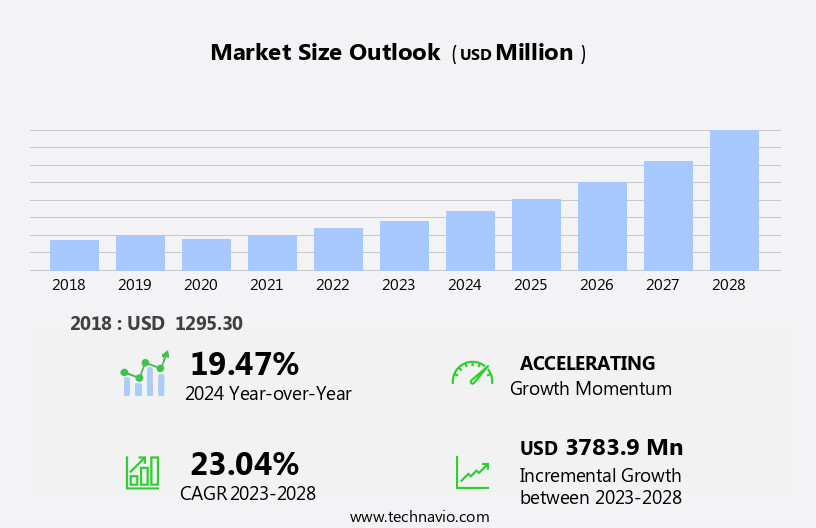
- The market is witnessing significant growth due to the increasing adoption of computer vision technology in various industries. AI-enhanced cameras, language recognition software, and deep learning models are driving the market's expansion. Financial transaction analysis, self-driving car algorithms, and healthcare, particularly diagnostic radiology, are some major applications. The market is also influenced by the integration of big data, the Internet of Things (IoT), Industry 4.0, machine learning, and deep learning models. Cloud computing and edge computing technologies are enabling real-time image recognition and analysis. Autonomous driving solutions, face identification, and social networking websites are other significant areas of application. Safety and security, facial recognition, airports, and security checkpoints are key end-users. Machine learning and 3D object detection are emerging trends in the market. Mobility solutions and quantum computing are also expected to provide new growth opportunities.
How is this AI Image Recognition Industry segmented and which is the largest segment?
The industry research report provides comprehensive data (region-wise segment analysis), with forecasts and estimates in "USD billion" for the period 2024-2028, as well as historical data from 2018-2022 for the following segments.
- End-user
- BFSI
- Automotive
- Retail
- Security
- Others
- Geography
- North America
- US
- APAC
- China
- Japan
- Europe
- Germany
- UK
- South America
- Middle East and Africa
- North America
By End-user Insights
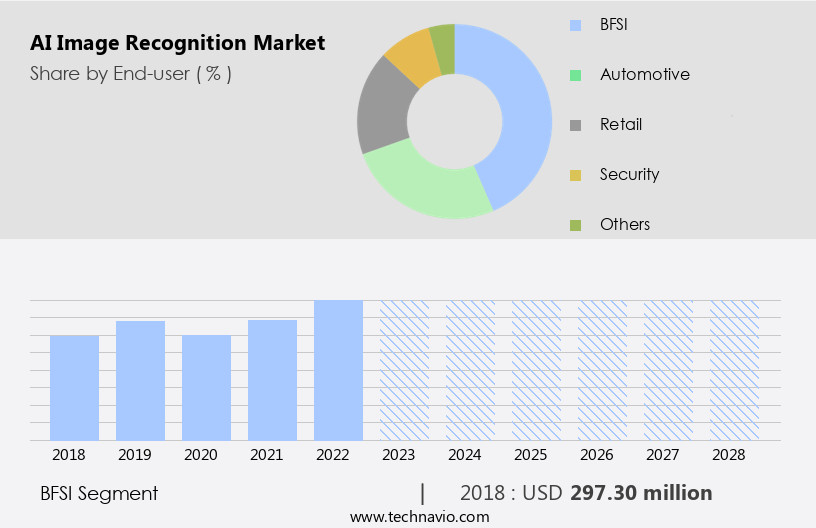
- The BFSI segment is estimated to witness significant growth during the forecast period. The technology plays a pivotal role in various sectors, particularly in vehicle performance monitoring with the use of high-resolution cameras and sensors. Computing devices and image recognition software, coupled with IT systems and neural networks, enable visual recognition systems to achieve high accuracy, efficiency, and versatility. This technology is extensively used in retail stores for inventory tracking and stock level management, preventing misplaced items and optimizing replenishment processes. In the BFSI sector, it is instrumental in personalizing customer communication, enhancing competitiveness, and automating monotonous tasks. Social networking websites, including Facebook, utilize this technology for face identification and removing fake accounts.
- Airports and security checkpoints employ AI image recognition for safety and security purposes, including facial recognition and contactless solutions. Advancements in AI image recognition include quantum machine learning, 3D object detection, and quantum computing, which enable big data analytics and image databases to facilitate event detection, image reconstruction, and video tracking. Mobility solutions and gesture recognition further expand the application scope of AI image recognition technology.
Get a glance at the market report of share of various segments Request Free Sample
The BFSI segment was valued at USD 297.30 billion in 2018 and showed a gradual increase during the forecast period.
Regional Analysis
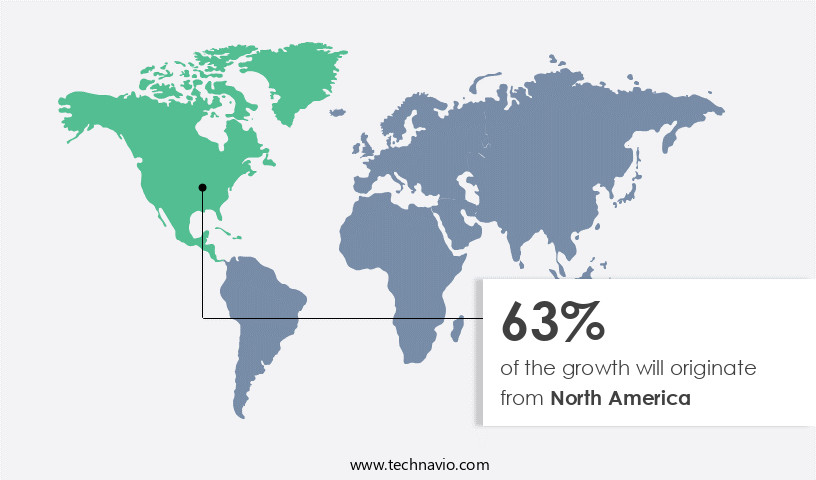
- North America is estimated to contribute 63% to the growth of the global market during the forecast period. Technavio's analysts have elaborately explained the regional trends and drivers that shape the market during the forecast period. Machine learning and deep learning models are powering cloud and edge computing technologies, enhancing autonomous driving solutions in the automotive sector. AI technicians analyze road conditions, obstacles, and hazards, enabling pedestrian detection and lane departure warnings, ensuring driver safety.
For more insights on the market size of various regions, Request Free Sample
Computer vision, a subset of artificial intelligence (AI), is revolutionizing various industries by enabling machines to identify and interpret visual information. Language recognition software is another AI application, enabling machines to understand human speech and text. AI-enhanced cameras are integrating these technologies, enhancing capabilities in financial transaction analysis, self-driving car algorithms, and healthcare diagnostics. In healthcare, AI is transforming radiology through machine vision technologies, enabling accurate CT scans, X-rays, ultrasounds, MRI, and tumor detection. Deep learning models are powering early cancer and broken bone diagnosis. Industry 4.0, 5G, and Big Data are fueling the growth of AI in autonomous robots, self-driving cars, and accident-avoidance systems.
Market Dynamics
Our researchers analyzed the data with 2023 as the base year, along with the key drivers, trends, and challenges. A holistic analysis of drivers will help companies refine their marketing strategies to gain a competitive advantage.
What are the key market drivers leading to the rise in the adoption of AI Image Recognition Industry?
- Advances in the medical imaging field is the key driver of the market. The integration of innovative technologies, such as high-resolution cameras, sensors, and computing devices, into various industries is significantly expanding the scope of image recognition applications. One of the most prominent sectors experiencing this trend is the automotive industry, where vehicle performance is enhanced through the use of image recognition software and IT systems to analyze data from neural networks and visual recognition systems. This technology aids in accuracy and efficiency, enabling better inventory management and tracking of stock levels, misplaced items, and inventory trends. Beyond industrial applications, the technology is also transforming the retail sector through facial recognition systems at security checkpoints and contactless solutions for payment and gesture recognition.
- Social networking websites and social media monitoring utilize them for content moderation and digital marketing purposes. In addition, safety and security applications, such as facial recognition at airports and event detection through video tracking, are becoming increasingly common. Advancements in technology, including quantum machine learning, 3D object detection, and quantum computing, are pushing the boundaries of image recognition capabilities. Big data analytics and image databases are essential components of these systems, enabling the processing and interpretation of vast amounts of data. These advancements offer significant potential for various industries, from retail to transportation, to improve their operations and enhance user experiences.
What are the market trends shaping the AI Image Recognition Industry?
- Growing popularity of cloud-based image analysis solutions is the upcoming market trend. The market for AI image recognition technology has experienced significant growth in various industries, including transportation, retail, security, and healthcare. High-performance computing devices, equipped with high-resolution cameras and sensors, are integrated with advanced image recognition software and neural networks to enable visual recognition systems. These systems offer improved accuracy, efficiency, and versatility in various lighting conditions and under diverse training datasets. In the retail sector, it is utilized for inventory tracking, stock level monitoring, and the identification of misplaced items. Retailers like Focal Systems employ this technology to optimize their replenishment processes and stay updated on inventory trends.
- Social networking websites and social media monitoring platforms use AI image recognition for face identification and digital marketing purposes. Safety and security applications, such as those at airports and security checkpoints, utilize them for contactless solutions and gesture recognition. Advanced technologies like quantum machine learning, 3D object detection, and quantum computing are being integrated into these systems to enhance their capabilities. Big data analytics and image databases are essential components of AI image recognition systems, enabling event detection, image reconstruction, and video tracking. It is also being adopted in mobility solutions, offering significant benefits in areas like traffic management, autonomous vehicles, and public safety.
What challenges does the AI Image Recognition Industry face during its growth?
- Growing concerns regarding data privacy and security is a key challenge affecting the industry growth. The integration of advanced technologies, such as high-resolution cameras, sensors, and computing devices, into various industries, including retail and transportation, has led to the growth of the market. This technology enables IT systems to utilize image recognition software and neural networks for visual recognition systems, enhancing efficiency and versatility in various applications. In retail stores, Ai image recognition is used for inventory tracking and stock level monitoring, preventing misplaced items and optimizing replenishment processes. It also facilitates face identification for security purposes and enhances the customer experience through contactless solutions and gesture recognition. Social networking websites and social media monitoring use Ai image recognition for digital marketing and event detection, while safety and security applications include facial recognition at airports and security checkpoints.
- Advancements in quantum machine learning, quantum computing, and big data analytics have led to the development of more accurate and efficient image recognition systems. These technologies enable image databases to process and analyze vast amounts of data, leading to object recognition, image reconstruction, and video tracking. Moreover, it is increasingly being used in mobility solutions, such as autonomous vehicles, for object detection and event detection under varying lighting conditions. The use of Ai image recognition is expected to continue expanding across various industries, offering significant benefits in terms of accuracy, efficiency, and versatility.
Exclusive Customer Landscape
The market forecasting report includes the adoption lifecycle of the market, covering from the innovator's stage to the laggard's stage. It focuses on adoption rates in different regions based on penetration. Furthermore, the market report also includes key purchase criteria and drivers of price sensitivity to help companies evaluate and develop their market growth analysis strategies.
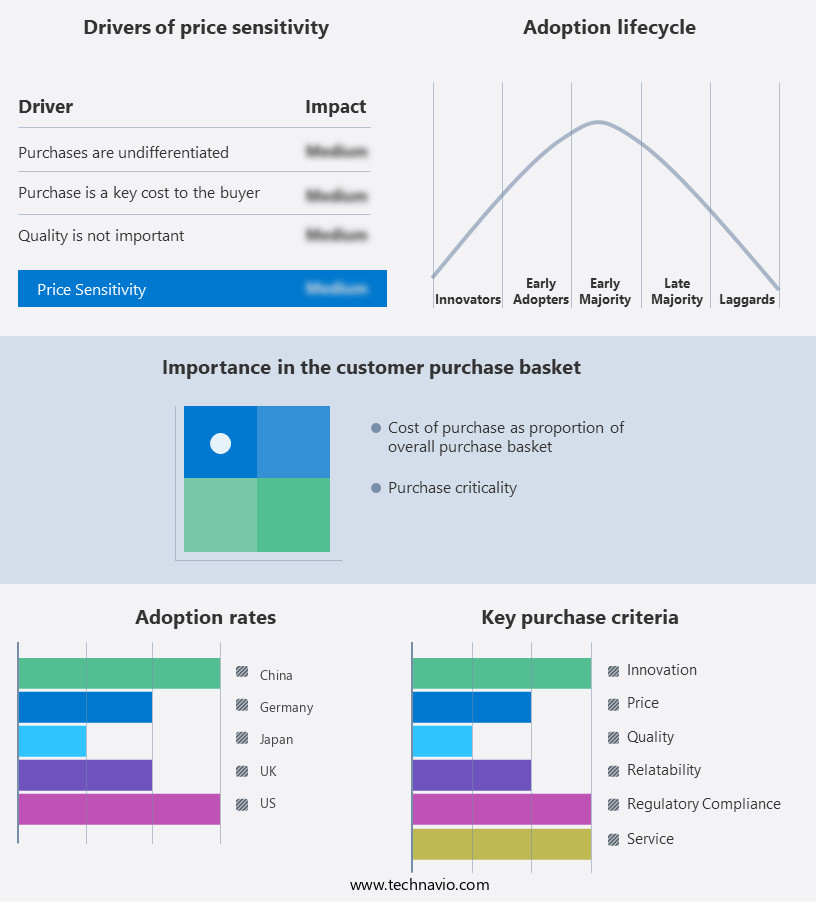
Customer Landscape
Key Companies & Market Insights
Companies are implementing various strategies, such as strategic alliances, market forecast, partnerships, mergers and acquisitions, geographical expansion, and product/service launches, to enhance their presence in the industry.
The industry research and growth report includes detailed analyses of the competitive landscape of the market and information about key companies, including:
- Alphabet Inc.
- Amazon.com Inc.
- Clarifai Inc.
- Hitachi Ltd.
- Honeywell International Inc.
- International Business Machines Corp.
- Intel Corp.
- LTU TECH
- Micron Technology Inc.
- Microsoft Corp.
- NEC Corp.
- NVIDIA Corp.
- Qualcomm Inc.
- Samsung Electronics Co. Ltd.
- Slyce Acquisition Inc.
- Vispera information technologies
- Wikitude GmbH
Qualitative and quantitative analysis of companies has been conducted to help clients understand the wider business environment as well as the strengths and weaknesses of key industry players. Data is qualitatively analyzed to categorize companies as pure play, category-focused, industry-focused, and diversified; it is quantitatively analyzed to categorize companies as dominant, leading, strong, tentative, and weak.
Research Analyst Overview
Image recognition, a subset of computer vision, has been revolutionized by Artificial Intelligence (AI) technologies. AI-driven image recognition solutions are transforming various industries, including healthcare, automotive, and finance, by enabling accurate and efficient analysis of visual data. Language recognition software is a crucial component of AI image recognition, enabling machines to understand and interpret human language, enhancing the overall functionality of these systems. AI-enhanced cameras are another essential technology, as they can process and analyze images in real-time, facilitating applications in financial transaction analysis, self-driving car algorithms, and healthcare diagnostics.
Moreover, deep learning models, powered by AI, are increasingly being used in industries like healthcare for analyzing medical images, such as CT scans, X-rays, ultrasounds, and MRI scans, to detect tumors, cancer, broken bones, and other conditions. In the automotive sector, it is used in autonomous driving solutions for analyzing road conditions, obstacles, and hazards, enhancing safety features like pedestrian detection and lane departure warnings. Cloud computing and edge computing technologies are essential infrastructure components for AI image recognition, enabling efficient data processing and analysis.
Furthermore, the increasing adoption of 5G technology is also expected to accelerate the growth of AI image recognition, enabling real-time data processing and analysis. AI technicians are becoming increasingly important in the development and deployment of AI image recognition systems, as they possess the necessary expertise to design, implement, and optimize these complex systems. The market is expected to grow significantly in the coming years, driven by the increasing demand for accurate and efficient image analysis in various industries.
|
Market Scope |
|
|
Report Coverage |
Details |
|
Page number |
151 |
|
Base year |
2023 |
|
Historic period |
2018-2022 |
|
Forecast period |
2024-2028 |
|
Growth momentum & CAGR |
Accelerate at a CAGR of 23.04% |
|
Market growth 2024-2028 |
USD 3.78 billion |
|
Market structure |
Fragmented |
|
YoY growth 2023-2024(%) |
19.47 |
|
Key countries |
US, China, Germany, UK, and Japan |
|
Competitive landscape |
Leading Companies, Market Positioning of Companies, Competitive Strategies, and Industry Risks |
What are the Key Data Covered in this Market Research and Growth Report?
- CAGR of the industry during the forecast period
- Detailed information on factors that will drive the market growth and forecasting between 2024 and 2028
- Precise estimation of the size of the market and its contribution of the industry in focus to the parent market
- Accurate predictions about upcoming growth and trends and changes in consumer behaviour
- Growth of the market across North America, APAC, Europe, South America, and Middle East and Africa
- Thorough analysis of the market's competitive landscape and detailed information about companies
- Comprehensive analysis of factors that will challenge the market growth of industry companies
We can help! Our analysts can customize this market research report to meet your requirements.