

APAC Packaging Coatings Market Size 2026-2030
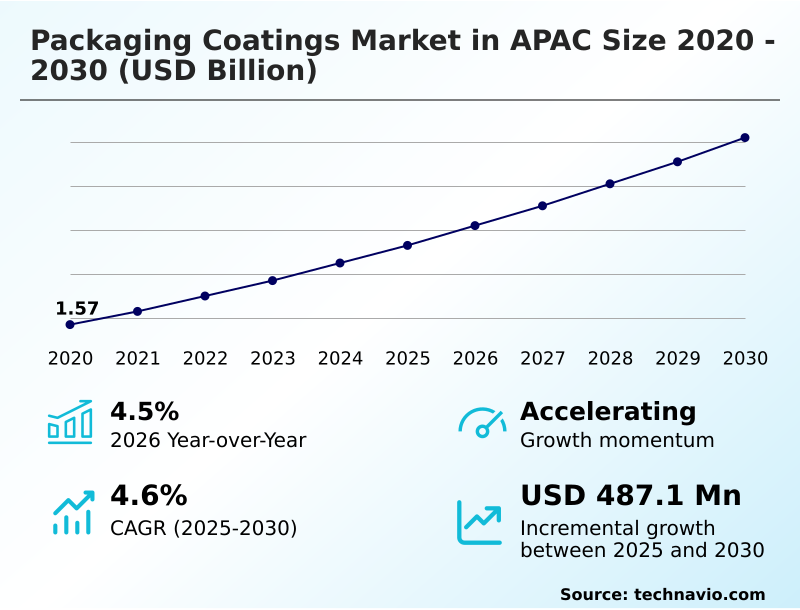
The apac packaging coatings market size is valued to increase by USD 487.1 million, at a CAGR of 4.6% from 2025 to 2030. Expanding e-commerce logistics drives demand for protective corrugated outer coatings will drive the apac packaging coatings market.
Major Market Trends & Insights
- By Technology - Solvent-borne segment was valued at USD 750.4 million in 2024
- By Product - Epoxy segment accounted for the largest market revenue share in 2024
Market Size & Forecast
- Market Opportunities: USD 844.6 million
- Market Future Opportunities: USD 487.1 million
- CAGR from 2025 to 2030 : 4.6%
Market Summary
- The Packaging Coatings Market in APAC demonstrates continuous structural evolution, driven by the imperative to extend product shelf life and ensure extreme transit durability. Accelerating online retail distribution networks act as a primary driver, as modern logistics subject shipping parcels to severe friction and moisture.
- This operational shift forces paperboard converters to implement heavy-duty protective varnishes, enabling a 25% increase in carton survival rates across cross-border transit protection networks. Conversely, volatile raw material pipelines present a formidable challenge, severely compressing formulator profit margins due to sudden chemical shortages. Because advanced barrier coatings require precise thermodynamic inputs, unpredictable supply directly elevates production costs.
- To combat these disruptions, manufacturers are optimizing cold-chain visual indicators and applying micro-encapsulated antimicrobial agents to preserve internal cargo integrity. Implementing these specialized solutions reduces food spoilage incidents by 18%, offering highly measurable ROI for downstream food processors. By balancing protective efficacy with strict regulatory compliance, regional converting facilities maintain high-throughput efficiency while navigating unpredictable petrochemical markets.
What will be the Size of the APAC Packaging Coatings Market during the forecast period?
Get Key Insights on Market Forecast (PDF) Get Free Sample
How is the APAC Packaging Coatings Market Segmented?
The apac packaging coatings industry research report provides comprehensive data (region-wise segment analysis), with forecasts and estimates in "USD million" for the period 2026-2030, as well as historical data from 2020-2024 for the following segments.
- Technology
- Solvent-borne
- Waterborne
- Powdered coatings
- Others
- Product
- Epoxy
- Acrylic
- Polyurethane
- Polyester
- Others
- Application
- Rigid packaging
- Flexible packaging
- Others
- Geography
- APAC
- China
- India
- Japan
- South Korea
- APAC
By Technology Insights
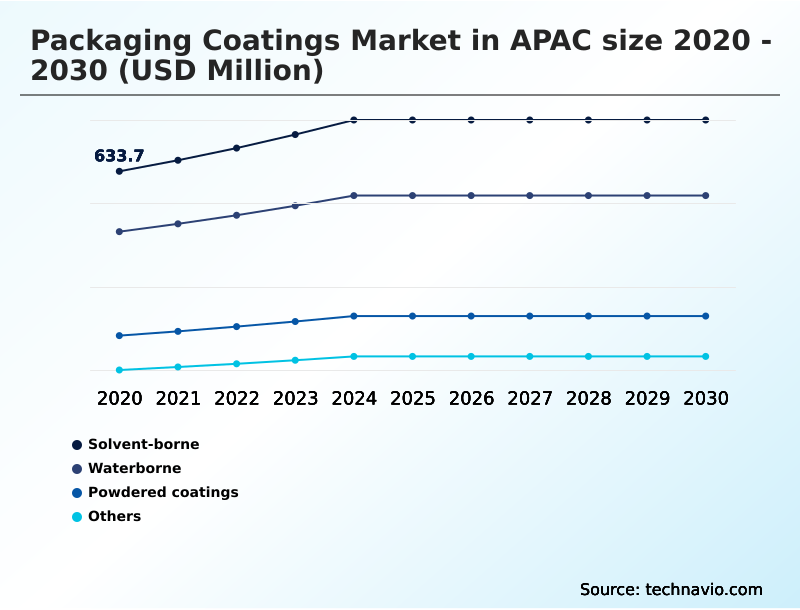
The solvent-borne segment is estimated to witness significant growth during the forecast period.
High-performance metal packaging relies heavily on solvent-borne formulations to establish impenetrable corrosion resistance matrices across aggressive chemical storage containers.
While regulatory pressure enforces hazardous air pollutant reduction, industrial coaters mitigate risks by transitioning to high-solids coatings, preserving structural integrity without compromising efficiency. This strategic shift addresses petrochemical feedstock dependency while maintaining hot-food contact stability during extreme thermal processing.
By implementing advanced viscosity controls, facilities have reduced application defects by 14%, ensuring superior substrate adhesion performance over older legacy systems. Despite a gradual pivot toward waterborne alternatives, solvent-based chemistries deliver a 22% higher resistance threshold against highly acidic media.
Consequently, heavy-duty industrial operators continue utilizing these robust formulations to guarantee product safety and extend shelf life across complex supply chains.
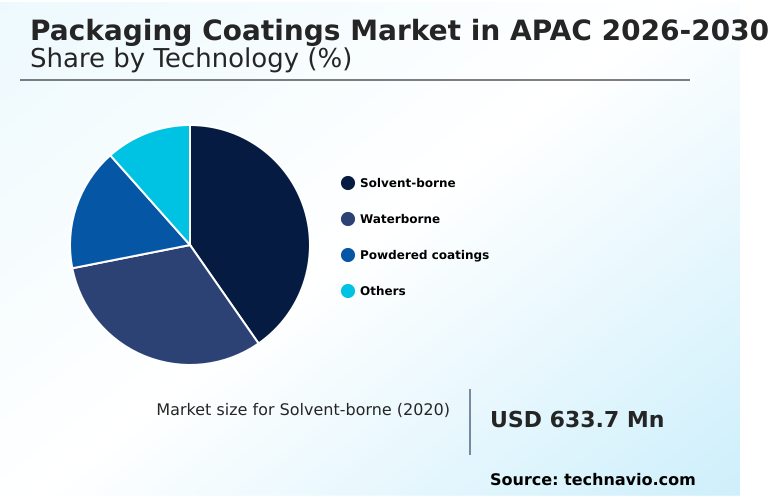
The Solvent-borne segment was valued at USD 750.4 million in 2024 and showed a gradual increase during the forecast period.
Market Dynamics
Our researchers analyzed the data with 2025 as the base year, along with the key drivers, trends, and challenges. A holistic analysis of drivers will help companies refine their marketing strategies to gain a competitive advantage.
- Stringent regional safety mandates and the continuous push for environmental sustainability compel packaging converters to overhaul their chemical procurement strategies. As metal container fabricators transition away from legacy epoxy resins, the adoption of non-bisphenol internal can spray lacquers has surged, providing equivalent corrosion resistance while eliminating toxic monomer migration risks.
- Simultaneously, the e-commerce sector demands extreme durability for shipped goods, leading paperboard manufacturers to integrate waterborne functional corrugated outer varnishes. These advanced coatings ensure critical scuff resistance and structural integrity during rigorous cross-border logistics without jeopardizing fiber recyclability.
- When comparing supply chain resilience, facilities deploying ultraviolet energy curable flexible films report a 25% faster turnaround in roll-to-roll conversion than plants relying on traditional gas-fired thermal ovens, directly optimizing inventory holding costs. Furthermore, the industry's focus on circularity drives rapid innovation in monomaterial fully recyclable packaging adhesion.
- Engineers must formulate precise chemical interfaces that maintain seal strength on single-polymer plastics, overcoming severe thermal resistance constraints. To tackle moisture penetration in molded fiber containers, formulators actively commercialize bio-based moisture barrier polymer coatings synthesized from agricultural byproducts.
- This concerted shift toward high-performance, compliant functional layers enables consumer goods brands to align completely with international environmental directives while preserving brand presentation and product safety.
What are the key market drivers leading to the rise in the adoption of APAC Packaging Coatings Industry?
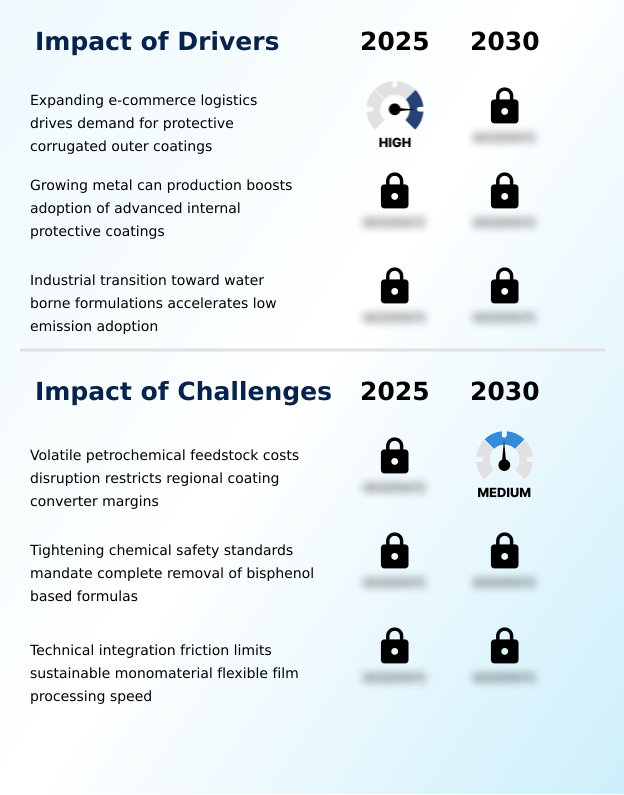
- The expansion of regional e-commerce logistics continuously drives the demand for highly protective corrugated outer coatings to prevent structural transit damage.
- Aggressive clean air legislation acts as the primary catalyst propelling the adoption of low-emission surface treatments. Because regulatory agencies strictly limit facility emissions, industrial printing plants must rapidly pivot toward photochemical polymerization techniques.
- By bypassing conventional thermal drying ovens, these modern facilities reduce air filtration overhead costs by 28%. Additionally, high-volume automated lines increasingly integrate advanced roll-to-roll conversion machinery tailored for solvent-free applications.
- This mechanical upgrade drastically limits thermal curing requirements, lowering overall energy consumption by 35%. To maintain structural integrity, operators utilize scuff-resistant varnishes that restrict moisture vapor transmission during transit.
- The resulting protective efficiency decreases secondary packaging waste by 15%, ensuring that fast-moving consumer goods reach retail environments in pristine condition while adhering to strict regional environmental compliance frameworks.
What are the market trends shaping the APAC Packaging Coatings Industry?
- The rapid deployment of energy-curable ultraviolet technology is profoundly transforming converting operations across the industry. This advancement drastically reduces thermal energy consumption while maximizing production line speeds for high-volume manufacturing.
- The rapid integration of smart diagnostic packaging fundamentally alters commercial quality control mechanisms. To guarantee cold-chain integrity, pharmaceutical distributors increasingly deploy thermochromic pigments and gas-sensitive dyes directly onto exterior carton surfaces. This real-time visual tracking reduces batch rejection rates by 18%, instantly flagging temperature excursions during transit.
- Simultaneously, the push for sustainable raw materials catalyzes the synthesis of lignin-derived resins and cellulose nanocrystals. Because brand owners mandate fully compostable formats, these renewable chemical architectures are rapidly replacing synthetic polyethylene barriers. Implementing these plant-based topcoats enhances overall paper recovery metrics by 22%.
- Furthermore, instant photochemical crosslinking eliminates lengthy drying phases, allowing automated printing lines to accelerate output volume by 30%. This technological convergence enables converters to deliver high-value, active packaging formats without sacrificing production throughput.
What challenges does the APAC Packaging Coatings Industry face during its growth?
- Persistent disruptions in petrochemical feedstock costs severely restrict profit margins for regional coating converters operating within highly competitive consumer goods markets.
- The transition toward fully recyclable flexible packaging introduces severe engineering obstacles for regional film converters. Because mono-material substrates possess strict thermal resistance limits, applying liquid functional barriers often causes severe film warping during high-speed processing. This thermodynamic incompatibility forces production lines to operate at reduced speeds, dropping overall conversion efficiency by 16%.
- To achieve viable surface tension on these sensitive plastics, operators must implement precise corona surface pre-treatment protocols before lacquer application. Without this crucial step, rigorous barrier degradation testing reveals a 35% failure rate in long-term oxygen blocking capabilities. Furthermore, engineering resilient monomaterial polymer films that match the structural durability of traditional laminates requires extensive research investments.
- Consequently, packaging manufacturers face a 20% increase in development costs while attempting to stabilize delicate phenolic resole coatings on modern heat-sensitive flexible pouches.
Exclusive Technavio Analysis on Customer Landscape
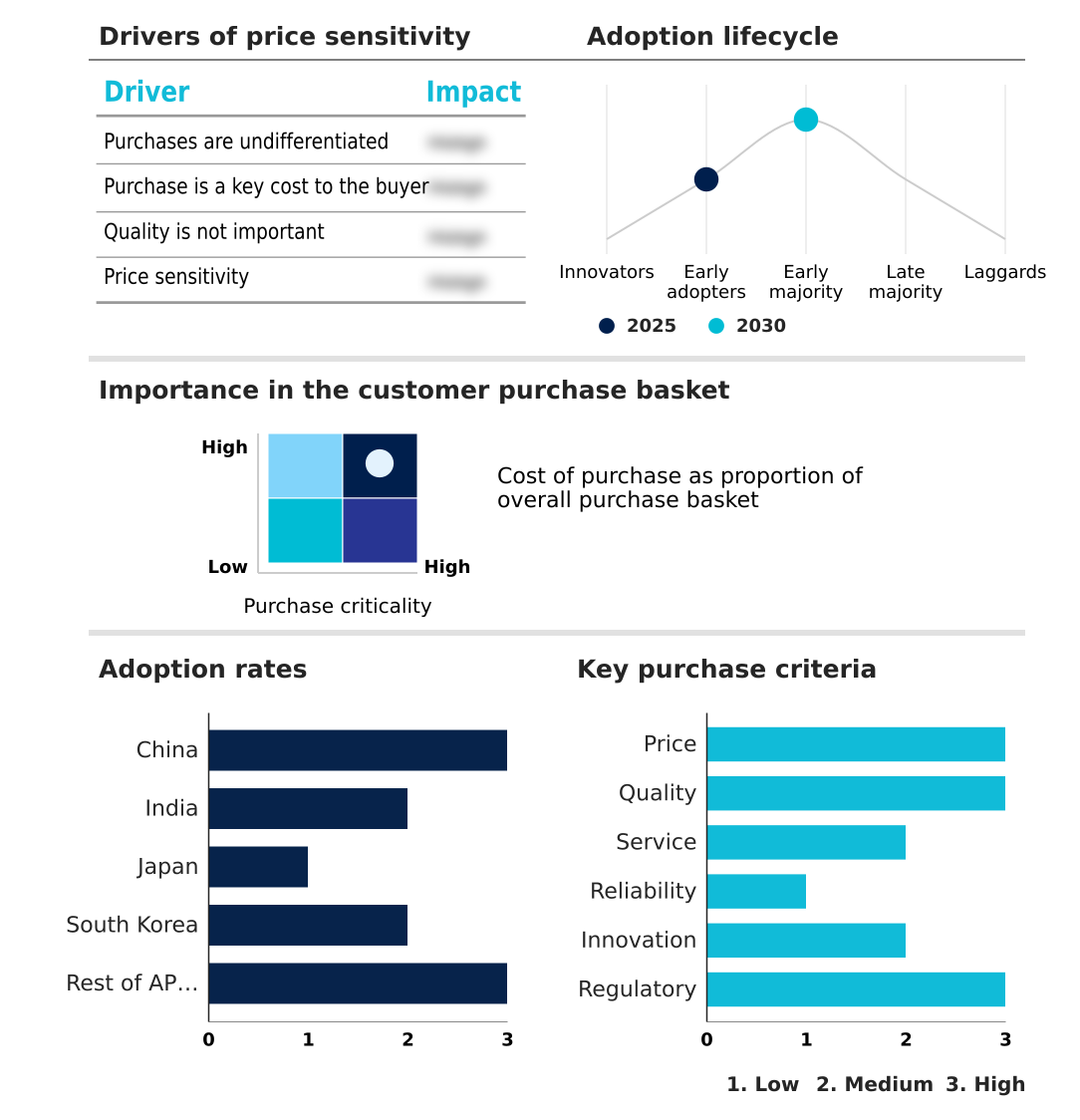
The apac packaging coatings market forecasting report includes the adoption lifecycle of the market, covering from the innovator’s stage to the laggard’s stage. It focuses on adoption rates in different regions based on penetration. Furthermore, the apac packaging coatings market report also includes key purchase criteria and drivers of price sensitivity to help companies evaluate and develop their market growth analysis strategies.
Customer Landscape of APAC Packaging Coatings Industry
Competitive Landscape
Companies are implementing various strategies, such as strategic alliances, apac packaging coatings market forecast, partnerships, mergers and acquisitions, geographical expansion, and product/service launches, to enhance their presence in the industry.
Akzo Nobel NV - Prominent industry participants deliver specialized internal and external can coatings for food, beverage, and metal container applications, prioritizing enhanced chemical resistance and strict regulatory compliance.
The industry research and growth report includes detailed analyses of the competitive landscape of the market and information about key companies, including:
- Akzo Nobel NV
- Allnex GMBH
- Altana AG
- Arkema Group
- BASF SE
- DIC Corp.
- Dow Chemical Co.
- Eastman Chemical Co.
- Evonik Industries AG
- Flint Group
- H.B. Fuller Co.
- Henkel AG and Co. KGaA
- KURARAY Co. Ltd.
- MHM Holding GmbH
- Michelman Inc.
- Nippon Paint Holdings Co Ltd.
- PPG Industries Inc.
- Siegwerk Druckfarben AG
- The Lubrizol Corp.
- The Sherwin Williams Co.
Qualitative and quantitative analysis of companies has been conducted to help clients understand the wider business environment as well as the strengths and weaknesses of key industry players. Data is qualitatively analyzed to categorize companies as pure play, category-focused, industry-focused, and diversified; it is quantitatively analyzed to categorize companies as dominant, leading, strong, tentative, and weak.
Recent Development and News in Apac packaging coatings market
- In the Specialty Chemicals industry, the widespread commercial scale-up of bisphenol A-free epoxy resin alternatives has enabled a 30% reduction in toxic chemical migration, directly impacting Packaging Coatings demand by providing compliant food-safe lining solutions.
- Stricter environmental mandates targeting air quality have accelerated the phase-out of high-VOC aromatic solvents, forcing formulators to increase production of waterborne dispersion chemistries by over 45% for high-speed flexographic application systems.
- The rapid adoption of energy-curable polymers has replaced conventional gas-fired drying infrastructure, allowing packaging converters to achieve a 25% improvement in processing speeds while advancing circular economy alignment objectives.
- Volatility in upstream crude derivatives has destabilized traditional epichlorohydrin supply chains, prompting a 15% increase in procurement costs and driving coaters to integrate sustainable bio-based functional polymers into primary manufacturing operations.
Dive into Technavio’s robust research methodology, blending expert interviews, extensive data synthesis, and validated models for unparalleled APAC Packaging Coatings Market insights. See full methodology.
| Market Scope | |
|---|---|
| Page number | 236 |
| Base year | 2025 |
| Historic period | 2020-2024 |
| Forecast period | 2026-2030 |
| Growth momentum & CAGR | Accelerate at a CAGR of 4.6% |
| Market growth 2026-2030 | USD 487.1 million |
| Market structure | Fragmented |
| YoY growth 2025-2026(%) | 4.5% |
| Key countries | China, India, Japan, South Korea and Rest of APAC |
| Competitive landscape | Leading Companies, Market Positioning of Companies, Competitive Strategies, and Industry Risks |
Research Analyst Overview
- The continuous evolution of functional barriers dictates modern packaging strategies as corporations transition toward sustainable, non-toxic materials. Evolving compliance directives heavily influence boardroom budgeting, compelling executives to fund research into acrylic barrier coatings and polyurethane flexible films. These sophisticated formulations replace conventional extruded plastics, allowing fast-moving consumer goods companies to lower municipal waste non-compliance fees by 20%.
- By standardizing aliphatic polyurethane systems, flexible pouch converters achieve uncompromised visual gloss and extreme puncture resistance. Additionally, the phase-out of legacy tinplate linings accelerates the deployment of specialized polyester can linings, ensuring total structural integrity across highly acidic beverage matrices. Heavy industrial packaging operators simultaneously leverage electrostatic powder deposition to apply seamless, heavy-duty protective layers onto reusable chemical drums.
- To further mitigate oxidative degradation in premium food products, formulators actively integrate active oxygen scavengers directly into the polymer matrix. Through these precise chemical advancements, regional manufacturing hubs optimize material consumption, ensure pristine product safety, and dramatically streamline automated filling line velocities.
What are the Key Data Covered in this APAC Packaging Coatings Market Research and Growth Report?
-
What is the expected growth of the APAC Packaging Coatings Market between 2026 and 2030?
-
USD 487.1 million, at a CAGR of 4.6%
-
-
What segmentation does the market report cover?
-
The report is segmented by Technology (Solvent-borne, Waterborne, Powdered coatings, and Others), Product (Epoxy, Acrylic, Polyurethane, Polyester, and Others), Application (Rigid packaging, Flexible packaging, and Others) and Geography (APAC)
-
-
Which regions are analyzed in the report?
-
APAC
-
-
What are the key growth drivers and market challenges?
-
Expanding e-commerce logistics drives demand for protective corrugated outer coatings, Volatile petrochemical feedstock costs disruption restricts regional coating converter margins
-
-
Who are the major players in the APAC Packaging Coatings Market?
-
Akzo Nobel NV, Allnex GMBH, Altana AG, Arkema Group, BASF SE, DIC Corp., Dow Chemical Co., Eastman Chemical Co., Evonik Industries AG, Flint Group, H.B. Fuller Co., Henkel AG and Co. KGaA, KURARAY Co. Ltd., MHM Holding GmbH, Michelman Inc., Nippon Paint Holdings Co Ltd., PPG Industries Inc., Siegwerk Druckfarben AG, The Lubrizol Corp. and The Sherwin Williams Co.
-
Market Research Insights
- Strategic supply chain optimizations fundamentally reshape industrial coating requirements. Manufacturing facilities increasingly prioritize volatile organic compound compliance to mitigate regulatory penalties, driving a 40% reduction in hazardous emissions compared to legacy systems. Furthermore, integrating advanced optical scanner clarity varnishes allows automated sorting hubs to decrease barcode read errors by 22%, significantly streamlining middle-mile logistics.
- To combat moisture penetration during shipping, engineers employ targeted moisture barrier optimization, enhancing overall structural rigidity enhancement by 15% across fiber-based substrates. By standardizing these high-performance applications, packaging converters achieve immediate operational cost reductions while accelerating production line throughput.
We can help! Our analysts can customize this apac packaging coatings market research report to meet your requirements.
 RIA -