



Berries Market Size 2026-2030
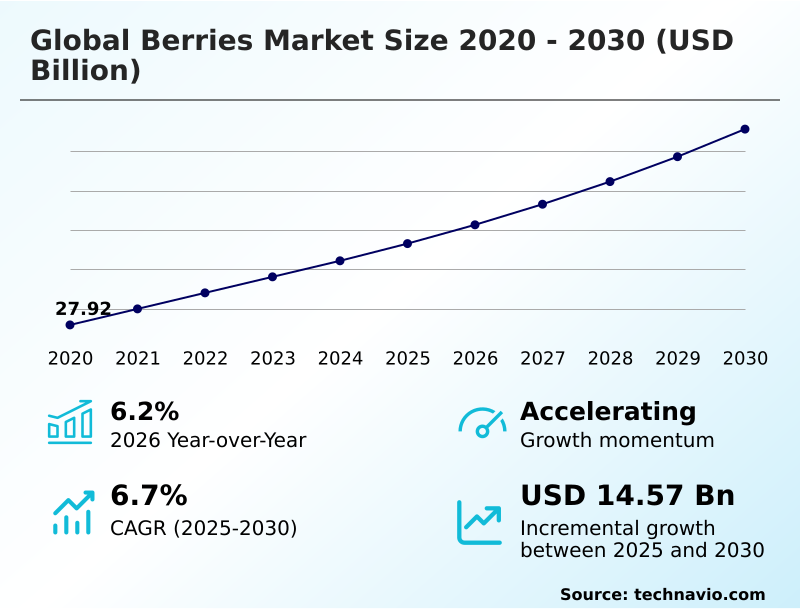
The berries market size is valued to increase by USD 14.57 billion, at a CAGR of 6.7% from 2025 to 2030. Growing awareness and promotion of benefits of consuming berries will drive the berries market.
Major Market Trends & Insights
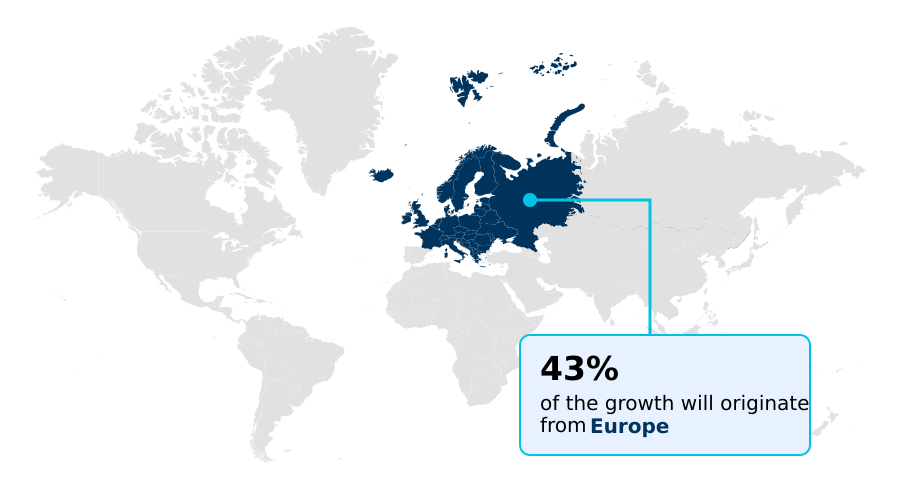
- Europe dominated the market and accounted for a 43.2% growth during the forecast period.
- By Application - Food and beverages segment was valued at USD 31.02 billion in 2024
- By Type - Strawberries segment accounted for the largest market revenue share in 2024
Market Size & Forecast
- Market Opportunities: USD 24.92 billion
- Market Future Opportunities: USD 14.57 billion
- CAGR from 2025 to 2030 : 6.7%
Market Summary
- The berries market is evolving beyond simple agricultural output, transforming into a sophisticated sector driven by proprietary genetics and advanced cultivation methods. A significant driver is the rising consumer health awareness, which fuels demand for antioxidant-rich extracts and clean-label ingredients in functional foods. This trend supports the superfood market positioning of berries and their integration into plant-based diets.
- Consequently, producers are adopting sustainable farming practices and investing in varietal innovation to enhance bioactive compounds and improve crop resilience. However, the industry grapples with challenges related to post-harvest waste reduction and the high costs of implementing traceability systems.
- For instance, a large-scale distributor aiming to ensure supply chain transparency must balance the expense of sophisticated tracking technology against the market's demand for competitive pricing. This dynamic pushes the industry toward greater efficiency, encouraging investment in robotic harvesting technology and improved cold chain logistics to meet demand while managing operational complexities and food safety standards.
What will be the Size of the Berries Market during the forecast period?
Get Key Insights on Market Forecast (PDF) Get Free Sample
How is the Berries Market Segmented?
The berries industry research report provides comprehensive data (region-wise segment analysis), with forecasts and estimates in "USD million" for the period 2026-2030, as well as historical data from 2020-2024 for the following segments.
- Application
- Food and beverages
- Personal care
- Others
- Type
- Strawberries
- Blueberries
- Raspberries
- Others
- Distribution channel
- Offline
- Online
- Geography
- Europe
- Germany
- UK
- Spain
- North America
- US
- Canada
- Mexico
- APAC
- China
- Japan
- India
- South America
- Brazil
- Argentina
- Middle East and Africa
- Saudi Arabia
- UAE
- South Africa
- Rest of World (ROW)
- Europe
By Application Insights
The food and beverages segment is estimated to witness significant growth during the forecast period.
The food and beverages segment remains the primary application within the berries market, driven by the expanding use of berries as functional and clean-label ingredients.
Manufacturers are leveraging natural food colorants and flavors from berries to meet consumer demand for transparency and wellness.
Innovations in processing, such as freeze-drying techniques and the use of individually quick frozen (IQF) formats, are crucial for maintaining nutritional integrity and extending shelf-life extension.
These methods support the inclusion of berries in a wide array of products, from snacks and dairy to functional beverages. The foodservice sector supply chain, in particular, benefits from these advancements, enabling a 15% reduction in product spoilage.
Quality assurance protocols and proprietary genetics further ensure a consistent supply for high-value applications, including specialty berry cultivation for gourmet products.
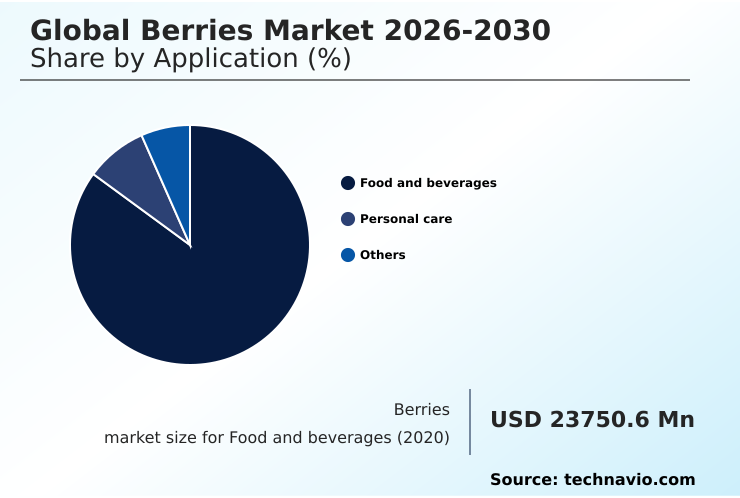
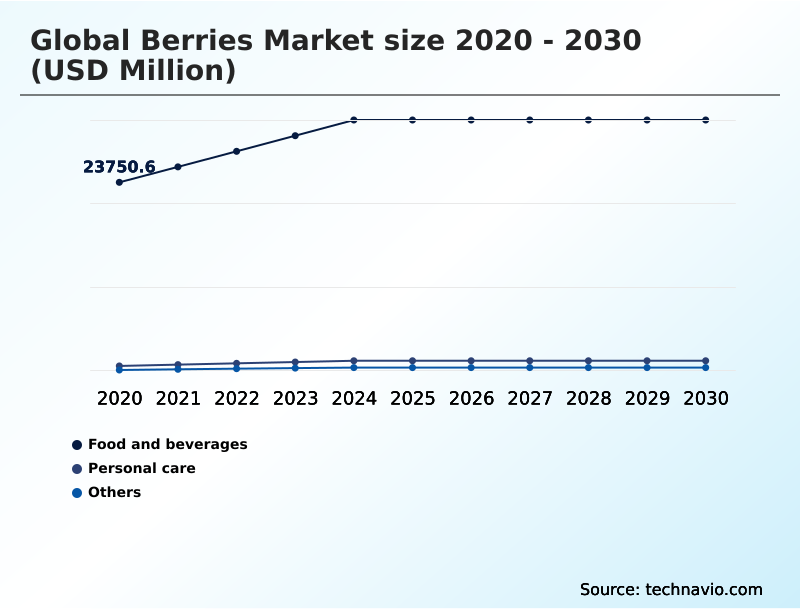
The Food and beverages segment was valued at USD 31.02 billion in 2024 and showed a gradual increase during the forecast period.
Regional Analysis
Europe is estimated to contribute 43.2% to the growth of the global market during the forecast period.Technavio’s analysts have elaborately explained the regional trends and drivers that shape the market during the forecast period.
See How Berries Market Demand is Rising in Europe Get Free Sample
The geographic landscape is defined by established hubs and emerging territories, with Europe leading incremental growth, contributing over 43% to the market's expansion.
In North America, the focus is on agritech investment to enhance domestic consumption growth and food security focus, with protected cropping systems and high-density tunnel cultivation becoming standard. South American nations continue to dominate export-oriented production, leveraging favorable climates.
Meanwhile, regions like the Middle East are pioneering hydroponic systems to overcome environmental constraints. This global geographic diversification requires complex logistics, where efficient farm-to-store delivery and sophisticated cold chain management are critical for maintaining quality across continents.
The strategic expansion into new cultivation areas is mitigating risks associated with climate change in traditional growing zones.
Market Dynamics
Our researchers analyzed the data with 2025 as the base year, along with the key drivers, trends, and challenges. A holistic analysis of drivers will help companies refine their marketing strategies to gain a competitive advantage.
- Understanding the core dynamics of the global berries market 2026-2030 requires analyzing the interplay between production challenges and consumer demands. The impact of weather on berry pricing remains a primary concern for growers, directly influencing profitability and supply stability.
- As producers navigate the high cost of chemical-free berry farming, many are investing in technology for mechanized berry harvesting, which can reduce labor expenses by up to 30% compared to manual methods. A key focus is on improving the shelf life of strawberries, where innovations in post-harvest treatments and packaging are critical.
- For consumers, the antioxidant levels in different berry types are a major purchasing driver, fueling research into varietal development. However, the challenges in organic berry cultivation, such as pest management and yield consistency, present significant hurdles. Optimizing the cold chain for fresh berries is essential for reducing spoilage, a constant issue in long-distance supply chains.
- These factors, combined with consumer trends driving berry consumption and the rise of private label impact on berry market pricing, create a complex operational environment. Furthermore, addressing the risk of contamination in berry packaging and improving water management for berry agriculture are vital for ensuring long-term sustainability and regulatory compliance.
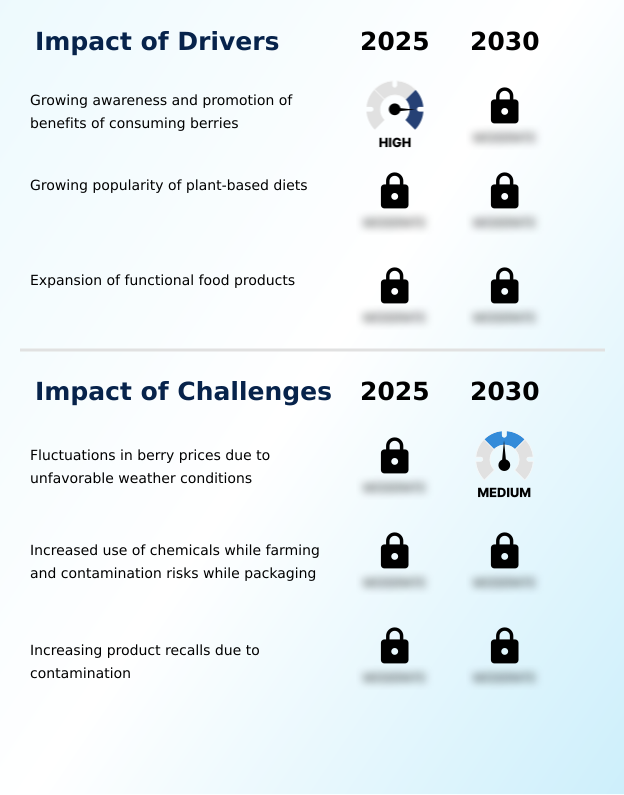
What are the key market drivers leading to the rise in the adoption of Berries Industry?
- Growing consumer awareness regarding the health benefits of berries, amplified by promotional efforts, serves as a key market driver.
- Market growth is significantly fueled by the mainstreaming of plant-based diet integration, where berries serve as a key component, contributing to a 20% rise in their use in vegan product formulations.
- This aligns with the superfood market positioning of berries, which are sought for their antioxidant-rich extracts and bioactive compounds. The expansion of functional food ingredients and nutraceutical ingredient sourcing has created new, high-margin opportunities.
- To meet this demand, producers are focusing on varietal innovation to ensure a year-round supply chain.
- Effective retail inventory management and quality assurance protocols are critical to capitalizing on these drivers, with optimized systems reducing out-of-stock instances by up to 18%.
What are the market trends shaping the Berries Industry?
- The increasing prominence of private-label brands is a significant upcoming trend, as retailers strategically enhance their market position through competitive pricing and quality control.
- Key trends are reshaping the competitive landscape, with private-label branding gaining significant traction as retailers leverage it to offer value, which has led to a 15% increase in their market share in some categories. This is coupled with heightened consumer health awareness, driving the demand for clean-label ingredients and supporting a premiumization strategy focused on nutritional benefits.
- As a result, the organic farming conversion rate has accelerated, with growers adopting sustainable packaging solutions to meet retailer and consumer expectations. Supply chain transparency is also paramount, with direct-to-consumer platforms emerging as a key channel. These trends are underpinned by robust food safety standards, compelling the entire industry to innovate.
What challenges does the Berries Industry face during its growth?
- Fluctuations in berry prices, driven by unfavorable weather conditions, pose a key challenge to the industry's growth trajectory.
- Persistent challenges require strategic adaptation, particularly in climate-resilient agriculture, where unpredictable weather can cause supply shifts of up to 30% in a single season. This volatility complicates management of counter-seasonal imports and puts pressure on cold chain logistics. Furthermore, growers in export-oriented production regions face issues of water scarcity management and rising costs associated with food safety regulations.
- The need to reduce post-harvest waste has accelerated the adoption of robotic harvesting technology and advanced traceability systems. These investments, while necessary, increase operational expenses, making it difficult for smaller producers to compete without significant agritech investment and support.
Exclusive Technavio Analysis on Customer Landscape
The berries market forecasting report includes the adoption lifecycle of the market, covering from the innovator’s stage to the laggard’s stage. It focuses on adoption rates in different regions based on penetration. Furthermore, the berries market report also includes key purchase criteria and drivers of price sensitivity to help companies evaluate and develop their market growth analysis strategies.
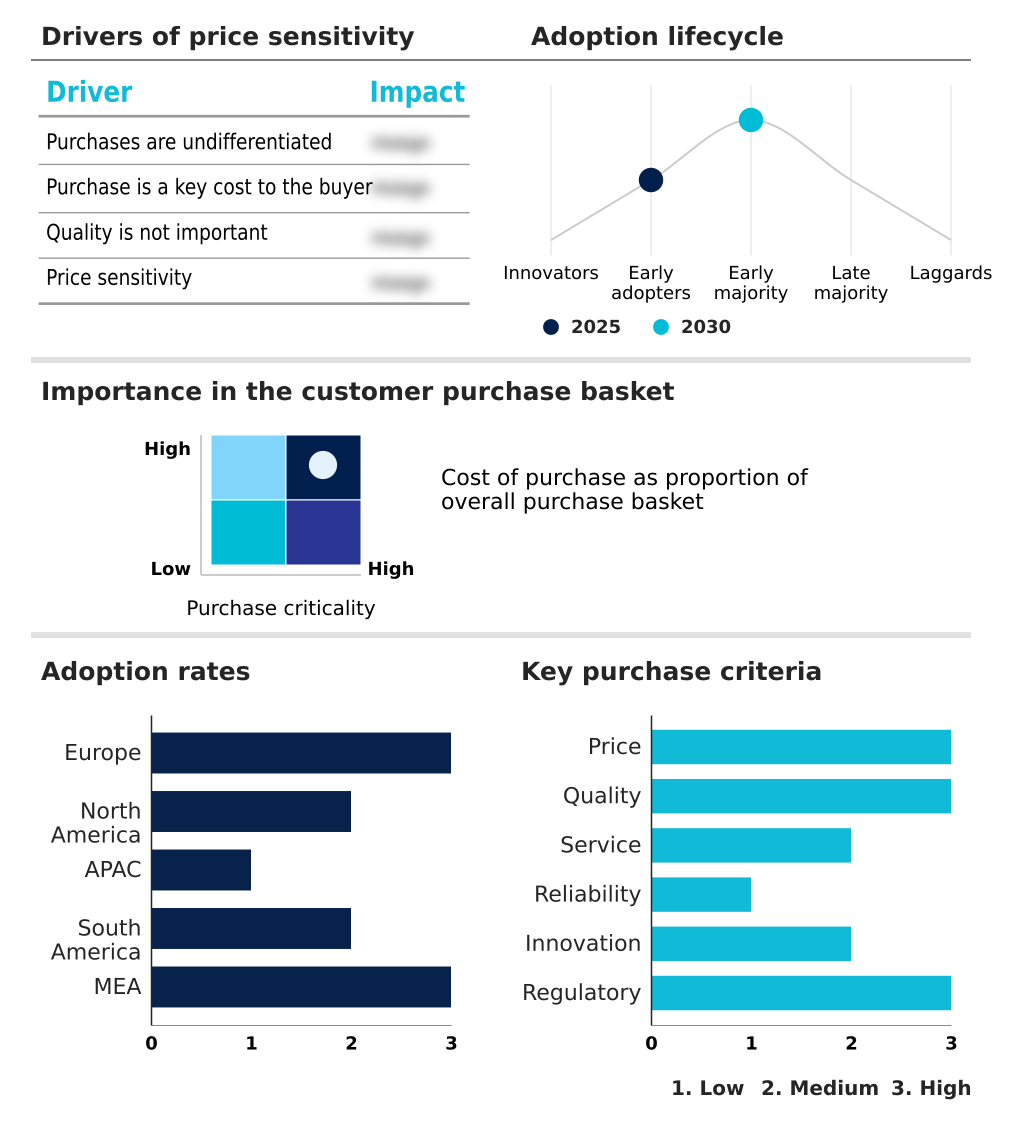
Customer Landscape of Berries Industry
Competitive Landscape
Companies are implementing various strategies, such as strategic alliances, berries market forecast, partnerships, mergers and acquisitions, geographical expansion, and product/service launches, to enhance their presence in the industry.
AGRANA Beteiligungs AG - Vendors offer a range of fresh and processed berries, focusing on varietal innovation to meet global demand for quality and year-round availability.
The industry research and growth report includes detailed analyses of the competitive landscape of the market and information about key companies, including:
- AGRANA Beteiligungs AG
- Arctic Flavors
- Ardo NV
- BerryWorld Group
- Betec
- California Giant Inc
- Coast Berry Co. Ltd.
- Dole plc
- Driscolls Inc.
- Earthbound Farm
- Family Tree Farms
- Haygrove Ltd.
- Hortifrut SA
- Jones Family Farms
- Joy Wing Mau Group
- Kenburn Orchards
- MBG Marketing
- Naturipe Farms LLC
- Rainier Fruit Co.
- World Variety Produce Inc.
Qualitative and quantitative analysis of companies has been conducted to help clients understand the wider business environment as well as the strengths and weaknesses of key industry players. Data is qualitatively analyzed to categorize companies as pure play, category-focused, industry-focused, and diversified; it is quantitatively analyzed to categorize companies as dominant, leading, strong, tentative, and weak.
Recent Development and News in Berries market
- In May 2025, the European Union implemented stricter mandates regarding chemical residues, specifically capping thiacloprid levels at 0.01 milligrams per kilogram, necessitating immediate modifications in farming practices to maintain access to high-value European markets.
- In March 2025, the Costa Group initiated a landmark blueberry development project in Laos, establishing seventeen hectares of cultivation with the intent to expand to two hundred hectares, signaling a strategic move to leverage local climate conditions for the burgeoning Asian consumer base.
- In March 2025, Brazil formally approved the importation of strawberries from South Korea, representing the first agreement of its kind within the South American continent and granting consumers access to premium varieties.
- In January 2025, the United Kingdom implemented a critical regulatory change by reclassifying strawberries from the European Union as low-risk imports, removing the requirement for phytosanitary certificates and physical checks, which has significantly enhanced the competitiveness of European growers within the British market.
Dive into Technavio’s robust research methodology, blending expert interviews, extensive data synthesis, and validated models for unparalleled Berries Market insights. See full methodology.
| Market Scope | |
|---|---|
| Page number | 298 |
| Base year | 2025 |
| Historic period | 2020-2024 |
| Forecast period | 2026-2030 |
| Growth momentum & CAGR | Accelerate at a CAGR of 6.7% |
| Market growth 2026-2030 | USD 14570.4 million |
| Market structure | Fragmented |
| YoY growth 2025-2026(%) | 6.2% |
| Key countries | Germany, UK, Spain, France, Italy, The Netherlands, US, Canada, Mexico, China, Japan, India, South Korea, Australia, Indonesia, Brazil, Argentina, Chile, Saudi Arabia, UAE, South Africa, Israel and Turkey |
| Competitive landscape | Leading Companies, Market Positioning of Companies, Competitive Strategies, and Industry Risks |
Research Analyst Overview
- The berries market has matured into a highly technical sector where varietal innovation and a premiumization strategy dictate success. The deployment of proprietary genetics is central to developing fruits that meet stringent food safety standards and offer extended shelf-life extension, which is critical for minimizing post-harvest waste reduction.
- Leading producers are investing in protected cropping systems, including high-density tunnel cultivation and advanced hydroponic systems, to ensure a consistent, high-quality supply. These capital-intensive methods are increasingly paired with mechanical harvesting solutions and robotic harvesting technology to mitigate labor shortages.
- For boardroom consideration, the adoption of comprehensive traceability systems is no longer optional; it directly impacts brand reputation and market access, with integrated platforms improving recall management efficiency by over 40%.
- The entire value chain, from sustainable farming practices and integrated pest management to sophisticated cold chain logistics and the development of clean-label ingredients, is geared toward delivering premium, safe, and transparent products to a discerning global consumer base.
What are the Key Data Covered in this Berries Market Research and Growth Report?
-
What is the expected growth of the Berries Market between 2026 and 2030?
-
USD 14.57 billion, at a CAGR of 6.7%
-
-
What segmentation does the market report cover?
-
The report is segmented by Application (Food and beverages, Personal care, and Others), Type (Strawberries, Blueberries, Raspberries, and Others), Distribution Channel (Offline, and Online) and Geography (Europe, North America, APAC, South America, Middle East and Africa)
-
-
Which regions are analyzed in the report?
-
Europe, North America, APAC, South America and Middle East and Africa
-
-
What are the key growth drivers and market challenges?
-
Growing awareness and promotion of benefits of consuming berries, Fluctuations in berry prices due to unfavorable weather conditions
-
-
Who are the major players in the Berries Market?
-
AGRANA Beteiligungs AG, Arctic Flavors, Ardo NV, BerryWorld Group, Betec, California Giant Inc, Coast Berry Co. Ltd., Dole plc, Driscolls Inc., Earthbound Farm, Family Tree Farms, Haygrove Ltd., Hortifrut SA, Jones Family Farms, Joy Wing Mau Group, Kenburn Orchards, MBG Marketing, Naturipe Farms LLC, Rainier Fruit Co. and World Variety Produce Inc.
-
Market Research Insights
- Market dynamics are shaped by a strategic focus on year-round supply chain management, balancing domestic production with counter-seasonal imports to stabilize availability. This approach has led to a 10% improvement in retail inventory management efficiency.
- The rise of direct-to-consumer platforms is also reshaping distribution, allowing for better quality assurance protocols and strengthening private-label branding, which now accounts for a significant portion of sales in developed markets. Concurrently, the expansion of cosmeceutical applications and nutraceutical ingredient sourcing is creating new high-value revenue streams.
- For instance, the adoption rate for berry-derived extracts in new skincare formulations has increased by over 25% in the last two years, reflecting a broader consumer shift toward natural ingredients.
We can help! Our analysts can customize this berries market research report to meet your requirements.
 RIA -
RIA - 
