
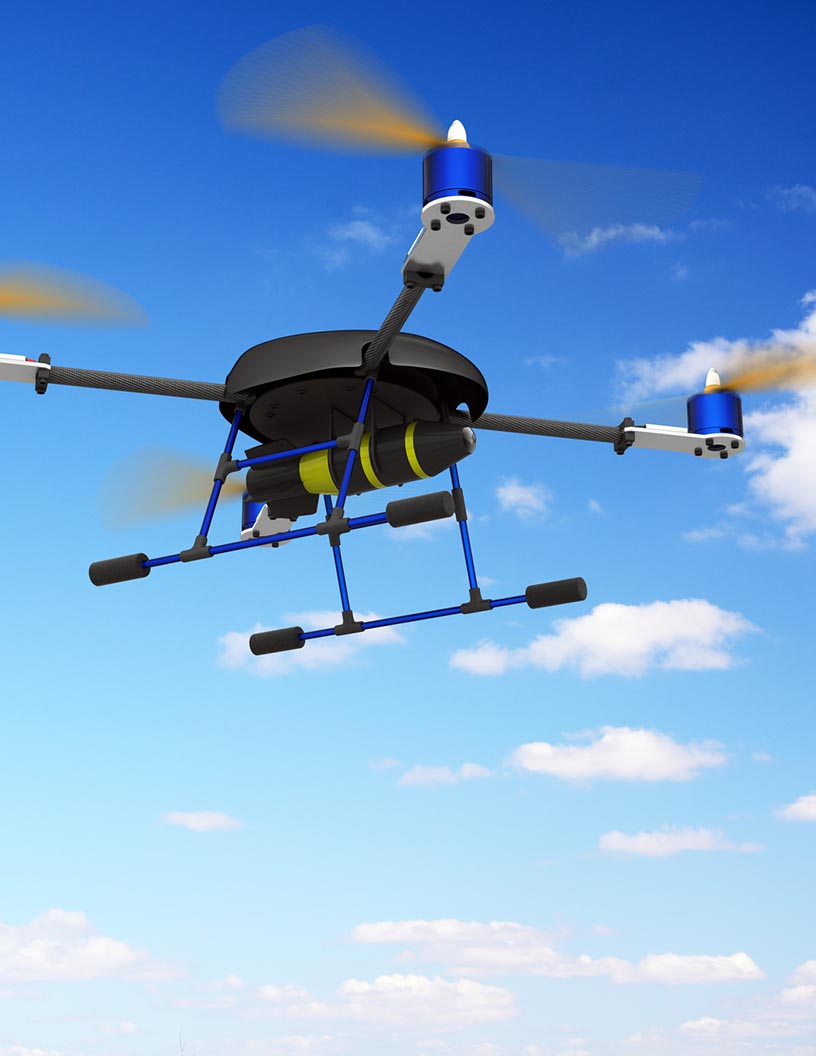


Drone Flight Management System Market Size 2024-2028
The drone flight management system market size is forecast to increase by USD 14.36 billion at a CAGR of 28.77% between 2023 and 2028.
- The Drone Flight Management System (FMS) market is experiencing significant growth due to the increasing acceptance of drone operations for commercial applications in sectors such as agriculture, construction, energy, public safety, commercial aviation, and military aviation. This trend is driven by the need for efficient and cost-effective solutions for various industries. A key market development is the advancement of lithium-metal batteries, which offer improved energy density and longer flight times compared to traditional batteries.
- However, challenges persist, including the relatively low battery life and limited capacity of current drone models.Top technology providers like Collins Aerospace are tackling these challenges by investing in research and development to improve FMS and drone capabilities. This will allow drones to fly longer and carry heavier payloads, broadening their applications and boosting market potential.
What will be the Drone Flight Management System Market Size During the Forecast Period?
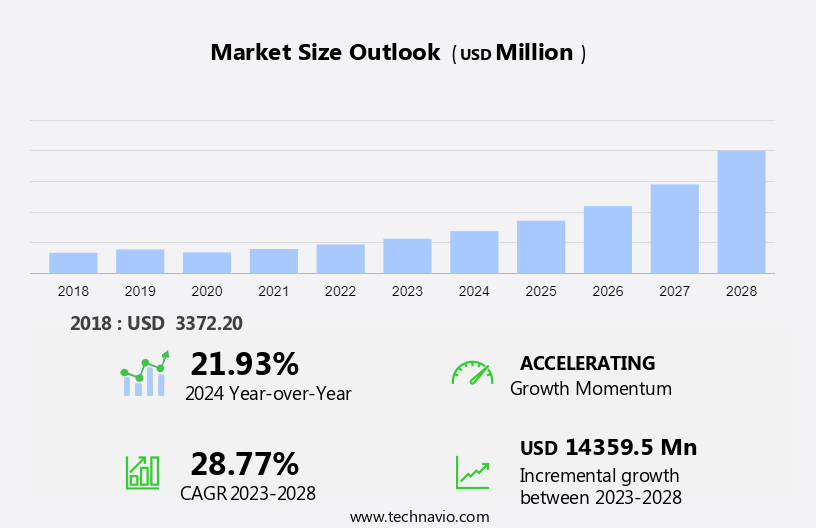
- The market in North America is witnessing significant growth due to the increasing adoption of drones in various industries, including agriculture, construction, energy, public safety, commercial aviation, and military aviation. Collins Aerospace and Berkshire Hathaway are among the tech firms investing in advanced flight control algorithms and GPS technology to enhance drone navigation and surveillance capabilities. In the agriculture sector, drones equipped with flight management systems are used for crop monitoring, irrigation management, and yield optimization. Construction sites utilize drones for site surveys, progress tracking, and safety inspections. Energy companies employ drones for pipeline inspections, power line monitoring, and wind turbine maintenance. Public safety agencies use drones for search and rescue missions, disaster management, and law enforcement.
- In commercial aviation, drones are used for cargo delivery, passenger transportation, and aerial photography. Military aviation relies on drones for reconnaissance, surveillance, and target identification. Flight management systems enable drones to follow waypoints, optimize flight paths, and ensure safe and efficient operation. GPS technology is crucial for drone navigation, and battery management systems ensure optimal battery usage for extended flight times. The integration of flight management systems in fixed-wing drones enhances their capabilities, making them more versatile and efficient. Glass cockpits equipped with advanced avionics and display systems provide pilots with real-time information, improving situational awareness and decision-making.
- Additionally, aircraft system manufacturers are investing in research and development to integrate advanced technologies, such as artificial intelligence and machine learning, into drone flight management systems. These technologies enable autonomous flight, object detection, and obstacle avoidance, making drones an indispensable tool for various industries. The use of drones in North America is expected to grow significantly, driven by the increasing demand for efficient and cost-effective solutions in various industries. The adoption of drone flight management systems will continue to be a key trend, as tech firms invest in advanced technologies to enhance drone capabilities and improve safety and efficiency.
How is this market segmented and which is the largest segment?
The market research report provides comprehensive data (region-wise segment analysis), with forecasts and estimates in "USD billion" for the period 2024-2028, as well as historical data from 2018-2022 for the following segments.
- Component
- Ground controller
- Data link
- Onboard controller
- Geography
- APAC
- China
- North America
- US
- Europe
- Germany
- UK
- France
- Middle East and Africa
- South America
- APAC
By Component Insights
- The ground controller segment is estimated to witness significant growth during the forecast period.
Drone Flight Management Systems (FMS) are essential components for operating and commanding unmanned aerial vehicles (UAVs) from the ground. Collins Aerospace, a leading provider in the aerospace industry, offers advanced FMS for various applications, including agriculture, construction, energy, public safety, commercial aviation, and military aviation. These systems enable operators to control fixed-wing drones using a ground controller, which typically includes a joystick and a display for real-time footage. Ground controllers integrate a joystick with a small computer that translates the operator's radio frequency inputs. In defense applications, ground controllers may include an antenna and a more complex control setup for HALE (High-Altitude, Long-Endurance) and MALE (Middle-Altitude, Long-Endurance) drones. The display mounted over the controller allows operators to view footage captured by the drone-mounted camera. Advancements in drone technology have led to the development of software-based control systems, enabling users to operate drones via a smartphone or laptop.
Additionally, these systems offer increased flexibility and convenience, making drone operations more accessible to a broader range of users. Collins Aerospace and other industry leaders continue to invest in research and development to enhance the capabilities of FMS, ensuring their applications remain at the forefront of innovation. In summary, Drone Flight Management Systems are crucial for controlling and managing UAVs from the ground. Collins Aerospace provides advanced FMS solutions for various industries, including agriculture, construction, energy, public safety, commercial aviation, and military aviation. These systems feature a ground controller with a joystick, display, and computer, as well as software-based control options for added flexibility. Continuous innovation in drone technology drives the development of more advanced FMS, making drone operations increasingly efficient and accessible.

Get a glance at the market report of share of various segments Request Free Sample
The ground controller segment was valued at USD 2.08 billion in 2018 and showed a gradual increase during the forecast period.
Regional Analysis
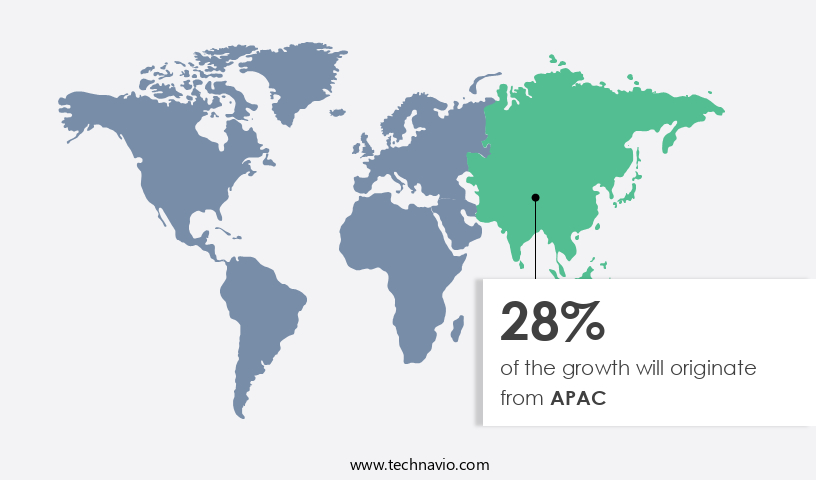
- APAC is estimated to contribute 28% to the growth of the global market during the forecast period.
Technavio's analysts have elaborately explained the regional trends and drivers that shape the market during the forecast period.
For more insights on the market share of various regions Request Free Sample
In 2023, the Asia Pacific region held the largest share of The market. China, specifically, was the primary contributor to the market's revenue in this region. China's technological advancements in electronic components have facilitated the production of sophisticated drone equipment. One notable company in this sector is DJI, a leading global provider of commercial drone solutions. The adoption of drones is on the rise in various industries across China, including agriculture, construction, defense, and mining. Flight management systems are crucial components of drone technology, enabling efficient flight control through algorithms, GPS, and waypoint navigation. These systems are increasingly utilized in search and rescue and disaster management applications.
In addition, a battery management system ensures optimal battery usage for extended flight durations. The market is witnessing significant growth due to the increasing demand for drone applications in various sectors. Technological advancements, such as improved GPS and waypoint navigation, are enhancing drone capabilities, making them increasingly indispensable in industries like agriculture, construction, and defense. Furthermore, the integration of search and rescue and disaster management applications is expanding the market's potential. The increasing use of drones in various industries and the integration of advanced technologies are expected to drive market expansion. In conclusion, the market is poised for significant growth due to the increasing adoption of drones in various industries and the integration of advanced technologies. The Asia Pacific region, particularly China, is a significant contributor to the market's growth due to its technological advancements and cost-effective production capabilities.
Market Dynamics
Our researchers analyzed the data with 2023 as the base year, along with the key drivers, trends, and challenges. A holistic analysis of drivers will help companies refine their marketing strategies to gain a competitive advantage.
What are the key market drivers leading to the rise in adoption of Drone Flight Management System Market?
An increase in legal acceptance of drone operations for commercial applications is the key driver of the market.
- In the realm of technology, the utilization of drones for commercial purposes is a growing trend. However, the implementation of these aircraft systems is subjected to legal permissions and regulatory oversight. Authorities have established legislation to govern commercial drone operations, with some countries outright banning their use, while others impose stringent requirements. In the United States, for instance, the Federal Aviation Administration (FAA) mandates that pilots maintain a visual line of sight with their drones during commercial flights.
- Additionally, tech firms, including SAP, are developing advanced drone flight management systems to enhance navigation and surveillance capabilities for crewmembers. These systems enable pilots to monitor and control multiple drones simultaneously, ensuring safe and efficient operations. As the demand for drone technology continues to escalate, it is expected that more countries will follow suit and legally accept commercial drone operations.
What are the market trends shaping the Drone Flight Management System Market?
The development of lithium-metal batteries is the upcoming trend in the market.
- Drone Flight Management Systems are essential components for ensuring optimal drone performance and safety. These systems utilize various displays, such as multi-function displays, to provide real-time data on aircraft parameters. The market for Drone Flight Management Systems can be segmented based on aircraft type, with applications in both narrow-body and wide-body aircraft. Line fit and retrofit are common installation methods for these systems.
- However, the use of lithium-ion and lithium polymer (LiPo) batteries as the primary power source for drones poses challenges. These batteries have a low energy capacity, resulting in limited flight times, typically under 30 minutes. Additionally, they contain flammable organic solvents, increasing the risk of fire and explosion due to short circuits, overcharging, or high temperatures. Innovative solutions to these challenges include lithium-metal batteries, which employ a non-flammable electrolyte, thereby eliminating the risk of fire and explosion. Furthermore, lithium-metal batteries offer a higher energy density, allowing for extended drone flight times. This development is crucial for enhancing drone capabilities, particularly in sensitive applications and long-range missions.
What challenges does Drone Flight Management System Market face during the growth?
Lower battery life and low capacity of drones are key challenges affecting the market growth.
- Drone Flight Management Systems are essential components that enable efficient and safe drone operations. These systems incorporate various elements such as glass cockpits, programmers, sensors, and control display units. Glass cockpits offer pilots a clear and unobstructed view of essential flight information. Programmers enable customized drone settings, while sensors ensure drone stability and safety. However, the use of drones comes with potential risks, including cyber attacks. Open wifi networks can make drones vulnerable to hacking, compromising sensitive data stored in flight management computers. To mitigate these risks, manufacturers are integrating advanced security features into their drone systems. Flight management computers are the brain of the drone, processing data from various sensors and controlling drone navigation. These computers require large data storage capacities to accommodate complex algorithms and real-time data processing.
- Additionally, control display units provide pilots with real-time drone performance data, enabling them to make informed decisions during flight. Manufacturers are continually innovating to improve battery technology to expand the area of drone application. Lithium-ion and lithium polymer (LiPo) batteries are commonly used in drones due to their high energy density and long life. However, increasing battery capacity requires either increasing the battery size or the number of batteries, which adds weight to the drone. It is crucial to strike a balance between battery capacity and weight to optimize drone performance. In conclusion, Drone Flight Management Systems play a vital role in ensuring safe and efficient drone operations. These systems incorporate various components such as glass cockpits, programmers, sensors, control display units, and flight management computers. Manufacturers are addressing cybersecurity concerns by integrating advanced security features. Continuous innovation in battery technology is essential to expand the area of drone application while maintaining optimal weight.
Exclusive Customer Landscape
The market forecasting report includes the adoption lifecycle of the market, covering from the innovator's stage to the laggard's stage. It focuses on adoption rates in different regions based on penetration. Furthermore, the market report also includes key purchase criteria and drivers of price sensitivity to help companies evaluate and develop their market growth analysis strategies.
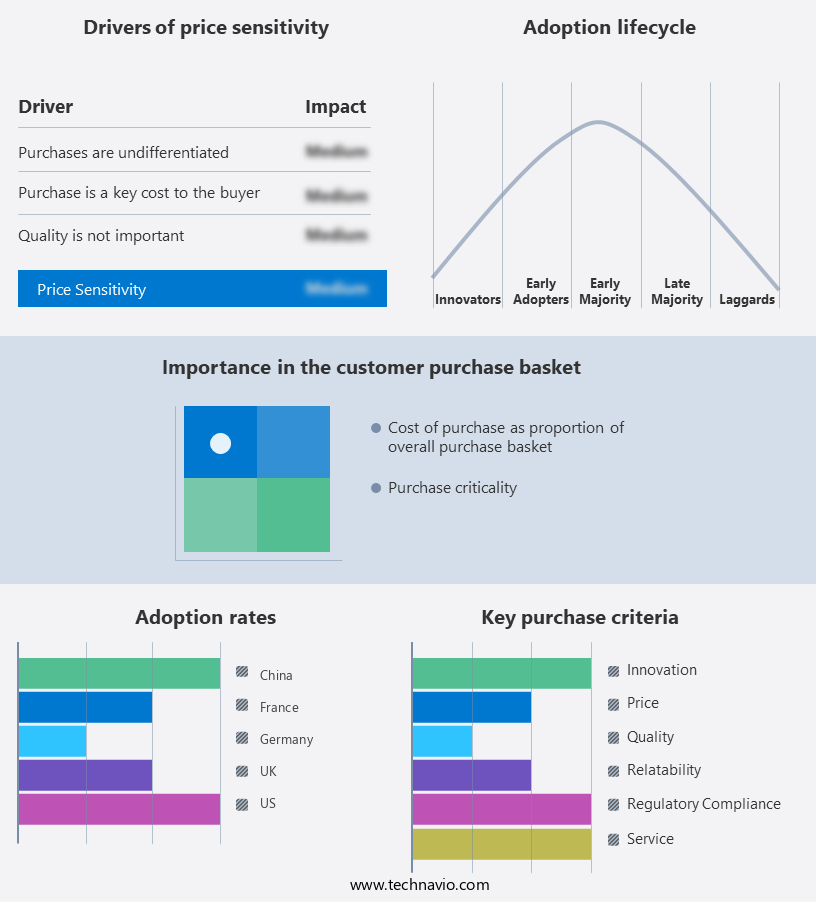
Customer Landscape
Key Companies & Market Insights
Companies are implementing various strategies, such as strategic alliances, market forecast, partnerships, mergers and acquisitions, geographical expansion, and product/service launches, to enhance their presence in the market. The market research and growth report includes detailed analyses of the competitive landscape of the market and information about key companies, including:
- AeroVironment Inc.
- Autel Robotics Co. Ltd.
- Black Swift Technologies LLC.
- DELAIR SAS
- EHang Holdings Ltd.
- Elbit Systems Ltd.
- HENSOLDT AG
- Intel Corp.
- Mobilicom Ltd.
- Northrop Grumman Corp.
- Parrot Drones SAS
- Safran SA
- SZ DJI Technology Co. Ltd.
- Teledyne Technologies Inc.
- Thales Group
- The Boeing Co.
- UAV Navigation SL
- UAVOS Inc.
- vHive
- Yuneec International Co. Ltd.
Qualitative and quantitative analysis of companies has been conducted to help clients understand the wider business environment as well as the strengths and weaknesses of key market players. Data is qualitatively analyzed to categorize companies as pure play, category-focused, industry-focused, and diversified; it is quantitatively analyzed to categorize companies as dominant, leading, strong, tentative, and weak.
Research Analyst Overview
The market is witnessing significant growth due to the increasing adoption of drones in various industries such as agriculture, construction, energy, public safety, commercial aviation, and military aviation. Collins Aerospace, a leading tech firm in the aircraft industry, is focusing on developing advanced flight management systems for fixed-wing and rotary wing drones. These systems incorporate GPS, waypoint navigation, flight control algorithms, and battery management systems. The market caters to both short-range and long-range drones, with electric propulsion systems gaining popularity due to their eco-friendly nature and cost-effectiveness. Supernal, a tech firm, is working on the Gremlins demonstration system, which aims to launch and recover multiple drones in a single flight.
Additionally, the energy sector is utilizing drones for pipeline inspections, while agriculture is adopting them for crop monitoring and irrigation management. In construction, drones are used for site surveys and progress monitoring. Public safety agencies are employing drones for search and rescue, disaster management, and surveillance. Flight management systems are essential for pilots and crewmembers to navigate aircraft effectively and ensure safe operations. These systems integrate sensors, cyber attack protection, open wifi security, data storage, and control display units. Flight management computers and multi-function displays are key components of these systems, with line fit and retrofit options available for various aircraft types, including narrow-body and wide-body airplanes.
|
Market Scope |
|
|
Report Coverage |
Details |
|
Page number |
151 |
|
Base year |
2023 |
|
Historic period |
2018-2022 |
|
Forecast period |
2024-2028 |
|
Growth momentum & CAGR |
Accelerate at a CAGR of 28.77% |
|
Market growth 2024-2028 |
USD 14.36 billion |
|
Market structure |
Fragmented |
|
YoY growth 2023-2024(%) |
21.93 |
|
Key countries |
China, US, Germany, France, and UK |
|
Competitive landscape |
Leading Companies, Market Positioning of Companies, Competitive Strategies, and Industry Risks |
What are the Key Data Covered in this Market Research and Growth Report?
- CAGR of the market during the forecast period
- Detailed information on factors that will drive the market growth and forecasting between 2024 and 2028
- Precise estimation of the size of the market and its contribution of the market in focus to the parent market
- Accurate predictions about upcoming market growth and trends and changes in consumer behaviour
- Growth of the market across APAC, North America, Europe, Middle East and Africa, and South America
- Thorough analysis of the market's competitive landscape and detailed information about companies
- Comprehensive analysis of factors that will challenge the growth of market companies
We can help! Our analysts can customize this market research report to meet your requirements. Get in touch
 RIA -
RIA - 
