
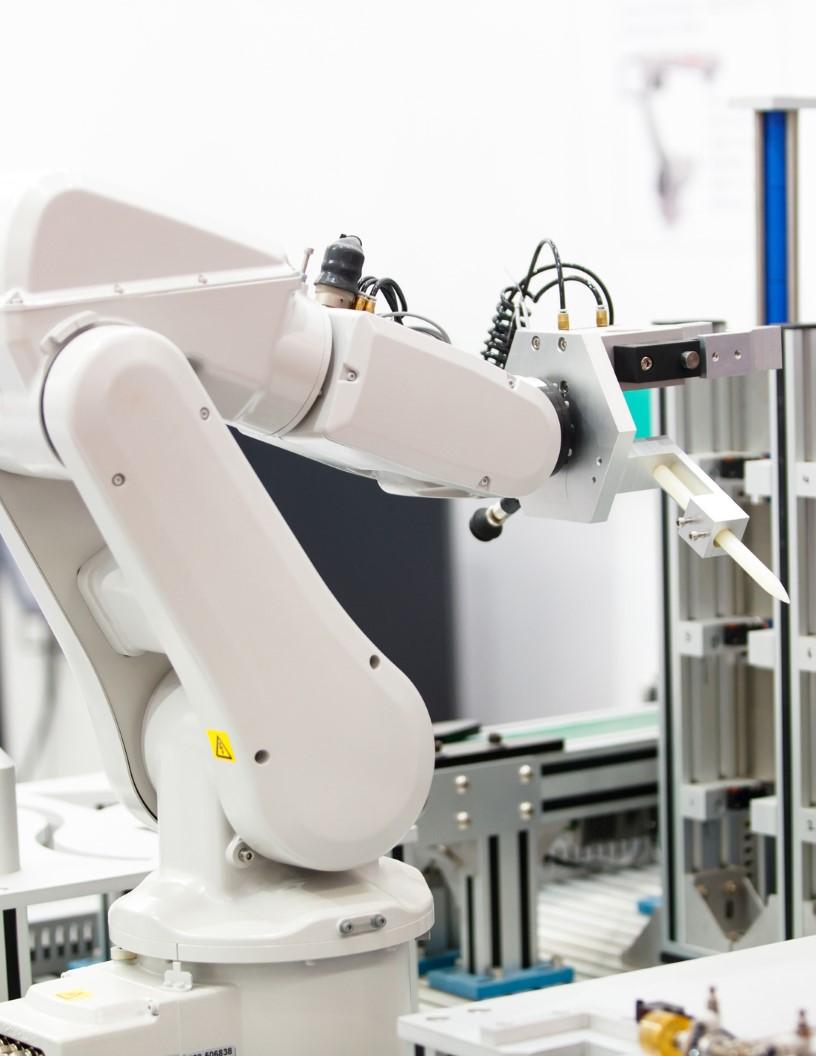


Machine Vision And Vision Guided Robotics Market Size 2025-2029
The machine vision and vision guided robotics market size is forecast to increase by USD 7.58 billion, at a CAGR of 9.7% between 2024 and 2029.
- The market is experiencing significant growth, driven by the increasing adoption of Industry 4.0 and the introduction of new products by companies. The integration of machine vision and robotics in manufacturing processes is revolutionizing production lines, enabling real-time quality control, increased efficiency, and flexibility. This trend is particularly prevalent in sectors such as automotive, electronics, and food and beverage, where precision and consistency are crucial. However, the market faces challenges, primarily from volatile raw material prices. The reliance on raw materials such as silicon and rare earth elements for the production of sensors and cameras can significantly impact the cost structure of machine vision and vision guided robotics systems.
- This price volatility can hinder the growth of the market, necessitating the need for strategic sourcing and supply chain management. Companies must navigate this challenge by exploring alternative materials, optimizing their supply chain, and building strong relationships with suppliers to mitigate the impact of price fluctuations.
What will be the Size of the Machine Vision And Vision Guided Robotics Market during the forecast period?
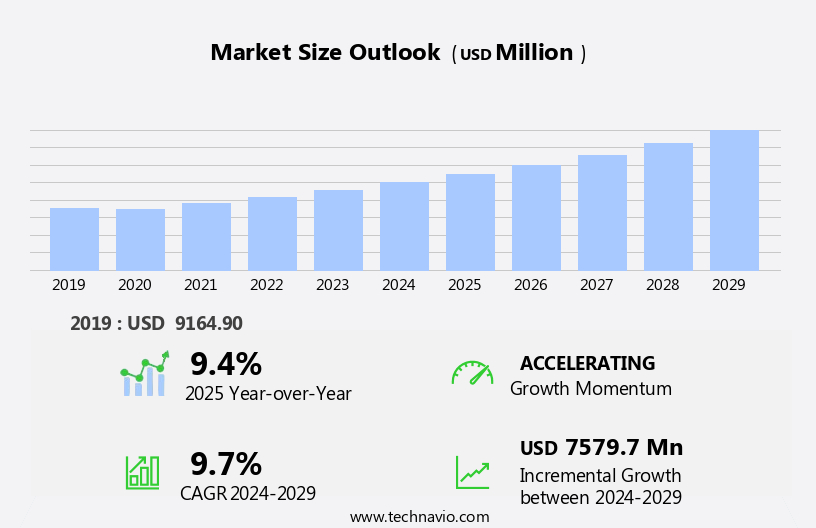
Explore in-depth regional segment analysis with market size data - historical 2019-2023 and forecasts 2025-2029 - in the full report.
Request Free Sample
The market continues to evolve, driven by the increasing demand for automation and advanced manufacturing processes. Real-time processing plays a crucial role in material handling applications, enabling industrial robots to quickly and accurately identify and manipulate objects. Stereo vision and time of flight sensors are integral to quality control processes, ensuring the precision required in various industries. Collaborative and SCARA robots are increasingly being integrated into smart factories, utilizing 3D reconstruction and scene understanding for efficient assembly line automation. Machine learning and neural networks facilitate decision making and image segmentation, while camera calibration and sensor fusion optimize robot guidance.
Pick and place applications benefit from object recognition and 3D modeling, while pallet loading and path planning require depth sensing and motion planning. Convolutional neural networks and feature extraction are essential for bin picking and defect detection. Lighting systems and computer vision systems are critical components of machine vision systems, enabling high-speed imaging and data interpretation. Vision guided robotics is revolutionizing manufacturing automation, with software development and pose estimation playing a significant role in system optimization and performance evaluation. Deep learning and object tracking are essential for advanced applications, such as collision avoidance and safety standards compliance.
The integration of 2D vision and 3D modeling, as well as cloud computing and digital twins, further enhances the capabilities of machine vision and vision guided robotics systems.
How is this Machine Vision And Vision Guided Robotics Industry segmented?
The machine vision and vision guided robotics industry research report provides comprehensive data (region-wise segment analysis), with forecasts and estimates in "USD million" for the period 2025-2029, as well as historical data from 2019-2023 for the following segments.
- Product
- Smart camera based machine vision system
- Vision guided robotics
- PC-based machine vision system
- End-user
- Automotive
- Electronics and semiconductor
- Food and beverage
- Pharmaceuticals and healthcare
- Others
- Geography
- North America
- US
- Europe
- Germany
- APAC
- China
- Japan
- South Korea
- Rest of World (ROW)
- North America
By Product Insights
The smart camera based machine vision system segment is estimated to witness significant growth during the forecast period.
The market encompasses smart camera-based systems, which combine a camera with an embedded processor for real-time image processing. This design offers several advantages, including compactness, cost-effectiveness, and the elimination of the need for an external PC. Smart cameras are increasingly adopted for applications such as material handling, quality control, and assembly line automation. Their self-contained nature facilitates seamless integration with various industrial systems, ensuring a harmonious balance between performance and simplicity. Key technologies driving market growth include stereo vision, time of flight, and 3D vision for depth sensing and 3D modeling. Machine learning algorithms, such as convolutional neural networks and deep learning, are employed for object recognition and defect detection.
These advanced capabilities enable smart cameras to perform complex tasks, such as image segmentation, scene understanding, and pose estimation. Vision guided robotics further enhance the versatility of these systems by enabling precise robot guidance and motion planning. Integration services play a crucial role in ensuring seamless implementation of these solutions in smart factories. Additionally, the integration of cloud computing and digital twins allows for system optimization, performance evaluation, and safety standards compliance. In the realm of industrial automation, applications include pick and place, pallet loading, and path planning. Sensor fusion, object tracking, and collision avoidance are essential features that contribute to the efficiency and reliability of these systems.
Overall, the market is witnessing significant growth due to the increasing demand for automation and the integration of advanced technologies.
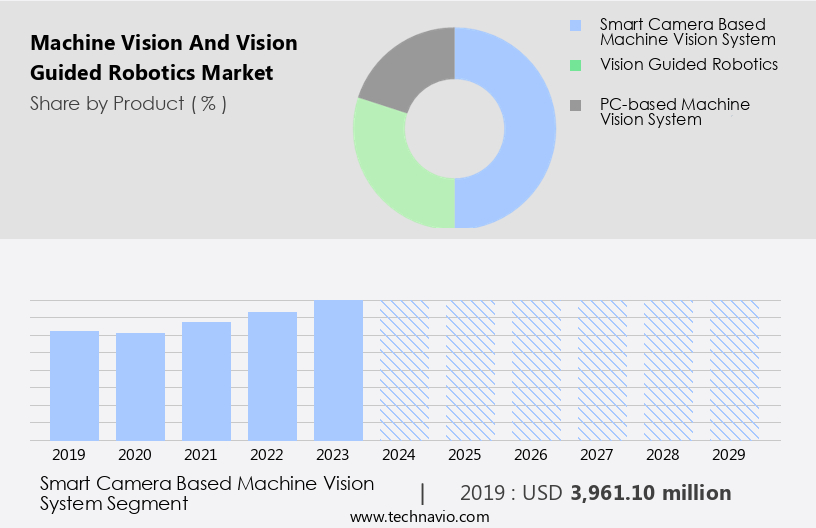
The Smart camera based machine vision system segment was valued at USD 3.96 billion in 2019 and showed a gradual increase during the forecast period.
Regional Analysis
APAC is estimated to contribute 40% to the growth of the global market during the forecast period.Technavio’s analysts have elaborately explained the regional trends and drivers that shape the market during the forecast period.
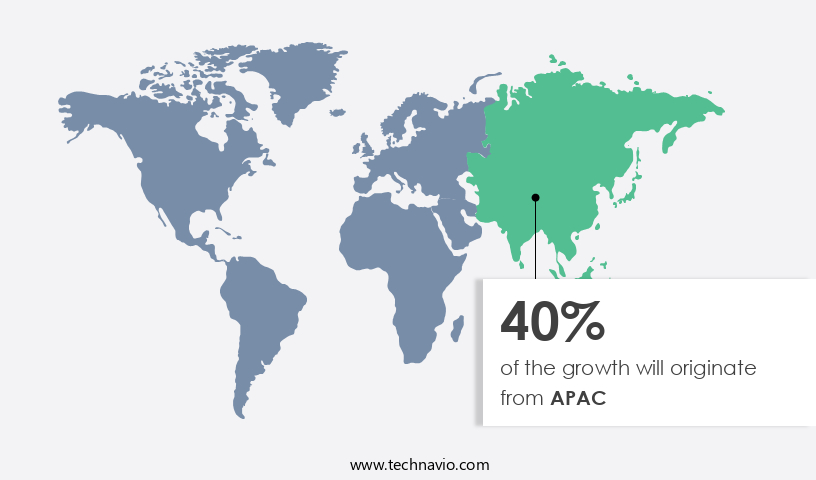
The Asia-Pacific (APAC) region is a major contributor to The market. Countries such as China, Japan, South Korea, and India are driving this growth due to their advanced adoption of these technologies, particularly in industries like automotive, electronics, and semiconductors. The robust manufacturing base in the region, combined with a focus on automation and smart factories, is fueling the demand for advanced vision systems and robotics solutions. In the automotive sector, China's vehicle production reached approximately 21 million units in the first nine months of 2024, signifying a steady growth. Machine vision and VGR technologies are integral to the manufacturing process, enabling real-time processing, quality control, and automation of tasks such as pick and place, bin picking, and pallet loading.
Sophisticated technologies like stereo vision, 3D reconstruction, and 3D modeling are essential for industries that require high precision, such as electronics and semiconductors. These technologies facilitate scene understanding, object recognition, and pose estimation, ensuring the production of flawless products. Furthermore, the integration of machine learning, deep learning, and neural networks enhances the capabilities of machine vision systems, enabling them to perform complex tasks like defect detection, motion planning, and decision making. Lighting systems and camera calibration are crucial components of machine vision systems, ensuring optimal image acquisition for accurate analysis. Vision guided robotics (VGR) is a critical component of industrial automation, with applications ranging from assembly line automation and pallet loading to path planning and motion control.
VGR systems use image processing, data acquisition, and control systems to enable robots to navigate their environment and perform tasks based on visual information. Cloud computing and digital twins are increasingly being adopted to optimize manufacturing processes, enabling real-time monitoring, system optimization, and performance evaluation. Collaborative robots (cobots) and SCARA robots are popular choices for industries seeking to integrate machine vision and robotics, offering flexibility, ease of use, and improved safety standards. Sensor fusion, depth sensing, and 2D vision are other essential technologies that enhance the capabilities of machine vision and VGR systems. These technologies enable accurate data interpretation, object tracking, and scene understanding, ensuring efficient and effective manufacturing processes.
Market Dynamics
Our researchers analyzed the data with 2024 as the base year, along with the key drivers, trends, and challenges. A holistic analysis of drivers will help companies refine their marketing strategies to gain a competitive advantage.
What are the key market drivers leading to the rise in the adoption of Machine Vision And Vision Guided Robotics Industry?
- The expansion of Industry 4.0 serves as the primary catalyst for market growth. Industry 4.0, characterized by the integration of advanced technologies such as artificial intelligence, robotics, and the Internet of Things, is revolutionizing production processes and driving market progression.
- The market are experiencing significant growth due to the implementation of Industry 4.0 technologies. Industry 4.0, which integrates industrial IoT networks, AI, Big Data, robotics, and automation into manufacturing processes, is driving the market's expansion. This transformation aims to increase productivity, efficiency, and flexibility while facilitating more informed decision-making and customization in manufacturing and supply chain operations. China, as the world's leading manufacturing hub, is at the forefront of adopting Industry 4.0 technologies. Leveraging its technological prowess, the Chinese manufacturing sector is pioneering innovation in this space, propelling the market forward.
- The integration of machine vision and robotics in manufacturing processes enhances performance evaluation, enabling real-time quality control and improved product consistency. The market's growth is further fueled by the increasing demand for automation and the need for cost savings and increased efficiency in industrial processes.
What are the market trends shaping the Machine Vision And Vision Guided Robotics Industry?
- The introduction of new products by companies is a prevailing market trend. This dynamic process reflects the industry's continuous evolution and innovation.
- The market is experiencing notable growth due to the increasing adoption of advanced vision systems in various industries. companies are introducing innovative products to enhance automation and precision in applications such as material handling, industrial robotics, and quality control. For instance, on April 16, 2024, Teledyne Technologies launched the Bumblebee X series, an advanced stereo vision solution designed to improve warehouse automation and robotics guidance. This product leverages over 25 years of stereo vision expertise, featuring a factory-calibrated 24 cm baseline with 3 MP sensors for high accuracy and low latency in real-time applications. The integration of smart factories, collaborative robots, and scara robots is further fueling the market's growth.
- Advanced control systems, high-speed imaging, and time of flight technologies are also contributing to the market's expansion. ROI analysis is a crucial factor in the decision-making process for businesses considering the implementation of machine vision and vision guided robotics systems. The market's future looks promising as it continues to provide solutions that increase efficiency, reduce errors, and improve product quality.
What challenges does the Machine Vision And Vision Guided Robotics Industry face during its growth?
- The volatile pricing of raw materials poses a significant challenge to the industry's growth trajectory.
- The market encounter substantial challenges due to the volatile nature of raw material prices. Crucial components for these systems, including cameras, sensors, processors, and lenses, heavily rely on materials such as semiconductors, metals, and optical glass. Prices for these materials are susceptible to fluctuations caused by supply chain disruptions, geopolitical tensions, and shifting demand from various industries, notably automotive and consumer electronics. From 2020 to 2023, a global electrical component shortage, predominantly affecting semiconductors, affected over 169 industries worldwide. This shortage resulted in price hikes, extended delays, and severe supply chain disruptions, underscoring the market's susceptibility to such price fluctuations.
- Image processing, data acquisition, visual inspection, 3D reconstruction, 3D vision, scene understanding, object recognition, data analysis, and machine learning technologies are integral to machine vision and vision guided robotics. Camera calibration, machine learning, and pick-and-place applications are essential in industrial automation, pallet loading, and path planning. However, the market's growth is influenced by the unpredictability of raw material prices and the subsequent impact on component availability and costs.
Exclusive Customer Landscape
The machine vision and vision guided robotics market forecasting report includes the adoption lifecycle of the market, covering from the innovator’s stage to the laggard’s stage. It focuses on adoption rates in different regions based on penetration. Furthermore, the machine vision and vision guided robotics market report also includes key purchase criteria and drivers of price sensitivity to help companies evaluate and develop their market growth analysis strategies.
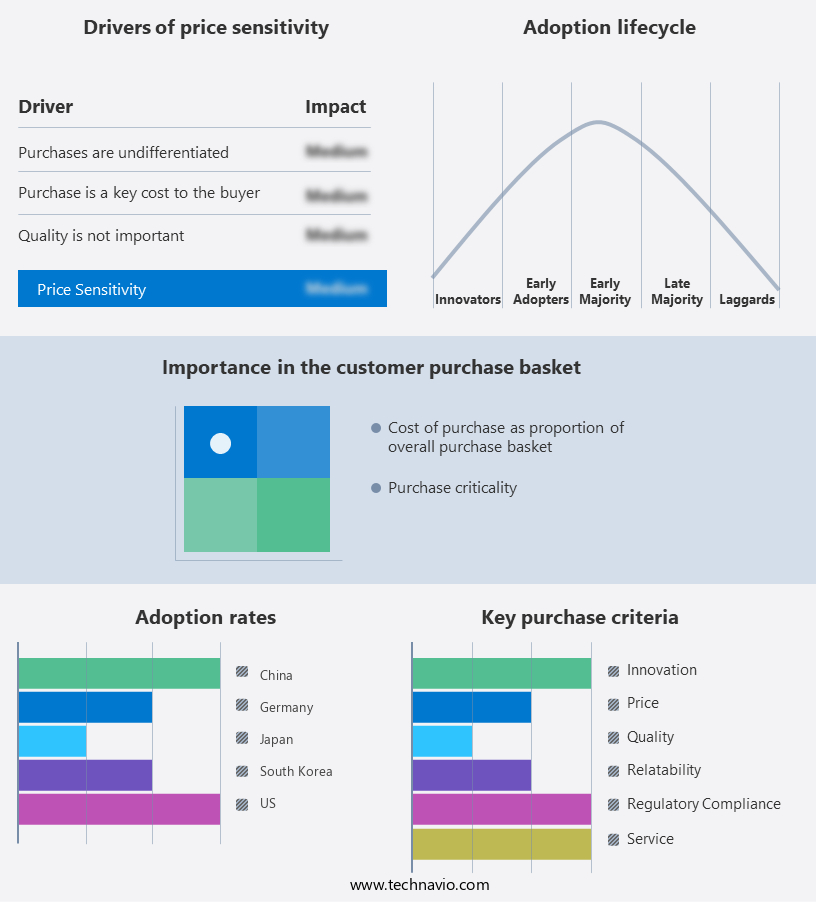
Customer Landscape
Key Companies & Market Insights
Companies are implementing various strategies, such as strategic alliances, machine vision and vision guided robotics market forecast, partnerships, mergers and acquisitions, geographical expansion, and product/service launches, to enhance their presence in the industry.
ABB Ltd. - Machine vision and robotics guided by vision technology are integral solutions we provide, catering to diverse industries such as automotive, electronics, food processing, and logistics. These advanced technologies enhance efficiency, accuracy, and productivity. By leveraging computer vision algorithms and robotics, our offerings enable automated inspection, quality control, and material handling applications. Our machine vision systems analyze visual data to identify patterns, defects, and make decisions with high precision. Simultaneously, our robotics systems, guided by vision, execute complex tasks with dexterity and consistency. Together, these technologies drive automation and digital transformation across various sectors.
The industry research and growth report includes detailed analyses of the competitive landscape of the market and information about key companies, including:
- ABB Ltd.
- Aindra Systems
- Atlas Copco AB
- Basler AG
- Cognex Corp.
- FANUC America Corp.
- Hexagon AB
- Keyence Corp.
- KUKA AG
- National Instruments Corp.
- OMRON Corp.
- Qualcomm Inc.
- SensoPart Industriesensorik GmbH
- SigTuple Technologies Pvt. Ltd.
- Staubli International AG
- STEMMER IMAGING AG
- Teledyne Technologies Inc.
- Universal Robots AS
- Yaskawa America Inc.
Qualitative and quantitative analysis of companies has been conducted to help clients understand the wider business environment as well as the strengths and weaknesses of key industry players. Data is qualitatively analyzed to categorize companies as pure play, category-focused, industry-focused, and diversified; it is quantitatively analyzed to categorize companies as dominant, leading, strong, tentative, and weak.
Recent Development and News in Machine Vision And Vision Guided Robotics Market
- In February 2024, Cognex Corporation, a leading provider of machine vision systems, launched its new In-Sight 2000 series machine vision sensors. These sensors offer advanced capabilities, including deep learning and high-speed image processing, making them suitable for various industries, including automotive, electronics, and food and beverage (Cognex Corporation Press Release, 2024).
- In May 2024, Keyence Corporation and Bosch Rexroth, two major players in the machine vision and robotics market, announced a strategic partnership to integrate Keyence's machine vision systems with Bosch Rexroth's robotic solutions. This collaboration aims to provide customers with more comprehensive automation solutions (Keyence Corporation Press Release, 2024).
- In August 2025, Teradyne, a leading supplier of automatic test equipment, acquired AutoGuide Mobile Robots, a provider of autonomous mobile robots for material handling. This acquisition is expected to strengthen Teradyne's position in the growing market for industrial automation and robotics (Teradyne Press Release, 2025).
- In October 2025, the European Union announced the European Chips Act, a â¬43 billion investment plan to boost Europe's semiconductor industry. The initiative includes funding for research, development, and manufacturing of advanced chips, as well as incentives for companies to establish or expand their operations in Europe. This policy change is expected to create opportunities for machine vision and vision-guided robotics companies (European Commission Press Release, 2025).
Research Analyst Overview
- The market is experiencing significant advancements, driven by the integration of technologies such as image recognition, motion tracking, and pattern recognition. Edge computing plays a crucial role in enabling real-time processing of data generated by these systems. Augmented reality (AR) and virtual reality (VR) are revolutionizing human-robot interaction, while deep learning models and artificial intelligence enhance image classification and visual navigation. Industrial safety and process control are major applications of machine vision, with barcode recognition and data analytics essential for efficient inventory management and quality assurance. Motion tracking and gesture recognition enable seamless human-robot collaboration.
- Remote monitoring and data visualization are transforming industries, allowing for real-time process optimization and factory optimization. Autonomous vehicles and visual navigation are key trends in the transportation sector. Machine learning algorithms and big data analysis are driving innovation and improving overall system performance. Computer graphics and data analytics are crucial for creating immersive AR and VR experiences. Facial recognition and pattern recognition are increasingly being used for security and access control purposes. Overall, the market is witnessing rapid growth, with continuous advancements in technology and applications.
Dive into Technavio’s robust research methodology, blending expert interviews, extensive data synthesis, and validated models for unparalleled Machine Vision And Vision Guided Robotics Market insights. See full methodology.
|
Market Scope |
|
|
Report Coverage |
Details |
|
Page number |
221 |
|
Base year |
2024 |
|
Historic period |
2019-2023 |
|
Forecast period |
2025-2029 |
|
Growth momentum & CAGR |
Accelerate at a CAGR of 9.7% |
|
Market growth 2025-2029 |
USD 7579.7 million |
|
Market structure |
Fragmented |
|
YoY growth 2024-2025(%) |
9.4 |
|
Key countries |
US, China, Japan, Germany, and South Korea |
|
Competitive landscape |
Leading Companies, Market Positioning of Companies, Competitive Strategies, and Industry Risks |
What are the Key Data Covered in this Machine Vision And Vision Guided Robotics Market Research and Growth Report?
- CAGR of the Machine Vision And Vision Guided Robotics industry during the forecast period
- Detailed information on factors that will drive the growth and forecasting between 2025 and 2029
- Precise estimation of the size of the market and its contribution of the industry in focus to the parent market
- Accurate predictions about upcoming growth and trends and changes in consumer behaviour
- Growth of the market across APAC, North America, Europe, South America, and Middle East and Africa
- Thorough analysis of the market’s competitive landscape and detailed information about companies
- Comprehensive analysis of factors that will challenge the machine vision and vision guided robotics market growth of industry companies
We can help! Our analysts can customize this machine vision and vision guided robotics market research report to meet your requirements.
 RIA -
RIA - 
