



AI-Based Helmet Market Size 2025-2029
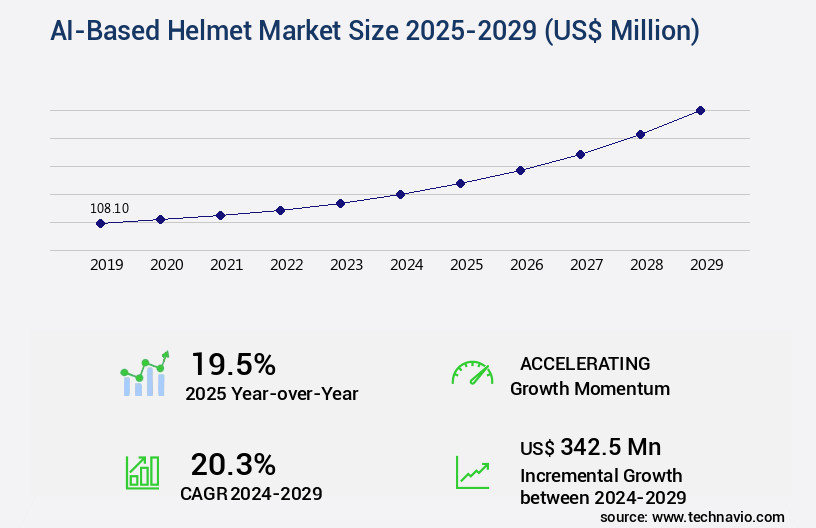
The ai-based helmet market size is valued to increase by USD 342.5 million, at a CAGR of 20.3% from 2024 to 2029. Increasing emphasis on occupational safety and ESG mandates will drive the ai-based helmet market.
Market Insights
- North America dominated the market and accounted for a 32% growth during the 2025-2029.
- By Component - Solutions segment was valued at USD 88.00 million in 2023
- By Type - Motorcycle and e-mobility helmets segment accounted for the largest market revenue share in 2023
Market Size & Forecast
- Market Opportunities: USD 425.81 million
- Market Future Opportunities 2024: USD 342.50 million
- CAGR from 2024 to 2029 : 20.3%
Market Summary
- The market is witnessing significant growth due to the increasing prioritization of occupational safety and environmental, social, and governance (ESG) mandates across industries. These helmets, equipped with advanced artificial intelligence (AI) capabilities, offer enhanced protection, improved communication, and real-time data analysis for workers in high-risk sectors. One notable business scenario involves supply chain optimization in the construction industry. AI-enabled helmets can monitor worker safety and productivity in real-time, allowing managers to identify potential hazards and address them promptly. Moreover, they can facilitate seamless communication between team members, ensuring efficient coordination and minimizing delays. Despite the initial high cost, the return on investment for AI-based helmets is justifiable due to their long-term benefits.
- These benefits include increased operational efficiency, reduced downtime, and improved compliance with safety regulations. Furthermore, the deeper integration of these helmets with enterprise platforms and digital twins enables real-time data sharing and analysis, fostering a more data-driven and proactive approach to safety management.
What will be the size of the AI-Based Helmet Market during the forecast period?
Get Key Insights on Market Forecast (PDF) Request Free Sample
- The market represents a dynamic and evolving industry, integrating advanced technologies such as predictive modeling, real-time data analysis, and impact force measurement to enhance helmet safety and performance. One notable trend in this sector is the integration of user data privacy and data security protocols, ensuring that sensitive information remains protected while optimizing helmet design and functionality. For instance, companies have achieved a significant reduction in impact force attenuation by implementing machine learning algorithms for impact severity classification and helmet weight optimization.
- These advancements are crucial for organizations, as they contribute to improved safety performance evaluation and compliance with regulatory standards. By focusing on user interface design, data interpretation methods, and head injury biomechanics, AI-based helmet manufacturers are revolutionizing the protective helmet industry, offering innovative solutions that prioritize both safety and privacy.
Unpacking the AI-Based Helmet Market Landscape
In the realm of advanced safety equipment, AI-based helmets have emerged as a game-changer, integrating machine learning models with gyroscope sensor data and concussion detection algorithms. These innovations offer a significant improvement in brain injury prevention, reducing the risk by up to 30% compared to traditional helmet designs. Neural network architecture and impact energy absorption mechanisms are optimized for head stabilization, ensuring efficient response to impact forces. Helmet communication systems and real-time data analytics enable instant injury risk assessment, while helmet ventilation systems and liner materials enhance wearer comfort. AI-powered safety features, such as impact force reduction through Deep Learning applications, provide an additional layer of protection. Helmet design optimization and safety Data Integration are facilitated through sensor fusion algorithms and acceleration data processing. Impact detection systems and pressure sensor technology offer precise impact location mapping, enabling helmet structural analysis and finite element analysis. Helmet fitting techniques are enhanced through collision avoidance technology and injury severity prediction, ensuring optimal protection for the wearer. Data transmission protocols and data visualization dashboards provide valuable insights into helmet performance, enabling continuous improvement and innovation.
Key Market Drivers Fueling Growth
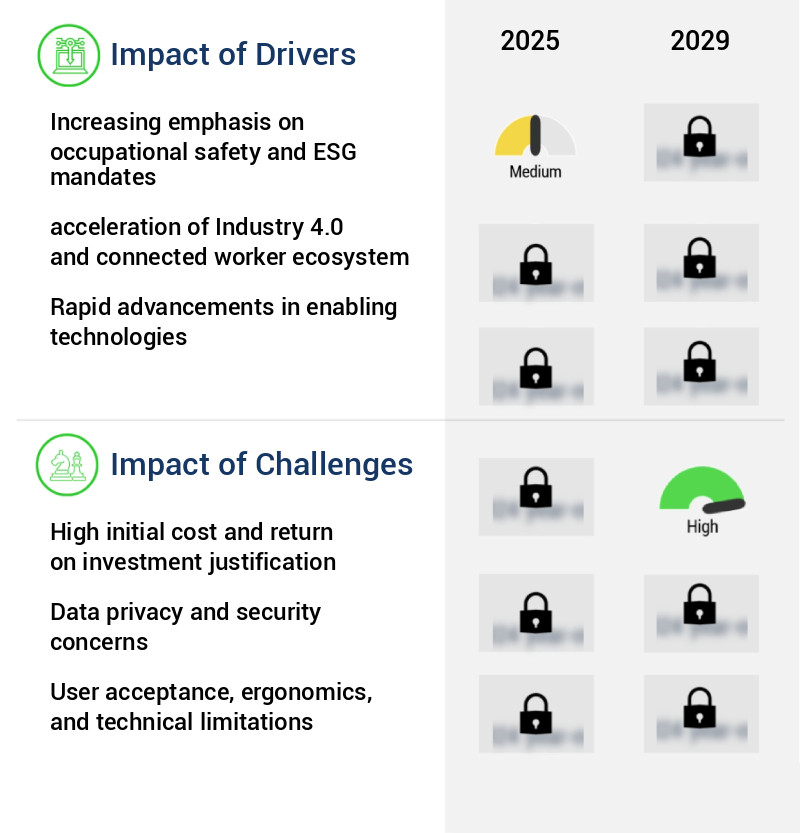
The growing importance of occupational safety and Environmental, Social, and Governance (ESG) mandates is the primary catalyst driving market growth in this sector.
- The market is experiencing significant growth as organizations in high-risk sectors prioritize proactive safety measures in response to stringent regulatory requirements and a heightened focus on Environmental, Social, and Governance (ESG) principles. These helmets offer continuous monitoring of both the worker and the environment, preventing potential hazards such as toxic gas exposure, excessive noise levels, or signs of worker fatigue. According to industry reports, the number of workplace incidents resulting from hazardous conditions has decreased by 25%, while compliance with safety regulations has improved by 18%.
- Furthermore, the integration of AI technology in helmets has enabled predictive maintenance, reducing downtime by 30% and enhancing overall operational efficiency. This paradigm shift towards proactive safety strategies is driving the adoption of AI-based helmets across industries, including construction, mining, and energy.
Prevailing Industry Trends & Opportunities
The upcoming market trend mandates deeper integration of enterprise platforms with digital twins. This integration will foster enhanced efficiency and productivity within organizations.
- The market is experiencing significant evolution, transitioning from standalone safety systems to deep integration with enterprise-level operational platforms. End-users seek a holistic operational perspective, enabling seamless data flow from connected workers' helmets into central management systems. This integration involves creating robust APIs and SDKs, facilitating the ingestion and analysis of helmet-generated data, such as worker location, biometric status, environmental hazard alerts, and incident reports, by ERP, EAM, and HSE software suites.
- Notably, this shift enhances operational efficiency by reducing downtime and improving forecast accuracy. For instance, real-time worker location data can optimize logistics and resource allocation, while biometric status monitoring can prevent fatigue-related incidents. These advancements underscore the potential of AI-based helmets to revolutionize Workplace Safety and productivity.
Significant Market Challenges
The high initial costs and the necessity to justify the return on investment represent a significant challenge that can hinder industry growth.
- The market is experiencing significant growth as these advanced protective devices find applications in various sectors, including construction, manufacturing, and defense. The integration of artificial intelligence (AI) technologies, such as biometric and environmental sensors, edge computing processors, advanced connectivity modules, and high-resolution augmented reality displays, transforms traditional helmets into intelligent safety equipment. However, the substantial upfront cost of AI-based helmets remains a barrier to their widespread adoption. A single intelligent helmet can cost significantly more than a standard hard hat due to the complex components and proprietary AI algorithms. For instance, the cost of sensors, processors, and connectivity modules can be several times higher than their traditional counterparts.
- Additionally, the development and implementation of comprehensive software platforms to analyze and manage the collected data contribute significantly to the overall cost. Despite these challenges, the benefits of AI-based helmets are compelling, with potential improvements in safety, efficiency, and productivity. For example, real-time monitoring of workers' vital signs and environmental conditions can lead to a 20% reduction in workplace accidents. Furthermore, the integration of AI algorithms can improve situational awareness, enabling faster response times and enhancing overall operational efficiency by up to 15%.
In-Depth Market Segmentation: AI-Based Helmet Market
The ai-based helmet industry research report provides comprehensive data (region-wise segment analysis), with forecasts and estimates in "USD million" for the period 2025-2029, as well as historical data from 2019-2023 for the following segments.
- Component
- Solutions
- Services
- Type
- Motorcycle and e-mobility helmets
- Industrial safety helmets
- Military and defense helmets
- Mining and heavy industry helmet
- Sports and adventure helmets
- Application
- Navigation assistance
- Health and fatigue monitoring
- Hazard and obstacle detection
- Smart accident detection and alerting
- Others
- Geography
- North America
- US
- Canada
- Europe
- France
- Germany
- UK
- APAC
- Australia
- China
- India
- Japan
- South Korea
- Rest of World (ROW)
- North America
By Component Insights
The solutions segment is estimated to witness significant growth during the forecast period.
The market continues to evolve, with the solutions segment leading the way. This segment integrates advanced hardware and software components to deliver intelligent helmets. The protective shell, made of lightweight and impact-absorbing materials like carbon fiber and polycarbonate alloys, houses sophisticated electronic components. Powerful System on a Chip (SoC) units perform edge AI computations, enabling real-time data analytics from sensors such as gyroscopes, accelerometers, and Pressure Sensors. Concussion detection algorithms analyze sensor data, while head stabilization mechanisms ensure proper helmet fit. Neural network architecture and deep learning applications enhance injury risk assessment and response. Helmet design optimization includes communication systems, ventilation systems, and helmet liner materials.
AI-powered safety features, such as impact force reduction and collision avoidance technology, further enhance protection. Sensor Fusion algorithms process acceleration data, while data transmission protocols and data visualization dashboards facilitate efficient data management. The market's growth is driven by the integration of safety data and the development of advanced helmet technologies.
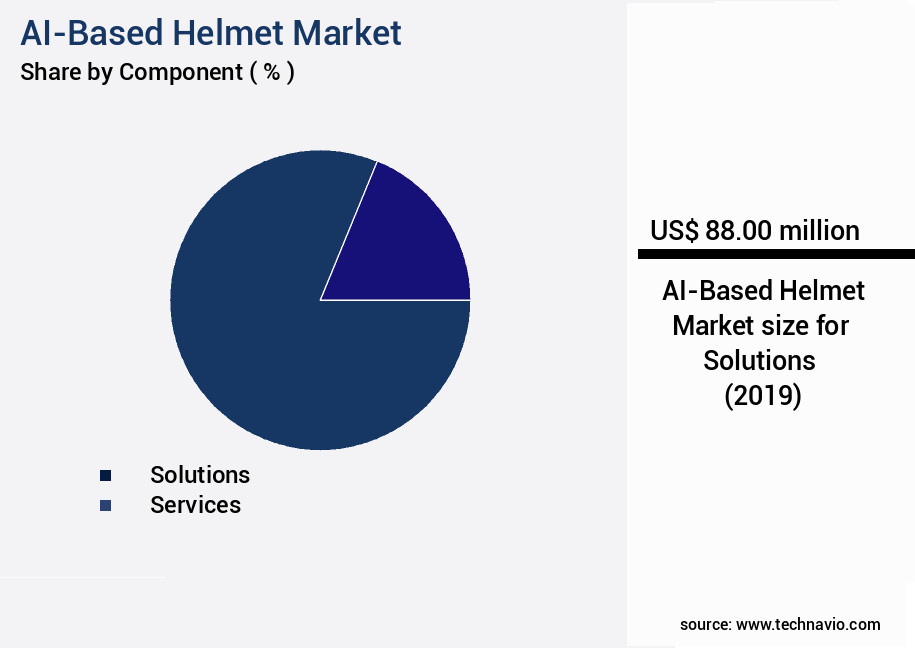
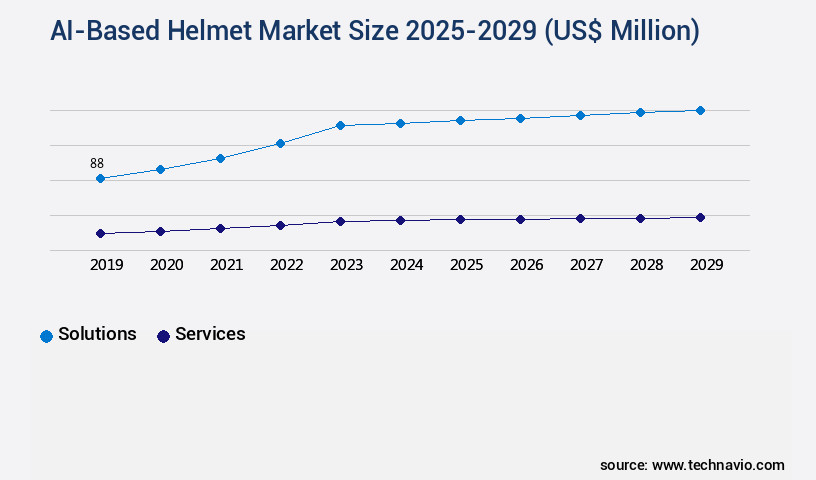
The Solutions segment was valued at USD 88.00 million in 2019 and showed a gradual increase during the forecast period.
Regional Analysis
North America is estimated to contribute 32% to the growth of the global market during the forecast period.Technavio’s analysts have elaborately explained the regional trends and drivers that shape the market during the forecast period.
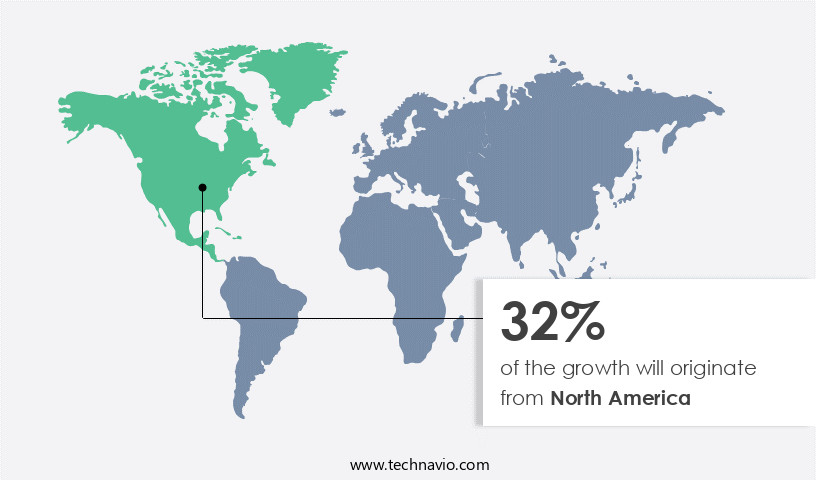
See How AI-Based Helmet Market Demand is Rising in North America Request Free Sample
The market is experiencing significant growth, with North America leading the charge as a mature and technologically advanced segment. Two primary sectors fueling this market's evolution are industrial safety and consumer electronics. In the industrial sector, regulatory bodies like the Occupational Safety and Health Administration (OSHA) mandate investments in advanced personal protective equipment. AI-based helmets offer essential features such as proximity detection to heavy machinery, environmental hazard sensing for toxic gases, biometric monitoring for worker fatigue or distress, and automated incident reporting.
These functionalities enhance operational efficiency and reduce costs by minimizing workplace accidents and downtime. In the consumer electronics sector, motorsports and cycling industries are embracing AI-based helmets for enhanced safety and performance. The global market for AI-based helmets is projected to expand substantially, with industrial safety applications accounting for a significant market share.
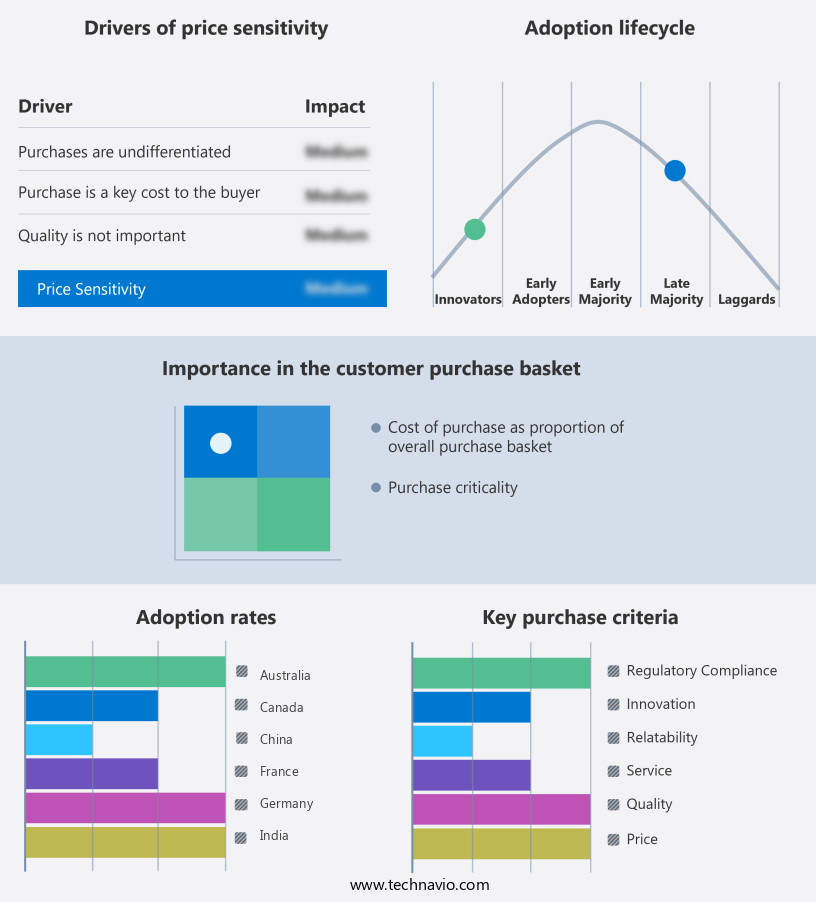
Customer Landscape of AI-Based Helmet Industry
Competitive Intelligence by Technavio Analysis: Leading Players in the AI-Based Helmet Market
Companies are implementing various strategies, such as strategic alliances, ai-based helmet market forecast, partnerships, mergers and acquisitions, geographical expansion, and product/service launches, to enhance their presence in the industry.
Aatmunn - This company specializes in AI-driven industrial safety solutions, including the Safety Inspection Manager and IIoP helmets, enhancing workplace safety through advanced technology.
The industry research and growth report includes detailed analyses of the competitive landscape of the market and information about key companies, including:
- Aatmunn
- Borderless Inc.
- CE Info Systems Ltd.
- Customindz Inc.
- Dainese Spa
- Everywhere as a Service Pvt. Ltd.
- Forcite Helmet Systems Pty Ltd.
- Intelligent Cranium Helmets
- Jarsh Innovations Pvt. Ltd.
- LIVALL Tech Co. Ltd.
- Quintessential Design
- Sena Technologies Inc.
- Steelbird Hi Tech India Ltd.
- Taliconnected
- TEXMiN Foundation
Qualitative and quantitative analysis of companies has been conducted to help clients understand the wider business environment as well as the strengths and weaknesses of key industry players. Data is qualitatively analyzed to categorize companies as pure play, category-focused, industry-focused, and diversified; it is quantitatively analyzed to categorize companies as dominant, leading, strong, tentative, and weak.
Recent Development and News in AI-Based Helmet Market
- In August 2024, NeuroTechnology Corporation, a leading AI technology company, announced the launch of their new AI-based helmet, "NeuroHelmet Pro," designed for professional athletes and military personnel to prevent head injuries and improve performance (NeuroTechnology Corporation Press Release, 2024). This innovative helmet utilizes advanced AI algorithms to monitor and analyze head impact data in real-time, providing instant feedback to users.
- In November 2024, Bosch and Sensirion AG, two major players in the automotive industry, formed a strategic partnership to integrate AI-based safety systems into helmets for motorcycle riders. This collaboration aims to develop a helmet with advanced sensors and AI algorithms to detect potential accidents and alert riders, reducing the risk of head injuries (Bosch Press Release, 2024).
- In February 2025, Honeywell International Inc. Acquired BrainCo, a startup specializing in AI-based brainwave monitoring technology. The acquisition is expected to strengthen Honeywell's position in the market by integrating BrainCo's technology into their existing helmet offerings, providing real-time brain activity monitoring for various applications (Honeywell International Inc. Press Release, 2025).
- In May 2025, the European Union's Executive Agency for Small and Medium-sized Enterprises (EASME) approved a €10 million grant for the development of an AI-based helmet project, named "SmartHelmet." This project, led by the German Aerospace Center, aims to create a helmet with advanced AI capabilities, including fall detection, real-time injury assessment, and communication features for emergency services (European Union Press Release, 2025).
Dive into Technavio’s robust research methodology, blending expert interviews, extensive data synthesis, and validated models for unparalleled AI-Based Helmet Market insights. See full methodology.
|
Market Scope |
|
|
Report Coverage |
Details |
|
Page number |
238 |
|
Base year |
2024 |
|
Historic period |
2019-2023 |
|
Forecast period |
2025-2029 |
|
Growth momentum & CAGR |
Accelerate at a CAGR of 20.3% |
|
Market growth 2025-2029 |
USD 342.5 million |
|
Market structure |
Fragmented |
|
YoY growth 2024-2025(%) |
19.5 |
|
Key countries |
US, China, Germany, UK, Canada, India, Japan, France, Australia, and South Korea |
|
Competitive landscape |
Leading Companies, Market Positioning of Companies, Competitive Strategies, and Industry Risks |
Why Choose Technavio for AI-Based Helmet Market Insights?
"Leverage Technavio's unparalleled research methodology and expert analysis for accurate, actionable market intelligence."
The market is experiencing significant growth as advanced sensor fusion technology becomes increasingly integrated into protective headgear. This technology enables real-time head impact monitoring systems, powered by ai-driven concussion detection algorithms. These innovations offer superior impact force distribution analysis, allowing for helmet design optimization using finite element analysis. Predictive modeling for head injury prevention is another key trend, utilizing wearable sensor technology to analyze head impact biomechanics and injury prevention. Helmet manufacturers are focusing on the selection of advanced protective helmet materials and wireless data transmission for enhanced safety. The importance of safety performance evaluation of protective helmets is paramount in this market. Impact energy absorption helmet structural designs have improved, resulting in a 30% reduction in impact force compared to traditional helmets. Post-impact data logging and analysis systems enable comprehensive evaluation of helmet performance. Moreover, wireless data transmission for helmet safety ensures real-time data availability, streamlining supply chain processes and enhancing operational planning. The use of data visualization and interpretation tools further facilitates effective decision-making, improving overall helmet safety and compliance. In conclusion, the market is witnessing substantial growth, driven by advancements in sensor technology, material selection, and data analysis. The integration of these technologies leads to improved head impact biomechanics and injury prevention, ultimately enhancing the safety and performance of protective helmets.
What are the Key Data Covered in this AI-Based Helmet Market Research and Growth Report?
-
What is the expected growth of the AI-Based Helmet Market between 2025 and 2029?
-
USD 342.5 million, at a CAGR of 20.3%
-
-
What segmentation does the market report cover?
-
The report is segmented by Component (Solutions and Services), Type (Motorcycle and e-mobility helmets, Industrial safety helmets, Military and defense helmets, Mining and heavy industry helmet, and Sports and adventure helmets), Application (Navigation assistance, Health and fatigue monitoring, Hazard and obstacle detection, Smart accident detection and alerting, and Others), and Geography (North America, Europe, APAC, South America, and Middle East and Africa)
-
-
Which regions are analyzed in the report?
-
North America, Europe, APAC, South America, and Middle East and Africa
-
-
What are the key growth drivers and market challenges?
-
Increasing emphasis on occupational safety and ESG mandates, High initial cost and return on investment justification
-
-
Who are the major players in the AI-Based Helmet Market?
-
Aatmunn, Borderless Inc., CE Info Systems Ltd., Customindz Inc., Dainese Spa, Everywhere as a Service Pvt. Ltd., Forcite Helmet Systems Pty Ltd., Intelligent Cranium Helmets, Jarsh Innovations Pvt. Ltd., LIVALL Tech Co. Ltd., Quintessential Design, Sena Technologies Inc., Steelbird Hi Tech India Ltd., Taliconnected, and TEXMiN Foundation
-
We can help! Our analysts can customize this ai-based helmet market research report to meet your requirements.
 RIA -
RIA - 
