


Commodity Plastics Market Analysis, Size, and Forecast 2024-2028: North America (US and Canada), Europe (France, Germany, Italy, and UK), Middle East and Africa (Egypt, KSA, Oman, and UAE), APAC (China, India, and Japan), South America (Argentina and Brazil), and Rest of World (ROW)

Commodity Plastics Market Analysis, Size, and Forecast 2024-2028:
North America (US and Canada), Europe (France, Germany, Italy, and UK), Middle East and Africa (Egypt, KSA, Oman, and UAE), APAC (China, India, and Japan), South America (Argentina and Brazil), and Rest of World (ROW)

Published: Aug 2024 186 Pages SKU: IRTNTR75161

Market Overview at a Glance

$189.5 B
Market Opportunity
6.78%
CAGR
6.23
YoY growth 2023-2024(%)

Commodity Plastics Market Size 2024-2028

The commodity plastics market size is forecast to increase by USD 189.5 billion, at a CAGR of 6.78% between 2023 and 2028.

Major Market Trends & Insights

  • APAC dominated the market and accounted for a 36% growth during the forecast period.
  • By the Product - Polyethylene segment was valued at USD 109.80 billion in 2022
  • By the End-User - Packaging segment accounted for the largest market revenue share in 2022

Market Size & Forecast

  • Market Opportunities: USD 82.57 billion
  • Market Future Opportunities: USD 189.50 billion
  • CAGR : 6.78%
  • APAC: Largest market in 2022

Market Summary

  • The market experiences continuous evolution, driven by advancements in technology and shifting consumer preferences. The market is experiencing significant growth due to the increasing demand for packaging materials. According to recent studies, the global plastic packaging market is anticipated to reach a value of USD 530 billion by 2027, growing at a steady pace. This expansion is due to the increasing demand for lightweight, durable, and cost-effective packaging solutions across various industries, including food and beverage, pharmaceuticals, and cosmetics. Moreover, recycling techniques have gained significant traction, with an estimated 30% of plastic waste being recycled in 2020.
  • This trend is expected to continue, as companies seek to reduce their environmental footprint and comply with stringent regulations regarding plastic usage. The market's dynamism is further reflected in the development of biodegradable and compostable plastics, which offer sustainable alternatives to traditional materials. Overall, the market presents numerous opportunities for growth and innovation, as businesses adapt to evolving consumer demands and regulatory requirements.

What will be the Size of the Commodity Plastics Market during the forecast period?
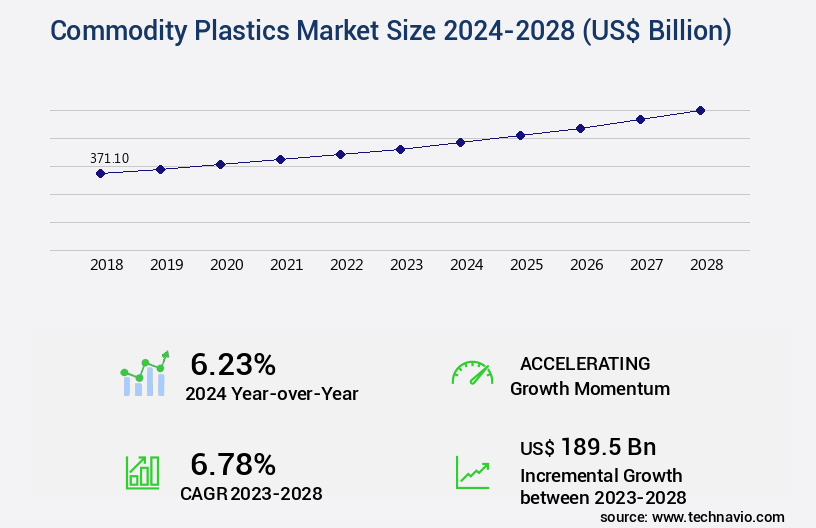
Commodity Plastics Market Size

Explore market size, adoption trends, and growth potential for commodity plastics market Request Free Sample

  • The market encompasses the production, processing, and application of various polymer materials. With a global production volume of over 300 million metric tons annually, it is a significant contributor to the manufacturing sector. Notably, plastic recycling has emerged as a crucial aspect of the market, with an estimated 30% of plastic waste being recycled each year. This figure underscores the importance of adhering to stringent recycling standards and advanced plastic waste stream management. Polymer compounding, a key process in the plastics industry, involves the addition of various additives to enhance the properties of base polymers.
  • For instance, the use of rheological properties modifiers can improve the flow behavior of molten polymers during processing. In contrast, polymer characterization techniques, such as chromatographic separation and spectroscopic analysis, are essential for understanding the molecular structure and composition of plastics. This knowledge facilitates the development of sustainable plastics and the optimization of plastic part design. The ongoing evolution of plastics technology encompasses various processes, including plastic pyrolysis, gasification, and depolymerization, all aimed at enhancing plastic energy recovery and reducing waste.

How is this Commodity Plastics Industry segmented?

The commodity plastics industry research report provides comprehensive data (region-wise segment analysis), with forecasts and estimates in "USD billion" for the period 2024-2028, as well as historical data from 2018-2022 for the following segments.

  • Product
    • Polyethylene
    • Polypropylene
    • Polyvinyl chloride
    • Polyethylene terephthalate
  • End-User
    • Packaging
    • Consumer goods
    • Electronics
    • Automotive
    • Others
  • Application
    • Films and Sheets
    • Pipes and Fittings
    • Automotive Components
    • Household Products
  • Geography
    • North America
      • US
      • Canada
    • Europe
      • France
      • Germany
      • Italy
      • UK
    • Middle East and Africa
      • Egypt
      • KSA
      • Oman
      • UAE
    • APAC
      • China
      • India
      • Japan
    • South America
      • Argentina
      • Brazil
    • Rest of World (ROW)

By Product Insights

The polyethylene segment is estimated to witness significant growth during the forecast period.

Polyethylene (PE), a versatile thermoplastic, is extensively used in various industries due to its lightweight, durability, and crystalline structure. It is the second most widely produced plastic globally, with packaging being a significant application. PE packaging, which involves enclosing products for protection, storage, distribution, and sales, utilizes high-density polyethylene (HDPE) and low-density polyethylene (LDPE) as primary materials. Polyethylene's production process involves the chemical synthesis of ethylene. This thermoplastic is further categorized into HDPE, LDPE, and linear low-density polyethylene (LLDPE), each with distinct properties. HDPE, known for its high density and rigidity, is commonly used for bottles and containers.

LDPE, with its low density and flexibility, is suitable for film applications. LLDPE combines the properties of both HDPE and LDPE. The plastic industry is continuously evolving, with advancements in additive manufacturing, fiber reinforcement materials, and plastic degradation kinetics. Additive manufacturing plastics enable the production of complex shapes and structures, while fiber reinforcement materials enhance the strength and durability of plastics. Plastic degradation pathways and kinetics are essential aspects of the industry, as understanding these factors can lead to improved product design and waste management. Polymer chain structure, molecular weight, and thermal stability are crucial factors affecting plastic properties.

Polystyrene, polyethylene terephthalate (PET), and polyvinyl chloride (PVC) are essential polymers with distinct properties. Polystyrene is known for its excellent insulation properties, while PET is widely used for packaging due to its high tensile strength and thermal stability. PVC, on the other hand, is valued for its flexibility and resistance to chemicals. Plastic recycling plays a significant role in the industry, with mechanical and chemical recycling methods being the primary approaches. Mechanical recycling involves the reprocessing of used plastics into new products, while chemical recycling converts waste plastics into their base chemicals for reuse. Plastic waste management is a critical issue, with ongoing efforts to improve recycling rates and reduce plastic pollution.

Plastic additives, such as color masterbatches, flame retardants, impact resistance enhancers, and UV stabilizers, are essential components of plastic production. These additives improve plastic properties and extend their applications across various sectors. Plastic material properties, such as tensile strength, flexural modulus, viscosity control, and impact resistance, are essential factors in determining their suitability for specific applications. Plastic production techniques, including injection molding, blow molding, and film extrusion, are continually evolving to meet the demands of various industries. Thermoforming applications, such as automotive, packaging, and construction, are significant markets for plastics. Plastic pipe manufacturing, composite materials, and polymer molecular weight are other essential aspects of the industry.

According to recent studies, the global PE market is expected to grow by 5.2% in the next year, with a further 4.5% growth anticipated in the following year. These figures reflect the industry's continuous expansion and the growing demand for PE-based products across various sectors.
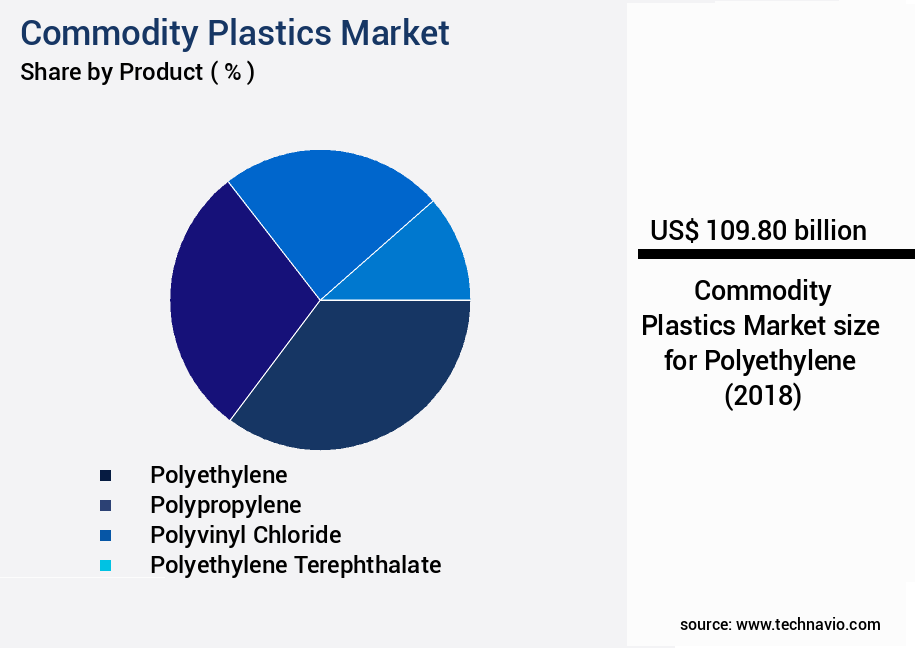
Commodity Plastics Market Size

The Polyethylene segment was valued at USD 109.80 billion in 2018 and showed a gradual increase during the forecast period.

The Commodity Plastics Market is driven by innovations in polypropylene resin properties and applications, advances in high-density polyethylene film extrusion process, and low-density polyethylene packaging design guidelines that enhance product performance. Sustainability challenges focus on polyethylene terephthalate recycling challenges, mechanical recycling of polyethylene terephthalate, chemical recycling of polystyrene waste, and plastic waste management strategies and technologies, supported by plastic sorting technologies, plastic monomer recovery, depolymerization reaction, plastic pyrolysis process, and plastic gasification.

Material performance depends on plastic tensile strength and impact resistance, polymer molecular weight distribution analysis, plastic melt flow index measurement techniques, plastic flexural modulus and yield strength, and plastic uv resistance and stabilization. Research into polyvinyl chloride degradation mechanisms, polymer degradation kinetics and modeling, and plastic thermal stability and degradation supports innovation in plastic durability testing. Manufacturing efficiency is enhanced by plastic viscosity control in extrusion, plastic extrusion lines, plastic molding machines, polymer processing aids, and plastic surface treatment. Market trends are also shaped by plastic coating methods, plastic printing techniques, plastic labeling regulations, plastic recycling standards, and strategies for plastic waste reduction, with plastic product lifecycle, material flow analysis, and plastic waste streams influencing long-term sustainability.
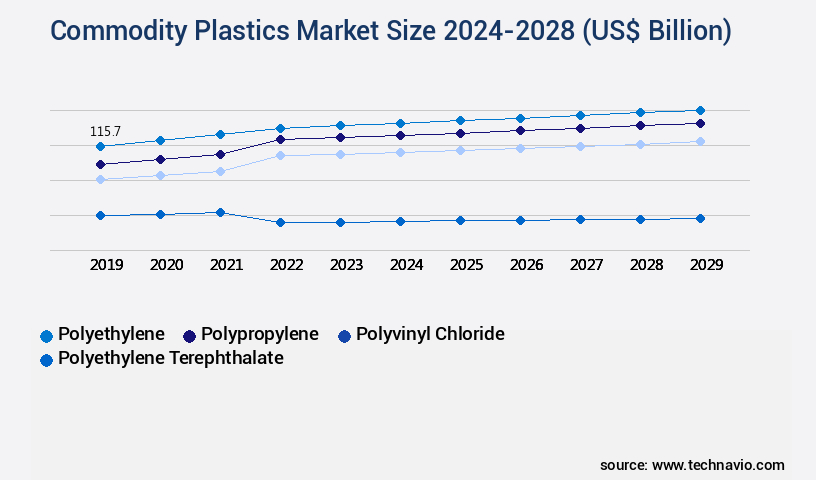
Commodity Plastics Market Size

Request Free Sample

Regional Analysis

APAC is estimated to contribute 36% to the growth of the global market during the forecast period.Technavio's analysts have elaborately explained the regional trends and drivers that shape the market during the forecast period.
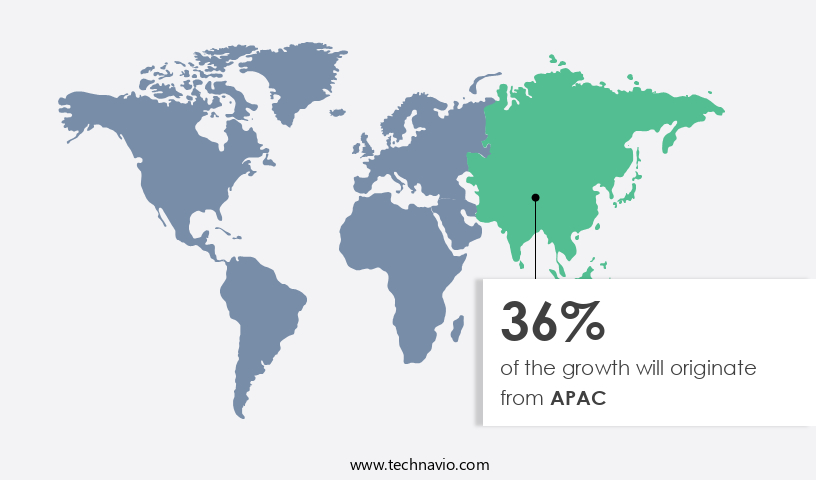
Commodity Plastics Market Share by Geography

See How Commodity Plastics Market Demand is Rising in APAC Request Free Sample

The market in Asia Pacific (APAC) is experiencing significant expansion, driven by the burgeoning industries of e-commerce, fast-moving consumer goods (FMCG), household appliances, and personal care. Countries like China and India are poised to become significant contributors to the market's revenue growth. The e-commerce sector in APAC is witnessing a surge due to the region's expanding population, which is fueling the demand for goods through online channels. According to recent estimates, the e-commerce market in APAC is projected to grow by 20% annually over the next five years. Furthermore, the FMCG sector is anticipated to expand by 12% yearly, contributing to the increased demand for commodity plastics.

Household appliances and personal care industries are also expected to witness a similar growth trajectory. The market in APAC is expected to grow by 15% in the next five years, as per industry reports. This growth is primarily due to the rising demand for plastics in various end-use industries and the region's expanding population. The market's expansion is also fueled by the increasing adoption of plastics in packaging applications, particularly in the food and beverage sector. Despite the challenges posed by environmental concerns, the market in APAC remains a promising area for growth.

Market Dynamics

Our researchers analyzed the data with 2023 as the base year, along with the key drivers, trends, and challenges. A holistic analysis of drivers will help companies refine their marketing strategies to gain a competitive advantage.

Enhancing Business Performance in the US the market: A Focus on Polypropylene, PET, PVC, and More The US the market is witnessing significant advancements in various sectors, from polypropylene (PP) to polyethylene terephthalate (PET), polyvinyl chloride (PVC), and beyond. Let's explore some key trends and improvements in these areas. Polypropylene (PP): With its excellent thermal stability and impact resistance, PP is widely used in various industries. The latest innovations focus on enhancing its properties, such as improving melt flow index measurement techniques and optimizing color masterbatch formulation for better color consistency. Polyethylene Terephthalate (PET): In the PET sector, recycling challenges persist, but progress is being made. Mechanical recycling and chemical recycling technologies are gaining traction, reducing plastic waste and improving sustainability. Polyvinyl Chloride (PVC): Understanding PVC degradation mechanisms is crucial for maintaining product quality and extending product life. Innovative additives can improve plastic stability, ensuring compliance with industry standards and enhancing overall performance. High-Density Polyethylene (HDPE): The film extrusion process for HDPE is undergoing efficiency improvements, with a focus on reducing downtime and increasing output. Advanced viscosity control techniques enable better process control and higher-quality products. Low-Density Polyethylene (LDPE): In LDPE packaging design, guidelines are being updated to optimize material usage and reduce environmental impact. Innovative design approaches can lead to significant reductions in material waste and cost savings. Staying informed about these trends and advancements can help businesses in the US the market stay competitive and maintain a strong market position. By focusing on performance improvements, efficiency gains, and sustainability, companies can drive growth and success in this dynamic industry.
Commodity Plastics Market Size

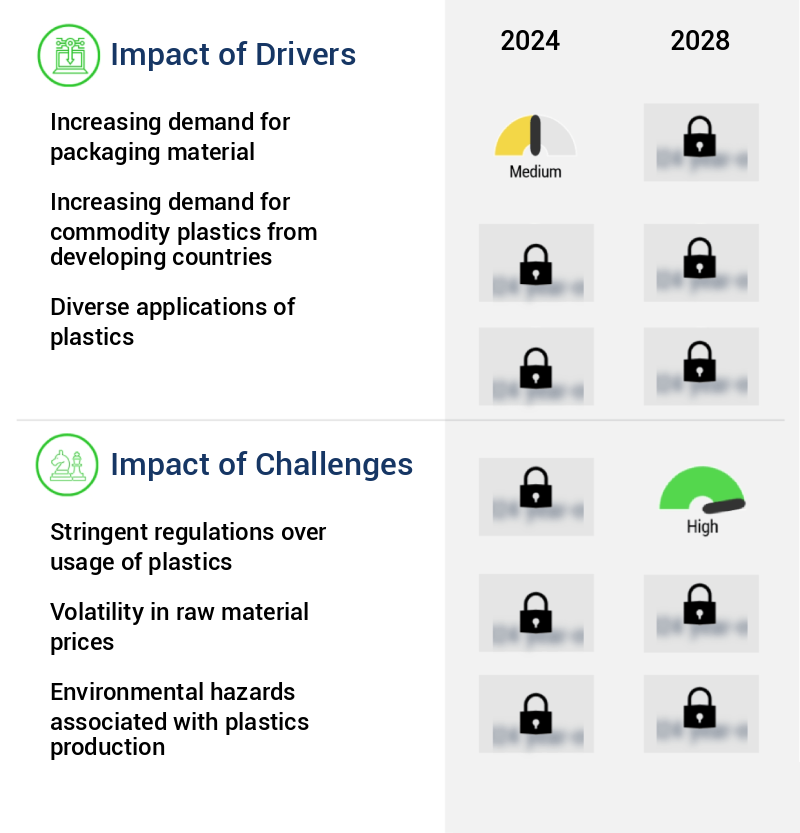
What are the key market drivers leading to the rise in the adoption of Commodity Plastics Industry?

  • The packaging material market is driven primarily by the rising demand for these materials due to increasing consumer preferences for convenient and protective packaging solutions. 
  • The market has experienced significant growth and evolution in recent years, driven by the increasing demand for packaging materials across various industries. This trend was particularly pronounced during the COVID-19 pandemic, which led to a surge in demand for consumer goods, medical equipment, and other essential products. As a result, the demand for plastic packaging experienced notable growth. In the consumer goods sector, the shift towards e-commerce and grocery delivery services accelerated, leading to increased demand for flexible plastic packaging. With restaurants and food-service outlets shutting down, consumers turned to online channels for their daily staples and fresh food, resulting in a significant uptick in demand for packaging materials.
  • The healthcare sector also saw a surge in demand for plastic packaging, as medical equipment and supplies became essential during the pandemic. Despite the challenges posed by the pandemic, the market continued to unfold, with new applications and trends emerging. For instance, there has been a growing interest in sustainable and biodegradable plastic alternatives, as businesses and consumers increasingly prioritize environmental concerns. Additionally, advancements in technology have led to the development of innovative plastic solutions, such as smart and active packaging, which offer enhanced functionality and improved consumer experience. In terms of numerical data, according to industry reports, the global plastic packaging market is projected to reach a value of over USD500 billion by 2027, growing at a steady pace during the forecast period.
  • This growth is attributed to the increasing demand for plastic packaging in various end-use industries and the ongoing development of innovative plastic solutions. In conclusion, the market continues to evolve, driven by the increasing demand for packaging materials across various industries and the ongoing development of innovative plastic solutions. The market is expected to grow steadily in the coming years, with sustainable and biodegradable plastic alternatives and advanced plastic technologies being key areas of focus.

What are the market trends shaping the Commodity Plastics Industry?

  • The use of advanced recycling techniques is becoming increasingly mandated in the market trend. Market trends now prioritize the implementation of sophisticated recycling methods.
  • Commodity plastics, a significant segment of the global plastics industry, have been witnessing continuous evolution in response to growing environmental concerns and increasing demand across various sectors. According to estimates, approximately 8 million tons of plastic waste enter the ocean each year, a figure projected to reach two tons per minute by 2030 and potentially quadruple by 2050. This environmental issue has prompted commodity plastic manufacturers and end-users to focus on recycling initiatives. In October 2022, BASF SE, a leading player in the market, unveiled its commitment to a more sustainable plastics economy at the K 2022 trade fair.
  • BASF presented several recyclable product packages and announced plans to expand existing recycling methods. This initiative is part of a larger trend, as companies increasingly prioritize sustainable solutions to mitigate the environmental impact of plastic production and consumption. The market encompasses a diverse range of applications, including packaging, construction, automotive, and consumer goods. In the packaging sector, the shift towards sustainable solutions has led to the development of biodegradable and recycled plastics. In construction, plastic pipes and insulation materials offer durability and cost-effectiveness. The automotive industry relies on commodity plastics for parts production, while consumer goods manufacturers utilize plastics for various applications, from household items to electronics.
  • In conclusion, the market is undergoing significant changes as manufacturers and end-users respond to environmental concerns and shifting consumer preferences. Recycling initiatives and the development of sustainable alternatives are key drivers of market growth and innovation. BASF SE's commitment to a more sustainable plastics economy is a testament to the evolving nature of this dynamic market.

What challenges does the Commodity Plastics Industry face during its growth?

  • The strict regulations governing the use of plastics pose a significant challenge to the industry's growth trajectory. 
  • The market encompasses a diverse range of plastic materials, primarily derived from fossil fuels, which have become integral to numerous industries due to their versatility and affordability. This market's continuous evolution is driven by the ongoing demand for plastics in various sectors, including packaging, construction, automotive, and electronics. In the US, the Food and Drug Administration (FDA) plays a crucial role in regulating the usage of plastics, particularly in food-contact applications. Polystyrene and polyethylene are among the plastics commonly used in food packaging. The FDA adheres to a rigorous approval process for these plastics to ensure their safety for food contact.
  • The global plastics market is subject to increasing scrutiny due to the environmental concerns surrounding plastic pollution and the associated impact on ecosystems and human health. Governments worldwide are implementing regulations to mitigate the consequences of plastic usage. As a result, the market dynamics are continually unfolding, with emerging trends and technologies shaping the future of commodity plastics. Comparatively, the production of bioplastics, derived from renewable resources, is gaining traction as a sustainable alternative to fossil fuel-based plastics. Bioplastics offer a reduced carbon footprint and can effectively contribute to the reduction of plastic pollution. However, their production and adoption face challenges, including higher production costs and limited availability, compared to conventional plastics.
  • In conclusion, the market is a dynamic and evolving landscape, shaped by regulatory requirements, technological advancements, and shifting consumer preferences. The ongoing efforts to reduce plastic pollution and minimize the environmental impact of plastics are driving innovation and change within the industry.

Exclusive Customer Landscape

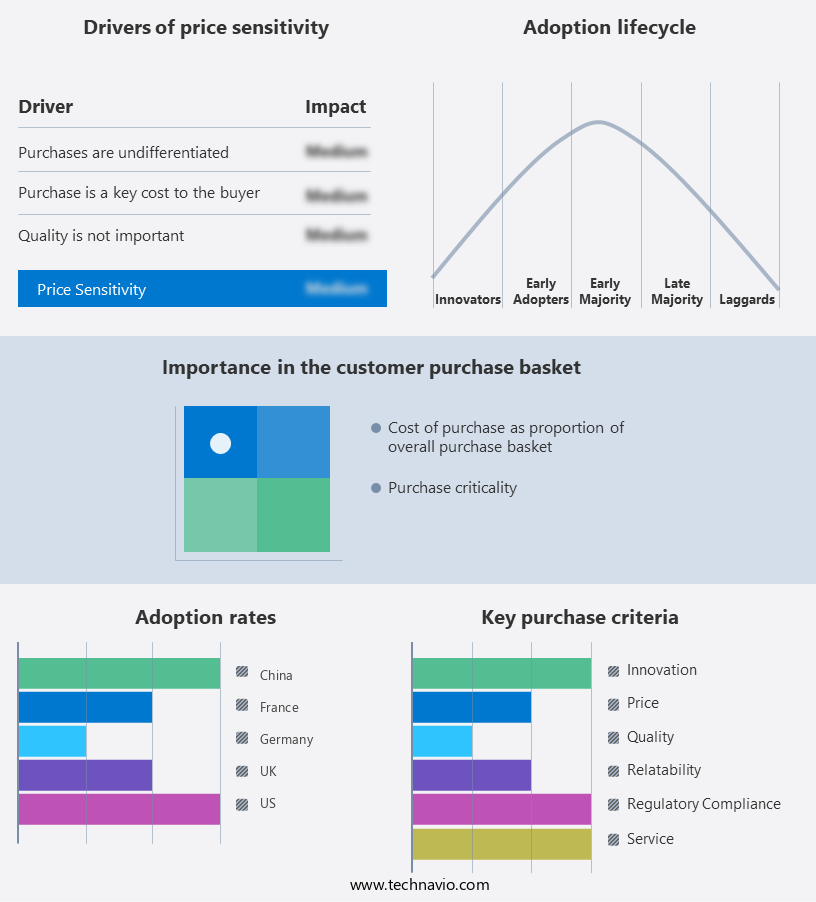
The commodity plastics market forecasting report includes the adoption lifecycle of the market, covering from the innovator's stage to the laggard's stage. It focuses on adoption rates in different regions based on penetration. Furthermore, the commodity plastics market report also includes key purchase criteria and drivers of price sensitivity to help companies evaluate and develop their market growth analysis strategies.
Commodity Plastics Market Share by Geography

 Customer Landscape of Commodity Plastics Industry

Key Companies & Market Insights

Companies are implementing various strategies, such as strategic alliances, commodity plastics market forecast, partnerships, mergers and acquisitions, geographical expansion, and product/service launches, to enhance their presence in the industry.

BASF SE - This company specializes in producing commodity plastics, catering to various industries such as automotive, footwear, and electronics. Their product offerings provide essential solutions for these sectors, enhancing durability, functionality, and sustainability.

The industry research and growth report includes detailed analyses of the competitive landscape of the market and information about key companies, including:

  • BASF SE
  • Borealis AG
  • Braskem
  • Chevron Phillips Chemical Company
  • China Petroleum & Chemical Corporation (Sinopec)
  • Dow Inc.
  • DuPont de Nemours, Inc.
  • ExxonMobil Corporation
  • Formosa Plastics Corporation
  • INEOS Group
  • LANXESS AG
  • LG Chem
  • LyondellBasell Industries
  • Mitsubishi Chemical Corporation
  • Reliance Industries Limited
  • SABIC
  • Sumitomo Chemical Co., Ltd.
  • Toray Industries, Inc.
  • TotalEnergies
  • Westlake Chemical Corporation

Qualitative and quantitative analysis of companies has been conducted to help clients understand the wider business environment as well as the strengths and weaknesses of key industry players. Data is qualitatively analyzed to categorize companies as pure play, category-focused, industry-focused, and diversified; it is quantitatively analyzed to categorize companies as dominant, leading, strong, tentative, and weak.

Recent Development and News in Commodity Plastics Market

  • In January 2024, LyondellBasell Industries N.V. (NYSE: LYB), a leading plastics manufacturer, announced the launch of its new Borstar PE 4522i polyethylene technology, enabling enhanced performance and reduced emissions for commodity plastics (LyondellBasell Press Release, 2024).
  • In March 2024, BASF SE (ETR: BAS), the world's largest chemical producer, and TotalEnergies SE (EPA: TTE), a major energy company, entered into a strategic collaboration to develop and produce circular polymers from waste plastic (BASF Press Release, 2024).
  • In April 2025, SABIC, a leading manufacturer of commodity plastics, completed the acquisition of Sinopec's 50% stake in their joint venture, Sinopec SABIC Petrochemicals Company Limited, expanding SABIC's market presence in China (SABIC Press Release, 2025).
  • In May 2025, Dow Inc. (NYSE: DOW) and Corbion, a biotech company, announced a strategic partnership to commercialize bio-based polyethylene derived from renewable feedstocks, aiming to reduce the plastics industry's carbon footprint (Dow Inc. Press Release, 2025).

Research Analyst Overview

  • The high-density polyethylene (HDPE) and low-density polyethylene (LDPE) markets continue to evolve, driven by advancements in plastic additive effects, impact resistance, and ultraviolet (UV) resistance. HDPE, known for its high strength and chemical resistance, is increasingly used in applications such as plastic pipe manufacturing and plastic film extrusion. HDPE's impact resistance is enhanced through the addition of elastomers, while UV resistance is improved with the incorporation of additives like titanium dioxide and antioxidants. LDPE, on the other hand, is widely used in packaging due to its flexibility and low cost. Its impact resistance can be boosted with the addition of plasticizers, while flame retardants like antimony trioxide and brominated flame retardants are used in certain applications.
  • Polypropylene resin, another important player in the market, is valued for its high strength, heat resistance, and chemical resistance. Its impact resistance can be enhanced through the addition of impact modifiers, while UV resistance is improved with the use of additives like UV absorbers and hindered amine light stabilizers. The plastic industry is expected to grow at a rate of 4.5% annually, driven by increasing demand from various sectors, including automotive, construction, and packaging. HDPE and LDPE are expected to remain key contributors to this growth, with HDPE accounting for a larger market share due to its versatility and high demand in packaging and pipe applications.
  • Plastic flame retardants, polypropylene resin, and plastic film extrusion are integral parts of this dynamic market, with ongoing research focusing on improving plastic properties, enhancing sustainability, and reducing environmental impact. Plastic pipe manufacturing, for instance, is increasingly turning to recycled materials and alternative manufacturing methods to reduce waste and improve efficiency. In conclusion, the market is a continuously evolving landscape, driven by advancements in plastic additives, manufacturing processes, and industry trends. HDPE, LDPE, and polypropylene resin remain key players, with ongoing research focusing on improving their properties and reducing their environmental impact. The market is expected to grow at a robust rate, driven by increasing demand from various sectors.

Dive into Technavio's robust research methodology, blending expert interviews, extensive data synthesis, and validated models for unparalleled Commodity Plastics Market insights. See full methodology.

Market Scope

Report Coverage

Details

Page number

186

Base year

2023

Historic period

2018-2022

Forecast period

2024-2028

Growth momentum & CAGR

Accelerate at a CAGR of 6.78%

Market growth 2024-2028

USD 189.5 billion

Market structure

Fragmented

YoY growth 2023-2024(%)

6.23

Key countries

US, Canada, Germany, UK, Italy, France, China, India, Japan, Brazil, Egypt, UAE, Oman, Argentina, KSA, UAE, Brazil, and Rest of World (ROW)

Competitive landscape

Leading Companies, Market Positioning of Companies, Competitive Strategies, and Industry Risks

Request Free Sample

What are the Key Data Covered in this Commodity Plastics Market Research and Growth Report?

  • CAGR of the Commodity Plastics industry during the forecast period
  • Detailed information on factors that will drive the growth and forecasting between 2024 and 2028
  • Precise estimation of the size of the market and its contribution of the industry in focus to the parent market
  • Accurate predictions about upcoming growth and trends and changes in consumer behaviour
  • Growth of the market across APAC, North America, Europe, South America, and Middle East and Africa
  • Thorough analysis of the market's competitive landscape and detailed information about companies
  • Comprehensive analysis of factors that will challenge the commodity plastics market growth of industry companies

We can help! Our analysts can customize this commodity plastics market research report to meet your requirements.

Get in touch

1 Executive Summary

  • 1.1 Market overview
    • Executive Summary - Chart on Market Overview
    • Executive Summary - Data Table on Market Overview
    • Executive Summary - Chart on Global Market Characteristics
    • Executive Summary - Chart on Market by Geography
    • Executive Summary - Chart on Market Segmentation by Product
    • Executive Summary - Chart on Market Segmentation by Application
    • Executive Summary - Chart on Incremental Growth
    • Executive Summary - Data Table on Incremental Growth
    • Executive Summary - Chart on Company Market Positioning

2 Market Landscape

  • 2.1 Market ecosystem
    • Parent Market
    • Data Table on - Parent Market
  • 2.2 Market characteristics
    • Market characteristics analysis
  • 2.3 Value chain analysis
    • Value Chain Analysis

3 Market Sizing

  • 3.1 Market definition
    • Offerings of companies included in the market definition
  • 3.2 Market segment analysis
    • Market segments
  • 3.3 Market size 2023
    • 3.4 Market outlook: Forecast for 2023-2028
      • Chart on Global - Market size and forecast 2023-2028 ($ billion)
      • Data Table on Global - Market size and forecast 2023-2028 ($ billion)
      • Chart on Global Market: Year-over-year growth 2023-2028 (%)
      • Data Table on Global Market: Year-over-year growth 2023-2028 (%)

    4 Historic Market Size

    • 4.1 Global Commodity Plastics Market 2018 - 2022
      • Historic Market Size - Data Table on Global Commodity Plastics Market 2018 - 2022 ($ billion)
    • 4.2 Product segment analysis 2018 - 2022
      • Historic Market Size - Product Segment 2018 - 2022 ($ billion)
    • 4.3 Application segment analysis 2018 - 2022
      • Historic Market Size - Application Segment 2018 - 2022 ($ billion)
    • 4.4 Geography segment analysis 2018 - 2022
      • Historic Market Size - Geography Segment 2018 - 2022 ($ billion)
    • 4.5 Country segment analysis 2018 - 2022
      • Historic Market Size - Country Segment 2018 - 2022 ($ billion)

    5 Five Forces Analysis

    • 5.1 Five forces summary
      • Five forces analysis - Comparison between 2023 and 2028
    • 5.2 Bargaining power of buyers
      • Bargaining power of buyers - Impact of key factors 2023 and 2028
    • 5.3 Bargaining power of suppliers
      • Bargaining power of suppliers - Impact of key factors in 2023 and 2028
    • 5.4 Threat of new entrants
      • Threat of new entrants - Impact of key factors in 2023 and 2028
    • 5.5 Threat of substitutes
      • Threat of substitutes - Impact of key factors in 2023 and 2028
    • 5.6 Threat of rivalry
      • Threat of rivalry - Impact of key factors in 2023 and 2028
    • 5.7 Market condition
      • Chart on Market condition - Five forces 2023 and 2028

    6 Market Segmentation by Product

    • 6.1 Market segments
      • Chart on Product - Market share (2023-2028) (%)
      • Data Table on Product - Market share (2023-2028) (%)
    • 6.2 Comparison by Product
      • Chart on Comparison by Product
      • Data Table on Comparison by Product
    • 6.3 Polyethylene - Market size and forecast (2023-2028)
      • Chart on Polyethylene - Market size and forecast (2023-2028) ($ billion)
      • Data Table on Polyethylene - Market size and forecast (2023-2028) ($ billion)
      • Chart on Polyethylene - Year-over-year growth (2023-2028) (%)
      • Data Table on Polyethylene - Year-over-year growth (2023-2028) (%)
    • 6.4 Polypropylene - Market size and forecast (2023-2028)
      • Chart on Polypropylene - Market size and forecast (2023-2028) ($ billion)
      • Data Table on Polypropylene - Market size and forecast (2023-2028) ($ billion)
      • Chart on Polypropylene - Year-over-year growth (2023-2028) (%)
      • Data Table on Polypropylene - Year-over-year growth (2023-2028) (%)
    • 6.5 Polyvinyl chloride - Market size and forecast (2023-2028)
      • Chart on Polyvinyl chloride - Market size and forecast (2023-2028) ($ billion)
      • Data Table on Polyvinyl chloride - Market size and forecast (2023-2028) ($ billion)
      • Chart on Polyvinyl chloride - Year-over-year growth (2023-2028) (%)
      • Data Table on Polyvinyl chloride - Year-over-year growth (2023-2028) (%)
    • 6.6 Polyethylene terephthalate - Market size and forecast (2023-2028)
      • Chart on Polyethylene terephthalate - Market size and forecast (2023-2028) ($ billion)
      • Data Table on Polyethylene terephthalate - Market size and forecast (2023-2028) ($ billion)
      • Chart on Polyethylene terephthalate - Year-over-year growth (2023-2028) (%)
      • Data Table on Polyethylene terephthalate - Year-over-year growth (2023-2028) (%)
    • 6.7 Market opportunity by Product
      • Market opportunity by Product ($ billion)
      • Data Table on Market opportunity by Product ($ billion)

    7 Market Segmentation by Application

    • 7.1 Market segments
      • Chart on Application - Market share (2023-2028) (%)
      • Data Table on Application - Market share (2023-2028) (%)
    • 7.2 Comparison by Application
      • Chart on Comparison by Application
      • Data Table on Comparison by Application
    • 7.3 Films and Sheets - Market size and forecast (2023-2028)
      • Chart on Films and Sheets - Market size and forecast (2023-2028) ($ billion)
      • Data Table on Films and Sheets - Market size and forecast (2023-2028) ($ billion)
      • Chart on Films and Sheets - Year-over-year growth (2023-2028) (%)
      • Data Table on Films and Sheets - Year-over-year growth (2023-2028) (%)
    • 7.4 Pipes and Fittings - Market size and forecast (2023-2028)
      • Chart on Pipes and Fittings - Market size and forecast (2023-2028) ($ billion)
      • Data Table on Pipes and Fittings - Market size and forecast (2023-2028) ($ billion)
      • Chart on Pipes and Fittings - Year-over-year growth (2023-2028) (%)
      • Data Table on Pipes and Fittings - Year-over-year growth (2023-2028) (%)
    • 7.5 Automotive Components - Market size and forecast (2023-2028)
      • Chart on Automotive Components - Market size and forecast (2023-2028) ($ billion)
      • Data Table on Automotive Components - Market size and forecast (2023-2028) ($ billion)
      • Chart on Automotive Components - Year-over-year growth (2023-2028) (%)
      • Data Table on Automotive Components - Year-over-year growth (2023-2028) (%)
    • 7.6 Household Products - Market size and forecast (2023-2028)
      • Chart on Household Products - Market size and forecast (2023-2028) ($ billion)
      • Data Table on Household Products - Market size and forecast (2023-2028) ($ billion)
      • Chart on Household Products - Year-over-year growth (2023-2028) (%)
      • Data Table on Household Products - Year-over-year growth (2023-2028) (%)
    • 7.7 Market opportunity by Application
      • Market opportunity by Application ($ billion)
      • Data Table on Market opportunity by Application ($ billion)

    8 Market Segmentation by End-User

    • 8.1 Market segments
      • Chart on End-User - Market share (2023-2028) (%)
      • Data Table on End-User - Market share (2023-2028) (%)
    • 8.2 Comparison by End-User
      • Chart on Comparison by End-User
      • Data Table on Comparison by End-User
    • 8.3 Packaging - Market size and forecast (2023-2028)
      • Chart on Packaging - Market size and forecast (2023-2028) ($ billion)
      • Data Table on Packaging - Market size and forecast (2023-2028) ($ billion)
      • Chart on Packaging - Year-over-year growth (2023-2028) (%)
      • Data Table on Packaging - Year-over-year growth (2023-2028) (%)
    • 8.4 Consumer goods - Market size and forecast (2023-2028)
      • Chart on Consumer goods - Market size and forecast (2023-2028) ($ billion)
      • Data Table on Consumer goods - Market size and forecast (2023-2028) ($ billion)
      • Chart on Consumer goods - Year-over-year growth (2023-2028) (%)
      • Data Table on Consumer goods - Year-over-year growth (2023-2028) (%)
    • 8.5 Electronics - Market size and forecast (2023-2028)
      • Chart on Electronics - Market size and forecast (2023-2028) ($ billion)
      • Data Table on Electronics - Market size and forecast (2023-2028) ($ billion)
      • Chart on Electronics - Year-over-year growth (2023-2028) (%)
      • Data Table on Electronics - Year-over-year growth (2023-2028) (%)
    • 8.6 Automotive - Market size and forecast (2023-2028)
      • Chart on Automotive - Market size and forecast (2023-2028) ($ billion)
      • Data Table on Automotive - Market size and forecast (2023-2028) ($ billion)
      • Chart on Automotive - Year-over-year growth (2023-2028) (%)
      • Data Table on Automotive - Year-over-year growth (2023-2028) (%)
    • 8.7 Others - Market size and forecast (2023-2028)
      • Chart on Others - Market size and forecast (2023-2028) ($ billion)
      • Data Table on Others - Market size and forecast (2023-2028) ($ billion)
      • Chart on Others - Year-over-year growth (2023-2028) (%)
      • Data Table on Others - Year-over-year growth (2023-2028) (%)
    • 8.8 Market opportunity by End-User
      • Market opportunity by End-User ($ billion)
      • Data Table on Market opportunity by End-User ($ billion)

    9 Customer Landscape

    • 9.1 Customer landscape overview
      • Analysis of price sensitivity, lifecycle, customer purchase basket, adoption rates, and purchase criteria

    10 Geographic Landscape

    • 10.1 Geographic segmentation
      • Chart on Market share by geography 2023-2028 (%)
      • Data Table on Market share by geography 2023-2028 (%)
    • 10.2 Geographic comparison
      • Chart on Geographic comparison
      • Data Table on Geographic comparison
    • 10.3 APAC - Market size and forecast 2023-2028
      • Chart on APAC - Market size and forecast 2023-2028 ($ billion)
      • Data Table on APAC - Market size and forecast 2023-2028 ($ billion)
      • Chart on APAC - Year-over-year growth 2023-2028 (%)
      • Data Table on APAC - Year-over-year growth 2023-2028 (%)
    • 10.4 North America - Market size and forecast 2023-2028
      • Chart on North America - Market size and forecast 2023-2028 ($ billion)
      • Data Table on North America - Market size and forecast 2023-2028 ($ billion)
      • Chart on North America - Year-over-year growth 2023-2028 (%)
      • Data Table on North America - Year-over-year growth 2023-2028 (%)
    • 10.5 Europe - Market size and forecast 2023-2028
      • Chart on Europe - Market size and forecast 2023-2028 ($ billion)
      • Data Table on Europe - Market size and forecast 2023-2028 ($ billion)
      • Chart on Europe - Year-over-year growth 2023-2028 (%)
      • Data Table on Europe - Year-over-year growth 2023-2028 (%)
    • 10.6 South America - Market size and forecast 2023-2028
      • Chart on South America - Market size and forecast 2023-2028 ($ billion)
      • Data Table on South America - Market size and forecast 2023-2028 ($ billion)
      • Chart on South America - Year-over-year growth 2023-2028 (%)
      • Data Table on South America - Year-over-year growth 2023-2028 (%)
    • 10.7 Middle East and Africa - Market size and forecast 2023-2028
      • Chart on Middle East and Africa - Market size and forecast 2023-2028 ($ billion)
      • Data Table on Middle East and Africa - Market size and forecast 2023-2028 ($ billion)
      • Chart on Middle East and Africa - Year-over-year growth 2023-2028 (%)
      • Data Table on Middle East and Africa - Year-over-year growth 2023-2028 (%)
    • 10.8 China - Market size and forecast 2023-2028
      • Chart on China - Market size and forecast 2023-2028 ($ billion)
      • Data Table on China - Market size and forecast 2023-2028 ($ billion)
      • Chart on China - Year-over-year growth 2023-2028 (%)
      • Data Table on China - Year-over-year growth 2023-2028 (%)
    • 10.9 US - Market size and forecast 2023-2028
      • Chart on US - Market size and forecast 2023-2028 ($ billion)
      • Data Table on US - Market size and forecast 2023-2028 ($ billion)
      • Chart on US - Year-over-year growth 2023-2028 (%)
      • Data Table on US - Year-over-year growth 2023-2028 (%)
    • 10.10 Germany - Market size and forecast 2023-2028
      • Chart on Germany - Market size and forecast 2023-2028 ($ billion)
      • Data Table on Germany - Market size and forecast 2023-2028 ($ billion)
      • Chart on Germany - Year-over-year growth 2023-2028 (%)
      • Data Table on Germany - Year-over-year growth 2023-2028 (%)
    • 10.11 France - Market size and forecast 2023-2028
      • Chart on France - Market size and forecast 2023-2028 ($ billion)
      • Data Table on France - Market size and forecast 2023-2028 ($ billion)
      • Chart on France - Year-over-year growth 2023-2028 (%)
      • Data Table on France - Year-over-year growth 2023-2028 (%)
    • 10.12 UK - Market size and forecast 2023-2028
      • Chart on UK - Market size and forecast 2023-2028 ($ billion)
      • Data Table on UK - Market size and forecast 2023-2028 ($ billion)
      • Chart on UK - Year-over-year growth 2023-2028 (%)
      • Data Table on UK - Year-over-year growth 2023-2028 (%)
    • 10.13 Market opportunity by geography
      • Market opportunity by geography ($ billion)
      • Data Tables on Market opportunity by geography ($ billion)
    • 10.14 Canada - Market size and forecast (2023-2028)
      • Chart on Canada - Market size and forecast (2023-2028) ($ billion)
      • Data Table on Canada - Market size and forecast (2023-2028) ($ billion)
      • Chart on Canada - Year-over-year growth (2023-2028) (%)
      • Data Table on Canada - Year-over-year growth (2023-2028) (%)
    • 10.15 Italy - Market size and forecast (2023-2028)
      • Chart on Italy - Market size and forecast (2023-2028) ($ billion)
      • Data Table on Italy - Market size and forecast (2023-2028) ($ billion)
      • Chart on Italy - Year-over-year growth (2023-2028) (%)
      • Data Table on Italy - Year-over-year growth (2023-2028) (%)
    • 10.16 India - Market size and forecast (2023-2028)
      • Chart on India - Market size and forecast (2023-2028) ($ billion)
      • Data Table on India - Market size and forecast (2023-2028) ($ billion)
      • Chart on India - Year-over-year growth (2023-2028) (%)
      • Data Table on India - Year-over-year growth (2023-2028) (%)
    • 10.17 Japan - Market size and forecast (2023-2028)
      • Chart on Japan - Market size and forecast (2023-2028) ($ billion)
      • Data Table on Japan - Market size and forecast (2023-2028) ($ billion)
      • Chart on Japan - Year-over-year growth (2023-2028) (%)
      • Data Table on Japan - Year-over-year growth (2023-2028) (%)
    • 10.18 Brazil - Market size and forecast (2023-2028)
      • Chart on Brazil - Market size and forecast (2023-2028) ($ billion)
      • Data Table on Brazil - Market size and forecast (2023-2028) ($ billion)
      • Chart on Brazil - Year-over-year growth (2023-2028) (%)
      • Data Table on Brazil - Year-over-year growth (2023-2028) (%)
    • 10.19 Egypt - Market size and forecast (2023-2028)
      • Chart on Egypt - Market size and forecast (2023-2028) ($ billion)
      • Data Table on Egypt - Market size and forecast (2023-2028) ($ billion)
      • Chart on Egypt - Year-over-year growth (2023-2028) (%)
      • Data Table on Egypt - Year-over-year growth (2023-2028) (%)
    • 10.20 UAE - Market size and forecast (2023-2028)
      • Chart on UAE - Market size and forecast (2023-2028) ($ billion)
      • Data Table on UAE - Market size and forecast (2023-2028) ($ billion)
      • Chart on UAE - Year-over-year growth (2023-2028) (%)
      • Data Table on UAE - Year-over-year growth (2023-2028) (%)
    • 10.21 Oman - Market size and forecast (2023-2028)
      • Chart on Oman - Market size and forecast (2023-2028) ($ billion)
      • Data Table on Oman - Market size and forecast (2023-2028) ($ billion)
      • Chart on Oman - Year-over-year growth (2023-2028) (%)
      • Data Table on Oman - Year-over-year growth (2023-2028) (%)
    • 10.22 Argentina - Market size and forecast (2023-2028)
      • Chart on Argentina - Market size and forecast (2023-2028) ($ billion)
      • Data Table on Argentina - Market size and forecast (2023-2028) ($ billion)
      • Chart on Argentina - Year-over-year growth (2023-2028) (%)
      • Data Table on Argentina - Year-over-year growth (2023-2028) (%)
    • 10.23 KSA - Market size and forecast (2023-2028)
      • Chart on KSA - Market size and forecast (2023-2028) ($ billion)
      • Data Table on KSA - Market size and forecast (2023-2028) ($ billion)
      • Chart on KSA - Year-over-year growth (2023-2028) (%)
      • Data Table on KSA - Year-over-year growth (2023-2028) (%)
    • 10.24 Rest of World (ROW) - Market size and forecast (2023-2028)
      • Chart on Rest of World (ROW) - Market size and forecast (2023-2028) ($ billion)
      • Data Table on Rest of World (ROW) - Market size and forecast (2023-2028) ($ billion)
      • Chart on Rest of World (ROW) - Year-over-year growth (2023-2028) (%)
      • Data Table on Rest of World (ROW) - Year-over-year growth (2023-2028) (%)

    11 Drivers, Challenges, and Opportunity/Restraints

    • 11.1 Market drivers
      • 11.2 Market challenges
        • 11.3 Impact of drivers and challenges
          • Impact of drivers and challenges in 2023 and 2028
        • 11.4 Market opportunities/restraints

          12 Competitive Landscape

          • 12.1 Overview
            • 12.2 Competitive Landscape
              • Overview on criticality of inputs and factors of differentiation
            • 12.3 Landscape disruption
              • Overview on factors of disruption
            • 12.4 Industry risks
              • Impact of key risks on business

            13 Competitive Analysis

            • 13.1 Companies profiled
              • Companies covered
            • 13.2 Market positioning of companies
              • Matrix on companies position and classification
            • 13.3 BASF SE
              • BASF SE - Overview
              • BASF SE - Product / Service
              • BASF SE - Key offerings
            • 13.4 Borealis AG
              • Borealis AG - Overview
              • Borealis AG - Product / Service
              • Borealis AG - Key offerings
            • 13.5 Braskem
              • Braskem - Overview
              • Braskem - Product / Service
              • Braskem - Key offerings
            • 13.6 Chevron Phillips Chemical Company
              • Chevron Phillips Chemical Company - Overview
              • Chevron Phillips Chemical Company - Product / Service
              • Chevron Phillips Chemical Company - Key offerings
            • 13.7 China Petroleum & Chemical Corporation (Sinopec)
              • China Petroleum & Chemical Corporation (Sinopec) - Overview
              • China Petroleum & Chemical Corporation (Sinopec) - Product / Service
              • China Petroleum & Chemical Corporation (Sinopec) - Key offerings
            • 13.8 Dow Inc.
              • Dow Inc. - Overview
              • Dow Inc. - Product / Service
              • Dow Inc. - Key offerings
            • 13.9 DuPont de Nemours, Inc.
              • DuPont de Nemours, Inc. - Overview
              • DuPont de Nemours, Inc. - Product / Service
              • DuPont de Nemours, Inc. - Key offerings
            • 13.10 ExxonMobil Corporation
              • ExxonMobil Corporation - Overview
              • ExxonMobil Corporation - Product / Service
              • ExxonMobil Corporation - Key offerings
            • 13.11 Formosa Plastics Corporation
              • Formosa Plastics Corporation - Overview
              • Formosa Plastics Corporation - Product / Service
              • Formosa Plastics Corporation - Key offerings
            • 13.12 INEOS Group
              • INEOS Group - Overview
              • INEOS Group - Product / Service
              • INEOS Group - Key offerings
            • 13.13 LANXESS AG
              • LANXESS AG - Overview
              • LANXESS AG - Product / Service
              • LANXESS AG - Key offerings
            • 13.14 LG Chem
              • LG Chem - Overview
              • LG Chem - Product / Service
              • LG Chem - Key offerings
            • 13.15 LyondellBasell Industries
              • LyondellBasell Industries - Overview
              • LyondellBasell Industries - Product / Service
              • LyondellBasell Industries - Key offerings
            • 13.16 Mitsubishi Chemical Corporation
              • Mitsubishi Chemical Corporation - Overview
              • Mitsubishi Chemical Corporation - Product / Service
              • Mitsubishi Chemical Corporation - Key offerings
            • 13.17 Reliance Industries Limited
              • Reliance Industries Limited - Overview
              • Reliance Industries Limited - Product / Service
              • Reliance Industries Limited - Key offerings
            • 13.18 SABIC
              • SABIC - Overview
              • SABIC - Product / Service
              • SABIC - Key offerings
            • 13.19 Sumitomo Chemical Co., Ltd.
              • Sumitomo Chemical Co., Ltd. - Overview
              • Sumitomo Chemical Co., Ltd. - Product / Service
              • Sumitomo Chemical Co., Ltd. - Key offerings
            • 13.20 Toray Industries, Inc.
              • Toray Industries, Inc. - Overview
              • Toray Industries, Inc. - Product / Service
              • Toray Industries, Inc. - Key offerings
            • 13.21 TotalEnergies
              • TotalEnergies - Overview
              • TotalEnergies - Product / Service
              • TotalEnergies - Key offerings
            • 13.22 Westlake Chemical Corporation
              • Westlake Chemical Corporation - Overview
              • Westlake Chemical Corporation - Product / Service
              • Westlake Chemical Corporation - Key offerings
            • 13.23 BASF SE
              • BASF SE - Overview
              • BASF SE - Product / Service
              • BASF SE - Key offerings
            • 13.24 Braskem SA
              • Braskem SA - Overview
              • Braskem SA - Product / Service
              • Braskem SA - Key offerings
            • 13.25 Chevron Corp.
              • Chevron Corp. - Overview
              • Chevron Corp. - Product / Service
              • Chevron Corp. - Key offerings
            • 13.26 Covestro AG
              • Covestro AG - Overview
              • Covestro AG - Product / Service
              • Covestro AG - Key offerings
            • 13.27 Dow Chemical Co.
              • Dow Chemical Co. - Overview
              • Dow Chemical Co. - Product / Service
              • Dow Chemical Co. - Key offerings
            • 13.28 Eastman Chemical Co.
              • Eastman Chemical Co. - Overview
              • Eastman Chemical Co. - Product / Service
              • Eastman Chemical Co. - Key offerings
            • 13.29 Exxon Mobil Corp.
              • Exxon Mobil Corp. - Overview
              • Exxon Mobil Corp. - Product / Service
              • Exxon Mobil Corp. - Key offerings
            • 13.30 Formosa Plastics Group
              • Formosa Plastics Group - Overview
              • Formosa Plastics Group - Product / Service
              • Formosa Plastics Group - Key offerings
            • 13.31 Hanwha Corp.
              • Hanwha Corp. - Overview
              • Hanwha Corp. - Product / Service
              • Hanwha Corp. - Key offerings
            • 13.32 INEOS AG
              • INEOS AG - Overview
              • INEOS AG - Product / Service
              • INEOS AG - Key offerings
            • 13.33 LG Chem Ltd.
              • LG Chem Ltd. - Overview
              • LG Chem Ltd. - Product / Service
              • LG Chem Ltd. - Key offerings
            • 13.34 Lotte Chemical Corp.
              • Lotte Chemical Corp. - Overview
              • Lotte Chemical Corp. - Product / Service
              • Lotte Chemical Corp. - Key offerings
            • 13.35 LyondellBasell Industries N.V.
              • LyondellBasell Industries N.V. - Overview
              • LyondellBasell Industries N.V. - Product / Service
              • LyondellBasell Industries N.V. - Key offerings
            • 13.36 Mitsubishi Chemical Corp.
              • Mitsubishi Chemical Corp. - Overview
              • Mitsubishi Chemical Corp. - Product / Service
              • Mitsubishi Chemical Corp. - Key offerings
            • 13.37 OMV Aktiengesellschaft
              • OMV Aktiengesellschaft - Overview
              • OMV Aktiengesellschaft - Product / Service
              • OMV Aktiengesellschaft - Key offerings
            • 13.38 PTT Global Chemical Public Co. Ltd.
              • PTT Global Chemical Public Co. Ltd. - Overview
              • PTT Global Chemical Public Co. Ltd. - Product / Service
              • PTT Global Chemical Public Co. Ltd. - Key offerings
            • 13.39 Reliance Industries Ltd.
              • Reliance Industries Ltd. - Overview
              • Reliance Industries Ltd. - Product / Service
              • Reliance Industries Ltd. - Key offerings
            • 13.40 Saudi Basic Industries Corp.
              • Saudi Basic Industries Corp. - Overview
              • Saudi Basic Industries Corp. - Product / Service
              • Saudi Basic Industries Corp. - Key offerings
            • 13.41 Sumitomo Chemical Co. Ltd.
              • Sumitomo Chemical Co. Ltd. - Overview
              • Sumitomo Chemical Co. Ltd. - Product / Service
              • Sumitomo Chemical Co. Ltd. - Key offerings
            • 13.42 TotalEnergies SE
              • TotalEnergies SE - Overview
              • TotalEnergies SE - Product / Service
              • TotalEnergies SE - Key offerings

            14 Appendix

            • 14.1 Scope of the report
              • 14.2 Inclusions and exclusions checklist
                • Inclusions checklist
                • Exclusions checklist
              • 14.3 Currency conversion rates for US$
                • Currency conversion rates for US$
              • 14.4 Research methodology
                • Research methodology
              • 14.5 Data procurement
                • Information sources
              • 14.6 Data validation
                • Data validation
              • 14.7 Validation techniques employed for market sizing
                • Validation techniques employed for market sizing
              • 14.8 Data synthesis
                • Data synthesis
              • 14.9 360 degree market analysis
                • 360 degree market analysis
              • 14.10 List of abbreviations
                • List of abbreviations

              Research Methodology

              Technavio presents a detailed picture of the market by way of study, synthesis, and summation of data from multiple sources. The analysts have presented the various facets of the market with a particular focus on identifying the key industry influencers. The data thus presented is comprehensive, reliable, and the result of extensive research, both primary and secondary.

              INFORMATION SOURCES

              Primary sources

              • Manufacturers and suppliers
              • Channel partners
              • Industry experts
              • Strategic decision makers

              Secondary sources

              • Industry journals and periodicals
              • Government data
              • Financial reports of key industry players
              • Historical data
              • Press releases

              DATA ANALYSIS

              Data Synthesis

              • Collation of data
              • Estimation of key figures
              • Analysis of derived insights

              Data Validation

              • Triangulation with data models
              • Reference against proprietary databases
              • Corroboration with industry experts

              REPORT WRITING

              Qualitative

              • Market drivers
              • Market challenges
              • Market trends
              • Five forces analysis

              Quantitative

              • Market size and forecast
              • Market segmentation
              • Geographical insights
              • Competitive landscape

              Interested in this report?

              Get your sample now to see our research methodology and insights!

              Download Now

              Frequently Asked Questions

              Commodity Plastics market growth will increase by $ 189.5 bn during 2024-2028.

              The Commodity Plastics market is expected to grow at a CAGR of 6.78% during 2024-2028.

              Commodity Plastics market is segmented by Product( Polyethylene, Polypropylene, Polyvinyl chloride, Polyethylene terephthalate, Polyethylene terephthalate) End-User( Packaging, Consumer goods, Electronics, Automotive, Others)

              BASF SE, Borealis AG, Braskem, Chevron Phillips Chemical Company, China Petroleum & Chemical Corporation (Sinopec), Dow Inc., DuPont de Nemours, Inc., ExxonMobil Corporation, Formosa Plastics Corporation, INEOS Group, LANXESS AG, LG Chem, LyondellBasell Industries, Mitsubishi Chemical Corporation, Reliance Industries Limited, SABIC, Sumitomo Chemical Co., Ltd., Toray Industries, Inc., TotalEnergies, Westlake Chemical Corporation are a few of the key vendors in the Commodity Plastics market.

              APAC will register the highest growth rate of 36% among the other regions. Therefore, the Commodity Plastics market in APAC is expected to garner significant business opportunities for the vendors during the forecast period.

              US, Canada, Germany, UK, Italy, France, China, India, Japan, Brazil, Egypt, UAE, Oman, Argentina, KSA, UAE, Brazil, Rest of World (ROW)

              • Increasing demand for packaging materialThe demand for packaging materials in various industries is the driving factor this market.
              • such as construction is the driving factor this market.
              • healthcare is the driving factor this market.
              • and consumer goods is the driving factor this market.
              • has increased in recent years. During 2020-2021 is the driving factor this market.
              • due to the COVID-19 pandemic is the driving factor this market.
              • there was a surge in demand for consumer goods is the driving factor this market.
              • medical equipment is the driving factor this market.
              • and others is the driving factor this market.
              • which increased the demand for packaging materials for these goods. There was high growth in the demand for plastic packaging for e-commerce and grocery delivery. This was due to the shutdown of restaurants and food-service outlets during the pandemic. Consumers resorted to panic buying and bulk stocking due to the fear of lockdowns. Consumers also ordered daily staples and fresh food through online channels is the driving factor this market.
              • which led to an increase in the demand for flexible plastic packaging. The demand for non-food and premium-good packaging was negatively affected amid the pandemic during 2020-2021 due to the shutdown of offline stores. However is the driving factor this market.
              • in 2021 is the driving factor this market.
              • the mass vaccination drive and other government initiatives resulted in the removal of lockdown restrictions is the driving factor this market.
              • the resumption of business operations in the manufacturing of commodity plastic is the driving factor this market.
              • and the demand for premium-good packaging stabilized as the retail outlets reopened.The demand for flexible plastic packaging by hospitals is the driving factor this market.
              • drugs is the driving factor this market.
              • and PPE manufacturers in the healthcare industry is expected to remain robust during the forecast period. There has been an increase in the demand for plastic in medical devices is the driving factor this market.
              • such as testing equipment is the driving factor this market.
              • ventilators is the driving factor this market.
              • syringes is the driving factor this market.
              • surgical trays is the driving factor this market.
              • medical bags is the driving factor this market.
              • and PPE is the driving factor this market.
              • such as masks is the driving factor this market.
              • face shields is the driving factor this market.
              • respirators is the driving factor this market.
              • goggles is the driving factor this market.
              • gowns is the driving factor this market.
              • and gloves. This was due to the increasing health awareness and increased COVID-19 cases in China. The demand for packaging material in the healthcare sector is expected to remain stable during the forecast period. The increasing demand for packaging material will boost the growth of the global commodity plastics market during the forecast period. is the driving factor this market.

              The Commodity Plastics market vendors should focus on grabbing business opportunities from the Polyethylene segment as it accounted for the largest market share in the base year.
