



Digital Twin Market Size 2025-2029
The digital twin market size is valued to increase USD 163.42 billion, at a CAGR of 64.9% from 2024 to 2029. Industry 4.0 and industrial IoT will drive the digital twin market.
Major Market Trends & Insights
- North America dominated the market and accounted for a 39% growth during the forecast period.
- By Deployment - On-premises segment was valued at USD 1.99 billion in 2023
- By End-user - Manufacturing segment accounted for the largest market revenue share in 2023
Market Size & Forecast
- Market Opportunities: USD 6.00 million
- Market Future Opportunities: USD 163424.30 million
- CAGR : 64.9%
- North America: Largest market in 2023
Market Summary
- The market represents a dynamic and evolving landscape, driven by the increasing adoption of core technologies such as artificial intelligence, machine learning, and the Internet of Things (IoT). Digital twins, virtual replicas of physical assets, processes, or systems, are gaining significant traction in various sectors, including Industry 4.0 and healthcare. According to a recent report, the healthcare market is projected to grow at a steady rate, reaching a 25% adoption rate by 2025. However, the high cost of deployment and the complex architecture of digital twins pose challenges for market growth.
- Regulations, such as data privacy laws, also play a crucial role in shaping the market. In the applications realm, digital twins find extensive use in predictive maintenance, design optimization, and performance analysis. The ongoing evolution of digital twin technology presents numerous opportunities for businesses to enhance operational efficiency and productivity.
What will be the Size of the Digital Twin Market during the forecast period?

Get Key Insights on Market Forecast (PDF) Request Free Sample
How is the Digital Twin Market Segmented and what are the key trends of market segmentation?
The digital twin industry research report provides comprehensive data (region-wise segment analysis), with forecasts and estimates in "USD million" for the period 2025-2029, as well as historical data from 2019-2023 for the following segments.
- Deployment
- On-premises
- Cloud
- End-user
- Manufacturing
- Energy and utilities
- Aerospace and defense
- Automotive
- Infrastructure and others
- Application
- Product Design & Development
- Predictive Maintenance
- Business Optimization
- Others
- Geography
- North America
- US
- Canada
- Europe
- Germany
- UK
- APAC
- Japan
- Rest of World (ROW)
- North America
By Deployment Insights
The on-premises segment is estimated to witness significant growth during the forecast period.
The market is experiencing significant growth, with on-premises solutions currently dominating the landscape. In 2024, this segment accounted for over 70% of the global market share. Businesses in aerospace, automobile, and manufacturing sectors are the primary adopters, prioritizing intellectual property and data security. On-premises digital twin solutions offer these enterprises greater control over their data, enabling them to set user access policies, install security software, and promptly apply security patches. Moreover, the market is in its nascent stages, with ongoing innovation driving its evolution. Predictive maintenance models, model calibration techniques, and performance monitoring tools are increasingly integrated into digital twin architecture.

The On-premises segment was valued at USD 1.99 billion in 2019 and showed a gradual increase during the forecast period.
These advancements enable real-time simulation, data analytics pipelines, and model-based systems engineering, enhancing system performance and optimizing design. Furthermore, the market's future growth is promising, with a projected 30% increase in adoption by 2026. The integration of IoT device connectivity, simulation accuracy, and software-defined systems has fueled this expansion. Fault detection algorithms and cybersecurity protocols are also crucial components, ensuring system reliability and data security. Additionally, cloud computing infrastructure, scenario planning tools, and virtual sensors are becoming essential elements of digital twin platforms. These features enable edge computing deployment, data governance frameworks, and AI-driven optimization, further expanding the market's potential applications.
In summary, the market is witnessing continuous growth, with on-premises solutions currently leading the charge. The integration of advanced technologies and the increasing emphasis on data security are driving market expansion, making it an essential tool for businesses in various sectors.

Regional Analysis
North America is estimated to contribute 39% to the growth of the global market during the forecast period. Technavio's analysts have elaborately explained the regional trends and drivers that shape the market during the forecast period.
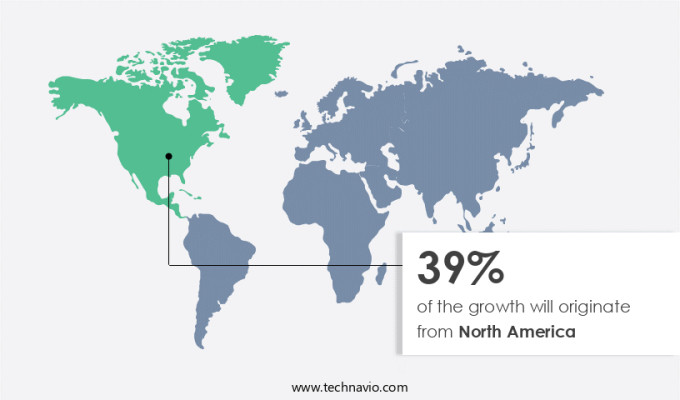
See How Digital Twin Market Demand is Rising in North America Request Free Sample
The market in North America has shown significant growth and held a substantial share of the global market in 2022. This region, comprised of developed countries like the US and Canada, is expected to maintain its dominance due to well-established IT and network infrastructure. The automobile and aerospace industries in North America are driving the demand for digital twin solutions, leading to substantial market expansion during the forecast period.
Notably, key players such as The Boeing Company and Lockheed Martin Corp. are based in this region and are making significant contributions to the market's development.
Market Dynamics
Our researchers analyzed the data with 2024 as the base year, along with the key drivers, trends, and challenges. A holistic analysis of drivers will help companies refine their marketing strategies to gain a competitive advantage.
The market is experiencing robust growth as businesses increasingly adopt this technology for sensor data integration in predictive maintenance, real-time simulation of complex systems, and high-fidelity digital twin model creation. IoT device connectivity plays a crucial role in enabling digital twin platforms, allowing for AI-driven optimization in manufacturing processes and digital twin lifecycle management strategies. Model calibration techniques ensure improved accuracy, while data validation methods secure model robustness. Digital twin architecture for scalable systems facilitates system integration testing and performance monitoring tools, enabling fault detection algorithms for predictive maintenance. Scenario planning tools provide what-if analysis capabilities, and design optimization tools refine digital twins for various industries.
Data mining techniques and machine learning algorithms are integral to model development, while cloud computing infrastructure and model parameterization ensure accurate simulations. Virtual sensors enable data acquisition, and edge computing deployment supports real-time monitoring. In the realm of industrial applications, the adoption rates are significantly higher than in academic segments, with more than 70% of new product developments focusing on this area. This disparity underlines the market's potential for driving innovation and efficiency in manufacturing and production processes.

What are the key market drivers leading to the rise in the adoption of Digital Twin Industry?
- Industry 4.0 and the industrial Internet of Things (IoT) serve as the primary catalysts for market growth. These advanced technologies enable smart manufacturing, automation, and data-driven decision-making, making them essential drivers for business innovation and competitiveness.
- Industry 4.0, the latest industrial revolution, is significantly transforming manufacturing facilities through digitalization. This paradigm shift focuses on interconnectivity, automation, and real-time data processing. The fourth industrial revolution is reshaping the IT infrastructure of industrial companies. The Industrial Internet of Things (IIoT) is a key component of Industry 4.0, enabling the use of smart sensors and actuators in manufacturing processes. IIoT offers numerous advantages, including productivity and efficiency improvements, increased collaboration and knowledge-sharing, enhanced customer experience, cost reduction, and high profitability.
- Industry 4.0 initiatives introduce innovative production methodologies using advanced technologies, such as cloud, IoT, analytics, digital twin, digital scanning, AI, and cybersecurity. IIoT adoption rates have seen substantial growth, with a significant percentage of industrial companies integrating these technologies into their operations. The benefits of Industry 4.0 are far-reaching and span various sectors, making it a dynamic and evolving market.
What are the market trends shaping the Digital Twin Industry?
- The healthcare sector is experiencing growing demand and increasing traction, representing the latest market trend.
- The healthcare sector leads the charge in technological innovation, prioritizing cost reduction and delivering superior patient care. AI, IoT, and analytics are among the technologies swiftly integrated into healthcare business processes. The digital twin has gained substantial traction in this industry, enabling hospital management to model hospitals, processes, staffing, and care models digitally. This 3D representation offers insights into bed shortages, germ transmission, staff schedules, and operating rooms.
- By leveraging digital twin solutions, hospital management can make informed decisions, optimize patient care, costs, and facility performance. This sector's continuous evolution underscores its commitment to improving patient experiences and operational efficiencies.
What challenges does the Digital Twin Industry face during its growth?
- The high cost of deployment and intricate architecture of digital twin systems pose a significant challenge to the industry's growth, requiring substantial investment and technical expertise.
- The market faces substantial challenges due to the high expenses associated with deployment and intricate architecture. Companies must invest in IoT platforms, sensors, software, infrastructure, and security solutions to implement a digital twin. These investments represent a significant financial commitment, which can be a barrier for asset-intensive organizations already grappling with high IT costs. Furthermore, maintaining the digital twin infrastructure necessitates continuous investment in operations to ensure seamless functioning. The digital twin project's long-term nature adds to the variable costs.
- Despite these challenges, the market continues to evolve, offering potential benefits such as predictive maintenance, improved efficiency, and enhanced operational insights. Companies across various sectors, including manufacturing, energy, and healthcare, are increasingly recognizing the value of digital twins and are investing in their implementation. The market's ongoing growth is driven by the increasing adoption of IoT technologies and the growing need for real-time data analysis and predictive maintenance.
Exclusive Technavio Analysis on Customer Landscape
The digital twin market forecasting report includes the adoption lifecycle of the market, covering from the innovator's stage to the laggard's stage. It focuses on adoption rates in different regions based on penetration. Furthermore, the digital twin market report also includes key purchase criteria and drivers of price sensitivity to help companies evaluate and develop their market growth analysis strategies.
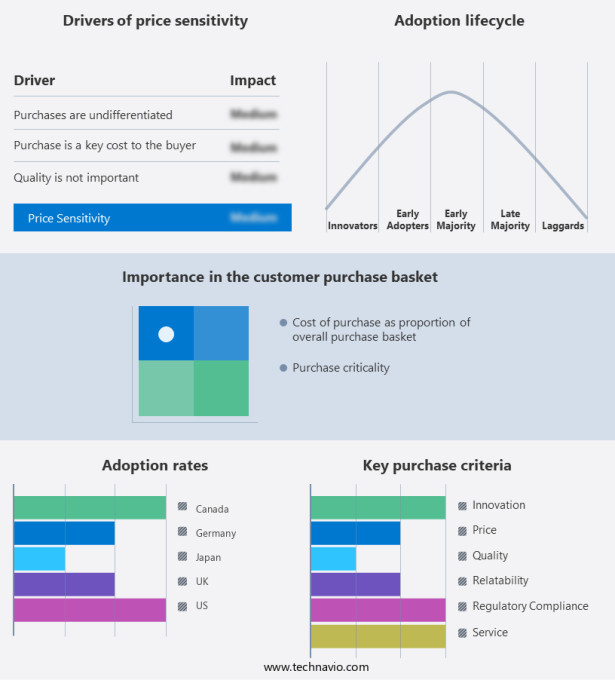
Customer Landscape of Digital Twin Industry
Competitive Landscape
Companies are implementing various strategies, such as strategic alliances, digital twin market forecast, partnerships, mergers and acquisitions, geographical expansion, and product/service launches, to enhance their presence in the industry.
ANSYS Inc. - This company specializes in data-driven and simulation-based Digital Twin Software, delivering advanced virtual replicas of physical assets for enhanced operational efficiency and predictive maintenance.
The industry research and growth report includes detailed analyses of the competitive landscape of the market and information about key companies, including:
- ANSYS Inc.
- Dassault Systemes SE
- DNV Group AS
- General Electric Co.
- Hexagon AB
- Honeywell International Inc.
- International Business Machines Corp.
- Johnson Controls International Plc
- Kongsberg Gruppen ASA
- Microsoft Corp
- Oracle Corp
- PTC Inc.
- Robert Bosch GmbH
- SAP SE
- ScaleOut Software Inc.
- Siemens AG
- Software AG
- SWIM Inc.
- Veerum Inc.
- Wipro Ltd.
Qualitative and quantitative analysis of companies has been conducted to help clients understand the wider business environment as well as the strengths and weaknesses of key industry players. Data is qualitatively analyzed to categorize companies as pure play, category-focused, industry-focused, and diversified; it is quantitatively analyzed to categorize companies as dominant, leading, strong, tentative, and weak.
Recent Development and News in Digital Twin Market
- In January 2024, Siemens Digital Industries Software and Microsoft announced a strategic partnership to integrate Microsoft Azure IoT and Siemens' Simcenter and Polarion software solutions, enhancing digital twin capabilities for industrial customers (Microsoft Press Release, 2024).
- In March 2024, PTC, a leading Digital Twin technology provider, raised USD 300 million in a funding round, bringing its total valuation to USD 5.5 billion, fueling further innovation and growth in the market (PTC Press Release, 2024).
- In May 2024, IBM and Schneider Electric entered into a collaboration to offer digital twin solutions for industrial customers, combining IBM's Watson IoT and Schneider Electric's EcoStruxure platforms (IBM Press Release, 2024).
- In April 2025, Siemens Gamesa Renewable Energy successfully deployed a digital twin of its wind farm in Denmark, enabling real-time monitoring, predictive maintenance, and optimization of wind turbine performance (Siemens Gamesa Press Release, 2025).
Dive into Technavio's robust research methodology, blending expert interviews, extensive data synthesis, and validated models for unparalleled Digital Twin Market insights. See full methodology.
|
Market Scope |
|
|
Report Coverage |
Details |
|
Page number |
215 |
|
Base year |
2024 |
|
Historic period |
2019-2023 |
|
Forecast period |
2025-2029 |
|
Growth momentum & CAGR |
Accelerate at a CAGR of 64.9% |
|
Market growth 2025-2029 |
USD 163424.3 million |
|
Market structure |
Fragmented |
|
YoY growth 2024-2025(%) |
45.1 |
|
Key countries |
US, Germany, UK, Japan, and Canada |
|
Competitive landscape |
Leading Companies, Market Positioning of Companies, Competitive Strategies, and Industry Risks |
Research Analyst Overview
- In the dynamic and evolving market, data mining techniques play a pivotal role in extracting valuable insights from vast amounts of data. These techniques enable the creation of digital twin architecture, where data acquisition systems collect and transmit real-time data to the cloud for processing. Model fidelity is a critical aspect, with predictive maintenance models and model calibration techniques ensuring accurate simulations. Performance monitoring tools and remote monitoring capabilities provide real-time insights into system behavior, while cloud computing infrastructure offers scalability and flexibility. Scenario planning tools and real-time simulation enable organizations to test various what-if scenarios, enhancing decision-making.
- Data analytics pipelines and model-based systems engineering facilitate data validation methods, ensuring the accuracy of digital twin models. IoT device connectivity is essential for data acquisition and integration, while simulation accuracy depends on virtual sensors and a simulation environment. High-fidelity simulation and virtual commissioning processes are crucial for optimizing system performance metrics and design. Digital thread implementation and digital twin platforms enable seamless integration of data from various sources. Three-dimensional model creation and data visualization dashboards provide valuable insights, while edge computing deployment and data governance frameworks ensure data security and compliance. AI-driven optimization and system integration testing further enhance digital twin capabilities, with machine learning algorithms and fault detection algorithms improving overall performance.
- Cybersecurity protocols are essential to protect against potential threats, making data security a top priority in the market. Continuous innovation and advancements in these areas underscore the market's ongoing evolution and growth.
What are the Key Data Covered in this Digital Twin Market Research and Growth Report?
-
What is the expected growth of the Digital Twin Market between 2025 and 2029?
-
USD 163.42 billion, at a CAGR of 64.9%
-
-
What segmentation does the market report cover?
-
The report segmented by Deployment (On-premises and Cloud), End-user (Manufacturing, Energy and utilities, Aerospace and defense, Automotive, and Infrastructure and others), Geography (North America, Europe, APAC, Middle East and Africa, and South America), and Application (Product Design & Development, Predictive Maintenance, Business Optimization, and Others)
-
-
Which regions are analyzed in the report?
-
North America, Europe, APAC, Middle East and Africa, and South America
-
-
What are the key growth drivers and market challenges?
-
Industry 4.0 and industrial IoT, High cost of deployment and complex architecture of digital twin
-
-
Who are the major players in the Digital Twin Market?
-
Key Companies ANSYS Inc., Dassault Systemes SE, DNV Group AS, General Electric Co., Hexagon AB, Honeywell International Inc., International Business Machines Corp., Johnson Controls International Plc, Kongsberg Gruppen ASA, Microsoft Corp, Oracle Corp, PTC Inc., Robert Bosch GmbH, SAP SE, ScaleOut Software Inc., Siemens AG, Software AG, SWIM Inc., Veerum Inc., and Wipro Ltd.
-
Market Research Insights
- The market encompasses the development and implementation of virtual replicas of physical assets, systems, and processes. These digital counterparts enable data-driven decision-making, process optimization, and model-based design through virtual prototyping, model updating, and model verification. According to industry estimates, the market is projected to reach USD 150 billion by 2025. In contrast, the market size was valued at USD 10 billion in 2020. Digital twin applications span across various industries, including manufacturing, energy, healthcare, and transportation.
- They facilitate system monitoring, software updates, and change management processes, ensuring real-time analytics and predictive maintenance. Furthermore, digital twins enable system upgrades, data transformation, simulation software, and asset performance management through data aggregation, data cleansing, and model parameterization. Integration testing, risk assessment modeling, sensor data analysis, and version control systems are also integral components of digital twin development.
We can help! Our analysts can customize this digital twin market research report to meet your requirements.