
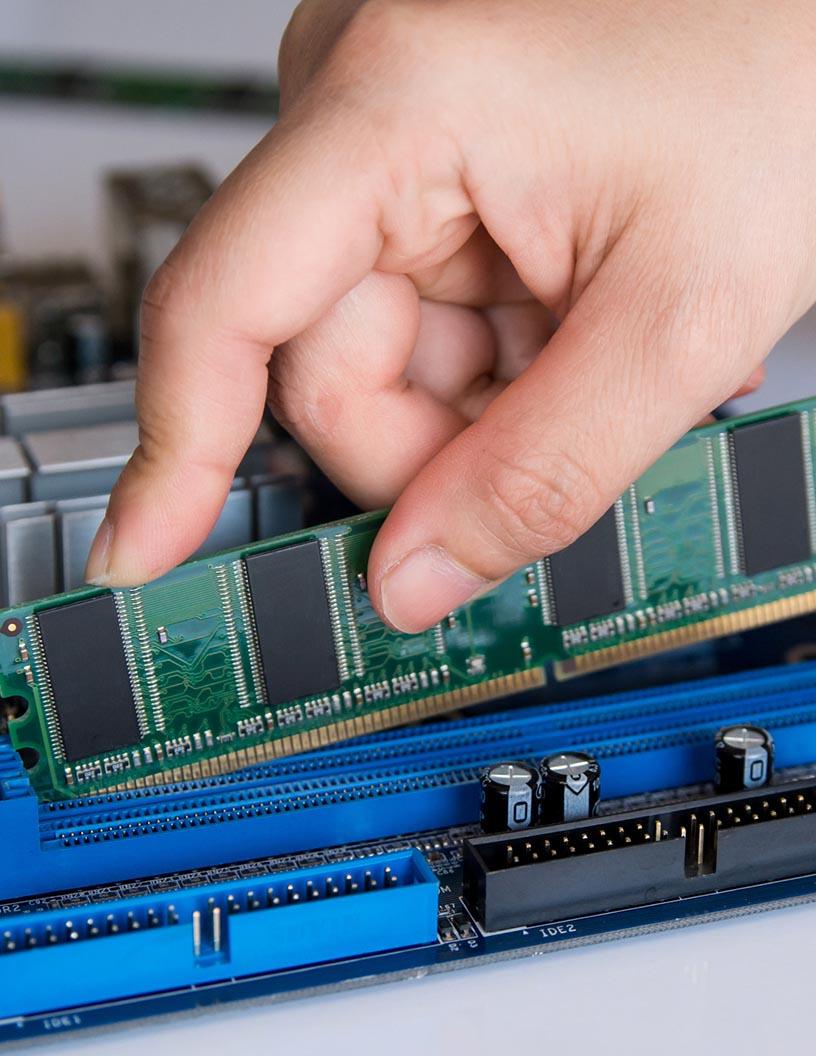


Dynamic Random Access Memory Market Size 2025-2029
The dynamic random access memory (DRAM) market size is forecast to increase by USD 258.8 billion, at a CAGR of 21.7% between 2024 and 2029.
- The market is experiencing significant growth due to several key trends. The expansion of smart cities is driving market demand, as these urban areas rely heavily on technology and data storage. Furthermore, the automotive industry is increasingly adopting DRAM for advanced driver-assistance systems and electric vehicles. Technological advancements, such as 3D XPoint and High Bandwidth Memory (HBM), offer price benefits and improved performance, making DRAM an attractive choice for various applications. These factors collectively contribute to the market's growth and innovation.
What will be the Size of the Market During the Forecast Period?
_Market_size_abstract_2024_v1.jpg)
- Dynamic Random Access Memory (DRAM) is a semiconductor memory technology widely used in various applications, including personal computers, smartphones, Automotive Advanced Driver-Assistance Systems (ADAS), workstations, servers, and various ICT infrastructure. The market for DRAM continues to evolve, driven by advancements in technology and increasing demand from various industries. DRAM architecture has seen significant improvements over the years, with DDR3 and DDR2 being the most common versions in use today. These advancements have led to increased capacity, faster data transfer rates, and improved power saving capabilities. The personal computer market remains a significant contributor to the market, with the ongoing shift towards higher performance systems driving demand. However, the emergence of new applications, such as artificial intelligence (AI) and machine learning, has led to increased demand from the datacenter sector.
- The proliferation of smart devices, including smartphones, smartwatches, and home entertainment products, has also led to increased demand for DRAM. The growing popularity of streaming services and the increasing use of GPUs in various applications have further boosted demand. Moreover, the construction of new data centers and the increasing adoption of big data and ICT infrastructure have created new opportunities for DRAM. Additionally, the rise of Bitcoin mining and the increasing use of DRAM in gaming consoles have also contributed to the market's growth. Despite the various applications and industries driving demand, the DRAM market faces challenges, including increasing competition and the need to continually innovate to meet the evolving needs of customers. Power saving capabilities remain a critical consideration, as the demand for energy-efficient solutions continues to grow.
How is this market segmented and which is the largest segment?
The market research report provides comprehensive data (region-wise segment analysis), with forecasts and estimates in "USD billion" for the period 2025-2029, as well as historical data from 2019-2023 for the following segments.
- Application
- Computers
- Mobile devices
- Consumer electronics
- Networking devices
- Technology
- DDR2
- DDR3
- DDR4
- DDR5
- Geography
- APAC
- China
- India
- Japan
- South Korea
- North America
- Mexico
- US
- Europe
- Germany
- UK
- France
- South America
- Middle East and Africa
- APAC
By Application Insights
- The computers segment is estimated to witness significant growth during the forecast period.
The market has experienced a shift in demand due to the proliferation of mobile devices, surpassing the demand from traditional computer systems. With the decline in computer shipments and the leaner operating systems, the need for DRAM in computers has diminished. However, the computer segment is predicted to exhibit growth, albeit at a slower pace. Concurrently, DRAM is finding increased usage in various applications such as TVs, smart speakers, set top boxes, consumer goods, cameras, automotive systems, medical equipment, and semiconductor self-sufficiency. Furthermore, international commerce, high-speed connectivity, high-density memory, and graphics DRAM chips continue to drive market growth.
_Market_segments_abstract_2024_v2.jpg)
Get a glance at the market report of share of various segments Request Free Sample
The computers segment was valued at USD 27.60 billion in 2019 and showed a gradual increase during the forecast period.
Regional Analysis
- APAC is estimated to contribute 72% to the growth of the global market during the forecast period.
Technavio's analysts have elaborately explained the regional trends and drivers that shape the market during the forecast period.
_Market_regions_abstract_2023_geo_v2.jpg)
For more insights on the market share of various regions Request Free Sample
The market in the Asia Pacific (APAC) region is projected to experience significant growth during the forecast period. China, as the largest market for semiconductors in APAC, is a major contributor to this expansion. The increasing demand for semiconductors in end-user industries such as automotive, aerospace, electronic and electrical, and others, particularly in developing countries like China and India, is driving market growth. Furthermore, industrial expansion in countries like China, India, South Korea, Indonesia, and Taiwan, leading to high levels of automation, is also fueling demand. Additionally, the rising disposable income of consumers in these countries is expected to boost demand for automobiles, gadgets, and electrical equipment.
Market Dynamics
Our researchers analyzed the data with 2024 as the base year, along with the key drivers, trends, and challenges. A holistic analysis of drivers will help companies refine their marketing strategies to gain a competitive advantage.
What are the key market drivers leading to the rise in the adoption of the Dynamic Random Access Memory (DRAM) Market?
The growth of smart cities is the key driver of the market.
- The market encompasses semiconductor memory technology utilized in various electronic devices, including personal computers, smartphones, ADAS systems, smartwatches, workstations, servers, and emerging technologies such as generative AI, streaming, gaming, autonomous vehicles, and datacenter architecture. DRAM comes in different architectures like DDR3 and DDR2. DRAM is integral to cloud computing, AI, high-performance computing (HPC), and 5G, fueling the demand for semiconductor manufacturers like Micron Technology, AMD, and Intel. Power saving capabilities are essential in DRAM for mobile devices, IoT, and datacenter demand.
- The technology's integration in consumer goods, cameras, automotive systems, medical equipment, and home entertainment products further expands its reach. The semiconductor industry's self-sufficiency and international commerce are influenced by DRAM's high-speed connectivity and high density memory. DRAM's applications span across industries, from Bitcoin mining and gaming consoles to GPUs and wearable gadgets. Projections indicate continued growth in the DRAM market, driven by emerging memory technologies and commercial relationships with OEMs and operators.
What are the market trends shaping the Dynamic Random Access Memory (DRAM) Market?
Increasing demand from the automotive segment is the upcoming trend in the market.
- The market, a significant segment of the semiconductor memory industry, has experienced substantial growth due to the increasing demand for high-performance computing (HPC) applications in various sectors. Personal computers, smartphones, ADAS systems in automobiles, workstations, servers, and emerging technologies like generative AI, streaming, gaming, and autonomous vehicles have fueled this growth. Semiconductor manufacturers, including Micron Technology, AMD, and Intel, are at the forefront of meeting this demand. DDR3 and DDR2 architectures have been replaced by advanced DDR4 and DDR5, offering improved power saving capabilities and higher data transfer rates. The datacenter sector, driven by cloud services, AI, and big data, is a major consumer of DRAM.
- The automotive industry's growing reliance on DRAM for safety-critical applications, such as ADAS and self-driving vehicle systems, necessitates stringent standards like ISO 26262. LPDDR4(X) chips with embedded error correction code (ECC) capabilities cater to this demand, offering fast speeds and low power consumption. Moreover, the proliferation of IoT, 5G, and wearable gadgets, along with the rise of cloud computing and 3D games, has further expanded the DRAM market. The semiconductor industry's focus on self-sufficiency, international commerce, and high-speed connectivity has also contributed to the market's growth. DRAM's applications extend to consumer goods like cameras, medical equipment, and home entertainment products, including TVs, smart speakers, and set-top boxes.
What challenges does the Dynamic Random Access Memory (DRAM) Market face during its growth?
Various upcoming and improved technologies with price benefits is a key challenge affecting the market growth.
- The Semiconductor memory market, specifically Dynamic Random Access Memory (DRAM), plays a pivotal role in powering various electronic devices, including personal computers, smartphones, ADAS systems, smartwatches, workstations, servers, and more. DRAM, available in architectures such as DDR3 and DDR2, is currently the dominant memory technology. However, emerging memory technologies, such as phase-change memory, resistive RAM (RRAM), and magneto-resistive RAM (MRAM), pose significant challenges due to their power-saving capabilities, faster processing speeds, higher densities, and lower costs. DRAM is extensively used in data centers for applications such as artificial intelligence, streaming, gaming, autonomous vehicles, and high-performance computing (HPC). Semiconductor manufacturers like Micron Technology, Intel, AMD, and OEMs continue to invest in DRAM technology to meet the growing demand from various industries, including cloud computing, AI, and 5G.
- Phase-change memory, a type of non-volatile random-access memory, is faster than DRAM and can retain data for extended periods. RRAM exhibits higher resistance, has a relatively simple fabrication process, and can be scaled down below 10 nm. MRAM stores information in nanoscale magnets, offering higher data retention and faster access times. These emerging memory technologies are expected to disrupt the market in the coming years. However, DRAM will continue to dominate in specific applications due to its high-performance capabilities and the large installed base of electronic devices. The semiconductor industry, including handset manufacturers and wearable gadget makers, is closely monitoring these advancements to optimize their product offerings and maintain competitiveness.
- The market is influenced by various factors, including datacenter demand, artificial intelligence, high-speed connectivity, and the increasing adoption of electronic devices in various industries. The industry is also impacted by the ongoing construction of new data centers, machine learning, big data, and ICT infrastructure development. Bitcoin mining, gaming consoles, GPUs, home entertainment products, TVs, smart speakers, set top boxes, and consumer goods are some of the sectors that rely on DRAM for their high-performance requirements. As the demand for high-density memory and ultra-thin notebooks, high memory tablets, and online operability increases, DRAM manufacturers will need to focus on processing technologies and per unit costs to remain competitive.
- Commercial relationships between semiconductor manufacturers, operators, and mobile device makers will continue to evolve, driving innovation and growth in the market. In summary, DRAM remains a crucial component in the semiconductor memory landscape, but emerging memory technologies, such as phase-change memory, RRAM, and MRAM, are poised to disrupt the market with their power-saving capabilities, faster processing speeds, higher densities, and lower costs. The market is influenced by various factors, including datacenter demand, artificial intelligence, high-speed connectivity, and the increasing adoption of electronic devices in various industries. Semiconductor manufacturers, handset manufacturers, and wearable gadget makers will need to adapt to these advancements to remain competitive.
Exclusive Customer Landscape
The market forecasting report includes the adoption lifecycle of the market, covering from the innovator's stage to the laggard's stage. It focuses on adoption rates in different regions based on penetration. Furthermore, the market report also includes key purchase criteria and drivers of price sensitivity to help companies evaluate and develop their market growth analysis strategies.
_Market_customer_landscape_abstract_2023_geo_v1.jpg)
Customer Landscape
Key Companies & Market Insights
Companies are implementing various strategies, such as strategic alliances, market forecast, partnerships, mergers and acquisitions, geographical expansion, and product/service launches, to enhance their presence in the market.
Apacer Technology Inc. - The company offers various DRAM such as DDR5 gaming memory module, DDR4, and DDR3.Apacer Technology Inc. - The company offers various DRAM such as DDR5 gaming memory module, DDR4, and DDR3.
The market research and growth report includes detailed analyses of the competitive landscape of the market and information about key companies, including:
- Advantech Co. Ltd.
- Alliance Memory Inc.
- Elite Semiconductor Microelectronics Technology Inc.
- Etron Technology Inc.
- Fujitsu Ltd.
- GSI Technology Inc.
- Infineon Technologies AG
- Integrated Silicon Solution Inc.
- Intel Corp.
- Kingston Technology Co. Inc.
- Micron Technology Inc.
- Nanya Technology Corp.
- Powerchip Semiconductor Manufacturing Corp.
- Samsung Electronics Co. Ltd.
- Shenzhen Longsys Electronics Co. Ltd.
- SK hynix Co. Ltd.
- Texas Instruments Inc.
- Transcend Information Inc.
- Winbond Electronics Corp.
Qualitative and quantitative analysis of companies has been conducted to help clients understand the wider business environment as well as the strengths and weaknesses of key market players. Data is qualitatively analyzed to categorize companies as pure play, category-focused, industry-focused, and diversified; it is quantitatively analyzed to categorize companies as dominant, leading, strong, tentative, and weak.
Research Analyst Overview
Dynamic Random Access Memory (DRAM) is a crucial component in the realm of semiconductor memory, playing a pivotal role in powering various electronic devices, from personal computers to smartphones, autonomous vehicles, and data centers. This content delves into the market dynamics of DRAM, focusing on its applications, trends, and growth drivers. DRAM is a versatile memory technology that offers high-performance capabilities, making it an essential ingredient in numerous applications. In the context of personal computers, DRAM's ability to provide quick access to data and applications has been instrumental in enhancing the overall user experience. Similarly, in smartphones, DRAM's power-saving capabilities enable seamless multitasking and efficient processing of data-intensive applications. Beyond personal computers and smartphones, DRAM finds extensive applications in other sectors such as artificial intelligence (AI) and autonomous vehicles.
In the realm of AI, DRAM's high-speed data processing capabilities are indispensable for machine learning algorithms and big data analysis. In the autonomous vehicle sector, DRAM plays a crucial role in enabling real-time data processing, enhancing the safety and efficiency of these systems. The data center sector is another significant market for DRAM, with the increasing demand for cloud computing, cloud services, and high-performance computing (HPC) driving the growth of the market. The proliferation of digital platforms and the shift towards online operability have further fueled the demand for DRAM, as these platforms require large amounts of memory to store and process data efficiently. DRAM also plays a crucial role in powering various consumer electronics, including tablets, laptops, gaming consoles, TVs, smart speakers, and set-top boxes.
In the mobile device market, DRAM is a critical component in mobile devices, with mobile DRAM being a significant segment of the overall market. The emergence of 5G smartphones and the increasing popularity of ultra-thin notebooks and high-memory tablets have further boosted the demand for mobile DRAM. The semiconductor industry's evolution has led to the development of various DRAM types, including DDR3, DDR4, and emerging memory technologies like DDR5. These advancements have resulted in increased memory density, reduced power consumption, and enhanced performance. Additionally, the increasing adoption of self-sufficiency in the semiconductor industry and international commerce has led to the growth of local semiconductor manufacturers, further driving the market.
|
Market Scope |
|
|
Report Coverage |
Details |
|
Page number |
212 |
|
Base year |
2024 |
|
Historic period |
2019-2023 |
|
Forecast period |
2025-2029 |
|
Growth momentum & CAGR |
Accelerate at a CAGR of 21.7% |
|
Market Growth 2025-2029 |
USD 258.8 billion |
|
Market structure |
Fragmented |
|
YoY growth 2024-2025(%) |
19.9 |
|
Key countries |
South Korea, US, China, Taiwan, Japan, Germany, Mexico, UK, India, and France |
|
Competitive landscape |
Leading Companies, Market Positioning of Companies, Competitive Strategies, and Industry Risks |
What are the Key Data Covered in this Market Research and Growth Report?
- CAGR of the market during the forecast period
- Detailed information on factors that will drive the market growth and forecasting between 2025 and 2029
- Precise estimation of the size of the market and its contribution of the market in focus to the parent market
- Accurate predictions about upcoming market growth and trends and changes in consumer behaviour
- Growth of the market across APAC, North America, Europe, South America, and Middle East and Africa
- Thorough analysis of the market's competitive landscape and detailed information about companies
- Comprehensive analysis of factors that will challenge the growth of market companies
We can help! Our analysts can customize this market research report to meet your requirements.