

Household Kitchen Blenders Market Analysis North America, APAC, Europe, South America, Middle East and Africa - US, China, Germany, Canada, UK - Size and Forecast 2024-2028

Household Kitchen Blenders Market Analysis North America, APAC, Europe, South America, Middle East and Africa - US, China, Germany, Canada, UK - Size and Forecast 2024-2028

Published: Jul 2024 173 Pages SKU: IRTNTR71717

Market Overview at a Glance

$988.6 Mn
Market Opportunity
5.97%
CAGR
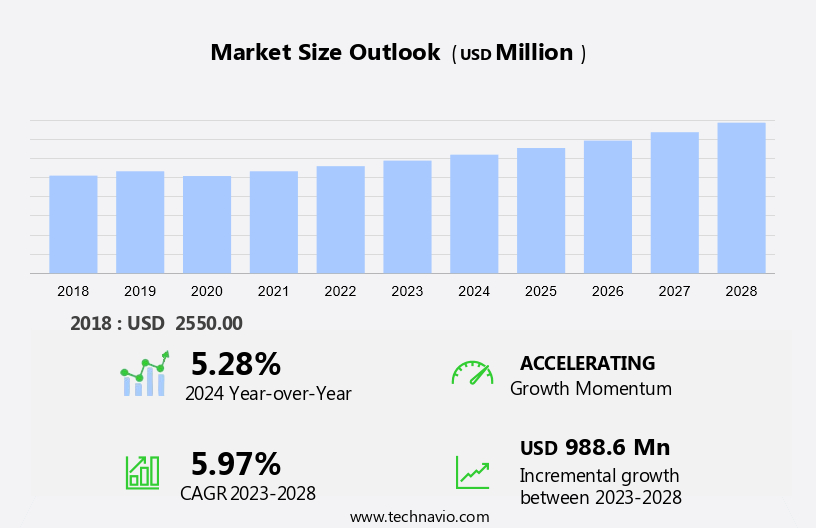
5.28
YoY growth 2023-2024(%)

Household Kitchen Blenders Market Size 2024-2028

The household kitchen blenders market size is forecast to increase by USD 988.6 million at a CAGR of 5.97% between 2023 and 2028.

  • The household kitchen blender market is experiencing significant growth, driven by several key factors. Ease of use, portability, and convenience are major growth drivers, as consumers increasingly seek appliances that can blend various ingredients quickly and efficiently for smoothies, soups, sauces, and other dishes. However, the market faces challenges from counterfeit household kitchen blenders, which threaten to undermine brand reputation and consumer trust. To stay competitive, market players must focus on product innovation, quality, and customer service while addressing the issue of counterfeit products. Overall, the household kitchen blender market is expected to continue its growth trajectory, driven by consumer demand for convenience, functionality, and value.

What will be the Size of the Household Kitchen Blenders Market During the Forecast Period?
Household Kitchen Blenders Market Size

 Request Free Sample

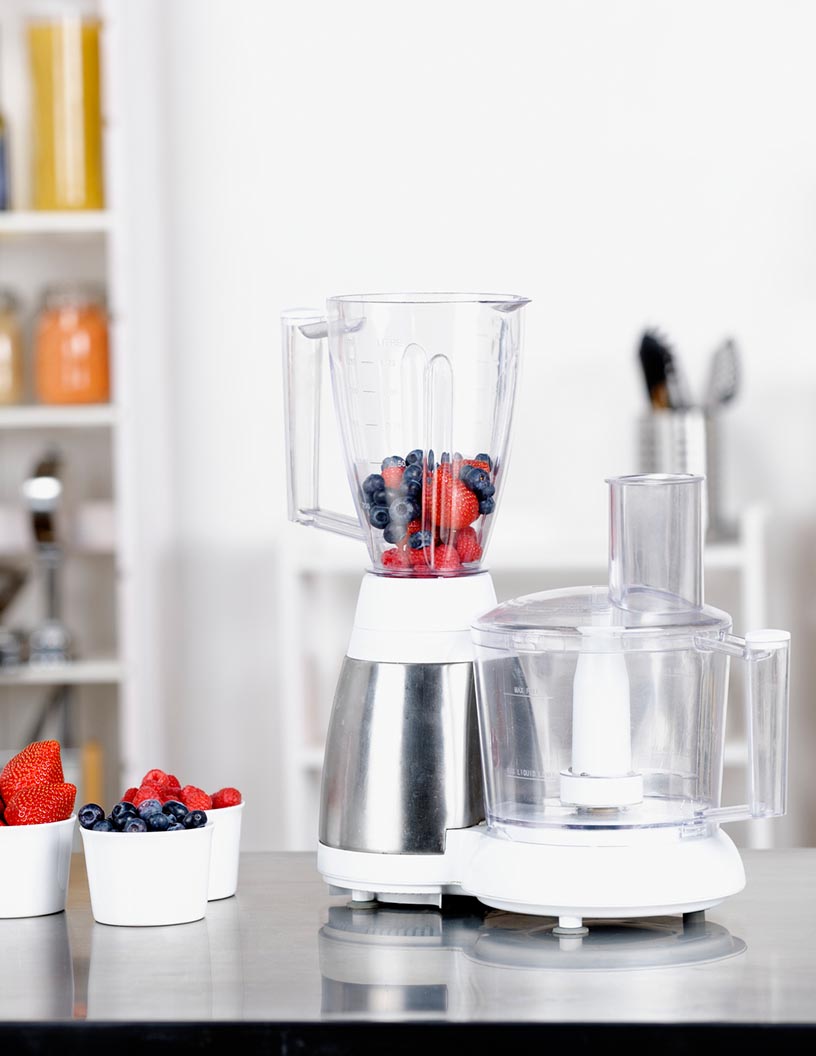
  • Household kitchen blenders have become essential kitchen equipment in modern homes, providing convenience and versatility in preparing food and drinks. These appliances come in two main types: countertop blenders and immersion blenders. Countertop blenders, with their powerful motors and large compartments, are ideal for making smoothies, pureed soups, slushy cocktails, and even baby food. They often feature pivoting edges for easy food gathering and a driveshaft for efficient mixing, chopping, and liquefying. Immersion blenders, on the other hand, are handheld and can be directly submerged in a pot or container, making them perfect for blending soups and sauces right In the cooking pot.
  • They are usually made of metal or durable plastic and come with detachable blades for easy cleaning. Both types cater to the diverse needs of home cooks, allowing them to create contemporary kitchen delights in a home environment. Whether it's blending fruits for a refreshing smoothie or pureeing vegetables for a hearty soup, kitchen blenders are an indispensable part of any kitchen.

How is this Household Kitchen Blenders Industry segmented and which is the largest segment?

The household kitchen blenders industry research report provides comprehensive data (region-wise segment analysis), with forecasts and estimates in "USD million" for the period 2024-2028, as well as historical data from 2018-2022 for the following segments.

  • Product
    • Countertop blenders
    • Immersion blenders
  • Distribution Channel
    • Offline
    • Online
  • Geography
    • North America
      • Canada
      • US
    • APAC
      • China
    • Europe
      • Germany
      • UK
    • South America
    • Middle East and Africa

By Product Insights

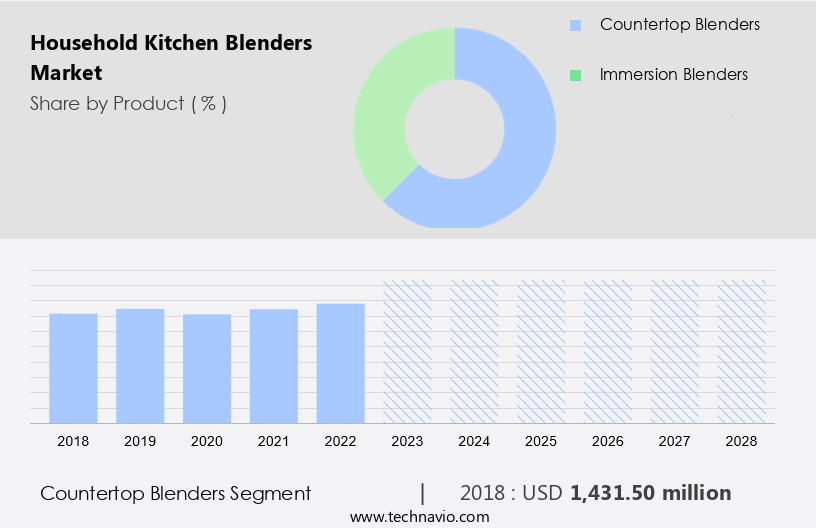
The countertop blenders segment is estimated to witness significant growth during the forecast period.In the modern home environment, contemporary kitchens are equipped with advanced kitchen appliances that cater to consumer desires for time-saving, easy kitchen solutions. Household kitchen blenders have emerged as essential tools, offering functionality and aesthetics in one package. These appliances enable users to puree, chop, mix, and liquefy various ingredients, from soups and culinary delights to nut butters and seed pastes. As consumer demands evolve, kitchen blenders have become more energy-efficient, smart, and sustainable. Smart features such as automated settings, connectivity possibilities, and tech-savvy apps offer customized recipes and dietary requirements for younger populations and health-conscious individuals. Eco-friendly materials and strong motors with vacuum blending capabilities and nutrient-extraction functions further enhance the effective culinary experience.

Multi-functional immersion blenders, which offer improved performance and versatility, are gaining popularity due to their ability to blend directly in pots and containers, reducing the need for multiple appliances. In this competitive environment, household kitchen blenders continue to adapt, providing energy efficiency, functionality, and aesthetics to meet the changing consumer demands.
Household Kitchen Blenders Market Size

Get a glance at the market report of share of various segments Request Free Sample

The countertop blenders segment was valued at USD 1.43 billion in 2018 and showed a gradual increase during the forecast period.

Regional Analysis

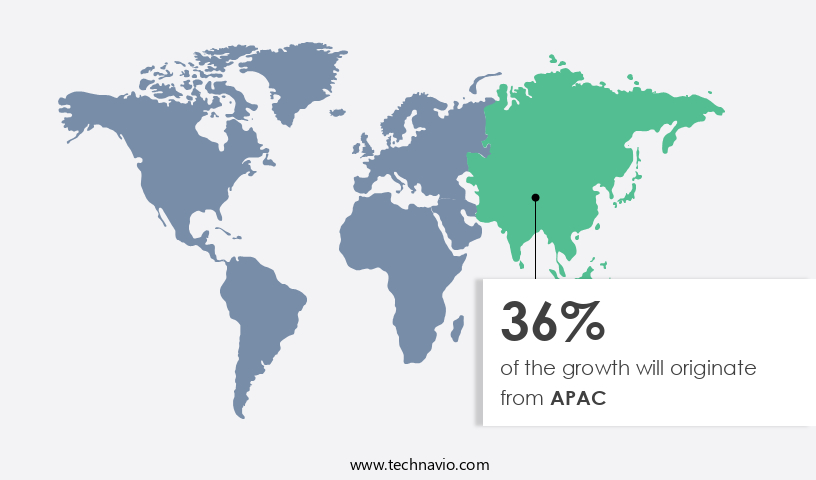
APAC is estimated to contribute 36% to the growth of the global market during the forecast period. Technavio's analysts have elaborately explained the regional trends and drivers that shape the market during the forecast period.
Household Kitchen Blenders Market Share by Geography

For more insights on the market size of various regions, Request Free Sample

In the contemporary home environment, kitchen blenders have emerged as indispensable kitchen appliances, catering to consumer desires for time-saving, easy kitchen solutions. These appliances offer functionality and aesthetics, enabling users to puree, chop, mix, and liquefy a wide range of ingredients for soups, culinary delights, and health-conscious options. In the evolving kitchen landscape, energy efficiency and smart features are key considerations. Smart blenders with automated settings and connectivity possibilities cater to tech-savvy customers, allowing them to access apps for customized recipes, nutrient-extraction functions, and strong motors. Sustainability is a growing concern, with eco-friendly materials and recyclable parts becoming increasingly popular.

Household kitchen blenders now cater to changing consumer demands, offering strong motors, vacuum blending capabilities, nutrient-extraction functions, and versatility in handling nut butters, seed pastes, alternative protein sources, and more. The competitive environment drives manufacturers to innovate, introducing features like automated settings, smart connectivity, and eco-friendly materials to enhance the effective culinary experience.

Market Dynamics

Our researchers analyzed the data with 2023 as the base year, along with the key drivers, trends, and challenges. A holistic analysis of drivers will help companies refine their marketing strategies to gain a competitive advantage.

What are the key market drivers leading to the rise In the adoption of Household Kitchen Blenders Industry?

  • The ease of use, portability, and convenience of kitchen blenders is the key driver of the market. The market is witnessing significant growth due to the increasing demand for time- and energy-efficient appliances among busy consumers. With the rise of nuclear families and dual-income households, there is a growing need for convenient and portable blenders that cater to personal-sized servings. 
  • Environmentally aware consumers are also driving the market's growth, as energy-efficient features and self-cleaning capabilities become increasingly important considerations. Single-serve accessories have further boosted the market's popularity, enabling users to blend and go without the hassle of cleaning. companies are investing in innovation to meet these demands, offering advanced features and sleek designs that make blending a breeze.

What are the market trends shaping the Household Kitchen Blenders Industry?

  • Multi-functional immersion blenders with improved performance is the upcoming market trend. Household kitchen blenders have witnessed significant advancements, with energy-efficient features and self-cleaning mechanisms becoming increasingly popular among environmentally aware consumers. ImmerSION blenders, in particular, have gained popularity due to their compact size and convenience. These handheld appliances offer versatility with various attachments and detachable shafts for grating, chopping, and pureeing at different speeds. 
  • The convenience of immersion blenders lies In their ability to blend ingredients directly In the container, eliminating the need for transferring contents to a separate blender. Furthermore, their small size allows users to store them easily in drawers or mount them on walls. Some models even feature self-cleaning mechanisms or detachable shafts that are dishwasher-safe, addressing common cleaning problems for busy individuals. Overall, the market for household kitchen blenders continues to grow, catering to the demands of consumers seeking efficient and convenient solutions for their culinary needs.

What challenges does the Household Kitchen Blenders Industry face during its growth?

  • Threat from counterfeit household kitchen blenders is a key challenge affecting the industry growth. Household kitchen blenders have gained significant popularity in recent years due to their energy-efficient features and convenience. With environmentally aware consumers becoming more prevalent, energy-saving appliances are in high demand. These blenders offer various advantages, including self-cleaning features and single-serve accessories, making them ideal for busy lifestyles. However, the market faces a challenge with the presence of counterfeit products. These imitations, manufactured at low costs, deceive retailers and consumers with packaging that mimics authentic brands. The proliferation of counterfeit products not only tarnishes the reputation of original companies but also undermines consumer trust, ultimately hindering market growth. Therefore, it is crucial for manufacturers to prioritize quality and authenticity to maintain consumer loyalty and confidence.

Exclusive Customer Landscape

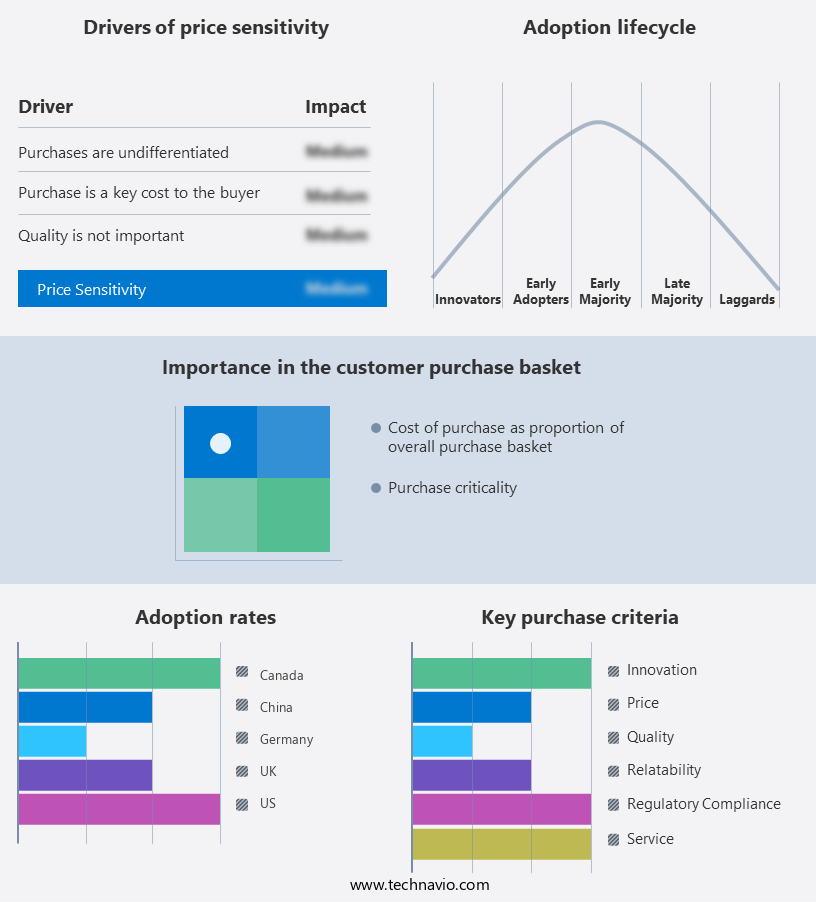
The household kitchen blenders market forecasting report includes the adoption lifecycle of the market, covering from the innovator's stage to the laggard's stage. It focuses on adoption rates in different regions based on penetration. Furthermore, the household kitchen blenders market report also includes key purchase criteria and drivers of price sensitivity to help companies evaluate and develop their market growth analysis strategies.
Household Kitchen Blenders Market Share by Geography

 Customer Landscape

Key Companies & Market Insights

Companies are implementing various strategies, such as strategic alliances, household kitchen blenders market forecast, partnerships, mergers and acquisitions, geographical expansion, and product/service launches, to enhance their presence In the industry.

The industry research and growth report includes detailed analyses of the competitive landscape of the market and information about key companies, including:

  • Bajaj Electricals Ltd.
  • Breville Group Ltd.
  • Crompton Greaves Consumer Electricals Ltd.
  • Cuisinart
  • Electrolux group
  • Glen Dimplex Group.
  • Hamilton Beach Brands Holding Co.
  • Havells India Ltd.
  • JS Global Lifestyle Co. Ltd.
  • Koninklijke Philips N.V.
  • Midea Group Co. Ltd.
  • Newell Brands Inc.
  • Orpat Group
  • Panasonic Holdings Corp.
  • Robert Bosch GmbH
  • SEB Developpement SA
  • Smeg S.p.a.
  • TTK Prestige Ltd.
  • Vita Mix Corp.
  • Whirlpool Corp.

Qualitative and quantitative analysis of companies has been conducted to help clients understand the wider business environment as well as the strengths and weaknesses of key industry players. Data is qualitatively analyzed to categorize companies as pure play, category-focused, industry-focused, and diversified; it is quantitatively analyzed to categorize companies as dominant, leading, strong, tentative, and weak.

Research Analyst Overview

Household kitchen blenders have revolutionized the way we prepare food and drinks in our homes. These versatile kitchen machines come in various designs, from countertop models with pivoting edges and compartments to handheld immersion blenders. The base of these blenders is typically made of metal or plastic, while the driveshaft and motor ensure efficient blending. Juice, water, oil, and even protein shakes are no match for these kitchen equipment wonders. Countertop blenders, with their large compartments, are perfect for making large batches of smoothies, pureed soups, and slushy cocktails.

On the other hand, portable hand blenders, also known as immersion blenders, are ideal for small spaces and quick blending tasks, such as making baby food or emulsifying sauces. The market for household kitchen blenders is vast and diverse. It caters to both offline and online sales channels. Key applications include the emulsification of sauces and dressings, the preparation of protein shakes and exercise gym drinks, and making baby food. Emulsifiers like lecithin, polyglycerol esters, and ammonium phosphatide are commonly used In the production of these blenders. Drenching blenders, also known as food processors, are another popular kitchen equipment category that shares similarities with blenders. They are used for chopping, grinding, and pureeing various food items. Overall, household kitchen blenders continue to be an essential kitchen tool for food and drink preparation.

Market Scope

Report Coverage

Details

Page number

173

Base year

2023

Historic period

2018-2022

Forecast period

2024-2028

Growth momentum & CAGR

Accelerate at a CAGR of 5.97%

Market growth 2024-2028

USD 988.6 million

Market structure

Fragmented

YoY growth 2023-2024(%)

5.28

Key countries

US, China, Germany, Canada, and UK

Competitive landscape

Leading Companies, Market Positioning of Companies, Competitive Strategies, and Industry Risks

Request Free Sample

What are the Key Data Covered in this Household Kitchen Blenders Market Research and Growth Report?

  • CAGR of the Household Kitchen Blenders industry during the forecast period
  • Detailed information on factors that will drive the growth and forecasting between 2024 and 2028
  • Precise estimation of the size of the market and its contribution of the industry in focus to the parent market
  • Accurate predictions about upcoming growth and trends and changes in consumer behaviour
  • Growth of the market across North America, APAC, Europe, South America, and Middle East and Africa
  • Thorough analysis of the market's competitive landscape and detailed information about companies
  • Comprehensive analysis of factors that will challenge the household kitchen blenders market growth of industry companies

We can help! Our analysts can customize this household kitchen blenders market research report to meet your requirements.

Get in touch

1 Executive Summary

  • 1.1 Market overview
    • Executive Summary - Chart on Market Overview
    • Executive Summary - Data Table on Market Overview
    • Executive Summary - Chart on Global Market Characteristics
    • Executive Summary - Chart on Market by Geography
    • Executive Summary - Chart on Market Segmentation by Product
    • Executive Summary - Chart on Market Segmentation by Distribution Channel
    • Executive Summary - Chart on Incremental Growth
    • Executive Summary - Data Table on Incremental Growth
    • Executive Summary - Chart on Company Market Positioning

2 Market Landscape

  • 2.1 Market ecosystem
    • Parent Market
    • Data Table on - Parent Market
  • 2.2 Market characteristics
    • Market characteristics analysis
  • 2.3 Value chain analysis
    • Value Chain Analysis

3 Market Sizing

  • 3.1 Market definition
    • Offerings of companies included in the market definition
  • 3.2 Market segment analysis
    • Market segments
  • 3.3 Market size 2023
    • 3.4 Market outlook: Forecast for 2023-2028
      • Chart on Global - Market size and forecast 2023-2028 ($ million)
      • Data Table on Global - Market size and forecast 2023-2028 ($ million)
      • Chart on Global Market: Year-over-year growth 2023-2028 (%)
      • Data Table on Global Market: Year-over-year growth 2023-2028 (%)

    4 Historic Market Size

    • 4.1 Global Household Kitchen Blenders Market 2018 - 2022
      • Historic Market Size - Data Table on Global Household Kitchen Blenders Market 2018 - 2022 ($ million)
    • 4.2 Product segment analysis 2018 - 2022
      • Historic Market Size - Product Segment 2018 - 2022 ($ million)
    • 4.3 Distribution Channel segment analysis 2018 - 2022
      • Historic Market Size - Distribution Channel Segment 2018 - 2022 ($ million)
    • 4.4 Geography segment analysis 2018 - 2022
      • Historic Market Size - Geography Segment 2018 - 2022 ($ million)
    • 4.5 Country segment analysis 2018 - 2022
      • Historic Market Size - Country Segment 2018 - 2022 ($ million)

    5 Five Forces Analysis

    • 5.1 Five forces summary
      • Five forces analysis - Comparison between 2023 and 2028
    • 5.2 Bargaining power of buyers
      • Bargaining power of buyers - Impact of key factors 2023 and 2028
    • 5.3 Bargaining power of suppliers
      • Bargaining power of suppliers - Impact of key factors in 2023 and 2028
    • 5.4 Threat of new entrants
      • Threat of new entrants - Impact of key factors in 2023 and 2028
    • 5.5 Threat of substitutes
      • Threat of substitutes - Impact of key factors in 2023 and 2028
    • 5.6 Threat of rivalry
      • Threat of rivalry - Impact of key factors in 2023 and 2028
    • 5.7 Market condition
      • Chart on Market condition - Five forces 2023 and 2028

    6 Market Segmentation by Product

    • 6.1 Market segments
      • Chart on Product - Market share 2023-2028 (%)
      • Data Table on Product - Market share 2023-2028 (%)
    • 6.2 Comparison by Product
      • Chart on Comparison by Product
      • Data Table on Comparison by Product
    • 6.3 Countertop blenders - Market size and forecast 2023-2028
      • Chart on Countertop blenders - Market size and forecast 2023-2028 ($ million)
      • Data Table on Countertop blenders - Market size and forecast 2023-2028 ($ million)
      • Chart on Countertop blenders - Year-over-year growth 2023-2028 (%)
      • Data Table on Countertop blenders - Year-over-year growth 2023-2028 (%)
    • 6.4 Immersion blenders - Market size and forecast 2023-2028
      • Chart on Immersion blenders - Market size and forecast 2023-2028 ($ million)
      • Data Table on Immersion blenders - Market size and forecast 2023-2028 ($ million)
      • Chart on Immersion blenders - Year-over-year growth 2023-2028 (%)
      • Data Table on Immersion blenders - Year-over-year growth 2023-2028 (%)
    • 6.5 Market opportunity by Product
      • Market opportunity by Product ($ million)
      • Data Table on Market opportunity by Product ($ million)

    7 Market Segmentation by Distribution Channel

    • 7.1 Market segments
      • Chart on Distribution Channel - Market share 2023-2028 (%)
      • Data Table on Distribution Channel - Market share 2023-2028 (%)
    • 7.2 Comparison by Distribution Channel
      • Chart on Comparison by Distribution Channel
      • Data Table on Comparison by Distribution Channel
    • 7.3 Offline - Market size and forecast 2023-2028
      • Chart on Offline - Market size and forecast 2023-2028 ($ million)
      • Data Table on Offline - Market size and forecast 2023-2028 ($ million)
      • Chart on Offline - Year-over-year growth 2023-2028 (%)
      • Data Table on Offline - Year-over-year growth 2023-2028 (%)
    • 7.4 Online - Market size and forecast 2023-2028
      • Chart on Online - Market size and forecast 2023-2028 ($ million)
      • Data Table on Online - Market size and forecast 2023-2028 ($ million)
      • Chart on Online - Year-over-year growth 2023-2028 (%)
      • Data Table on Online - Year-over-year growth 2023-2028 (%)
    • 7.5 Market opportunity by Distribution Channel
      • Market opportunity by Distribution Channel ($ million)
      • Data Table on Market opportunity by Distribution Channel ($ million)

    8 Customer Landscape

    • 8.1 Customer landscape overview
      • Analysis of price sensitivity, lifecycle, customer purchase basket, adoption rates, and purchase criteria

    9 Geographic Landscape

    • 9.1 Geographic segmentation
      • Chart on Market share by geography 2023-2028 (%)
      • Data Table on Market share by geography 2023-2028 (%)
    • 9.2 Geographic comparison
      • Chart on Geographic comparison
      • Data Table on Geographic comparison
    • 9.3 North America - Market size and forecast 2023-2028
      • Chart on North America - Market size and forecast 2023-2028 ($ million)
      • Data Table on North America - Market size and forecast 2023-2028 ($ million)
      • Chart on North America - Year-over-year growth 2023-2028 (%)
      • Data Table on North America - Year-over-year growth 2023-2028 (%)
    • 9.4 APAC - Market size and forecast 2023-2028
      • Chart on APAC - Market size and forecast 2023-2028 ($ million)
      • Data Table on APAC - Market size and forecast 2023-2028 ($ million)
      • Chart on APAC - Year-over-year growth 2023-2028 (%)
      • Data Table on APAC - Year-over-year growth 2023-2028 (%)
    • 9.5 Europe - Market size and forecast 2023-2028
      • Chart on Europe - Market size and forecast 2023-2028 ($ million)
      • Data Table on Europe - Market size and forecast 2023-2028 ($ million)
      • Chart on Europe - Year-over-year growth 2023-2028 (%)
      • Data Table on Europe - Year-over-year growth 2023-2028 (%)
    • 9.6 South America - Market size and forecast 2023-2028
      • Chart on South America - Market size and forecast 2023-2028 ($ million)
      • Data Table on South America - Market size and forecast 2023-2028 ($ million)
      • Chart on South America - Year-over-year growth 2023-2028 (%)
      • Data Table on South America - Year-over-year growth 2023-2028 (%)
    • 9.7 Middle East and Africa - Market size and forecast 2023-2028
      • Chart on Middle East and Africa - Market size and forecast 2023-2028 ($ million)
      • Data Table on Middle East and Africa - Market size and forecast 2023-2028 ($ million)
      • Chart on Middle East and Africa - Year-over-year growth 2023-2028 (%)
      • Data Table on Middle East and Africa - Year-over-year growth 2023-2028 (%)
    • 9.8 US - Market size and forecast 2023-2028
      • Chart on US - Market size and forecast 2023-2028 ($ million)
      • Data Table on US - Market size and forecast 2023-2028 ($ million)
      • Chart on US - Year-over-year growth 2023-2028 (%)
      • Data Table on US - Year-over-year growth 2023-2028 (%)
    • 9.9 China - Market size and forecast 2023-2028
      • Chart on China - Market size and forecast 2023-2028 ($ million)
      • Data Table on China - Market size and forecast 2023-2028 ($ million)
      • Chart on China - Year-over-year growth 2023-2028 (%)
      • Data Table on China - Year-over-year growth 2023-2028 (%)
    • 9.10 Germany - Market size and forecast 2023-2028
      • Chart on Germany - Market size and forecast 2023-2028 ($ million)
      • Data Table on Germany - Market size and forecast 2023-2028 ($ million)
      • Chart on Germany - Year-over-year growth 2023-2028 (%)
      • Data Table on Germany - Year-over-year growth 2023-2028 (%)
    • 9.11 Canada - Market size and forecast 2023-2028
      • Chart on Canada - Market size and forecast 2023-2028 ($ million)
      • Data Table on Canada - Market size and forecast 2023-2028 ($ million)
      • Chart on Canada - Year-over-year growth 2023-2028 (%)
      • Data Table on Canada - Year-over-year growth 2023-2028 (%)
    • 9.12 UK - Market size and forecast 2023-2028
      • Chart on UK - Market size and forecast 2023-2028 ($ million)
      • Data Table on UK - Market size and forecast 2023-2028 ($ million)
      • Chart on UK - Year-over-year growth 2023-2028 (%)
      • Data Table on UK - Year-over-year growth 2023-2028 (%)
    • 9.13 Market opportunity by geography
      • Market opportunity by geography ($ million)
      • Data Tables on Market opportunity by geography ($ million)

    10 Drivers, Challenges, and Opportunity/Restraints

    • 10.1 Market drivers
      • 10.2 Market challenges
        • 10.3 Impact of drivers and challenges
          • Impact of drivers and challenges in 2023 and 2028
        • 10.4 Market opportunities/restraints

          11 Competitive Landscape

          • 11.1 Overview
            • 11.2 Competitive Landscape
              • Overview on criticality of inputs and factors of differentiation
            • 11.3 Landscape disruption
              • Overview on factors of disruption
            • 11.4 Industry risks
              • Impact of key risks on business

            12 Competitive Analysis

            • 12.1 Companies profiled
              • Companies covered
            • 12.2 Market positioning of companies
              • Matrix on companies position and classification
            • 12.3 Bajaj Electricals Ltd.
              • Bajaj Electricals Ltd. - Overview
              • Bajaj Electricals Ltd. - Business segments
              • Bajaj Electricals Ltd. - Key offerings
              • Bajaj Electricals Ltd. - Segment focus
            • 12.4 Breville Group Ltd.
              • Breville Group Ltd. - Overview
              • Breville Group Ltd. - Product / Service
              • Breville Group Ltd. - Key offerings
            • 12.5 Cuisinart
              • Cuisinart - Overview
              • Cuisinart - Product / Service
              • Cuisinart - Key offerings
            • 12.6 Electrolux group
              • Electrolux group - Overview
              • Electrolux group - Business segments
              • Electrolux group - Key news
              • Electrolux group - Key offerings
              • Electrolux group - Segment focus
            • 12.7 Glen Dimplex Group.
              • Glen Dimplex Group. - Overview
              • Glen Dimplex Group. - Product / Service
              • Glen Dimplex Group. - Key offerings
            • 12.8 Hamilton Beach Brands Holding Co.
              • Hamilton Beach Brands Holding Co. - Overview
              • Hamilton Beach Brands Holding Co. - Product / Service
              • Hamilton Beach Brands Holding Co. - Key news
              • Hamilton Beach Brands Holding Co. - Key offerings
            • 12.9 Havells India Ltd.
              • Havells India Ltd. - Overview
              • Havells India Ltd. - Business segments
              • Havells India Ltd. - Key news
              • Havells India Ltd. - Key offerings
              • Havells India Ltd. - Segment focus
            • 12.10 JS Global Lifestyle Co. Ltd.
              • JS Global Lifestyle Co. Ltd. - Overview
              • JS Global Lifestyle Co. Ltd. - Business segments
              • JS Global Lifestyle Co. Ltd. - Key news
              • JS Global Lifestyle Co. Ltd. - Key offerings
              • JS Global Lifestyle Co. Ltd. - Segment focus
            • 12.11 Koninklijke Philips N.V.
              • Koninklijke Philips N.V. - Overview
              • Koninklijke Philips N.V. - Business segments
              • Koninklijke Philips N.V. - Key news
              • Koninklijke Philips N.V. - Key offerings
              • Koninklijke Philips N.V. - Segment focus
            • 12.12 Midea Group Co. Ltd.
              • Midea Group Co. Ltd. - Overview
              • Midea Group Co. Ltd. - Product / Service
              • Midea Group Co. Ltd. - Key offerings
            • 12.13 Newell Brands Inc.
              • Newell Brands Inc. - Overview
              • Newell Brands Inc. - Business segments
              • Newell Brands Inc. - Key news
              • Newell Brands Inc. - Key offerings
              • Newell Brands Inc. - Segment focus
            • 12.14 Panasonic Holdings Corp.
              • Panasonic Holdings Corp. - Overview
              • Panasonic Holdings Corp. - Business segments
              • Panasonic Holdings Corp. - Key news
              • Panasonic Holdings Corp. - Key offerings
              • Panasonic Holdings Corp. - Segment focus
            • 12.15 Robert Bosch GmbH
              • Robert Bosch GmbH - Overview
              • Robert Bosch GmbH - Product / Service
              • Robert Bosch GmbH - Key news
              • Robert Bosch GmbH - Key offerings
            • 12.16 SEB Developpement SA
              • SEB Developpement SA - Overview
              • SEB Developpement SA - Business segments
              • SEB Developpement SA - Key news
              • SEB Developpement SA - Key offerings
              • SEB Developpement SA - Segment focus
            • 12.17 Smeg S.p.a.
              • Smeg S.p.a. - Overview
              • Smeg S.p.a. - Product / Service
              • Smeg S.p.a. - Key offerings

            13 Appendix

            • 13.1 Scope of the report
              • 13.2 Inclusions and exclusions checklist
                • Inclusions checklist
                • Exclusions checklist
              • 13.3 Currency conversion rates for US$
                • Currency conversion rates for US$
              • 13.4 Research methodology
                • Research methodology
              • 13.5 Data procurement
                • Information sources
              • 13.6 Data validation
                • Data validation
              • 13.7 Validation techniques employed for market sizing
                • Validation techniques employed for market sizing
              • 13.8 Data synthesis
                • Data synthesis
              • 13.9 360 degree market analysis
                • 360 degree market analysis
              • 13.10 List of abbreviations
                • List of abbreviations

              Research Methodology

              Technavio presents a detailed picture of the market by way of study, synthesis, and summation of data from multiple sources. The analysts have presented the various facets of the market with a particular focus on identifying the key industry influencers. The data thus presented is comprehensive, reliable, and the result of extensive research, both primary and secondary.

              INFORMATION SOURCES

              Primary sources

              • Manufacturers and suppliers
              • Channel partners
              • Industry experts
              • Strategic decision makers

              Secondary sources

              • Industry journals and periodicals
              • Government data
              • Financial reports of key industry players
              • Historical data
              • Press releases

              DATA ANALYSIS

              Data Synthesis

              • Collation of data
              • Estimation of key figures
              • Analysis of derived insights

              Data Validation

              • Triangulation with data models
              • Reference against proprietary databases
              • Corroboration with industry experts

              REPORT WRITING

              Qualitative

              • Market drivers
              • Market challenges
              • Market trends
              • Five forces analysis

              Quantitative

              • Market size and forecast
              • Market segmentation
              • Geographical insights
              • Competitive landscape

              Interested in this report?

              Get your sample now to see our research methodology and insights!

              Download Now

              Frequently Asked Questions

              Household Kitchen Blenders market growth will increase by $ 988.6 mn during 2024-2028.

              The Household Kitchen Blenders market is expected to grow at a CAGR of 5.97% during 2024-2028.

              Household Kitchen Blenders market is segmented by Product( Countertop blenders, Immersion blenders) Distribution Channel( Offline, Online)

              Bajaj Electricals Ltd., Breville Group Ltd., Crompton Greaves Consumer Electricals Ltd., Cuisinart, Electrolux group, Glen Dimplex Group., Hamilton Beach Brands Holding Co., Havells India Ltd., JS Global Lifestyle Co. Ltd., Koninklijke Philips N.V., Midea Group Co. Ltd., Newell Brands Inc., Orpat Group, Panasonic Holdings Corp., Robert Bosch GmbH, SEB Developpement SA, Smeg S.p.a., TTK Prestige Ltd., Vita Mix Corp., Whirlpool Corp. are a few of the key vendors in the Household Kitchen Blenders market.

              APAC will register the highest growth rate of 36% among the other regions. Therefore, the Household Kitchen Blenders market in APAC is expected to garner significant business opportunities for the vendors during the forecast period.

              US, China, Germany, Canada, UK

              • Ease of use is the driving factor this market.
              • portability is the driving factor this market.
              • and convenience of kitchen blendersEase of use is the driving factor this market.
              • portability is the driving factor this market.
              • and convenience are the three pillars of innovation. Vendors invest a considerable number of resources to study consumer behavior and understand their needs and wants. Factors such as busy lifestyles and evolving demographic segmentation with growing equality in the workplace among men and women are driving the growth of the global household kitchen blenders market. Additionally is the driving factor this market.
              • as the number of nuclear families continues to rise is the driving factor this market.
              • parents need household products that are easy to use is the driving factor this market.
              • portable is the driving factor this market.
              • and convenient. The increase in dual-income households with rising disposable income allows consumers to pay extra for premium products that are time- and energy-efficient. For example is the driving factor this market.
              • PB2000 Blender On The Go by Sunbeam Products makes quick and easy-to-prepare nutritious drinks is the driving factor this market.
              • protein shakes is the driving factor this market.
              • breakfast smoothies or snacks. The portable blender allows consumers to prepare smoothies at home and even carry them to the gym is the driving factor this market.
              • work is the driving factor this market.
              • and outside the house. Consumers can make a smoothie by placing all ingredients in a bottle and attaching the blade system accompanied by a motor unit at the base. After blending the smoothie is the driving factor this market.
              • consumers can turn the bottle over is the driving factor this market.
              • detach the blades is the driving factor this market.
              • add a spill-proof lid is the driving factor this market.
              • and enjoy the smoothie on the go. Thus is the driving factor this market.
              • the ease of use is the driving factor this market.
              • portability is the driving factor this market.
              • and convenience of household kitchen blenders are expected to fuel the growth of the global household kitchen blenders market during the forecast period. is the driving factor this market.

              The Household Kitchen Blenders market vendors should focus on grabbing business opportunities from the Countertop blenders segment as it accounted for the largest market share in the base year.
              RIA - Research AI Assistant
              Ask RIA
