



Optical Encoder Market Size 2024-2028
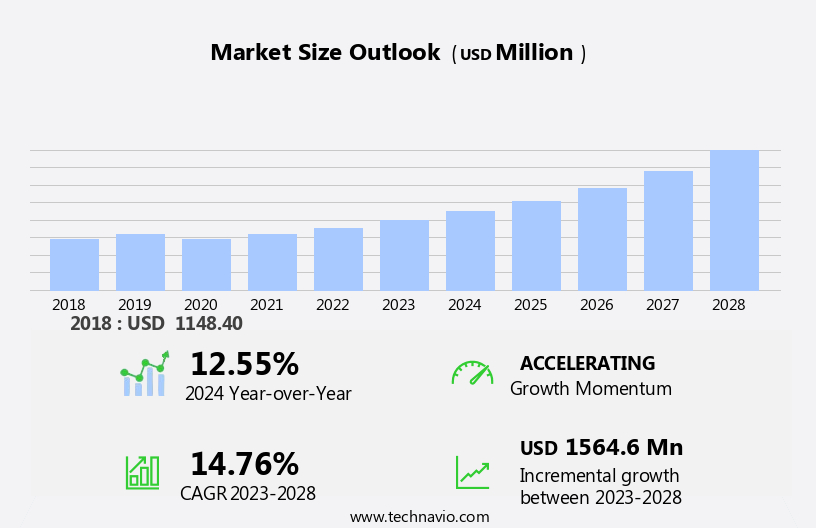
The optical encoder market size is forecast to increase by USD 1.56 billion, at a CAGR of 14.76% between 2023 and 2028.
- The market is witnessing significant growth due to the increasing demand for automation solutions in various industries, including semiconductor manufacturing, logistics, and automotive. The adoption of industrial robots and motion control systems in manufacturing processes is driving the market's growth. Furthermore, the integration of artificial intelligence and machine learning algorithms in compressors, pumps, and compressors is leading to the development of advanced precision control systems, thereby increasing the demand for optical encoders. In the data center sector, the growing use of servers and inverters is fueling the market's expansion. The rise of e-commerce and the increasing popularity of consumer electronics, gaming, and medical devices are also contributing to the market's growth.
- The adoption of optical encoders in renewable energy applications, such as solar panels and wind turbines, is another significant trend. Moreover, the market is witnessing increasing demand from emerging applications, such as autonomous vehicles, lidar, and drones. The use of optical encoders in robotics and aviation industries is also on the rise. In the field of agriculture, precision farming is driving the demand for optical encoders in surface mount technology (SMT) equipment and pressure sensors. Despite these growth opportunities, the market faces challenges, such as mechanical and environmental challenges, which require the development of advanced and rise optical encoder designs.
What will be the Size of the Optical Encoder Market During the Forecast Period?
- The market encompasses a diverse range of applications, including semiconductor manufacturing, aerospace, scientific research, and various industrial sectors such as automation, motion control, automation systems, security systems, robotic systems, server maintenance, cable management systems, data centers, precision agriculture, and farm automation. Optical encoders play a crucial role In these industries by providing accurate position and speed feedback for mechanical devices, enabling improved automation and industrial controls. Key trends in the market include the increasing adoption of optical encoders in autonomous systems, such as autonomous tractors, harvesters, drones, and electric motors.
- Unique features, like diagnostic capabilities and linear measuring functions, enhance the performance and reliability of these systems. Additionally, the market is driven by the growing demand for web tensioning, backstop gauging, and other applications requiring high-precision measurements. Overall, the market is poised for continued growth as industries increasingly rely on automation and motion control technologies to optimize operations and enhance productivity.
How is this Optical Encoder Industry segmented and which is the largest segment?
The optical encoder industry research report provides comprehensive data (region-wise segment analysis), with forecasts and estimates in "USD billion" for the period 2024-2028, as well as historical data from 2018-2022 for the following segments.
- Type
- Absolute encoder
- Incremental encoder
- End-user
- Machine tools manufacturers
- Assembly equipment manufacturers
- Consumer electronics and semiconductor equipment manufacturers
- Healthcare equipment manufacturers
- Others
- Geography
- APAC
- China
- Japan
- South Korea
- Europe
- Germany
- North America
- US
- South America
- Middle East and Africa
- APAC
By Type Insights
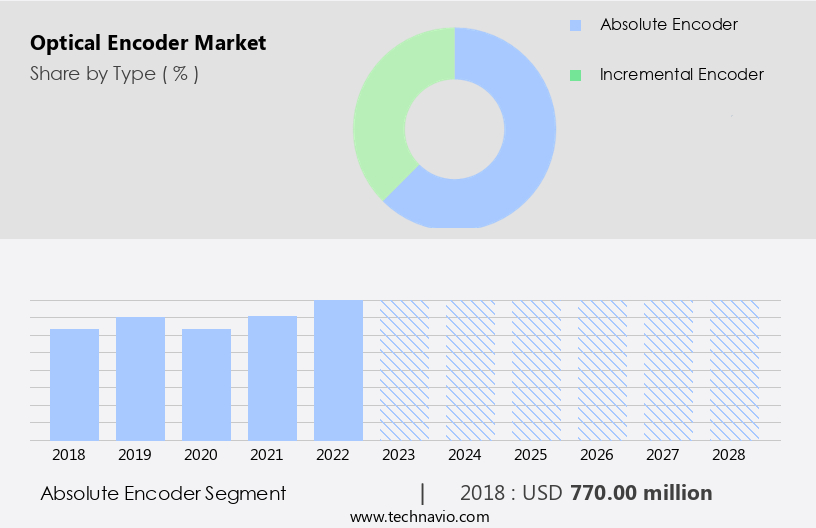
- The absolute encoder segment is estimated to witness significant growth during the forecast period.
Absolute rotary encoders offer a distinct advantage in position sensing applications due to their ability to provide an exact numerical value for each shaft position. Unlike incremental encoders, absolute rotary encoders do not require additional expensive components for referencing as they have built-in reference data. This feature ensures the current position of an object is known even during power failure or machine shutdown. Absolute rotary encoders come in two types: single-turn and multi-turn. Single-turn encoders divide the shaft into a defined number of steps, while multi-turn encoders determine the number of resolutions and angular positions within a revolution.
Absolute rotary encoders find extensive use in various industries, including semiconductor manufacturing, aerospace, scientific research, automation, motion control, automation systems, security systems, robotic systems, server maintenance, cable management systems, data centers, precision agriculture, and automotive industries. With advancements in technologies like machine learning, artificial intelligence algorithms, predictive maintenance capabilities, and emerging alternative sensing methods, the demand for absolute rotary encoders continues to grow.
Get a glance at the Optical Encoder Industry report of share of various segments Request Free Sample
The absolute encoder segment was valued at USD 770.00 million in 2018 and showed a gradual increase during the forecast period.
Regional Analysis
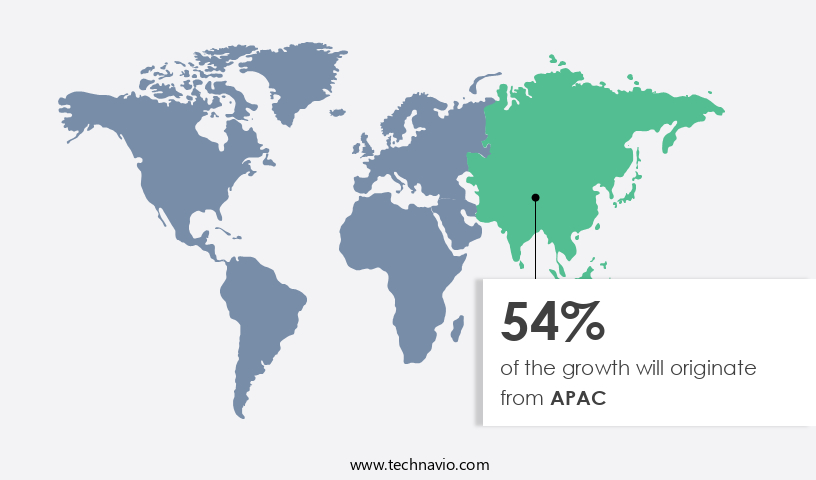
- APAC is estimated to contribute 54% to the growth of the global market during the forecast period.
Technavio's analysts have elaborately explained the regional trends and drivers that shape the market during the forecast period.
For more insights on the market share of various regions, Request Free Sample
The market in APAC experiences significant growth due to the region's concentration of electronic manufacturing services (EMS) firms. Major EMS companies, including Foxconn, Flextronics, and Murata Manufacturing, are based in APAC, making it an attractive destination for original equipment manufacturers (OEMs) seeking to outsource production. For instance, Foxconn, which manufactures phones for brands like Gionee, Nokia, OPPO, and Xiaomi, planned a USD145 billion investment in a new mobile manufacturing hub in India. The hub's production could benefit from the market's increasing demand in industries such as semiconductor manufacturing, aerospace, scientific research, automation, motion control, automation systems, security systems, robotics systems, server maintenance, cable management systems, data centers, precision agriculture, and more.
The market's growth is driven by advanced technologies like machine learning, artificial intelligence algorithms, and predictive maintenance capabilities. Key industries include consumer electronics, industrial equipment, automation and robotics, healthcare, logistics, and renewable energy. Optical encoders are essential components in various applications, including transportation, engineering and technology, specialty chemicals, process technologies, sensing, replacement parts, relays and switches, semiconductor connections, actuators and motors, thermal management, inverters and chargers, pressure sensors, force sensors, position sensors, and encoders. The market's growth is also influenced by factors like improved automation, industrial controls, unique features, diagnostic capabilities, and linear measuring applications.
Market Dynamics
Our researchers analyzed the data with 2023 as the base year, along with the key drivers, trends, and challenges. A holistic analysis of drivers will help companies refine their marketing strategies to gain a competitive advantage.
What are the key market drivers leading to the rise In the adoption of Optical Encoder Industry?
Growing demand for SMT equipment is the key driver of the market.
- Optical encoders play a crucial role in ensuring accurate component placement in Surface Mount Technology (SMT) equipment used in semiconductor manufacturing. These encoders provide high-resolution feedback to the fine adjustment systems on each axis, enabling precise component positioning onto Printed Circuit Boards (PCBs). The increasing complexity of electronic products necessitates stringent quality assurance in SMT processes, thereby fueling the demand for advanced optical encoders. The expansion of various industries such as aerospace, scientific research, industrialization, automation, and automation systems reliant on motion control and robotics further boosts the market for optical encoders. Applications in security systems, robotic systems, server maintenance, cable management systems, data centers, precision agriculture, and farm automation, among others, contribute significantly to the market growth.
- Advanced technologies like machine learning, artificial intelligence algorithms, and predictive maintenance capabilities are integrated into optical encoders to enhance operational efficiency and improve automation. The market caters to diverse industries, including consumer electronics, industrial equipment, manufacturing, robotics, electronics, machinery, renewable energy, and healthcare, among others. Consolidation In the automation and robotics industry and the emergence of next-generation encoders with unique features like diagnostic capabilities, linear measuring, and absolute position sensing are expected to further propel market growth. The market encompasses various product segments, including absolute encoders, incremental encoders, and digital encoder segments, with technology development focusing on signal processing, communication systems, and manufacturing applications.
What are the market trends shaping the Optical Encoder Industry?
Increasing interest in using drones across numerous applications is the upcoming market trend.
- Optical encoders play a crucial role in various industries, including semiconductor manufacturing, aerospace, scientific research, and automation systems. These encoders use light to measure the position, velocity, and direction of motion. In automation and robotics, they are essential for motion control, improving operational efficiency and precision. Optical encoders find applications in security systems, robotic systems, server maintenance, cable management systems, data centers, precision agriculture, and farm automation. Advanced technologies such as machine learning and artificial intelligence algorithms enable predictive maintenance capabilities, enhancing the functionality of these encoders. Consumer electronics, including camera lenses, gaming consoles, and appliances, utilize optical encoders for position sensing.
- Industrial equipment, such as electric motors, also relies on these encoders for improved automation and control. Consolidation In the automation and robotics industry is driving the growth of the market. The market caters to various sectors, including manufacturing, renewable energy, construction, medical devices, and transportation. Emerging technologies, such as alternative sensing methods, are expanding the scope of optical encoders. The rotary encoder market and optical transmitter market are significant contributors to the overall growth. Signal processing and communication systems are essential for the effective functioning of these encoders. Environmental conditions, such as dust, moisture, and vibrations, can impact the performance of optical encoders.
What challenges does the Optical Encoder Industry face during its growth?
Mechanical and environmental challenges is a key challenge affecting the industry growth.
- Optical encoders are essential components in various industries, including semiconductor manufacturing, aerospace, scientific research, and automation. These encoders are susceptible to environmental conditions such as dust, moisture, and vibrations. In industrialization and automation systems, encoders are utilized in motion control, security systems, robotic systems, server maintenance, cable management systems, data centers, precision agriculture, and farm automation. Optical encoders consist of an optical transmitter and receiver. The transmitter emits light, which is interrupted by the rotation of the encoder disk. The receiver detects these interruptions and converts them into an output signal. The output signal can be incremental or absolute, depending on the application.
- In the automotive industry, optical encoders are used in various applications, including engine control, transmission control, and power steering systems. In such environments, humidity and dust particles are prevalent, requiring the encoders to maintain precise alignment and positioning of the light source to accurately identify the tiny lines on the disk. Advanced technologies, such as machine learning, artificial intelligence algorithms, predictive maintenance capabilities, and alternative sensing methods, are increasingly being integrated into encoders to enhance operational efficiency. The market includes the rotary encoder market and optical transmitter market. Signal processing and communication systems are critical components of these encoders.
- Optical encoders are used in various industries, including manufacturing, robotics, electronics, machinery, renewable energy, consumer electronics market, industrial automation, electronics manufacturing, smart cities, and intelligent transportation systems. They are also used in construction, medical devices, artificial intelligence, internet of things, and various industrial equipment. Consolidation In the automation and robotics industry is leading to the development of next-generation encoders with unique features such as diagnostic capabilities, linear measuring, web tensioning, backstop gauging, electric motors, embedded microprocessors, and signal processing capabilities. These advanced encoders are used in various applications, including robotic surgery, ophthalmic laser treatment, radiation therapy, artificial respiration, orthopaedic rehabilitation, laboratory analysis, scanners, printers, copiers, and various industrial controls.
Exclusive Customer Landscape
The optical encoder market forecasting report includes the adoption lifecycle of the market, covering from the innovator's stage to the laggard's stage. It focuses on adoption rates in different regions based on penetration. Furthermore, the optical encoder market report also includes key purchase criteria and drivers of price sensitivity to help companies evaluate and develop their market growth analysis strategies.

Customer Landscape
Key Companies & Market Insights
Companies are implementing various strategies, such as strategic alliances, optical encoder market forecast, partnerships, mergers and acquisitions, geographical expansion, and product/service launches, to enhance their presence In the industry.
The industry research and growth report includes detailed analyses of the competitive landscape of the market and information about key companies, including:
- Allied Motion Technologies Inc.
- Baumer Holding AG
- Bourns Inc.
- Broadcom Inc.
- CODECHAMP SA
- HEIDENHAIN
- Fortive Corp.
- FRABA BV
- Grayhill Inc.
- Gurley Precision Instruments Inc.
- HONEST SENSOR CORP.
- Honeywell International Inc.
- ifm electronic gmbh
- Kempston Controls
- MEGATRON Elektronik GmbH and Co. KG
- Novanta Inc.
- OMRON Corp.
- Renishaw Plc
- Rockwell Automation Inc.
- Sensata Technologies Inc.
- US Digital Corp.
- Encoder Products Co.
Qualitative and quantitative analysis of companies has been conducted to help clients understand the wider business environment as well as the strengths and weaknesses of key industry players. Data is qualitatively analyzed to categorize companies as pure play, category-focused, industry-focused, and diversified; it is quantitatively analyzed to categorize companies as dominant, leading, strong, tentative, and weak.
Research Analyst Overview
The market encompasses a broad range of applications in various industries, including semiconductor manufacturing, aerospace, scientific research, and industrialization. Optical encoders play a crucial role in automation and motion control systems, finding use in automation systems, security systems, robotic systems, server maintenance, cable management systems, data centers, precision agriculture, and more. In the realm of manufacturing, optical encoders contribute significantly to automation and robotics, electronics, machinery, and renewable energy. These technologies facilitate operational efficiency and improved automation in industries such as automotive, healthcare, logistics, and advanced technologies. Optical encoders are essential components in various systems, including motion control systems, offshore equipment, construction equipment, military and aerospace, and alternative energy systems.
Further, they enable precise measurement and control in applications where high accuracy and reliability are paramount. The emergence of next-generation encoders has led to the development of alternative sensing methods, such as magnetic encoders and signal processing capabilities, communication systems, and manufacturing. These advancements cater to the demands of various industries, including robotics, electronics, machinery, and renewable energy. Environmental conditions, such as dust, moisture, and vibrations, can impact the performance of optical encoders. To address these challenges, emerging technologies and improvements in encoder designs have focused on enhancing their durability and resilience. In the realm of industrial automation, electronics manufacturing, and consumer electronics, optical encoders play a vital role in various applications.
In addition, they are employed in smart cities, intelligent transportation systems, construction, and consumer electronics manufacturing. Optical encoders are also used in medical devices, artificial intelligence, the internet of things, and various industrial controls. Unique features, such as diagnostic capabilities and linear measuring, are increasingly becoming essential for optical encoders. These features enable predictive maintenance capabilities and improve overall system performance. Applications in areas like web tensioning, backstop gauging, electric motors, and embedded microprocessors further expand the market's reach. Optical encoders are integral components in various industries, enabling precision and control in automation, motion, and measurement applications. Their role in automation and robotics, electronics, machinery, and renewable energy continues to evolve, driven by technological advancements and the increasing demand for improved operational efficiency.
|
Market Scope |
|
|
Report Coverage |
Details |
|
Page number |
179 |
|
Base year |
2023 |
|
Historic period |
2018-2022 |
|
Forecast period |
2024-2028 |
|
Growth momentum & CAGR |
Accelerate at a CAGR of 14.76% |
|
Market Growth 2024-2028 |
USD 1.56 billion |
|
Market structure |
Fragmented |
|
YoY growth 2023-2024(%) |
12.55 |
|
Key countries |
China, US, Japan, Germany, and South Korea |
|
Competitive landscape |
Leading Companies, Market Positioning of Companies, Competitive Strategies, and Industry Risks |
What are the Key Data Covered in this Optical Encoder Market Research and Growth Report?
- CAGR of the Optical Encoder industry during the forecast period
- Detailed information on factors that will drive the market growth and forecasting between 2024 and 2028
- Precise estimation of the size of the market and its contribution of the industry in focus to the parent market
- Accurate predictions about upcoming growth and trends and changes in consumer behaviour
- Growth of the market across APAC, Europe, North America, South America, and Middle East and Africa
- Thorough analysis of the market's competitive landscape and detailed information about companies
- Comprehensive analysis of factors that will challenge the optical encoder market growth of industry companies
We can help! Our analysts can customize this optical encoder market research report to meet your requirements.
 RIA -
RIA - 
