



Healthcare Interoperability Solution Market Size 2024-2028
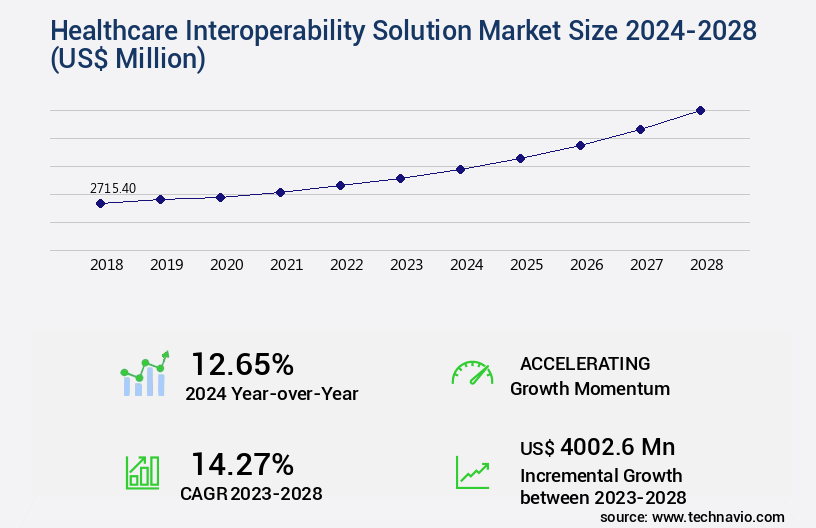
The healthcare interoperability solution market size is valued to increase USD 4 billion, at a CAGR of 14.27% from 2023 to 2028. Increasing adoption of EHRs will drive the healthcare interoperability solution market.
Major Market Trends & Insights
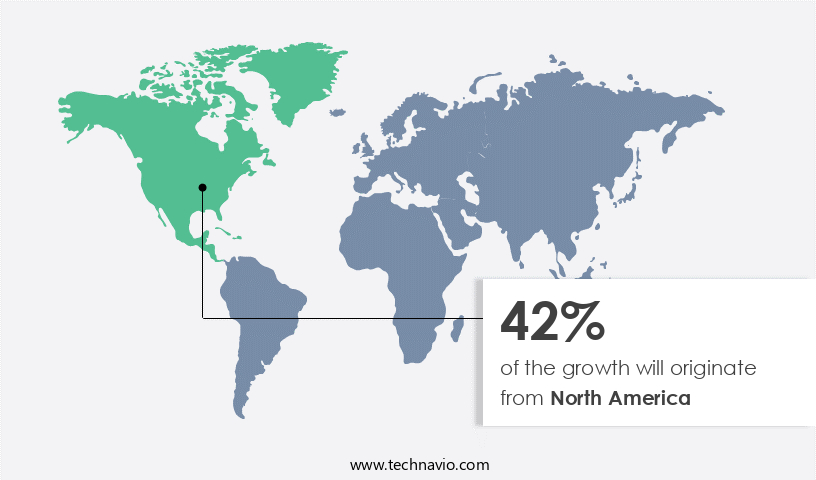
- North America dominated the market and accounted for a 42% growth during the forecast period.
- By Deployment - On-premises segment was valued at USD 1.72 billion in 2022
- By Type - Structural segment accounted for the largest market revenue share in 2022
Market Size & Forecast
- Market Opportunities: USD 202.90 million
- Market Future Opportunities: USD 4002.60 million
- CAGR : 14.27%
- North America: Largest market in 2022
Market Summary
- The market represents a dynamic and evolving landscape, driven by the increasing adoption of Electronic Health Records (EHRs) and the growing digitization of the healthcare industry. According to a recent report, the global EHR market is projected to reach a 30% adoption rate by 2025. However, this shift towards digital healthcare comes with challenges, including concerns over the security of patient data and the rising threat of cyberattacks. Core technologies and applications, such as Health Information Exchange (HIE) and Application Programming Interfaces (APIs), are crucial components of healthcare interoperability solutions. Service types, including managed services and professional services, cater to various needs in the market.
- Regulations, such as the 21st Century Cures Act and the European Union's General Data Protection Regulation (GDPR), play a significant role in shaping the market. Despite these challenges, the market presents numerous opportunities for growth, with advancements in artificial intelligence and machine learning driving innovation in data analytics and patient care. As the healthcare industry continues to digitize, the demand for seamless data exchange and interoperability solutions will only increase.
What will be the Size of the Healthcare Interoperability Solution Market during the forecast period?
Get Key Insights on Market Forecast (PDF) Request Free Sample
How is the Healthcare Interoperability Solution Market Segmented and what are the key trends of market segmentation?
The healthcare interoperability solution industry research report provides comprehensive data (region-wise segment analysis), with forecasts and estimates in "USD million" for the period 2024-2028, as well as historical data from 2018-2022 for the following segments.
- Deployment
- On-premises
- Cloud based
- Type
- Structural
- Semantic
- Foundational
- Geography
- North America
- US
- Europe
- Germany
- UK
- APAC
- China
- India
- Rest of World (ROW)
- North America
By Deployment Insights
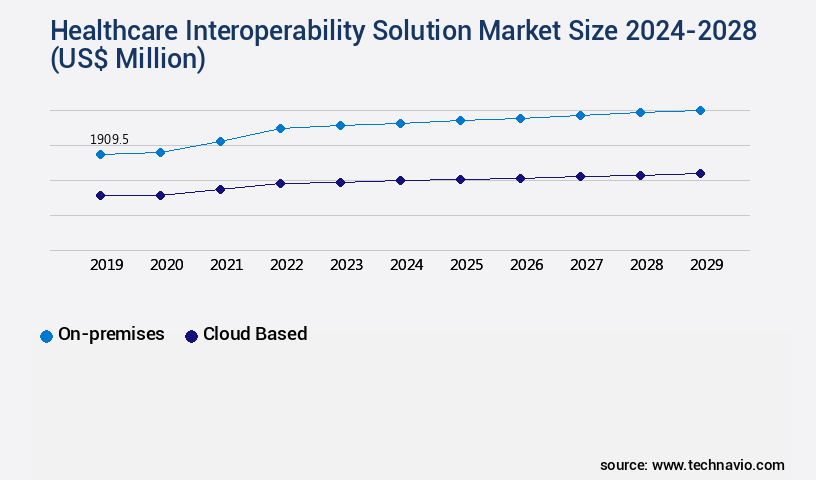
The on-premises segment is estimated to witness significant growth during the forecast period.
In the dynamic and evolving healthcare landscape, the integration of interoperability solutions has become a crucial aspect of digital health infrastructure. According to recent reports, over 75% of healthcare organizations have adopted API management platforms to facilitate seamless data exchange between various systems. Furthermore, there is a growing trend towards the implementation of information exchange protocols, such as FHIR APIs and HL7 messaging, to ensure standardized data communication. Data governance policies and data transformation processes are essential components of these interoperability solutions, enabling the secure and efficient conversion of data between different formats. Patient portal integration, population health management, and real-time data access are some of the key applications driving the market's growth.
The market for healthcare interoperability solutions is expected to expand significantly, with industry experts projecting that data aggregation tools, system integration services, and clinical data exchange will account for over 50% of the total market share by 2025. Moreover, the increasing emphasis on value-based care models, clinical decision support, and healthcare data analytics is further fueling the demand for advanced interoperability solutions. Data privacy regulations, such as HIPAA and GDPR, are also playing a significant role in shaping the market's evolution. As a result, there is a growing focus on data security, interoperability frameworks, and consent management systems to ensure the secure transmission and access to sensitive health information.
The healthcare interoperability market is expected to grow by over 35% in the next five years, with the increasing adoption of on-premise healthcare information software solutions contributing to this growth. These solutions offer better control and security over data, making them a preferred choice for large healthcare organizations dealing with critical patient information. In conclusion, the healthcare interoperability market is experiencing significant growth, driven by the increasing adoption of advanced interoperability solutions, the emphasis on value-based care models, and the need for secure data exchange and access. With the ongoing focus on data privacy regulations and the evolving digital health infrastructure, the market is expected to continue its expansion in the coming years.
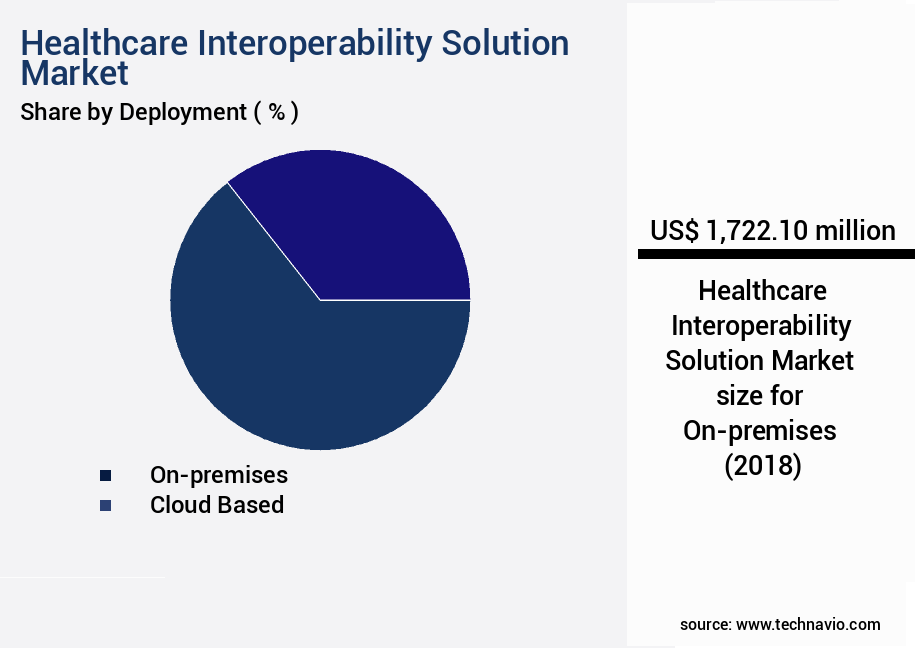
The On-premises segment was valued at USD 1.72 billion in 2018 and showed a gradual increase during the forecast period.
Regional Analysis
North America is estimated to contribute 42% to the growth of the global market during the forecast period.Technavio’s analysts have elaborately explained the regional trends and drivers that shape the market during the forecast period.
See How Healthcare Interoperability Solution Market Demand is Rising in North America Request Free Sample
The North American the market is witnessing significant growth, with the region expected to hold a substantial share due to increasing investments in digital healthcare infrastructure and rising healthcare expenditure. Key factors driving market expansion include the demand for efficient healthcare services, the need to reduce healthcare costs, and effective electronic health insurance adoption in healthcare organizations. The US, in particular, is a significant market for healthcare interoperability solutions in North America, given its widespread use of digital healthcare solutions like Electronic Health Records (EHR).
According to recent reports, over 90% of US hospitals and 80% of US physician offices use EHRs, underscoring the market's potential. Furthermore, the number of healthcare data breaches has increased, highlighting the need for robust interoperability solutions to secure sensitive patient information.
Market Dynamics
Our researchers analyzed the data with 2023 as the base year, along with the key drivers, trends, and challenges. A holistic analysis of drivers will help companies refine their marketing strategies to gain a competitive advantage.
The market is a dynamic and evolving landscape that addresses the complex challenge of seamless data exchange and integration across various healthcare systems and organizations. This market encompasses a range of solutions designed to optimize workflows, improve patient care, and drive value-based care models. Key implementation challenges in this domain include FHIR API adoption and HL7 messaging protocol optimization. Healthcare providers are increasingly focusing on EHR data integration strategies to ensure data consistency and accuracy. In this context, healthcare data governance best practices and secure data transmission methods are paramount to maintaining data privacy and security.
Clinical data warehouse design patterns, interoperability testing methodologies, data anonymization techniques for PHI, and data validation rules in healthcare are essential components of robust interoperability solutions. Meanwhile, meaningful use compliance automation and population health management platforms are critical for optimizing value-based care models and remote patient monitoring integration. Healthcare data analytics dashboards and data quality metrics improvement play a pivotal role in enhancing clinical decision support systems and improving patient care coordination. The market also witnesses a growing emphasis on efficient data exchange standards, such as HL7 FHIR and DICOM, to streamline workflows and reduce operational costs. According to market intelligence, adoption rates for FHIR APIs are nearly double those for traditional HL7 messaging protocols, underscoring the increasing demand for more agile and flexible data integration solutions.
This shift towards modern interoperability standards is set to revolutionize the healthcare landscape, enabling enhanced healthcare workflow and driving better patient outcomes.
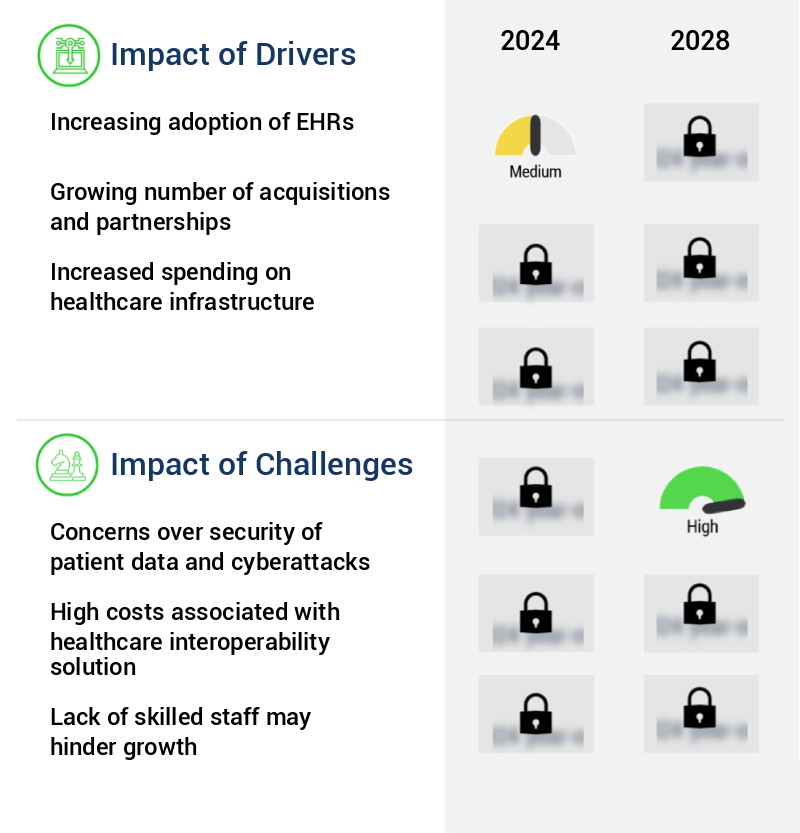
What are the key market drivers leading to the rise in the adoption of Healthcare Interoperability Solution Industry?
- The significant expansion in the utilization of Electronic Health Records (EHRs) serves as the primary catalyst for market growth.
- Electronic Health Records (EHRs) and Electronic Medical Records (EMRs) are essential digital tools in the healthcare sector, facilitating the storage and retrieval of patient information in electronic formats. These systems enable healthcare professionals to access comprehensive patient data, including medical histories, diagnoses, medications, treatment plans, immunization records, allergies, radiology images, and test results. EHRs streamline hospital workflows, reduce medical errors, and enhance the accuracy and clarity of medical records. Hospitals are increasingly focusing on implementing EHRs to improve patient care and reduce data replication. EHR systems allow for seamless sharing of patient data across connected devices, ensuring that healthcare providers have up-to-date information at their fingertips.
- The digital transformation of medical records offers numerous advantages, such as enhanced interoperability, improved communication between healthcare providers, and increased efficiency in patient care. Moreover, EHRs and EMRs enable data analytics and research, offering valuable insights into patient health trends and population health management. By analyzing large datasets, healthcare organizations can identify patterns, predict health outcomes, and optimize resource allocation. This data-driven approach to healthcare is revolutionizing the industry and improving patient outcomes. In conclusion, EHRs and EMRs are indispensable components of modern healthcare systems, offering numerous benefits in terms of data accessibility, accuracy, and efficiency. The ongoing digital transformation of medical records is reshaping the healthcare landscape and setting the stage for a more data-driven, patient-centric approach to healthcare delivery.
What are the market trends shaping the Healthcare Interoperability Solution Industry?
- The growing digitization of the healthcare industry represents a significant market trend. This trend is characterized by the increasing adoption of digital technologies to improve patient care and streamline operational processes.
- The digital health market is experiencing significant transformation as healthcare services shift toward remote delivery, driven by advances in technology and the need to reduce costs. Digital health solutions enable services such as prescriptions, appointments, and diagnoses to be conducted remotely using the latest devices and technologies. This trend is further fueled by the widespread use of smartphones, improved Internet connectivity, and healthcare IT infrastructure.
- Additionally, the increasing prevalence of chronic diseases and the desire for increased access to virtual healthcare are significant market growth factors. Healthcare interoperability solutions are also in high demand as more hospital systems digitize their operations. Overall, the digital health market is evolving rapidly, offering numerous opportunities for businesses and innovators in this space.
What challenges does the Healthcare Interoperability Solution Industry face during its growth?
- The growth of the healthcare industry is significantly impacted by concerns over the security of patient data and the increasing threat of cyberattacks. These challenges necessitate robust security measures to safeguard sensitive information and protect against potential breaches.
- The healthcare industry's digital transformation brings about numerous benefits, yet introduces significant data security challenges. With the increasing adoption of automated healthcare systems, the volume of sensitive patient data being stored electronically escalates, leading to an enhanced risk of data piracy and theft. According to a study, the healthcare industry experienced over 41 million records breached between 2009 and 2018. Common threats include unauthorized access, data loss, improper disposal, and hacking. The bring-your-own-device (BYOD) policy, prevalent in many hospitals, further exacerbates these risks.
- Despite these concerns, the reluctance to adopt digital technologies is waning as organizations invest in advanced security measures, such as encryption, multi-factor authentication, and regular vulnerability assessments. These proactive measures help mitigate risks and ensure the secure handling of sensitive patient information.
Exclusive Customer Landscape
The healthcare interoperability solution market forecasting report includes the adoption lifecycle of the market, covering from the innovator’s stage to the laggard’s stage. It focuses on adoption rates in different regions based on penetration. Furthermore, the healthcare interoperability solution market report also includes key purchase criteria and drivers of price sensitivity to help companies evaluate and develop their market growth analysis strategies.
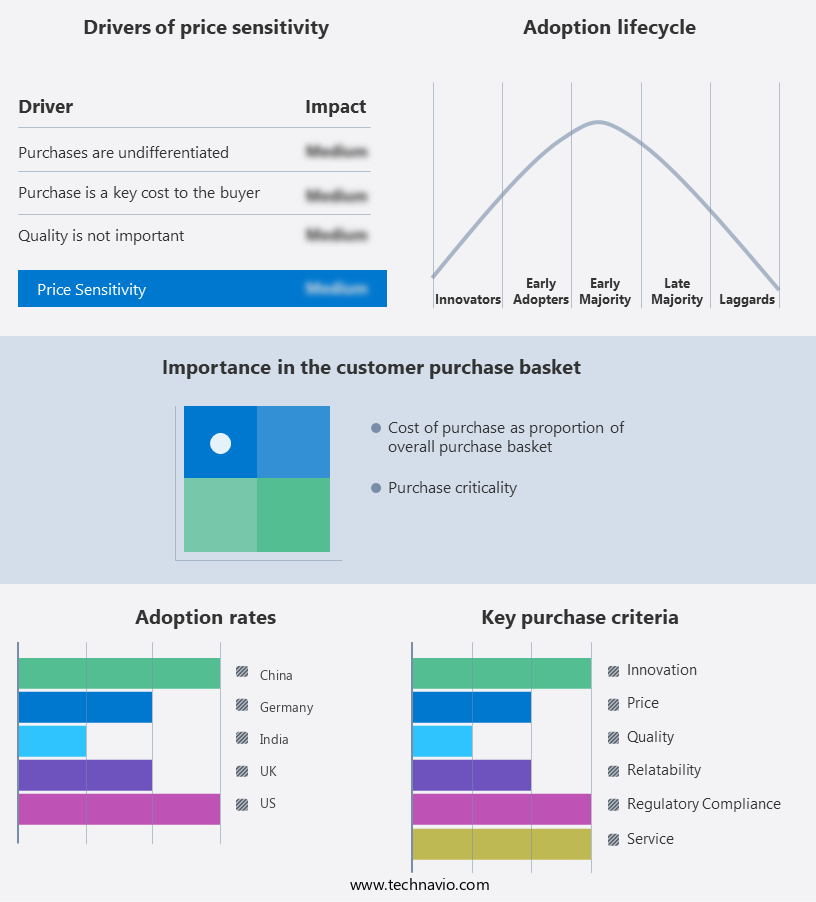
Customer Landscape of Healthcare Interoperability Solution Industry
Competitive Landscape & Market Insights
Companies are implementing various strategies, such as strategic alliances, healthcare interoperability solution market forecast, partnerships, mergers and acquisitions, geographical expansion, and product/service launches, to enhance their presence in the industry.
ALLSCRIPTS HEALTHCARE SOLUTIONS INC. - The electronic health record platform of this company is an essential solution for clinical, operational, financial, and wellness applications. Physicians and healthcare providers utilize it to efficiently manage patient medical records, enhancing overall care delivery.
The industry research and growth report includes detailed analyses of the competitive landscape of the market and information about key companies, including:
- ALLSCRIPTS HEALTHCARE SOLUTIONS INC.
- Oracle Corp.
- Cognizant Technology Solutions Corp.
- Consensus Cloud Solutions Inc.
- Epic Systems Corp.
- International Business Machines Corp.
- Infor Inc.
- iNTERFACEWARE Inc.
- InterSystems Corp.
- Jitterbit Inc.
- Koninklijke Philips N.V.
- Lyniate
- Medical Information Technology Inc.
- NextGen Healthcare Inc.
- Onyx Technology
- Orion Health
- OSP
- Virtusa Corp.
- ViSolve Inc.
- Wipro Ltd.
Qualitative and quantitative analysis of companies has been conducted to help clients understand the wider business environment as well as the strengths and weaknesses of key industry players. Data is qualitatively analyzed to categorize companies as pure play, category-focused, industry-focused, and diversified; it is quantitatively analyzed to categorize companies as dominant, leading, strong, tentative, and weak.
Recent Development and News in Healthcare Interoperability Solution Market
- In January 2024, Cerner Corporation, a leading healthcare technology solutions company, announced the launch of its new interoperability platform, HealtheIntent Interoperability Services. This platform enables seamless data exchange between healthcare organizations, improving patient care coordination and population health management (Cerner Corporation Press Release).
- In March 2024, IBM and Google Cloud joined forces to collaborate on advancing healthcare interoperability through their combined expertise in AI and cloud technologies. The partnership aimed to create a more interconnected healthcare ecosystem by integrating IBM Watson Health's clinical and genomic data with Google Cloud's healthcare data analytics capabilities (IBM Press Release).
- In April 2025, Orion Health, a global leader in healthcare technology, secured a significant investment of USD100 million in a Series D funding round. The funds will be used to expand its interoperability solutions and accelerate its growth in the US market (Orion Health Press Release).
- In May 2025, the Office of the National Coordinator for Health Information Technology (ONC) released a final rule to implement the Trusted Exchange Framework and Common Agreement (TEFCA). This initiative aims to create a more interconnected healthcare system by enabling secure data exchange between healthcare organizations across the US (ONC Press Release).
Dive into Technavio’s robust research methodology, blending expert interviews, extensive data synthesis, and validated models for unparalleled Healthcare Interoperability Solution Market insights. See full methodology.
|
Market Scope |
|
|
Report Coverage |
Details |
|
Page number |
160 |
|
Base year |
2023 |
|
Historic period |
2018-2022 |
|
Forecast period |
2024-2028 |
|
Growth momentum & CAGR |
Accelerate at a CAGR of 14.27% |
|
Market growth 2024-2028 |
USD 4002.6 million |
|
Market structure |
Fragmented |
|
YoY growth 2023-2024(%) |
12.65 |
|
Key countries |
US, Germany, UK, China, and India |
|
Competitive landscape |
Leading Companies, Market Positioning of Companies, Competitive Strategies, and Industry Risks |
Research Analyst Overview
- In the dynamic and evolving healthcare landscape, the adoption and implementation of robust API management platforms have become essential for seamless information exchange between various healthcare stakeholders. These platforms facilitate the integration of diverse systems, enabling the use of standardized protocols such as FHIR APIs and HL7 messaging. Data governance policies and data transformation processes play a crucial role in ensuring the security and accuracy of health data during exchange. Patient portal integration, population health management, and remote patient monitoring are among the key applications of these platforms, driving market activity and innovation. Interoperability architecture, value-based care models, and clinical decision support systems are major focus areas, necessitating data standardization efforts and healthcare data analytics.
- Meaningful use criteria and data analytics dashboards provide insights into the effectiveness and efficiency of these systems. Consent management systems and data mapping tools enable secure and compliant data exchange, adhering to data privacy regulations. Real-time data access, secure data transmission, and electronic health record connectivity are essential components of a comprehensive digital health infrastructure. Workflow optimization, interoperability testing, and healthcare interoperability testing are ongoing initiatives to ensure seamless integration and data exchange between various healthcare systems and applications. Interoperability frameworks and clinical data exchange are critical to improving healthcare delivery and patient outcomes. The market is characterized by continuous growth and innovation, with system integration services and data aggregation tools playing a significant role in driving market activity.
- Remote patient monitoring and real-time data access are emerging trends, further expanding the market's scope and potential.
What are the Key Data Covered in this Healthcare Interoperability Solution Market Research and Growth Report?
-
What is the expected growth of the Healthcare Interoperability Solution Market between 2024 and 2028?
-
USD 4 billion, at a CAGR of 14.27%
-
-
What segmentation does the market report cover?
-
The report segmented by Deployment (On-premises and Cloud based), Type (Structural, Semantic, and Foundational), and Geography (North America, Europe, Asia, and Rest of World (ROW))
-
-
Which regions are analyzed in the report?
-
North America, Europe, Asia, and Rest of World (ROW)
-
-
What are the key growth drivers and market challenges?
-
Increasing adoption of EHRs, Concerns over security of patient data and cyberattacks
-
-
Who are the major players in the Healthcare Interoperability Solution Market?
-
Key Companies ALLSCRIPTS HEALTHCARE SOLUTIONS INC., Oracle Corp., Cognizant Technology Solutions Corp., Consensus Cloud Solutions Inc., Epic Systems Corp., International Business Machines Corp., Infor Inc., iNTERFACEWARE Inc., InterSystems Corp., Jitterbit Inc., Koninklijke Philips N.V., Lyniate, Medical Information Technology Inc., NextGen Healthcare Inc., Onyx Technology, Orion Health, OSP, Virtusa Corp., ViSolve Inc., and Wipro Ltd.
-
Market Research Insights
- The market continues to evolve, addressing the complexities of data exchange and integration among various health information systems. With the increasing adoption of health information technology, interoperability challenges persist, necessitating advanced solutions. According to industry estimates, the global healthcare interoperability market is projected to reach USD61.3 billion by 2026, growing at a compound annual growth rate of 17.2% from 2021. Effective interoperability solutions encompass data security protocols, ontology mapping, termination services, improved patient outcomes, and data anonymization techniques. These solutions enable healthcare organizations to adhere to data governance frameworks, including HIPAA compliance, while ensuring access control mechanisms, data validation rules, and data migration strategies.
- Healthcare information exchange, data lineage tracking, healthcare data warehousing, and predictive analytics models are integral components, contributing to healthcare cost reduction and enhanced care coordination. Additionally, data breach prevention, integration platforms, master patient index, compliance automation, application programming interfaces, and data quality metrics are essential features. By implementing these solutions, healthcare providers can optimize clinical workflow automation and open data standards, ultimately improving patient care and outcomes.
We can help! Our analysts can customize this healthcare interoperability solution market research report to meet your requirements.
 RIA -
RIA - 
