


Industrial Automation Device Manager Software Market Size 2025-2029
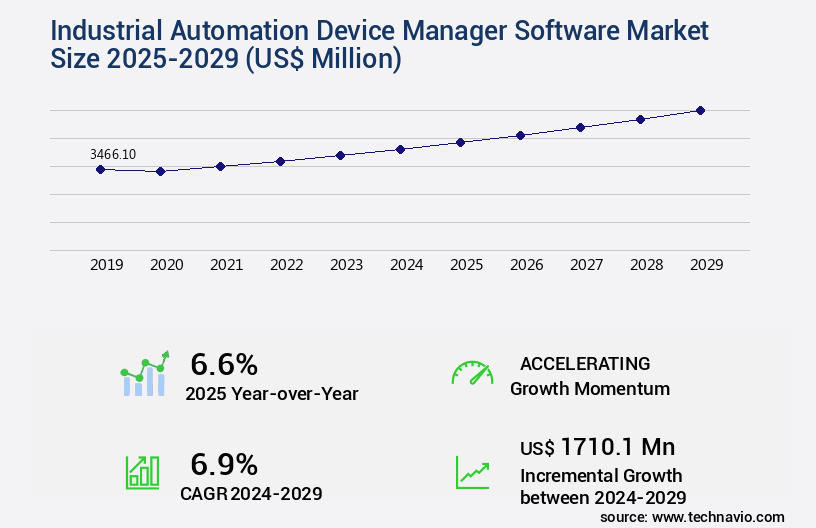
The industrial automation device manager software market size is valued to increase USD 1.71 billion, at a CAGR of 6.9% from 2024 to 2029. Growing demand for integrated asset management services will drive the industrial automation device manager software market.
Major Market Trends & Insights
- APAC dominated the market and accounted for a 40% growth during the forecast period.
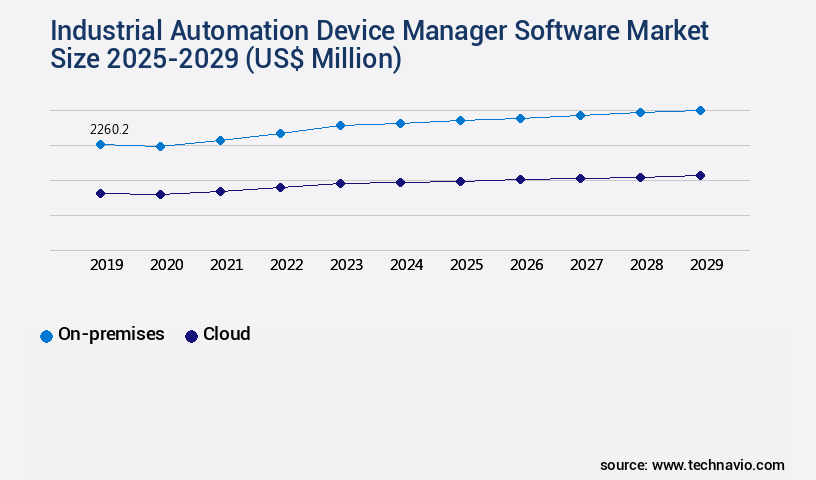
- By Deployment - On-premises segment was valued at USD 2.26 billion in 2023
- By End-user - Oil and gas segment accounted for the largest market revenue share in 2023
Market Size & Forecast
- Market Opportunities: USD 74.67 million
- Market Future Opportunities: USD 1710.10 million
- CAGR from 2024 to 2029 : 6.9%
Market Summary
- The market is experiencing significant growth, fueled by the increasing need for efficient and integrated asset management solutions in industrial settings. Device manager software plays a crucial role in streamlining the management of industrial automation devices, enabling real-time monitoring, diagnostics, and updates. This functionality is increasingly important as industries strive to optimize their operations, reduce downtime, and enhance productivity.
- The shift towards Industry 4.0 and the Internet of Things (IoT) is further accelerating the adoption of these solutions, as they facilitate seamless communication between devices and systems. Cloud-based technologies are a key trend in the market, offering advantages such as scalability, flexibility, and cost savings. These solutions enable remote access and real-time data analysis, making it easier for organizations to manage their industrial automation assets from anywhere, at any time. Additionally, the integration of advanced analytics and machine learning algorithms is enabling predictive maintenance and proactive problem-solving, further enhancing the value proposition of these software solutions.
- Despite these opportunities, challenges remain, including security concerns, complex implementation processes, and the need for standardization. However, market participants are addressing these challenges through collaborative efforts and innovative solutions, ensuring the continued growth and evolution of the market.
What will be the Size of the Industrial Automation Device Manager Software Market during the forecast period?
Get Key Insights on Market Forecast (PDF) Request Free Sample
How is the Industrial Automation Device Manager Software Market Segmented?
The industrial automation device manager software industry research report provides comprehensive data (region-wise segment analysis), with forecasts and estimates in "USD million" for the period 2025-2029, as well as historical data from 2019-2023 for the following segments.
- Deployment
- On-premises
- Cloud
- End-user
- Oil and gas
- Power
- Chemical and petrochemical
- Automotive
- Food and beverages and others
- Type
- Large enterprises
- SMEs
- Geography
- North America
- US
- Canada
- Europe
- France
- Germany
- UK
- APAC
- China
- India
- Japan
- South Korea
- South America
- Brazil
- Rest of World (ROW)
- North America
By Deployment Insights
The on-premises segment is estimated to witness significant growth during the forecast period.
The market continues to evolve, with on-premises solutions holding the leading position in 2024, accounting for approximately 70% of the market share. This dominance can be attributed to the data security and regulatory concerns prevalent in industries such as healthcare, finance, and vital infrastructure. On-premises deployments offer greater control over software customization and infrastructure integration, making them ideal for businesses with intricate operating requirements. Top firms, including Schneider Electric EcoStruxure Machine Expert and ABB RobotStudio, continue to innovate and offer efficient on-premises solutions tailored to industry demands. Furthermore, the market is witnessing the integration of advanced technologies like cybersecurity compliance, scalable system design, software-defined networking, SCADA system integration, automation device control, and security protocols integration.
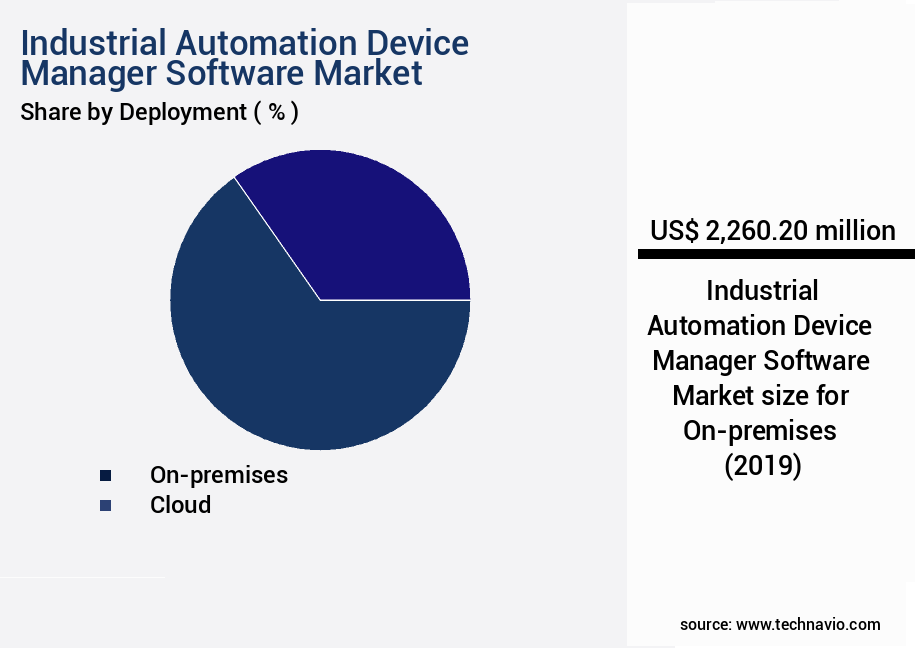
The On-premises segment was valued at USD 2.26 billion in 2019 and showed a gradual increase during the forecast period.
RESTful API integration, system uptime optimization, industrial communication protocols, MQTT message queuing, user role management, data encryption standards, Profinet device integration, operational efficiency metrics, fault tolerance mechanisms, OPC UA connectivity, high-availability architecture, machine learning algorithms, real-time data visualization, predictive maintenance software, access control systems, remote monitoring systems, device lifecycle management, remote diagnostics tools, networked device management, edge computing gateways, and cloud-based device monitoring are increasingly becoming standard features. Data analytics dashboards provide valuable insights, enabling organizations to make informed decisions and optimize their industrial processes.
Regional Analysis
APAC is estimated to contribute 40% to the growth of the global market during the forecast period. Technavio's analysts have elaborately explained the regional trends and drivers that shape the market during the forecast period.
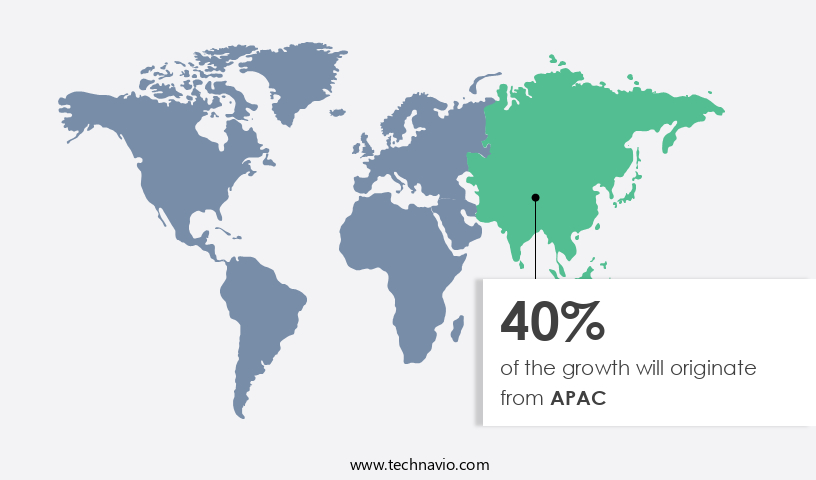
See How Industrial Automation Device Manager Software Market Demand is Rising in APAC Request Free Sample
The market is witnessing significant growth, driven by the increasing adoption of automation technologies in various industries. The food and beverage industry is a key contributor to this growth, with the Asia Pacific region leading the way. Factors such as population growth, improving per capita incomes, and increasing consumption habits are fueling the industrialization process in the region. This, in turn, is driving the demand for industrial automation device manager software in the food and beverage sector.
The region is expected to feature an increase in growth over the forecast period, with major contributions from markets in China, South Korea, Japan, India, Vietnam, Malaysia, and Australia. The food and beverage industry in APAC is anticipated to grow during the forecast period, owing to the rising demand for packaged food and ready-to-eat food in the region. Population growth, coupled with improved purchasing power parity and increased spending on food and beverage products, are some of the major factors fostering the growth of the food and beverage industry in the region.
Market Dynamics
Our researchers analyzed the data with 2024 as the base year, along with the key drivers, trends, and challenges. A holistic analysis of drivers will help companies refine their marketing strategies to gain a competitive advantage.
The market is experiencing significant growth as businesses seek to optimize their operations through remote access and real-time data visualization. This software enables organizations to monitor and control their industrial automation devices from a centralized dashboard, providing valuable insights for predictive maintenance using machine learning and SCADA system integration with cloud platforms. Security is a top priority in this market, with a secure remote device configuration tool and automated alert system for critical events, ensuring industrial automation systems remain protected. Device lifecycle management software features, such as high-availability architecture for device monitoring and data encryption, are essential for ensuring system reliability and compliance. Industrial automation device manager software also offers advanced capabilities like OPC UA communication for device integration, MQTT messaging for real-time device control, and RESTful API integration for third-party apps. Customizable dashboards for device monitoring and user role management for secure access control provide flexibility and ease of use. System performance monitoring and optimization, energy consumption monitoring and reduction, remote firmware updates and device management, and automated report generation for device status are just a few of the many features that make industrial automation device manager software an indispensable tool for modern businesses. Fault tolerance mechanisms and a scalable system design for future expansion further ensure the reliability and adaptability of these solutions.
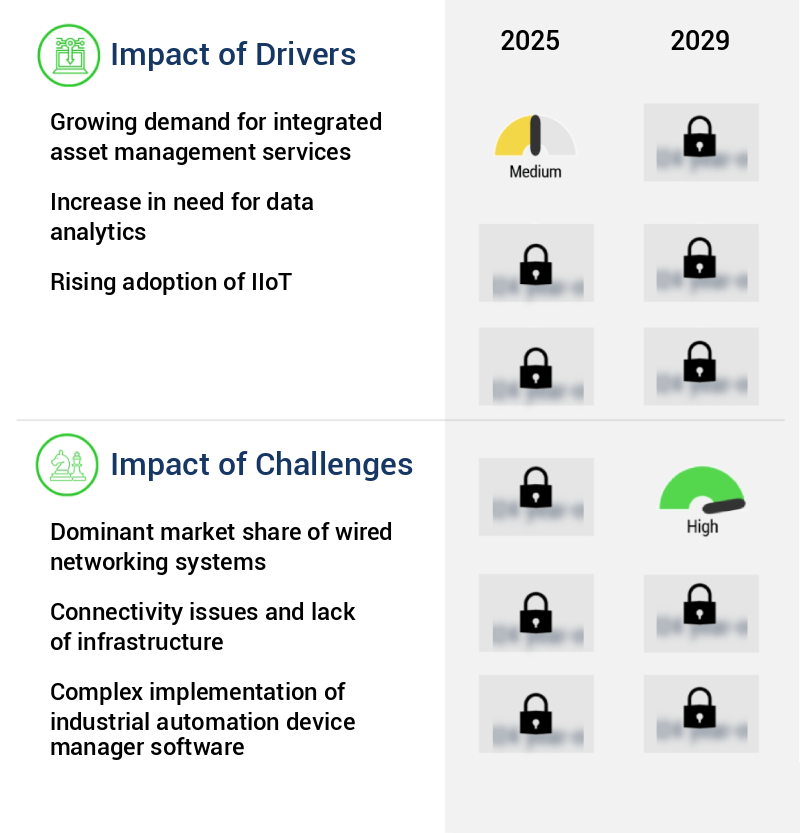
What are the key market drivers leading to the rise in the adoption of Industrial Automation Device Manager Software Industry?
- The expanding need for comprehensive asset management solutions is the primary market catalyst, driven by increasing demand from businesses and individuals seeking to optimize their financial portfolios.
- Industrial automation device manager software is witnessing significant growth in various sectors, particularly in heavy industries, oil and gas, and mining, due to the increasing need for efficient asset management. Traditional asset management processes are often fraught with challenges, such as unstructured maintenance planning, a lack of a centralized data source, and poor inventory management. These issues contribute to increased capital and operational expenses and reduced equipment performance. In response, there is a growing demand for integrated asset management services (IAMS), which encompass information management, maintenance and material management, enterprise asset management, and asset tracking and monitoring.
- By streamlining these processes, IAMS enhances overall plant and facility performance, leading to substantial cost savings and improved efficiency.
What are the market trends shaping the Industrial Automation Device Manager Software Industry?
- Cloud technology's evolution is the forthcoming market trend. This refers to the advancement and increasing popularity of cloud-based solutions.
- The market has experienced significant growth and transformation in recent years, driven by the integration of technologies such as IoT, data analytics, and cloud computing. These innovations have led to the adoption of cloud-based solutions in industrial facilities, surpassing the use of traditional wired and cable management systems. IoT technology facilitates data sharing and transfer between standalone control systems and other devices, enabling real-time monitoring and analysis. Cloud computing, acting as a network of servers on the Internet, stores, manages, and processes vast amounts of data related to industrial operations and performance.
- By deriving meaningful insights from unstructured data, these cloud-based tools have become essential for effective business decision-making in various sectors, including manufacturing, energy, and transportation. The adoption of these advanced technologies signifies a shift towards more efficient, data-driven industrial processes.
What challenges does the Industrial Automation Device Manager Software Industry face during its growth?
- The significant market dominance held by wired networking systems poses a substantial challenge to the industry's growth trajectory.
- Industrial communication protocols, primarily focused on wired technologies such as Fieldbus and Ethernet, are increasingly adopted in end-user industries. The advantages of using wired communication protocols are manifold: uninterrupted data transmission, limited interference in industrial environments, and the introduction of higher data speeds. The emergence of Power over Ethernet (PoE) protocols has further propelled industries to leverage data transmission speeds of up to 100 Gbps. Industrial communication cables, known for their robustness and resistance to external interferences, are the backbone of these applications. Fiber-optic cables, in particular, have gained significant traction due to their improved data transfer capabilities.
- The industrial communication cables market is poised for steady growth during the forecast period. The advantages of wired communication protocols, such as uninterrupted data transmission and limited interference, make them a preferred choice in industries. With the advent of PoE and fiber-optic cables, data transfer speeds have seen a significant surge, further enhancing their appeal.
Exclusive Technavio Analysis on Customer Landscape
The industrial automation device manager software market forecasting report includes the adoption lifecycle of the market, covering from the innovator's stage to the laggard's stage. It focuses on adoption rates in different regions based on penetration. Furthermore, the industrial automation device manager software market report also includes key purchase criteria and drivers of price sensitivity to help companies evaluate and develop their market growth analysis strategies.
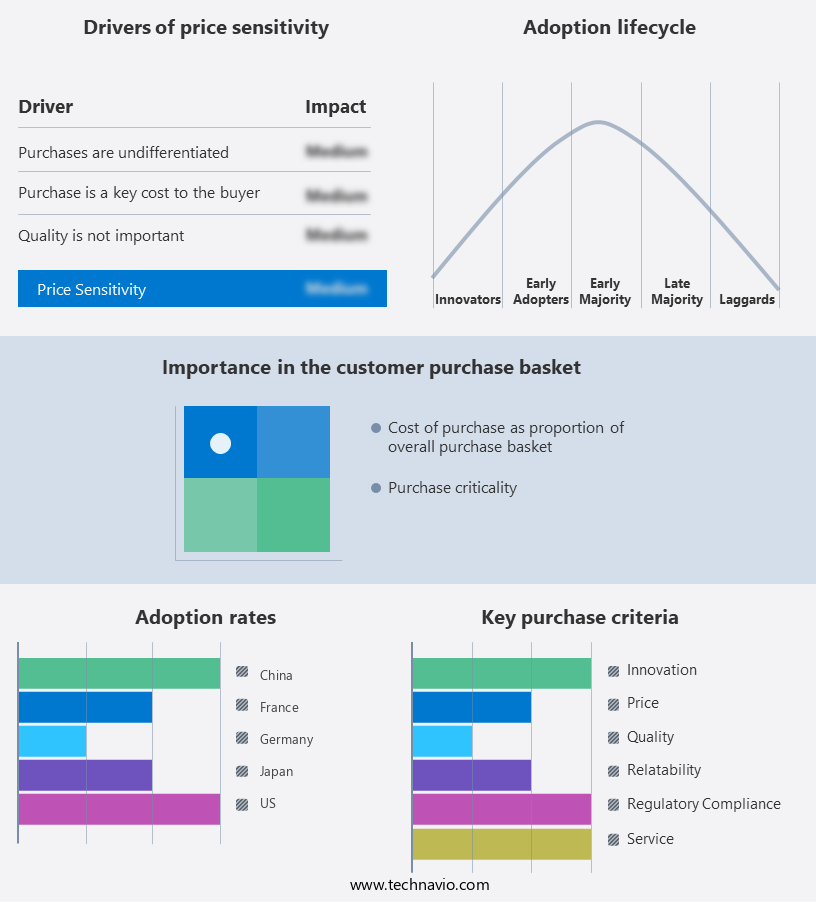
Customer Landscape of Industrial Automation Device Manager Software Industry
Competitive Landscape
Companies are implementing various strategies, such as strategic alliances, industrial automation device manager software market forecast, partnerships, mergers and acquisitions, geographical expansion, and product/service launches, to enhance their presence in the industry.
ABB Ltd. - ABB, a leading industrial automation solutions provider, offers ABB Ability Industrial Software as its device manager solution.
The industry research and growth report includes detailed analyses of the competitive landscape of the market and information about key companies, including:
- ABB Ltd.
- Advantech Co. Ltd.
- Danaher Corp.
- Delta Electronics Inc.
- Digi International Inc.
- Eaton Corp. plc
- Emerson Electric Co.
- Endress Hauser Group Services AG
- Flexera Software LLC
- General Electric Co.
- Hitachi Vantara LLC
- Honeywell International Inc.
- Moxa Inc.
- OMRON Corp.
- Parsec Automation Corp.
- Rockwell Automation Inc.
- Schneider Electric SE
- Siemens AG
- WAGO GmbH and Co. KG
- Yokogawa Electric Corp.
Qualitative and quantitative analysis of companies has been conducted to help clients understand the wider business environment as well as the strengths and weaknesses of key industry players. Data is qualitatively analyzed to categorize companies as pure play, category-focused, industry-focused, and diversified; it is quantitatively analyzed to categorize companies as dominant, leading, strong, tentative, and weak.
Recent Development and News in Industrial Automation Device Manager Software Market
- In January 2024, ABB, a leading industrial automation company, launched its new ABB Ability™ Smart Sensor Portfolio, which includes an advanced Industrial Automation Device Manager Software. This software enables real-time monitoring and predictive maintenance of devices, enhancing overall plant efficiency and productivity (ABB Press Release).
- In March 2024, Siemens and Microsoft announced a strategic partnership to integrate Microsoft Azure IoT and Siemens' MindSphere industrial IoT operating system. This collaboration aimed to offer advanced Industrial Automation Device Manager Software solutions for predictive maintenance and data analytics (Microsoft News Center).
- In May 2024, Schneider Electric completed the acquisition of AVEVA Group, a leading industrial software company. This acquisition significantly expanded Schneider Electric's portfolio in process automation, asset performance management, and industrial control systems (Schneider Electric Press Release).
- In April 2025, Honeywell International unveiled its Forge Technology platform, an Industrial Automation Device Manager Software designed to optimize operations across industrial facilities. This cloud-based solution uses AI and machine learning algorithms for predictive maintenance and performance analysis (Honeywell Press Release).
- These developments demonstrate the growing importance of Industrial Automation Device Manager Software in enhancing operational efficiency, predictive maintenance, and overall industrial digitalization. Companies are investing heavily in these solutions to remain competitive and meet the increasing demand for smart, connected industrial infrastructure.
Dive into Technavio's robust research methodology, blending expert interviews, extensive data synthesis, and validated models for unparalleled Industrial Automation Device Manager Software Market insights. See full methodology.
|
Market Scope |
|
|
Report Coverage |
Details |
|
Page number |
236 |
|
Base year |
2024 |
|
Historic period |
2019-2023 |
|
Forecast period |
2025-2029 |
|
Growth momentum & CAGR |
Accelerate at a CAGR of 6.9% |
|
Market growth 2025-2029 |
USD 1710.1 million |
|
Market structure |
Fragmented |
|
YoY growth 2024-2025(%) |
6.6 |
|
Key countries |
US, China, Japan, Germany, Canada, India, UK, France, Brazil, and South Korea |
|
Competitive landscape |
Leading Companies, Market Positioning of Companies, Competitive Strategies, and Industry Risks |
Research Analyst Overview
- The market continues to evolve, driven by the increasing adoption of device data acquisition in various sectors. Industrial IoT platforms are at the forefront of this trend, enabling scalable system designs and cybersecurity compliance. Software-defined networking and SCADA system integration are crucial components, ensuring seamless automation device control and security protocols integration. Restful API integration, system uptime optimization, and industrial communication protocols such as MQTT message queuing, are essential for ensuring efficient operational processes. User role management, data encryption standards, and access control systems are integral to maintaining cybersecurity. Profinet device integration and OPC UA connectivity are becoming industry standards, facilitating high-availability architectures and real-time data visualization.
- Predictive maintenance software, machine learning algorithms, and remote monitoring systems are transforming maintenance practices, leading to significant cost savings. For instance, a leading manufacturing company reported a 20% increase in operational efficiency after implementing a device lifecycle management system with remote diagnostics tools and networked device management. The market is expected to grow by over 15% annually, fueled by the increasing demand for cloud-based device monitoring, edge computing gateways, and data analytics dashboards.
What are the Key Data Covered in this Industrial Automation Device Manager Software Market Research and Growth Report?
-
What is the expected growth of the Industrial Automation Device Manager Software Market between 2025 and 2029?
-
USD 1.71 billion, at a CAGR of 6.9%
-
-
What segmentation does the market report cover?
-
The report is segmented by Deployment (On-premises and Cloud), End-user (Oil and gas, Power, Chemical and petrochemical, Automotive, and Food and beverages and others), Type (Large enterprises and SMEs), and Geography (APAC, North America, Europe, South America, and Middle East and Africa)
-
-
Which regions are analyzed in the report?
-
APAC, North America, Europe, South America, and Middle East and Africa
-
-
What are the key growth drivers and market challenges?
-
Growing demand for integrated asset management services, Dominant market share of wired networking systems
-
-
Who are the major players in the Industrial Automation Device Manager Software Market?
-
ABB Ltd., Advantech Co. Ltd., Danaher Corp., Delta Electronics Inc., Digi International Inc., Eaton Corp. plc, Emerson Electric Co., Endress Hauser Group Services AG, Flexera Software LLC, General Electric Co., Hitachi Vantara LLC, Honeywell International Inc., Moxa Inc., OMRON Corp., Parsec Automation Corp., Rockwell Automation Inc., Schneider Electric SE, Siemens AG, WAGO GmbH and Co. KG, and Yokogawa Electric Corp.
-
Market Research Insights
- The market is a dynamic and continuously evolving sector, encompassing a range of solutions designed to optimize and manage various industrial devices. Two key aspects of this market are the increasing demand for compliance certifications and security audits, with over 60% of organizations reporting an annual budget allocation for these initiatives. Furthermore, industry analysts anticipate a growth rate of approximately 15% for the market in the coming years. For instance, a leading manufacturing firm successfully implemented a device manager software solution, resulting in a 20% reduction in system downtime due to improved performance monitoring and remote firmware updates.
- This outcome underscores the potential impact of such solutions on industrial operations. Additionally, the market offers a diverse range of features, including user interface design, system maintenance, technical support services, and system upgrade options, among others, to cater to the varying needs of industries.
We can help! Our analysts can customize this industrial automation device manager software market research report to meet your requirements.
 RIA -
RIA - 
